Culture · Festivals
Japanese festivals: what a matsuri is, the biggest festivals month by month, what to wear and eat, how to join in, and dates to August 2027
Japanese festivals, called matsuri, happen all year and all over the country, from a small shrine festival in one neighbourhood to parades watched by more than a million people. This guide explains what a matsuri is, the main kinds, the biggest festivals, a calendar from January to December, what happens at one, what to wear and eat, and how a visitor can join in. It ends with dates from late October 2026 to August 2027, with the day of the week for each. The facts come from the Japan National Tourism Organization, the Kyoto City Tourism Association, the official sites of the Aomori Nebuta, Akita Kanto, Sendai Tanabata, Awa Odori and Sapporo Snow festivals, Kanda Myojin shrine, the Nagasaki Kunchi and Asakusa Shrine, the Hida Takayama tourism office and UNESCO, read on 15 October 2026, and each page is listed under Sources at the end.
Last checked · Sources

In short
Japanese festivals, matsuri, are local celebrations, and nearly all of them are tied to a Shinto shrine, a Buddhist temple, the seasons or an event in history. At many of them people carry a portable shrine, a mikoshi, or pull decorated floats through the streets to flutes and taiko drums, while food stalls sell dishes such as yakisoba, takoyaki and shaved ice. The biggest include the Gion Matsuri in Kyoto, all through July with float processions on 17 and 24 July, the Tenjin Matsuri in Osaka on 24 and 25 July, three festivals in Tohoku in early August, the Aomori Nebuta from 2 to 7 August, the Akita Kanto from 3 to 6 August and the Sendai Tanabata from 6 to 8 August, the Awa Odori dance in Tokushima in mid-August, and the Sapporo Snow Festival, from 4 to 11 February in 2027. Some sell seats along the route, but you can watch the Nebuta from the roadside and the Awa Odori has free areas. Many visitors wear a yukata, a summer kimono, and you can join the dancing at a bon odori, or at the Nebuta if you wear the haneto costume.
What Japanese festivals are
The Japan National Tourism Organization (JNTO) starts its guide to local festivals simply: "Matsuri are Japanese festivals and are a way for the local community to get together and celebrate." Most have a reason behind them. JNTO goes on: "Nearly all matsuri have some connection to Buddhism, Shinto, the four seasons or important historical events, though a few of them rely entirely on the beauty of fireworks."
The word itself, JNTO explains in a feature on festival history, comes from a verb meaning to enshrine. In the past a festival was a way to thank the gods for good fortune, or to ask them for a good harvest or for protection from natural disasters. Festivals differ from one region to the next, but the same feature says "every matsuri is a community-wide event and an opportunity to proudly display and preserve local traditions". It adds what that means for a traveller: "Today, Japan's festivals enable visitors to witness ancient rituals, performances and lively participation by local residents."
Words you will hear
A few Japanese words come up again and again, on posters, in timetables and in the shouts of the crowd.
Words you will hear
- Matsuri: a festival. Many names end in it, as in Gion Matsuri.
- Mikoshi: a portable shrine, carried on the shoulders, that takes the shrine's deity around the neighbourhood.
- Dashi: a festival float. Unlike a mikoshi it is pulled, not carried.
- Yama, hoko and yatai: local names for floats. Kyoto's Gion floats are yama and hoko, and Takayama's are yatai.
- Yatai: also the word for a food stall.
- Happi, hachimaki and tabi: the short coat with the group's symbol, the headband, and the split-toe cloth shoes worn by people taking part.
- Yukata: a summer kimono, worn by many people who come to watch.
- Bon odori: the dances held during Obon, the Buddhist festival of summer.
- Hanabi: fireworks.
- Kakegoe: the cries and shouts of performers and the crowd.
Types of Japanese festivals
Japan's festivals, in JNTO's words, "range from the small and peaceful to the large and fiery". It describes the traditional ones like this: "Traditional Japanese festivals are frequently celebrated around shrines and temples, with participants dressed in colorful garb and often hoisting heavy portable shrines on their shoulders." Most fit one or more of six broad kinds.
Six kinds of festival
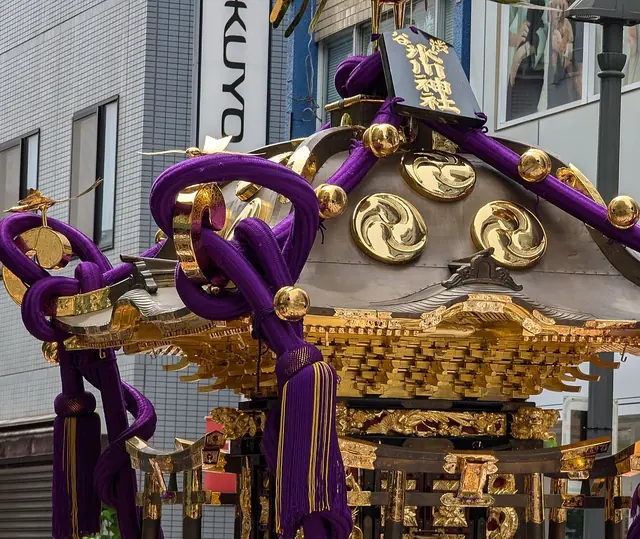 Shrine festivals: a shrine's deity rides through its neighbourhood in a mikoshi. At Tokyo's Sanja Matsuri almost 100 neighbourhood mikoshi are blessed and paraded on the Saturday.
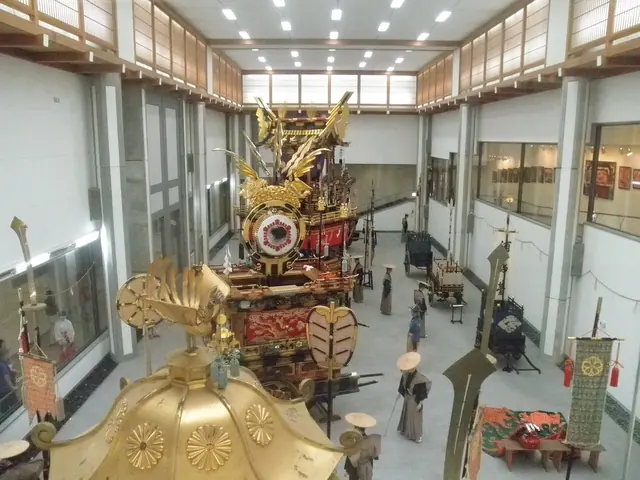 Float festivals: towns pull huge decorated floats through the streets. UNESCO first listed Japan's float festivals in 2016 and extended the listing in 2025.
- Dance festivals: whole streets dance, as at the Awa Odori in Tokushima and at the bon odori dances held all over Japan in summer.
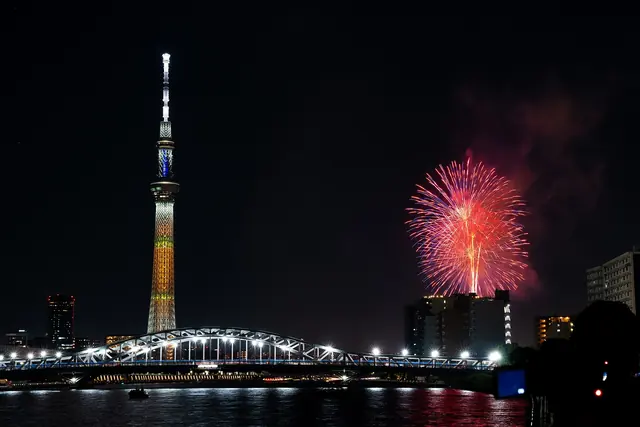 Fireworks: summer is the season for fireworks, such as the Sumidagawa display in Tokyo on the last Saturday of July.
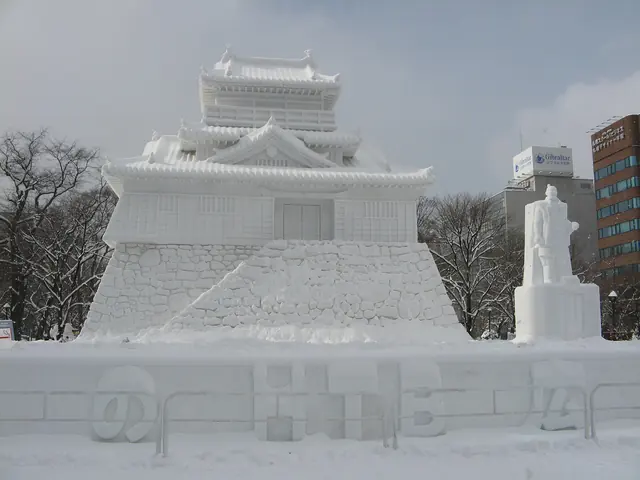 Snow festivals: snow and ice sculptures and lantern-lit paths in winter, the largest of them in Sapporo in February.
- Flowers and leaves: cherry blossom festivals in spring, such as those at Hirosaki and Kakunodate, and autumn festivals in the season of red maple leaves.
Harvest festivals
A large share of Japan's festivals are, at heart, harvest festivals. Some pray for a good crop and others give thanks for it. JNTO's guide to October notes that many of that month's festivals began as simple harvest celebrations and grew into the parades and processions seen today.
Four harvest festivals
- Akita Kanto, 3 to 6 August: local people pray for good harvests with tall poles hung with lanterns, swayed in the night sky.
- Nagasaki Kunchi, 7 to 9 October: an autumn harvest festival said to date from 1634.
- Takayama Autumn Festival, 9 and 10 October: the festival of Sakurayama Hachimangu Shrine, a thanksgiving for the harvest, with 11 floats.
- Karatsu Kunchi, early November: a festival of thanks for good harvests held in Karatsu, Saga Prefecture, since the Edo period (1603 to 1867).
The biggest Japanese festivals
There is no official ranking, but the same names keep coming up. The Kyoto City Tourism Association puts it this way: "Kyoto's Gion Matsuri Festival is one of the three greatest festivals in Japan. The other two are Tokyo's Kanda Matsuri and Osaka's Tenjin Matsuri." In the north, JNTO's guide to August points to the three major summer festivals of Tohoku, all in early August. Add the Awa Odori dance in Tokushima and the Sapporo Snow Festival, and you have the festivals most visitors plan a trip around.
The biggest by the numbers
- 34floats in the two Gion Matsuri processions in Kyoto
- 280poles hung with 10,000 lanterns at the Akita Kanto
- 400years or so of the Awa Odori in Tokushima, which JNTO says draws 1.4 million people
Gion Matsuri, Kyoto: all of July
The Gion Matsuri is the summer festival of Yasaka Jinja shrine, and it fills the whole of July, from the 1st to the 31st. The Kyoto City Tourism Association says: "Among these the Gion Matsuri may be said to be the largest and most extravagant festival." Its high points are the two float processions: 23 floats on 17 July from 9 a.m., and 11 on 24 July from 9:30 a.m. On the evenings before each, the Yoiyama, the streets turn into a party, and houses along the route show off their folding screens and heirlooms, which is why it is also called the Byobu Matsuri, the Screen Festival.
The festival goes back to 869, when the whole country was struck by a plague and the emperor sent a messenger to Yasaka Jinja to pray for it to end. The shrine set up 66 halberds, one for each province, as an offering to the god Gozu Tenno, and from 970 the ritual became a yearly event. If you want to go, JNTO's advice is to book a room months ahead.
Tenjin Matsuri, Osaka: 24 and 25 July
Osaka's great summer festival began in 951 at Osaka Tenmangu shrine and honours Sugawara Michizane, the deity of scholarship and learning. JNTO says "The Tenjin Matsuri is considered one of Japan's top three festivals". The opening rituals are held at the shrine on 24 July. On the night of 25 July a parade of 100 boats moves along the Okawa River, and the evening ends with fireworks that last an hour and a half. The nearest stations are JR Osaka-Tenmangu and Minami-Morimachi.
Kanda Matsuri and Sanja Matsuri, Tokyo: May
Tokyo's two May festivals
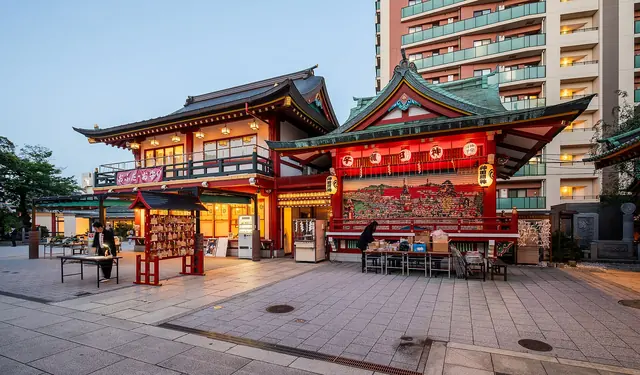 Kanda Matsuri, May, in odd-numbered years: the festival of Kanda Myojin, with more than 200 mikoshi carried into the shrine. The next one is in 2027.
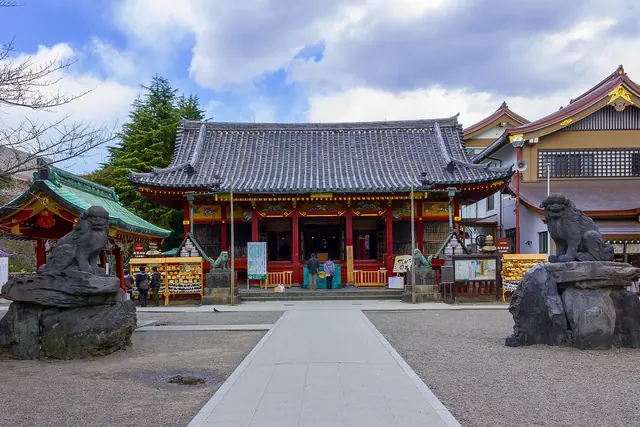 Sanja Matsuri, third full weekend of May: the yearly festival of Asakusa Shrine, with a parade on the Friday, neighbourhood mikoshi on the Saturday and the shrine's own on the Sunday.
Tokyo's two big shrine festivals both fall in May. The Kanda Matsuri of Kanda Myojin shrine takes about a week, and its liveliest days are the weekend just before 15 May: parades on the Saturday and the portable shrine procession on the Sunday, with routes that reach Otemachi, Marunouchi and Nihonbashi. More than 200 mikoshi are carried into the shrine. JNTO notes that "this major event is only celebrated every other year". The shrine's own site says it was held in 2025 and takes place once every two years, so the next one is in May 2027. In the years between, Hie-jinja shrine holds its Sanno Matsuri in June.
The Sanja Matsuri of Asakusa Shrine is held every year on the third full weekend of May. JNTO calls it "one of Tokyo's top three festivals", and its guide to May says it draws over a million people a year. There is a parade, the Daigyoretsu, on the Friday afternoon, almost 100 neighbourhood mikoshi on the Saturday, and the shrine's own large mikoshi on the Sunday.
Tohoku's summer festivals: early August
Tohoku, the north of Honshu, has three big festivals within the first eight days of August, and JNTO suggests touring the region in early August to see them.
Tohoku's three big festivals
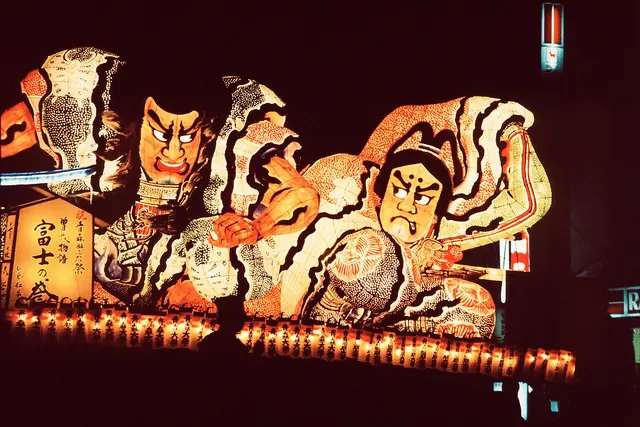 Aomori Nebuta, 2 to 7 August: giant floats of paper on wire frames, 9 m wide, 7 m deep and 5 m high, lit from inside and paraded through Aomori, mostly at night, with drums, flutes and hand cymbals.
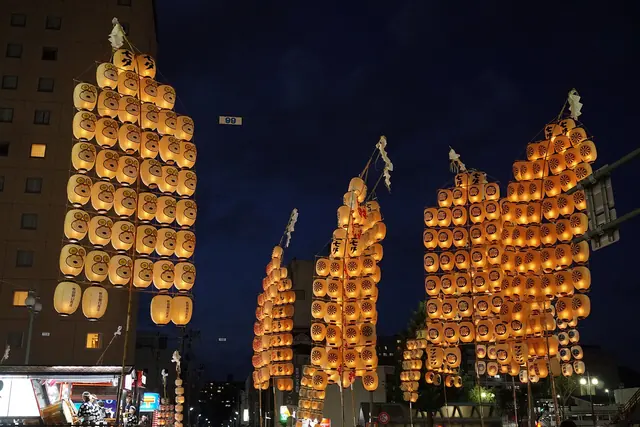 Akita Kanto, 3 to 6 August: 280 bamboo poles hung with 10,000 lanterns, held up in the night sky on a performer's palm, forehead or shoulder. The largest is 12 m long, weighs 50 kg and carries 46 lanterns.
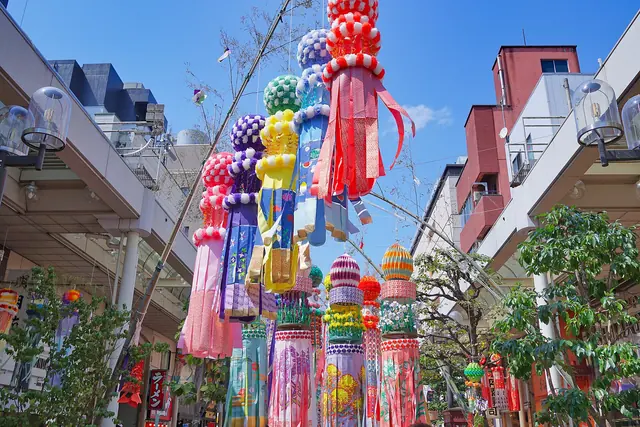 Sendai Tanabata, 6 to 8 August: the shopping arcades are hung with huge paper balls and streamers, low enough to walk through, and there are fireworks on the night before.
Each has its own story. The Nebuta, says the festival's site, may have begun as a form of the Tanabata festival, though no one can be sure, and once paper, bamboo and candles were easy to come by it turned into lanterns and then into the nebuta floats. The Kanto is a festival of prayers for a good harvest about 270 years old, and it is a National Important Intangible Folk Cultural Property. Tanabata comes from an old Chinese legend of two lovers, the stars Altair and Vega, called Orihime and Hikoboshi in Japan, who are kept apart by the Milky Way and can meet only one night a year. It is usually held on the seventh day of the seventh month, and Sendai keeps it a month later than most of Japan, in August. Its official site says more than 2 million people visit each year.
Awa Odori, Tokushima: mid-August
The Awa Odori is a dance, not a parade of floats. It is danced around Obon, when the spirits of ancestors are honoured, and JNTO says it goes back about 400 years. The festival's official site gives the dates as 11 to 15 August every year, five days in all, with more than a million visitors filling Tokushima City; JNTO gives 12 to 15 August. The official site lists both paid stages and free ones, and parts of the festival are open to anyone who wants to dance.
Sapporo Snow Festival: February
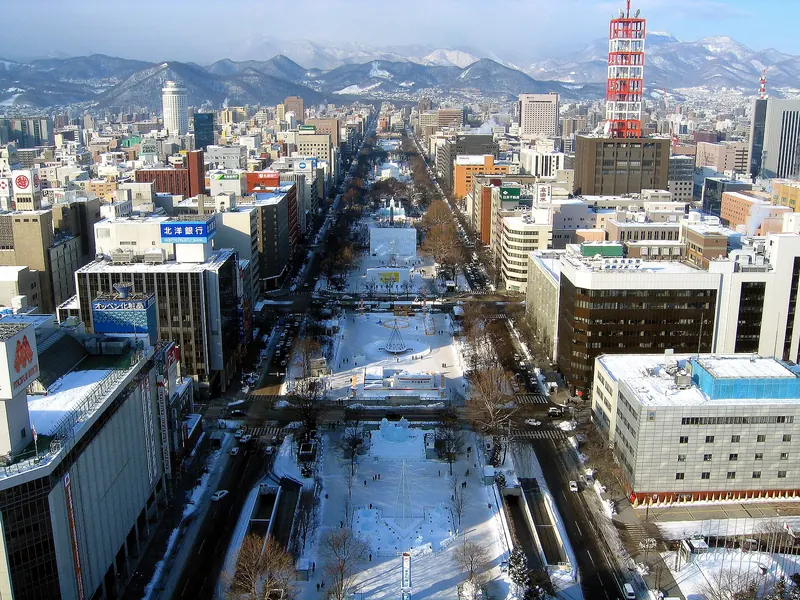
The biggest winter festival is in Sapporo, in Hokkaido. In 2027 the 77th Sapporo Snow Festival runs from Thursday 4 February to Thursday 11 February, a national holiday, at three sites: Odori Park, Tsudome and Susukino. JNTO says it "draws over 2 million visitors each year" and advises booking accommodation early. At winter festivals like this one, JNTO describes snow and ice carved into anime characters, historical figures and famous buildings, and lanterns lighting paths lined with igloos.
Japanese festivals calendar: January to December
There is a festival somewhere in Japan in every month of the year. This calendar lists the ones JNTO and the festivals' own sites single out, month by month. For the next dates, with the day of the week, see the dates section near the end of this guide.
Japanese festivals by month
- January: hatsumode, the year's first visit to a shrine or temple, with food stalls at the big ones. Dance and music at Itsukushima Shrine, Miyajima, on 1 to 3 and 5 January.
- February: the Sapporo Snow Festival, the Yokote Kamakura Festival in Akita, the Tokamachi Snow Festival in Niigata, the Hirosaki Castle Snow Lantern Festival in Aomori, and the Saidai-ji Eyo, the Naked Man Festival, in Okayama.
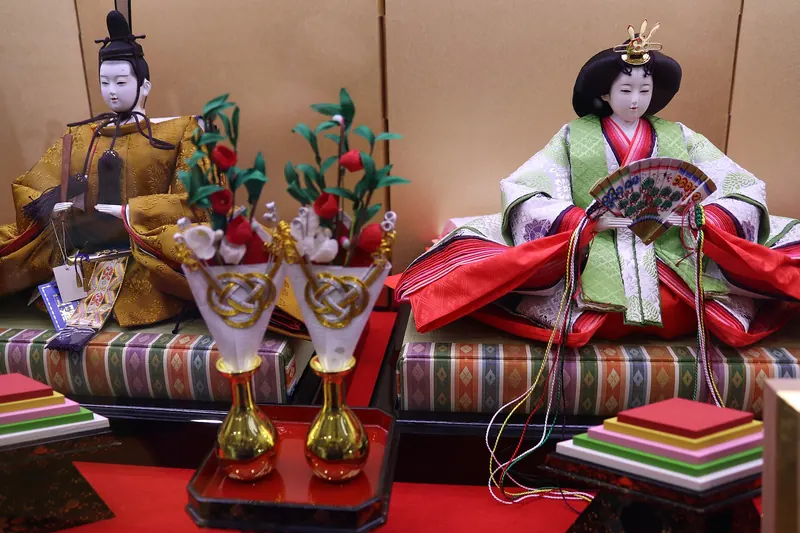
- March: Hinamatsuri, the girls' festival, on 3 March all over Japan, and Omizutori at Todaiji in Nara from 1 to 14 March.
- April: the Takayama Spring Festival on 14 and 15 April, and cherry blossom festivals. Hirosaki's runs from late April to early May.
- May: the Aoi Matsuri in Kyoto on 15 May, the Kanda Matsuri in Tokyo in odd-numbered years, and the Sanja Matsuri on the third full weekend.
- June: the Yosakoi Soran dance festival in Sapporo in early to mid-June, the Hokkaido Shrine Festival from 14 June, and Tokyo's Sanno Matsuri in even-numbered years.
- July: the Gion Matsuri all month, the Nachi Fire Festival on 14 July, the Tenjin Matsuri on 24 and 25 July, and the Sumidagawa fireworks on the last Saturday.
- August: the Nebuta, Kanto and Sendai Tanabata in Tohoku, the Awa Odori, bon odori dances around Obon, lanterns floated in Hiroshima on 6 August, and the Gozan Okuribi bonfires on the hills of Kyoto on 16 August.
- September: the Owara Kaze no Bon in Toyama on the first three days, the Kishiwada Danjiri in Osaka, horseback archery at the Tsurugaoka Hachimangu shrine festival in mid-September, and the Aizu Matsuri later in the month.
- October: the Nagasaki Kunchi on 7 to 9 October, the Takayama Autumn Festival on 9 and 10 October, and the Jidai Matsuri in Kyoto on 22 October.
- November: the Karatsu Kunchi in Saga on 2 to 4 November.
- December: the Chichibu Night Festival in Saitama on 2 and 3 December, and the Namahage of Oga, Akita, on New Year's Eve.
Summer festivals
When are Japanese summer festivals? Mostly from June to August. JNTO counts "hundreds of summer festivals happening in June, July and August", and August is the peak, with the Tohoku festivals, the Awa Odori, fireworks and the dances of Obon. In JNTO's words: "Some of the biggest and best festivals include Tokushima's Awa Odori and Aomori's approximately week-long Nebuta Matsuri". Obon itself, it says, usually falls between 13 and 16 August.
Autumn and winter festivals
Autumn is the season of harvest festivals and of historical parades. JNTO's guide to October calls it "a time of harvest and harvest festivals", and in Kyoto the Jidai Matsuri on 22 October sends about 2,000 people in the costumes of eight periods of history through the city. Winter belongs to the north, with snow festivals in Hokkaido, Akita, Niigata and Aomori, and on New Year's Eve in Oga City, Akita, performers dressed as namahage, which JNTO calls "a visiting deity who purges bad luck and brings good fortune", dance and glower at the crowds.
What happens at a Japanese festival
At a shrine festival the shrine's god goes out into the town and then comes home again. The Kyoto City Tourism Association explains the pattern: "In traditional Japanese festivals, the deity is carried from one shrine to a special place during the festival, and then, returned to their original place as the festival ends." Two rituals matter most, one to send the deity out and one to bring it back, and in both of them the spirit of the deity rides in a mikoshi, a portable shrine.
A shrine festival, step by step
- The deity sets out: a ritual called the Shinko-sai carries the deity out of its shrine, its spirit riding in a mikoshi.
- Round the neighbourhood: people carry the mikoshi on their shoulders through the streets around the shrine.
- A stay away from home: the mikoshi rest for a while at a special place called the Otabisho.
- The return: a second ritual, the Kanko-sai, takes the deity back to its own shrine, and the festival ends.
The Gion Matsuri follows this pattern. Its Shinko-sai is on 17 July, when the three sacred carriages of Yasaka Jinja are carried on men's shoulders from the shrine to the Otabisho on Shijo street, and its Kanko-sai, when they go back, is on 24 July. The famous floats were never the main event. In the association's words, "Opulently decorated floats were considered to be preliminary celebration before the important mikoshi processions."
How a mikoshi moves depends on the town. JNTO says some processions are calm, while at other festivals "the mikoshi is rocked back and forth for the deity's amusement". Shows are offered to the gods in the same spirit. The Takayama festival's site explains: "In Shinto ceremonies, not only are goods offered to the gods for their willingness to accept them, but also performing arts and traditional competitions are sometimes held."
Festival floats
Floats are the other big sight. JNTO says they stand for local spirits and gods, that people pull them instead of carrying them, and that they are richly decorated: "They can be small, pulled by just four or five people, or as large as buildings." The Gion floats are at the large end. JNTO's feature on festival history describes them as "As high as 25 meters and weighing up to 12 tons", covered in woven fabric, textiles and sculptures.
Three float festivals to see
- Gion Matsuri, Kyoto, July: yama and hoko floats up to 25 m high and 12 tonnes, 23 of them in the procession on 17 July and 11 on 24 July.
- Takayama Spring Festival, Gifu, 14 and 15 April: 12 floats, three with marionette shows, and about 100 lanterns lit on each float for the night parade on the 14th.
- Chichibu Night Festival, Saitama, 2 and 3 December: six huge floats of 10 to 20 tonnes pulled along the main avenue to drums and flutes.
In Takayama the marionettes are called karakuri, and they have been part of the floats since they were introduced between 1804 and 1830. At the spring festival three floats, Sanbaso, Ryujin-tai and Shakkyo-tai, give their show at the Takayama Jinya, the old government house, where each doll's many strings are worked by six to eight masters, the tsunakata. The autumn festival in October has 11 floats, one of them with a marionette show.
UNESCO lists Japan's float festivals as intangible cultural heritage. It says they are held every year to ask the gods for peace and to keep natural disasters away, and that young and old, men and women, share the work, from building the floats to running the day. In its words, "Yama, Hoko and Yatai float festivals play a key role in community-building."
Music, dance and the shouts of the crowd
You will hear a festival before you see it. JNTO describes the sound: "Matsuri music is full of traditional sounds made by haunting reed flutes called hichiriki, plucky shamisen, and pounding taiko drums." On top of the music come the kakegoe, the cries of the performers, and the crowd joins in. At the Aomori Nebuta the band, the nebuta bayashi, plays drums, flutes and hand cymbals, and the festival's site explains how the three fit together: "The drummers set the rhythm, the flute plays the melody, and the cymbals accentuate the music." The dancers bounce along beside the floats while people cheer Rassera, Rassera.
Sounds of a festival
- Taiko drums: the pounding beat under the music. At the Nebuta the drummers set the rhythm for the dancers.
- Flutes: reed flutes such as the hichiriki, and at the Nebuta the flute that carries the tune.
- Hand cymbals: part of the Nebuta band, where they accent the music of the drums and flutes.
- Kakegoe: the cries and shouts of the performers, and of the people watching too.
Japanese festival food
Food is part of the fun. JNTO says "Yatai, or food stalls, sell both traditional and innovative matsuri foods", and its guide to Tokyo's summer festivals lists the stalls' "yakisoba, okonomiyaki, takoyaki, kakigori, and more". There are stalls at New Year, too. Of the year's first shrine visit, JNTO's guide to January says: "Even if your interest is purely secular, the festive atmosphere and food stalls make such events worth a look."
Six festival foods
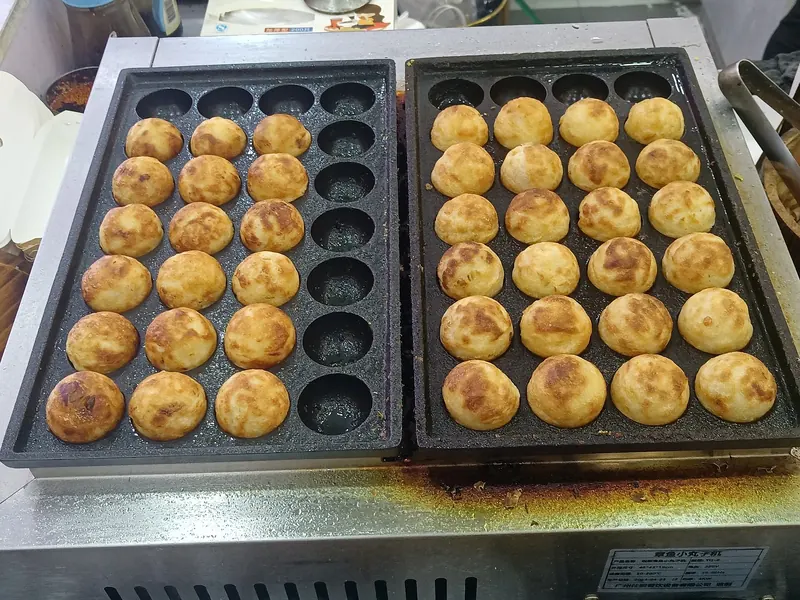
- Yakisoba: fried noodles, one of the dishes on JNTO's list for Tokyo's summer stalls.
- Okonomiyaki: a savoury pancake of batter and cabbage, with pork or seafood mixed in.
- Takoyaki: balls of batter with a piece of octopus inside.
- Yakitori: grilled skewered meats.
- Hashimaki: a savoury crepe rolled round a pair of chopsticks, so it is easy to eat on the move.
- Kakigori: shaved ice, sold at the summer festivals.
Food is often shared with people at home, too. JNTO notes: "Many people take food home as a souvenir for those who can't attend the festival." The big festivals are also trying to cut their waste. Since 2014 the Gion Matsuri has had a campaign for zero waste, and its night shops and street stalls, which between them serve almost 210,000 meals during the festival, are moving from throwaway to reusable plates and bowls.
What to wear to a Japanese festival
To watch, everyday clothes are fine. In summer many people dress up, and JNTO notes that "Yukata, summer kimono, are also common sights that many spectators choose to wear." Its guide to Tokyo's summer festivals talks of families, friends and couples "dressed in their best yukatas". The people taking part have their own styles of dress: a happi coat with the symbol of their community, a hachimaki headband, and tabi, cloth shoes split at the big toe so that they can be worn with geta, wooden sandals.
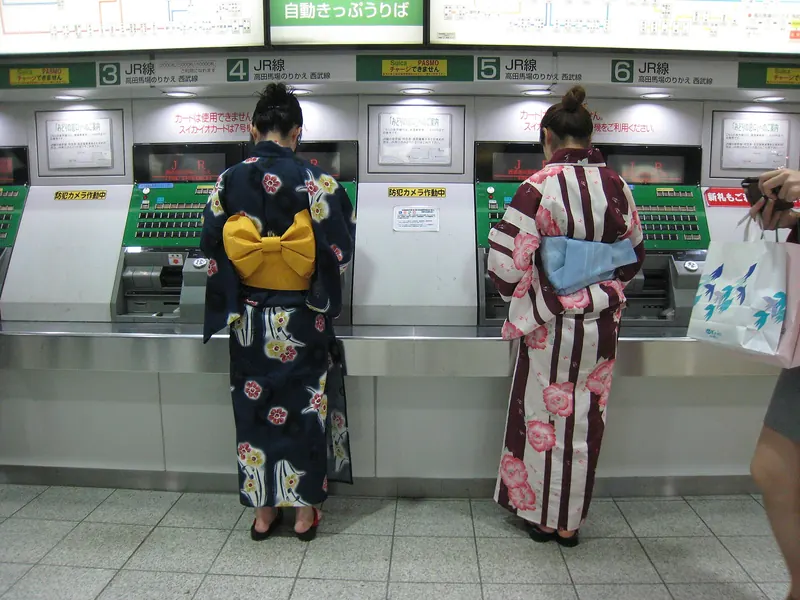
At the Aomori Nebuta the costume is your ticket in. Its official site says: "Anyone can join the dance as long as they wear a haneto costume, which is part of the festival's appeal." Department stores in Aomori City and other places sell the costume, and some shops will rent you one and help you dress.
How to wear the Nebuta haneto costume
- Hat: a hanagasa, a three-cornered straw hat covered in colourful artificial flowers.
- Yukata: a mostly white yukata, its hem rolled up to the knee, with a pink or light blue okoshi beneath it.
- Strap and sash: a brightly coloured strap, such as red or pink, over the shoulder, and a shigoki band round the waist.
- Feet: white tabi and zori, sandals with straw strings, fastened with mameshibori cloth so they stay on as you dance.
How to join in at a Japanese festival
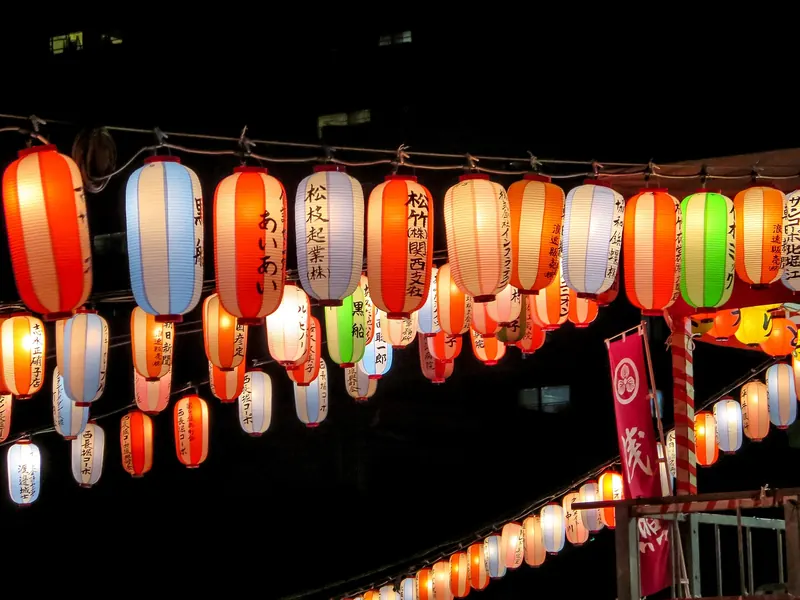
Can you take part? Often, but not always. Many festivals are put on by a community for its own deity or its own history, and JNTO is frank that "they aren't necessarily open to tourist participation". But it adds: "Some matsuri are opening up to the wider public to include visitors from abroad." At some festivals, it adds, spectators may even be invited to help carry a mikoshi. The easiest way in is the summer bon odori, held during Obon all over Japan and open to everybody. JNTO's advice: "Basic dances are easy to learn and the locals will be delighted to share their moves with you."
Festivals you can join
- Bon odori, summer, all over Japan: the dances of Obon are open to everyone, and the basic steps are easy to learn.
- Aomori Nebuta, 2 to 7 August: put on the haneto costume and join any group at the starting point, with no booking.
- Awa Odori, Tokushima, mid-August: some areas let anyone join the dance, and the Awa Odori Kaikan teaches the steps all year.
- Naha Ohtsunahiki, Okinawa: a tug-of-war of 15,000 people, thought to go back to about 1450. Pick a side and pull.
- Owarai Festival, Higashi-Osaka: some 3,000 people laugh without stopping for 20 minutes, for the happiness of the community.
- Muon Bon Odori, Tokai City, Aichi: a silent bon odori, with the music played through the dancers' headphones.
At the Nebuta the festival's site is clear that the dancers, called haneto, need no booking: "Hanetos can just walk in and start dancing." For the Awa Odori, you can practise first. The Awa Odori Kaikan, about 10 minutes on foot from JR Tokushima Station, explains the history of the dance and shows photos and videos of the festival, and a local group performs there through the day. At the end, the dancers ask visitors to come and try the easy steps with them, in the spirit of an old Tokushima proverb: "The dancing fool and the watching fool are both fools, so why not dance?" The festival's own site says the dance has always been easy for first-timers, as another old saying goes: raise your hands, move your feet, and you are dancing the Awa Odori.
If you would rather not dance, JNTO says you can still take part quietly, in a yukata, eating festival food and enjoying the atmosphere from the side of the street.
Paid seats and where to watch
The busiest parades also sell seats. At the Nebuta, for example, the festival's site warns that the spots along the route without seats are usually crowded, and the Akita Kanto builds its seats in tiers for a clear view.
Paid seats at the big festivals
- Akita Kanto: tiered seats down the middle of the 800 m Kanto Odori avenue, so the heads in front do not block your view. In 2026 they cost 3,500 yen for a bench, 4,000 yen for an A seat and 4,500 yen for an S seat, or 28,000 yen for a box for up to six. Children pay the adult price, and babies who do not need a seat are free.
- Booking the Kanto: for 2026, booking opened on 16 April for groups of 15 or more and on 14 May for groups of 14 or fewer.
- Aomori Nebuta: paid seats along the route, best bought in advance. Any left over go on sale on the day. You are welcome to watch from elsewhere on the route, though it is usually packed.
- Awa Odori: the official site lists both paid stages and free ones.
- Jidai Matsuri, Kyoto: the procession goes from the Kyoto Gyoen National Garden to Heian Jingu Shrine. In 2026 there are general seats in the garden and special seats in front of the Outenmon Gate, and both come with a live English or Chinese commentary, and front-row seats can be reserved.
For the Jidai Matsuri's general seats you need your own smartphone, with an internet connection, and earphones to hear the commentary. Special-seat guests are given an earphone device on the day, and their commentary comes from a specialist. If you only want to see the Akita Kanto poles up close, there is also a daytime contest from 4 to 6 August at Area Nakaichi, about a 10-minute walk from Akita Station, where teams and individuals compete in six events to decide the year's masters.
Festival etiquette: do's and don'ts
JNTO asks visitors to respect Japanese culture and traditions, so that each festival keeps its character. Its list starts with the basics: "Don't cut lines or litter." It adds that the community is not there to serve you, and asks you to keep out of the way of choreographed events and to be aware of your surroundings.
Do's and don'ts at a matsuri
- Do ask: JNTO says not to be shy: if you are lost or unsure, ask.
- Do join in: talk to local people, and take part where you can, by dressing up or learning the local dance.
- Do try the food: JNTO encourages you to be adventurous with what the stalls sell.
- Don't touch the floats: in Takayama the floats are invaluable cultural assets, and the festival asks visitors not to touch them.
- Don't open an umbrella in a crowd: at the Nebuta, wear a raincoat instead so that everyone can see.
- Don't block the parade: Takayama also asks visitors not to get in the way of the procession to take photos.
The point of it all, in JNTO's words: "Do have fun and make friends."
Japanese festivals 2026 and 2027
These are the next dates for the festivals in this guide, from late October 2026 to August 2027. Most of them fall on the same dates every year, while the Sapporo Snow Festival, the Kanda and Sanja festivals and the Sumidagawa fireworks move with the calendar. The days of the week are our own count, and for festivals tied to a weekend we have worked out the dates from the festival's rule.
Autumn 2026 to spring 2027
- Thursday 22 October 2026: Jidai Matsuri, Kyoto, the parade in the costumes of eight periods of history.
- Monday 2 to Wednesday 4 November 2026: Karatsu Kunchi, Saga.
- Wednesday 2 and Thursday 3 December 2026: Chichibu Night Festival, Saitama.
- Thursday 31 December 2026: the namahage of Oga, Akita, on New Year's Eve.
- Friday 1 January 2027: New Year's Day, and the start of hatsumode, the year's first shrine or temple visit.
- Thursday 4 to Thursday 11 February 2027: the 77th Sapporo Snow Festival, at Odori Park, Tsudome and Susukino.
- Monday 1 to Sunday 14 March 2027: Omizutori at Todaiji, Nara.
- Wednesday 3 March 2027: Hinamatsuri, the girls' festival.
- Wednesday 14 and Thursday 15 April 2027: Takayama Spring Festival, Gifu.
Summer 2027
- May 2027: Kanda Matsuri, Tokyo, held in odd-numbered years, with its busiest days on the Saturday and Sunday before 15 May.
- Saturday 15 May 2027: Aoi Matsuri, Kyoto.
- Friday 14 to Sunday 16 May 2027: Sanja Matsuri, Tokyo, on the third full weekend of May.
- Thursday 1 to Saturday 31 July 2027: Gion Matsuri, Kyoto, with its float processions on Saturday 17 July and Saturday 24 July.
- Saturday 24 and Sunday 25 July 2027: Tenjin Matsuri, Osaka, with the boats and fireworks on the Sunday night.
- Saturday 31 July 2027: the Sumidagawa fireworks, Tokyo, on the last Saturday of July.
- Monday 2 to Saturday 7 August 2027: Aomori Nebuta.
- Tuesday 3 to Friday 6 August 2027: Akita Kanto.
- Friday 6 August 2027: lanterns floated in Hiroshima.
- Friday 6 to Sunday 8 August 2027: Sendai Tanabata.
- Wednesday 11 to Sunday 15 August 2027: Awa Odori, Tokushima, by the official site's dates. JNTO gives 12 to 15 August.
- Friday 13 to Monday 16 August 2027: Obon, when it usually falls.
- Monday 16 August 2027: the Gozan Okuribi bonfires, Kyoto.
Planning a festival trip
Choose the festival first, then build the rest of the trip round it. Many of the big ones fall close together: the three Tohoku festivals sit inside the first eight days of August, and in 2027 the second Gion Matsuri procession and the Tenjin Matsuri share the weekend of 24 and 25 July. For the summer festivals and the Sapporo Snow Festival, reserve a room early, before the city fills up.
Around your festival trip
- Kyoto: the Gion, Aoi and Jidai festivals all take place here. Our Kyoto guide has the rest of the city.
- Tohoku in August: the Nebuta, Kanto and Tanabata in one trip, with our Tohoku guide.
- More to eat: beyond the stalls, the dishes worth trying are in what to eat in Japan.
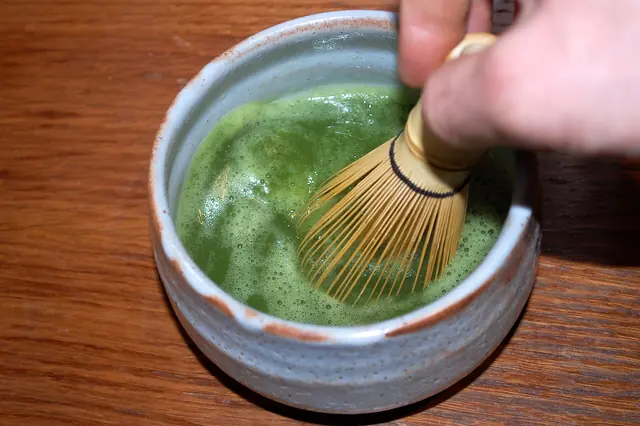
- A quieter ritual: between festivals, try a bowl of matcha at a tea ceremony.
- Fitting it in: build the days around your festival with a sample Japan itinerary.
- Somewhere to stay: rooms near the big festivals go early. Where to look: hotels in Japan.
Frequently asked questions
What are Japanese festivals called?
They are called matsuri. The word comes from a verb meaning to enshrine, and nearly all festivals are linked to a Shinto shrine, a Buddhist temple, the seasons or an event in history.
What are the main Japanese festivals?
The Gion Matsuri in Kyoto, the Kanda Matsuri in Tokyo and the Tenjin Matsuri in Osaka are often named as the three greatest. Visitors also plan trips around the Aomori Nebuta, the Akita Kanto and the Sendai Tanabata in early August, the Awa Odori in Tokushima in mid-August and the Sapporo Snow Festival in February.
What is the biggest festival in Japan?
No list is official. By visitor numbers, the Sapporo Snow Festival and the Sendai Tanabata each draw more than 2 million people a year, and JNTO counts 1.4 million at the Awa Odori. The Gion Matsuri in Kyoto lasts the whole of July.
When are Japanese festivals held?
All year. Summer, from June to August, is the busiest season, and August is the peak. Autumn brings harvest festivals and historical parades, and winter brings snow festivals to Hokkaido, Akita, Niigata and Aomori.
Can tourists take part in Japanese festivals?
At some of them. The bon odori dances of summer are open to everyone. At the Aomori Nebuta you can dance with any group if you wear the haneto costume, with no booking, and the Awa Odori has areas where anyone may join. Not every festival is open to visitors who want to take part, but you can still watch.
What should I wear to a Japanese festival?
Everyday clothes are fine. In summer many visitors wear a yukata, a summer kimono. In Tokyo most yukata rental shops are in areas near temples and shrines, and Asakusa, Shibuya and Harajuku are the most popular.
What food is sold at Japanese festivals?
Stalls called yatai sell yakisoba fried noodles, okonomiyaki pancakes, takoyaki octopus balls, yakitori skewers, hashimaki crepes rolled on chopsticks, and kakigori shaved ice in summer.
Do you need tickets for Japanese festivals?
Not always. You can watch the Nebuta from the roadside and the Awa Odori from its free stages. Paid seats give a clearer view: at the Akita Kanto in 2026 they cost 3,500 to 4,500 yen, or 28,000 yen for a box for up to six, and the Jidai Matsuri in Kyoto sells seats with commentary in English or Chinese.
When is the Gion Matsuri in 2027?
From Thursday 1 July to Saturday 31 July 2027. The float processions are on Saturday 17 July and Saturday 24 July, and on the Yoiyama evenings before each the streets fill with people.
When is the next Kanda Matsuri?
In May 2027. It is held every other year and last took place in 2025. The busiest days are the Saturday and Sunday before 15 May, and Kanda Myojin shrine announces the exact dates. In the years between, Tokyo has Hie-jinja shrine's Sanno Matsuri in June.
Do Japanese festivals go ahead in the rain?
Many do. The Aomori Nebuta goes ahead with its floats under vinyl sheets, and you are asked to wear a raincoat rather than open an umbrella. The Akita Kanto may be shortened but, as a rule, is not called off. In Takayama the processions and marionette shows are cancelled in rain.
Sources
Official and primary sources used for this page. Checked October 15, 2026.
- JNTO: Get Involved in Local Japanese Festivals — what a matsuri is, mikoshi, floats, music, dress, food, joining in, festivals you can join, do's and don'ts
- JNTO: Festivals & Events — the kinds of festival, traditional festivals
- JNTO: Experience Japanese Festivals with History — the word matsuri, festivals and the community, the Gion floats
- JNTO: Pull a Traditional Japanese Float at One of Japan's Three Great Float Festivals — the Gion, Takayama and Chichibu floats
- JNTO: How To Enjoy Summer Festivals In Tokyo — yukata, festival food, yukata rental in Tokyo
Show all 48 sources
- JNTO: Tohoku's Summer Festivals — the three Tohoku festivals, touring Tohoku in August
- JNTO: Gion Festival — history, the Byobu Matsuri, booking ahead
- JNTO: Tenjin Festival — history, the boats and fireworks, stations
- JNTO: Kanda Festival — the festival every other year
- JNTO: Sanja Festival — the weekend, the mikoshi
- JNTO: Sendai Tanabata Festival — the legend, the decorations
- JNTO: Takayama Autumn Festival — the autumn floats
- JNTO: Chichibu Night Festival — the floats, the dates
- JNTO: Karatsu Kunchi Festival — the dates, history
- JNTO: Awa Odori Kaikan — learning the dance, the proverb, getting there
- JNTO: Autumn in Japan — the Nagasaki Kunchi, the Jidai Matsuri
- JNTO: Japan in January — hatsumode, New Year food stalls, Itsukushima Shrine
- JNTO: Japan in February — the snow festivals, the Saidai-ji Eyo
- JNTO: Japan in March — Hinamatsuri, Omizutori
- JNTO: Japan in April — cherry blossom festivals
- JNTO: Japan in May — the Aoi, Kanda and Sanja festivals
- JNTO: Japan in June — the Yosakoi Soran, the Hokkaido Shrine Festival, the Sanno Matsuri
- JNTO: Japan in July — the Gion, Nachi and Tenjin festivals, the Sumidagawa fireworks
- JNTO: Japan in August — summer festivals, Obon, Hiroshima, the Gozan Okuribi, busy travel
- JNTO: Japan in September — the Owara Kaze no Bon, Kishiwada, horseback archery, Aizu
- JNTO: Japan in October — harvest festivals
- JNTO: Japan in November — the Karatsu Kunchi
- JNTO: Japan in December — the Chichibu Night Festival, the namahage
- Kyoto City Tourism Association: Gion Matsuri Festival — the three greatest festivals, the rituals, the floats, the zero-waste campaign
- Kyoto City Tourism Association: Jidai Matsuri Festival — the procession
- Kyoto City Tourism Association: Jidai Matsuri paid viewing seats — the 2026 seats and commentary
- Kyoto City Tourism Association: Festivals & Events — Kyoto's festival calendar
- Aomori Nebuta Festival — the floats, the music, the haneto costume, seats, rain
- Akita Kanto Festival: English — the poles and lanterns, the techniques, the groups
- Akita Kanto Festival: About the festival (in Japanese) — history
- Akita Kanto Festival: FAQ (in Japanese) — dates, seats and prices, rain, food in the seats, the daytime contest
- Akita Kanto Festival: Schedule (in Japanese) — the 2026 times and booking dates
- Sendai Tanabata Festival (in Japanese) — dates, visitors
- Awa Odori (in Japanese) — dates, visitors, paid and free stages
- Sapporo Snow Festival — the 2027 dates and sites
- Sapporo Snow Festival (in Japanese) — the 77th festival
- Kanda Myojin (in Japanese) — the festival every other year
- Asakusa Shrine (in Japanese) — the Sanja Matsuri
- Nagasaki Kunchi (in Japanese) — history
- Hida Takayama: Takayama Festival — the spring and autumn festivals, floats, lanterns
- Hida Takayama: Spring Takayama Festival (Sanno Matsuri) — the floats, the marionettes, rain, requests to visitors
- Hida Takayama: Autumn Takayama Festival (Hachiman Matsuri) — the floats, rain, requests to visitors
- UNESCO: Yama, Hoko, Yatai, float festivals in Japan — the listing, the festivals and the community
Related guides
To cite or link to this page: Japanese festivals: what a matsuri is, the biggest festivals month by month, what to wear and eat, how to join in, and dates to August 2027 — Japan Pocket Guide, https://japanpocketguide.com/culture/japanese-festivals/