Food · Cooking at home
Easy Japanese recipes to make at home: 13 dishes for beginners, with times, ingredients and the steps in short
You don't have to be in Japan to eat what people there cook for dinner. The 13 dishes on this page all come from the English-language cookbook of Kikkoman, the Japanese soy sauce maker, and each takes between 10 and 30 minutes by the company's own timings. Below you'll find what every recipe needs, its steps cut down to the essentials, the few bottles that season almost all of them, and a quick way to choose the first one to cook.
Last checked · Sources

In short
For a first try, make teriyaki chicken (chicken thigh glazed with equal parts soy sauce and mirin, 20 minutes), ginger pork or teriyaki salmon (10 minutes each), one of the two rice bowls, oyakodon or gyudon (15 minutes each), and miso soup (10 minutes). Onigiri rice balls and yakisoba noodles suit lunch, while tofu steak and tamagoyaki, a rolled omelette, contain no meat or fish. Twelve of the 13 recipes use soy sauce, and most of the rest of the seasoning is mirin, sugar and cooking sake.
13 easy Japanese recipes at a glance
Every recipe here is from the Kikkoman Global Cookbook, the English recipe site of the company best known abroad for its soy sauce. They are everyday home dishes rather than restaurant food: rice bowls, pan-fried meat and fish, a simmered stew, an omelette, rice balls and a bowl of soup. Most serve two.
The 13 recipes in numbers
- 13home dishes, all from Kikkoman's English cookbook
- 10–30minutes of cooking for each, as Kikkoman times them
- 12of the 13 seasoned with soy sauce
The table runs from the quickest to the slowest. Calories and sodium are Kikkoman's figures for one serving of each recipe as it is written.
| Dish | Time | Serves | Calories | Sodium | What goes in |
|---|---|---|---|---|---|
| Miso soup with tofu and wakame | 10 min | 2 | 43 kcal | 512 mg | dashi, miso, tofu, wakame seaweed |
| Ginger pork (shōgayaki) | 10 min | 2 | 441 kcal | 819 mg | pork loin, grated ginger, sake, mirin, sugar, soy sauce |
| Teriyaki salmon | 10 min | 2 | 357 kcal | 800 mg | salmon, cabbage, shimeji mushrooms, soy sauce, mirin, sugar |
| Spinach and egg | 10 min | 2 | 155 kcal | 354 mg | spinach, eggs, butter, mirin, soy sauce |
| Oyakodon (chicken and egg on rice) | 15 min | 2 | 466 kcal | 2,100 mg | chicken breast, onion, eggs, dashi, soy sauce, mirin, sugar |
| Gyudon (beef on rice) | 15 min | 2 | 757 kcal | 1,000 mg | thinly sliced beef, onion, soy sauce, sake, mirin, sugar |
| Tamagoyaki (rolled omelette) | 15 min | 2 | 154 kcal | 300 mg | eggs, sugar, soy sauce |
| Onigiri (rice balls) | 15 min, plus the rice | 2 | 376 kcal | 591 mg | rice, nori, tuna with mayonnaise, or bonito flakes with soy sauce |
| Teriyaki chicken | 20 min | 2 | 282 kcal | 827 mg | chicken thigh, soy sauce, mirin |
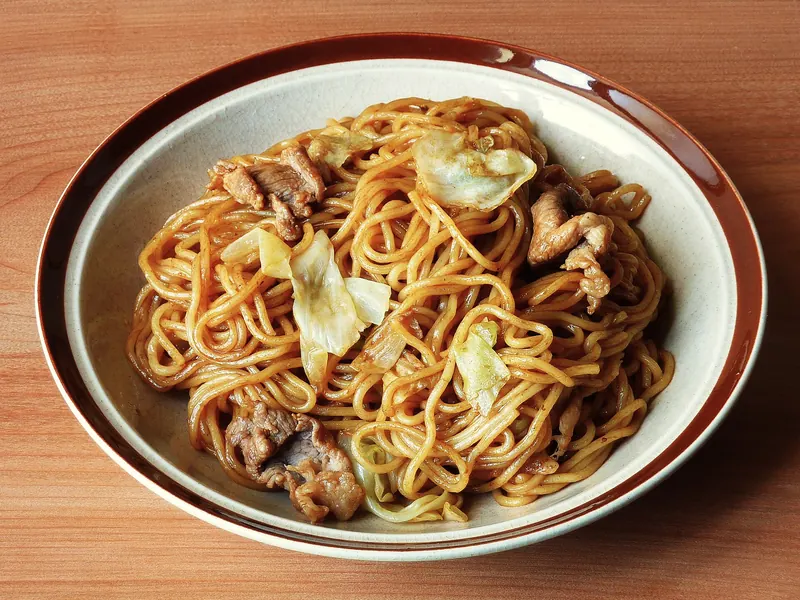
| Yakisoba (fried noodles) | 20 min | 2 | 460 kcal | 1,400 mg | steamed noodles, pork, cabbage, bean sprouts, yakisoba sauce |
| Tofu steak | 25 min | 2 | 228 kcal | 200 mg | firm tofu, flour, oil, soy sauce |
| Karaage (fried chicken) | 30 min | 3–4 | 438 kcal | 634 mg | chicken thigh, soy sauce, sake, ginger, garlic, flour |
| Nikujaga (meat and potatoes) | 30 min | 3–4 | 346 kcal | 807 mg | beef, potatoes, onion, carrot, sake, mirin, sugar, soy sauce |
The times do not include cooking the rice for the bowls and rice balls; the next section shows how to do that in a pot. If you are watching your salt, the sodium column is the one to read. It runs from 200 mg a serving for the tofu steak to 2,100 mg for the oyakodon.
Before you start: rice, dashi and four seasonings
These recipes share their seasonings to a surprising degree. Count what goes into the 13 and the same four come up again and again.
The four seasonings behind most of these recipes
- Soy sauce: in 12 of the 13; only the miso soup goes without
- Mirin: in 7, from the teriyaki chicken to the nikujaga, nearly always paired with soy sauce
- Sugar: in 6, including both rice bowls and the tamagoyaki
- Cooking sake: in 4: the gyudon, ginger pork, nikujaga and karaage
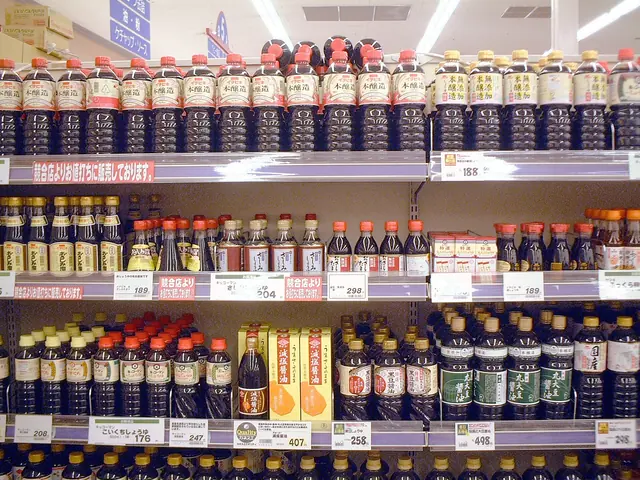
So one bottle each of soy sauce, mirin and cooking sake, with the sugar you already have, covers almost the whole page. Our guide to Japanese ingredients explains what each bottle is and where to look for them outside Japan, and buying from Japan online covers ordering direct.
Three of the dishes are built on rice: the two rice bowls and the onigiri. Kikkoman's method for Japanese white rice uses an ordinary pot, so you don't need a rice cooker.
Japanese white rice in a pot, for 4
- Measure: 360 g of rice and 480 ml of water
- Wash: swirl the rice by hand in water, tip the cloudy water away, and repeat until it is nearly clear
- Soak: put the rice in the pot with the measured water and leave it for 30 minutes
- Boil: set the pot on a medium heat without a lid, and cover it once it is boiling hard
- Cook: turn the heat right down and leave it for 15 minutes
- Rest: switch off the heat, keep the lid on for another 15 minutes, then loosen the rice with a paddle or wooden spoon
Two recipes need dashi, the soup stock: the miso soup and the oyakodon. Kikkoman's miso soup makes it from dried sardines, niboshi. Its dashi glossary lists other kinds too, from kombu with bonito flakes, from bonito flakes alone, from kombu by itself and from shiitake, so a stock with no fish in it is possible. The ingredients guide has Kikkoman's recipe for the classic kombu and bonito dashi.
Rice bowls: oyakodon and gyudon
Both bowls are a hot topping, simmered in a sweet soy-based sauce, spooned over rice, and both take 15 minutes in Kikkoman's versions. Each cooks in a single pan or pot while the rice is on, and Kikkoman calls its gyudon easy to make.
Oyakodon is chicken and onion cooked in a little broth and then set with egg. Kikkoman's broth is soy sauce, mirin, sugar and dashi.
Oyakodon for 2
- Cut: 100 g of chicken breast into bite-size pieces, and half an onion into long strips
- Simmer: heat the broth in a frying pan, add the chicken and onion, cover, and once it boils let it bubble gently for 7 to 8 minutes
- Add the eggs: pour in 2 beaten eggs, scatter over a few pieces of mitsuba, Japanese parsley, then cover and turn off the heat
- Serve: slide it over two bowls of warm rice and finish with thin strips of nori
This bowl is also the saltiest dish on the page, at 2,100 mg of sodium a serving in Kikkoman's figures.
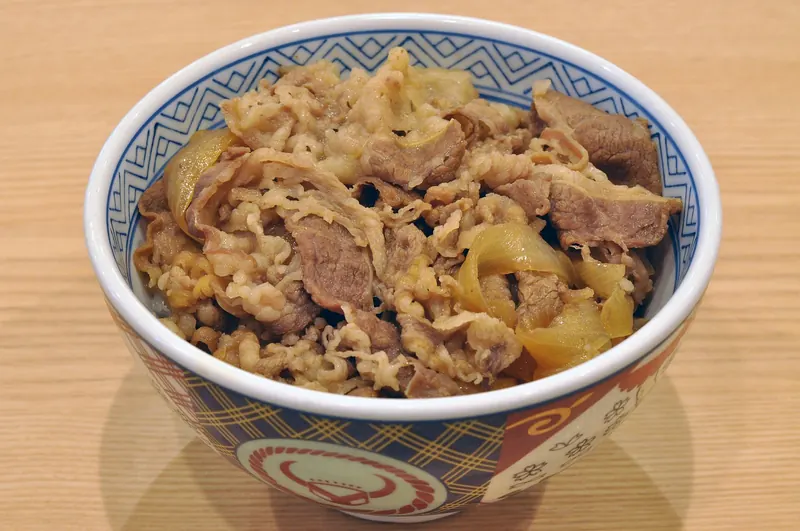
Gyudon is beef and onion simmered together. Kikkoman's sauce is 200 ml of water with 2 tablespoons each of soy sauce, sake and mirin and 1 tablespoon of sugar. Slice half an onion 5 mm thick and put it in a pot with the sauce on a high heat. When it boils, add 180 g of thinly sliced beef cut into bite-size pieces and pull the slices apart. Let it come back to the boil, skim off any scum, and simmer on a medium heat for 6 to 7 minutes. Spoon the beef and some of its liquid over the rice. Pickled red ginger and daikon sprouts on top are optional.
Gyudon is the same dish that Japan's beef bowl chains serve; our page on Japanese chain restaurants has their prices if you want to compare.
Chicken: teriyaki chicken and karaage
Both use chicken thigh, and both start with a short soak in a soy sauce marinade.
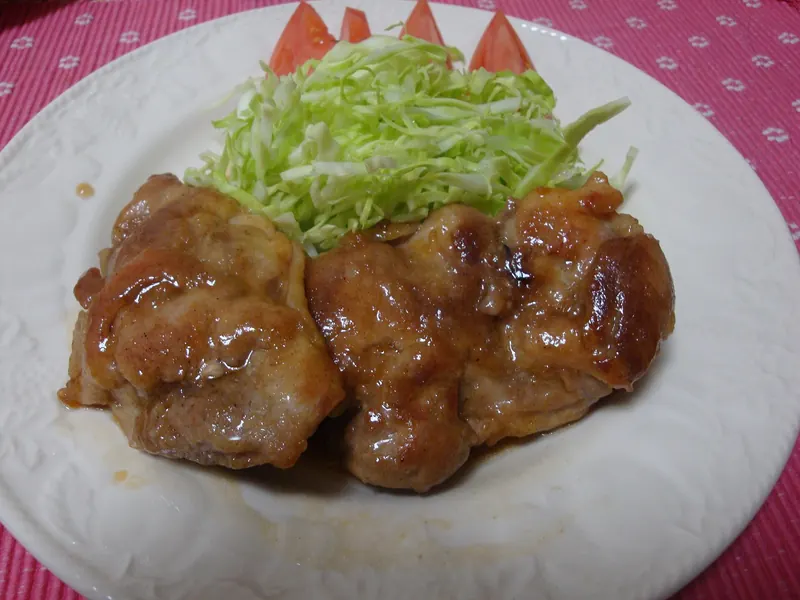
Kikkoman's teriyaki chicken needs a sauce of just two things: one and a half tablespoons each of soy sauce and mirin. Leave a 250 g chicken thigh in it for 10 minutes. Fry the chicken skin side down until it is golden, turn it, then put a lid on and let it cook through on a low heat. Lift it out, wipe the fat from the pan, and boil the sauce briefly so that it thickens a little before the chicken goes back in to be coated. Slice it about 1.5 cm thick and serve it with chopped green onion. Kikkoman adds shishito peppers, slit and pan-fried first.
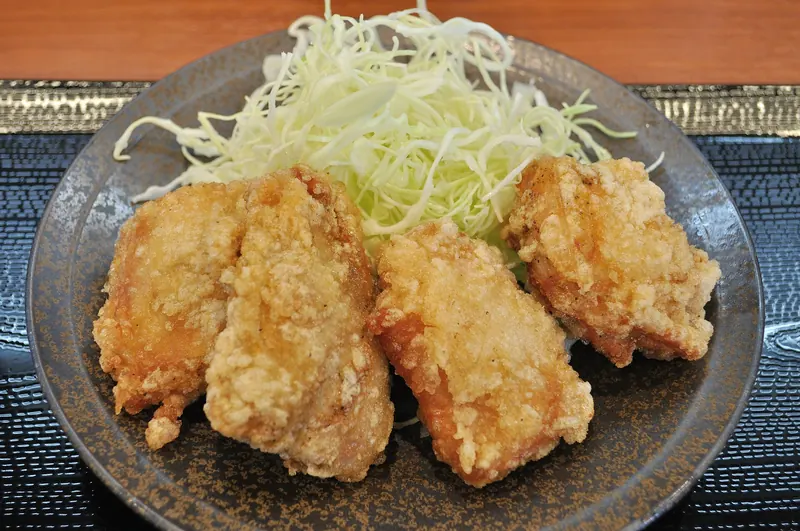
Karaage, Japanese fried chicken, takes longer, 30 minutes for 3 to 4 people, and Kikkoman says it is fun to make at home.
Karaage for 3 to 4
- Cut: 600 g of chicken thigh into pieces about 4 cm square
- Marinate: add 2 tablespoons each of soy sauce and cooking sake and a teaspoon each of grated ginger and garlic, rub them in well, and leave for 10 minutes
- Coat: mix 50 g of flour in with the chicken, then dust each piece with a little more flour, pressing it lightly into a round shape
- Fry: in oil 2 cm deep at 170 °C; leave the chicken alone for 2 minutes, turn each piece, and give it 3 minutes more
- Drain: let the oil drip off on a tray, and serve with lemon wedges to squeeze over
Dinner in 10 to 30 minutes: ginger pork, teriyaki salmon and nikujaga
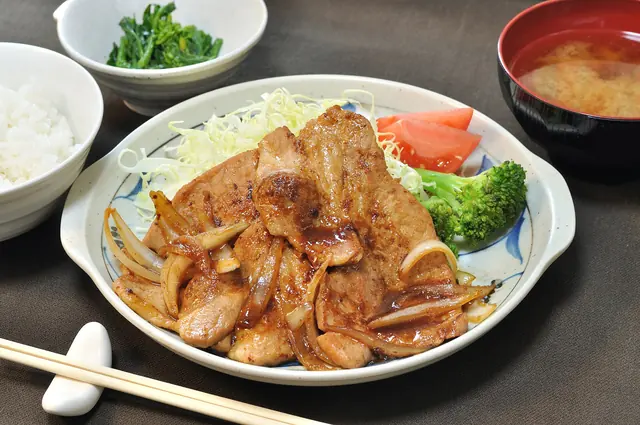
Ginger pork, shōgayaki, takes 10 minutes. Dust six slices of pork loin with potato starch and fry them side by side for 2 minutes, then turn them for a minute or two more. Add sake, mirin, sugar and soy sauce, then a tablespoon of grated ginger, and turn the meat until it is coated. Kikkoman serves it with salad leaves, tomato and the sauce from the pan.
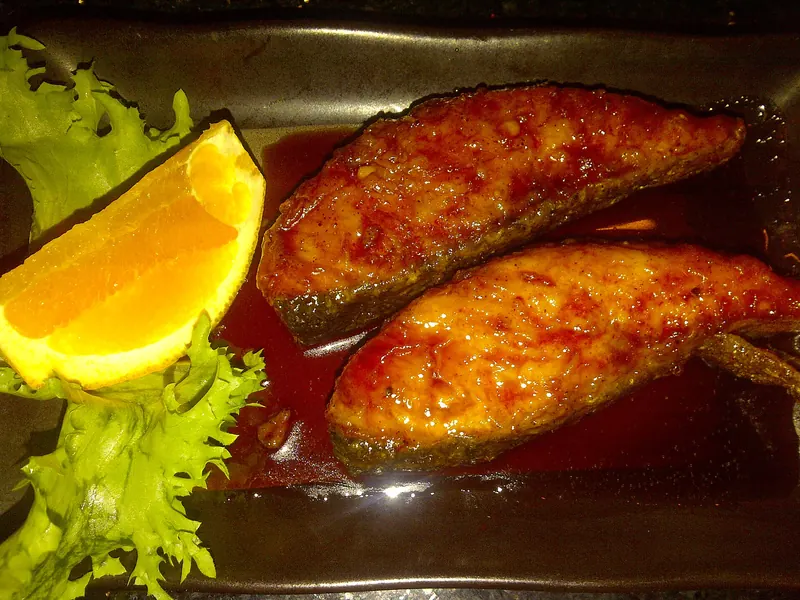
Teriyaki salmon also takes 10 minutes, and comes with its vegetables. Fry shredded cabbage and shimeji mushrooms with salt and pepper and set them aside. Flour two salmon fillets and cook them on both sides in the same pan, then add soy sauce, mirin and a little sugar and keep turning the fish over a medium heat. Stop while some sauce is left, plate the salmon with the vegetables, and pour the rest of the sauce over.
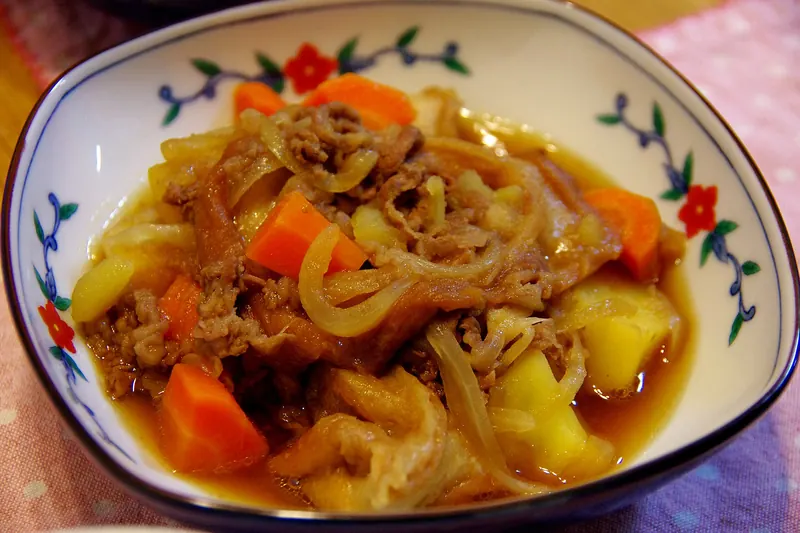
Nikujaga, beef and potatoes, is the one stew here: 30 minutes for 3 to 4 people. Leave the potato chunks to soak for about 5 minutes. Fry the beef until it changes colour, add the potatoes, carrot and onion, and stir until they are glossy with oil. Pour in sake, water, mirin and sugar, bring it to the boil, then cover and simmer on a low heat for 7 to 8 minutes. Only then add the soy sauce, for another 5 to 6 minutes under the lid. Finish with the lid off until about two-thirds of the liquid is left, then turn off the heat and let it stand, covered, for about 10 minutes.
One thing to get right in each
- Ginger pork: cut through the band of sinew between the fat and the lean in 7 or 8 places, or the slices harden and curl as they cook
- Teriyaki salmon: stop turning the fillets in the sauce before it has all gone, and pour what is left over the plate
- Nikujaga: hold back the soy sauce for the first simmer, and give the pot its 10 minutes of rest at the end
No meat or fish: tamagoyaki, tofu steak and spinach with egg
Kikkoman files its tofu steak under both vegan and vegetarian recipes, and its tamagoyaki under vegetarian. The spinach and egg has no meat or fish in it either. Keep in mind that the miso soup and the oyakodon both use dashi, which in Kikkoman's miso soup is made from dried sardines.
Three dishes without meat or fish
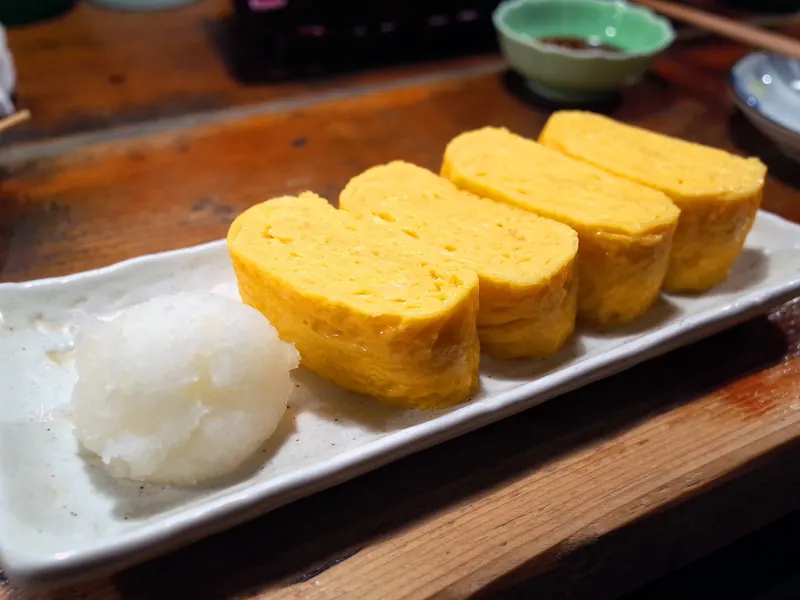
- Tamagoyaki: eggs, sugar and soy sauce, rolled up in layers; 15 minutes
- Tofu steak: firm tofu, flour, oil and soy sauce, fried until crisp; 25 minutes, most of it pressing the tofu
- Spinach and egg: spinach and soft scrambled egg with butter, mirin and soy sauce; 10 minutes
Tamagoyaki is a sweet rolled omelette, built up from thin layers of egg. Kikkoman cooks it in a tamagoyaki pan, the kind made for rolled omelettes, and serves it in slices with grated daikon and a little soy sauce.
Tamagoyaki for 2
- Mix: beat 3 eggs gently so they don't froth, then stir in 2 tablespoons of water, 1 teaspoon of soy sauce and 1 tablespoon of sugar
- First layer: wipe the pan with an oiled paper towel, heat it, pour in a third of the egg, and when it no longer runs as you tilt the pan, roll it from the far side towards you
- Two more layers: push the roll back to the far side, oil the pan again, pour in half of what is left and lift the roll so the egg runs under it; roll it up, then do the same with the last of the egg
- Shape and slice: wrap the omelette in a sushi mat or paper towel for about 3 minutes, then cut it into bite-size pieces
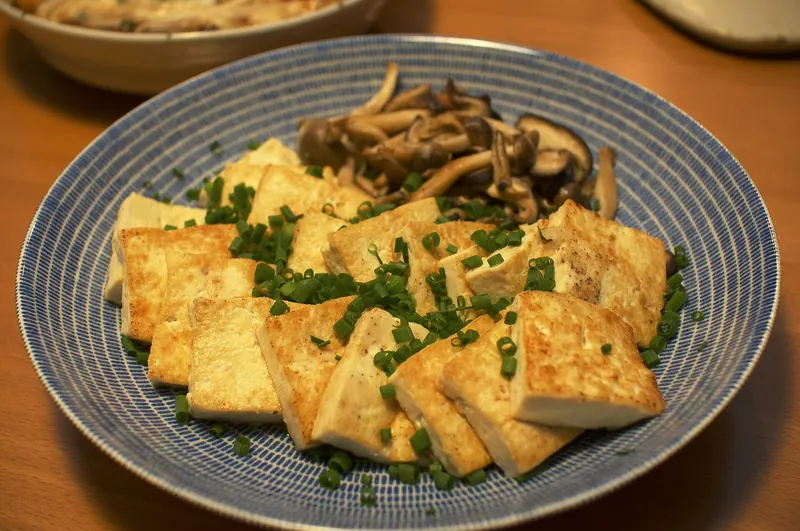
For the tofu steak, wrap a 400 g block of firm tofu in paper towel and press it under a weight of half a kilo to a kilo for about 15 minutes to get the water out. Cut it into pieces, dust both sides with flour, and fry them in half a tablespoon of oil on a medium heat until golden on both sides. A splash of soy sauce is the only seasoning, which keeps the list to four ingredients.
The spinach and egg takes 10 minutes. Cut 150 g of spinach into 2 cm lengths, and beat 2 eggs with half a tablespoon each of mirin and water. Toss the spinach quickly in a pan with oil and butter, pour in the egg and fold it through in big, slow strokes. When it is softly set, run the soy sauce in around the edge of the pan.
Lunch: onigiri, yakisoba and miso soup
Onigiri are rice balls, shaped by hand and eaten by hand, and the same snack you would find in a Japanese convenience store. Kikkoman gives two fillings. For okaka, bonito flakes and soy sauce are mixed right through the rice. For tuna mayonnaise, the filling goes in the middle.
Tuna mayonnaise onigiri, 2 rice balls
- Filling: mix 20 g of drained tinned tuna with 10 g of mayonnaise, a teaspoon of soy sauce and half a teaspoon of white sesame seeds
- Hands: wet your hands and rub a pinch of salt over your palms
- Fill: take 100 g of warm rice in one cupped hand, press a hollow into it and put in half of the filling
- Shape: close the rice over the filling, press it into a triangle and wrap it in a strip of nori, then make the second one
Yakisoba is fried noodles with pork and vegetables. Kikkoman notes that it began as a Chinese dish and that you can buy it in convenience stores in Japan. Fry the pork until it changes colour, then add carrot, onion, cabbage and bean sprouts in that order. Add 300 g of steamed noodles and loosen them, then stir in 3 tablespoons of yakisoba sauce, 2 teaspoons of soy sauce and a teaspoon of soup stock. Shredded nori and pickled red ginger go on top if you like.
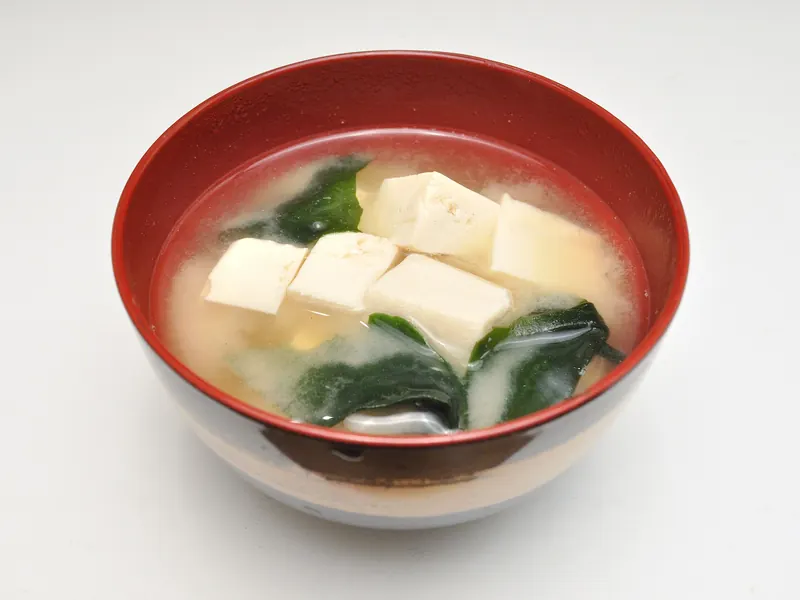
Miso soup is the quickest thing on the page. Heat 300 ml of dashi, dissolve a tablespoon of miso in it, then add cubes of tofu and bite-size pieces of rehydrated wakame. Bring it just to the boil and it is ready. At 43 kcal a serving, it is also the lightest dish here.
Which recipe to make first
None of them is the right first dish for everyone. It comes down to what is in your kitchen and how much time you have.
Choose by what you have
- 10 minutes: miso soup, ginger pork, teriyaki salmon, spinach and egg
- Fewest ingredients: tofu steak and miso soup, four each; teriyaki chicken's sauce is only soy sauce and mirin
- Chicken: teriyaki chicken, karaage, oyakodon
- With rice: gyudon, oyakodon, onigiri
- No meat or fish: tamagoyaki, tofu steak, spinach and egg
- Three or four people: karaage, nikujaga
- Least sodium: tofu steak at 200 mg a serving, tamagoyaki at 300 mg, spinach and egg at 354 mg
Kikkoman says its ginger pork pairs well with rice, so it is a natural partner for the pot of rice above. If the shop near you has none of the bottles, start with our guide to Japanese ingredients.
Frequently asked questions
What is the easiest Japanese food to make at home?
By Kikkoman's timings, miso soup, ginger pork, teriyaki salmon and spinach with egg take 10 minutes each. Tofu steak needs only four ingredients: firm tofu, flour, oil and soy sauce.
What Japanese dishes can I make with chicken?
Teriyaki chicken (20 minutes), karaage, which is Japanese fried chicken (30 minutes), and oyakodon, chicken and egg over rice (15 minutes). The first two use chicken thigh; Kikkoman's oyakodon uses chicken breast.
How do I make teriyaki sauce at home?
Kikkoman's teriyaki chicken uses equal parts soy sauce and mirin, one and a half tablespoons of each for a 250 g chicken thigh. Its teriyaki salmon adds sugar: one and a half tablespoons of soy sauce, one of mirin and half a tablespoon of sugar for two fillets.
How do I cook Japanese rice without a rice cooker?
Wash 360 g of rice until the water is nearly clear, soak it in 480 ml of water in the pot for 30 minutes, and bring it to the boil uncovered. Then cover it, cook it for 15 minutes on a very low heat, and leave it covered off the heat for 15 minutes more. That makes enough for 4.
Are there easy vegetarian Japanese recipes?
Yes. Kikkoman lists its tofu steak as vegan and vegetarian and its tamagoyaki as vegetarian, and spinach with egg has no meat or fish either. The miso soup and oyakodon use dashi, which Kikkoman's miso soup makes from dried sardines; its dashi glossary also lists kinds made from kombu or from shiitake mushrooms.
What can I use instead of yakisoba sauce?
Kikkoman suggests a Worcestershire-style sauce, which gives a slightly different flavour.
Do Japanese recipes always need dashi?
No. Only two of the 13 recipes here use it, the miso soup and the oyakodon. The others get their flavour mainly from soy sauce, mirin, sake and sugar.
Where do I find the seasonings for these recipes?
Our guide to Japanese ingredients explains each seasoning and where to look for it outside Japan, and our page on buying from Japan online covers ordering direct.
Sources
Official and primary sources used for this page. Checked November 15, 2026.
- Kikkoman: Miso Soup - Tofu and Wakame Seaweed — ingredients, method, time, calories and sodium
- Kikkoman: Grilled Ginger Pork (Shogayaki) — ingredients, method, cutting the sinew
- Kikkoman: Teriyaki Salmon — ingredients and method with cabbage and shimeji
- Kikkoman: Spinach and Egg Saute — ingredients and method
- Kikkoman: Traditional Oyakodon (Chicken and Egg Rice Bowl) — ingredients, method, note on raw or semi-cooked ingredients
Show all 14 sources
- Kikkoman: Gyudon (Japanese Beef and Rice Bowls) — ingredients and method
- Kikkoman: Tamagoyaki (Japanese Sweet Rolled Omelette) — ingredients, method, vegetarian tag
- Kikkoman: Onigiri (Rice Balls) - Bonito Soy Sauce and Tuna Mayo — fillings, shaping, and cooking white rice in a pot
- Kikkoman: Teriyaki Chicken — two-ingredient sauce, method, pricking the skin
- Kikkoman: Fried Noodles (Yakisoba) — ingredients, method, sauce substitute
- Kikkoman: Simple Tofu Steak — ingredients, pressing the tofu, vegan and vegetarian tags
- Kikkoman: Karaage (Japanese Fried Chicken) — marinade, coating and frying
- Kikkoman: Nikujaga (Japanese Meat and Potato Stew) — ingredients and the two-stage simmer
- Kikkoman: Dashi — the kinds of dashi
Related guides
To cite or link to this page: Easy Japanese recipes to make at home: 13 dishes for beginners, with times, ingredients and the steps in short — Japan Pocket Guide, https://japanpocketguide.com/food/easy-japanese-recipes/