Food · Cooking at home
Japanese ingredients to buy: a pantry list, what each one does, how to keep it and where to find it outside Japan
Cooking Japanese food at home takes no trip to Japan, only a few bottles and packets that most kitchens elsewhere lack. This guide lists them, explains what each one does in the words of the companies and associations that make them, and shows how to find shops abroad that are certified for selling Japanese food.
Last checked · Sources

In short
Start with soy sauce, mirin, cooking sake, rice vinegar and miso, plus kombu and katsuobushi (bonito flakes) to make dashi, the basic stock of Japanese cooking, and a bag of Japanese rice. Outside Japan, look for them at shops on JETRO's list of Japanese Food and Ingredient Supporter Stores, which had 3,879 certified shops and restaurants on 31 October 2026, or at online shops that sell Japanese food.
The Japanese pantry: what to buy first
Most everyday Japanese dishes are seasoned from the same short row of bottles, and many of them start with dashi, a stock made by soaking or briefly heating dried ingredients in water. Kikkoman's glossary calls dashi "the most fundamental soup stock in Japanese cooking". Buy the seasonings and the dashi ingredients first; the rest of this page can wait until a recipe calls for it.
A first shopping list
- Soy sauce: one bottle of the common type, koikuchi
- Mirin, the sweet rice seasoning
- Cooking sake, ryōrishu
- Rice vinegar, komezu
- Miso, the fermented soybean paste
- Kombu (dried kelp) and katsuobushi (bonito flakes) for dashi
- A bag of Japanese white rice
Several of these are fermented. Soy sauce, miso and mirin are all made with kōji, which Kikkoman's entry on miso describes simply as a fermentation starter.
The second group is dry goods, which keep for months if they are stored well: nori, wakame, dried shiitake, panko, potato starch and sesame seeds. The third is ready-made sauces such as tsuyu and ponzu, which save time once you know what the basic seasonings do.
Soy sauce: the five types and which one to buy
Japan's soy sauce makers sort their product into five types, set out by the Japan Soy Sauce Brewers' Association under the Japanese Agricultural Standards (JAS). The first of them, koikuchi, is the one the association calls "the most general type".
The five JAS types of soy sauce
- Common (koikuchi): around 80% of what Japan produces; the all-purpose soy sauce for cooking and the table
- Light colour (usukuchi): from the Kansai region, around 10% of production; paler, for dishes that keep the colour of the ingredients
- Tamari: brewed mainly in the Chubu region; thick, with dense umami, long served with sushi and sashimi
- Refermented (saishikomi): made around Yamaguchi prefecture; dense in colour and flavour, and also called sweet soy sauce
- Extra light colour (shiro): pale amber, from Hekinan in Aichi prefecture; used in soups and chawanmushi egg custard
Kikkoman's standard soy sauce is the honjozo kind, brewed from soybeans, wheat, salt and water and left to ferment and age through what the company calls "the power of microorganisms". Outside Japan it also sells a less-sodium soy sauce and a gluten-free soy sauce made without wheat, and, depending on the country, ready-made teriyaki and ponzu sauces.
Once a bottle is open, Kikkoman recommends keeping it in the refrigerator to preserve the flavour. The refermented type is mainly a table sauce for sashimi, sushi and chilled tofu, and tamari is commonly served at the table with sushi and sashimi too.
Mirin, cooking sake and rice vinegar
These three bottles look alike on the shelf, and each does a different job. Read the front label closely, because each name covers more than one kind of product.
Mirin adds sweetness, richness and umami. Kikkoman divides rice-based mirin into three groups. Hon mirin, or true mirin, is an alcohol-based seasoning made from rice, glutinous rice, rice kōji and alcohol, through a long, slow process in which starch turns to sugar, followed by ageing. Kikkoman lists what it does in cooking: sweetness and savouriness, a glossy glaze, the removal of unpleasant odours, and keeping ingredients from falling apart as they boil. A second group, sweet cooking rice seasoning, is made from rice, rice kōji and alcohol but also contains salt. The third, sweetened cooking seasoning, has less than 1% alcohol, and Kikkoman suggests it for anyone who wants to avoid alcohol.
The government's Highlighting Japan magazine adds the legal side. Under Japan's Liquor Tax Law, hon mirin is treated as an alcoholic drink; seasonings sold as mirin-style, with under 1% alcohol, are a different product. A mirin maker founded in 1772 told the magazine that its mirin is made from glutinous rice, rice kōji and shōchū, and ferments for about two months while enzymes in the kōji turn starch into glucose and protein into amino acids. Mirin began as a sweet drink, and became a seasoning in the 18th century when the eel and soba restaurants of Edo, now Tokyo, used it in place of sugar, which was hard to get.
Three bottles that look alike
- Hon mirin: alcohol-based, made from rice, glutinous rice, rice kōji and alcohol; sweet, glossy, removes odours
- Sweet cooking rice seasoning: rice, rice kōji and alcohol, with salt added
- Sweetened cooking seasoning: less than 1% alcohol; the choice if you want to avoid alcohol
- Cooking sake: around 15% alcohol, salted so that it cannot be drunk as sake
- Rice vinegar: milder than fruit or wine vinegars; for sushi rice, dressings and pickles
Cooking sake, ryōrishu, is a rice-based alcohol made by fermentation. Kikkoman says it adds umami and a sweet, mellow flavour, removes strong odours and tenderises meat, and is used in steamed seafood, soups, sauces and marinades. It is around 15% alcohol, though heating drives most of that off. Under Japan's Liquor Tax Act, cooking sake has to have salt added so that it cannot be drunk as sake, and because no liquor tax is charged on it, it is cheaper. Do not drink it. If you would rather not use alcohol at all, Kikkoman's advice is to replace it with the same amount of water.
Rice vinegar, komezu, is made from rice. Kikkoman describes it as a little gentler than vinegars made from fruit or wine, with sweetness from the rice, and lists sushi rice, dressings and Japanese pickles as its uses. Rice vinegar was widely used as a seasoning in the Edo period (1603 to 1868), when sushi also appeared.
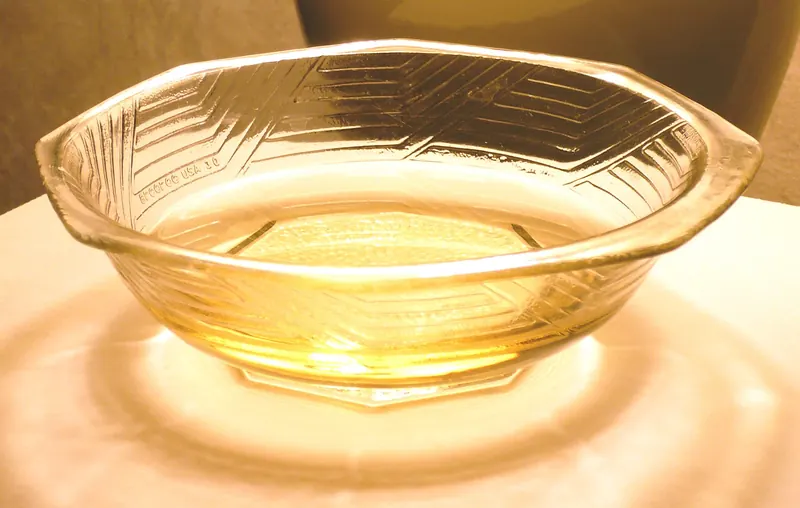
On storage, the three differ. Kikkoman says to keep cooking sake in a cool, dark place before opening and in the refrigerator once it is open. Rice vinegar keeps in a cool, dark cupboard, and for longer in the fridge.
Miso: rice, soybean and barley
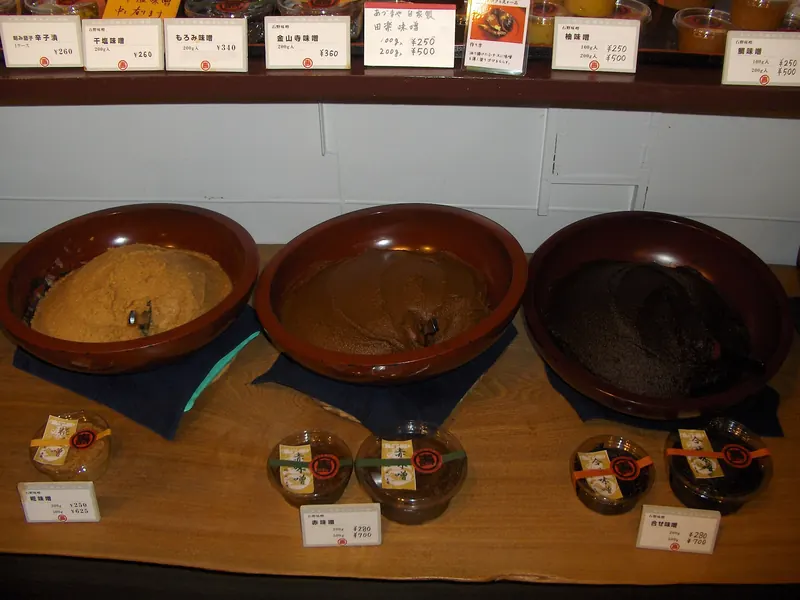
Miso is a paste made by fermenting soybeans with salt and kōji. Kikkoman lists its uses as soups, nabe hot pots, and a glaze brushed on grilled eggplant. Kikkoman sorts it into three main kinds by what goes into it.
The three main kinds of miso
- Kome miso (rice): soybeans with rice kōji; about 80% of the miso made in Japan, in sweet, mild and salty styles that range from white through yellow to red
- Mame miso (soybean): soybeans and salt only, fermented for a long time, mainly in Aichi prefecture; reddish dark brown and rich, with a slight tang
- Mugi miso (barley): soybeans with barley kōji; a distinct barley aroma and light sweetness
Colour names help too. White miso is a sweet rice miso with a high share of rice kōji, and is used in dishes such as saikyō-zuke, fish pickled in miso. Mame miso is also called red miso because of its colour. Kikkoman recommends keeping miso in the refrigerator, because changes in temperature can harm it.
Dashi: kombu, katsuobushi and dried shiitake
Dashi is the stock behind miso soup, nabe and many noodle dishes. The Umami Information Center says it is made with "carefully prepared ingredients, patiently matured, which are only soaked in water or heated briefly", rather than boiled for a long time like a Western bouillon. The usual pair is kombu, a dried kelp, and katsuobushi, flakes shaved from bonito that has been boiled, matured with mould and dried again and again. Dried shiitake mushrooms and niboshi, small dried fish, are also used.
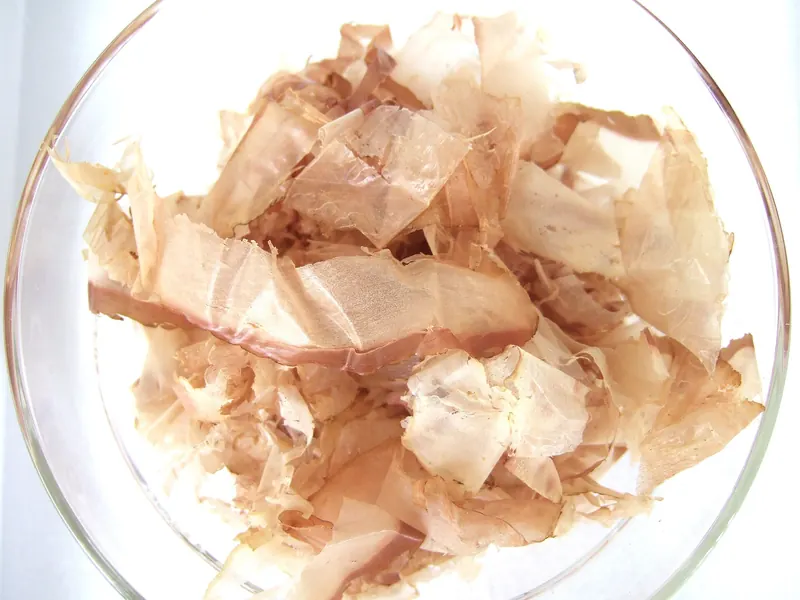
The pair works together. Kombu is rich in glutamate, and katsuobushi in inosinate, and Kikkoman says that combining the two gives a much deeper flavour than either alone. The government's Highlighting Japan magazine, citing the Umami Information Center, put the gain at "a factor of seven or eight compared with a soup using only one of the two ingredients".
Kikkoman's basic dashi, for about 800 ml
- Measure: 10 g of kombu (a piece about 3 by 25 cm), 20 g of katsuobushi and 1,000 ml of water
- Soakthe kombu in the water for 30 minutes
- Heatover a medium heat, and lift out the kombu just before the water boils
- Add the flakes: turn off the heat, wait a few minutes, then add the katsuobushi and leave it for 2 minutes
- Strainthrough a damp paper towel laid in a strainer
Temperature matters with katsuobushi. Kikkoman's glossary warns that dashi made with bonito flakes should be cooked at over 85°C, because cooler water brings out bitter flavours. The flakes left over need not be thrown away: the katsuobushi maker interviewed by Highlighting Japan said they might squeeze and dry them and use them a second time as a topping for rice.
For a meat-free and fish-free stock, use kombu on its own or with dried shiitake. The Umami Information Center notes that kombu can make vegetarian dashi by itself, and that dried shiitake is "common in vegetarian dashi". Dried shiitake take at least 30 minutes to an hour to rehydrate, and Kikkoman says the kōshin type suits dashi better than the thicker donko type.

Both dashi ingredients need care once the packet is open. Katsuobushi starts to oxidise as soon as you open it, so Kikkoman advises sealing it in an airtight container and keeping it in the refrigerator or freezer. For kombu, it suggests cutting it into pieces about 15 cm long and sealing them in a can or jar in a dry, dark place, or keeping them in the refrigerator or freezer. More than 90% of Japan's kombu is harvested off the coast of Hokkaido, according to the same glossary.
Rice, nori, panko and other dry goods
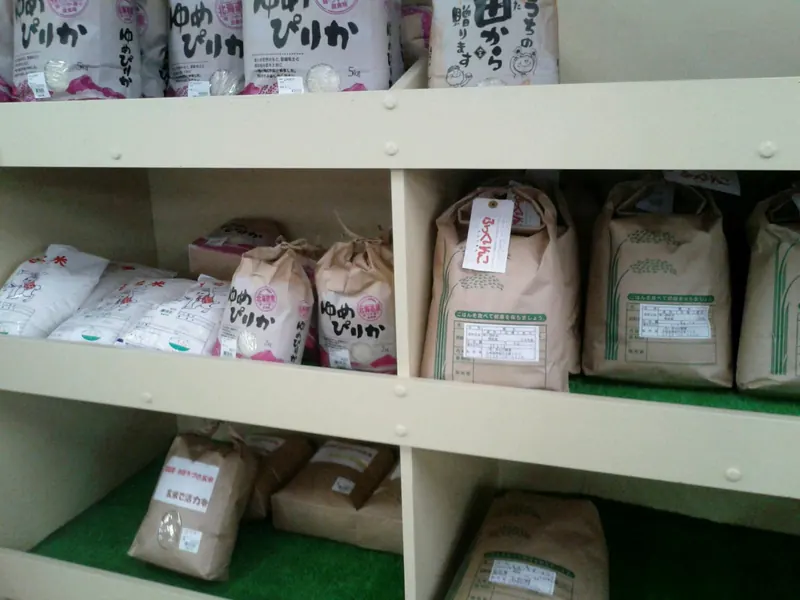
Rice. In Japan, white rice is mostly cooked in a rice cooker. Kikkoman says cooked rice weighs 2.1 to 2.3 times as much as the dry grains, and puts a bowl at about 150 g of cooked rice. Keep uncooked rice in a cool, dark place; Kikkoman's tip is to drop two or three dried red chillies into the container to keep insects away. Cooked rice wrapped in small portions keeps in the freezer for around a month.
Nori. Sheets of nori are made by cutting seaweed small, washing it, then straining and drying it much as washi paper is made. Grilled nori, yakinori, is the kind used to wrap sushi and onigiri rice balls; seasoned nori, flavoured with soy sauce or sugar, comes in small rectangular slices to eat with rice. Nori absorbs moisture readily. Kikkoman's glossary also links it to laverbread in Britain, a paste that may come from the same seaweed.
Wakame. This soft seaweed for miso soup and salads is sold raw (only blanched), salted or dried. Dried wakame starts as salted wakame: the salt is rinsed off, and the leaves are cut small and dried; it goes straight into soups once rehydrated.
Panko. These large crumbs are made from shokupan, standard Japanese white bread, and give the crunch to tonkatsu pork cutlets and fried prawns. Kikkoman notes that panko is sold under that name outside Japan, in a dry form with less than 14% moisture and a fresh form with more.
Potato starch. Sold in Japan as katakuriko, it thickens soups and sauces and gives a crisp coating when dusted on meat or fish before frying. Always mix it with water before adding it to hot liquid, or it forms lumps. It contains no gluten, and the name comes from the katakuri dogtooth violet, whose bulbs it was first made from before potatoes took over.
Sesame. White sesame is sweet and aromatic, and black sesame, which is bitter, is mixed with salt to make gomashio. Roasted seeds are often ground in a suribachi mortar to bring out the aroma.
How long dry goods keep, from Kikkoman's glossary
- Nori, once opened: up to a month at room temperature, 3 to 4 months in the refrigerator, about six months in the freezer
- Dried wakame: about a year unopened, six months after opening; keep it dry
- Salted wakame: about three months in the refrigerator, about a year in the freezer
- Cooked rice: around one month in the freezer, wrapped in small portions
- Potato starch: in an airtight container in the refrigerator; at room temperature it can go mouldy or attract mites
- Fresh panko: room temperature until opened, then the freezer
Ready-made sauces: tsuyu, ponzu and Kewpie mayonnaise
Once you have the basics, a few ready-made bottles save time. The Japan Soy Sauce Brewers' Association lists the main soy-sauce-based condiments, and points out that none of them is JAS-certified soy sauce.
Soy-sauce-based shortcuts
- Tsuyu: soy sauce with mirin, sugar, dashi and other umami ingredients; from noodle sauces to all-purpose ones for stews, hot pots and tempura
- Dashi soy sauce: soy sauce blended in advance with katsuobushi and kombu, sold under names such as kombu soy sauce
- Tare: basting sauces for yakitori and other grilled food, for yakiniku, and a base for sukiyaki
- Ponzu: soy sauce with brewed vinegar, plus juice from fragrant citrus fruit or flavours such as dashi
- Soy sauce dressing: French dressing with soy sauce added
Ponzu takes its tang from citrus. Kikkoman explains that, strictly, the brownish sauce made with soy sauce is ponzu soy sauce, and a paler one made mostly of citrus juice is ponzu, although in Japan today the line is blurred and people tend to call both of them ponzu. The citrus fruits it names in shop-bought ponzu are yuzu, sudachi, kabosu, shikuwasa and lemon. Kikkoman suggests it as a topping for salad, chilled tofu, boiled greens and grilled fish or meat, and as a dip for sashimi, potstickers and shabu-shabu. To make your own, mix soy sauce with pure citrus juice and vinegar, add something for dashi such as katsuobushi, and sweeten with mirin or sugar if you like.
Kewpie mayonnaise has been the company's flagship product since it was launched in 1925, and Kewpie says it had the largest share of mayonnaise sales in Japan as of October 2024. The company makes it "using only egg yolks, not whole eggs", which gives the rich flavour and umami it is known for. The other main ingredients are vegetable oil and vinegar; the company developed its own vinegar for mayonnaise from apple juice and malt, and says the vinegar and salt preserve the mayonnaise, so no preservatives are needed.
If you are comparing a bottle at home with one from Japan, read the label. Kewpie's global site shows mayonnaise made for export, including a gluten-free version, and lists the mayonnaise it sells in China, Thailand, Malaysia, Vietnam, Indonesia, the Philippines, the USA and Europe. The range for the Japanese market appears only on its Japanese site. The ingredients list on the bottle in your hand is the reliable guide to what is in it.
Where to buy Japanese ingredients outside Japan
Japan's agriculture ministry, MAFF, has guidelines for certifying overseas shops and restaurants that sell or use Japanese food, and JETRO, Japan's trade promotion organisation, takes the applications and publishes the list. A certified shop is called a Japanese Food and Ingredient Supporter Store. To qualify, a shop must consistently sell Japanese food and drink, show on its shelves that the products are from Japan, and promote them; online shops must sell to countries outside Japan. Certification is free and lasts two years, and certified shops may display the scheme's logo.
JETRO's supporter stores
- 3,879certified shops and restaurants on 31 October 2026
- 2years before a shop must renew its certification
- Freefor shops: JETRO makes no charge for certification
JETRO publishes the full list online. You can narrow it by country or area, by type (retail store, e-commerce site, restaurant or other) and by name, and each entry shows the city and address. Choose "Retail Store" or "E-Commerce Site" to find somewhere to buy ingredients rather than somewhere to eat.
| Country or area | Certified in all | Shops or online shops | Of those, selling online | Restaurants only |
|---|---|---|---|---|
| Australia | 1,686 | 1,661 | 2 | 25 |
| Hong Kong | 526 | 269 | 38 | 257 |
| Philippines | 285 | 172 | 0 | 112 |
| United States | 129 | 40 | 12 | 89 |
| Singapore | 38 | 24 | 2 | 14 |
| United Kingdom | 26 | 18 | 15 | 8 |
| New Zealand | 15 | 4 | 0 | 11 |
| Canada | 6 | 2 | 1 | 4 |
The totals are from JETRO's count by country. The other columns are our count of the types shown on its list, dated the same day; an entry that is a restaurant as well as a shop is counted as a shop, and one Philippine entry is listed only as other.
What the list shows, country by country
- United States: 17 of the 40 shops and online shops are in California and 9 in New York, among them branches of Tokyo Central and Marukai Market
- United Kingdom: 13 of the 18 are in London, and 15 of the 18 sell online, which helps if there is no shop near you
- Australia: more than 1,600 of the retail entries are branches of two chains, BWS and Dan Murphy's
- Singapore: the 24 include branches of Don Don Donki and of Fish Mart Sakuraya, which is also a restaurant
- New Zealand and Canada: the 4 New Zealand shops are all in Auckland; Canada's 2 are in Toronto and Markham
The scheme covers Japanese alcoholic drinks as well as food, so check what a shop actually sells before you travel to it.
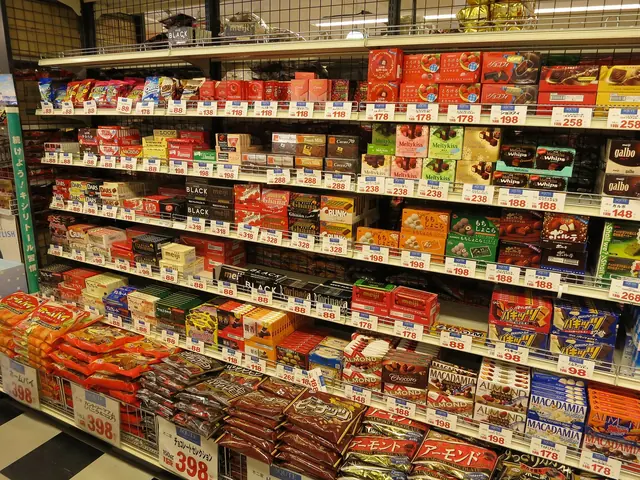
The list is not complete. A shop can sell plenty of Japanese food without ever applying, so the scheme is a starting point, not a register of every Japanese grocery. If you cannot find an item locally, you can also buy from Japan itself: our guide to buying from Japan online explains proxy and forwarding services, what they charge and what Japan Post will not carry. For a box of sweets rather than a pantry, see our guide to Japanese snack boxes.
Reading a Japanese food label
A packet bought in Japan, or sent from there through a proxy, carries a Japanese label: Japan's Consumer Affairs Agency says food labelling must be in Japanese when food is sold in Japan. The most useful thing to find on it is the date, and there are two kinds.
Two dates on a Japanese packet
- 賞味期限 (shōmi kigen), best-before: the date until which the food keeps the quality expected of it; it may still be fine after the date. Used for snacks, cup noodles and canned food
- 消費期限 (shōhi kigen), use-by: the date after which the food may no longer be safe to eat. Used for boxed lunches, sandwiches and prepared dishes
Both dates assume the food is stored in the way the label instructs. The agency's English example of a label prints the date as year, month and day, as in 2022.10.31.
Look for allergens too. Japanese labels must show eight specified ingredients: shrimp, crab, walnut, wheat, buckwheat, egg, dairy products and peanut. For twenty more, including soybean, sesame, beef and gelatin, labelling is only recommended, so a label may not mention them. As a rule each allergen is named on its own, in brackets after the ingredient it is part of; the agency's example reads mayonnaise (including egg and soybean). Wheat matters in the pantry: Kikkoman's standard soy sauce is brewed from soybeans, wheat, salt and water, so anyone avoiding gluten needs a soy sauce made without wheat, such as Kikkoman's gluten-free one.
Frequently asked questions
What Japanese ingredients should I buy first?
Soy sauce, mirin, cooking sake, rice vinegar and miso, plus kombu and katsuobushi to make dashi, and Japanese rice. Add dry goods such as nori, wakame, panko and potato starch when a recipe needs them.
Which soy sauce should I buy?
Start with the common type, koikuchi. It makes up around 80% of Japan's production and is used both in cooking and at the table. Light-colour usukuchi is paler but saltier, and tamari is thicker, with dense umami.
What is the difference between hon mirin and mirin-style seasoning?
Hon mirin is made from rice, glutinous rice, rice kōji and alcohol, and Japan's Liquor Tax Law treats it as an alcoholic drink. Mirin-style seasonings have less than 1% alcohol and are a different product, suited to cooks who want to avoid alcohol.
Can you drink cooking sake?
No. Kikkoman says cooking sake is processed for cooking and not suitable for drinking, and Japanese law requires salt to be added to it. Its alcohol, around 15%, mostly evaporates when heated, and you can replace it with the same amount of water.
How do I make dashi at home?
Kikkoman's basic recipe soaks 10 g of kombu in 1,000 ml of water for 30 minutes, heats it and removes the kombu just before boiling, then steeps 20 g of katsuobushi off the heat for 2 minutes before straining. It makes about 800 ml.
Does miso need to be refrigerated?
Kikkoman recommends keeping miso in the refrigerator, because changes in temperature can harm it. The same advice applies to soy sauce once it is open.
What is in Kewpie mayonnaise?
Egg yolks, vegetable oil and vinegar are the main ingredients, according to Kewpie. It uses only yolks, not whole eggs, and its own vinegar made from apple juice and malt. Recipes for different markets can vary, so check the label on your bottle.
Where can I buy Japanese ingredients near me?
Search JETRO's list of Japanese Food and Ingredient Supporter Stores by country, city and type of store. It had 3,879 certified shops and restaurants worldwide on 31 October 2026, including online shops. If nothing is close, buy online or from Japan through a proxy service.
Sources
Official and primary sources used for this page. Checked November 15, 2026.
- Kikkoman: Kikkoman Soy Sauce — honjozo brewing, ingredients, storage, less-sodium and gluten-free versions
- Kikkoman: Mirin — hon mirin and the two other kinds, cooking effects
- Kikkoman: Sake (Japanese cooking sake) — alcohol content, added salt, storage, water as a substitute
- Kikkoman: Rice vinegar — uses and storage
- Kikkoman: Miso — rice, soybean and barley miso, storage
Show all 28 sources
- Kikkoman: Dashi — kinds of dashi, basic recipe, iodine in kelp dashi
- Kikkoman: Kombu — storage, Hokkaido's share of the harvest
- Kikkoman: Katsuobushi — how it is made, storage, temperature for dashi
- Kikkoman: Dried shiitake mushrooms — rehydrating, types for dashi
- Kikkoman: White rice — cooked weight, storage
- Kikkoman: Nori seaweed — how sheets are made, storage, laverbread
- Kikkoman: Wakame seaweed — raw, salted and dried wakame, storage
- Kikkoman: Panko — dry and fresh panko, storage
- Kikkoman: Potato starch — thickening, storage, the name katakuriko
- Kikkoman: Sesame seeds — white and black sesame, storage
- Kikkoman: Ponzu sauce — ponzu and ponzu soy sauce, citrus used, uses
- Japan Soy Sauce Brewers' Association: Types and how to use them — the five JAS types and soy-sauce-based condiments
- Highlighting Japan, March 2025: The history and characteristics of traditional mirin (PDF) — hon mirin and the Liquor Tax Law, how mirin is made
- Highlighting Japan, November 2016: Starting with stock — dashi ingredients, katsuobushi, reusing the flakes
- Umami Information Center: What is dashi? — dashi ingredients, umami, vegetarian dashi
- Kewpie: Mayonnaise — egg yolks, vinegar, no preservatives, markets
- JETRO: Certification program of Japanese Food and Ingredient Supporter Stores Overseas — requirements, validity, fee
- JETRO: Number of supporter stores by country/areas, 31 October 2026 (PDF) — total and counts by country
- JETRO: List of Japanese Food and Ingredient Supporter Stores — searchable list by country, type and name
- Consumer Affairs Agency: Food labelling — labelling in Japanese
- Consumer Affairs Agency: Expiration date labelling (PDF) — best-before and use-by
- Consumer Affairs Agency: Best-before and use-by, Japanese and English (PDF, in Japanese) — the Japanese words on labels
- Consumer Affairs Agency: Allergen labelling (PDF) — mandatory and recommended allergens
Related guides

To cite or link to this page: Japanese ingredients to buy: a pantry list, what each one does, how to keep it and where to find it outside Japan — Japan Pocket Guide, https://japanpocketguide.com/food/japanese-ingredients/