Food · Chain restaurants
Japanese chain restaurants: the chains visitors love, how to get a table, order and pay, and how to find one
Japan's big restaurant chains are some of the cheapest and easiest places to eat in the country, and they are everywhere: by stations, in shopping streets and along main roads. Many have English menus, touch screens or ticket machines, so you can order without speaking Japanese. This guide explains which chains to look out for, how a meal works from the door to paying, what a bowl of beef or a plate of sushi costs, which payment methods the chains list, and how to find a branch, with maps and directions from the nearest station.
Last checked · Sources

In short
At most Japanese chains you wait at the entrance to be shown to a seat, or take a queue number from a machine; at beef-bowl shops such as Matsuya you buy a meal ticket at a machine first. You then order on a tablet or touch screen, with your ticket, or by calling the staff, and pay at the table, at the register, at a self-checkout or before you eat. Tipping is not required. In October 2026 the usual price of a regular beef bowl, eaten in, was 460 yen at Matsuya, 480 yen at Sukiya and 498 yen at Yoshinoya. Chains that JNTO, Japan's national tourism organisation, names for visitors include Matsuya, Yoshinoya, Sukiya, Saizeriya, Gusto, Denny's, Sushiro, Hama Sushi, CoCo Ichibanya, Marugame Seimen and Ichiran.
Which Japanese chain restaurants should you try?
A chain restaurant in Japan is not a second-best meal. GO TOKYO, the Tokyo government's official travel site, puts it plainly: "Some of the best deals on meals are served at Japan’s home-grown fast-food restaurants." It goes on: "You’ll find gyudon (beef bowls), udon and soba with tempura, ramen and Japanese-style curry at very reasonable prices." The family restaurants, or famiresu, are cheap too, and GO TOKYO adds: "Depending on the chain, drink bars, salad bars and all-you-can-eat options provide extra value."
The chains below are the ones JNTO, Japan's national tourism organisation, names in its own guides for visitors. Its breakfast guide lists Yoshinoya, Matsuya, Sukiya, Gusto and Denny's as restaurant chains with English websites. Its guide to Japan with children says of the family restaurants: "Popular examples include Saizeriya, Gusto, Denny's, Sushiro, and Hama Sushi—all great spots for a stress-free meal with little ones in tow." Its udon guide names Marugame Seimen and Hanamaru Udon, and its Muslim-friendly guide names CoCo Ichibanya and the ramen chain Ichiran.
The main kinds of chain restaurant
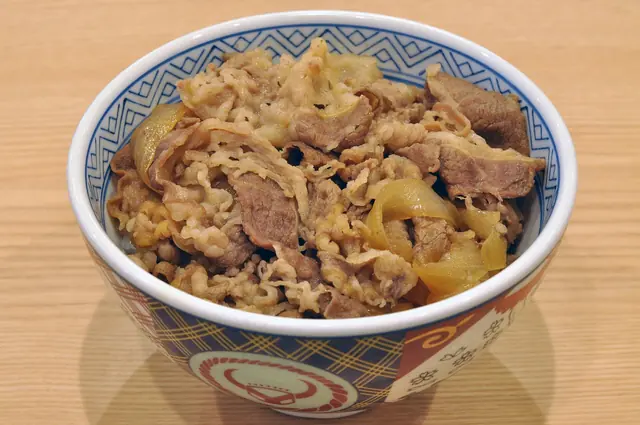 Beef bowls (gyudon): Matsuya, Yoshinoya and Sukiya. Quick, cheap and often open late.
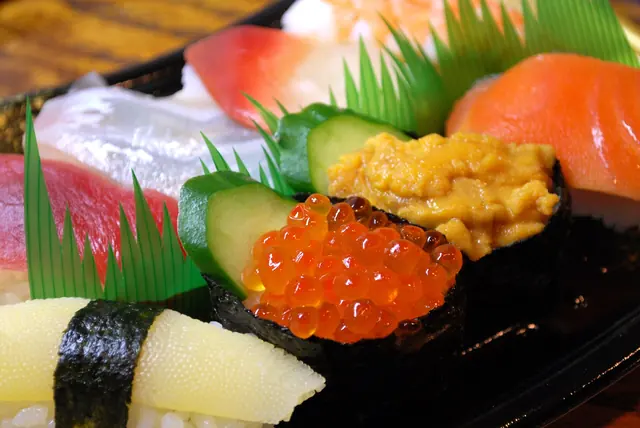 Conveyor-belt sushi: Sushiro, Kura Sushi and Hama Sushi. You order on a touch screen and plates come to your seat.
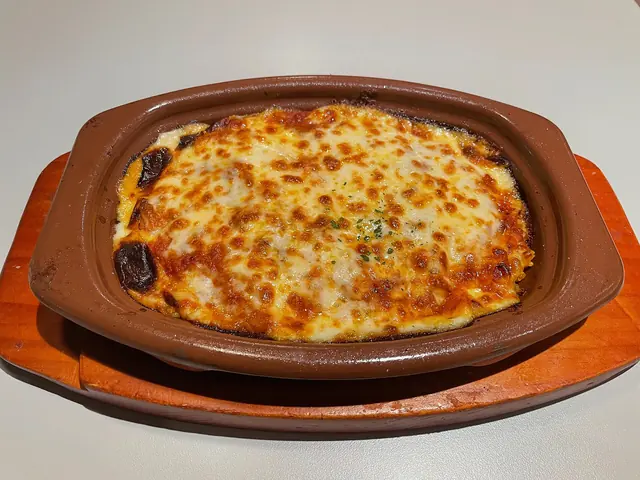 Family restaurants: Saizeriya, Gusto and Denny's. Long menus, booths and tables for groups and children.
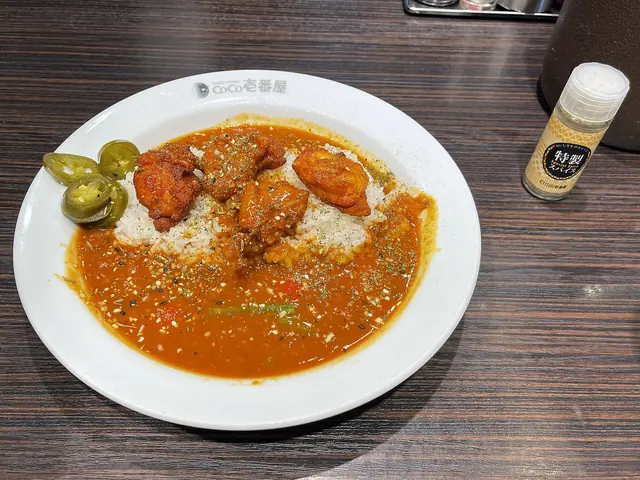 Curry rice: CoCo Ichibanya, where you choose the rice, the spice level and the toppings.
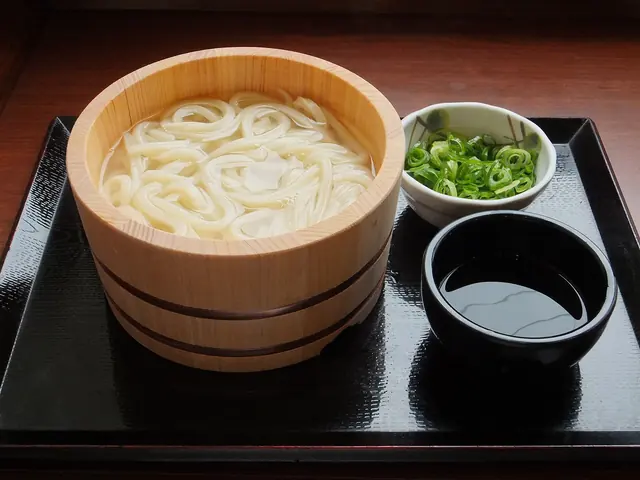 Udon: Marugame Seimen and Hanamaru Udon, where you collect your bowl at the counter, cafeteria-style.
- Ramen: Ichiran, with its solo booths, and other ramen chains. See our ramen guide.
The rest of this guide takes these chains one kind at a time. For the dishes themselves, see our guide to what to eat in Japan; for sushi prices and etiquette, our sushi guide; and for ramen, including Ichiran, our ramen guide.
How does eating at a Japanese chain restaurant work?
GO TOKYO's guide to how a meal in Tokyo flows, reviewed by the head of an etiquette school, starts at the door: "In Japan, it’s customary to wait to be greeted and shown to your seat rather than seating yourself." If there is a queue, join the back of it. "Some restaurants provide a sign-in sheet near the entrance, where you can add your name and the number of people in your party." JNTO's guide to dining etiquette for Canadians adds: "Some popular restaurants such as sushi trains may even require you to take a number from a machine (these tend to be bigger chains, where the interface is multilingual)."
Before you go in, check the sign at the door. GO TOKYO explains that 営業中 (eigyochu) means the restaurant is open, while 準備中 (junbichu), 仕込み中 or 支度中 mean it is closed. The staff will ask how many you are; if you are not sure what to say, GO TOKYO notes: "If needed, you can indicate the number with your fingers."
A meal at a chain restaurant, from the door to leaving
- At the door: check the sign says open, then wait to be seated, add your name to the sheet, or take a number from the machine.
- Ticket shops: at a shop with a ticket machine, buy your meal ticket before you sit down.
- Sit down: water is usually brought to you, or you help yourself from a dispenser.
- Order: on the tablet or touch screen, by pressing the call button, or by handing over your ticket.
- Clear up, if asked: at self-service shops, such as Yoshinoya's newer branches, you take your tray back when you have finished.
- Pay and go: take the bill to the register, use the self-checkout, or simply leave if you paid at the machine. No tip.
At ticket-machine shops, GO TOKYO's advice is simple: "Purchase your meal ticket first, hand it to the staff, and then take your seat as directed." Elsewhere, once you sit down, "you’ll usually be served water at no charge." "At some restaurants, water is self-service, with a dispenser available inside."
To order, GO TOKYO says, "either wait for a staff member to come to your table or use the call button or tablet often provided." "When ordering, pointing to photos on the menu or using a translation app is perfectly fine." One thing to know if you are in a group: "In Japan, each person is usually expected to order at least one dish, and this is particularly common during busy hours."
Four ways to order at a Japanese chain
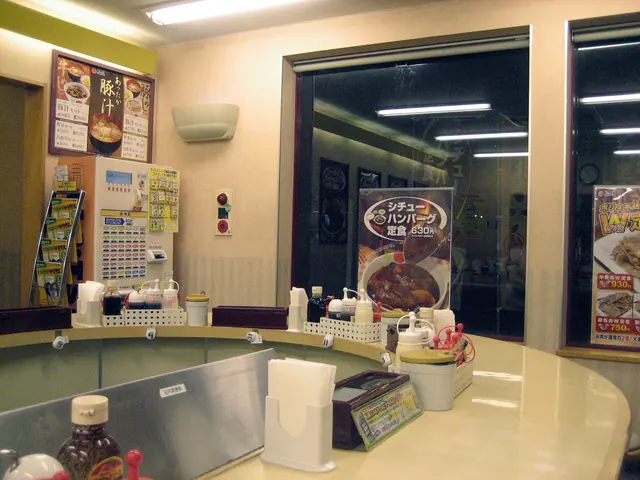 Ticket machine: you choose and pay before you eat, then hand the ticket over or wait for your number. Matsuya works this way.
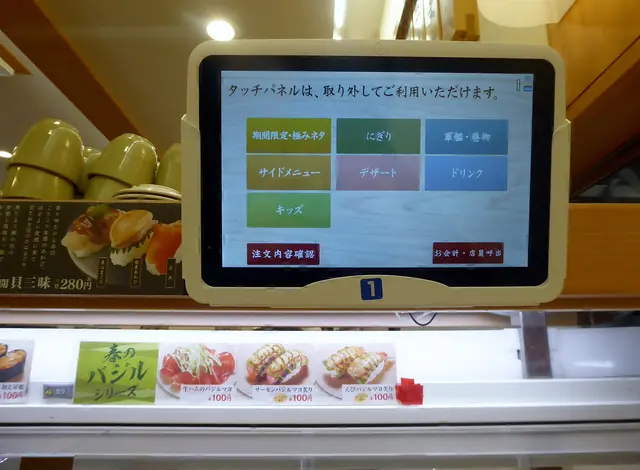 Touch screen or tablet: you order at your seat, often in English. The sushi chains and Yoshinoya's newer shops work this way.
- QR code: at Sukiya you can order and pay in its app by scanning the QR code on the table.
- Call button: at family restaurants, press the button on the table and someone comes to take your order.
When you have finished, "Payment styles vary." GO TOKYO explains: "In some restaurants, you’ll pay at the table; in others, you’ll bring your bill to the register near the entrance." You do not need to leave anything extra: "In most cases, service charges are already included in the bill, so tipping is not required in Japan."
How do you pay at Japanese chain restaurants?
Cash works almost everywhere, but the big chains in the cities also take cards, IC cards such as Suica and QR codes. JNTO's guide to cashless payments says: "Cards and electronic money that can be used are indicated at the entrance of establishments and payment counters." It also warns: "Smartphone payment methods used overseas, such as ApplePay, GooglePay and AliPay sometimes cannot be used in Japan." So look for the stickers on the door or the till, and keep some cash as a back-up.
What a chain accepts can change from one branch to the next, so the best guide is the branch's own page. These are what three branches in Shinjuku listed in October 2026:
What three Shinjuku branches list
- Yoshinoya, Shinjuku Yasukuni-dori: Visa, Mastercard, JCB, American Express, Diners Club and Discover cards; transport IC cards such as Suica; PayPay, Alipay and WeChat Pay, among others.
- Sukiya, Shinjuku Southeast Exit: credit cards; transport IC cards; PayPay, Alipay+, UnionPay QR and WeChat Pay, among others.
- Matsuya: pay at the ticket machine. Matsuya accepts QR payments through Smart Code, but says some of them cannot be used at shops without a ticket machine or self-checkout.
Some details from the chains themselves:
- Sukiya says on its FAQ page that some shops do not take credit cards, and that you can check which ones do in its shop search, by ticking the box for credit cards.
- Matsuya added Alipay+ and WeChat Pay to its official app on 22 January 2026, for paying online in the app, and says more customers from abroad use its shops every year.
- Sukiya's app lets you pay by credit card or PayPay, so you do not need to queue at the till.
For how cards, cash and Suica work in Japan in general, see our guide to cash or card in Japan.
Matsuya, Sukiya and Yoshinoya: how do the beef bowl chains compare?
The three big beef bowl, or gyudon, chains are the easiest cheap meal in Japan. Sukiya's English site describes the dish: "Gyudon is a Japanese dish consisting of a bowl of rice topped with thinly sliced beef and onions simmered in a mildly sweet soy based sauce." Matsuya calls its version gyumeshi, but it is the same kind of bowl.
All three serve the same basic dish, so the differences are in the price, the sizes and, above all, how you order. These were the prices on each chain's own menu page in October 2026, tax included, for eating in:
| Matsuya | Sukiya | Yoshinoya | |
|---|---|---|---|
| Small bowl | 430 yen | 420 yen | 465 yen |
| Regular bowl | 460 yen | 480 yen | 498 yen |
| Large bowl | 680 yen | 680 yen | 740 yen |
| Late-night extra | about 7%, 10 p.m. to 5 a.m. | 7%, 10 p.m. to 5 a.m. | not listed on its menu page |
| How you order | ticket machine | depends on the branch | tablet at Cooking & Comfort shops |
| Breakfast | 5 a.m. to 11 a.m. | 4 a.m. to 11 a.m. | 4 a.m. to 11 a.m. |
| Shops in Japan | 1,449 across all Matsuya Foods brands (July 2026) | 2,016 (September 2026) | 1,291 (September 2026) |
These are the usual prices. For its autumn beef bowl festival, from 11 a.m. on 15 October to 3 p.m. on 21 October 2026, Yoshinoya takes 100 yen off its beef bowls, to eat in or take away, so a regular bowl costs 398 yen; some shops do not take part.
At Matsuya, miso soup comes free with your bowl when you eat in; at Sukiya it comes as part of a set. Each chain also has a size with more beef on a regular amount of rice: atama no omori at Yoshinoya, atama omori at Matsuya, and "M-extra" on Sukiya's English menu.
A regular beef bowl, eaten in, at the usual price (October 2026)
- 460 yen: Matsuya, with free miso soup
- 480 yen: Sukiya
- 498 yen: Yoshinoya
Matsuya: buy a ticket first
Matsuya is the chain where you pay before you eat. Its How to Order sheet, in English, Chinese and Korean, sets out the steps:
How to order at Matsuya
- Buy a ticket: choose your meal at the ticket machine by the door. The language can be changed at the bottom of the screen, and you choose eating in or takeaway.
- Sit down: take your ticket to a seat. Your order goes to the kitchen as soon as you pay.
- Watch the screen: your number shows on the left of the display over the counter while your meal is being made, and moves to the right when it is ready.
- Collect your tray: bring your ticket to the counter.
- Return your tray: take your dishes to the return counter when you have finished.
In Matsuya's own words: "Your order will be automatically processed after you buy a ticket, and your order number will be displayed on the left side of the screen above the service counter. Take the ticket and wait at your seat." Then: "When your meal is ready, your ticket number will be displayed on the right side of the screen above the counter. The cooking time will differ depending on the menu." When you have eaten, "bring your tableware to the return counter by yourself."
Matsuya's English menu says: "Free miso soup for those dining on the premises!" In October 2026 the prices on that English page were lower than on the Japanese menu, so go by the prices on the machine. Matsuya says on its menu pages that it adds about 7% between 10 p.m. and 5 a.m.
Sukiya: every branch works a little differently
Sukiya's English menu lists the beef bowl in six sizes, from S at 420 yen to MEGA at 1,060 yen, and toppings such as kimchi, three cheeses and grated radish. You can add a set, for example "Miso Soup and Salad + ¥200".
How you order depends on the branch. Sukiya says it has brought in ticket machines, self-order systems and self-checkout registers, so what you find depends on the shop: a machine by the door, a screen at your seat or a member of staff. At branches with mobile ordering, you can order in the Sukiya app by scanning the QR code on your table, and pay in the app, so you do not have to queue at the till afterwards. The app takes credit cards and PayPay.
Two things to know at Sukiya
- Late at night: 7% is added to orders placed between 10 p.m. and 5 a.m., and that includes the first hour of breakfast, from 4 a.m. to 5 a.m.
- Not every shop has everything: its FAQ says some shops do not take credit cards and some do not have the children's menu or desserts.
Yoshinoya: a beef bowl shop since 1899
Yoshinoya's English site traces the chain to 1899, the year a family shop opened in what was then the fish market at Nihonbashi, in Tokyo, and gives its motto as "tasty, affordable, and fast".
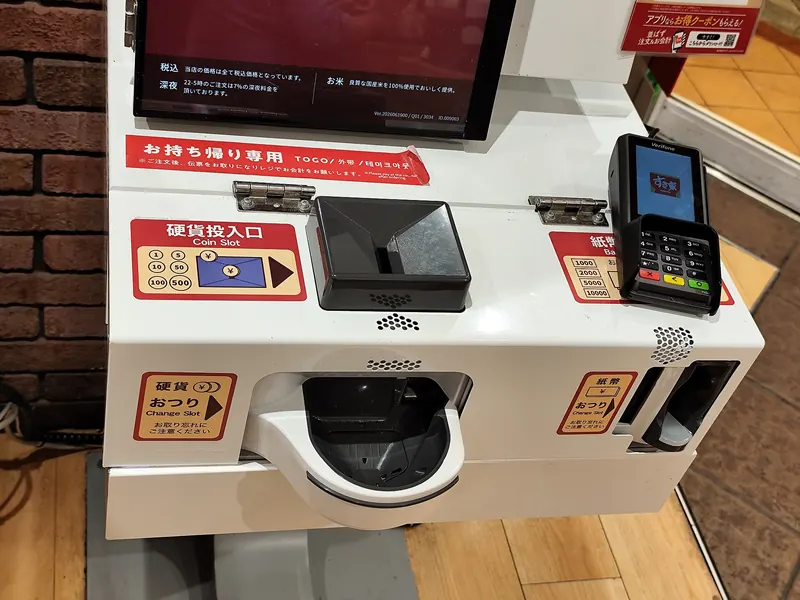
Since 2016, Yoshinoya has also opened what it calls Cooking & Comfort shops, aimed at a more relaxed meal. There you order on a tablet, collect your food from the counter and carry it to your seat, and you clear up and then pay when you have finished. The Shinjuku Yasukuni-dori branch in the map section below is one of them.
Yoshinoya charges slightly less to take away: a regular bowl is 498 yen to eat in and 489 yen to take away. Its breakfast set, the asagyu set, is a regular bowl with miso soup and one side dish, such as an egg, a small salad or natto, for 552 yen. It is served from 4 a.m. to 11 a.m. and only to eat in.
Which beef bowl chain is best?
Which one suits you depends on what you want from the meal, so the three are not put in order here:
Choosing a beef bowl chain
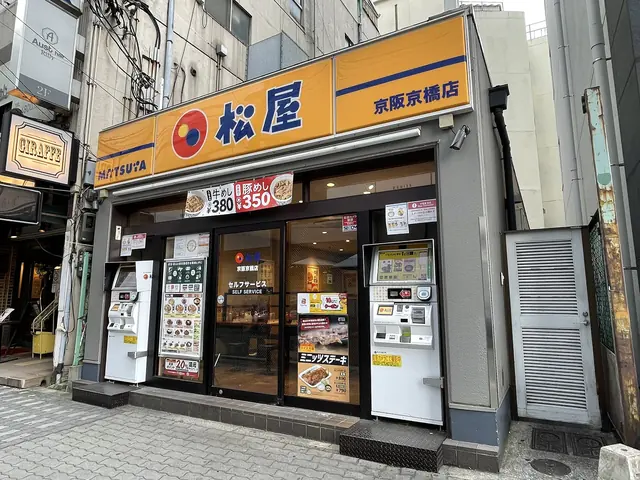 Matsuya: the cheapest regular bowl of the three at the usual prices in October 2026, with free miso soup. You pay at a ticket machine, so you do not need to speak.
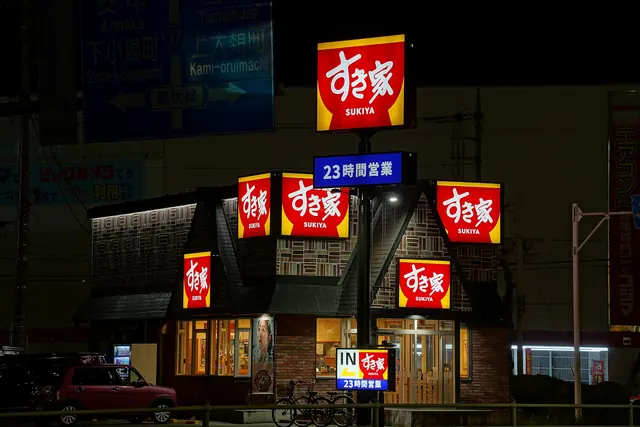 Sukiya: six sizes from S to MEGA and a long list of toppings. How you order depends on the branch.
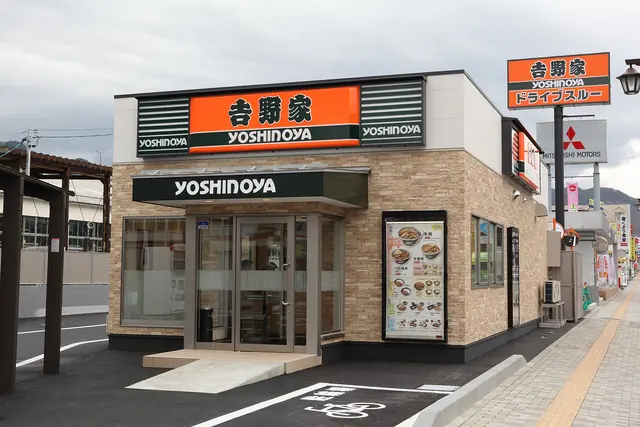 Yoshinoya: a beef bowl shop since 1899, with Cooking & Comfort shops where you order on a tablet.
The beef bowl shops are also a good bet for a very early or very late meal. The Shinjuku branches in the map section below are open 24 hours, or almost.
Sushiro, Kura Sushi and Hama Sushi: how do the conveyor-belt sushi chains work?
The three biggest conveyor-belt sushi, or kaitenzushi, chains are Sushiro, Kura Sushi and Hama Sushi. Sushiro had 659 shops in Japan on 30 September 2025, and Hama Sushi 652 on the same date. Kura Sushi had 687 at the end of October 2025, a count that includes its shops in the United States and elsewhere in Asia; its guide for first-time customers says it has more than 500 across Japan. Hama Sushi's English site puts the appeal for visitors simply: "We hope you will find and enjoy Hamasushi conveniently located near your hotels and sites you visit during your stay in Japan."
Plates still go round on a belt, but at all three most of what you eat is ordered on a touch panel and sent to your seat. For what a plate costs at each chain, topping by topping, see our sushi guide. This section is about getting a table, ordering and paying, and the three chains do each of those a little differently:
| Sushiro | Kura Sushi | Hama Sushi | |
|---|---|---|---|
| Shops | 659 in Japan (September 2025) | 687, including shops in the US and Asia (October 2025) | 652 in Japan (September 2025) |
| Booking a table | in the Sushiro app, as a member; not by phone | on its website, with no app; you need an email address | in the Hama Sushi app, as a place in the queue or a set time |
| Ordering | touch panel in English, simplified Chinese and Korean | touch panel, or your own phone | touch panel; some shops also have a strip of screen along the lane |
| Paying | credit cards at every shop; QR codes except at some shops; no electronic money | checkout button on the touch panel; cards are not taken at some shops | cash, credit cards and some electronic money; not all of them at every shop |
| Something extra | Digiro shops, with a large touch display at the table seats | Bikkura Pon, a prize game for every five plates | an English site with the menu and a shop search |
A meal at a conveyor-belt sushi chain
- Book, or just turn up: reserve a time or a place in the queue in the chain's app or on its website, or take a number at the machine by the door.
- Check in: if you booked, enter your booking number at the machine by the entrance. At Kura Sushi you then get a slip with your seat number.
- Order: choose on the touch panel at your seat, and your plates come to you on a lane. You can also take a plate as it passes on the belt.
- Finish and pay: at Kura Sushi you press the checkout button on the touch panel and pay without a member of staff; elsewhere, the staff can show you how to pay.
Sushiro: order on a touch panel in your language
Sushiro's English site promises a touch panel you can read: "You can order your favorite products from a touch panel that supports multiple languages: English, Chinese (simplified), and Korean." Some shops, among them the Dotonbori shop in Osaka, are what Sushiro calls Digiro shops. Instead of a small panel, the tables have a large touch display on which sushi flows past as it would on a belt, and you tap a plate to order it; the counter seats have a smaller version, and you can also order from your own phone. Sushiro says the size of the screen differs from shop to shop.
To skip the queue, use the app. In the words of the English site: "You can make a reservation for the store or for take out with the app." Its Japanese FAQ adds the details. You can book at every Sushiro except the Sakurazuka shop and the Sushiro To Go takeaway shops, only through the smartphone app and never by phone. The app works in several languages, although the web pages it links to do not. Every day from 2 a.m. until about 6 a.m. the booking system is updated and you cannot book.
Booking a table at Sushiro
- Sign in: register as a member in the Sushiro app and log in.
- Book: choose between going now and going later.
- Check in: when you arrive, enter your booking number at the reception stand by the entrance.
- Do not be late: if you do not check in within 30 minutes, the booking is cancelled automatically.
Paying is where Sushiro differs most from the others. "Payment with all kinds of credit cards and QR code is available." But the English site also says: "We do not accept electronic money." If you were planning to pay with a transport IC card such as Suica, ask at the till first. The Japanese FAQ says credit cards are accepted at every shop, while QR code payments cannot be used at some shops. The Dotonbori and Asakusa Rokku shops list Visa, Mastercard, JCB, American Express, Diners Club and Discover.
Kura Sushi: book on the web and play Bikkura Pon
Kura Sushi is the chain to try if you would rather not install an app. Its guide for first-time customers, in Japanese, shows how to book a time on the web:
Booking Kura Sushi on the web
- Find the shop: look it up on Google Maps, scroll down to the booking option and press the button to go on to the booking. You can change the language at the top right of the page.
- Confirm your email: enter your email address, agree to the terms, and open the link in the email that Kura sends you.
- Book: choose a language, the number of people and the date and time, and you get a booking number.
- Check in: at the reception machine by the entrance, press the orange Check-in button on the left and enter your booking number. The machine prints a slip with your seat number on it.
Groups of five or more may be seated at separate tables. You order on the touch panel or from your own phone, and what you order comes to you on a separate order lane.
When you have finished a plate, put it in the slot at your table. Kura counts your plates as you go, and for every five, the touch panel gives you a chance to win a small prize in a game called Bikkura Pon. The prizes change with the season, and Kura notes that, as it is a game, you will not always win. To pay, press the checkout button on the touch panel; the plates have already been counted, so you can pay without a member of staff. Kura's guide lists credit cards, electronic money and smartphone payment apps, but its page on how to use the shops warns that some shops do not take credit cards, and there you pay in cash.
Kura has also opened what it calls global flagship shops, designed around Japanese culture and with visitors from abroad in mind:
Kura Sushi's global flagship shops
- Asakusa, Tokyo: the first, opened in January 2020 in the Asakusa ROX building.
- Dotonbori, Osaka: opened in April 2021.
- Harajuku, Tokyo: opened in December 2021 as the third flagship.
- Tokyo Skytree Oshiage-ekimae: opened in March 2022, and called by Kura the largest conveyor-belt sushi restaurant in the world.
- Namba Parks South, Osaka: opened in July 2023, Kura's second flagship in the Kansai region.
- Ginza, Tokyo: opened in April 2024, with Kura's longest belt, at 123.14 metres, and food stalls made to look like the old town of Edo.
When the Asakusa shop opened, Kura said its touch panels worked in four languages and that staff who speak foreign languages are marked with a plate so that you can spot them at a glance.
Hama Sushi: book a place in the queue and order from the lane
Hama Sushi is not only sushi. Its English site says: "Other than sushi, Hamasushi also offers deep-fried foods and noodles such as ramen." The English site, in English and Chinese, has the menu and a shop search.
Hama Sushi does not take seat reservations, its FAQ says, but in its official app you can reserve a place in the queue or book a set time. You order on the touch panel at your seat. Each shop's page says which kinds of lane it has:
The lanes at Hama Sushi
- Rotating lane: the belt that carries plates round the room.
- Straight lane: brings what you ordered straight to you.
- Lane ordering: at some shops, a strip of touch screen along the lane where pictures of the dishes flow past and you order from them.
The Akihabara Denkigai-guchi shop has the straight lane and lane ordering.
For paying, the FAQ lists cash, credit cards, some electronic money and Zensho Cooca, a card of the Zensho group, which runs both Hama Sushi and Sukiya, and says that cards, electronic money and Cooca cannot be used at some shops. The Akihabara Denkigai-guchi and Ikebukuro Green Odori shops list transport IC cards, PayPay, Alipay+, UnionPay QR and WeChat Pay, among others.
Which conveyor-belt sushi chain should you choose?
Each of the three makes a different part of the meal easier, so none is put above the others:
Choosing a conveyor-belt sushi chain
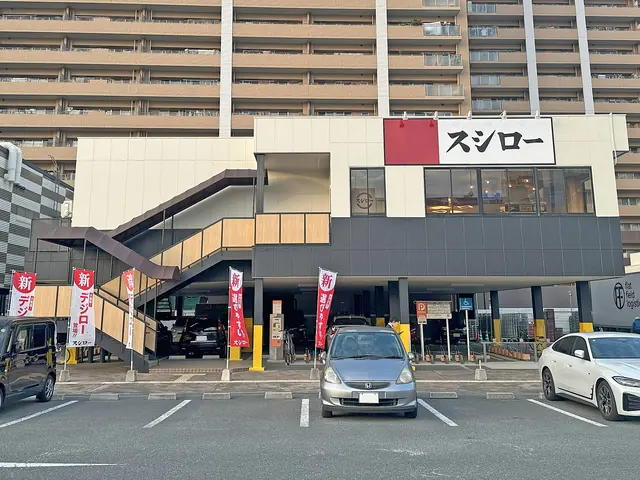 Sushiro: a touch panel in English, Chinese and Korean, and credit cards at every shop, but no electronic money. Book in the app.
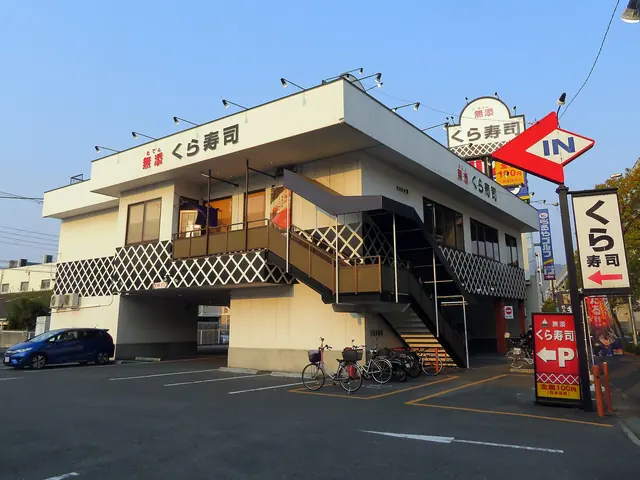 Kura Sushi: book on the web without an app, and play Bikkura Pon as you finish your plates. Its flagship shops in Asakusa, Osaka and Ginza are built with visitors in mind.
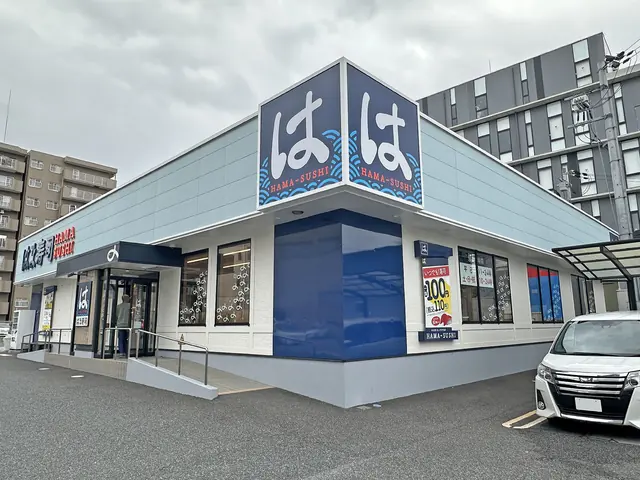 Hama Sushi: reserve a place in the queue in the app. Its Akihabara and Ikebukuro shops take IC cards and QR codes.
Saizeriya and Gusto: how do Japan's family restaurants work?
Family restaurants, or famiresu, are the sit-down chains: long picture menus, booths and big tables, a button to call the staff and, at most of them, a drink bar. Saizeriya and Gusto are two of the biggest, and both are on JNTO's list for families. Denny's, which JNTO also names, is not covered in this guide.
Saizeriya serves Italian-style food. It started in 1967 in Motoyawata, in Chiba, and in February 2026 it ran 1,062 restaurants in Japan and 670 abroad; it says it serves about 300 million customers a year. Gusto is the main brand of the Skylark group, and had 1,202 restaurants on 30 September 2026. Skylark also runs Bamiyan, Shabu-Yo, Jonathan's and Yumean, among others, and uses the same ordering and payment systems across its main brands.
The two work in much the same way, with a few differences:
| Saizeriya | Gusto | |
|---|---|---|
| Shops in Japan | 1,062 (February 2026) | 1,202 (September 2026) |
| Ordering | scan the QR code on the table with your own phone and enter menu numbers, or ring the bell for the staff | a touch-screen menu at every table |
| Bringing the food | staff | staff, or a serving robot at many shops |
| Paying | at the register, with a self-checkout at every shop since August 2024 | at the register, or at the table with the Skylark app or a barcode payment app at many shops |
| Drink bar | 200 yen with food or dessert, 300 yen on its own, 100 yen for children of primary school age and under | 250 to 329 yen with a meal, 130 yen for children, depending on the shop |
| After 10 p.m. | 10% extra | 10% extra |
All prices in this section include tax.
Saizeriya: order by number from your phone
Saizeriya's dishes are cheap. In October 2026 the first dish on its list of popular dishes was the Milan-style doria, a baked rice dish, at 300 yen, and the same list had a small shrimp salad at 350 yen, spicy chicken wings and peperoncino pasta at 300 yen each, and an Italian pudding at 250 yen. Every dish has a number; the doria is 2101.
Saizeriya is bringing in ordering from your own phone. It said that at the end of August 2025 about 900 shops had it, and that it planned to have it at every shop by the end of 2025. Its English guide to the system shows the steps:
Ordering at Saizeriya on your phone
- Scan: scan the QR code on your table with your phone's camera, then tap the link.
- Set up: choose your language under Language, then the number of people at the table.
- Enter a number: type in the menu number of the dish and tap Next.
- Add it: choose how many and tap Add to order basket. Tap Add to order something else, or Order when you are done.
- Order more later: tap Add order. If you close the page, scan the QR code again.
- Leave: tap Check out and then Pay, and pay at the register.
"You can find the menu number in the menu book." If you are a group, "Multiple people can place orders from their respective smartphones." "All orders from the same table will be combined into one billing slip." And if you would rather talk to someone: "If you would like to place an order verbally or ask any questions, please press the button to call a staff." The guide adds: "If you require any other assistance, please contact the staff before completing your order."
Help yourself at Saizeriya
- Water: Saizeriya's Japanese guide says to use the glasses at the drink counter, the same ones as for the drink bar. There are cups for children too.
- Paper hand towels: also at the drink counter.
- Small plates and chopsticks: at the service station.
Saizeriya's English menu sets out the house rules. "All guests are kindly asked to make at least one order per person." "A 10% charge will be added to your bill after 10 p.m. as a late-night surcharge." Saizeriya has had a drink bar since 1996, with more than 20 drinks, although "Drinks available at the drink bar may vary depending on the restaurant." Children under four drink free.
Saizeriya brought in cashless payment at every shop in April 2021. The Ginza, Akihabara and Namba shops in the map section below list transport IC cards such as Suica and credit cards such as Visa.
Gusto: a touch screen, a robot and the drink bar
Gusto's English pages are machine-translated, so what follows is from its Japanese pages. Skylark says every shop of its main brands has a digital menu book, a touch screen at the table on which you order. It began putting them at the tables in February 2020. In 2022 Skylark put about 3,000 floor serving robots into about 2,100 of its restaurants. The robot that brings your food to the table has a face that changes expression, and it talks.
Skylark began trying out self-checkout registers in January 2017 and cashless payments in May 2019. At about 2,100 Skylark restaurants, Gusto among them, you can now also pay at the table on the digital menu book, although some shops inside larger facilities do not offer table payment.
Ways to pay at Gusto
- At the register: Gusto's Japanese site says credit cards and electronic money can be used at its shops across Japan, though not at some of them. Cards are for single payments only, and electronic money cannot be topped up at the till.
- At the table, with a payment app: barcode payment apps such as PayPay, since August 2023.
- At the table, by card: credit cards through the Skylark app, which you have to register for first, since December 2024.
Gusto's drink bar costs 250 to 329 yen with a meal and 130 yen for children. What it has and what it costs vary from shop to shop, and some shops do not have one. Orders placed after 10 p.m. cost 10% more.
One thing Gusto does not offer visitors on their own: its booking service for groups from abroad is only for travel agents.
Saizeriya and Gusto
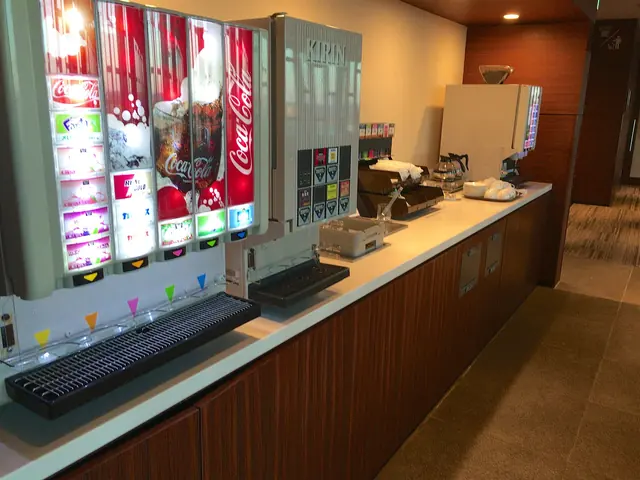 Saizeriya: the Milan-style doria for 300 yen, ordered by number on your phone, and a drink bar for 200 yen with food.
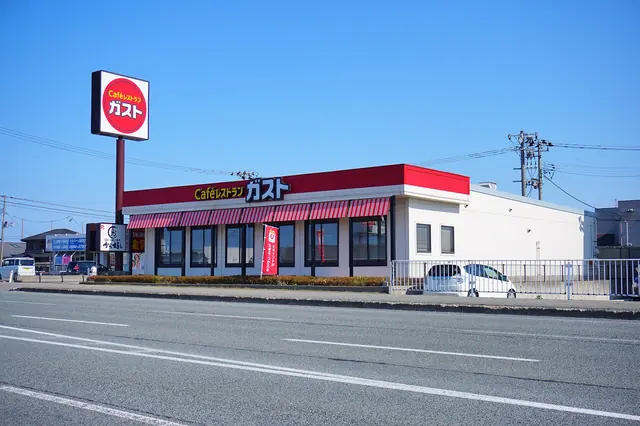 Gusto: a touch-screen menu at every table, serving robots at many shops, and a drink bar from 250 yen with a meal.
About the photos: the drink bar is at a family restaurant photographed in 2015, not necessarily a Saizeriya, and the Gusto is in Oga, in Akita.
CoCo Ichibanya and Marugame Seimen: curry and udon your way
These two chains let you put your own meal together: at CoCo Ichibanya you build your curry, and at Marugame Seimen you collect your udon and pick your own tempura. JNTO names both in its guides for visitors.
CoCo Ichibanya: choose the sauce, the rice, the heat and the toppings
CoCo Ichibanya, or CoCoICHI, specialises in Japanese curry rice. It was "Established in 1978", in the words of its English site, and at the end of February 2026 it had 1,205 restaurants in Japan and 217 abroad. Its idea is simple: "Make your very own CoCoICHI curry by customizing the rice portion, spice level, and optional toppings." Its English page on how to order takes you through four choices:
How to order at CoCo Ichibanya
- Sauce: pork, mild pork, beef, CoCoICHI vegetarian, or hashed beef and rice.
- Rice: choose how much. A larger portion costs a little more.
- Heat: pick anything from mild up to level 20. Regular, or futsu, is a standard medium heat.
- Toppings: add as many as you like, from nearly 40 kinds.
On the heat: "Select your spice level from Mild to Level 20." The beef and vegetarian sauces cannot be made mild. If you are bringing children, "Kids' curry sauce is used for mild pork curry." Not every shop has every sauce: "Some stores do not provide hashed beef and rice."
On the rice: "Order as much rice as you want!" Between 150 g and 400 g you change the amount in 50 g steps, and above 400 g in 100 g steps. With the pork, mild pork and vegetarian sauces, 350 g of rice costs 65 yen extra and each 100 g above 400 g costs 130 yen; with the beef and hashed beef sauces the extras are 78 yen and 157 yen. On the toppings: "You can add any kinds of toppings to the curry you order." Cheese costs 264 yen and a pork cutlet 409 yen.
CoCo Ichibanya prices, eaten in, tax included (October 2026)
- 646 yen: pork curry or mild pork curry
- 794 yen: beef curry
- 1,055 yen: pork cutlet curry
- 264 yen: cheese as a topping
These are the prices for Tokyo, Kanagawa and Osaka, and for the Maker's Pier shop in Nagoya. CoCo Ichibanya's Japanese menu says the pork-based curries are cheaper in other areas. Between 10 p.m. and 5 a.m. it adds 7% to the bill.
If you do not eat meat, CoCo Ichibanya has a vegetarian curry. "We cater to people with different cultures and dietary habits." Its English site describes it as "A curry only using plant-based ingredients." It costs 683 yen on the English site, which also has menu books to look at in English, Chinese, Korean, Thai and Vietnamese, and in Russian, Arabic, Portuguese and Spanish. This guide could not find a list of the payment methods CoCo Ichibanya's shops take, so look for the stickers at the entrance and the register.
Marugame Seimen: collect your udon, cafeteria-style
Marugame Seimen opened its first shop in November 2000 in Kakogawa, in Hyogo, and its first shop abroad in April 2011. In September 2026 it had 906 shops in Japan. Its English pages are machine-translated, so this is from its Japanese guide for first-time customers. Marugame Seimen is self-service, and a meal goes like this:
How a meal at Marugame Seimen works
- Order your udon: say which udon you want, what size and whether hot or cold.
- Take your bowl: collect it from the staff.
- Pick your tempura: put tempura and rice balls (onigiri) on a plate yourself.
- Pay: at the register.
- Help yourself: take condiments, water and tea, and find a seat. Chopsticks, shichimi chilli pepper, dashi soy sauce and dashi sauce are on the tables.
- Clear up: take your tray and dishes to the return counter when you have finished.
Some shops have a separate window for takeaway, or ask you to fill in an order slip. Depending on the dish there are up to four sizes: small, with three quarters of a portion of noodles; regular, with one; large, with one and a half; and toku, with two.
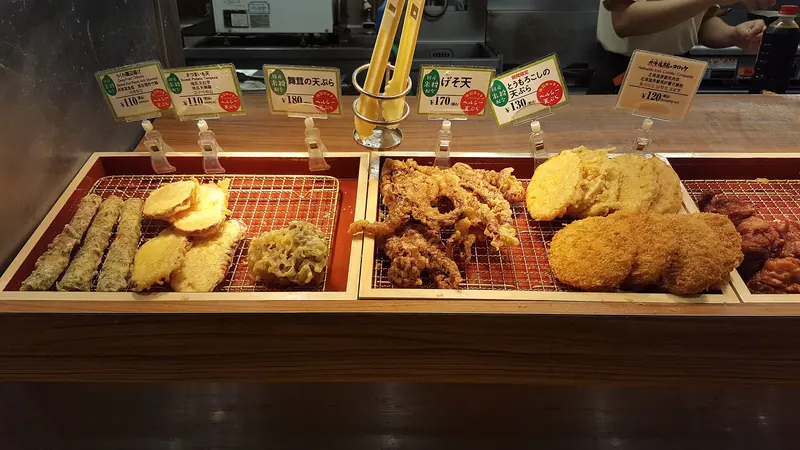
On Marugame Seimen's Japanese menu, a regular kamaage udon, noodles served in the hot water they were cooked in, costs 390 yen, and a regular kake udon, in hot broth, 440 yen. The children's set, for children up to the last year of primary school, costs 290 yen. Prices include tax and may differ at some shops. If you cannot finish, you can take home only the items marked as fine for takeaway.
Whether you can pay without cash, and with what, depends on the shop, so check at the shop. Marugame Seimen's list includes transport IC cards such as Suica, PASMO and ICOCA; QUICPay, Rakuten Edy, iD and nanaco; Visa, Mastercard, JCB, American Express, Diners Club and Discover cards; and PayPay, Rakuten Pay, d Barai, Merpay, au PAY, Alipay and Smart Code, among others. Its website can be read in Japanese, English, traditional and simplified Chinese and Korean.
Hanamaru Udon, the other udon chain JNTO names, is part of the Yoshinoya group and had 424 shops in September 2026. This guide does not cover it in detail.
CoCo Ichibanya and Marugame Seimen
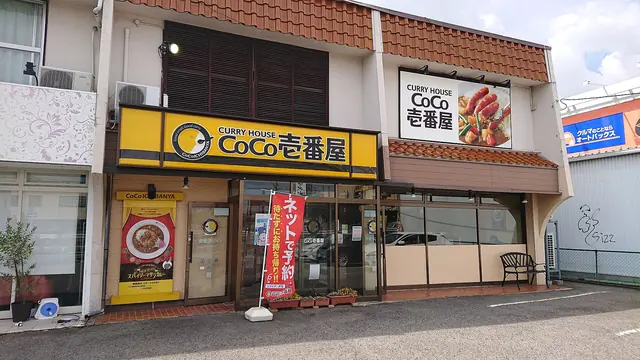 CoCo Ichibanya: build your own curry, from mild to level 20, with a vegetarian curry made only from plant-based ingredients.
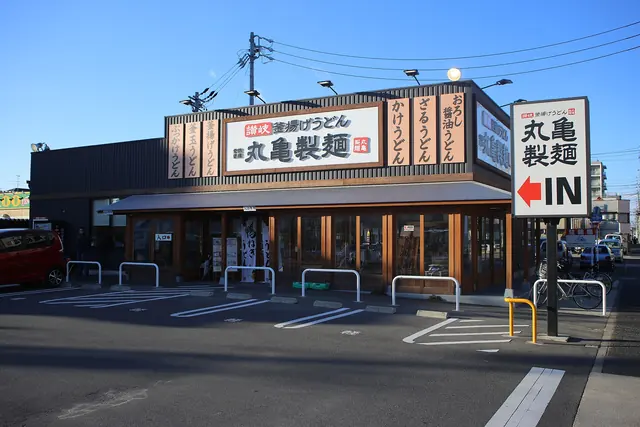 Marugame Seimen: udon from 390 yen, with tempura you pick yourself and a children's set for 290 yen.
Where are the chain restaurants, and how do you get there?
Below are branches of the chains in this guide in seven areas that visitors often go to: Shinjuku, Shibuya, Asakusa, Akihabara, Ginza and Ikebukuro in Tokyo, and Dotonbori and Namba in Osaka. The address, the opening hours and, where the branch's page gives one, the walking time from the station were checked on each branch's own page in October 2026. Where a page gives no walking time, this guide does not guess one; use the map.
Hours change, and shops sometimes close early, so check the branch's page or the map on the day. For getting between areas, a transport IC card is the easiest way to pay your fares: see our guides to the Suica card and the Tokyo Subway Ticket.
Shinjuku: three beef bowl shops open late or all night
Yoshinoya's branch page lists the lines that stop there, among them the JR Yamanote, Chuo and Saikyo lines, the Keio and Odakyu lines, the Tokyo Metro Marunouchi line and the Toei Oedo and Shinjuku lines. All three beef bowl chains have a branch a short walk from the station:
Beef bowl shops in Shinjuku
- Yoshinoya Shinjuku Yasukuni-dori: 1-6-3 Kabukicho. Open 24 hours, and a Cooking & Comfort shop, where you order on a tablet. About 2 minutes' walk, or 171 metres, from exit B10 of Shinjuku Station, about 3 minutes from exit B8 of Shinjuku-sanchome Station and about 5 minutes from Seibu-Shinjuku Station.
- Sukiya Shinjuku Southeast Exit: 3-32-2 Shinjuku. Open from 4 a.m. to 3 a.m. the next day, so it is closed only between 3 a.m. and 4 a.m. Named after the southeast exit of Shinjuku Station; its page gives no walking time.
- Matsuya Shinjuku West Exit: 1-13-3 Nishi-Shinjuku, on 1F. Open 24 hours, with about 7% added to the bill between 10 p.m. and 5 a.m. Named after the west exit of Shinjuku Station; its page gives no walking time.
Shibuya: a Matsuya on Center Gai and a Gusto by the crossing
Gusto's Shibuya Ekimae branch is on 7F of the Shibuya Ekimae Building, 2-3-1 Dogenzaka. Gusto asks you to use entrance A, on the side of the scramble crossing. Its page gives the distance to Shibuya Station by line: 105 metres for the Tokyo Metro Ginza line and others, 111 metres for the Keio Inokashira line, 131 metres for the JR Yamanote line and others, 232 metres for the Tokyu Toyoko line and others, and 249 metres for the Tokyu Den-en-toshi line.
Chain restaurants in Shibuya
- Gusto Shibuya Ekimae: 7F, Shibuya Ekimae Building, 2-3-1 Dogenzaka. Open every day from 7:30 a.m. to 11:00 p.m. Use entrance A, on the side of the scramble crossing.
- Matsuya Shibuya Center Gai: 1F, Metro Building, 26-9 Udagawacho. Open 24 hours. When it is busy, people who ordered on their phones join the same queue as everyone else. Its page gives no walking time.
Asakusa: sushi and udon around the ROX buildings
In Asakusa, Kura Sushi's first global flagship shop and a Marugame Seimen are both in the Asakusa ROX buildings, and a Sushiro is nearby. Sushiro's page gives about 2 minutes' walk from Asakusa Station on the Tsukuba Express.
Chain restaurants in Asakusa
- Sushiro Asakusa Rokku: 3F, Tokyo Rakutenchi Asakusa Building, 2-6-7 Asakusa. Open 11:00 a.m. to 11:00 p.m. on weekdays and 10:30 a.m. to 11:00 p.m. at weekends and on holidays. Last orders are 30 minutes before closing.
- Kura Sushi Asakusa ROX: 4F, Asakusa ROX, 1-25-15 Asakusa. Open 11:00 a.m. to 11:00 p.m. on weekdays and 10:20 a.m. to 11:00 p.m. at weekends. After 9 p.m., take the Kura Sushi lift next to the main ROX building straight up to 4F.
- Marugame Seimen Asakusa ROX: 1F, ROX-3G, 1-26-5 Asakusa. Open every day from 11:00 a.m. to 9:00 p.m. Last orders are 30 minutes before closing.
Akihabara: sushi, Saizeriya, curry and udon near the station
Akihabara has four of the chains in this guide within a few streets of the station. Two are named after its exits: the Electric Town, or Denkigai, exit and the Showa-dori exit. For what else to do in the area, see our guide to Akihabara and Ikebukuro.
Chain restaurants in Akihabara
- Hama Sushi Akihabara Denkigai-guchi: 3F, BiTO AKIBA PLAZA, 1-18-18 Sotokanda. Open 11:00 a.m. to 11:00 p.m. on weekdays and 10:00 a.m. to 11:00 p.m. at weekends and on holidays. Last entry is 30 minutes before closing and last orders 15 minutes before.
- Saizeriya Akihabara Chuo-dori: 2F, Akiba Place, 3-15-1 Sotokanda. Open from 11:00 a.m. to 5:00 a.m. Takes transport IC cards and credit cards such as Visa.
- CoCo Ichibanya JR Akihabara Station Showa-dori Exit: 1F, Watanabe Building, 4 Kanda Hirakawacho. Open from 10:00 a.m., with last orders at 11:30 p.m.
- Marugame Seimen atre Akihabara 1: 1F, atre Akihabara 1, 1-17-6 Sotokanda. Open 10:00 a.m. to 10:30 p.m. Last orders are 30 minutes before closing.
None of these four pages gives a walking time. The map below shows the station; open it in Google Maps and search for a shop's name to see the way.
Ginza: Kura Sushi's longest belt and a Saizeriya
Ginza has Kura Sushi's newest global flagship shop, the one with the 123.14-metre belt, and a Saizeriya.
Chain restaurants in Ginza
- Kura Sushi Ginza: 7F, Marronnier Gate Ginza 2, 3-2-1 Ginza. Open 11:00 a.m. to 11:00 p.m. on weekdays and 10:20 a.m. to 11:00 p.m. at weekends.
- Saizeriya Ginza Inz: Ginza Inz 2F, 3-1 Ginza-nishi. Open 10:00 a.m. to 11:00 p.m. Takes transport IC cards and credit cards such as Visa.
Neither page gives a walking time.
Ikebukuro: Hama Sushi on Green Odori
Hama Sushi's Ikebukuro Green Odori shop is in the basement and keeps the same hours as the Akihabara shop. Its page gives no walking time.
Osaka: Dotonbori and Namba
In Osaka, the branches below are around Dotonbori and Namba, in Chuo and Naniwa wards. Sushiro's Dotonbori shop, a Digiro shop with large touch displays at the tables, gives about 4 minutes' walk from Namba Station on the Osaka Metro.
Chain restaurants in Dotonbori and Namba
- Sushiro Digiro Dotonbori: 2F, Nakaza Cuidaore Building, 1-7-21 Dotonbori, Chuo Ward. Open 11:00 a.m. to 11:00 p.m. on weekdays and 10:30 a.m. to 11:00 p.m. at weekends and on holidays. Last orders are 30 minutes before closing.
- Kura Sushi Global Flagship Dotonbori: 2F, 1-4-22 Dotonbori, Chuo Ward. Open 11:00 a.m. to midnight on weekdays and 10:20 a.m. to midnight at weekends.
- Saizeriya Namba OCAT: B1F, OCAT, 1-4-1 Minatomachi, Naniwa Ward. Open 10:00 a.m. to 11:00 p.m. Takes transport IC cards and credit cards such as Visa.
- CoCo Ichibanya Namba Sennichimae: 10-14 Nanba Sennichimae, Chuo Ward. Open from 11:00 a.m., with last orders at 11:00 p.m.
When can you eat? Breakfast, late nights and last orders
The beef bowl chains are open early. JNTO's guide to breakfast in Japan counts the restaurant chains among the places where commuters eat in the morning, and notes that besides beef bowls they serve Japanese set breakfasts, some with touch screens in several languages.
Breakfast at the beef bowl chains (October 2026)
- 4 a.m.: breakfast starts at Yoshinoya and Sukiya
- 5 a.m.: breakfast starts at Matsuya
- 11 a.m.: breakfast ends at all three
At Yoshinoya, the asagyu breakfast set, a regular beef bowl with miso soup and one side dish, costs 552 yen and is only for eating in. The family restaurants open later: Gusto's Shibuya Ekimae branch, for example, opens at 7:30 a.m.
Late at night, several chains add a charge to the bill. These are the rules on each chain's own pages in October 2026:
Late-night charges
- Matsuya: about 7%, from 10 p.m. to 5 a.m.
- Sukiya: 7%, from 10 p.m. to 5 a.m., which includes the first hour of breakfast.
- CoCo Ichibanya: 7%, from 10 p.m. to 5 a.m.
- Saizeriya: 10% after 10 p.m.
- Gusto: 10% after 10 p.m.
- Yoshinoya: not listed on its menu page.
Can you eat at chain restaurants with allergies or a special diet?
Yes, with care. The big chains publish allergen lists for their menus, and some of them are in English. But the lists only cover the main allergens, kitchens share utensils and fryers, and the menu differs from shop to shop, so the chains themselves say not to rely on the lists alone.
Where to find each chain's allergen list
- Sushiro: an English list covering 28 ingredients, dated 7 October 2026.
- Kura Sushi: an English list, dated 16 October 2026 and updated every day.
- Saizeriya: an English list, dated April 2023.
- CoCo Ichibanya: a list in Japanese and English.
- Gusto: a web page in Japanese, covering nine ingredients.
- Matsuya, Sukiya and Yoshinoya: lists in Japanese.
Sushiro's English list says: "Our allergen information covers the 28 designated ingredients under the Japanese Food Labeling Act." And it is clear about the limits: "This information does not guarantee that an allergic reaction will not occur." Kura Sushi's English list is updated every day, and it notes that some restaurants do not serve every item on it.
Saizeriya's English list explains why: "As tableware and cooking utensils are shared at Saizeriya restaurants, there is a possibility of minuscule contamination." It goes on: "Please use this list solely as a reference. Consult medical specialists and make final decisions at your responsibility." CoCo Ichibanya's list makes the same point about fried food: "All deep fried food is fried using the same fryer and oil".
Gusto's allergen page, in Japanese, covers nine ingredients: buckwheat, peanuts, wheat, egg, milk, shrimp, crab, walnuts and cashew nuts. It says that traces that get into a dish during cooking are not shown on the list; that side dishes, sauces, dressings and the condiments on the table are not covered; that utensils, tableware, frying oil, batter and the places where food is stored are shared; and that noodles, including buckwheat noodles, are cooked with the same utensils and pots. The drink bar is not covered either, and its nozzles are shared.
On our allergy card page you tick what you cannot eat, and it gives you a card in Japanese for the staff.
If you eat halal, ask before you order. JNTO's Muslim-friendly guide says CoCo Ichibanya has opened shops offering halal food in Akihabara and Shinjuku. But when this guide searched CoCo Ichibanya's shop finder in October 2026, no shop came up for halal, and the shop finder says to ask the shop about what it sells. If you do not eat meat, CoCo Ichibanya's vegetarian curry, described in the curry section above, is one choice; remember that its fried toppings share a fryer.
Useful Japanese at a chain restaurant
At most chains you can order without speaking, on a screen or at a ticket machine, and the staff are used to visitors who point. These words often appear on ticket machines and touch panels; for ramen words, such as shokken and ōmori, see our ramen guide.
| Japanese | Reading | Meaning |
|---|---|---|
| 店内 | tennai | Eat in |
| 持ち帰り / テイクアウト | mochikaeri / teikuauto | Takeaway |
| 牛丼 | gyūdon | Beef bowl |
| 並盛 | namimori | Regular size |
| 小盛 | komori | Small size |
| 特盛 | tokumori | Extra large |
| 定食 | teishoku | Set meal, with rice, soup and side dishes |
| 単品 | tanpin | On its own, not as a set |
| 味噌汁 | misoshiru | Miso soup |
| 注文 | chūmon | Order |
| 呼び出し | yobidashi | Call (the staff) |
| 受付 | uketsuke | Reception, check-in |
| 予約 | yoyaku | Booking |
| 会計 | kaikei | Bill, checkout |
| 深夜料金 | shin'ya ryōkin | Late-night charge |
| What the staff may say | Reading | Meaning |
|---|---|---|
| 店内でお召し上がりですか? | Tennai de omeshiagari desu ka? | Are you eating in? |
| お持ち帰りですか? | Omochikaeri desu ka? | Is it to take away? |
| お会計はご一緒ですか? | Okaikei wa goissho desu ka? | Are you paying together? |
| 番号でお呼びします | Bangō de oyobi shimasu | We will call your number |
| What you can say | Reading | Meaning |
|---|---|---|
| 店内で | Tennai de | To eat in |
| 持ち帰りで | Mochikaeri de | To take away |
| 予約しています | Yoyaku shite imasu | I have a booking |
| どのくらい待ちますか? | Dono kurai machimasu ka? | How long is the wait? |
| 別々でお願いします | Betsubetsu de onegai shimasu | Separate bills, please |
| お会計お願いします | Okaikei onegai shimasu | The bill, please |
| 交通系ICは使えますか? | Kōtsūkei IC wa tsukaemasu ka? | Can I pay with an IC card such as Suica? |
| 〜アレルギーがあります | … arerugī ga arimasu | I am allergic to … |
| 肉は入っていますか? | Niku wa haitte imasu ka? | Is there meat in it? |
Our Japanese travel phrases page has more, each with audio.
Frequently asked questions
Do you tip at Japanese chain restaurants?
No. Tipping is not expected at chain restaurants, and you pay what the menu or the machine says, plus a late-night charge at some chains. JNTO's guide to tipping says: "Tipping practices in Japan differ significantly from those in many other countries."
Do Japanese chain restaurants take credit cards?
Usually, but not at every shop. Sushiro takes credit cards at every shop but says it does not accept electronic money. Sukiya and Kura Sushi say some of their shops do not take credit cards, and Saizeriya has taken cashless payment at every shop since April 2021. Carry some cash as a back-up.
Do Japanese chain restaurants have English menus?
Many do. Sushiro's touch panels work in English, simplified Chinese and Korean, Matsuya's ticket machines let you change the language, Saizeriya has an English menu and phone ordering in English, and CoCo Ichibanya has menu books in English and eight other languages. Sukiya and Hama Sushi have English menus on their websites.
Which chain restaurants are open 24 hours?
It depends on the branch, not the chain. In October 2026, Matsuya's Shinjuku West Exit and Shibuya Center Gai branches and Yoshinoya's Shinjuku Yasukuni-dori branch were open 24 hours. Sukiya's Shinjuku Southeast Exit branch closes only from 3 a.m. to 4 a.m., and Saizeriya's Akihabara Chuo-dori branch is open until 5 a.m.
What is the cheapest chain restaurant in Japan?
No one chain is cheapest for everything, but some dishes cost well under 500 yen. In October 2026, Saizeriya's Milan-style doria cost 300 yen, a regular kamaage udon at Marugame Seimen 390 yen, and a small beef bowl at Sukiya 420 yen.
Can vegetarians eat at Japanese chain restaurants?
At some. CoCo Ichibanya has a vegetarian curry made only from plant-based ingredients, for 683 yen on its English site. At other chains, ask the staff and show a card in Japanese that says what you do not eat.
Can you book a table at a chain restaurant?
At the sushi chains, yes. Sushiro takes bookings in its app, for members, and not by phone; Kura Sushi takes them on its website; and Hama Sushi lets you reserve a place in the queue or a set time in its app. Gusto's booking service for groups from abroad is only for travel agents.
Are Japanese chain restaurants good for children?
Yes, and JNTO names Saizeriya, Gusto, Sushiro and Hama Sushi among them. Children under four drink free at Saizeriya's drink bar, Marugame Seimen has a children's set for 290 yen, and CoCo Ichibanya uses a children's curry sauce for its mild pork curry. Sukiya says some of its shops have no children's menu.
Do Japanese chain restaurants serve breakfast?
The beef bowl chains do. Yoshinoya and Sukiya serve breakfast from 4 a.m. and Matsuya from 5 a.m., all until 11 a.m. Yoshinoya's asagyu set costs 552 yen and is only for eating in.
Is there a late-night charge at Japanese chain restaurants?
At some chains. Matsuya adds about 7% and Sukiya and CoCo Ichibanya 7% between 10 p.m. and 5 a.m., and Saizeriya and Gusto add 10% after 10 p.m.
Sources
Official and primary sources used for this page. Checked October 17, 2026.
- GO TOKYO: Tokyo at a Discount — fast-food chains and family restaurants as cheap meals, drink bars and salad bars
- GO TOKYO Gourmet: From Door to Leaving: How Dining Out in Tokyo Flows — waiting to be seated, sign-in sheets, open and closed signs, ticket machines, water, ordering, one dish each, paying, tipping
- JNTO: Starting Your Day in Japan: Breakfast Options to Fit Your Travel Plans — restaurant chains with English websites, breakfast at the chains, touch screens
- JNTO: Traveling With Children — family restaurants and sushi chains named for families
- JNTO USA: Self-Service Udon Restaurants — Marugame Seimen and Hanamaru Udon
Show all 102 sources
- JNTO Singapore: Japanese Restaurants with Halal Food — CoCo Ichibanya's shops with halal options, Ichiran
- JNTO Canada: Etiquette — number machines at popular restaurants
- JNTO: Cashless Payments in Japan — payment stickers at the entrance, smartphone payments from abroad
- JNTO: Tipping in Japan — tipping
- Matsuya Foods: How to Order (PDF) — the ticket machine, the screen above the counter, returning your tray
- Matsuya Foods: Beef Bowl, English menu — free miso soup, English prices
- Matsuya Foods: 牛めし (in Japanese) — beef bowl prices, *atama omori*, the late-night charge
- Matsuya Foods: Price changes and late-night charges (in Japanese) — the late-night charge
- Matsuya Foods: Breakfast menu (in Japanese) — breakfast hours
- Matsuya Foods: Matsuya in numbers (in Japanese) — number of shops
- Matsuya Foods: QR code payments (in Japanese) — Smart Code, shops without a ticket machine or self-checkout
- Matsuya Foods: Alipay+ and WeChat Pay in the official app (in Japanese) — app payments, visitors from abroad
- Matsuya Foods: Mobile order shop list (in Japanese) — the Shinjuku West Exit and Shibuya Center Gai branches
- Matsuya Foods: Allergen information (in Japanese) — allergen list
- Sukiya: English site — what gyudon is, sizes, toppings, sets
- Sukiya: 牛丼 (in Japanese) — beef bowl prices, the late-night charge
- Sukiya: Sukiya's DX (in Japanese) — ticket machines, self-order systems and self-checkouts
- Sukiya: Mobile ordering in the app (in Japanese) — ordering with the QR code on the table, paying in the app
- Sukiya: Breakfast at Sukiya (in Japanese) — breakfast hours
- Sukiya: たまかけ朝食 (in Japanese) — the late-night charge on early breakfasts
- Sukiya: FAQ (in Japanese) — shops without credit cards, the children's menu and desserts
- Sukiya: Shinjuku Southeast Exit branch (in Japanese) — address, hours, payment methods
- Sukiya: Beef bowl allergen information (in Japanese) — allergen list
- Zensho Holdings: Sukiya Monthly Trends — number of Sukiya shops
- Yoshinoya: English site — the 1899 shop at Nihonbashi, the motto
- Yoshinoya: 牛丼 (in Japanese) — beef bowl prices to eat in and take away, *atama no omori*
- Yoshinoya: 秋の牛丼フェス'26 (in Japanese) — the October 2026 discount
- Yoshinoya: 朝牛セット (in Japanese) — the breakfast set, its price and hours
- Yoshinoya: How to spend your time at Yoshinoya (in Japanese) — Cooking & Comfort shops
- Yoshinoya: Shinjuku Yasukuni-dori branch (in Japanese) — address, hours, stations, payment methods
- Yoshinoya: Allergen information (PDF, in Japanese) — allergen list
- Yoshinoya Holdings: Number of Stores of the Group — number of Yoshinoya and Hanamaru Udon shops
- Akindo Sushiro: English site — touch panel languages, the app, credit cards and QR codes, no electronic money
- Akindo Sushiro: Company profile (in Japanese) — number of shops
- Akindo Sushiro: FAQ (in Japanese) — booking in the app, the booking system's hours, checking in, payment at every shop
- Akindo Sushiro: What is Digiro? (in Japanese) — Digiro and Digiro mini, ordering from your phone
- Akindo Sushiro: Dotonbori shop (in Japanese) — address, hours, walking time, credit cards
- Akindo Sushiro: Asakusa Rokku shop (in Japanese) — address, hours, walking time, credit cards
- Akindo Sushiro: Allergen information (PDF) — the 28 ingredients, the limits of the list
- Kura Sushi: Company outline (in Japanese) — number of shops
- Kura Sushi: Guide for first-time customers (in Japanese) — checking in, the seat slip, the order lane, paying at the touch panel, number of shops in Japan
- Kura Sushi: Booking (in Japanese) — booking on the web, the email address, groups of five or more
- Kura Sushi: How to enjoy Kura Sushi (in Japanese) — Bikkura Pon, shops that do not take credit cards
- Kura Sushi: The global flagship shop in Asakusa (in Japanese) — the first flagship, touch panel languages, staff who speak foreign languages
- Kura Sushi: The global flagship shop in Dotonbori (in Japanese) — opening date
- Kura Sushi: The global flagship shop in Harajuku (in Japanese) — opening date
- Kura Sushi: The global flagship shop at Tokyo Skytree Oshiage-ekimae (in Japanese) — opening date, the largest conveyor-belt sushi restaurant
- Kura Sushi: The global flagship shop at Namba Parks South (in Japanese) — opening date
- Kura Sushi: The global flagship shop in Ginza (in Japanese) — opening date, the 123.14-metre belt, the Edo-style stalls
- Kura Sushi: Asakusa ROX shop (in Japanese) — address, hours, last entry, the lift after 9 p.m.
- Kura Sushi: Ginza shop (in Japanese) — address, hours
- Kura Sushi: Dotonbori shop (in Japanese) — address, hours
- Kura Sushi: Allergen and calorie information (PDF) — the daily update, items not served at every shop
- Hama Sushi: English site — visitors, the menu beyond sushi, the shop search
- Hama Sushi: FAQ (in Japanese) — no seat reservations, the app, payment methods, Zensho Cooca
- Hama Sushi: Akihabara Denkigai-guchi shop (in Japanese) — address, hours, lanes, payment methods
- Hama Sushi: Ikebukuro Green Odori shop (in Japanese) — address, hours, payment methods
- Zensho Holdings: Brands (in Japanese) — Hama Sushi and Sukiya in the Zensho group
- Zensho Holdings: Results for the half year to September 2025 (PDF, in Japanese) — number of Hama Sushi shops in Japan
- Saizeriya: English menu (PDF) — number of restaurants and customers, one order per person, the late-night charge, the drink bar
- Saizeriya: Ordering guide (PDF) — ordering on your phone, step by step
- Saizeriya: Popular dishes (in Japanese) — dish prices and menu numbers
- Saizeriya: Drink bar (in Japanese) — drink bar prices
- Saizeriya: How to use Saizeriya (in Japanese) — water, glasses and children's cups, paper hand towels, the service station
- Saizeriya: The founding years (in Japanese) — 1967 in Motoyawata
- Saizeriya: History (in Japanese) — the drink bar, cashless payment, self-checkouts
- Saizeriya: Message from the president (in Japanese) — phone ordering at about 900 shops
- Saizeriya: Akihabara Chuo-dori shop (in Japanese) — address, hours, payment methods
- Saizeriya: Ginza Inz shop (in Japanese) — address, hours, payment methods
- Saizeriya: Namba OCAT shop (in Japanese) — address, hours, payment methods
- Saizeriya: Allergen list (PDF) — shared tableware and utensils, using the list as a reference
- Skylark Holdings: Number of restaurants by brand (in Japanese) — number of Gusto restaurants, the group's brands
- Skylark Holdings: DX (in Japanese) — digital menu books, serving robots, self-checkouts, cashless payments
- Skylark Holdings: Serving robots at Gusto and Shabu-Yo (PDF, in Japanese) — the robot's face and voice
- Skylark Holdings: Table payment (PDF, in Japanese) — barcode payment at the table from August 2023
- Skylark Holdings: Paying at the table with the Skylark app (PDF, in Japanese) — card payment in the app from December 2024, shops without table payment
- Skylark: Credit cards and electronic money (in Japanese) — what can be used, single payments only, no top-ups
- Gusto: Drink bar (in Japanese) — drink bar prices, the late-night charge
- Gusto: Shibuya Ekimae branch (in Japanese) — address, hours, entrance A, distances to the station
- Skylark: Restaurants for inbound groups (in Japanese) — bookings for travel agents only
- Skylark: Allergen information, notes (in Japanese) — the nine ingredients, what the list does not cover, shared utensils
- CoCo Ichibanya: English site — founding year, customising, nearly 40 toppings, the vegetarian curry, menu books
- CoCo Ichibanya: How to order — sauces, rice amounts and prices, spice levels, toppings
- CoCo Ichibanya: Meat curries (in Japanese) — prices, prices by area, the late-night charge
- CoCo Ichibanya: Toppings (in Japanese) — topping prices
- Ichibanya: Shop information (in Japanese) — number of shops in Japan and abroad
- CoCo Ichibanya: JR Akihabara Station Showa-dori Exit shop (in Japanese) — address, hours
- CoCo Ichibanya: Namba Sennichimae shop (in Japanese) — address, hours
- CoCo Ichibanya: Shop search for halal (in Japanese) — the search result in October 2026
- CoCo Ichibanya: Allergy information (PDF) — the shared fryer
- Marugame Seimen: Company (in Japanese) — the first shop in Kakogawa, the first shop abroad
- Marugame Seimen: Guide for beginners (in Japanese) — how a meal works, sizes, takeaway
- Marugame Seimen: Udon menu (in Japanese) — udon prices, the children's set
- Marugame Seimen: Cashless payment (in Japanese) — payment methods
- Marugame Seimen: Asakusa ROX shop (in Japanese) — address, hours
- Marugame Seimen: atre Akihabara 1 shop (in Japanese) — address, hours
- Toridoll Holdings: Monthly Sales Report — number of Marugame Seimen shops in Japan
Related guides
To cite or link to this page: Japanese chain restaurants: the chains visitors love, how to get a table, order and pay, and how to find one — Japan Pocket Guide, https://japanpocketguide.com/food/japanese-chain-restaurants/