Things to do · Anime
Claw machines in Japan: what they are called, how to pay for a play, how to win, the prize rules, and where to play in Tokyo, Osaka, Kyoto and Yokohama
Claw machines take over the ground floor of many Japanese arcades, and their prizes are why so many anime fans walk in: plush toys, figures made only for arcades, even snacks. This page covers what the machines are called, how to pay when the slot takes only coins, the tips that help, the national rules on what a prize may be worth, and the arcades a visitor can find most easily, with addresses, stations and hours. The facts come from the GiGO chain's guide for foreign visitors, Guinness World Records, Japan's national tourism organisation, the makers Sega and Taito, the National Police Agency and the arcade industry's trade body. We read them all on Sunday 8 November 2026, and the link to each one is under Sources, at the bottom of this page.
Last checked · Sources

In short
In Japan a claw machine is called a crane game (クレーンゲーム) or a UFO catcher, after a Sega machine first made in 1985. Arcades are free to enter. You normally pay with coins, which a change machine inside gives you for notes, and some GiGO arcades also take Suica cards and Alipay. No chain or industry body we checked publishes a standard price per play, so this site does not quote one. Under police rules, a prize must have a shop price of about 1,000 yen or less. Easy places to start are GiGO Sohonten in Ikebukuro, GiGO Akihabara Building 3 and GiGO Osaka Dotonbori Honten. The Guinness record for the most claw machines in one place, 555, belongs to an arcade in Yokohama.
Claw machines in Japan at a glance
What is a claw machine called in Japan?
The everyday Japanese word is kurēn gēmu, crane game, written クレーンゲーム. The other name you will see on signs is UFO catcher. Crane games often go by that name, and JNTO, the national tourism body, gives the reason: "because of the modern grabbing mechanism resembling an alien spaceship". It also points out that the name UFO CATCHER belongs to Sega as a trademark.
Sega tells the story of the name itself. The machine, which it launched in 1985, was first developed as the Eagle Catcher, because it would snatch up a prize the way an eagle seizes its prey. The eagle design never came together. Watching the machine lift goods into the air, the team thought it looked more like a UFO, then a craze on Japanese TV, carrying things off the ground, and the name changed. In 2024 the name won an excellence award in the Japan Naming Awards.
How claw machines grew up in Japan
- 1965: Taito builds the Crown 602, which its company history calls the first crane game made in Japan. You looked down into it from above while a clawed crane lifted the prize.
- 1985: Sega launches the UFO Catcher.
- 2001: police guidelines put the prize limit in writing, at a shop price of about 800 yen.
- 2022: the limit rises to about 1,000 yen on 1 March, and on 22 July a Yokohama arcade reopens with 555 claw machines, a Guinness World Record.
The prizes are the point. JNTO's guide lists plush toys and arcade-only anime goods, and even "food items such as dry snacks, boil-in-the-bag curries, and ice cream". GiGO's guide for visitors suggests that families "Get loads of Japanese snacks with crane games". Figures made only as arcade prizes, which you will not find on a shop shelf, are covered in our anime figure shopping guide.
Are claw machines popular in Japan?
More than ever, going by the numbers that the Japan Amusement Industry Association (JAIA), the arcade trade body, provides to the press. Its figures cover the whole industry, adding its own estimate for companies that are not members. They count crane games together with the other machines that pay out goods, under the heading of prize games.
Prize games in Japan's arcades
- 417.7billion yen of prize-game sales in the 2024 financial year
- 68%of all arcade sales, up from 41% in 2013
- 258,903crane games and other prize machines in 2024
- 136,096of them in 2013
The arcades themselves have changed shape. JAIA says the old game centres by the station have been closing while big arcades open in shopping centres, so the number of machines has held up even where small arcades have gone.
How much does a claw machine cost in Japan?
There is no national price list. No chain or industry body we checked publishes a standard price per play, and GiGO's guide for visitors does not give one either, so this site does not quote one. Read the price on each machine before you put money in.
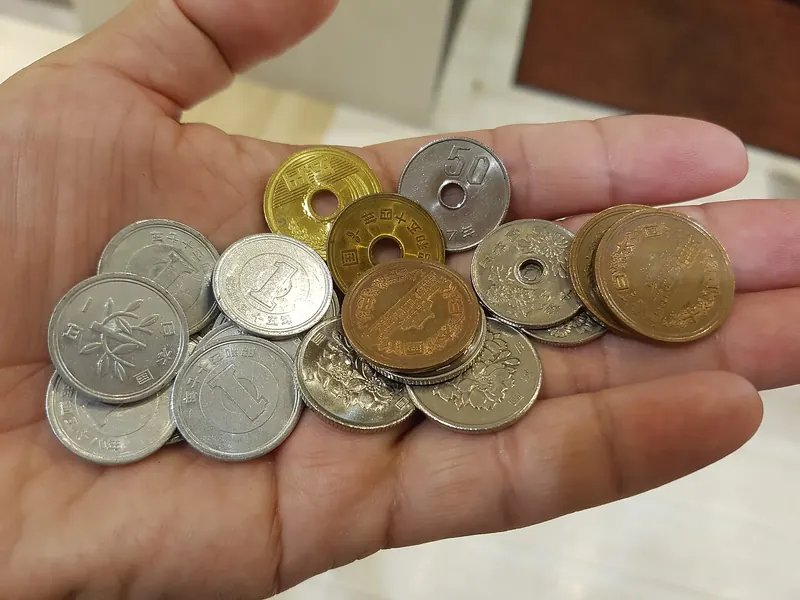
Two fixed points help. Taito's company history, looking back to 1989, describes game centres as businesses run on 100 yen a play, which made it hard to raise prices when Japan brought in consumption tax. And at the arcade in Yokohama that holds the Guinness record, Guinness found that "There is also a 10-yen corner, where one game costs only 10 yen".
The real cost of a prize is the number of plays it takes, which is why the prize rules further down matter for your budget.
How to pay: coins, Suica or Alipay
"At Japanese amusement arcades, you normally have to insert coins directly into the game machines to play on them." That is how GiGO's guide puts it, and the machines will not take notes: "Bills aren’t accepted, so exchange them for coins!" The guide sends you to the change machine inside the arcade.
Changing notes into coins at a GiGO arcade
- Put ina note or a 500-yen coin.
- Choosewhat you want back: 100-yen or 500-yen coins, or medals. Not every change machine offers all three.
- Takethe coins from the return slot.
- With foreign notes,use the foreign money exchange machine first to get yen, then start again at step 1.
GiGO's guide lists three main ways to pay at its arcades: cash, Welcome Suica and Alipay. "Note that only some locations support cashless payments and foreign currency exchange." Where a machine has a payment terminal, the card and app options work like this:
Paying without cash at GiGO
- Suica and other transport IC cards: press the red-framed button on the terminal, choose IC with the arrow buttons, then touch your card, or your phone if you use mobile Suica.
- Alipay, WeChat Pay or UnionPay QR: same button, choose your service's logo, scan the code on the screen with the app and pay in the app.
- Foreign notes: the exchange machines list 13 currencies, among them US dollars, euros, pounds, Australian and Hong Kong dollars, Chinese yuan and Korean won. Foreign coins are not taken, and each machine handles a different set.
Depending on the arcade and the machine, other e-money and credit cards may work too, the guide says, so what you can use differs from place to place. Where it is accepted, a charged Suica card lets you skip the coins altogether. If you are deciding how much cash to carry in Japan generally, our notes on carrying money help.
How to win at Japanese claw machines
Expect to lose a few plays first. The Guinness writers who visited the 555-machine arcade in Yokohama said "most people trying the game out for the first time will struggle to grab a prize straight away". They went from machine to machine for an hour, and at the end of it "we were able to pick up about five or six prizes". Their tips, with two from GiGO:
What actually helps
- Start in a beginners' sectionif the arcade has one.
- Learn the controls.Most machines move the claw with a joystick or with buttons.
- Set the claw's height.On many machines you press the button to stop the claw at the height you choose, a step beginners often miss.
- Plan on several plays.Some prizes take more than one go.
- Find the centre of gravityand use it to keep the prize balanced on its way to the drop hole.
- Or tip the prize overon purpose, to move it closer to the hole.
- Play again straight awayif you like. GiGO's guide says crane games may be played back to back until you win, unlike games where you take turns.
- Ask the staffwhen a prize will not move.
The last tip is the one visitors from abroad tend to skip. GiGO's guide says that if you cannot get a prize however hard you try, you should "tell a staff member—they might even adjust its position for you!" JNTO adds that for rare or very popular prizes "there may be an additional rule of one prize per customer".
Do not shake or bang a machine to free a prize. GiGO's rules say: "Do not strike, kick, or otherwise roughly handle the game machines."
GiGO suggests a few words of Japanese for the moment you need help:
Japanese for the arcade floor
- Sumimasen!: Excuse me! To call a member of staff over.
- Ryogae-ki wa doko desu ka?: Which way to the change machine? For when your coins run out.
- Doko wo neraeba toremasuka?: Where should I aim to win it? For a prize that will not budge.
Are Japanese claw machines rigged?
Nobody outside an arcade can see how a given machine is set up, and this site has not tested any. What can be checked are the rules that every arcade in Japan plays by, and they are tighter than many visitors expect. GiGO's guide is blunt about what kind of game this is: "Japanese crane games are tests of skill."
The rules start with the law. Article 23 of Japan's law on amusement businesses forbids game centres to give prizes according to the result of a game. The National Police Agency's guidelines for applying that law, in the version dated 1 July 2026, carve out one exception: an item that a player lifts with a crane, or wins in a similar way, does not count, so long as its shop price is about 1,000 yen or less. The figure was about 800 yen from 2001 and rose to 1,000 yen on 1 March 2022.
JAIA, the trade body, turns that into a guideline for its members:
What the prize rules say
- Value: a shop price of about 1,000 yen or less. Goods made only as prizes must also be about 1,000 yen or less each.
- What you see is what you get: the prize must be the same item as the one on display.
- No bait: an arcade must not show a pricier item as a demonstration.
- No swaps: no tickets in a capsule to trade for a prize, and no trading a prize you won for a different one.
JAIA's page for the press goes further. Even prizes that are large, or come with clever gadgets such as radio-controlled cars, it says, are sold by the makers to arcades as goods meant only for arcades, all at 1,000 yen or less. An arcade that hands out something dearer from the same machines, or a number tag to trade for a prize, is breaking the law.
Two things follow for you. First, set a budget for each prize. Once you have spent more than about 1,000 yen chasing one, you have paid more than its shop price can be, and walking away is reasonable. Second, a prize is a prize and nothing more. GiGO's guide says: "Acquired prizes cannot be exchanged for other prizes." Nor can you turn one into cash.
Arcade rules: age limits, photos and manners
"Entry is free of charge!" GiGO's guide says. There is no fee at the door, and you pay only for the games you play. A few rules apply once you are inside.
GiGO's guide adds, "Restriction details differ depending on the prefecture." If you are travelling with children, plan arcade visits for the afternoon. More on travelling with children is on our page for families.
Manners on the arcade floor
- Photos and video: allowed at GiGO, but keep other customers out of them.
- Other arcades: check with the staff whether photos are allowed before you start shooting.
- Taking turns: games other than crane games may expect you to play once and then make way for whoever is waiting. Some machines say so on a notice.
- Not sure?Ask the staff.
Photography rules are where arcades differ most. GiGO's guide warns: "Photography and filming may be prohibited depending on the amusement arcade."
The best claw machine arcades in Japan
There is no ranking on this page. We found no independent one that we could check, and we have not played at every arcade. What we can give you is the list in GiGO's guide for foreign visitors, which recommends a few of its own branches in each big tourist area, with the facts from each branch's entry: where it is, the nearest station and the opening hours. We read them on 8 November 2026, and hours can change.
| Arcade | Area | Where in the building | Nearest station | Hours |
|---|---|---|---|---|
| GiGO Sohonten | Ikebukuro, Tokyo | B1–3F, Rokumarugate IKEBUKURO | JR Ikebukuro, East Exit, 3 min | 10:00–23:00; Fri and Sat to 1:00 for a limited time |
| GiGO Akihabara Building 3 | Akihabara, Tokyo | Soto-Kanda 1-chome Building, on Chuo-dori | JR Akihabara, Electric Town Exit, 3 min | 10:00–23:30 |
| GiGO Shibuya | Shibuya, Tokyo | 1F–3F, Zen Mall Building | JR Shibuya, Hachiko Exit, 5 min | 10:00–23:00 |
| GiGO Osaka Dotonbori Honten | Dotonbori, Osaka | 1F–3F, Dotombori Building | Namba (Osaka Metro, Exit 15-B) or Osaka-Namba (Kintetsu and Hanshin, Exit 14), 6 min | 10:00–1:00 |
| GiGO Kyoto Shinkyogoku | Kawaramachi, Kyoto | 441-2 Sakuranocho | Kyoto-Kawaramachi (Hankyu), Exit 9, 5 min | 10:00–22:00 |
| GiGO Kawaramachi OPA | Kawaramachi, Kyoto | 7F, Kawaramachi OPA | Kyoto-Kawaramachi (Hankyu), Exit 3, 1 min | 11:00–21:00 |
Other chains and independent arcades have claw machines too. We use GiGO's list because its guide is written for foreign visitors and gives the same facts for every branch.
Claw machines in Tokyo
GiGO's guide picks out four areas of Tokyo: Akihabara, Shinjuku Kabukicho, the Shibuya Scramble Crossing and Ikebukuro around Sunshine City. It recommends two or three branches in each, and three of them are below.
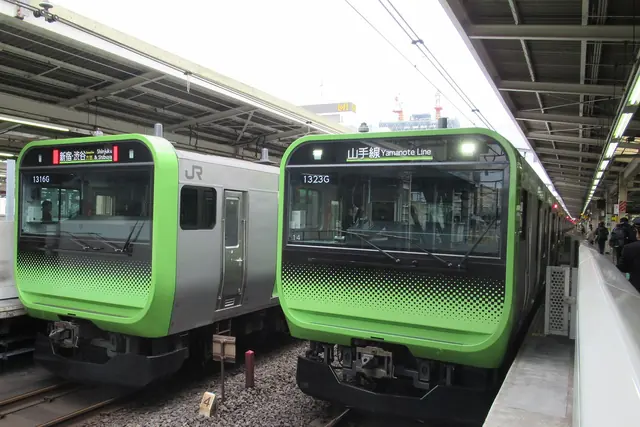
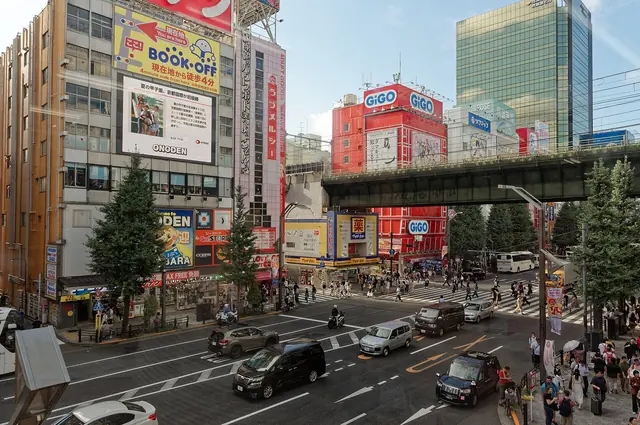
Games and ways to pay at the three
- GiGO Sohonten: crane games, photo sticker booths, video, music and driving games, play equipment for small children and capsule toys. Pay with coins, transport IC cards or PASELI.
- GiGO Akihabara Building 3: crane games, photo sticker booths, and video, music, gun and driving games. Pay with coins, transport IC cards, nanaco, WAON, Edy, iD or PASELI.
- GiGO Shibuya: crane games, photo sticker booths and music games. Pay with coins, transport IC cards, nanaco, WAON or iD.
GiGO Sohonten, Ikebukuro
Four floors, from B1 to 3F of the Rokumarugate IKEBUKURO building at 1-13-6 Higashiikebukuro, Toshima-ku. Capsule toys are on its list, and on neither of the other two. Our gachapon guide for Tokyo covers the capsule toy shops elsewhere in Ikebukuro, and Akihabara and Ikebukuro compared will help you decide between them when time is short.
GiGO Akihabara Building 3
At 1-11-11 Sotokanda, Chiyoda-ku, on Chuo-dori, a 3-minute walk from the station's Electric Town Exit. Of the three, it takes the widest range of e-money. GiGO's guide also recommends Building 5 and Building 2 in Akihabara. For the anime shops on the same streets, see our Akihabara shopping list.
GiGO Shibuya
At 29-4 Udagawacho, Shibuya-ku, over the first three floors of the Zen Mall Building. It has the shortest list of games of the three. The guide's other pick in the area, GiGO Shibuya Miyamasuzaka, is 2 minutes' walk from JR Shibuya Station, on 1F and 7F, with crane games, photo sticker booths, and video and music games.
Claw machines in Osaka and Kyoto
In Osaka, GiGO's guide recommends three branches around Dotonbori and three around Umeda. The first it lists for Dotonbori is GiGO Osaka Dotonbori Honten, on 1F to 3F of the Dotombori Building, 1-8-22 Dotombori, Chuo-ku. It has crane games, video, music and driving games, photo sticker booths, and play equipment for children, and the guide lists transport IC cards as the way to pay without coins. For anime shopping as well, Den Den Town, Osaka's street of anime and electronics shops, is roughly a five-minute walk to the east of Namba Station.
GiGO's other picks, in Osaka and further afield
- Dotonbori and Namba: Namba Ebisubashi and Namba Avion.
- Umeda: NU Chayamachi, Higashi-Umeda and Osaka 4th Building.
- Sapporo: Susukino, COCONO SUSUKINO and Sapporo Station West Exit.
- Fukuoka: Fukuoka Tenjin, Mina Tenjin and Yodobashi Hakata.
- Hiroshima: Hiroshima Hondori.
- Naha, Okinawa: Naha Kokusai Street.
In Kyoto, the guide's area is Gion and Kawaramachi. GiGO Kyoto Shinkyogoku, at 441-2 Sakuranocho, Nakagyo-ku, has crane games and photo sticker booths and takes transport IC cards, nanaco, WAON, iD and PASELI. GiGO Kawaramachi OPA is on 7F of the Kawaramachi OPA building, 385 Komeyacho, Nakagyo-ku, with crane games and play equipment for children. Its entry in the guide lists no way to pay other than coins, so bring some.
The world's biggest claw machine arcade, in Yokohama
Guinness World Records lists the record for the most claw crane games in one place as 555, set at an arcade in Yokohama on 22 July 2022. "The attempt took place on the day of the arcade's reopening."
Yokohama's record-holding arcade, according to Guinness
- 555claw machines in a single arcade
- 10claws worked in one go on one of its machines
- 20minutes from Yokohama by train
The two Guinness pages give the arcade different names. The record page calls it Asobi town. In a June 2025 article, Guinness calls it Sarpura Yokohama Play Town, in Northport Mall, and says "no one has since broken this amazing feat". The same article describes a novice section "where prizes are relatively easy to grab", and a machine with one huge rotating claw for picking up a giant stuffed toy.
We found no official page for the arcade with an address or opening hours that we could check, so they are not on this page. Check with Northport Mall before you make the trip.
Frequently asked questions
What is a claw machine called in Japan?
A crane game, written クレーンゲーム and said kurēn gēmu. You will also hear UFO catcher, which is Sega's name for its own machine of 1985 and is used for crane games in general.
How much does a claw machine cost in Japan?
There is no standard price, and this site does not quote one. Taito's history describes arcades in 1989 as built around 100 yen a play, and the Yokohama arcade with the Guinness record has a corner where a play costs 10 yen. Check each machine before you put money in.
Are Japanese claw machines rigged?
This site cannot test machines, so it cannot say how any one is set. The rules are clear, though: under police guidelines a prize may be worth about 1,000 yen or less in a shop, the prize must be the item on display, and an arcade may not show a pricier item as bait. If a prize will not move, ask the staff, who may reposition it.
Can I pay for claw machines with Suica?
At some GiGO arcades, yes, on machines that have a payment terminal. Some also take QR payments by Alipay, WeChat Pay or UnionPay. Elsewhere, expect to pay in coins, which you can get from the change machine inside.
Can I use foreign money at Japanese arcades?
Some GiGO arcades have machines that change 13 foreign currencies into yen. They take notes only, not coins, and not every branch has one. Otherwise, change your money into yen before you go.
Will the staff help me win a prize?
At GiGO, yes. If a prize will not move however many times you try, tell a member of staff and they may move it to a better spot. For rare or popular prizes, an arcade may allow only one per customer.
Can children go to Japanese arcades at night?
Not late. GiGO's guide says children under 16 may not enter from 6pm, though with a parent or guardian they may stay until 10pm in some cases. The exact rules are set by each prefecture, and some do not let children in after 6pm at all. Staff may ask for ID.
Where is the biggest claw machine arcade in Japan?
In Yokohama. An arcade in Northport Mall holds the Guinness World Record for the most claw machines in one place, with 555, set in July 2022.
Can I swap a prize I won for a different one?
No. GiGO's guide says a prize you have won cannot be traded for another one, and the arcade industry's own guideline forbids it. Prizes cannot be turned into cash either.
Sources
Official and primary sources used for this page. Checked November 8, 2026.
- GiGO: GiGO's guide to Japanese arcades for foreign visitors — paying with coins, Suica and QR apps, the change and foreign money machines, tips and staff help, Japanese phrases, age limits, photos and manners, and each recommended branch's address, station, hours, games and ways to pay
- Guinness World Records: Most claw crane games at a venue — the record of 555 machines, the place and the date
- Guinness World Records: We visited Japanese venue with world's most claw crane machines to find secret to winning — Northport Mall, the novice section, the 10-yen corner, the unusual machines and the tips for winning
- JNTO: Game centers — the UFO catcher name and trademark, the kinds of prizes and the one-per-customer rule
- SEGA: UFO CATCHER wins an excellence award at the Japan Naming Awards 2024 (in Japanese) — the 1985 machine and how it got its name
- TAITO: The company's history (in Japanese) — the Crown 602 of 1965 and arcades run on 100 yen a play in 1989
- National Police Agency: Standards for interpreting and applying the amusement business law, 1 July 2026 (PDF, in Japanese) — crane-game prizes with a shop price of about 1,000 yen or less
- Japan Amusement Industry Association: Guideline on prizes at amusement facilities, revised 2022 (PDF, in Japanese) — the rules on prize value, display, demonstration items and swaps
- Japan Amusement Industry Association: For the media (in Japanese) — prize-only goods, the 800-yen and 1,000-yen limits, prize-game sales and machine numbers, arcade closures and the age rules by prefecture
Related guides
To cite or link to this page: Claw machines in Japan: what they are called, how to pay for a play, how to win, the prize rules, and where to play in Tokyo, Osaka, Kyoto and Yokohama — Japan Pocket Guide, https://japanpocketguide.com/things-to-do/claw-machines-japan/