Culture · Performing arts
Noh theatre in Japan: what it is, noh vs kabuki, the stage, masks and music, tickets and English subtitles, and where to see it
Noh is Japan's masked theatre of chant, drum and slow dance, played in much the same form since the 14th century. In Tokyo it comes with English subtitles at every seat, for 2,800 to 5,800 yen a ticket in December 2026 and January 2027. This guide covers what noh is, how it differs from kabuki and kyogen, what to look for on stage, how to book, sit and behave, and where to see it in Tokyo, Kyoto, Osaka, Kanazawa, Sado and Miyajima. Everything was checked on 13 November 2026 against the pages listed under Sources.
Last checked · Sources

In short
Noh is a classical Japanese theatre in which a masked lead actor tells a story through slow dance and chant, backed by a chorus, a flute and three drums. It reached its present form in the 14th century, and it is usually staged together with kyogen, short comic plays, under the shared name nohgaku. The easiest place for a visitor to see it is the National Noh Theatre in Sendagaya, Tokyo, where shows run by the theatre have English subtitles on a screen at every seat, and tickets for the December 2026 and January 2027 programmes cost 2,800 to 5,800 yen. A noh play usually lasts 60 to 90 minutes, a kyogen 15 to 30.
What noh theatre is, and how it began
Noh is a form of drama in which the story is carried less by speech than by movement, chant and music. A lead actor, often masked, moves across a bare wooden stage in slow, controlled dances called mai, while a chorus sings the text, known as utai, and four musicians play a flute and three drums. Japan's national tourism organisation, JNTO, explains that the name comes from a word meaning skill or talent, and that noh relies far more on music than its comic partner does.
Noh almost never appears on its own. It shares a stage with kyogen, a comic theatre of dialogue, and the two together are called nohgaku. That is the word you will see on theatre websites and on the UNESCO list, where the art has been inscribed as intangible heritage since 2008.
Noh in four words
- Nohgaku: the shared name for noh and kyogen, played on the same stage.
- Noh: the serious side, with masks, chant, dance and live music.
- Kyogen: the comic side, mostly spoken and mostly without masks.
- Shite: the lead role, often played in a mask.
From street acrobats to a court art
The roots go back much further than the plays themselves. UNESCO traces nohgaku to the eighth century, when a mixed entertainment called sangaku reached Japan from China, made up of acrobatics, songs, dances and short comic sketches. Over the following centuries it absorbed other Japanese arts, and the comic sketches became the seed of kyogen.
Noh through the centuries
- 8th century: sangaku, a show of acrobats, song, dance and comic sketches, comes from China.
- 14th century: Kan'ami and Zeami shape noh into its present form in Nara and Kyoto.
- 14th and 15th centuries: UNESCO calls this the heyday of nohgaku.
- Edo period, from 1603: the shogunate makes nohgaku its ceremonial art, and lords keep their own troupes.
- Meiji era, from 1868: noh loses its old patrons and survives on private support.
- 1957: the government names nohgaku an Important Intangible Cultural Property.
- 1983: the National Noh Theatre opens in Tokyo.
- 2008: nohgaku is inscribed on the UNESCO intangible heritage list, after first being proclaimed in 2001.
The noh that is played today was shaped in the 14th century by Kan'ami and his son Zeami. According to the Kyoto Kanze Noh Theater, both men were working in Nara from the middle of that century and then moved on to Kyoto, where the shogun Ashikaga Yoshimitsu, the man who built the Golden Pavilion, became a great admirer. Zeami drew on Heian classics, among them The Tales of Ise and The Tale of Genji, and he wrote many plays in which the hero appears before a traveller and tells the story of a past life. JNTO says many plays by the two men are still part of a repertoire of about 250 pieces.
UNESCO sums up where all this led: "Today, Nôgaku is the principal form of Japanese theatre and has influenced the puppet theatre as well as Kabuki." In other words, the later stage arts that visitors know better borrowed from noh, not the other way round.
Noh vs kabuki, and where kyogen fits
Visitors often ask whether to see noh or kabuki, but the two make very different nights out. Kabuki is younger: JNTO traces it to Kyoto at the start of the 17th century, when a woman named Izumo no Okuni drew crowds with dance drama of a new kind. Before the century was out, women were banned from the kabuki stage and men took every role.
Noh is older, quieter and more spare. The Japan Arts Council's guide for beginners calls nohgaku "the world’s oldest surviving theatrical tradition", and its stage has no curtain, no sets and no special lighting. Where kabuki fills the stage, noh leaves it nearly bare and asks you to imagine the rest. For spectacle and a big cast, see kabuki first; the kabuki tickets guide explains how. For the art that kabuki itself borrowed from, choose noh.
| Noh | Kyogen | Kabuki | |
|---|---|---|---|
| Mood | Serious, poetic, slow | Comic and fast | Drama, dance and spectacle |
| Main tool | Dance, chant and music | Spoken dialogue | Acting, dance and music |
| Masks | Worn by the lead in many roles | Only for animals, demons and similar roles | See our kabuki guide |
| Took shape | 14th century | Grew up beside noh | Early 17th century |
| Length | 60 to 90 minutes a play | 15 to 30 minutes a play | See our kabuki guide |
| Who acts | Highly trained actors and musicians | Trained kyogen actors | Men only, since the 17th century |
Kyogen, the comic partner
Kyogen is driven by talk and jokes rather than symbols, which makes it the easier half to follow. JNTO says it began as the interval entertainment between noh plays, and it is still slotted between them. Its characters are ordinary people, and UNESCO describes it as a picture of everyday life from the 12th to the 16th century, written in old language.
Most kyogen actors play without masks. The Japan Arts Council notes that masks appear only for roles such as animals and demons, and that kyogen costumes are made of hemp or cotton rather than the silk of noh. You are welcome to laugh: in kyogen, laughter from the seats is part of the show, while during noh the audience holds its applause until the very end.
The five kinds of noh play
Noh plays are sorted by their lead role. JNTO lists five groups: gods, warriors, beautiful women, a mixed group of other beings, and demons. A full day of noh once ran through one play from each group, after the ritual piece Okina-Sanbaso. Today's shows are shorter: the National Noh Theatre usually pairs one kyogen with one noh, and Kanazawa's monthly shows run to two noh plays, one kyogen and one short dance.
A second way to sort plays, from the Japan Arts Council
- Mugen noh, or dream noh: a spirit, a god or a famous hero appears to a traveller, tells its story and fades away.
- Genzai noh: every character is a living person, and the story is set in the real world.
What you see on stage: the stage, masks, costumes and music
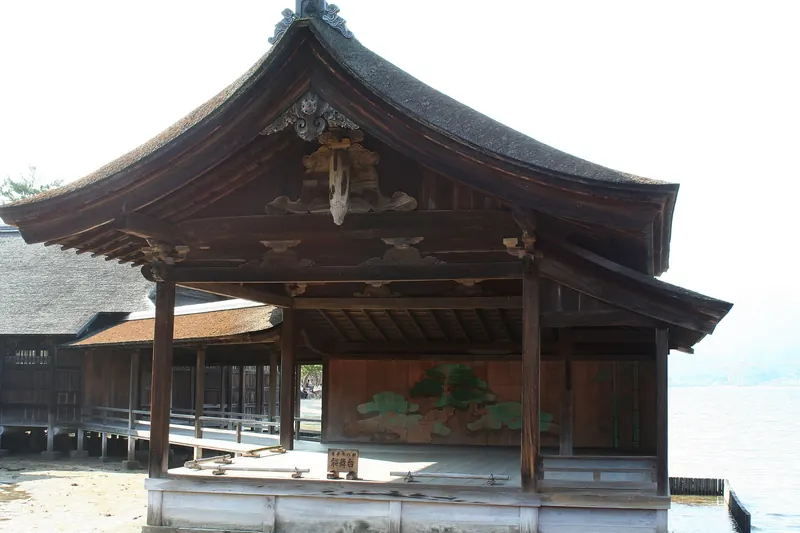
A noh stage is a small building inside a bigger one. It keeps its own roof, held up by four pillars, because noh began as an outdoor art, and the Nohgaku Performers' Association, the body of professional noh and kyogen performers, points out that there is no curtain between the audience and the actors. The theatre was designed in an age without microphones or spotlights, and many stages still work the old way, with large jars set under the floor to carry the sound and lighting kept close to daylight, without effects. The floor is cypress; at the National Noh Theatre in Tokyo, GO TOKYO says the boards come from cypress trees some 400 years old.
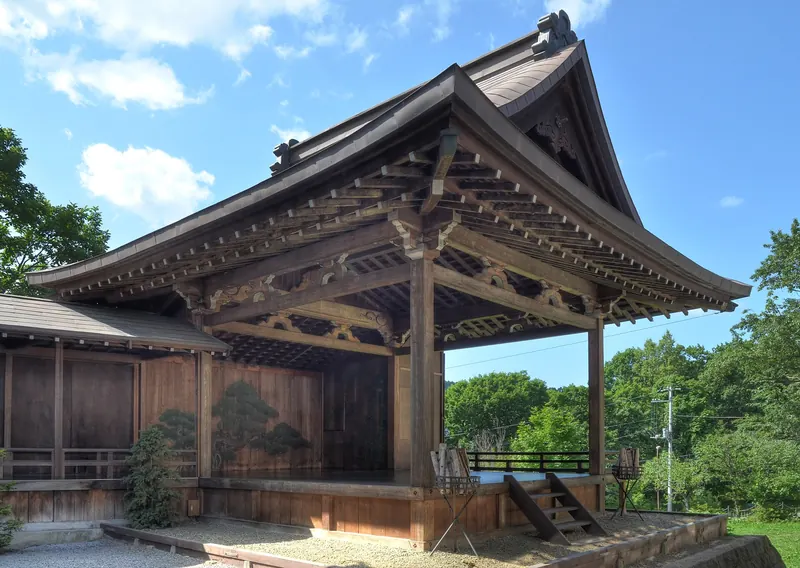
Parts of a noh stage
- Honbutai: the square main stage under its own roof, where the plays are acted.
- Kagami-ita: the back wall, painted with an old pine tree, a sign of long life.
- Hashigakari: the bridge on the left that actors use to come and go, seen as a road between this world and the next.
- Three pines: pine trees along the bridge, tallest nearest the stage, which makes the bridge look longer.
- Agemaku: a curtain in five colours at the far end of the bridge, lifted for each entrance and exit.
- Kagami-no-ma: the mirror room behind that curtain, where the lead puts on the mask.
- Four pillars: guides for masked actors, who see very little through the eye holes.
- Kirido-guchi: a low side door for the chorus, the stage assistants and characters who have been killed.
- Shirasu: a strip of white pebbles round the stage, left over from the days of daylight shows.
Reading the stage as a first-timer
Each part tells you something. The Nohgaku Performers' Association explains that the front left pillar, the metsuke-bashira, is the one the dancers fix on to keep their place. When the five-coloured curtain at the end of the bridge swings up, a new character is about to arrive, and the faint sound of the flute and drums tuning in the mirror room tells the house that a play will soon begin. The colours of that curtain stand for the five yin-yang elements: wood, fire, earth, water and metal.
Masks and costumes
The mask, called omote, is the sign of noh. The Japan Arts Council says masks are cut from cypress and given a coat made from crushed shells, and that a small tilt of the head under the lights can turn a calm face sad or happy. UNESCO notes that masks are worn for parts such as ghosts, women, children and the elderly. In kyogen, masks are rare.
The costumes, shozoku, are made mostly of silk and shine with gold thread and embroidery. Their colour and pattern show the age, rank and mood of the character, and a touch of scarlet marks youth. Kyogen actors wear lighter hemp or cotton, printed with bold stencil patterns so that you can tell the type of character at a glance.
To see masks and robes up close without a show, the free exhibition room at the National Noh Theatre sets costumes, masks, drums and fans at eye level with no glass in front of them.
The music: a flute, three drums and a chorus
The Nohgaku Performers' Association calls noh a musical drama, and the music is what moves each play along. The association lists four instruments, and their music runs from slow to fast as the story builds. Over them, a chorus chants much of the text, so the story reaches you in song as well as in dance.
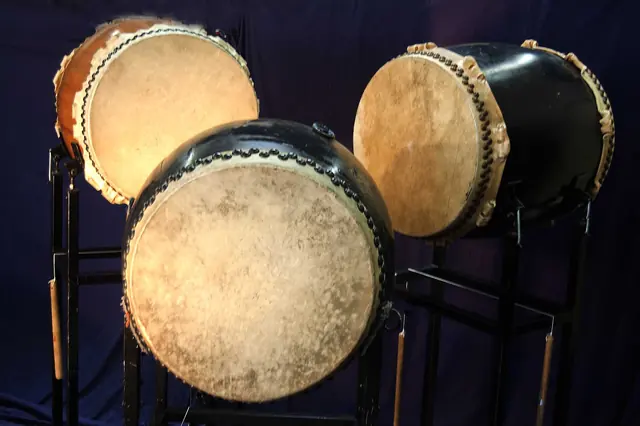
The four instruments of noh
- Fue: the flute, the one wind instrument.
- Kotsuzumi: the shoulder drum, the first of the three drums.
- Otsuzumi: the hip drum, the second of the three.
- Taiko: the stick drum, the third, which also gives its name to Japanese drums in general.
The last of these is the same word that is used for Japanese drums in general. If the drums catch your ear, the taiko drumming guide covers the big festival drums and places where you can play them yourself.
Roles and famous plays
Two names will appear in every programme. The shite is the lead character, and the waki is the shite's counterpart; between them they carry the story. Behind them work the chorus and the stage assistants, called koken, who use the low side door.
Some plays are staged again and again. The Nohgaku Performers' Association singles out Hagoromo, which may turn up in Japanese school textbooks, and Takasago, a favourite at weddings. The same body names Zeami as the most famous noh playwright and credits him with this saying: "Never forget the beginner’s spirit." It is good advice for a first night at the noh.
Noh in three numbers
- 250plays in the noh repertoire, roughly
- 4instruments: one flute and three drums
- 60–90minutes for a single noh play
Watching noh in Tokyo: the National Noh Theatre and Ginza
Tokyo has two noh stages that suit a visitor well. The National Noh Theatre in Sendagaya belongs to the Japan Arts Council, a public body, and is the one with English subtitles at every seat. The Kanze Noh Theater sits under the GINZA SIX shopping centre in Ginza and is the home of the Kanze school, one of the noh families. Pick the first for your first noh, and the second if you are comfortable with a show in Japanese.

The National Noh Theatre in Sendagaya
The National Noh Theatre opened in 1983 to protect and promote nohgaku. It stands between the Meiji Jingu forest and Shinjuku Gyoen National Garden, and it has 627 seats facing a cypress stage. The Japan Arts Council's guide says the theatre's own productions run on four or five days a month. The building also holds a library, free by appointment, and a corner where old recordings can be watched.
National Noh Theatre at a glance
- Address: 4-18-1 Sendagaya in Shibuya-ku.
- Seats: 627, with spaces for wheelchairs beside the front row.
- Box office: open between 10:00 and 18:00 when the theatre has its own show; cash and major cards.
- Closed: 1 July and the New Year holidays.
- Exhibition room: first floor, free, 11:00 to 17:00.
- Café: open from half an hour before the start on show days; on other days, lunch with last orders at 14:00, starting 11:30.
- Shop: open on show days only, with bilingual programmes, practice fans and small masks.
- Parking: none for visitors, except free spaces for disabled guests at the entrance.
The building is on one level, so you will not need stairs or a lift once you are inside. Large bags go in coin lockers, as there is no cloakroom, and photos and recordings are not allowed during shows.
Getting to the National Noh Theatre
- JR Sendagaya Station on the Chuo-Sobu Line is about 5 minutes on foot; the lifts and escalators are at the Yoyogi end of the platform.
- On the Toei Oedo Line, Kokuritsu-kyogijo Station is also about 5 minutes away, from Exit A4; that exit has an up escalator only, and the lift is at Exit A2.
- Kita-sando Station, on the Tokyo Metro Fukutoshin Line, is a 7-minute walk.
- Toei buses stop at Sendagaya Ekimae, about 5 minutes on foot, and the Hachiko Bus on its Jingu no Mori route stops 1 minute away.
What is on: November 2026 to January 2027
These are the shows by the National Noh Theatre that had been announced when this guide was written. Prices are for general seats in three bands; students pay less in the two cheaper bands, and the subtitles run in English and Japanese on screens at every seat. Sales for the January shows open on 10 December 2026.
| Date | Time | Programme | General seats |
|---|---|---|---|
| Fri 20 Nov 2026 | 18:30 | Biwa and noh: lute ballad, kyogen Hakuyo, noh Kusu-no-tsuyu | 7,300 / 5,700 / 4,600 yen |
| Sat 21 Nov 2026 | 13:00 | Biwa and noh: lute ballad, noh Ikarikazuki | 7,300 / 5,700 / 4,600 yen |
| Fri 18 Dec 2026 | 18:30 | Regular show: kyogen Nushi, noh Sumida-gawa | 5,800 / 4,000 / 3,500 yen |
| Sat 9 Jan 2027 | 13:00 | Outreach show, talk in Japanese: kyogen Kamabara, noh Tomonaga | 5,800 / 4,000 / 3,500 yen |
| Fri 15 Jan 2027 | 19:00 | Showcase: kyogen Shibiri, noh Kocho | 4,000 / 3,400 / 2,800 yen |
| Fri 29 Jan 2027 | 18:30 | Kyogen only: three comic plays | 5,500 / 4,000 / 3,500 yen |
The 18 December show is a good first choice, with one kyogen and one noh on a Friday evening. It belongs to the regular series, which this season looks at the work of the playwright Kanze Juro Motomasa; the kyogen Nushi, The Lacquerer, comes first and the noh play Sumida-gawa, The Sumida River, follows. The January Showcase is the cheapest and starts at 19:00, which suits an evening after sightseeing. The Japan Arts Council's beginner guide says the Showcase sets up hands-on stations in the lobby before the curtain, where you can try parts of the art for yourself.
Guided tours with a noh performer
The National Noh Theatre also runs guided tours led by a noh performer, with English interpretation. In about two hours you see the seats, the lobby, the exhibition room when it is open, the backstage area, the dressing rooms and the stage itself, with a short performance and hands-on activities along the way. Photos are allowed except in restricted areas.
Guided tour dates and rules
- 2026: Friday 27 November at 19:00, and Tuesday 22 December at 14:00 or 19:00.
- 2027: Tuesday 26 January and Thursday 4 March, each at 14:00 or 19:00.
- Sales open: 10 November 2026 for 22 December, 10 December 2026 for 26 January, and 10 February 2027 for 4 March, each at 10:00.
- Price and size: 4,000 yen, up to 40 people per tour.
- On stage: shoes off in the dressing room; white socks are handed out, and bare feet are not allowed on the stage.
- Free option: a self-guided look round the building, without the stage or backstage, on tour days.
Book through the National Theatre Ticket Centre well ahead, as the theatre warns that the tours often sell out.
The Kanze Noh Theater in Ginza
The Kanze school has kept a theatre in Tokyo since 1900. It moved to Shoto, in Shibuya, in 1972, closed there in the spring of 2015 after 43 years, and reopened on 20 April 2017 three floors below the street in GINZA SIX, with its old cypress stage moved across to the new site. Most shows are given once a day, programmes and seat prices vary from show to show, and there is no restaurant inside and no guided tour of the building.
Kanze Noh Theater at a glance
- Address: third basement of GINZA SIX, 6-10-1 Ginza in Chuo-ku.
- Closed: Mondays, as a rule.
- Nearest station: Ginza, about 2 minutes from Exit A2 or A3; Higashi-Ginza is about 3 minutes from Exit A1.
- Inside the building: take the escalator or lift on the Mihara-dori side; there is none to the theatre from the Chuo-dori entrance.
- Before 10:30: GINZA SIX itself is still shut, so use the Mihara-dori entrance.
- Tickets: sold online on KANZE.net at any hour, paid by card or at a Seven-Eleven store, and printed at Seven-Eleven, not at the theatre.
Its YouTube channel has a backstage tour video in English and French. None of this guide's sources mention English subtitles at the Kanze Noh Theater, so it helps to read the plot first.
Tickets, English subtitles, seats and manners
These rules apply to the National Noh Theatre and come from the Japan Arts Council, which runs it; the other theatres sell tickets in their own way.
How to buy National Noh Theatre tickets
Three ways to buy
- Online: the National Theatre Ticket Centre has an English booking site where you can buy as a guest, with no account.
- By phone: the centre takes calls between 10:00 and 18:00; you then pay for and collect the tickets at the theatre.
- In person: the box office in Sendagaya sells tickets between 10:00 and 18:00 for cash or a card, but only on days when the theatre has its own show.
Phone and online sales open first, at 10:00 on the date given for each programme, and the box office and ticket machines start a day later. No seats are kept back for the counter, so book online as soon as sales open. If seats are left on the day, they are sold at the theatre. Student and disability tickets are sold online, and groups of 10 or more can get a discount.
Booking online, step by step
- Start: open the National Theatre Ticket Centre's English site, choose Reservation / Purchase and carry on as a guest.
- Choose: pick the performance, then your seats on the plan.
- Pay: enter your name, email address and phone number, and pay by credit card.
- Go in: use the QR ticket or collect your ticket at the box office, depending on the option you chose.
Subtitles in English and other languages
For shows run by the theatre, every seat has its own small screen on the back of the seat in front. A single tap opens the menu: Japanese text, English, up to four other languages on some dates, or no subtitles at all. The English setting gives the lines in plain paraphrase with short notes, so you can follow the story without knowing the play. In the front row and other seats with no screen in front, lift the lid of the arm-rest to find a handheld monitor.
Where to sit
Because the stage juts into the hall, seats are sold in three areas, and the National Noh Theatre uses them as its three price bands.
The three seating areas
- Shomen, front: facing the stage head-on; usually the most popular area, and the dearest.
- Waki-shomen, side: along the side of the stage, beside the bridge, close to the actors as they come and go.
- Naka-shomen, middle: between the two, with a diagonal view; the cheapest band.
A pillar can block part of the view from some seats; the National Noh Theatre has set out its seats so that the pillar lines up with an aisle. Wheelchair spaces are by the front row; ask for one in advance by phone or at the ticket office.
Manners at a noh performance
Noh asks for more quiet than most theatre, but the rules are simple.
Before and during the show
- Skim the plot of each play beforehand, as the old texts and the chant are hard to catch.
- Arrive ten minutes early; doors open 30 to 60 minutes before the start, and late entry may be held back.
- Switch off your phone, and do not leave in the middle of a play.
- Wear what you like, but leave noisy jewellery and rustling jackets at home.
- No food, drink, photos or recording once you are seated.
- Save applause for the very end; laughing during kyogen is welcome.
Noh in Kyoto, Osaka and Kanazawa
Outside Tokyo, three cities make noh easy to fit into a trip: Kyoto, where Kan'ami and Zeami found their patron, Osaka, and Kanazawa, whose lords made noh the local art. Shows with English help are few, so plan around the dates below.
Kyoto Kanze Noh Theater
The Kyoto Kanze Noh Theater stands in Okazaki, a 5-minute walk from Higashiyama Station on the Tozai subway line, and city buses from Kyoto Station also stop nearby. You can book the theatre's own shows online or by phone, and on the day you simply give your name at reception; major cards are taken at its ticket office.
Invitation to Noh, 11 December 2026
- When: Friday 11 December, 18:45 to about 20:45; doors at 18:00.
- Programme: a talk on noh and a demonstration of dressing an actor in costume, then the noh Tsunemasa.
- Language: commentary in English and Japanese.
- Seats: S 8,000 yen at the front, A 7,000 yen at the side, B 5,000 yen in the middle or upstairs.
- Booking: through the theatre's English booking page, or with the organiser, Nohgakusha.
Earlier in the autumn, the Kyoto City Tourism Association ran IMAGINE NOH at the same theatre: shortened noh and kyogen for beginners, an English introduction, a photo session on stage and questions to the actors. Its 2026 dates ended on 5 November.
Yamamoto Noh Theater, Osaka
The Osaka Convention & Tourism Bureau calls the Yamamoto Noh Theater Osaka's oldest. The first stage went up in 1927, was lost in the war and was rebuilt in 1950, with black-polished wood, an old pine on the back wall and twelve jars under the floor. It is a Registered Tangible Cultural Property, a 5-minute walk from Tanimachi 4-chome Station, Exit 4.
Its regular series, Tanimachi Noh, runs in January, April and September, and Tokui Noh shows for beginners come with live commentary. English programme guides are handed out, there is no dress code, and you may eat and drink in the hall, though there is no food stall inside.
Yamamoto Noh Theater, November and December 2026
- 14 and 28 November: Osaka Traditional Performing Arts Heritage Night, an English-language show with English subtitles, 15:00 to 17:00.
- 21 November: a Tokui Noh beginner show, already full.
- 5 December: another Tokui Noh beginner show, 18:00 to 20:00, at 6,000 yen for general seats.
- November price: 5,000 yen, or 2,500 yen for students, unreserved; booking needed, and no preschool children.
- Booking: by email or phone, and some shows also through Ticket Pia.
- Parking: none on site; use the coin car parks nearby.
Ishikawa Prefectural Noh Theater, Kanazawa
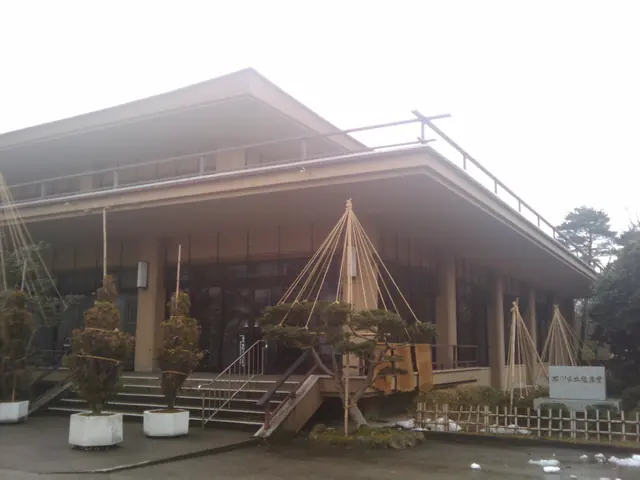
The lords of Kaga, who ruled Kanazawa, favoured the Hosho school, and the local style is still called Kaga Hosho. Visit Kanazawa passes on an old saying that noh songs fall from the sky here, because gardeners hummed them as they worked. The Ishikawa Prefectural Noh Theater dates from 1972, when it became the first independent public noh theatre in Japan; its stage was built in 1932 and moved here, and its stage tours are free until 17:00.
Regular noh in Kanazawa
- When: once a month except April and August, 13:00 to about 16:30; doors at 12:00. A special show takes the first Sunday of April.
- Next date: Sunday 6 December 2026, with two noh plays and a kyogen.
- Price: 3,300 yen in advance, 3,850 yen on the day; 1,100 yen for under-30s, on the day only; free below junior high school age.
- Closed: Mondays, public holidays other than 3 November, and 29 December until 3 January.
- Getting there: the Dewa-machi bus stop is a 3-minute walk away.
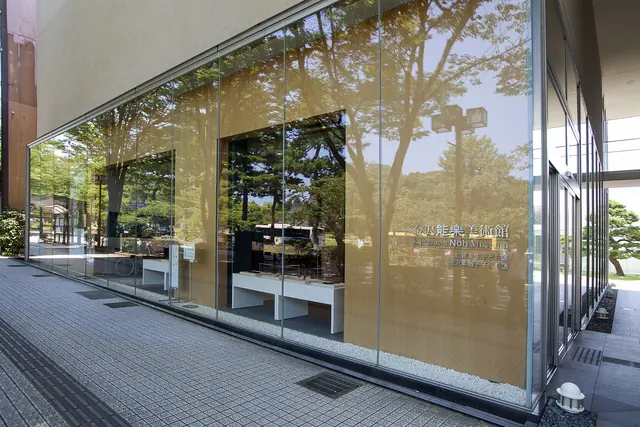
Visit Kanazawa says these monthly shows were the first regular noh in Japan to restart after the war. In summer 2025 the theatre also held Evening Noh on Saturdays in July and August, two hours for 1,500 yen. Near Kenrokuen, the Kanazawa Noh Museum explains the stage with a real one inside and shows Kaga Hosho masks and robes; adults pay 310 yen, and it closes on Mondays.
Noh on Sado Island and Miyajima
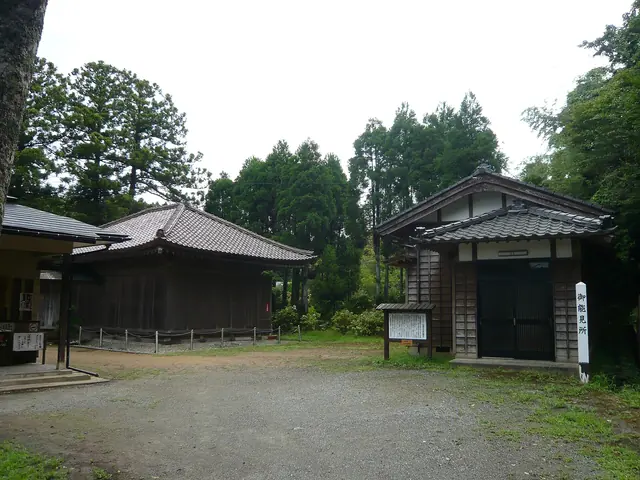
Sado, off Niigata, is where Zeami spent his exile, and in the Edo period its first commissioner had noh performed as an offering at shrines across the island, which brought it to farmers and townspeople as well as samurai. The Nohgaku Performers' Association says Sado once had more than 200 noh stages and still has over 30, and that islanders perform from April to October. Sado's tourism site puts the main season from June to August, with torch-lit shows somewhere on the island each week in June.

Sado noh stages to know
- Shoboji Temple: where Zeami lived in exile; candlelit noh in the main hall every June.
- Daizen Shrine: the oldest noh stage on Sado, with noh on 18 April and torch-lit takigi noh in June.
- Honma family stage: home of the island's leading troupe since the early Edo period, rebuilt in 1885; noh each year on July's last Sunday, and normally closed to the public.
- Shiizaki Suwa Shrine: a stage of 1902 above Lake Kamo, with takigi noh on Saturdays from May to early October.
Getting to Sado
- Fastest: jetfoil from Niigata Port to Ryotsu Port, 67 minutes.
- By car ferry: the same route in 2 hours 30 minutes.
- From the south: jetfoil from Naoetsu Port to Ogi Port, 75 minutes.
Miyajima, a 10-minute ferry ride from Miyajimaguchi near Hiroshima, has Japan's only noh stage set over the sea, at Itsukushima Shrine. Warlords have dedicated noh here since the Sengoku era of civil war, and the present stage was rebuilt in 1680.
Miyajima's noh stage at a glance
- Where to look: from the shrine's West Corridor.
- Protected: the stage, bridge and dressing room are Important Cultural Properties.
- Sound: the floor is built to flex so that it carries the sound of the performance.
- Performances: a full day of noh in the old five-part order on three days from 16 April each year.
Frequently asked questions
What is noh theatre?
Noh is a classical Japanese theatre in which a lead actor, often masked, tells a story through slow dance and chant, with a chorus, a flute and three drums. It reached its present form in the 14th century.
What is the difference between noh and kabuki?
Noh is older, quieter and played on a bare stage, with masks and a chorus. Kabuki dates from the early 1600s and is a bigger show of drama, dance and spectacle.
Can I see noh with English subtitles?
Yes. At the National Noh Theatre in Tokyo, shows run by the theatre have a screen at every seat with English subtitles. Some events at the Yamamoto Noh Theater in Osaka project English subtitles beside the stage.
How much are noh tickets in Tokyo?
At the National Noh Theatre, general seats for the December 2026 and January 2027 programmes cost 2,800 to 5,800 yen, and two November shows cost 4,600 to 7,300 yen.
How long does a noh performance last?
A noh play usually lasts 60 to 90 minutes and a kyogen 15 to 30 minutes. Most programmes pair one of each.
Is noh theatre still performed today?
Yes. It is played all year in Tokyo, Kyoto, Osaka, Kanazawa and other cities, and islanders still perform it on Sado.
Sources
Official and primary sources used for this page. Checked November 13, 2026.
- UNESCO: Nôgaku theatre — origins, kyogen, masks, history
- JNTO: Theater — noh, kyogen and kabuki
- GO TOKYO: National Noh Theatre — cypress stage
- Japan Arts Council: FAQs — subtitles, entry, children, closures
- Japan Arts Council: National Noh Theatre — seats, access, café, shop
Show all 36 sources
- Japan Arts Council: Biwa and noh, 20 November 2026 — programme and prices
- Japan Arts Council: Biwa and noh, 21 November 2026 — programme and prices
- Japan Arts Council: Regular show, 18 December 2026 — programme, prices, sales
- Japan Arts Council: Outreach show, 9 January 2027 — programme and prices
- Japan Arts Council: Showcase, 15 January 2027 — programme and prices
- Japan Arts Council: Kyogen show, 29 January 2027 — programme and prices
- Japan Arts Council: Guided tours 2026 — tour dates and rules
- Japan Arts Council: Special exhibition 2026 — exhibition room
- Japan Arts Council: Ticket purchase guide — online booking
- Japan Cultural Expo: Noh and kyogen for beginners — stage, subtitles, seats, manners
- Nohgaku Performers' Association: What is a noh theatre — roof, jars, light
- Nohgaku Performers' Association: Introduction to noh — roles, music, plays
- Nohgaku Performers' Association: A first visit — parts of the stage
- Nohgaku Performers' Association: Sado — Sado stages and ferries
- Nohgaku Performers' Association: Miyajima — sea stage
- Visit Sado: Tradition — Sado noh season
- Kanze Noh Theater: Home — address, access, history
- Kanze Noh Theater: Visitor information — escalator, backstage video
- Kanze Noh Theater: Tickets — buying and printing tickets
- Kyoto Kanze Noh Theater: English — history, booking, access
- Kyoto Kanze Noh Theater: Invitation to Noh — 11 December show (in Japanese)
- Kyoto City Tourism Association: IMAGINE NOH — autumn 2026 shows
- Yamamoto Noh Theater: Home — stage, access, parking
- Yamamoto Noh Theater: FAQ — series, subtitles, food, dress
- Yamamoto Noh Theater: Schedule — November shows
- Yamamoto Noh Theater: History — 1927 and 1950
- Osaka Convention & Tourism Bureau: Yamamoto Noh Theatre — oldest in Osaka
- Visit Kanazawa: Ishikawa Prefectural Noh Theater — Kaga Hosho, stage tours
- Visit Kanazawa: Regular Noh Performance — dates and prices
- Visit Kanazawa: Kanazawa Noh Museum — masks, robes, prices
- Visit Kanazawa: Evening Noh Theater 2025 — summer 2025 shows
Related guides
To cite or link to this page: Noh theatre in Japan: what it is, noh vs kabuki, the stage, masks and music, tickets and English subtitles, and where to see it — Japan Pocket Guide, https://japanpocketguide.com/culture/noh-theatre/