Culture · Performing arts
Kabuki tickets in Japan: how to buy them online, by phone and at the theatre, single act seats at the Kabukiza in Tokyo, full-show seats and prices, English captions and guides, a day at the Kabukiza, kabuki at the Minamiza in Kyoto, the Heisei Nakamuraza and Asakusa, Osaka and the National Theatre, what you will see on stage, and a kabuki workshop in English
Kabuki has been played in Japan for over 400 years, and in Tokyo it is on stage every month of the year. Tickets are easier to get than many visitors expect, and you do not have to sit through a whole afternoon to see it: at the Kabukiza in Ginza you can buy a seat for a single act, from about 1,500 yen. This guide starts with the three ways to buy a ticket and what to do when a show looks sold out online, then explains single act seats, full-show seats and prices, and the English captions and guides at each theatre. After that come a day at the Kabukiza, from the station exit to the rooftop garden, the other theatres in Tokyo, Kyoto and Osaka, what you will see on stage, and a hands-on workshop in English. Everything here was checked on 18 October 2026 against pages from Kabuki Web, the English site of Shochiku, the company that runs the main kabuki theatres, the Japan Arts Council and UNESCO; you will find them all under Sources at the end.
Last checked · Sources

In short
You can buy kabuki tickets in three ways: on the Shochiku Multilingual Online Ticket site, by phone on +81(0)3 6745-0888 from 10:00 to 17:00 Japan time with English-speaking staff, or at the theatre box office. Online sales close the day before the show at the Kabukiza in Tokyo and two days before at other theatres, and a show marked sold out online may still have seats if you call or go to the box office. A full show lasts 3 to 4 hours, and at the Kabukiza in November 2026 seats cost from 5,000 to 20,000 yen. For a shorter and cheaper visit, buy a single act seat on the Kabukiza's 4th level: in October 2026 they cost from 1,500 to 4,000 yen per act, sold online from 12:00 the day before, or from 10:00 on the day at their own box office. English captions can be rented at the Kabukiza for 1,500 yen for a full show or 1,000 yen per act, in cash.
How to buy kabuki tickets
The Kabukiza and the other main kabuki theatres are run by one company, Shochiku, and its English site, Kabuki Web, is where the programmes, prices and sale dates are published. There are three ways to buy a ticket: on the internet, over the phone, or at the theatre itself. Each one sells a different share of the seats, which is why it pays to know all three.
The online site is the easiest place to start, but it does not sell every seat. Kabuki Web explains that "Shochiku Multilingual Online Ticket serves as a ticket agency, meaning you can only purchase tickets allocated to it." It also stops selling earlier than the theatres do: "This service becomes unavailable one day before the performance for the Kabukiza Theatre and two days before the performance for all other theaters", and from then on the site shows the show as sold out. For a show tomorrow at the Kabukiza, or the day after tomorrow anywhere else, you need the phone line or the box office.
Three ways to buy a kabuki ticket
- Online: the Shochiku Multilingual Online Ticket site, in English. It sells only the seats set aside for it, and it closes one or two days before the show.
- By phone: +81(0)3 6745-0888, from 10:00 to 17:00 Japan time, with English-speaking staff. Bookings can be made up to the day before the show.
- At the box office: the Kabukiza and Shinbashi Enbujo in Tokyo and the Minamiza in Kyoto sell tickets for their own shows, including tickets for the same day.
The phone line has English-speaking staff, but it has one limit: "Tickets for the same day cannot be reserved by phone." For a show today, go to the theatre. Kabuki Web is encouraging about this: "If seats are left, you could also purchase tickets at the door at the last moment before the curtain rises, and even after the performance begins!" That works only while the box office is open.
The box offices keep office hours, and the times below were listed for October 2026. Kabuki Web adds that the hours can change with the programme.
Theatre box office hours (October 2026)
- Kabukiza, Tokyo: 10:00 to 18:00 during the October programme, 10:00 to 17:00 on days without a show; in Kobikichō Square, on the 2nd basement level
- Shinbashi Enbujo, Tokyo: 10:00 to 17:00
- Minamiza, Kyoto: 10:00 to 17:30
When kabuki tickets go on sale
Kabuki is sold month by month. Each theatre has a programme for a run of a few weeks, and the Q&A on Kabuki Web says that "Program schedules will be updated 1-2 months before the performance." At the Kabukiza, "Tickets for the Kabukiza Theatre go on sale half a month before the performance." The November 2026 programme there, for example, went on sale on 14 October at 10:00 Japan time, for a run that starts on 1 November.
From the programme to the curtain
- Programme posted: one to two months ahead, on the theatre's page on Kabuki Web.
- Sale opens: at the Kabukiza, about half a month before the run starts, at 10:00 Japan time; online, by phone and at the box office.
- Online sale ends: the day before the show at the Kabukiza, two days before elsewhere.
- Phone bookings end: the day before the show.
- On the day: box office only, including single act seats from 10:00 at the Kabukiza.
At the Kabukiza, the single act box office takes cash or credit cards, but captions are rented for cash only. The credit card guide explains which cards work best in Japan.
Kabuki single act tickets at the Kabukiza
A full kabuki show is long, and for a first visit many people want something shorter. Kabuki Web describes the answer: "A kabuki program is usually made up of several different plays and dances, but at the Kabukiza Theatre and occasionally at other theatres, 'Single Act Seats' are available so that you can watch just one of the acts." It sums up the appeal this way: "You can choose to watch particular scenes at an affordable price within a short time." The acts vary a great deal in length: "Some acts last about 20 minutes, while others could last 90 minutes long."
Two kinds of single act seat at the Kabukiza
- 4th level: the highest level and the furthest from the stage, with about 90 seats a show: about 70 sold online with a seat number, and about 20 sold at the box office on the day, where you choose your own seat. The cheapest way to see kabuki.
- Upgrade seats on the 2nd level: 23 seats in rows 3 to 5 on the right side of the 2nd level, nearer the stage and roomier than the 4th level, with entry through the main lobby. Sold online only, and not on every day.
The 4th level seats go on sale online "from the day before the performance date at 12:00 PM for every act", and the rest are sold at the single act box office from 10:00 on the day of the show. That box office is on the ground level of the Kabukiza, to the left of the main entrance, and it takes cash and credit cards. The upgrade seats are "located in the corner of the area normally sold as First-class seats, and offer a closer view of the stage than the 4th level Single Act Seats". They also go on sale online at 12:00 the day before, and sales on the day end at 17:00.
Single act seats: the rules
- 4th level, online: from 12:00 the day before, with a reserved seat; about 70 seats
- 4th level, box office: from 10:00 on the day, you choose your seat; about 20 seats; cash or card
- Upgrade seats, 2nd level: online from 12:00 the day before; sales on the day end at 17:00; 23 seats; some days have none
- Times and prices: set month by month and posted on Kabuki Web by the first day of the run
- Captions: 1,000 yen per act, in cash
Single act prices: October 2026 as an example
Single act times and prices change every month, because the acts change. Kabuki Web says that "Every month, a News page will go up with the times and prices for the Single Act Seats." On 18 October 2026 the November page was not yet up, so the table below shows the October programme, which runs until 20 October, to give an idea of the prices.
| Act, October 2026 | Time | 4th level (yen) | Upgrade, 2nd level (yen) |
|---|---|---|---|
| Koi Tsukami | 11:00 to 11:51 | 2,500 | 9,300 |
| Kawatsura Hōgen Yakata | 12:26 to 13:37 | 3,000 | 9,900 |
| Moritsuna Jin'ya | 14:30 to 16:20 | 4,000 | 13,800 |
| Yamagaeri | 16:45 to 17:00 | 1,500 | 5,400 |
| Tokaiya, Daimotsu no Ura | 18:00 to 20:00 | 3,500 | 12,000 |
| Yashiki Musume, Ōmi no Okane | 20:30 to 21:00 | 2,000 | 7,200 |
The pattern is simple: the longer the act, the higher the price. In October a 15-minute act cost 1,500 yen on the 4th level and an act of nearly two hours cost 4,000 yen. An upgrade seat cost between three and four times as much as a 4th level seat for the same act.
Watching more than one act
You can buy tickets for several acts in a row, but each act is a separate ticket. The 4th level page asks you to "Please leave the seat once the corresponding act is over." With an online ticket, you go out to the 4th level lobby and show the QR code for your next act to come back in. With a box office ticket, you wait in the lobby: "As soon as preparations are complete, the staff will guide you for re-entrance." Between acts there is no break to rest in, since "There is no intermission for Single Act Ticket purchasers".
Seeing two acts in a row on the 4th level
- Buy both acts: online from 12:00 the day before, or at the box office from 10:00 on the day.
- Leave after the first act: everyone goes out to the 4th level lobby.
- Come back in: show the QR code of your online ticket, or wait until staff guide box office ticket holders back to their seats.
- Going outside: show your ticket when you come back into the theatre.
What the 4th level is like
The 4th level is the top of the theatre, and Kabuki Web is frank about it. "The 4th level seats are on the top floor of the theatre and are furthest from the stage." The seats are tighter too: "Seat space for Single Act Seats (4th level) is more limited compared to those on the 1st and 2nd levels." The biggest catch for a first visit is the hanamichi, the walkway through the audience that actors use for their entrances and exits. From the 4th level, "Please note that the hanamichi (runway) is not visible and that the main stage may be partially out of sight."
Before you go up to the 4th level
- Big bags: use the lockers on the 4th level, which cost 100 or 200 yen.
- The view: you will not see the hanamichi, and the front row is close to a railing.
- Captions: rent them on the 4th level for 1,000 yen per act, in cash.
- Programmes and opera glasses: for sale at the 4th level counter.
- Other floors: single act tickets do not let you into levels 1 to 3.
That last point matters if you were hoping to look round the theatre: "Single Act Ticket holders do not have access to levels 1, 2, and 3." The 4th level has its own entrance, to the left of the main entrance, its own lobby, drink vending machines and lockers, but no souvenir shops or restaurants. If you want to see the main lobby, or to watch the actors come down the hanamichi, buy an upgrade seat or a full-show ticket.
Full-show seats and prices
A full show is kabuki as most Japanese theatregoers know it: several plays and dances in a row, with breaks in between. Kabuki Web says that "The Full Shows (Matinee/Evening Shows) each last between 3 to 4 hours (including intermissions) and offer a wide variety of acts." At the Kabukiza the day is divided into two or three shows, each with its own acts and its own tickets. In October 2026 there were three parts, starting at 11:00, 14:30 and 18:00. In November there are two: a matinee at 11:00 and an evening show at 16:30.
The Kabukiza in November 2026
- 23days with shows, from 1 to 25 November
- 5,000yen for the cheapest seat, Upper Tier B
- 2shows a day, at 11:00 and 16:30
Prices change from month to month with the programme. The table shows the Kabukiza's prices for October and November 2026, in yen, with tax included.
| Seat at the Kabukiza | October 2026 (yen) | November 2026 (yen) |
|---|---|---|
| Special Seat | 17,000 | 20,000 |
| Box Seat | 17,000 | 20,000 |
| First Class Seat | 16,000 | 18,000 |
| Second Class A | 13,000 | 15,000 |
| Second Class B | 12,000 | 14,000 |
| Second Class C | 8,000 | 9,000 |
| Upper Tier A | 6,000 | 6,500 |
| Upper Tier B | 4,500 | 5,000 |
Two kinds of seat, the Special Seat and the Box Seat, are marked "Not available online", so for those, call the phone line or go to the box office. On the online site you can also buy a "Ticket with Captioning Service", which adds 1,500 yen to the price.
November and December at the Kabukiza
November's programme is one of the best-known plays in kabuki. Kabuki Web calls Kanadehon Chūshingura "one of the Three Great Classics of the kabuki repertoire", and the play is "Based on the famous vendetta by the 47 masterless samurai of Akō domain". For hands-on ways to meet samurai culture in Japan, see the samurai experience guide.
That last point is worth taking seriously. For one act in November, the theatre warns: "If you arrive after the performance begins, we may not be able to show you to your seat for a while due to staging reasons." In December, the Kabukiza plays from Wednesday 2 to Friday 25 December, with no shows on Wednesday 9 and Thursday 17 December. On 18 October 2026 its times and prices had not yet been published.
Children at kabuki
Kabuki Web's Q&A is clear about ages: "There are no age restrictions for customers watching the performances. However, pre-school children who are 4 years of age and over must have a ticket." Younger children can come free if they stay on your lap: "Tickets are not required for infants aged 3 and under if they can sit on the adult's lap." A full show is long for a small child, so a single act may be the better choice. The theatre's manners page asks that "If little children start to cry or talk and disturb others they should be taken out for a break in the lobby area."
Children's tickets at the Kabukiza
- Aged 3 and under: free on an adult's lap; a ticket is needed for a seat of their own
- Aged 4 and over: a ticket is needed
- The best start: a short single act, from 1,500 yen in October 2026
The guide to Japan with kids has more ideas for days out with children.
English captions and help in English
Kabuki is performed in Japanese, so the help in English matters. The Kabukiza offers the most. Its caption devices show "Essential translations of dialogue and lyrics, as well as explanations relating to kabuki", in English or Simplified Chinese. With a full-show ticket you rent one on the ground level, with a single act ticket on the 4th level, and you pay in cash. For single acts there is one catch: "If the performance time is very short, the captioning service may not be provided".
English help, theatre by theatre (October 2026)
- Kabukiza, Tokyo: captions in English or Simplified Chinese, 1,500 yen for a full show or 1,000 yen per act, in cash; a free English flyer; an English synopsis at the back of the programme
- Minamiza, Kyoto: an English audio guide may be offered, depending on the show; in October 2026, a text-to-speech audio guide in limited numbers and a free English flyer
- Shinbashi Enbujo, Tokyo: no English earphone guide
- Heisei Nakamuraza, Asakusa: no English guide, but the programme sold there has an English synopsis
- Asakusa Public Hall, New Year: a free English flyer and an English synopsis in the programme
Even without captions you can follow the story, because at the Kabukiza "English synopses are written at the end of the Japanese program." Since January 2025 there has also been a free pamphlet: Kabuki Web announced that "a free kabuki guide pamphlet is being provided for overseas customers who have purchased tickets", at the Kabukiza, the Shinbashi Enbujo, the Minamiza and the Osaka Shochikuza.
Other help at the Kabukiza
- Programme: a Japanese programme with the English synopsis at the back; on the 4th level, programmes in Japanese and English are sold at the counter.
- Opera glasses: for rent with seats on levels 1 to 3, and for sale at the 4th level counter.
- Translator: staff use a pocket translation device if you need help in your own language.
- Free pamphlet: a guide to kabuki for overseas visitors with tickets, with photographs from the stage.
The translation device is a POCKETALK, which Kabuki Web describes as "a two-way translation device which offers simultaneous voice and text translation for 74 languages". The staff at the information desk in Kobikichō Square use one too.
A day at the Kabukiza
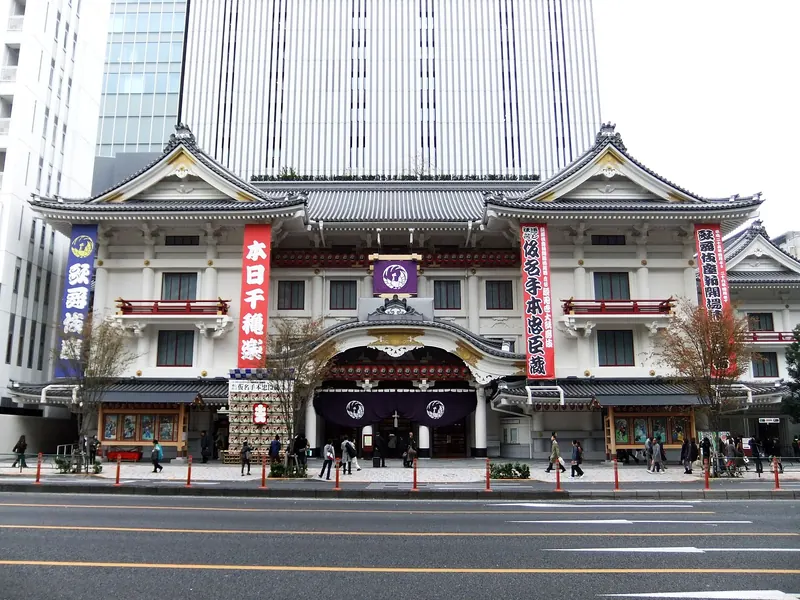
The Kabukiza is in Ginza, and few theatres in Tokyo are easier to reach. The nearest station, Higashi-Ginza, has an exit that leads straight into the building: Exit 3, "direct access to the theatre from the subway station". If you are staying elsewhere in the city, the Tokyo guide and the Tokyo Subway Ticket guide will help with getting around.
On the day, give yourself time. "Doors open approximately 30 minutes before the performance, so allow plenty of time to get there." If you bought a full-show ticket online, you collect it at the box office in the basement. Kabuki Web then asks you to "Take your seats 5 minutes before the performance starts."
A full show at the Kabukiza, step by step
- Arrive early: doors open about 30 minutes before the show.
- Get your ticket: collect it or buy it at the basement box office, two floors down, or use a ticket machine.
- Leave big bags: in a coin locker, since there is no cloakroom.
- Rent captions: on the ground level, in cash, if you did not buy them with your ticket.
- Sit down: 5 minutes before the curtain.
- The break: eat your lunch box in your seat or out in the lobby.
Kobikichō Square
Under the theatre, at the 2nd basement level, is Kobikichō Square, a shopping area that you can visit without a ticket. Kabuki Web describes it as "located at the 2nd basement of the Kabukiza Theatre, connected directly from the Higashi-Ginza station", and its landmark is easy to spot: "Its symbol is a big lantern suspended from the ceiling". This is where the main box office is, along with a café, street stalls selling souvenirs, gifts and Japanese sweets, and an information desk.
Kobikichō Square
- Where: 2nd basement level of the Kabukiza, straight from Higashi-Ginza Station
- Ticket: not needed
- Hours: 10:00 to 18:30 while a programme is on, and 10:00 to 18:00 at other times
- In the square: the box office, a café, street stalls, lunch boxes, an information desk and a money exchange
The rooftop garden and the Kabukiza Gallery
The building behind the theatre, the Kabukiza Tower, has two free places to visit on its 5th floor. One is the rooftop garden, which Kabuki Web says "is a relaxing spot where visitors can enjoy nature while still being in Ginza. Beside the garden is a vermilion Goemon staircase leading to the 4th level." Look at the roof tiles from the staircase: they carry the theatre's crest, a phoenix in a circle, "but one of the phoenix is facing the opposite direction." Finding it is said to bring good luck.
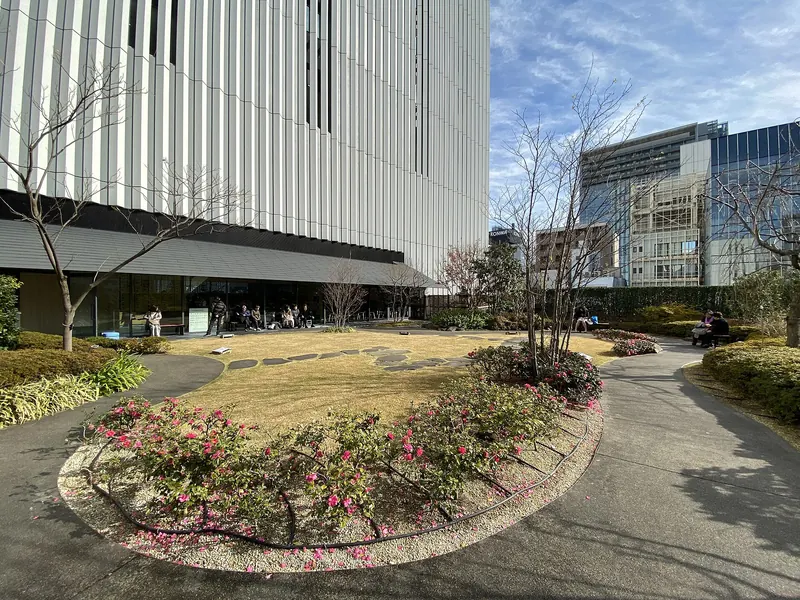
The garden cannot be reached from inside the theatre. "You cannot go to the rooftop garden and staircase from the Kabukiza Theatre’s main entrance. Please take the red lift from the Kabukiza Tower on the Showa-dori to the 5th floor." The Kabukiza Gallery, on the same floor and open from 10:30 to 18:00, calls itself "A perfect place to learn about kabuki", and both the gallery and the garden are free.
Food and intermissions
You may eat in the theatre, but only in the breaks. The Q&A explains: "There is an intermission between each act or performance, and you can eat 'obentō' (Japanese Style lunch boxes) and sweets sold at the theatre or other foods and drinks which you bought before entering the theatre." The breaks vary with the programme, but there is usually one of about 30 minutes, and you can eat either where you sit or in the lobby.
Kabuki etiquette
Kabuki audiences are relaxed, but a few rules keep the view clear for everyone. The first one on the manners page is: "Please do not lean forward during the play. Leaning forward will block other customers' view." It also asks you not to talk during the show and to "Please be aware of the sound of plastic!"
Kabuki etiquette in six points
- Phones and watches: switch off mobile phones and smartwatches.
- Sit back: rest against your seat back.
- No talking: during the show, and quietly in the breaks.
- Eating: only in the breaks, never during the play.
- Plastic bags: keep them still; the rustle carries.
- Hats: take them off, and keep your hair low.
What to wear to kabuki
You do not need to dress up. The Q&A says: "There is no dress code, so please come in your normal clothing." The one request is about hats and hairstyles, so that the people behind you can see. If you would like to wear a kimono, the New Year show in Asakusa sets one performance aside for it, as the next section explains. If you would like to try, the kimono rental guide explains how renting works.
Kabuki at other theatres
The Kabukiza is not the only place to see kabuki. Kabuki Web, Shochiku's English site, also lists theatres in Kyoto and Osaka and seasonal runs in other Tokyo theatres. These runs last a few weeks each, and the theatres change from season to season, so the right theatre depends on when you travel.
Kabuki theatres beyond the Kabukiza
- Minamiza, Kyoto: kabuki on the same spot by the Kamo River for over 400 years; shows in October and December 2026.
- Heisei Nakamuraza, Asakusa: a temporary Edo-style playhouse at Sensō-ji, with seats on cushions on the floor; until 25 October 2026.
- Asakusa Public Hall, Tokyo: the New Year show with young stars, from 2 to 26 January 2027, from 3,500 yen.
- Shinbashi Enbujo, Tokyo: in the Higashi-Ginza area, built in 1925 for dance; no kabuki listed on 18 October 2026.
- Osaka: the Shinkabukiza from 9 to 24 January 2027, and Try Kabuki tickets for overseas visitors in some months.
- National Theatre, Tokyo: closed for rebuilding, so its kabuki moves to other halls in the city.
The table sums up what Kabuki Web listed on 18 October 2026. Prices are in yen with tax included.
| Theatre | City | Kabuki dates listed | Prices (yen) |
|---|---|---|---|
| Kabukiza | Tokyo, Ginza | 1 to 25 November; 2 to 25 December | 5,000 to 20,000 in November |
| Minamiza | Kyoto | 3 to 25 October; 1 to 24 December | 5,000 to 16,000 in October |
| Heisei Nakamuraza | Tokyo, Asakusa | 1 to 25 October | 11,000 to 36,000 |
| Asakusa Public Hall | Tokyo, Asakusa | 2 to 26 January 2027 | 3,500 to 10,000 |
| Shinkabukiza | Osaka | 9 to 24 January 2027 | not yet listed |
| Shinbashi Enbujo | Tokyo, Higashi-Ginza | none listed | none listed |
| Osaka Shochikuza | Osaka | none listed | none listed |
Minamiza in Kyoto
Kabuki Web traces kabuki back to Kyoto. It tells how Izumo no Okuni's kabuki dances caused a stir there in 1603, how the dry riverbed of the Kamo grew into a theatre town in the same years, and says the Minamiza "has stood at this place for over 400 years". Shochiku took over the theatre in 1906, and in 1929 it was remodelled as "a gabled building in the Momoyama style". In 1996 the building joined the national list of Registered Tangible Cultural Properties, and after rebuilding work to make it safe in earthquakes, it reopened in November 2018. Its yearly Kaomise performance, held even during the war, "is now known as an annual event in Kyoto".
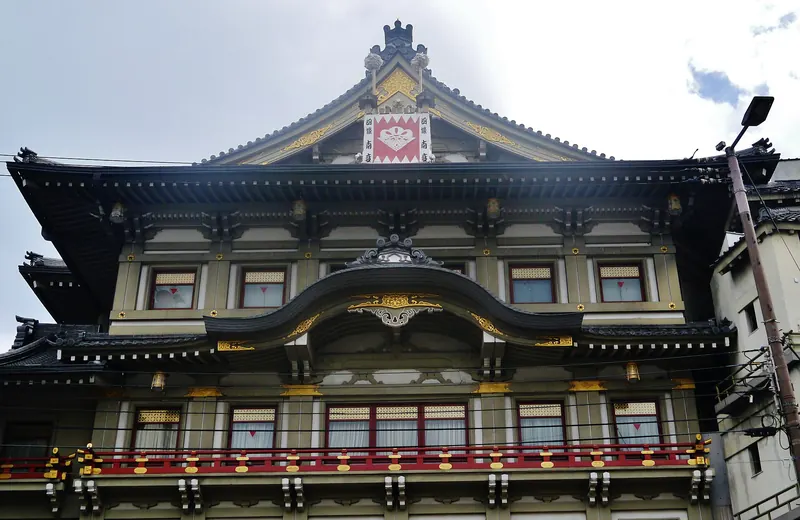
In October 2026 the Minamiza plays from 3 to 25 October, with a matinee at 11:30 and an evening show at 16:00 called Invitation to Kabuki. That evening show ends with an actor showing how his make-up, costume and wig are put on, and then playing a larger-than-life hero who defeats an evil spirit. Kabuki Web's invitation is simple: "Please enjoy this special opportunity to see how kabuki is created." December brings a second run, from 1 to 24 December, with tickets on sale from 9 November.
Online sales for the Minamiza close two days before each show. Some December dates were already sold out on 18 October: the matinees on 12, 19 and 20 December and the evening show on 18 December. Keihan Gion-Shijō Station is only a minute away, and the Kyoto guide has more on the city.
Heisei Nakamuraza in Asakusa
The Heisei Nakamuraza looks back to the very start of kabuki in Tokyo. Kabuki Web explains that "Edo kabuki is said to have originated in 1624", when the Nakamuraza was built in Edo, the old name for Tokyo, as "the first theatre officially recognized by the shogunate". The Heisei Nakamuraza is a modern revival of that theatre: a temporary theatre, "a recreation of an Edo-period playhouse", which has toured Japan and travelled as far as New York and Europe. In October 2026 it stands in the grounds of Sensō-ji Temple in Asakusa.
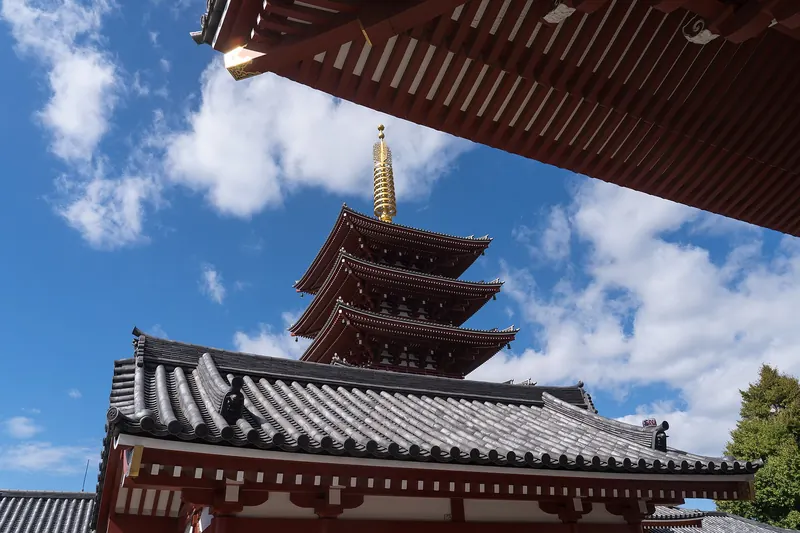
Its October run is from 1 to 25 October, with Part 1 at 11:00 and Part 2 at 16:00. The seating is unusual. Kabuki Web explains: "In the MATSU seats you will be seated on the floor on zabuton cushions." Everyone takes their shoes off, too: "Please take off your shoes at the entrance."
Seats at the Heisei Nakamuraza, October 2026 (yen)
- MATSU, level 1: 16,500; on cushions on the floor; not sold online
- TAKE, levels 1 and 2: 16,500; on benches
- UME, level 2: 13,000; on benches
- SAKURA, level 2: 11,000; on benches; not sold online
- ODAIJIN, level 2: 36,000; on special chairs; not sold online
There is no English guide at the Heisei Nakamuraza, but the programme sold there has a detailed English synopsis at the back. Children over 4 need a ticket. Because the theatre is temporary, it is not always in Asakusa, so check Kabuki Web for its next run.
New Year kabuki in Asakusa
For the New Year, Asakusa Public Hall hosts a programme "featuring the most talented young stars in kabuki today". Kabuki Web pitches it at beginners: "Compared to other kabuki performances, the length of each show is shorter, the tickets are sold at very reasonable prices and there is also a cheerful event where you can watch kabuki in kimono." Kabuki Web adds: "The program is perfect for tourists and customers who have never seen kabuki before."
New Year kabuki at Asakusa Public Hall
- 2–26January 2027, the dates of the run
- 3,500yen for a Third Class seat
- 2parts a day, at 11:00 and 15:00
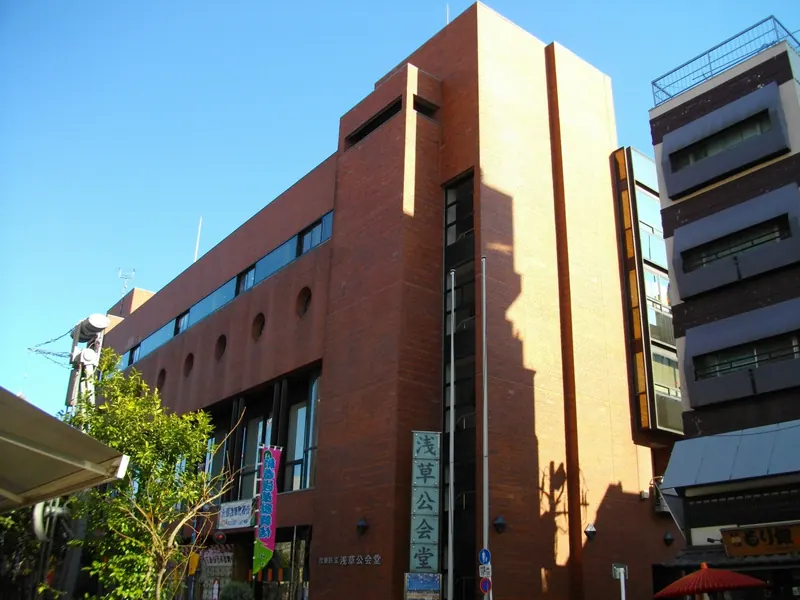
Sales open on Saturday 21 November 2026 at 10:00 Japan time, at 10,000 yen for First Class, 6,500 yen for Second Class and 3,500 yen for Third Class. Before each show the actors give New Year greetings to the audience. Part 2 on Sunday 17 January is Kabuki in Kimono, a show where the audience is invited to come in kimono. There is a free English flyer, and the programme has an English synopsis at the back.
Shinbashi Enbujo
The Shinbashi Enbujo is in the Higashi-Ginza area of Tokyo and, like the Kabukiza, close to Higashi-Ginza Station. It was "originally built as a stage for showing Azuma dance in April 1925", and was rebuilt in 1982. "It presented various genres of plays including Kabuki, straight plays, musicals and Super-Kabuki." On 18 October 2026, Kabuki Web listed no performance there, so look at its page before planning a visit around it.
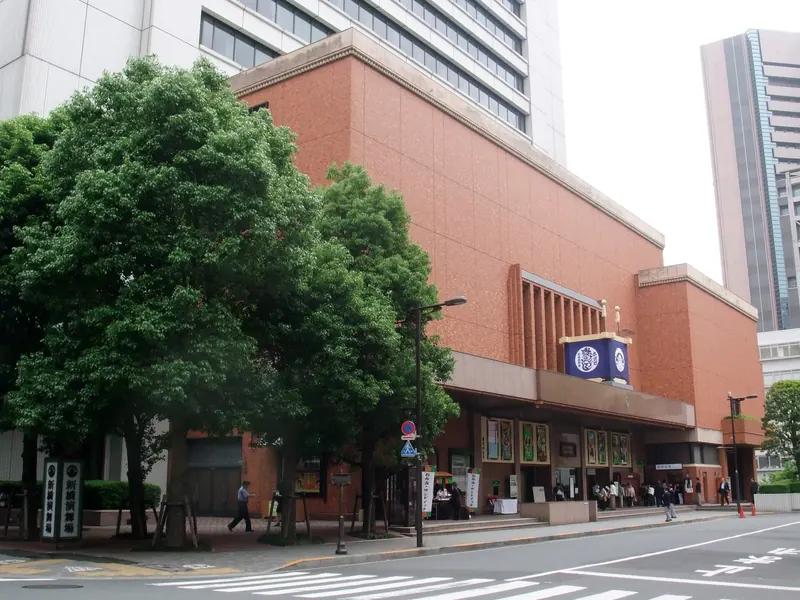
Osaka and Try Kabuki tickets
Kabuki Web lists two theatres in Osaka. On 18 October 2026, the page for the Osaka Shochikuza said: "No performance scheduled." The Shinkabukiza has a January programme, from 9 to 24 January 2027, with no show on Friday 15 January. The Osaka guide covers the rest of the city.
Outside Tokyo, single act seats have appeared as Try Kabuki tickets. In January 2026 the Osaka Shochikuza sold a "Try Kabuki Ticket", which Kabuki Web said "is for international tourists who want to experience" kabuki. The Minamiza ran the same idea in March 2025, and the Osaka Shochikuza again in July 2025.
Try Kabuki tickets, Osaka Shochikuza, January 2026
- Who: international tourists, including people living in Japan; Japanese customers cannot buy them
- What: a single act, at 5,000 or 7,000 yen, or the whole show for 16,000 yen
- Seats: First Class seats on the 2nd floor
- Online: until 17:00 two days before, by credit card only
- On the day: at the theatre box office only, from 10:00 to 17:30, in cash or by credit card
- Earlier runs: the Minamiza in March 2025, at 5,000 or 8,000 yen an act
The National Theatre in Tokyo
The National Theatre is run by the Japan Arts Council, not by Shochiku. Its own site explains: "The first National Theatre has been closed to undergo redevelopment, with its performances continually presented at alternative venues." In October 2026 its kabuki was at the Playhouse of the New National Theatre, Tokyo.
What you will see on stage
UNESCO sums up the art in one line: "Kabuki is a Japanese traditional theatre form, which originated in the Edo period at the beginning of the seventeenth century and was particularly popular among townspeople." It added kabuki to its Representative List of the Intangible Cultural Heritage of Humanity in 2008, after first proclaiming it in 2005. In Tokyo you can see it all year: "Kabuki is performed every month at the Kabukiza Theatre (Tokyo)."
Kabuki in three numbers
- 2008the year kabuki joined UNESCO's list of intangible heritage
- 1758the year given for the first large revolving stage, in Japan
- 110+overseas kabuki tours by Shochiku, to 35 countries
Today every role is played by men. UNESCO explains that in its early days kabuki had actors of both sexes, but that the stage later became all male, a tradition that has lasted to the present. "Male actors specialized in women's roles are called onnagata." Two other big role types are aragoto, the rough style of larger-than-life heroes, and wagoto, the soft style. Look out too for the mie, the moment "in which the actor holds a characteristic pose to establish his character". UNESCO's verdict: "Today, Kabuki is the most popular of the traditional styles of Japanese drama."
Kinds of kabuki play
The same classics come round again and again: "Kabuki is a repertory theater so many of the plays and dances are quite regularly performed." Kabuki Web sorts them into a few groups.
The main kinds of kabuki play
- Jidaimono: historical plays about nobles and samurai, often drawn from legend.
- Sewamono: domestic plays about the townspeople of the Edo period.
- Shosagoto: dance, from pure classical dance to plays built round it.
- Matsubamemono: dance dramas based on Nō or Kyōgen, on a set with a painted pine.
- Shin kabuki: plays from the Meiji to the Shōwa period by outside playwrights.
- Shinsaku kabuki: new works since the war, including Super Kabuki.
Jidaimono are, in Kabuki Web's words, "A category of plays set before the start of the Edo Period (1603-1868) depicting events that occurred among the nobility and samurai classes, often incorporating historical legend." November's Kanadehon Chūshingura at the Kabukiza is one of them. Sewamono "portray the ordinary lives of townspeople during the Edo Period (1603-1868) and would have been considered realistic and modern at that time", with the hair, costumes and speech of the audience of the day. Shosagoto "includes works of pure classical Japanese dance, as well as plays that incorporate a strong element of classical dance", danced to Gidayū, Tokiwazu, Kiyomoto, Nagauta and other kinds of music.
Plays from Nō, and new kabuki
Some kabuki plays come from the older Nō and Kyōgen theatre. They are played on a set called the matsubame, which Kabuki Web describes as "a stage set which resembles the interior of a Nō theatre, with its painting of an old pine tree as a backdrop, flanked by bamboo." Kanjinchō, taken from the Nō play Ataka, is thought to have been the first of them staged in the Edo period. Plays based on Kyōgen include Migawari Zazen and Bō Shibari.
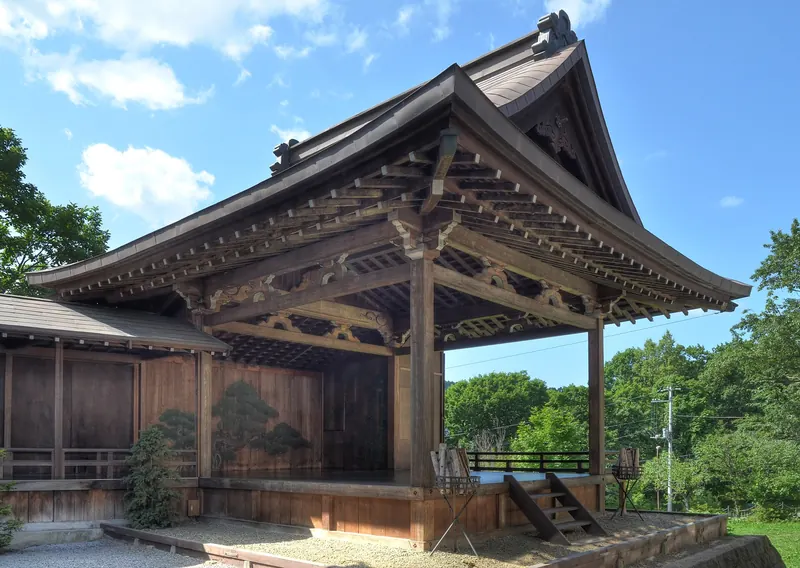
Newer plays keep being added. Shin kabuki are plays written between the mid-Meiji and the Shōwa periods by playwrights from outside the kabuki theatres. After them comes shinsaku kabuki: "A category of newly created works mainly written since the postwar era." Plays adapted from manga have become popular in recent years. Super Kabuki, a branch of shinsaku kabuki, is "a new type of kabuki play featuring epic stories told with great spectacle", with a style of direction aimed at modern audiences.
The stage: hanamichi, lifts and the revolving stage
The kabuki stage is built for surprises. Its most famous feature is the hanamichi: "A raised passageway running straight through the auditorium that brings the excitement and action of the dramas right into the audience's space." Actors enter and leave along it, and a clatter from the curtain at its far end warns you that someone is about to appear. From the single act seats on the 4th level you will not see it.
Parts of the kabuki stage
- Hanamichi: the raised walkway through the audience, used for entrances and exits; it can become the sea, a castle corridor or a road.
- Agemaku: the curtain where the hanamichi ends, which opens with a clattering sound.
- Shichi-san: the spot on the hanamichi where actors stop and pose.
- Suppon: a small lift at the shichi-san; in Tokyo it is generally kept for supernatural characters.
- Seri: the lifts in the main stage, which raise and lower actors and whole sets.
- Mawari butai: the revolving stage, which turns right round to change the scene.
Kabuki Web is proud of its revolving stage, saying that "this stage mechanism was actually first used in Kabuki!" It adds: "The large revolving stage is said to have been invented in Japan in 1758, making it the oldest in the world!" Lifts can make whole buildings rise out of the ground, painted cloth can become waves or fire, and some sets use "real rain or even a waterfall with actual water!" And for anyone who has only seen kabuki abroad: "Even if you've seen Kabuki on tour in other countries you won't have had the full experience until you visit a theatre in Japan."
Kakegoe: shouts from the audience
Do not be alarmed if someone in the audience calls out in the middle of a scene. Kabuki Web warns that "you might be startled by shouts from the audience seats during the performance!" The shouts are applause and encouragement for the actors, and part of the closeness between stage and audience that kabuki is known for. "This traditional practice, called kakegoe, adds a lot to the atmosphere."
Shochiku and kabuki
Shochiku, the company behind Kabuki Web, was founded by twin brothers, Ōtani Takejirō and Shirai Matsujirō, who had loved kabuki since they were children. Kabuki itself is over 400 years old, but Kabuki Web points out that "it was Shochiku that brought all the kabuki actors under the same management and raised the position of kabuki". It has also taken kabuki abroad: "It was in 1928 when the first kabuki performances were staged outside Japan in the Soviet Union." The tours have kept going since: "Now, the number of overseas kabuki tours has reached over 110, traveling to 35 countries and 90 cities."
Kabuki workshop in English
If you would like to try kabuki rather than only watch it, Kabuki Web lists an Interactive KABUKI Workshop in English. It takes place at the Kabukiza Hall, on the 5th floor of the Kabukiza Tower, the same floor as the rooftop garden and the Kabukiza Gallery. From 7 September to 21 December 2026 there are three sessions a month, and each one lasts 90 minutes. Be clear about what it is: "Please note that this is an interactive seminar program and not a traditional kabuki performance."
A kabuki actor leads the session together with a tsukeuchi artist, who makes sound effects by striking wooden clappers. "The program is conducted in English (MC/Interpretation)." The seats are unreserved benches for two or three people, and with only 90 minutes, very few people are chosen for the hands-on parts with the clappers and the make-up. Workshop tickets are sold separately: "Tickets are not available at the regular Kabukiza theater box office."
The workshop programme
- Lecture: where kabuki came from, how it grew and what makes it unique.
- Tsukeuchi: a live demonstration of the wooden clappers, then a try for a few chosen guests.
- Mie: a practical session where you learn and perform kabuki's famous dramatic poses.
- Kumadori: a live demonstration of kabuki's traditional stage make-up.
- Questions: a chance to ask the performers directly.
The programme may change. Groups, school trips and private parties can ask for a private session on another date through a web form handled by the co-organiser, the Asakusa Rokku Area Management Association. The workshop is a good way to start before a show at the Kabukiza. For another hands-on taste of traditional Japan, see the tea ceremony guide.
Frequently asked questions
How much do kabuki tickets cost?
At the Kabukiza in November 2026, full-show seats cost from 5,000 to 20,000 yen. Single act seats on the 4th level cost from 1,500 to 4,000 yen per act in October 2026. Prices change every month with the programme, and tax is included.
Can I buy kabuki tickets on the day?
Yes. The box office sells seats on the day while they last. At the Kabukiza, single act seats are sold from 10:00 on the day at their own box office, and online from 12:00 the day before.
What if the show is sold out online?
The online site sells only the seats set aside for it. Call the phone line or go to the box office, where seats may still be available for shows marked sold out online.
How long is a kabuki show?
A full show runs for 3 to 4 hours with its breaks. A single act is shorter: half an hour to an hour for a dance or a short drama, and 1 to 2 hours for a long one.
Is there English at kabuki?
Yes. The Kabukiza rents caption devices in English or Simplified Chinese, for 1,500 yen for a full show or 1,000 yen per act, in cash. Several theatres also hand out free English flyers, and the programmes usually have an English synopsis at the back.
Can children watch kabuki?
Yes. There is no age limit, but from the age of 4 every child needs a ticket. Children of 3 and under come free on an adult's lap.
What should I wear to kabuki?
Your normal clothes. There is no dress code, but take off your hat and keep your hair low so that the people behind you can see.
Can I eat during kabuki?
Only in the intermissions, either in your seat or out in the lobby. Single act tickets have no break, so eat before you go up to the 4th level.
Can I see kabuki in Kyoto or Osaka?
Yes, in some months. The Minamiza in Kyoto has kabuki from 3 to 25 October and from 1 to 24 December 2026, and the Shinkabukiza in Osaka from 9 to 24 January 2027. Try Kabuki tickets for overseas visitors have also been sold in both cities.
Where is the Kabukiza?
In Ginza, Tokyo, at Ginza 4-12-15. Exit 3 of Higashi-Ginza Station on the Hibiya and Asakusa lines leads straight into the theatre.
Are there women in kabuki?
No. Women acted in kabuki's early days, but today all roles are played by men, and the men who play female roles are known as onnagata.
What is the hanamichi?
A raised walkway that runs from the stage through the audience. Actors use it for dramatic entrances and exits. Seats on the 4th level, where single act tickets are, do not show it.
Is the kabuki workshop a performance?
No. It is a 90-minute seminar in English with a kabuki actor and a sound effects artist, with a lecture, demonstrations and a chance to try the poses. It costs 15,000 yen for adults and is not sold at the theatre box office.
Sources
Official and primary sources used for this page. Checked October 18, 2026.
- Kabuki Web (Shochiku): How to buy tickets — the online agency and its cut-off, phone line and hours, same-day phone rule, box offices and their hours, buying at the door
- Kabuki Web (Shochiku): Single Act Tickets — what a single act ticket is, who it suits
- Kabuki Web (Shochiku): 4th Level Single Act Seats — seat numbers, sale times, the box office, consecutive acts, lockers, captions
- Kabuki Web (Shochiku): Upgrade Single Act Seats (2nd level) — where the seats are, 23 seats, sale times, the 5 PM cut-off
- Kabuki Web (Shochiku): Single Act Tickets, Kabukiza, October 2026 — single-act prices on both levels
Show all 37 sources
- Kabuki Web (Shochiku): Kabukiza Theatre — the October 2026 run and its three parts
- Kabuki Web (Shochiku): October Program at the Kabukiza Theatre — full-show prices in October
- Kabuki Web (Shochiku): November Program at the Kabukiza Theatre — dates, start times, prices, sale date, sold-out shows, seats not sold online, the late-entry note, the play
- Kabuki Web (Shochiku): December Program at the Kabukiza Theatre — December dates and days off
- Kabuki Web (Shochiku): Kabukiza Theatre Information — address, stations and exits, taxi time, ticket machines, the single-act box office, intermissions
- Kabuki Web (Shochiku): Enjoy your stay — sale timing, doors, running times, 4th level cautions, captions, programme, opera glasses, dress, lockers, etiquette, souvenirs, translator, rooftop garden
- Kabuki Web (Shochiku): Service for International Visitors — caption prices and the short-act exception
- Kabuki Web (Shochiku): Kobikichō Square — the basement square, free entry without a ticket, information desk, money exchange
- Kabuki Web (Shochiku): Kabukiza Gallery — hours and floor
- Kabuki Web (Shochiku): Free guide pamphlet (January 2025) — free pamphlet for overseas buyers and the four theatres
- Kabuki Web (Shochiku): Q&A — schedule timing, running times, children, single-act times and prices, day tickets, captions, cloakroom, eating
- Kabuki Web (Shochiku): Manners — leaning forward, children who cry
- Kabuki Web (Shochiku): Minamiza Theatre Information — location, stations, history
- Kabuki Web (Shochiku): October Program at the Minamiza Theatre — dates, times, prices, Invitation to Kabuki, audio guide, two-day online cut-off
- Kabuki Web (Shochiku): December Program at the Minamiza Theatre — dates, times, days off, sold-out days, sale date
- Kabuki Web (Shochiku): October Program at the Heisei Nakamuraza Theatre — dates, times, seat types and prices, shoes off, the history of the theatre
- Kabuki Web (Shochiku): Other Theatres — no English guide at the Heisei Nakamuraza
- Kabuki Web (Shochiku): January Program at the Asakusa Public Hall — dates, times, prices, sale date, kimono day, who it suits
- Kabuki Web (Shochiku): January Program at the Shinkabukiza Theatre — dates in Osaka
- Kabuki Web (Shochiku): Shinbashi Enbujo Information — address, stations, no English earphone guide, history
- Kabuki Web (Shochiku): Osaka Shochikuza — no performance scheduled
- Kabuki Web (Shochiku): Try Kabuki Ticket, Osaka Shochikuza, January 2026 — who could buy, prices, how it was sold
- Kabuki Web (Shochiku): Try Kabuki Ticket, Minamiza, March 2025 — an earlier run in Kyoto
- Kabuki Web (Shochiku): Interactive KABUKI Workshop — dates, length, prices, ages, language, what it covers
- Kabuki Web (Shochiku): Schedule — where the theatres' programmes are listed
- Kabuki Web (Shochiku): Performances throughout the year — kabuki every month at Kabukiza, about 25 days a month
- Kabuki Web (Shochiku): Kabuki categories — historical, domestic and dance plays, Nō-based plays, new kabuki
- Kabuki Web (Shochiku): Stage structures — hanamichi, revolving stage, lifts
- Kabuki Web (Shochiku): Shouts from the audience — kakegoe and the Ōmukō
- Kabuki Web (Shochiku): About Shochiku — founded 1902, overseas tours since 1928
- Japan Arts Council: National Theatre — closed for redevelopment, performances at other venues
- UNESCO: Kabuki theatre — inscribed 2008, origins in the Edo period, onnagata, stage devices
Related guides
To cite or link to this page: Kabuki tickets in Japan: how to buy them online, by phone and at the theatre, single act seats at the Kabukiza in Tokyo, full-show seats and prices, English captions and guides, a day at the Kabukiza, kabuki at the Minamiza in Kyoto, the Heisei Nakamuraza and Asakusa, Osaka and the National Theatre, what you will see on stage, and a kabuki workshop in English — Japan Pocket Guide, https://japanpocketguide.com/culture/kabuki-tickets/