Culture · Hot springs
Onsen etiquette in Japan: what an onsen is and what sets it apart from a sento, how to bathe step by step, the rules in the water for towels, hair, phones and photos, tattoos and where they are welcome, private baths, mixed bathing and children, the public bathhouses of Kinosaki, Dogo and Kusatsu, and what to bring
A Japanese hot spring bath looks simple: a pool of hot water, often outdoors, shared with strangers. What makes first-timers nervous is everything around it. You bathe naked, you wash before you get in, the small towel never touches the water, and a tattoo can decide whether you are let in at all. This guide goes through it in the order you meet it: what an onsen is, how to bathe step by step, the rules in the water, tattoos, private baths, mixed bathing and children, three towns of public bathhouses, Kinosaki, Dogo and Kusatsu, with their hours and prices, and what to bring. Everything here was checked on 4 November 2026 against pages from the Japan National Tourism Organization (JNTO), the Japan Tourism Agency, the Ministry of Health, Labour and Welfare, the Ministry of the Environment, Visit Kinosaki, Dogo Onsen and the operator of Kusatsu's three public baths, with a link to each one in the list at the end.
Last checked · Sources

In short
At an onsen you undress completely in the changing room, take only a small towel into the bath area, and sit at a washing station to wash and rinse your whole body before you get into the water. Keep the towel and your hair out of the bath: fold the towel on your head or leave it at the edge, and tie up long hair. Do not swim, splash or dive, speak quietly, and leave your phone and camera in the locker, because photos are forbidden. Before you return to the changing room, pat yourself dry with the small towel. Tattoo rules depend on the place: some baths still refuse tattooed guests, while all the public bathhouses of Kinosaki and the three public baths of Kusatsu accept them. For a bath without strangers, book a private bath, called kashikiri.
What an onsen is
The word onsen means a hot spring, and it also covers the bath that a spring fills and the town that grows up around it. JNTO explains why Japan has so many: "Heated geothermally, onsen can be found all across Japan, thanks to the country’s location along the Pacific Ring of Fire." The water differs from one spring to the next. Some is cloudy and milky, some is smooth and fizzy, and at Kusatsu in Gunma the water has a pH of 1.7 to 2.1, which is strongly acidic.
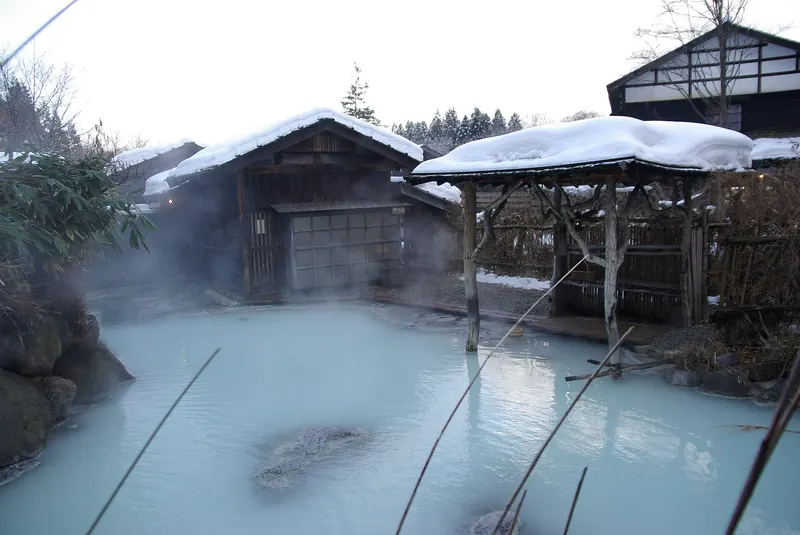
The bath is not always a spring. A sento is a public bath in a town, and JNTO's office in Britain describes it as a simpler version of an onsen "that just uses normal heated water instead of natural geothermal water in its baths". The same page notes that you may see the word tennen, natural, in front of onsen, to make the difference clear. The manners are the same in both: you wash first and bathe naked.
Hot springs in Japan, in the Ministry of the Environment's figures
- Lodgings that use hot-spring water: 12,999 at the end of the 2022 financial year, down from a peak of 15,714 in the 1995 financial year
- Public baths that use hot-spring water: 7,941 in the same year, a number that has been rising while the lodgings fall
- Overnight guests at hot-spring lodgings: about 109.9 million in the 2022 financial year
The figures come from a paper the ministry gave to its hot springs subcommittee in September 2024. Other pages count other things, so you will see very different totals; the ministry's are the official count of places to stay and bathe.
The kinds of bath you will meet
Most visitors meet the onsen in one of a few forms. Each has its own small rules, which the rest of this guide explains.
Six kinds of hot-spring bath
- The large bath: the shared bath at an inn or hotel, divided into a men's side and a women's side.
- The public bathhouse: a bathhouse in an onsen town that anyone can use for a fee, such as the bathhouses of Kinosaki and Dogo.
- The rotenburo: an open-air bath, at an inn or a bathhouse.
- The kashikiri: a private bath you have to yourself for a set time, usually for a fee.
- The bath in your room: some inns and hotels have rooms with their own hot-spring bath.
- The footbath: an ashiyu, a shallow bath for your feet, often outdoors near a station.
JNTO's British office explains how the baths at a place to stay are charged. Its rule of thumb is that "A public onsen at an accommodation is almost always free of charge for overnight guests", while a private kashikiri usually costs extra, and a bath in your own room is part of the room price. The same page singles out the yukimi onsen, an open-air bath for watching the snow, and the ashiyu footbath, which it suggests for anyone who would rather not undress.
Day trips and inns
A night's stay is not required. JNTO's guide to onsen bathing says that many places in onsen towns, such as Kusatsu, sell day-use plans or let you walk in for a bath. In Kinosaki, the inns give their guests a pass to all the town's public bathhouses, and anyone else can buy a day pass at the bathhouse counter. The ryokan guide walks through a night at an inn, from check-in to the bath before dinner.
How to use an onsen, step by step
The order is the same almost everywhere, from a small inn to a big public bathhouse. The steps below follow JNTO's guide and the bathing guide of Visit Kinosaki, the official tourism site of Toyooka City, with a few details from Dogo Onsen in Matsuyama.
From the door to the water and back
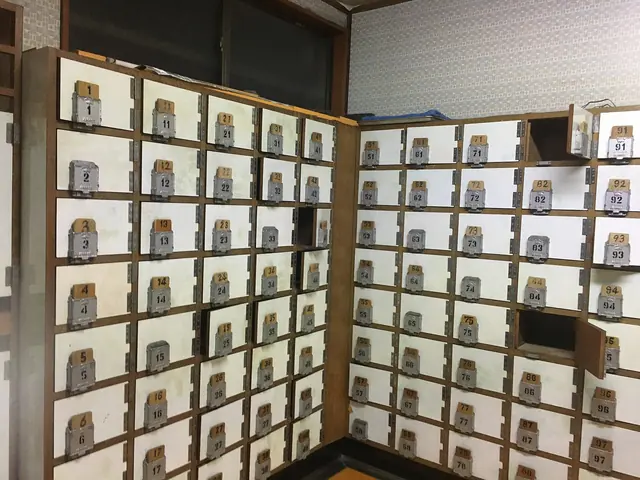
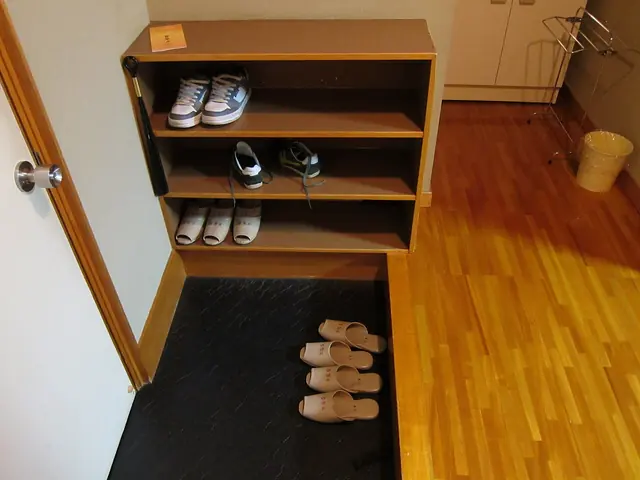
- Shoes off: at the entrance, put your shoes in a shoe locker; at an inn, slip off your slippers before the changing room.
- Pay or show your pass: buy a ticket at the counter or a machine, or show the pass your inn gave you.
- Choose the right side: red curtains usually mean women and blue mean men; at Kinosaki the men's side is sometimes purple.
- Undress completely: put everything in a locker or basket, lock it, and slip the key band over your wrist. Only the small towel comes with you.
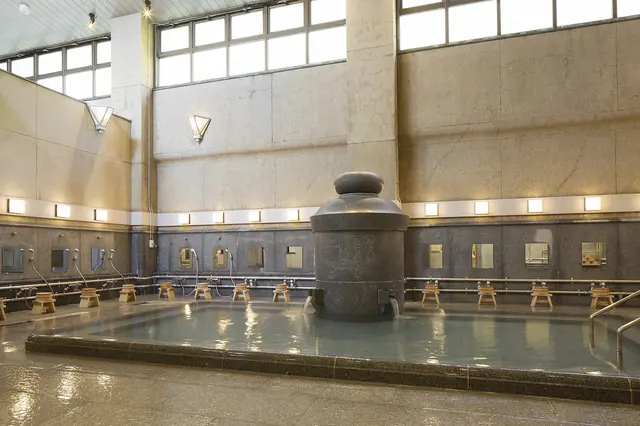
- Wash at a washing station: sit on the stool, wash your body and hair, and rinse off every trace of soap.
- Rinse your place: pour water over the stool and the basin and put them back.
- Pour hot water over yourself: this is kakeyu, and it gets your body used to the heat before you step in.
- Soak quietly: the small towel goes on your head or at the edge, never in the water.
- Dry off before you leave: wipe yourself with the small towel so that you do not drip on the changing-room floor.
Undressing is the step that worries people most. JNTO is plain about it: "Onsen bathing is typically enjoyed in the nude, so clothing (including swimwear) should be left in the changing area." Visit Kinosaki adds underwear to the list of things you may not wear in the bathing area. The small towel is for washing and, on the walk from the changing room, for covering yourself. Once you reach the bath, JNTO is clear that "it’s not for use in the bath".
Washing first
Washing is the heart of the routine, because everyone shares the same water. At the washing station you will find a low stool, a basin and usually a hand shower, with soap and shampoo. Stay seated the whole time, and take care where the water goes so that you do not spray the person beside you. Dogo Onsen asks bathers not to shower standing up, and Visit Kinosaki says the same.
How long you scrub is up to you. Visit Kinosaki is practical about it: "If you have already showered today and are clean, you can just rinse off before getting into the bath." If you have not, wash properly first. JNTO's guide also asks you to remove any makeup before you get in.
After the bath
Getting out is quicker than getting in. Do you need to rinse off the spring water before you dress? JNTO answers that it is a matter of taste, and sums up: "In short, there is no correct bathing style". Whatever you choose, dry yourself before you open the door to the changing room. Visit Kinosaki explains why: water from wet bathers makes puddles, and the floor becomes slippery.
JNTO ends its list of steps with some reassurance: "Don’t be overly concerned about following all the onsen norms and customs at first." Watch what others do, follow the steps above, and nobody will mind a small slip.
The rules inside the bath
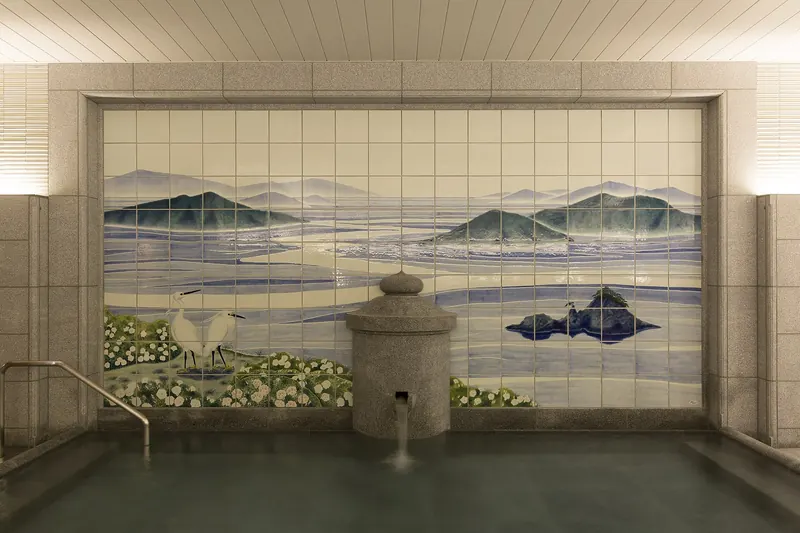
Bathhouses post their rules, and the lists are remarkably alike. The lists from JNTO, Visit Kinosaki, Dogo Onsen, the Japan Tourism Agency and a sign at Hakuba Happo-one in Nagano come down to the same few points, and most of them exist to keep the water clean.
What every bath asks of you
- Wash your whole body before you get in
- Keep the small towel out of the water
- Tie up long hair to keep it clear of the water
- Keep your head above the surface
- Bathe naked: no swimsuits, no underwear, no towel wrapped around you
- Do not swim, dive, jump in or splash
- Speak quietly
- Leave your phone and camera in the locker
- Do not bring food or drink into the bathing area
- Dry yourself before you go back to the changing room
Towels and hair
The towel rule is the one visitors break most often, usually without noticing. The Hakuba sign explains that the towel should neither touch the bath water nor be squeezed out over it, because "it’s seen as dirtying the water". Fold it and rest it on your head, or set it down at the edge of the bath.
Hair counts as well. JNTO's British office is firm: "Even recently washed hair is considered a potential contaminant." Bring a hair tie if your hair is long; Visit Kinosaki suggests a shower cap as another way. Keep your head out of the water too, short hair or not. JNTO's guide for Malaysia puts it simply: "Onsen aren’t swimming pools." It goes on: "It’s bad form to submerge your head in the water."
Washing, shaving and the hot-water spout
Some rules are about what you do at the washing station, not in the tub. Visit Kinosaki says: "Do not shave or brush your teeth in or near the baths." Dogo Onsen and the national guideline for public baths add a few more.
More rules for the washing station
- Dogo Onsen: no hair dyeing or haircuts, no laundry, and no washing yourself at the hot-water spout, where the spring water pours into the tub
- National guideline, Ministry of Health, Labour and Welfare: the guideline rules out washing your body inside the tub, and washing clothes
Quiet, space and jewellery
An onsen is a place to sit still. JNTO's guide asks you to keep your voice down in the changing room and the bath. Visit Kinosaki asks bathers not to hog the bath, and Dogo Onsen asks you not to take up space or leave your things unattended. Do not climb the walls of the bath, and walk rather than run on the wet floor.
Take off rings and necklaces before you go in. JNTO's British office warns that "jewelry can discolour depending on the mineral makeup of the water", and the operator of the Sainokawara open-air bath in Kusatsu says some of Kusatsu's water is acidic enough to tarnish silver at once. The same British page suggests about 30 minutes as the longest soak. If you feel too hot or dizzy, Visit Kinosaki advises getting out slowly and cooling down.
Onsen and tattoos
Tattoos are the question visitors ask most, and there is no single answer. Each bath sets its own rule, and the rules run from a flat ban to a warm welcome. The rules and manners guide covers tattoos in daily life; this section is about the bath.
Why some baths say no
The Japan Tourism Agency's ryokan pages say much the same: in Japan, tattoos call to mind people from criminal groups, and that is why many inns have refused them in the past.
Attitudes are changing, but slowly, and the official pages differ on how far. A sign written for visitors at Hakuba Happo-one in Nagano, kept in the Japan Tourism Agency's database of multilingual texts, warns of "the strict prohibition of people with tattoos entering the water", and says that only a tattoo small enough to cover with a skin-coloured waterproof sticker will get you in. JNTO's guide for Malaysia says that, although many places have relaxed their rules, "the vast majority still do not allow tattooed guests to use their baths". JNTO's British office is more hopeful. It says that in shared baths the reality is "very case-by-case", that many owners do not mind, and that "Generally speaking, there is more leniency given to international visitors".
Three ways inns treat tattoos, from the Japan Tourism Agency
- No limits: some inns set no rule on tattoos at all.
- Case by case: some decide each time, for example letting in a guest with one small tattoo.
- A private bath instead: some inns offer a private bath or a bath in the room, so that tattooed guests can still bathe.
Where tattoos are welcome
Some onsen towns have made a point of opening their public baths to everyone. Two of them are in this guide.
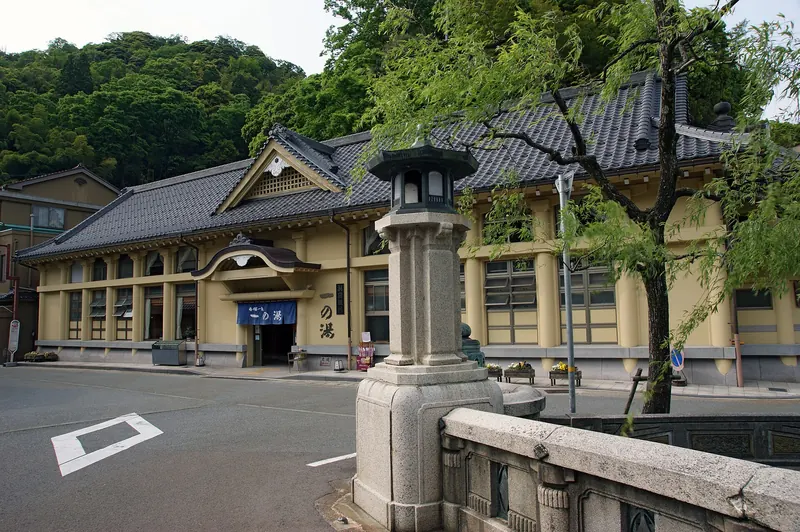
Kinosaki, in Hyogo Prefecture, states on its tattoo page that "all seven public hot springs in Kinosaki Onsen allow tattoos of all sizes, with no need to cover them up!" Its bathhouse page says the same of every public bathhouse in the town. One of the seven, Satono-yu, has been closed for renovation since 1 April 2024, so six are open. The rule covers the public bathhouses only: the baths inside the inns may have rules of their own, so ask your inn.
Kusatsu, in Gunma Prefecture, is just as open. The operator of its three public baths, Otakinoyu, Gozanoyu and the Sainokawara open-air bath, says in its Japanese FAQ that it does not turn away people with tattoos, and that it wants everyone, visitors from abroad included, to enjoy the baths while keeping to the manners. Its English page for Sainokawara goes further and says that "the vast majority of Kusatsu Onsen inns and bath facilities are welcoming to those with non-gang-related body art".
Tattoo rules on the official pages
- Hakuba Happo-one sign (Nagano): no entry with a tattoo, unless a small one can be covered with a skin-coloured waterproof sticker
- Kinosaki public bathhouses (Hyogo): tattoos of any size welcome, uncovered; inn baths may differ
- Kusatsu's three public baths (Gunma): people with tattoos are not turned away
- Ryokan in general: it depends on the inn, so ask before you book
If you have a tattoo
The safest plan is to ask before you go. JNTO's British office suggests emailing the place directly, or asking through the agency or site you booked with; some places may just ask you to come outside the busy hours. Its other tips are to hide a small tattoo under a tattoo seal, a skin-coloured sticker, to rent a private kashikiri bath, or to choose an onsen that welcomes tattoos.
Seals have their limits. JNTO's guide to onsen bathing says that many onsen sell small cover sheets, but warns that "these sheets are generally only suitable for very small tattoos". A tattoo too large to cover is the case where a private bath or a tattoo-friendly town makes most sense.
Before you go, if you have a tattoo
- Check the bath's own tattoo rule on its website, or email to ask
- If the tattoo is small, bring a skin-coloured seal, or ask whether the bath sells one
- If it is large, book a private bath or choose a town such as Kinosaki or Kusatsu
- At an inn, ask about the inn's own bath, even in a tattoo-friendly town
- Respect the answer at the door, even if another bath said yes
JNTO's British page also gives a few phrases for asking at the front desk. "Tatu ga haitte iru no desu ga, daijobu deshou ka?" asks whether you may go in even though you have a tattoo. "Tatu shiiru ga arimasu ka?" asks whether they have tattoo seals. To ask about a private bath instead, keep the same opening and end with kashikiri-buro wa arimasu ka?
Private baths, mixed bathing and children
Not everyone wants to bathe with strangers, and Japan has answers for that too. JNTO's guide starts with the basic fact: "Changing rooms are always gender specific, as are the vast majority of onsen baths." If that is still too public for you, you can book a bath of your own.
Private baths: kashikiri
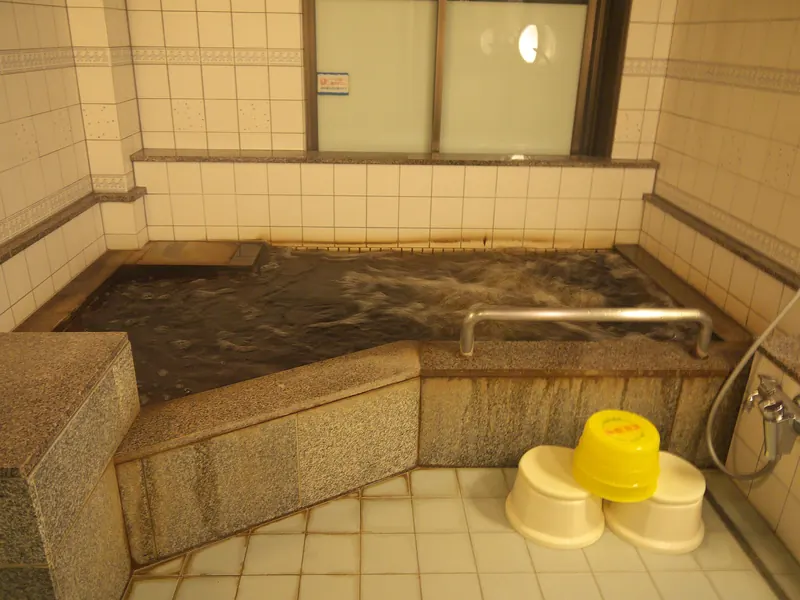
A kashikiri bath is one you reserve for yourself, your partner or your family for a set time. The Japan Tourism Agency's ryokan pages describe two kinds: a bath that comes with your room, which you can use whenever you like, and a shared private bath that you book for a time slot. The second kind needs a reservation, so ask the staff when you arrive. JNTO's guide for Malaysia says inns rent private baths "usually in 45- to 60-minute increments", and JNTO's British office says they almost always cost extra and "need to be reserved in advance or at the front desk, where you will receive a key".
Private baths in this guide
- Otakinoyu, Kusatsu: the Shakunage private bath, ¥2,000 an hour in addition to the entry fee, booked at the front desk, 9:00 to 19:00, last booking 18:00
- Asuka-no-Yu, Dogo: two special private baths modelled on the imperial bath at the Honkan, booked online from 90 days ahead
- Kinosaki: private baths at some of the inns
- Sainokawara, Kusatsu: no private bath
A private bath is the easy answer for couples, for families with children of different sexes, for tattooed guests and for anyone shy. The rules inside are the same as in a shared bath: wash first, keep the towel out of the water, and leave the bath clean for the next guests.
Mixed bathing
Mixed baths, where men and women bathe together, still exist but are rare. JNTO's guide for Malaysia speaks of "the tiny handful of increasingly rare mixed-gender onsen", where you may be allowed a swimsuit or a cover if the bath provides one. It names Nyuto Onsen in Akita Prefecture as a place where mixed pools are still common.
Kusatsu has a set evening for it. Every Friday, except on certain days, the men's side of the Sainokawara open-air bath becomes a mixed bath from 17:30 to 20:00, with last entry at 19:30. The operator started it as a weekly event in 2019. A door in the partition lets women walk through from the women's side without going round by the changing rooms, and the women's bath stays open as usual.
What to wear on the mixed-bathing evening at Sainokawara
- Women: rent a yuami-gi, a bathing gown, for ¥400, or bring a swimsuit; the spring water can discolour metal parts.
- Men: a yuami-gi is lent free during the mixed hours, and men are asked to wear one.
- Children: there are no children's gowns, so bring a swimsuit.
Children at the onsen
Children are welcome at most baths. JNTO's guide says: "Many onsen welcome families with children, but check the rules in advance." Some have family baths or private baths that make it easier.
The tricky part is when a girl bathes with her father, or a boy with his mother. Japan's national guideline for public baths, issued by the Ministry of Health, Labour and Welfare and revised in December 2020, says that men and women aged about seven or older should not bathe together. The actual age is set by each prefecture's own rules, so it varies. The Kusatsu baths, citing Gunma's rules, let children who have not yet started school go into the other side with a parent. Visit Kinosaki puts it simply: "Young children are also allowed to go into the opposite gender bath area if it is necessary." It also asks that an adult stay with children in the bath area.
Three bathhouse towns: Kinosaki, Dogo and Kusatsu
In an onsen town, the public bathhouses are the place to practise. The three towns below publish their rules, hours and prices in English, and each makes a good first onsen.
The three towns at a glance
- Kinosaki, Hyogo: seven public bathhouses in one small town, with six open at present, and tattoos welcome.
- Dogo, Ehime: an old public bathhouse, the Honkan, and two newer ones in Matsuyama.
- Kusatsu, Gunma: three public baths run by the town's operator, from a huge open-air bath to hot baths taken in turn.
Kinosaki
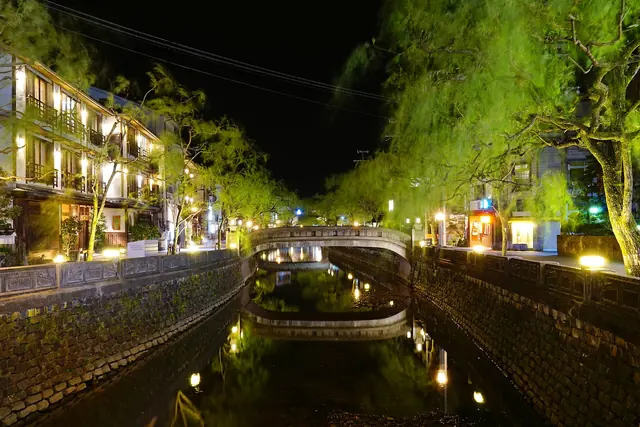
Kinosaki, a Hyogo Prefecture town close to the Sea of Japan coast, is roughly two and a half hours by limited express from Kyoto or Osaka. The idea here is to walk from one bathhouse to the next, often in the yukata your inn lends you; the guide to kimono rental explains the difference between a kimono and a yukata. The water in all the bathhouses is about 42°C.
If you stay at an inn in town, you will usually get a free pass at check-in. It has a barcode that you scan at the bathhouse door, and it is valid from the time you check in to 13:00 on your departure day. Without one, buy a day pass at any bathhouse counter: ¥1,500 for adults, ¥750 for children up to middle-school age, while under-threes go free. Soap, shampoo, conditioner and hair dryers are provided, and each bathhouse has a lounge where you can rest after your bath.
Kinosaki's public bathhouses
- Kono-yu: 7:00 to 23:00, closed on Tuesdays; it was closed for renovation from 11 May to 30 October 2026
- Mandara-yu: 15:00 to 23:00, closed on Wednesdays
- Goshono-yu: 7:00 to 23:00, closed on Thursdays
- Ichino-yu: 7:00 to 23:00, closed on Wednesdays
- Yanagi-yu: 15:00 to 23:00, closed on Thursdays
- Jizo-yu: 7:00 to 23:00, closed on Mondays
- Satono-yu: closed for renovation since 1 April 2024
Visit Kinosaki says the bathhouses keep their usual hours over Christmas and the New Year. Its site also shows how busy each bathhouse is, which helps you avoid the crowded hours.
Dogo
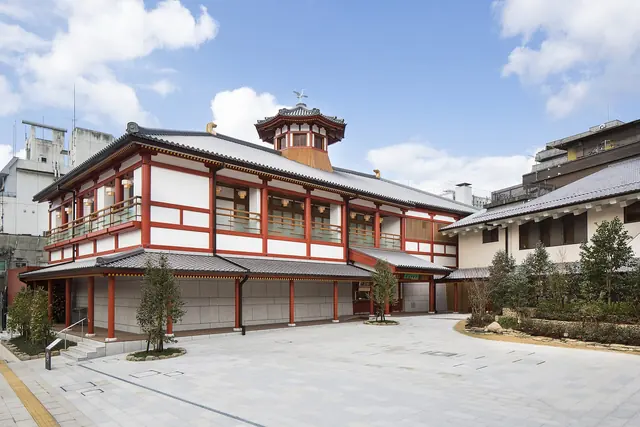
Dogo Onsen is in Matsuyama, on the island of Shikoku, in Ehime Prefecture. Its best-known building is the Dogo Onsen Honkan, an Important Cultural Property that is still a working bath. Its official site says: "Dōgo Onsen Honkan has long been a favorite of the locals, and some of them come here almost every day to take a bath." It is a bathhouse and nothing more: "Dōgo Onsen Honkan is a public bathhouse. Overnight stay is not available."
A visit to the Honkan
- Ticket: buy it at the window outside.
- Shoes: put them in a free shoe box with a lock.
- Door: show your ticket to go in.
- Changing room: in the main bath, Kami-no-yu, the men's is on the right and the women's on the left, and the lockers are free.
When it is busy, you register for a call system, take a numbered ticket and wait for a phone call. Part of every bathing fee goes towards the repair of the building. Inside is the Yushinden, which the site calls the only bathhouse in Japan made for the Imperial Household alone; you can look at it, but not bathe in it.
Dogo's three bathhouses
- Honkan: the old public bathhouse; it takes credit and debit cards, e-money, QR codes and transport IC cards
- Asuka-no-Yu: the annex, with open-air baths, which the Honkan does not have; the ground-floor bath is ¥610 for adults and ¥300 for children aged 2 to 11, from 6:00 to 23:00, with last entry at 22:30
- Tsubaki-no-Yu: ¥500 for adults and ¥200 for children, from 6:30 to 23:00, with last entry at 22:30, for up to an hour; no shampoo or soap, and the hair dryers and lockers cost ¥10
- Three-bathhouse ticket: ¥1,440 for adults and ¥680 for children, one bath at each of the three, valid on the day you buy it and the next day
Kusatsu
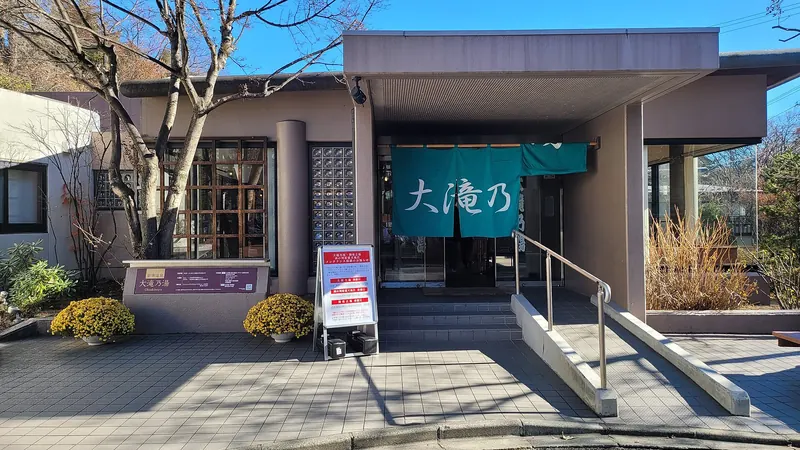
Kusatsu, in Gunma Prefecture, is an onsen town built around the Yubatake, the hot-water field in the centre of town. Its three public baths, which their official site calls the Kusatsu Three Baths, are Otakinoyu, Gozanoyu and the Sainokawara open-air bath. Otakinoyu and Sainokawara accept cards, e-money and PayPay.
Sainokawara is a 12-minute walk from the Yubatake. According to its English page, "The large outdoor bath (rotenburo) is separated for men and women", and it covers 500 square metres. It is an open-air bath and nothing else, and its FAQ is a good read before you set off: there is no washing area, no private bath, no hair dryer and no towel to rent, you may not bring in food or drink, and once you leave you cannot come back in. Otakinoyu is the place for something different: its awase-yu is a set of baths, from 38°C to 46°C, "where several baths are taken in turn, each hotter than the last".
Two of Kusatsu's public baths
- Sainokawara, hours: 7:00 to 20:00 from 1 April to 30 November, and 9:00 to 20:00 from 1 December to 31 March; last entry at 19:30
- Sainokawara, price: ¥800 for adults and ¥400 for children from 3 to the end of primary school; face towels ¥380 and bath towels ¥1,700 to buy
- Otakinoyu, hours: 9:00 to 21:00, last entry at 20:00, with no time limit while it is open
- Otakinoyu, price: ¥1,200 for adults and ¥600 for children; a towel and bath towel set to rent for ¥250
Because Sainokawara has no washing area, plan to wash before you go, for example at your inn.
What to bring, and what it costs
You need very little. JNTO's British office says free shampoo and body wash are nearly always provided, and Visit Kinosaki says your inn will give you a large and a small towel. The exceptions are worth knowing: Visit Kinosaki's FAQ says "You do not need to bring soap, shampoo, conditioner, or a hair dryer." But Dogo's Tsubaki-no-Yu provides none of them, and Sainokawara in Kusatsu has no towels to rent.
A small onsen bag
- A small towel for washing and drying off
- A larger towel, if the bath does not lend one
- A hair tie or a shower cap for long hair
- A tattoo seal, if you have a small tattoo
- Coins for lockers and hair dryers at some baths
- Cash, in case a small bath does not take cards
- Your inn's bath pass, if you have one
- A change of clothes, or the yukata from your inn
Prices for a public bath in this guide run from ¥500 at Dogo's Tsubaki-no-Yu to ¥1,500 for a day pass to all of Kinosaki's bathhouses. A private bath costs more: ¥2,000 an hour at Otakinoyu, plus the entry fee. Some small baths still want cash, and the page on paying in Japan says when to carry it.
Frequently asked questions
What is the proper etiquette at an onsen?
Undress completely in the changing room, wash your whole body at a washing station, and rinse off all the soap before you get in. Keep the small towel and your hair clear of the water, do not swim or splash, speak quietly, and leave your phone in the locker. Dry yourself before you go back to the changing room.
Do you have to be naked in an onsen?
Yes, at almost every onsen. You may not wear a swimsuit or underwear in the bath, and you should not wrap a towel around you in the water. The exceptions are a few mixed baths, such as the Friday evening at Sainokawara in Kusatsu, where a bathing gown or a swimsuit is allowed.
What do I do with the small towel?
Use it to wash, and to cover yourself on the way to the bath. Never put it in the water or wring it out over the bath. While you soak, fold it on your head or leave it at the edge of the bath, then use it to dry off before you go back to the changing room.
Can I go to an onsen with tattoos?
It depends on the bath. Some still refuse tattooed guests, some decide case by case, and some welcome them, such as all the public bathhouses of Kinosaki and the three public baths of Kusatsu. Check the rule before you go, put a seal over a small tattoo, or book a private bath.
Can couples bathe together at an onsen?
Not in the shared baths, which are divided into men's and women's sides. Book a private kashikiri bath, use a bath in your room, or go to one of the few mixed baths, such as Sainokawara on Friday evenings.
Can I shave at an onsen?
Visit Kinosaki asks you not to shave or clean your teeth at or around the baths. Rules differ from one bath to another, so check the rules posted at the bath you use.
Can a young child bathe with their father or mother on the other side?
Young children can, but the age limit depends on the prefecture. The national guideline says men and women aged about seven or older should not bathe together, and the Kusatsu baths allow children who have not yet started school. Kinosaki allows young children into the other side when it is necessary.
How long should I stay in an onsen?
JNTO's British office suggests about 30 minutes as the longest soak. If you feel too hot or dizzy, get out slowly, cool down and drink some water.
Sources
Official and primary sources used for this page. Checked November 4, 2026.
- JNTO: How to Best Enjoy Japan's Onsen — the steps, towels, hair, *kakeyu*, quiet, photos, day use, children, tattoo cover sheets
- JNTO UK: Onsen Hot Springs - On Tattoos and Etiquette — sento, baths at inns and their charges, footbaths, jewellery, hair, soaking time, tattoos and phrases
- JNTO Malaysia: Onsen in Japan etiquette guide — mixed baths, private bath times, tattoos, heads out of the water
- Japan Tourism Agency: Q&A about ryokan, the large bath (in Japanese) — the large bath, private baths, tattoos at inns, *kakeyu*
- Japan Tourism Agency: Japanese Hot Springs: Manners and Rules — the Hakuba Happo-one sign on tattoos and towels
Show all 23 sources
- Ministry of Health, Labour and Welfare: Revision of the hygiene guideline for public baths, 10 December 2020 (in Japanese) — the age for separate bathing, washing rules
- Ministry of the Environment: Recent hot spring administration, hot springs subcommittee, September 2024 (PDF, in Japanese) — numbers of lodgings, public baths and guests
- Visit Kinosaki: Taking a Japanese Bath — passes, curtains, children, what not to wear, washing, towels, shaving, drying off
- Visit Kinosaki: The 7 Mystic Onsen — the bathhouses, hours, renovations, tattoos
- Visit Kinosaki: Tattoo Friendly Onsen of Kinosaki — tattoos, inn baths
- Visit Kinosaki: FAQs — passes and prices, what to bring, in-room baths, holidays, access
- Dogo Onsen: Bathing Manners — the bath rules
- Dogo Onsen: Dogo Onsen Honkan — the Yushinden, shop items, the three-bathhouse ticket, payment
- Dogo Onsen: Facility Guide — tickets, shoe boxes, the call system
- Dogo Onsen: Dogo Onsen Annex Asuka-no-Yu — private baths, prices, hours
- Dogo Onsen: Dogo Onsen Tsubaki-no-Yu — prices, hours, what is not provided
- Kusatsu Three Baths: Sainokawara Rotenburo — size, walking time, the water, tattoos
- Kusatsu Three Baths: Sainokawara, how to use (in Japanese) — hours, prices, towels
- Kusatsu Three Baths: Sainokawara, mixed-bathing day (in Japanese) — the Friday hours and what to wear
- Kusatsu Three Baths: Sainokawara, FAQ (in Japanese) — facilities, re-entry, babies, children, tattoos
- Kusatsu Three Baths: Otakinoyu — *awase-yu* and its temperatures
- Kusatsu Three Baths: Otakinoyu, how to use (in Japanese) — hours, prices, the private bath
- Kusatsu Three Baths: Otakinoyu, FAQ (in Japanese) — prices, no time limit, tattoos
Related guides
To cite or link to this page: Onsen etiquette in Japan: what an onsen is and what sets it apart from a sento, how to bathe step by step, the rules in the water for towels, hair, phones and photos, tattoos and where they are welcome, private baths, mixed bathing and children, the public bathhouses of Kinosaki, Dogo and Kusatsu, and what to bring — Japan Pocket Guide, https://japanpocketguide.com/culture/onsen-etiquette/