Culture · Gardens
Famous Japanese gardens in Japan: what makes a Japanese garden, the three great gardens of Kenrokuen, Korakuen and Kairakuen, Ritsurin in Takamatsu, the zen and temple gardens of Kyoto, Japanese gardens in Tokyo, seasons and night openings, entry fees, hours and paying, garden rules, and how to plan a visit
Japanese gardens are made to feel larger than they are, and water is at the heart of nearly all of them: real water in a pond you walk around, or raked gravel and stones that stand in for it in the dry garden of a zen temple. This guide covers the famous gardens that are easiest to visit, from the three great gardens of Kenrokuen, Korakuen and Kairakuen to the rock garden of Ryoan-ji in Kyoto and the old lords' gardens of central Tokyo, with what each costs to enter, when it opens and how to pay.
Last checked · Sources

In short
The most famous Japanese gardens are the three great gardens, Kenrokuen in Kanazawa, Korakuen in Okayama and Kairakuen in Mito, and the temple gardens of Kyoto, such as the rock garden of Ryoan-ji and the pond garden of Tenryu-ji. Entry costs a few hundred yen: ¥320 for adults at Kenrokuen and Kairakuen, ¥500 at Korakuen and Tenryu-ji, and ¥600 at Ryoan-ji. In Tokyo, Shinjuku Gyoen costs ¥500, and the metropolitan gardens of Rikugien, Koishikawa Korakuen and Hama-rikyu cost ¥300 each.
What makes a Japanese garden
Japan's national tourism organisation, JNTO, says that the gardens here make use of space, water and sound, and that Japanese gardens are "meticulously designed to feel more vast than they actually are". A pond can stand in for the sea. At Kenrokuen in Kanazawa, the lords of Kaga made their big pond stand for the ocean and set in it an island meant for a legendary wizard, keeper of the secret of eternal youth, as a wish for long life and lasting prosperity.
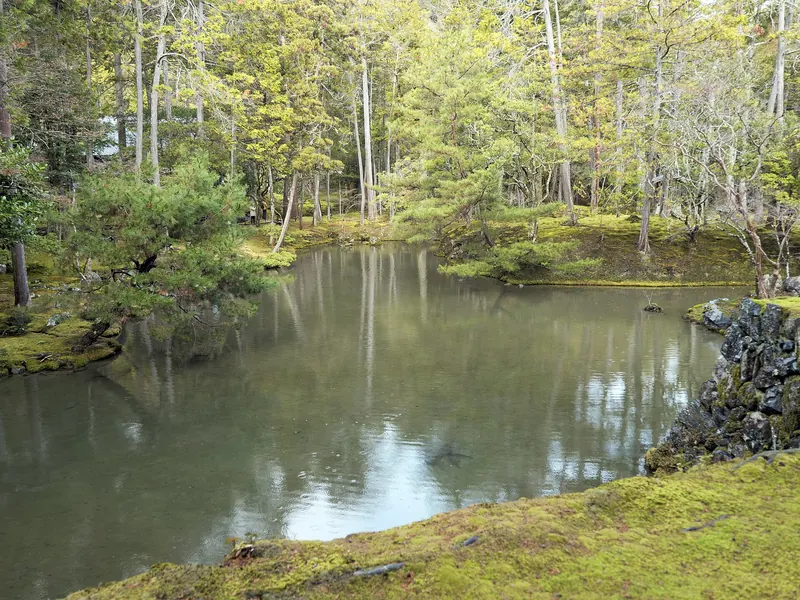
A garden is seen in one of two ways, and Kenrokuen's own site explains the difference. In a sit-and-view garden you enjoy the landscape from one spot in a temple or a palace. A strolling-style garden lays out its ponds and hills, with cottages and tea houses among them, across a wide area, and you walk round it to see it. Kenrokuen is a strolling garden, and so is the pond garden of Tenryu-ji in Kyoto, where a level path round the pond shows you the scenery from many angles. The rock garden of Ryoan-ji, also in Kyoto, is the other kind: you look at it from the abbot's hall, the hojo.
What to look for in a Japanese garden
- Water: a pond, a stream or a waterfall, or raked gravel that takes the place of water in a dry garden.
- Stones: set in groups, such as the 15 stones of Ryoan-ji or the large standing rocks that form a waterfall at Tenryu-ji.
- Borrowed scenery: hills beyond the walls used as part of the view; the Japanese word is shakkei.
- Sound: water running into a stone basin, and leaves rustling in the wind or crunching underfoot.
- Pines and moss: about 1,400 pines at Ritsurin in Takamatsu, and a garden known for its moss at Saiho-ji in Kyoto.
- Lanterns: stone lanterns such as Kenrokuen's Kotoji lantern, whose two legs are of different lengths.
The dry garden is the kind most visitors picture first. Its Japanese name is karesansui, and JNTO describes it in one line: "These dry landscape gardens use sand and stones to express the movement of water instead." At Daisen-in in Kyoto, JNTO says, the dry garden uses nothing but stones, sand, trees and plants to show water running from mountain to sea.
Borrowed scenery makes a garden look larger by taking in what lies outside it. JNTO's example is Tenryu-ji in Arashiyama, set against the Kameyama and Arashiyama foothills, and its advice is to look not only at what is in front of you but at the scenery around the garden as well. Sound matters too. A stone wash basin, where guests rinse their hands before going into a tea ceremony room, adds the sound of flowing water, and in autumn the leaves crunch under visitors' feet.
The three great gardens: Kenrokuen, Korakuen and Kairakuen
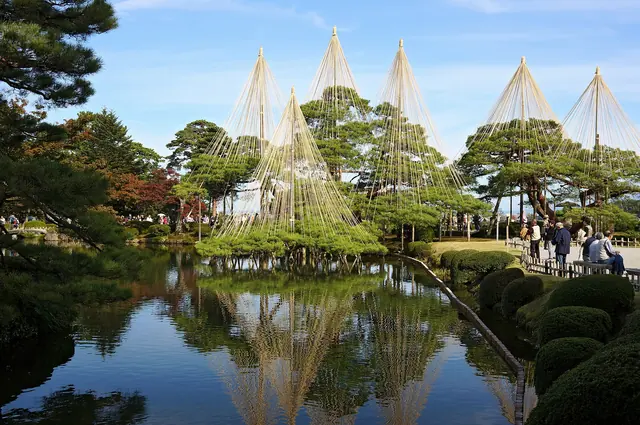
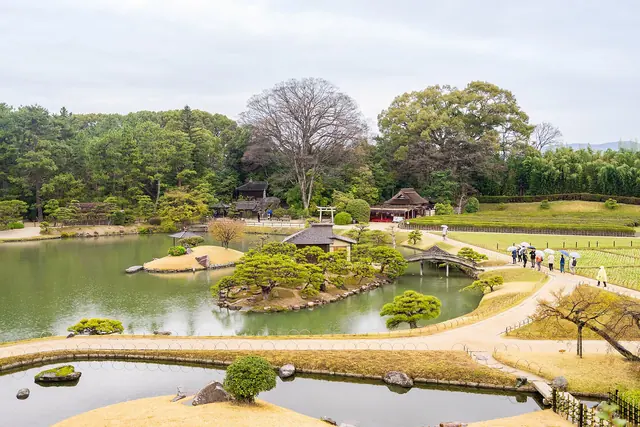
Kenrokuen's site says that it "stands as one of the three most beautiful gardens in Japan", naming Koraku-en in Okayama and Kairaku-en in Mito as the other two, and Okayama Korakuen calls itself one of the Three Great Gardens of Japan. All three were made for daimyo, the feudal lords of the Edo period.
| Kenrokuen | Okayama Korakuen | Kairakuen | |
|---|---|---|---|
| City | Kanazawa, Ishikawa | Okayama | Mito, Ibaraki |
| Made for | The lords of Kaga, over generations | Ikeda Tsunamasa, from 1687 | Tokugawa Nariaki, ninth lord of Mito |
| Summer hours | 7:00 to 18:00 | 7:30 to 18:00 | 6:00 to 19:00 |
| Adult entry | ¥320 | ¥500 | ¥320 |
| Known for | Its name's six qualities and the Kotoji lantern | Wide views inside and outside the garden | Plum blossoms, a bamboo grove and the Kobuntei villa |
Kenrokuen, Kanazawa
Kenrokuen grew over generations under the lords of Kaga, the Maeda family, and was named in 1822 by Matsudaira Sadanobu, who ruled the Shirakawa Domain. The name, the garden's site explains, means "garden that combines six characteristics". An ancient Chinese book of gardens names six qualities a garden can aspire to, in pairs: spaciousness and seclusion, artifice and antiquity, and water-courses and panoramas. It is rare, the site says, to find a garden with all six.
The garden opened fully to the public in 1874 and became a Special Place of Scenic Beauty in 1985, a rank its site likens to that of a National Treasure. Look for the Kotoji lantern, a stone lantern with legs of different lengths, and for the stone paving laid in a diamond pattern. Shigure-tei, a tea house in the garden, serves matcha and a seasonal sweet; our tea ceremony guide has its prices and hours.
Kenrokuen
- Hours: 7:00–18:00 (1 March–15 October) and 8:00–17:00 (16 October–end of February); last admission half an hour before closing
- Entry: ¥320 for adults and ¥100 for ages 6 to 17; free for visitors aged 65 and over with official proof of age
- Paying: cash, credit cards, transport IC cards such as Suica, and PayPay
- Open: every day of the year, with a free early opening each morning
- Guides: volunteer guides in Japanese and English
Okayama Korakuen
In 1687 Ikeda Tsunamasa, the daimyo of Okayama, had his retainer Tsuda Nagatada start work on a new garden, and it was 1700, 13 years later, before the groundwork was finished. Later lords changed its ponds, hills, lawns and buildings over the years, but the garden's site says the first idea of it as "a wide, bright space offering beautiful inner and outer vistas" never changed. In 1884 ownership passed to Okayama Prefecture, and the garden became a public one. A typhoon in 1934 and an air raid in 1945 damaged it badly, and it was restored from old plans and photographs. It became a Special Place of Scenic Beauty in 1952.
Combined tickets also cover Okayama Castle; our guide to Japanese castles has more on castle visits.
Okayama Korakuen
- Hours: 7:30 to 18:00 from 20 March to 30 September, last entry 17:45; 8:00 to 17:00 from 1 October to 19 March, last entry 16:45
- Entry: ¥500 for adults aged 15 to 64 and ¥200 for those aged 65 and over; free for children up to 14 and for students up to 18
- Combined tickets: with the Okayama Prefectural Museum ¥610, with Okayama Castle ¥800, and with Okayama Castle and the Hayashibara Museum of Art ¥1,280
- Paying: cash in yen, credit cards, transport IC cards such as ICOCA and Suica, and PayPay and other app payments
Kairakuen, Mito
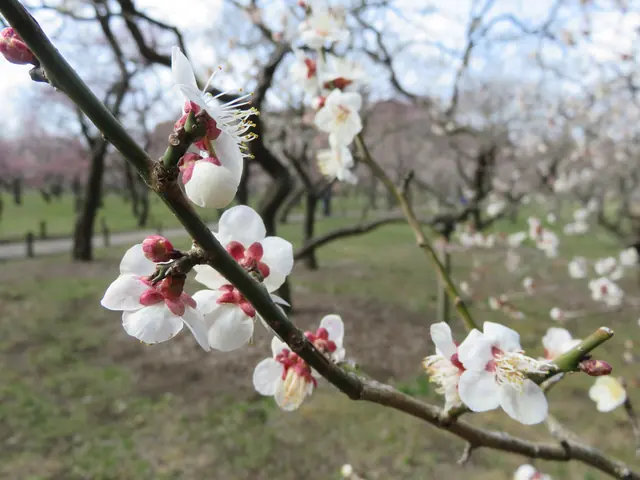
Kairakuen was made by Tokugawa Nariaki, the ninth lord of the Mito Domain, and its site says the name expresses his hope that he and the people of his domain could enjoy the garden together. He founded it as one half of a pair with Kodokan, a school for literature and the martial arts: Kodokan for study, Kairakuen for rest. The garden is best known for its plum blossoms, and the Plum Blossom Festival runs every year from mid-February to the end of March.
The recommended route takes 45 minutes. It passes through a grove of more than 1,000 Moso bamboo, which Nariaki brought from Kyoto as material for bows, and a forest of giant cedars, to Kobuntei. Outside the festival, the garden is free for everyone from opening until 9:00.
Kairakuen
- Hours: 6:00 to 19:00 from mid-February to 30 September, and 7:00 to 18:00 from 1 October to mid-February
- Entry: ¥320 for adults and ¥160 for children; half price for visitors aged 70 and over
- Free entry: from opening until 9:00, except during the Plum Blossom Festival
- Kobuntei: ¥230, open 9:00 to 17:00 (16:30 in winter), closed 29 December to 3 January
- Paying: credit cards, electronic money and transport IC cards are accepted
Ritsurin Garden, Takamatsu
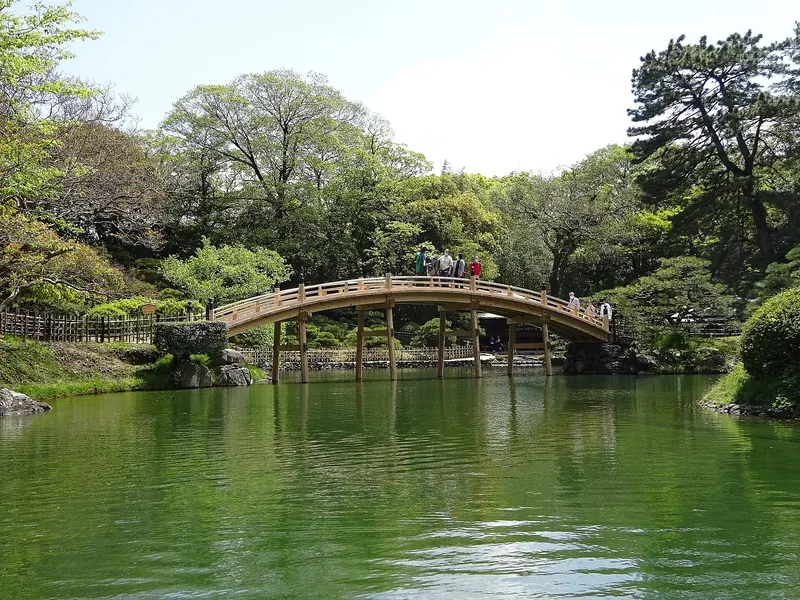
Ritsurin, in Takamatsu on the island of Shikoku, is not one of the three, but it is a lord's garden of the same kind. Kagawa Prefecture's leaflet calls it a strolling-style daimyo garden of the Edo period, with 13 landscaped hills and 6 ponds set against Mt. Shiun-zan. Ritsurin means chestnut grove, yet the garden has always been full of pines: about 1,400 of them, of which about 1,000 are shaped by the gardeners, some over 300 years old.
You can see the South Pond from a wasen, a traditional boat, and the leaflet calls the view from Hirai-ho, a hill made to resemble Mt. Fuji, the best in the garden: it takes in the Kikugetsu-tei teahouse, loved by the lords of Takamatsu, with Mt. Shiun-zan behind. Plum trees flower in February and March, and the maples turn in late November.
Ritsurin Garden
- Entry: ¥500 for adults and ¥170 for children
- Hours: change every month, from 5:30 to 19:00 in June, July and August to 7:00 to 17:00 in December and January
- Free days: 1 January and 16 March
- Guides: free, given by volunteers
- Station: JR Ritsurin Koen Kitaguchi Station, a 3-minute walk
Zen and temple gardens in Kyoto
JNTO notes that Japan has had famous gardens for more than 1,000 years, especially in Kyoto, the country's cultural and political centre at the time. Many of the best known belong to temples. Two you can simply walk into are Ryoan-ji, with its rock garden, and Tenryu-ji in Arashiyama, with its pond garden. Two others need planning: Saiho-ji, the moss temple, takes visitors by reservation only, and Katsura Imperial Villa only on a guided tour.
| Garden | Kind | How to visit | Adult entry |
|---|---|---|---|
| Ryoan-ji | Dry rock garden | Walk in, every day | ¥600 |
| Tenryu-ji | Pond garden with borrowed scenery | Walk in | ¥500, or ¥800 with the buildings |
| Saiho-ji | Moss garden | Reservation only | Shown when you book |
| Katsura Imperial Villa | Strolling garden of an imperial villa | Guided tour, apply in advance | Not on the English page |
Ryoan-ji: the rock garden
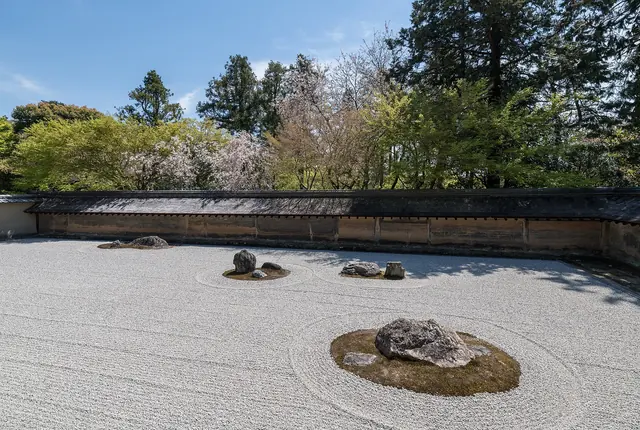
The rock garden of Ryoan-ji is very small and very plain: 15 stones of various sizes in a space of just 248 square metres, enclosed by an earthen wall. No one knows who made it. The temple dates it to the Muromachi period and lists the theories: the temple's founder, Giten Gensho, its patron Hosokawa Katsumoto or his son Masamoto, or the tea master Kanamori Sowa. Nor does anyone know what it means. The temple says it is usually called a "Tiger taking the cubs over the stream" garden or a Seven-Five-Three garden, after numbers thought lucky, and others see it as islands dotted in the sea, or as mountain peaks rising through cloud.
Look closely and the garden is less simple than it seems. The temple explains that the ground slopes slightly towards the far left corner, as seen from the abbot's hall, so that rain drains away, and that the wall on the right slants down towards the far end, a trick of perspective that makes the garden look deeper. The wall itself is 180 cm high and made of clay mixed with rapeseed oil, and it shades the garden from the glare of the sun on the white sand.
Ryoan-ji
- Hours: 8:00 to 17:00 from March to November, and 8:30 to 16:30 from December to February
- Entry: ¥600 for adults, ¥500 for high school students, and ¥300 for elementary and junior high school students
- Open: every day of the year
- Time needed: about 30 to 40 minutes, the temple says
- Getting there: city bus 50 from Kyoto Station to Ritsumeikan-daigaku-mae, then a 7-minute walk, or the Keifuku Kitano Line
The temple itself was founded in 1450, when Hosokawa Katsumoto received a mountain villa and invited the zen priest Giten Gensho to turn it into a temple. It burned in the Onin War about two decades later and was rebuilt by Masamoto. The abbot's hall was built in 1499, and the garden, the temple says, was probably made at the same time.
Tenryu-ji: the Sogenchi pond garden
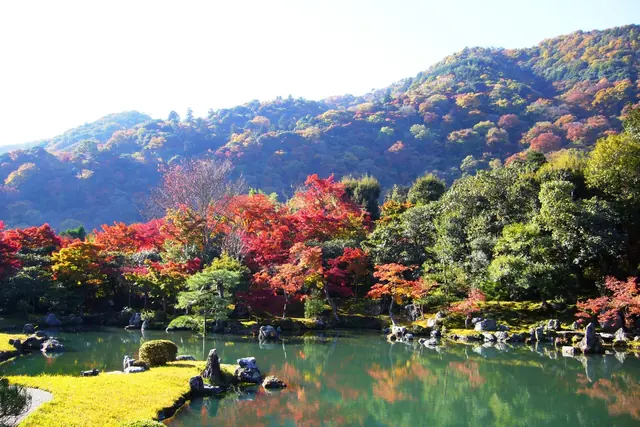
The shogun Ashikaga Takauji founded Tenryu-ji in Arashiyama in 1339 to honour the memory of Emperor Go-Daigo, and the zen master Muso Soseki became its first abbot. Muso Soseki laid out its garden, the Sogenchi, nearly 700 years ago, and the temple says it still keeps its original look; a guide to Kyoto's gardens printed in 1799 shows it much as it is today. It was the first site in Japan to be named both a Special Historic Site and a Special Place of Scenic Beauty.
The Sogenchi is a strolling pond garden, and it uses borrowed scenery, shakkei, "in which nearby mountains are used to give the garden a sense of added depth". From the centre of the abbot's hall veranda you look straight across the pond to a group of tall standing rocks.
Tenryu-ji
- Hours: 8:30 to 17:00, last entry 16:50
- Garden: ¥500 from high school age, and ¥300 for elementary and middle school students
- Buildings: ¥300 more
- Getting there: a 5-minute walk from Keifuku Arashiyama Station
Saiho-ji: the moss temple
Saiho-ji, known as Kokedera, the moss temple, is famous for a garden covered in moss. Its site says the moss began to spread after natural disasters and war: the temple's buildings burned in the Onin War, and floods from the river later left the temple in ruins. So that visitors can spend a quieter time there, it takes small numbers of them by reservation only. "This policy has been in place since 1977." You book on the temple's own site; do not go without a reservation.
Saiho-ji
- Basic visit: sutra copying as well as a walk in the garden
- Special programmes: such as morning zazen and seasonal visits
- Getting there: Kyoto Bus 73 from Kyoto Station, about 60 minutes
- Parking: none
Katsura Imperial Villa
Katsura Imperial Villa in western Kyoto is run by the Imperial Household Agency, and you can only see it on a tour guided by its staff. Places are limited, so you apply in advance, online, and the agency's site also has a page on walk-in registration. Tours in English for foreign visitors leave at 9:20, 11:20, 13:20, 15:20 and 16:20. The villa is closed on Mondays (on Tuesday when Monday is a national holiday) and from 28 December to 4 January.
Japanese gardens in Tokyo
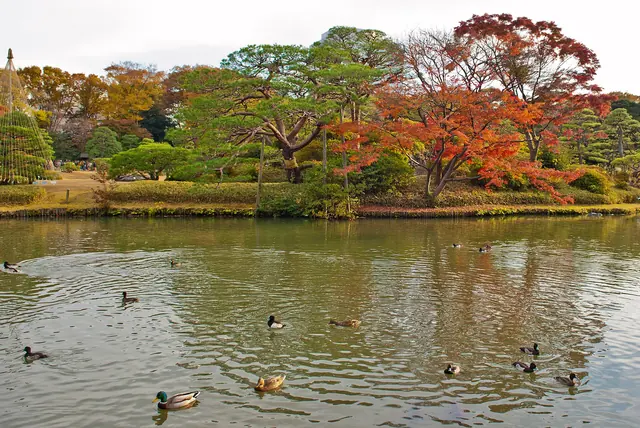
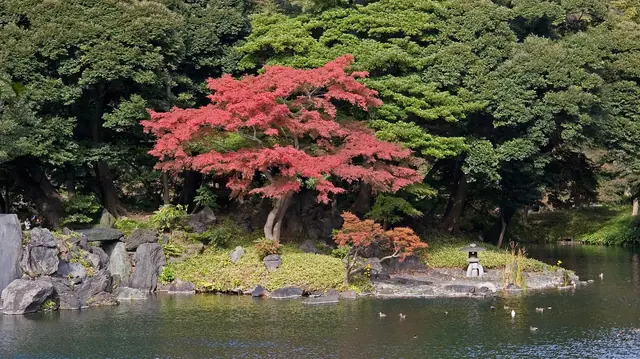
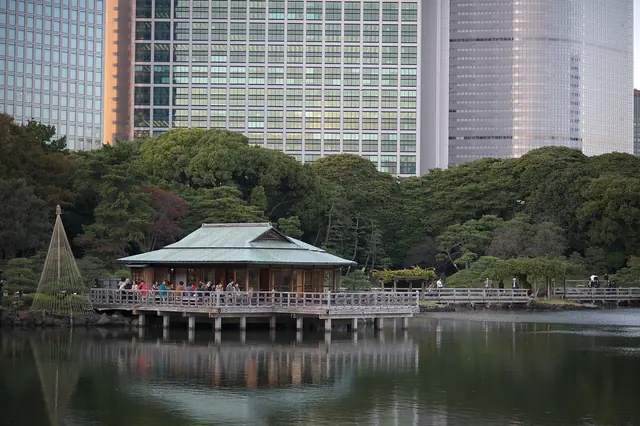
Central Tokyo still has gardens made by the lords who lived in Edo, as the city was then called. Tokyo has nine metropolitan gardens, and three of them are easy to add to a day of sightseeing: Rikugien at Komagome, Koishikawa Korakuen near Tokyo Dome, and Hama-rikyu by the bay. Shinjuku Gyoen, a national garden, has a Japanese garden inside a much larger park.
| Shinjuku Gyoen | Rikugien, Koishikawa Korakuen and Hama-rikyu | |
|---|---|---|
| Adult entry | ¥500 | ¥300 |
| Aged 65 and over | ¥250 | ¥150 |
| Children | Free up to 15 | Free up to elementary school age, with an adult |
| Hours | 9:00 to 16:30, 18:00 or 19:00, by season | 9:00 to 17:00, last entry 16:30 |
| Closed | Mondays, and 29 December to 3 January | 29 December to 1 January |
| Paying | Transport IC cards at the gates | Cards, IC cards, PayPay, Alipay and WeChat Pay |
Rikugien
Rikugien and Koishikawa Korakuen were counted together as the two great gardens of Edo. In 1695 the fifth shogun, Tokugawa Tsunayoshi, gave the land at Komagome to Yanagisawa Yoshiyasu, who designed the garden and directed the work himself, digging a pond and building hills on the flat ground; the Tokyo gardens leaflet dates the garden to 1702. It is a strolling garden, and the leaflet says it "reflects tastes and flavor of the world of Waka poetry": its 88 views copy the coast of Waka-no-ura in Wakayama and places famous in classical waka verse. Later it belonged to Iwasaki Yataro, the founder of Mitsubishi, and in 1938 the Iwasakis presented the garden to what was then the City of Tokyo.
Rikugien
- Look for: the weeping cherry just inside the Naitei-daimon gate, pale pink at the end of March
- English guide: free, for foreign visitors, on the first and third Sundays of the month at 11:00 and 14:00, except in July and August
- Station: Komagome, on the JR Yamanote Line, a 7-minute walk
Koishikawa Korakuen
Tokugawa Yorifusa, the first lord of the Mito branch of the Tokugawa family, began this garden in 1629, and his son Mitsukuni, the second lord, completed it with advice from a Chinese Confucian scholar; the same family's ninth lord made Kairakuen in Mito. The Chinese influence shows across the garden. The Engetsu-kyo bridge took its name from its reflection on the water, which "appeared like a full moon". About 500 maples turn red from late November to early December.
Hama-rikyu Gardens
Hama-rikyu, by Tokyo Bay, is a Special Place of Scenic Beauty and a Special Historic Site, and its centre is the Shioiri-no-ike, a tidal pond that draws in seawater and changes with the tide. "The pond is the only remaining seawater pond from the Edo era within Tokyo." Lock gates open and close with the level of the bay. You can drink matcha at the Nakajima teahouse on the pond; see our tea ceremony guide.
Hama-rikyu Gardens
- In the pond: sea fish such as black sea bream, goby and eel
- English guide: free, on Saturdays, Sundays and the second and fourth Mondays at 11:00
Shinjuku Gyoen
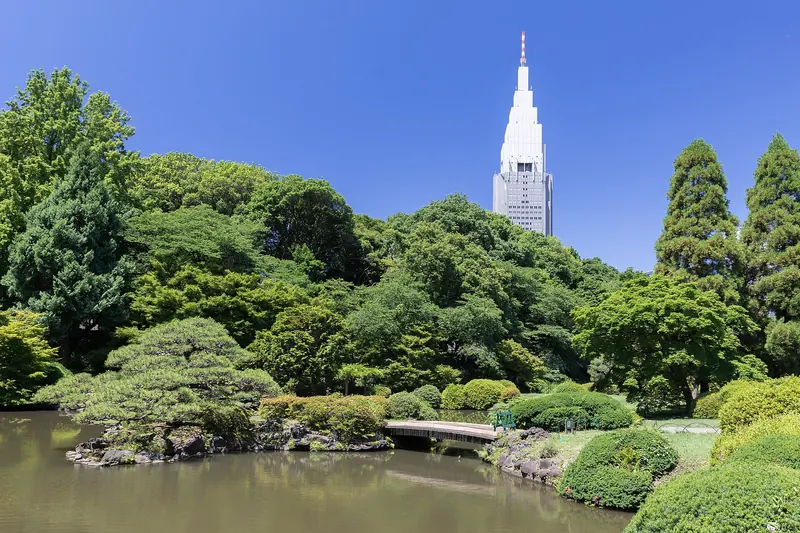
Shinjuku Gyoen has three gardens in one: a formal garden, a landscape garden designed by Henri Martinet, and a Japanese traditional garden. The Japanese garden runs along the Upper Pond. It began as an imperial duck habitat and took its present form in 1903, and in it are a Chinese-style pavilion, Kyu-Goryo-Tei, as well as two teahouses, Shouten-Tei and Rakuu-Tei. You can buy an e-ticket in advance from ASOVIEW, which sells them for the Ministry of the Environment; a ticket can be used for up to six months after you buy it.
Seasons and night openings
Every garden changes with the seasons, and many open late on a few nights a year. These are the dates the gardens' own sites give for 2026, and the times of year they name for each sight.
| When | Garden | What to see |
|---|---|---|
| Mid-February to end of March | Kairakuen | The Plum Blossom Festival |
| February and March | Ritsurin | Plum blossoms |
| End of March | Rikugien | The weeping cherry by the Naitei-daimon gate |
| 25 March to 24 April | Shinjuku Gyoen | Cherry blossom season; open every day |
| Late March to early April | Kenrokuen | Free entry for about a week in cherry blossom season |
| Early to late August | Okayama Korakuen | Summer Fantasy Garden, open until 21:30 |
| Mid-October | Okayama Korakuen | About 280 pines wrapped in straw belts, komo |
| 1 to 15 November | Shinjuku Gyoen | The Chrysanthemum Exhibition; open every day |
| 15 November 2026 | Rikugien | A yukitsuri demonstration |
| 13 to 24 November 2026 | Koishikawa Korakuen | Night opening, 18:00 to 21:00, last entry 20:00 |
| Mid to late November | Okayama Korakuen | Autumn Fantasy Garden, open until 20:30 |
| Late November | Ritsurin | Maples at Fugan, the maple shore |
| 25 November to 6 December 2026 | Rikugien | Night viewing of the autumn leaves |
| Late November to early December | Koishikawa Korakuen | About 500 maples |
Yukitsuri is a traditional gardener's skill, and the Tokyo gardens leaflet lists it with komomaki, the straw belts also used at Korakuen, among the winter protections for plants. Kenrokuen also holds light-ups, opening at night in the cherry blossom and autumn leaf seasons, and posts the details in its news.
Entry fees, opening hours and how to pay
Entry to a Japanese garden costs a few hundred yen, and the big public gardens now take cards and transport IC cards as well as cash. The temples are another matter: the English pages of Ryoan-ji and Tenryu-ji do not say how to pay, and neither does Ritsurin's, so carry enough yen in cash. Which IC cards work, and where, is covered in our page on paying by cash or card.
| Garden | Adults | Seniors | Children | Cards and IC cards |
|---|---|---|---|---|
| Kenrokuen | ¥320 | Free from 65, with proof of age | ¥100, ages 6 to 17 | Yes, and PayPay |
| Okayama Korakuen | ¥500 | ¥200 from 65 | Free up to 14 | Yes, and PayPay |
| Kairakuen | ¥320 | Half price from 70 | ¥160 | Yes |
| Ritsurin | ¥500 | Not listed | ¥170 | Not stated |
| Ryoan-ji | ¥600 | Not listed | ¥300, or ¥500 for high school | Not stated |
| Tenryu-ji | ¥500 | Not listed | ¥300 | Not stated |
| Shinjuku Gyoen | ¥500 | ¥250 from 65 | Free up to 15 | IC cards at the gates |
| Tokyo metropolitan gardens | ¥300 | ¥150 from 65 | Free up to elementary school | Yes, plus PayPay, Alipay and WeChat Pay |
Free mornings and free days
Two of the three great gardens let you in free early in the morning. At Kenrokuen the early opening is free every day, but only through the Renchi-mon and Zuishinzaka gates, and you have to leave 15 minutes before the paid hours begin, so go in by the last entry time.
| Kenrokuen early opening | Hours | Last entry |
|---|---|---|
| 1 to 31 March | 5:00 to 6:45 | 6:30 |
| 1 April to 31 August | 4:00 to 6:45 | 6:30 |
| 1 September to 15 October | 5:00 to 6:45 | 6:30 |
| 16 to 31 October | 5:00 to 7:45 | 7:30 |
| 1 November to end of February | 6:00 to 7:45 | 7:30 |
Kairakuen is free for everyone from opening until 9:00, except during the Plum Blossom Festival from mid-February to the end of March. Several gardens also have free days:
Free days
- Kenrokuen: about 7 days in the cherry blossom season (late March to early April), 3 days of the Hyakumangoku festival in early June, 14 to 16 August, 3 November, and 31 December to 3 January; it announces each about a week before
- Okayama Korakuen: 1 January, and 2 March, the day the garden opened to the public in 1884
- Ritsurin: 1 January and 16 March
- Tokyo metropolitan gardens: 4 May and 1 October
Passes and combined tickets
The Tokyo metropolitan gardens sell an annual pass for all nine gardens at ¥4,000, or ¥2,000 from 65, and two-garden tickets at ¥400: one for Rikugien and Kyu-Furukawa Gardens, and one for Hama-rikyu and Kyu-Shiba-rikyu Gardens, about 15 minutes' walk apart. At Okayama, the combined tickets in the Korakuen box above cover Okayama Castle and two museums. Kenrokuen sells combined tickets too, called Kenrokuen +1 (plus one).
Garden rules and manners
The rules differ from garden to garden, but most follow the same lines. Shinjuku Gyoen has the longest list, and pets are the rule most often missed: many gardens do not allow them at all.
Before you go in
- Pets: not allowed at Kenrokuen, in Kairakuen's main garden or at the Tokyo metropolitan gardens; Ryoan-ji allows them only in a closed cage or bag.
- Shoes: Kenrokuen's paths are paved with gravel and can be slippery in places.
- Drones: not allowed at Shinjuku Gyoen.
- Plants and animals: at Shinjuku Gyoen, no picking flowers, climbing trees or feeding animals, fish included.
- Noise and games: no loud music, ball games or tents at Shinjuku Gyoen.
- Photo shoots: organised photography and events at Kenrokuen need permission in advance.
- Bicycles: not allowed on Kenrokuen's paths.
- Inside the buildings: at Kobuntei in Kairakuen, no eating, drinking or tripods.
How to plan a garden visit
Planning a visit
- Choose your city: Kenrokuen for Kanazawa, Korakuen for Okayama, Kairakuen for Mito, Ritsurin for Takamatsu, and the temple gardens for Kyoto; in Tokyo, the city's gardens fit between other sights.
- Check the day: Shinjuku Gyoen and Katsura Imperial Villa are closed on Mondays, and the Tokyo metropolitan gardens over New Year.
- Book where you must: Saiho-ji and Katsura Imperial Villa need advance booking, and so may Shinjuku Gyoen on busy days in cherry blossom season.
- Go early: Kenrokuen's free early opening starts at 4:00 from April to August, and Ritsurin opens at 5:30 from April to September.
- Allow the time: about 30 to 40 minutes for Ryoan-ji and 45 minutes for Kairakuen's recommended route.
- Join a guide: volunteer guides in English at Kenrokuen, free guides at Ritsurin, and free English garden guides at Rikugien and Hama-rikyu.
To work a garden into your day, try the itinerary planner. The prefecture guides for Ishikawa, Okayama, Ibaraki, Kagawa, Kyoto and Tokyo cover the rest of each trip, and if you would like a night inside a temple as well, see our guide to a temple stay.
Frequently asked questions
What are the three great gardens of Japan?
They are Kenrokuen in Kanazawa, Okayama Korakuen in Okayama and Kairakuen in Mito. All three were made for feudal lords of the Edo period, and adult entry is ¥320 at Kenrokuen and Kairakuen and ¥500 at Korakuen.
What is a zen garden in Japan?
In English, a zen garden usually means a karesansui, a dry landscape garden, where stones and raked gravel or sand take the place of water. The best-known example is the rock garden of Ryoan-ji in Kyoto, with 15 stones in 248 square metres; the garden of Daisen-in in Kyoto pictures a river on its way from the mountains down to the sea.
How much is the entrance fee for Kenrokuen?
¥320 for adults and ¥100 for ages 6 to 17. Visitors aged 65 and over go in free with official proof of age, and the garden is free during its early opening each morning and on a few days a year, such as 3 November. You can pay in cash, by credit card, with a transport IC card or with PayPay.
What time does Kenrokuen open and close?
In spring, summer and early autumn, 1 March to 15 October, it opens 7:00 to 18:00; for the rest of the year, until the end of February, the hours are 8:00 to 17:00. Gates close to new visitors 30 minutes before closing. The free early opening starts between 4:00 and 6:00, depending on the month, through two gates only.
Kenrokuen or Korakuen: which should I visit?
They are in different cities, Kanazawa and Okayama, so pick the one on your route. Kenrokuen costs ¥320 and opens free early every morning; Korakuen costs ¥500, is free for children up to 14, and has a combined ticket with Okayama Castle for ¥800.
How many stones are in the Ryoan-ji rock garden?
Fifteen stones of various sizes, in a space of 248 square metres. No one knows who made the garden or what it means, and the temple lists several readings, from a tiger crossing a stream with its cubs to islands in the sea.
Which Japanese gardens can I visit in Tokyo?
Shinjuku Gyoen costs ¥500 and has a Japanese traditional garden inside a larger park. Rikugien, Koishikawa Korakuen and Hama-rikyu are metropolitan gardens and cost ¥300 each; all three take cards and IC cards.
What is the best time to see gardens in Japan?
Each season has its sight: plum blossoms at Kairakuen from mid-February to the end of March, cherry blossoms from late March, and autumn leaves in late November and early December, when Rikugien and Koishikawa Korakuen also open at night.
Do I need to book a Japanese garden?
Most gardens do not need booking. Saiho-ji takes visitors by reservation only, Katsura Imperial Villa is seen on a guided tour that you apply for in advance, and Shinjuku Gyoen may need a reservation on busy days in cherry blossom season.
Do Japanese gardens take credit cards?
At Kenrokuen, Korakuen, Kairakuen and the Tokyo metropolitan gardens, yes, and Shinjuku Gyoen takes transport IC cards at its gates. Ryoan-ji, Tenryu-ji and Ritsurin do not say how to pay on their English pages, so carry cash in yen.
Sources
Official and primary sources used for this page. Checked November 1, 2026.
- Kenroku-en: Information (in Japanese) — hours, entry, payment, free entry from 65, free days, the early opening, light-ups, rules
- Kenroku-en: Guidance — the older English page, with cash only and a passport for free entry from 65
- Kenroku-en: What is Kenroku-en? — strolling and sit-and-view gardens, the three gardens, the pond and islands, the Kotoji lantern
- Kenroku-en: Six Features — the six qualities and the meaning of the name
- Kenroku-en: History — the name in 1822, opening in 1874, Special Place of Scenic Beauty in 1985
Show all 35 sources
- Okayama Korakuen: Admission Information — entry, combined tickets, payment, hours
- Okayama Korakuen: Overview and History — 1687 to 1700, opening in 1884, damage in 1934 and 1945, 1952
- Okayama Korakuen: List of Annual Events — free days, the summer and autumn night gardens, the straw belts
- Kairakuen: User's Guide — Nariaki and Kodokan, hours, entry, free hours, the Plum Blossom Festival, Kobuntei, payment, pets
- Kairakuen: Recommended Route — the 45-minute route, the bamboo grove and cedar forest
- Kagawa Prefecture Tourism Association: Ritsurin Garden, General Information and Access — hours by month, entry, free days, free guides, the station
- Kagawa Prefecture Tourism Association: Ritsurin Garden leaflet (PDF) — ponds and hills, pines, the boat, Hirai-ho, Kikugetsu-tei, plums and maples
- Ryoanji: Home — hours and entry
- Ryoanji: Design — the 15 stones, 248 square metres, the readings of the garden
- Ryoanji: Carving — the unknown designer
- Ryoanji: Perspective — the slope and the slanted wall
- Ryoanji: Earthen Wall — the oil-earthen wall
- Ryoanji: Our History — 1450, the Onin War, the abbot's hall in 1499
- Ryoanji: Frequently asked questions (in Japanese) — open every day, time needed, pets, access
- Tenryu-ji: Admission and Access — hours, entry, access
- Tenryu-ji: What to See — the Sogenchi garden, borrowed scenery, the Dragon Gate Falls
- Tenryu-ji: About Tenryu-ji — 1339, Ashikaga Takauji, Muso Soseki
- Saihoji: Home — reservations since 1977, the moss, visiting programmes, access
- Imperial Household Agency: Katsura Imperial Villa — closing days
- Imperial Household Agency: Katsura Imperial Villa, Visit — guided tours only, applying in advance, English tour times
- JNTO: Japanese Gardens and Zen Gardens Around Japan — space, water, dry gardens, borrowed scenery, sound
- JNTO: Daisenin Shoin Garden — the dry garden from mountains to sea
- Kyoto City Tourism Association: Hogan dry-raking experience — ripple-raking, Sone Zoen, Okusaga
- Shinjuku Gyoen: Admission — hours, closing days, entry, IC cards, cherry and chrysanthemum seasons, e-tickets
- Shinjuku Gyoen: Garden Rules — what is not allowed
- Shinjuku Gyoen: Garden — the three garden styles, the Japanese garden in 1903
- Tokyo Metropolitan Park Association: Rikugien (in Japanese) — entry, hours, payment, passes, night viewing, English guide, the weeping cherry, 1695, the 88 views
- Tokyo Metropolitan Park Association: Koishikawa Korakuen (in Japanese) — entry, hours, night opening, 1629, pets
- Tokyo Metropolitan Park Association: Hama-rikyu Gardens (in Japanese) — entry, hours, English guide, free days, two-garden ticket
- Tokyo Japanese Garden Hospitality Committee: Japanese Gardens in Tokyo 2025 (PDF) — Rikugien in 1702 and waka, the Iwasaki family, Koishikawa Korakuen and Engetsu-kyo, the tidal pond, winter protections
Related guides
To cite or link to this page: Famous Japanese gardens in Japan: what makes a Japanese garden, the three great gardens of Kenrokuen, Korakuen and Kairakuen, Ritsurin in Takamatsu, the zen and temple gardens of Kyoto, Japanese gardens in Tokyo, seasons and night openings, entry fees, hours and paying, garden rules, and how to plan a visit — Japan Pocket Guide, https://japanpocketguide.com/culture/japanese-gardens/