Culture · Shrines
Shinto shrine etiquette in Japan: what a shrine is and how a temple is different, the torii and the approach, the temizu water ritual step by step, how to pray with two bows, two claps and one bow, the rules for photos, food, dress and pets, ema, goshuin and omamori, and the house rules at Meiji Jingu, Fushimi Inari, Ise, Izumo and Itsukushima
You will pass a Shinto shrine almost every day in Japan, from a tiny one squeezed between office blocks to Meiji Jingu in the middle of Tokyo. Anyone may walk in, whatever their faith, and the customs are simple once you know them: a bow at the gate, water for your hands and mouth, a coin, two bows, two claps and one more bow. This guide walks through a visit from the gate to the hall, explains how a shrine differs from a temple, sets out the rules on photos, food and dress, and ends with the house rules at five well-known shrines.
Last checked · Sources

In short
At a Shinto shrine, bow once at the torii gate and walk to one side of the approach rather than down the middle. At the water basin, scoop up water with the ladle held in your right hand, rinse your left hand, then your right, rinse your mouth with water poured into your cupped left palm, rinse your left hand again and stand the ladle upright to drain. At the hall, make an offering of a coin, ring the bell if the shrine has one, make two deep bows, clap twice, pray quietly and bow once more. Do not photograph people praying, eat only in marked areas and dress modestly.
What a Shinto shrine is
A shrine, jinja in Japanese, is a place where one or more kami are enshrined and worshipped. Jinja Honcho, the Association of Shinto Shrines, explains that kami is sometimes translated as god, but that the idea is not the same as the Western one: Shinto has a vast number of kami, including figures from myth, past emperors and people from history, and no single supreme god. It counts about 80,000 shrines and some 20,000 priests in the main shrine tradition, so there is nearly always one within a short walk.
Shinto has no founder and no scriptures, and nobody asks a visitor what they believe. Jinja Honcho puts it this way: "Shinto is something that you do, rather than something that you are", and it adds that most people who practise it would call themselves Buddhist or not religious at all. There is no rule against visitors of other faiths joining in. The association only asks that you keep the grounds dignified and pay your respects politely.
Shrines are part of the year for most people in Japan. The same association says that about 80% of the population visits one at New Year, a custom called hatsumode, and families go back for a newborn baby's first visit, for Shichigosan, which marks a child turning three, five or seven, and for weddings. Every shrine also has its own festival, and many people go to their local one for the main festival of the year; what happens at one is covered in the festival guide.
What you will see at most shrines
- Torii: the gate at the entrance, usually painted vermilion, which marks the edge of the sacred ground.
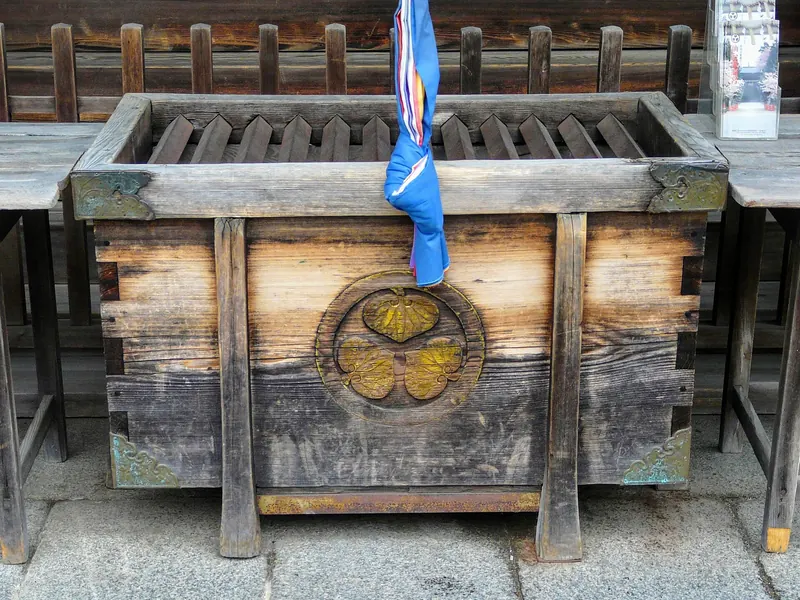
- Temizuya: a roofed water basin with ladles, where you rinse your hands and mouth before praying.
- Komainu: a pair of stone guardians, often lion-dogs, though some shrines have foxes or monkeys instead.
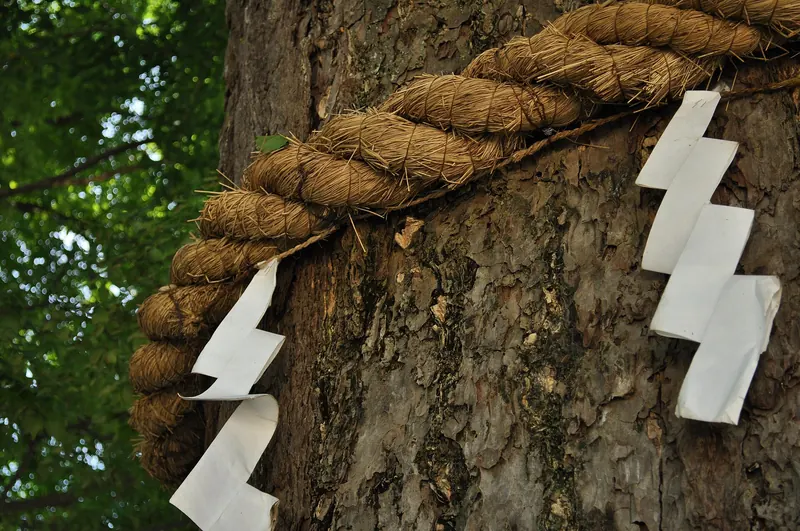
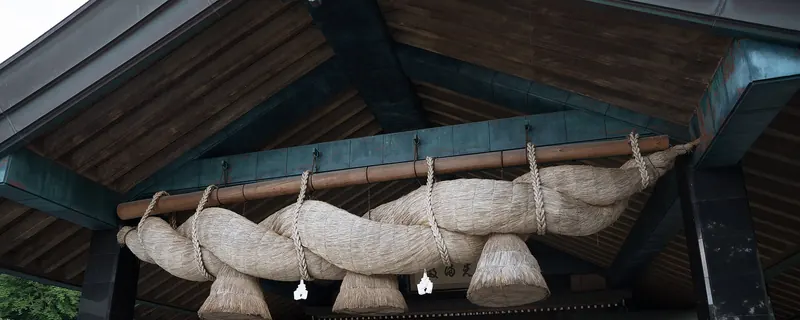
- Shimenawa: a thick twisted rope, often hung with strips of paper, tied around a rock, a tree or a building to show that it is sacred.
- Haiden: the worship hall, where visitors stand outside to pray.
- Honden: the main sanctuary, where the kami is enshrined, usually just behind the worship hall.
- Juyosho: the counter where you receive amulets, votive tablets and other shrine goods after you have prayed.
The guardians have a story of their own. A Japan Tourism Agency text written for Kasuga Taisha in Nara says that komainu reached Japan from China along with Buddhism. The figure on the right usually has its mouth open and the one on the left has it shut, as if sounding the first and the last syllables of the Sanskrit alphabet, and together they stand for the beginning and the end.
Shrine or temple?
The two stand side by side in many towns and are easy to confuse. Jinja Honcho's answer is short: shrines belong to Shinto, temples to Buddhism, and the torii at the entrance is the main thing that tells a shrine apart. JNTO adds that a temple is entered through a sanmon gate instead, the large ones guarded by fierce statues called niozo, as at Todaiji in Nara and Sensoji in Tokyo.
| Shrine (Shinto) | Temple (Buddhist) | |
|---|---|---|
| Gate | torii | sanmon, often with guardian statues |
| Water basin | almost always | at some temples, used the same way |
| Prayer | two bows, two claps, one bow | hands joined in silence, no clapping |
| Shoes | you pray from outside | you may be asked to take them off indoors |
The prayer is the clearest difference. At a temple JNTO's advice is to make your offering, put your hands together and pray in silence. "There is no need to clap your hands." Where a temple sells incense, light a stick, put the flame out with a wave of the hand rather than a breath, and stand it in the burner. If you would like to spend a night at a temple, the temple stay guide covers the lodgings at Koyasan.
The torii and the approach
The torii is where the shrine begins. Jinja Honcho describes it as the line between the everyday world and the sacred one, and a Japan Tourism Agency text written for Isonokami Jingu in Nara makes the comparison plain: "Passing through a torii is much like passing through the doors of a temple, church, mosque, or synagogue."
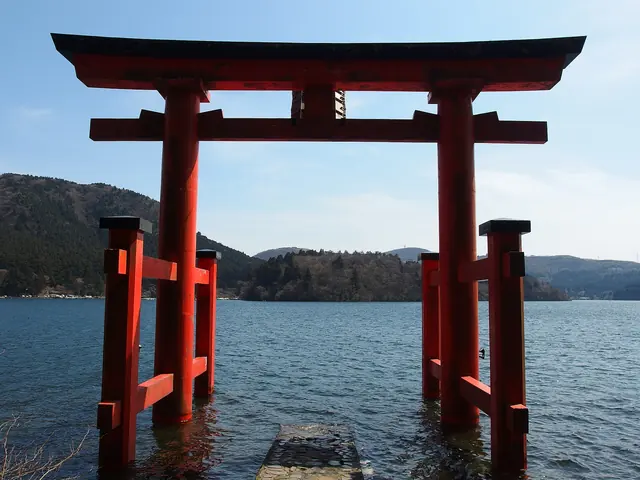
Not every torii is red. A text for Kasuga Taisha in Nara notes that "Torii are generally made of wood, although some are made of stone, metal, or other materials." They are usually painted a bright vermilion, but some are left as bare wood. A large shrine may have several in a row. The outermost one marks the entrance to the grounds, and each further gate closer to the main sanctuary leads into a space held to be more sacred still.
Bowing and walking to one side
JNTO's guide to shrine and temple customs is honest about how often people skip the first step: "Bowing once in front of the torii gate is the correct—if not always practiced—way to enter." Jinja Honcho describes the same moment more gently: many people stop and lower their heads a little before they walk through.
Once you are through, keep to one side of the path. JNTO's office in Britain gives the reason: "the centre is reserved for the kami". At Ise Jingu the direction is set for you, with visitors walking on the left side at the Outer Shrine and on the right at the Inner one.
At the gate and on the approach
- Stop before the torii and give a small bow.
- Pass through slightly off-centre, not down the middle.
- Keep your voice down on the approach and in the grounds.
- Go to the hall to pray first, and look around afterwards.
- Stay out of buildings and fenced or roped-off areas unless you are invited in.
- On the way out, turn back towards the shrine after the torii and bow once more.
The quiet manners do not stop at the hall. Jinja Honcho reminds visitors that "A jinja is a sacred space. This does not apply only to the buildings, but to the whole of the precincts." The association also explains why people walk straight to the hall: the custom is to greet the kami before you start sightseeing. Even a hall with its doors wide open is not an invitation to step inside; worshippers normally pray from the front and only go inside for a particular purpose, such as a ceremony.
Temizu: rinsing your hands and mouth
Purity matters a great deal in Shinto, and so most shrines have a water basin, the temizuya, near the entrance. A Japan Tourism Agency text from Sumiyoshi Taisha in Osaka explains where the custom comes from: "In ancient times, worshippers would bathe in a river or the ocean, but today a rinse of the hands and mouth will suffice." Taking part does not require any faith. A sign written for Meiji Jingu says simply: "Everyone, regardless of faith, is welcome to participate."
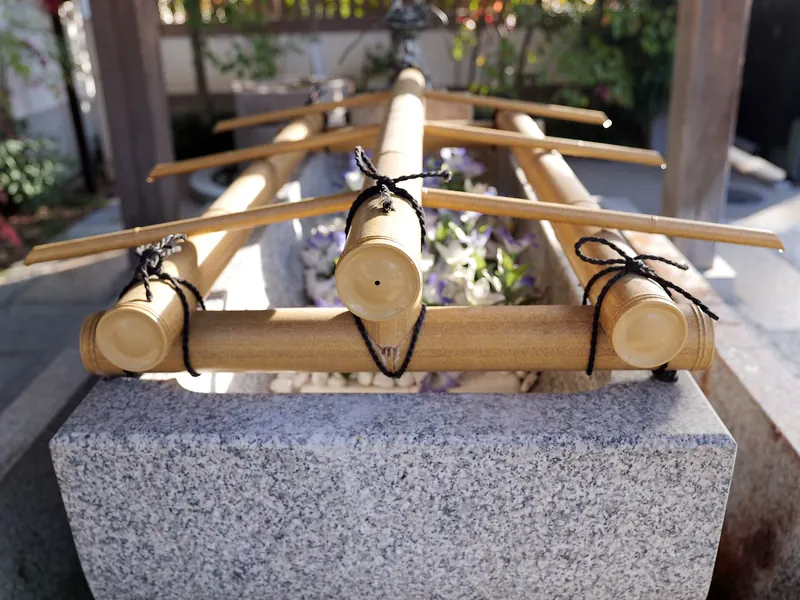
The method below follows Jinja Honcho and the official pages of Ise Jingu, with the extra details from a Meiji Jingu sign. The order is the same at almost every shrine.
Temizu, step by step
- Scoop: using your right hand, fill the ladle from the basin.
- Left hand: rinse your left hand with a little of the water.
- Right hand: change hands and wash your right hand the same way.
- Mouth: take the ladle back in your right hand, pour a little water into your cupped left palm and rinse your mouth from your palm, never from the ladle.
- Spit it out: let the water fall quietly to the ground or the drain beside the basin, not back into it.
- Left hand again: rinse the hand that touched your mouth once more.
- Clean the handle: stand the ladle upright so the remaining water drains down the handle, and put it back where you found it.
You do not refill the ladle between steps. JNTO's guide notes that "one scoop covers all three steps", so take a full ladle at the start and use a little each time. Jinja Honcho asks you to "spit the water out at the base of the font, not into it", and the Meiji Jingu sign adds two more requests: no drinking straight from the ladle, and no coins in the water. Meiji Jingu's own website gives a shorter version of the ritual: wash your hands, pour water into both hands to rinse your mouth, and wash your hands again.
Small things to get right
- The ladle: never touches your lips; the water goes into your palm first.
- The basin: stays clean; spit and leftover water go outside it.
- Coins: belong in the offering box at the hall, not in the water.
- Swallowing: not needed; rinse and spit, and the usual practice is not to swallow it.
During the COVID-19 pandemic many shrines took their ladles away so that crowds would not share them. A guide published in 2021 by the Meguro Tourism Association in Tokyo noted: "Now there seem to be many shrines in which ladles are not prepared." The same guide found that some shrines had also taken down the bell above the offering box for the same reason.
How to pray at a shrine
From the torii, the approach takes you to the place of prayer. At a small shrine that is the main sanctuary itself; at a larger one it is the worship hall, the haiden, with the sanctuary behind it. You pray from outside, at the top of the steps, where there is usually a wooden offering box, the saisen-bako, and often a thick rope hanging from a bell. Jinja Honcho explains what the two are for: "The sound of the bell is said to purify you, and offering a small amount shows respect for the kami."
The standard form is known as two bows, two claps and one bow, and Jinja Honcho says it is acceptable at any shrine in Japan. Meiji Jingu and Ise Jingu teach the same order on their own pages.
Two bows, two claps, one bow
- Stand straight: face the hall, and take off your hat.
- Offering: if you wish, drop a coin gently into the offering box.
- The bell: if there is a rope, shake it to ring the bell.
- Two deep bows: bend from the hips with your back straight, twice.
- Two claps: raise your hands to your chest, palms together, and clap twice.
- A quiet prayer: keep your hands together and pray silently, if you wish.
- One deep bow: bow once more, then step aside.
Ise Jingu's Japanese page on etiquette describes each movement in more detail. The bows are deep, with a flat back and the body bent to about 90 degrees. For the claps you bring your hands together at chest height, slide the fingertips of your right hand down a little, open your hands to about shoulder width and clap twice, then line the fingers up again before the last bow. You do not need to copy this exactly.
There is no set wording for the prayer, and Jinja Honcho leaves it up to you whether to say one at all. Ise Jingu's Japanese page asks visitors to stand before the kami with a feeling of gratitude. The final bow is also a courtesy to the people behind you: JNTO's American office says to "bow once more before leaving to let the next worshipper pay their respects".
How much to offer
Any amount is fine. Jinja Honcho's answer to the question is that coins are customary but "there is no fixed amount that is required". JNTO's advice is to drop the coin in quietly. Have a few coins ready before you reach the hall.
Where not to stand
The space in front of the hall is for prayer. Jinja Honcho notes that "if you stand around in front of the prayer hall or sit on the steps, you are likely to disrupt other people’s prayers". Pray, step to the side, and take your photographs from further back if they are allowed.
Shrine rules: photos, food, dress and pets
Opening times follow the sun, in Jinja Honcho's words: "Generally, the jinja precinct opens with the sunrise and closes with the sunset throughout the year."
Entry and opening hours
- Entry: shrines are open to everyone, and most do not charge for it.
- Museums and gardens: one inside the grounds may have its own fee, as Jinja Honcho notes.
- Hours: roughly sunrise to sunset, so they shift through the year.
- Big shrines: publish their hours month by month; the section on famous shrines below gives several.
What a shrine asks of you is mostly common sense in a place of worship, but a few rules surprise first-time visitors. The lists below bring together the advice of Jinja Honcho, JNTO and the house rules of Meiji Jingu, Ise Jingu and Fushimi Inari Taisha. The rules for visitors to Japan cover manners in public more widely.
Photos and filming
Photographs of the buildings and the grounds are usually fine. The limits are at the hall itself, around other people and on narrow paths. Meiji Jingu's answer is typical: "photography is prohibited in front of the main shrine where people are praying", and it also asks visitors not to photograph the amulet office. Ise Jingu asks the same at its places of prayer. Jinja Honcho adds a rule that applies everywhere: "Please do not take photographs of people without their permission."
Photos at a shrine
- Buildings and gardens: usually allowed, unless a sign says otherwise.
- The front of the hall: often not allowed while people are praying, as at Meiji Jingu and Ise Jingu.
- Other visitors, priests and families: ask first.
- Commercial or promotional filming: needs the shrine's permission.
- Drones: banned at Meiji Jingu and Fushimi Inari Taisha.
- Narrow paths: do not block the way while you take pictures.
Food, noise and behaviour
Jinja Honcho does not recommend bringing food and drink into the grounds; where a shrine has stalls, a café or vending machines, use the areas set aside for eating. Fushimi Inari Taisha also rules out eating while walking or standing outside its marked rest areas. Meiji Jingu asks visitors not to leave the paths in its forest or carry any living thing, flower, branch or nut in or out of it.
Quick rules for the grounds
- Eat and drink only in marked areas.
- Keep your voice low.
- Do not run, sit on the ground or block the path.
- Do not feed birds or animals.
- Take your rubbish home.
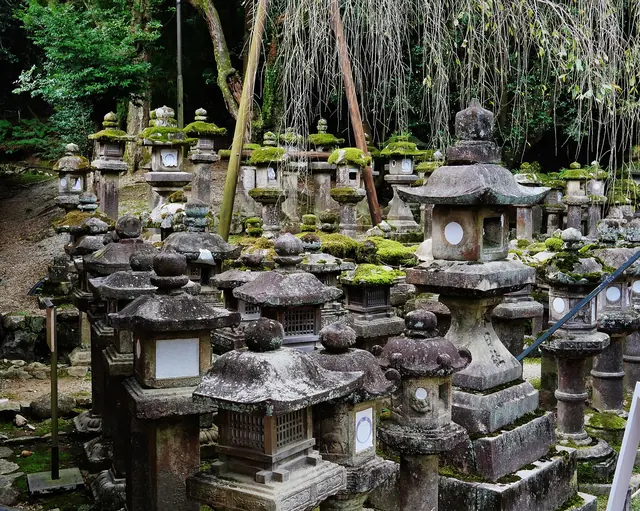
- Do not put anything on top of lanterns.
What to wear
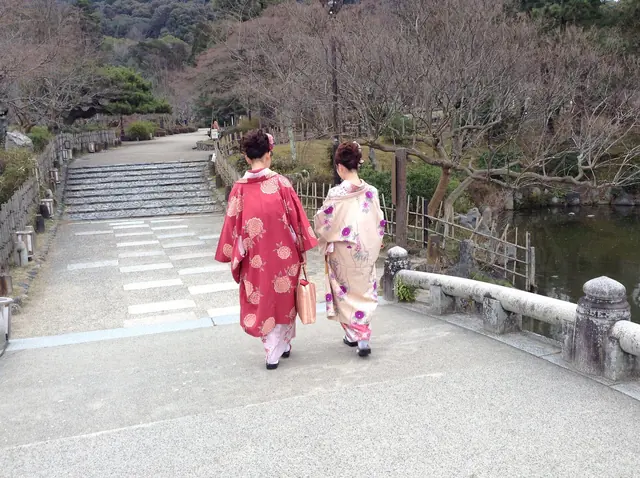
Shrines have no strict dress code. Jinja Honcho's advice is to "dress modestly as many local worshippers visit jinja to pray", and JNTO's guide to Ise suggests not showing too much skin and taking off your hat before the kami. Wear comfortable shoes, and take a good pair of socks if you also plan to visit temples, where you may be asked to take your shoes off. If you would like to visit in a kimono, our page on kimono rental covers the details. Fushimi Inari Taisha does ask visitors not to walk around in "wedding dresses or other costumes that are inappropriate for worship".
Pets, prams and luggage
Pets are not allowed at Ise Jingu; the shrine asks owners to leave them at the guard post by the entrance. Fushimi Inari Taisha does not allow pets to be walked or brought in either, apart from guide dogs and other animals that people need. Prams should not be left unattended outside the marked areas at Fushimi Inari, and Meiji Jingu has nowhere to leave a suitcase, so drop large bags at your hotel or a station locker first.
Ema, goshuin and omamori
Most shrines have a counter, the juyosho, where you can receive wooden votive tablets and amulets, and a shrine office where a handwritten seal for your visit is written. JNTO's British office describes the counter as the place you go once you have prayed, and that is the polite order: greet the kami at the hall first, then visit the counter.
Three things from the shrine counter
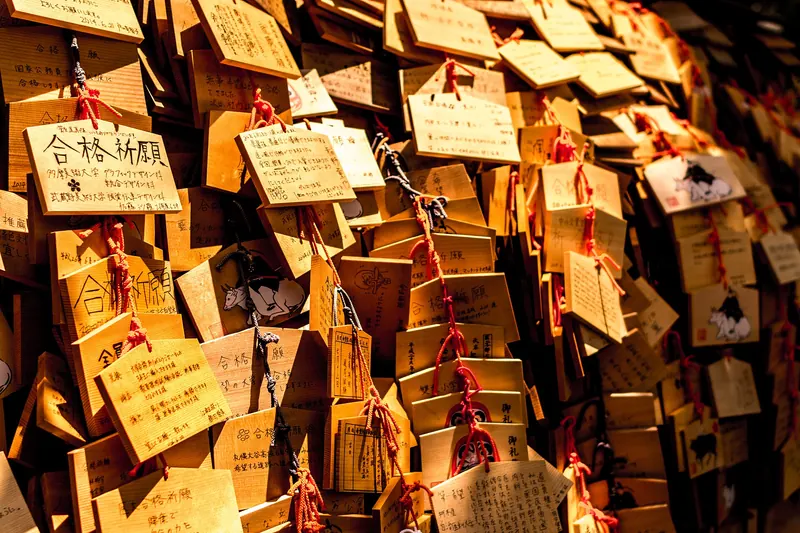
- Ema: a small wooden tablet on which you write a wish or a word of thanks, then hang it on the board at the shrine.
- Goshuin: a red seal with calligraphy, written into your book or on a sheet as a record of your visit.
- Omamori: a small amulet bearing the shrine's name, received in return for an offering and treated as sacred.
Ema
Ema are votive tablets, usually wooden, with a picture of the shrine, its kami or the local area on one side. You write your wish and hang the tablet with the others. JNTO notes that around the lunar new year you may even find tablets painted with the year's zodiac animal. At Meiji Jingu the tablets hang around the camphor tree that stands before the main shrine. One costs ¥500 there, or ¥1,000 for the one sold at New Year.
Goshuin
A goshuin is a seal from a shrine or a temple. A Japan Tourism Agency text for the temple of Engyoji describes them as a large crimson stamp with calligraphy giving the name of the place and the date, usually given for a small donation of a set amount. Collecting them in a special book, the goshuincho, began as a religious act, but the same text notes that "today many visitors collect them as souvenirs". Another text, written for Saihoji in Kyoto, explains the history: the seal is said to have begun as a kind of certificate for pilgrims who had copied a sutra.
Most seals are written by hand, so you can watch a shrine worker brush the calligraphy in front of you.
Seals at Meiji Jingu
- Where: a counter close to the main hall.
- A seal: ¥500.
- The shrine's own book: ¥1,500.
- No book: the seal can be written on a separate sheet.
Pray at the hall before you ask for one, since the seal records a visit to the shrine, not to its counter. The souvenirs guide has a short section on amulets and seal books, with a few more points of seal etiquette.
Omamori
An omamori is a small amulet with the name of the shrine on it. Jinja Honcho explains that omamori are more than mere souvenirs: "They are embodiments of the power of the kami, and so they should also be treated as sacred items." This guide does not go into what any particular amulet is for.
Omamori in short
- Size: usually small enough to carry in a bag or a wallet.
- How you get one: given in exchange for a donation at the shrine.
- Who keeps it: Jinja Honcho says it is fitting to keep one yourself or to give it to family or friends.
Five famous shrines and their own rules
Big shrines follow the same basic customs as a small local one, but each adds rules of its own, from the direction you walk to where you can take photographs. JNTO's British office names Fushimi Inari Taisha, Meiji Jingu and Itsukushima Shrine among the biggest sights in the country, and Jinja Honcho singles out Ise Jingu as a shrine to visit if you have the chance. The table gives their November hours; the sections below give the rest of the year.
| Shrine | Where | November hours | A rule to know |
|---|---|---|---|
| Meiji Jingu | Shibuya, Tokyo | 6:10 to 16:10 | no photos where people pray at the main shrine |
| Fushimi Inari Taisha | Fushimi, Kyoto | this site does not quote them | no eating while walking |
| Ise Jingu | Ise, Mie | 5:00 to 17:00 | keep left at the Outer Shrine, right at the Inner |
| Izumo Oyashiro | Izumo, Shimane | about 6:00 to 19:00 | four claps instead of two |
| Itsukushima Shrine | Miyajima, Hiroshima | 6:30 to 17:30 | high heels can catch between the boards |
Meiji Jingu, Tokyo
Meiji Jingu stands in a large forest next to Harajuku, and JNTO's British office notes that the grounds hardly feel like part of a huge city. Entry is free every day of the year, and the shrine opens at sunrise and closes at sunset, which means a different timetable every month. Allow about an hour for the shrine itself, and about two if you also want to see the Meiji Jingu Museum and the Inner Garden; the museum and some other facilities charge a fee. Some facilities in the grounds keep shorter hours, mostly 9:00 to 16:00.
| Month | Opens | Closes |
|---|---|---|
| January | 6:40 | 16:20 |
| February | 6:20 | 16:50 |
| March | 5:40 | 17:20 |
| April | 5:10 | 17:50 |
| May | 5:00 | 18:10 |
| June | 5:00 | 18:30 |
| July | 5:00 | 18:20 |
| August | 5:00 | 18:00 |
| September | 5:20 | 17:20 |
| October | 5:40 | 16:40 |
| November | 6:10 | 16:10 |
| December | 6:40 | 16:00 |
Besides the rules on photos, drones, food and the forest described above, the shrine's notice asks visitors not to run or play sports, and bicycles go in the lot by the entrance.
Fushimi Inari Taisha, Kyoto
Founded in AD 711, Fushimi Inari Taisha heads the Inari shrines, which number around 30,000 across Japan. Its grounds cover most of Inariyama, a sacred mountain 233 metres high and the most southerly of the 36 Higashiyama peaks of Kyoto, and the shrine counts around 10,000 torii of every size along the paths up the mountain. Worshippers have given them since the Edo period as a way to offer prayers and thanks. The shrine explains that foxes are regarded as messengers of the kami Inari Okami, and that the kami itself is not a fox.
To protect the dignity of the site, the shrine published a list of banned acts on 1 January 2022. On top of the rules on food, pets, photos, drones and clothes described above, it includes the points below, and anyone who ignores them can be asked to leave.
Banned at Fushimi Inari Taisha
- Restricted areas: the main hall, the other buildings and anything beyond the fences, without permission.
- Lanterns and torii: do not damage them or put anything on top of the lanterns.
- Rubbish: take bottles, cans and other rubbish with you.
- Wildlife: do not approach or feed the birds and animals.
- Parking: the shrine car parks are for people visiting the shrine.
- Surveys: no interviews or questionnaires without permission.
- Noise: no shouting and no sitting on the ground.
Ise Jingu, Mie
Ise Jingu is not one shrine but 125, centred on the Inner Shrine, Naiku, where Amaterasu-Omikami is enshrined, and the Outer Shrine, Geku. The two main shrines receive more than seven million visits a year between them. A JNTO feature from 2019 gives the traditional order, visiting Geku before Naiku; the two lie about 6 km apart, so plan the route.
At the main sanctuaries you do not go far. "Pilgrims usually worship the enshrined kami in front of the gate of the third row of the fence", and the courtyard behind is closed to visitors. You reach Naiku across the Uji Bridge over the Isuzu River, more than 100 metres long and said to separate the sacred grounds from everyday life. It is rebuilt every 20 years as part of the Shikinen Sengu, the renewal of the shrines. The 63rd renewal began in 2025, and the shrine says it will take more than eight years.
Ise Jingu, the visiting hours
- October to December: 5:00 to 17:00.
- January to April, and September: 5:00 to 18:00.
- May to August: 5:00 to 19:00.
- New Year: the hours change; the shrine posts them in its news.
- Food and drink: not in the sacred grounds; have a drink at a rest area.
Izumo Oyashiro, Shimane
Izumo Oyashiro, often called Izumo Taisha, ranks among Japan's oldest and most important shrines. The present main sanctuary dates from 1744 and is a national treasure. It stands 24 metres high and is said to have stood twice as tall in the 10th century. The Kagura-den hall has the largest shimenawa rope in Japan hanging at its front, 13.5 metres long according to JNTO. This is the shrine with four claps instead of two.
The front of the grounds is open from about 6:00 to 19:00 every day; outside those hours you can pray at the copper torii instead. Amulets and seals are given out from about 6:30 to 19:00.
Itsukushima Shrine, Hiroshima
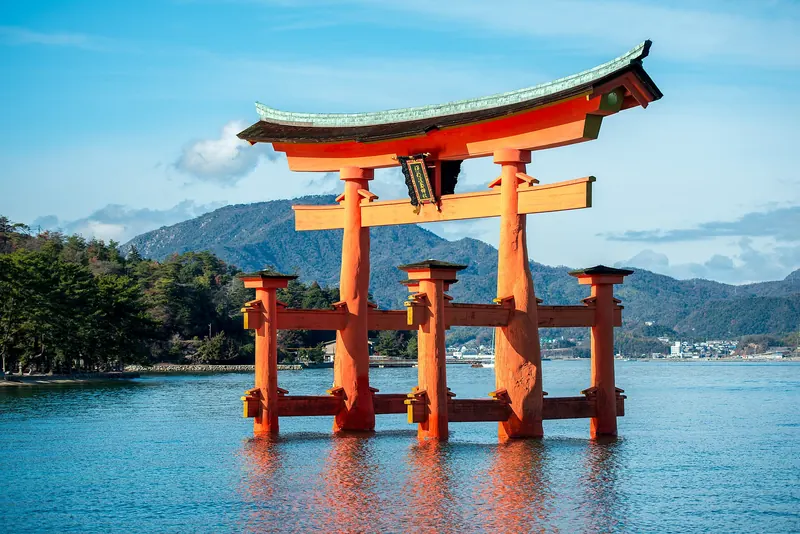
Itsukushima Shrine on Miyajima was established in 593. Taira no Kiyomori began building it on its present plan in 1168, and the main hall standing today dates from 1571, a rebuilding in the same style. JNTO's British office notes that it is "symbolised by its famous floating torii", which seems to float when the tide is in. Unlike most shrines, it charges for entry, and a combined ticket with the Treasure Hall is sold only at the shrine entrance.
Itsukushima Shrine in numbers
- 593the year the shrine was established
- 1168Taira no Kiyomori begins the shrine
- ¥300entry for adults
- ¥500with the Treasure Hall
The corridors stand over the sea, with small gaps between the floorboards to ease the pressure of the water at high tide. The shrine warns: "High heels may get stuck in the spaces." The opening hours change through the year.
| Dates | Hours |
|---|---|
| 1 January | midnight to 18:30 |
| 2 to 3 January | 6:30 to 18:30 |
| 4 January to the end of February | 6:30 to 17:30 |
| 1 March to 14 October | 6:30 to 18:00 |
| 15 October to 30 November | 6:30 to 17:30 |
| December | 6:30 to 17:00 |
High school students pay ¥200 and younger schoolchildren ¥100.
Frequently asked questions
What is proper Shinto shrine etiquette?
Bow once at the torii and walk to one side of the approach, not down the middle. At the water basin, rinse your hands and mouth, then go to the hall, make an offering of a coin, ring the bell if the shrine has one, bow twice, clap twice, pray quietly and bow once more. Speak quietly, never photograph people praying and eat only where a shrine allows it.
Do you clap at a shrine or at a temple?
Clap at a shrine, not at a temple. At a shrine the usual form is two bows, two claps and one bow, though Izumo Oyashiro uses four claps. At a Buddhist temple you put your hands together and pray in silence. A torii at the entrance tells you that you are at a shrine.
How much money should I offer at a shrine?
There is no set amount. Coins are the custom, and any amount is fine, so keep a few small coins ready and drop one quietly into the offering box. Most shrine counters, including the amulet and seal counters at Meiji Jingu, do not take cards.
Can visitors who are not Shinto pray at a shrine?
Yes. Shrines are open to everyone, and nobody asks what you believe. Jinja Honcho only asks visitors to keep the grounds dignified and to pay their respects politely.
Can I take photos at a Shinto shrine?
Usually, of the buildings and the grounds. Many shrines, including Meiji Jingu and Ise Jingu, ask you not to take pictures in front of the hall where people are praying, and you should ask before photographing other visitors or priests. Drones and commercial filming need permission and are banned at some shrines.
What should I do if there is no ladle at the water basin?
Rinse your hands and mouth under the running water from the spout, in the same order as with a ladle. Many shrines removed their ladles during the COVID-19 pandemic. Follow any sign at the basin.
How should I dress for a shrine visit?
No formal dress code applies, but dress modestly, avoid showing a lot of skin and take off your hat at the hall. Wear comfortable shoes. Fushimi Inari Taisha asks visitors not to wear wedding dresses or costumes.
Do shrines charge for entry, and when are they open?
Entry to most shrines is free, and they open from about sunrise to sunset, which means the times shift with the seasons. Itsukushima Shrine on Miyajima is an exception and charges ¥300 for adults. A museum or garden inside the grounds may charge its own fee.
Sources
Official and primary sources used for this page. Checked November 5, 2026.
- Jinja Honcho: Entering a Jinja — the torii, the water basin, the bell and offering, the prayer, the sacred grounds, amulets, where not to stand
- Jinja Honcho: At a Jinja — what a shrine is, the buildings, shrines and temples
- Jinja Honcho: Q&A — *kami*, the number of shrines and priests, visitors of other faiths, New Year visits, offerings, hours and fees, food, dress, photos, cards
- JNTO: Shrine and Temple Traditions — the bow at the torii, the water basin, praying at a temple, incense, temple gates
- JNTO US: Shrine & Temple Visits - Best Practices — the coin, the final bow
Show all 32 sources
- JNTO UK: Two Bows and Two Claps: The Ins and Outs of Shinto Shrines — the middle of the path, the shrine counter, *ema*, the famous shrines, the rope at Izumo
- JNTO Singapore: A Must Go in Mie! A Summary of How to Pray at Ise Grand Shrine — the order of the Outer and Inner Shrines, the distance between them, dress
- Meiji Jingu: Temizu & Sampai — the short form of the water ritual, the prayer
- Meiji Jingu: Etiquette — the house rules in the grounds and the forest
- Meiji Jingu: Q&A — photos, cards, luggage, time to allow
- Meiji Jingu: Ema & Goshuin — *ema*, seals, seal books and their prices
- Meiji Jingu: How to visit — opening hours by month, facility hours
- Ise Jingu: Pray — the water ritual and the prayer, hours
- Ise Jingu: About Ise Jingu — the 125 shrines, the place of prayer, the Uji Bridge, the renewal
- Ise Jingu: Etiquette and manners (in Japanese) — the bows and claps in detail, keeping left and right, food, pets, photos
- Ise Jingu: Visiting and prayers (in Japanese) — the number of visits a year, hours by season, the New Year
- Fushimi Inari Taisha: Request for All Visitors — the list of banned acts from 2022
- Fushimi Inari Taisha: FAQ — the Inari shrines, the foxes, the torii
- Fushimi Inari Taisha: Inariyama — the height of the mountain, the number of torii
- Fushimi Inari Taisha: Senbon Torii — why worshippers give torii
- Izumo Tourism Association: Izumo Oyashiro (Izumo Taisha) Grand Shrine — the four claps, the main sanctuary, the rope, opening hours
- Itsukushima Shrine: Admission — the founding, entry fees, the corridors, opening hours
- Miyajima Tourist Association: Itsukushima Shrine — the history of the buildings and the date of the main hall
- Japan Tourism Agency: Torii Gate — the Isonokami Jingu text on the torii
- Japan Tourism Agency: Ni no Torii Second Torii Gate — the Kasuga Taisha text on torii materials and the second gate
- Japan Tourism Agency: Komainu Guardian Statues — the Kasuga Taisha text on the guardians
- Japan Tourism Agency: Temizu-sha (Purification Fountain) — the Sumiyoshi Taisha text on the water basin
- Japan Tourism Agency: Temizuya, Ritual Purification — the Meiji Jingu sign at the basin
- Japan Tourism Agency: Ritual Purification — the Meiji Jingu sign on the ladle and coins
- Japan Tourism Agency: Goshuin Temple Stamps — the Saihoji text on the history of seals
- Japan Tourism Agency: Temple Stamps (Goshuin) — the Engyoji text on seals and seal books
- Meguro Tourism Association: Meguro Tourism Encyclopedia, Digest Version (PDF) — shrines without ladles or bells
Related guides
To cite or link to this page: Shinto shrine etiquette in Japan: what a shrine is and how a temple is different, the torii and the approach, the temizu water ritual step by step, how to pray with two bows, two claps and one bow, the rules for photos, food, dress and pets, ema, goshuin and omamori, and the house rules at Meiji Jingu, Fushimi Inari, Ise, Izumo and Itsukushima — Japan Pocket Guide, https://japanpocketguide.com/culture/shinto-shrine-etiquette/