Culture · Origami
Origami in Japan: the meaning of the word, Japanese or Chinese roots, its history from samurai gift folds to the 1797 crane book, the linked cranes of Kuwana, Hiroshima's paper cranes, classes and museums in Tokyo, and the paper to buy
Origami, the art of turning one sheet of paper into a crane, a frog or a windmill, is one of the first things many people link with Japan. This guide explains what the word means, where the art came from and why the honest answer to the Japanese-or-Chinese question has two parts, how it grew from samurai gift wrapping to a world hobby, the linked cranes of Kuwana, why Hiroshima receives millions of paper cranes, where to take a class or see a collection in Tokyo, and what to look for when you buy paper.
Last checked · Sources

In short
Origami means folding paper. Paper itself came to Japan from China, and paper folding also grew up in Europe, but the culture and techniques of origami were developed in Japan, from the gift folds of samurai etiquette to Edo-period play and the oldest known book on recreational folding, published in 1797. In Tokyo, the Ochanomizu Origami Kaikan and the Tokyo Origami Museum are both free to enter. In Hiroshima, paper cranes are offered for peace at the Children's Peace Monument.
What origami is, and is it Japanese or Chinese?
The word is simple. JNTO, Japan's national tourism organisation, glosses origami as literally 'fold paper', from oru, to fold, and kami, paper. The idea is just as plain: one sheet, usually square, folded into a shape without glue. Most people meet it as children, and the shape almost everyone in Japan learns first is the paper crane, orizuru.
Where it came from is harder to pin down, and the sources used here agree that nobody knows exactly when paper folding began in Japan. What they do agree on is the order of events. Paper was invented in China. Kuwana City in Mie Prefecture dates the arrival of papermaking skills from China to the reign of Empress Suiko, around the turn of the 7th century, and says folded paper first appeared in Japan in ritual objects such as gohei and shide, the paper streamers used in Shinto rites. From the Heian period onwards, folded paper was used for noshi and other wrappings in ceremonies and gift giving. Only in the Edo period did folding become a game.
Origami in six words
- Orizuru: the folded paper crane, the best-known shape in Japan.
- Origata: paper folds for wrapping gifts and letters, part of samurai etiquette.
- Renzuru: linked cranes, folded from one sheet with a few cuts.
- Senbazuru: many cranes threaded on strings; the name means a thousand cranes.
- Chiyogami: paper printed or dyed with bright repeating patterns.
- Washi: paper made in the Japanese way, used for folding and much more.
So, Japanese or Chinese?
The short answer has two parts. Paper is Chinese, and folding paper is not only Japanese.
Paper folding outside Japan
- China: where paper was invented.
- Spain: a traditional fold of its own, the pajarita or small bird, which most Spanish people know in the way that people in Japan know the crane.
- Germany: in the 19th century, Friedrich Fröbel, who founded the first kindergarten, built European paper folding into the way young children learned.
But it was in Japan that folding became an art with its own name, rules and books. Yamaguchi Makoto, an origami artist and head of the board of the Japan Origami Academic Society, put it this way in an interview with the government's Highlighting Japan magazine in 2021: "Origami is not unique to Japan, but I think it was Japan that developed the culture and techniques of origami." The word itself went round the world in the 20th century, which is why folders in every country now use the Japanese term.
Origami or kirigami?
Visitors often ask how origami differs from kirigami, a word built from kiru, to cut, and kami. Most origami artists work from one uncut square. Yamaguchi says a few of his own designs involve cutting into the paper, though nearly all start from one uncut square. The old Japanese tradition is less strict than the modern rule: the linked cranes of Kuwana, described below, are folded from one sheet in which small cuts let the birds stay joined.
A short history of origami in Japan
According to Yamaguchi, it is not clear when origami started in Japan, but one of its roots is plain. Between the 1430s and the late 1500s, in the Muromachi period, Japan's samurai rulers created origata, folds for wrapping presents and letters, as part of their code of manners. Those folds were passed on through the Edo period and are counted among the roots of origami as we know it.
The change came with cheap paper. By the Edo period, paper was being made in large amounts, and folding spread to ordinary people as entertainment. JNTO's guide for beginners says origami flourished in the 1600s. By the early 1700s, the paper crane was turning up in printed books of ukiyo-e pictures and of designs for kimono cloth.
Origami through the centuries
- Around the 7th century: papermaking skills arrive from China; folded paper appears in Shinto ritual objects.
- Heian period onwards: folded paper is used to wrap gifts and for ceremonies.
- 1430s to late 1500s: samurai develop origata, gift and letter folds, as etiquette.
- 1600s: paper becomes plentiful in the Edo period and folding turns into a game.
- Early 1700s: the paper crane appears in books of prints and fabric patterns.
- 1797: a Kyoto publisher issues the book of linked cranes now seen as the oldest on recreational origami.
- Meiji period: school paper folding arrives from Europe; the first dyed origami paper is made in Tokyo.
- After 1945: Yoshizawa Akira's work spreads origami abroad as an art.
- 1973: the Nippon Origami Association is founded in Japan.
The 1797 book of cranes
In 1797 a Kyoto publisher released Hiden Senbazuru Orikata, or Secret to Folding One-thousand Cranes. Highlighting Japan says it is "believed to be the world's oldest book on recreational origami", and Kuwana City describes it in the same way. Its subject was renzuru, several cranes joined together and folded from one sheet. The author was a Buddhist priest in Kuwana, whose story is told in the section on Kuwana below.
Schools, the Meiji period and a new kind of paper
When Japan built a school system on Western models in the Meiji period (1868 to 1912), Fröbel's educational paper folding came with it. Children in kindergartens and elementary schools were taught both European and Japanese folds, and origami became a pastime in almost every home.
From Japan to the world
According to Highlighting Japan, Japanese origami came to be seen abroad as an art only in the years after the Second World War. Much of the credit goes to Yoshizawa Akira (1911 to 2005), whose lifelike animals and other figures were shown in exhibitions and seminars in many countries. The American artist Lillian Oppenheimer (1898 to 1992), who kept in touch with folders around the world, including Yoshizawa, suggested using the Japanese word for paper folding in the United States, and the name stuck.
Paper cranes and the linked cranes of Kuwana
Ask almost anyone in Japan to fold something and they will fold a crane. Kuwana City says the bird has been loved for so long that the word origami brings the crane straight to mind, and that its graceful shape made it a byword for the art. In everyday speech, senbazuru means a large number of single cranes, often a thousand, threaded together on string.
Roko-an Gido and the book of 1797
The designs came from Roko-an Gido (1762 to 1834), the 11th chief priest of Choen-ji, a temple of the Jodo Shinshu Hongwanji school in Kuwana. Roko-an was his pen name. He was a well-read local historian who also wrote haiku and knew scholars of his day, though most of his writings were lost in wartime fires. In between his duties, Kuwana City says, he spent 18 years perfecting his linked cranes, which shows they were no idle pastime.
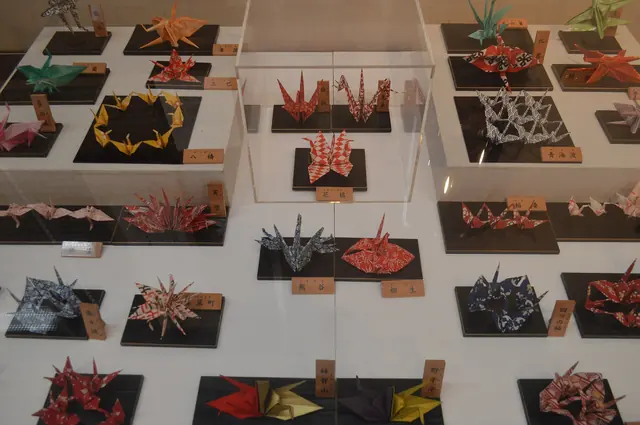
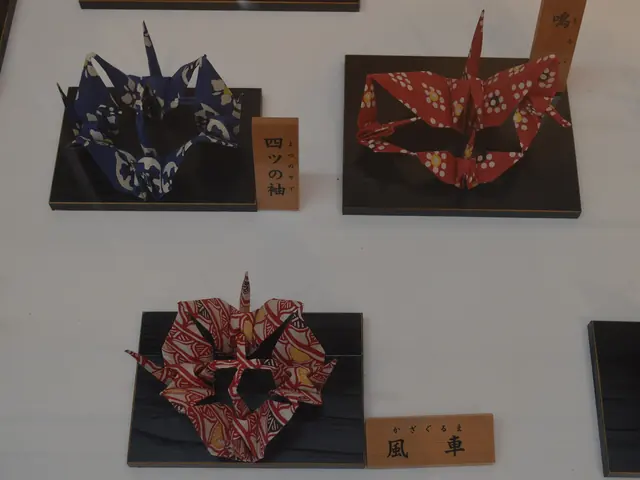
The 1797 book from Kyoto set out 49 of them, each with a drawing of the finished piece, an elegant name and a kyoka, a comic poem in the 5-7-5-7-7 form. Some of the designs place a small crane on the back of a larger one. Others overlap in many layers, and some have one bird threaded through a hole in another. Each bird is folded in the same way as an ordinary crane, but the whole set still looks modern today.
How the folds were brought back
When the city gave the designs that status in 1976, hardly anyone had actually folded them. The book gave no detailed instructions, and some of its diagrams were vague. Otsuka Yurami, a history specialist at the Kuwana City Museum, worked out each one so that anyone could fold them again. "I think the renzuru that Gido developed represent creative thinking that deserves to be passed on to future generations," Otsuka told Highlighting Japan.
Today Otsuka and a colleague hold the city's accreditation as keepers of the technique. They give lessons in Kuwana's elementary and junior high schools and run open workshops at the museum, and Kuwana City says the cranes have also reached other countries through home stays. In 2016 Kuwana hosted the Junior Summit in Mie, a youth meeting linked to the G7 Ise-Shima Summit, and Otsuka gave children from seven countries a piece called Nunozarashi: seven cranes joined as if holding hands. Other designs include Yatsuhashi, a ring of eight cranes, and Hyakkaku, a string of 97 cranes from one sheet.
The city's four rules for Kuwana cranes
- Master one crane: you must first fold a single crane perfectly, because each design's name has to match its shape.
- Use washi: choose paper made from kozo, mitsumata or gampi; its long fibres do not tear when the folds get forced.
- Keep the joins small: leave as little uncut paper between the birds as you can for a neat finish.
- Fold in your hands: unlike most origami, these are folded held in the hand rather than flat on a table.
Seeing the cranes in Kuwana
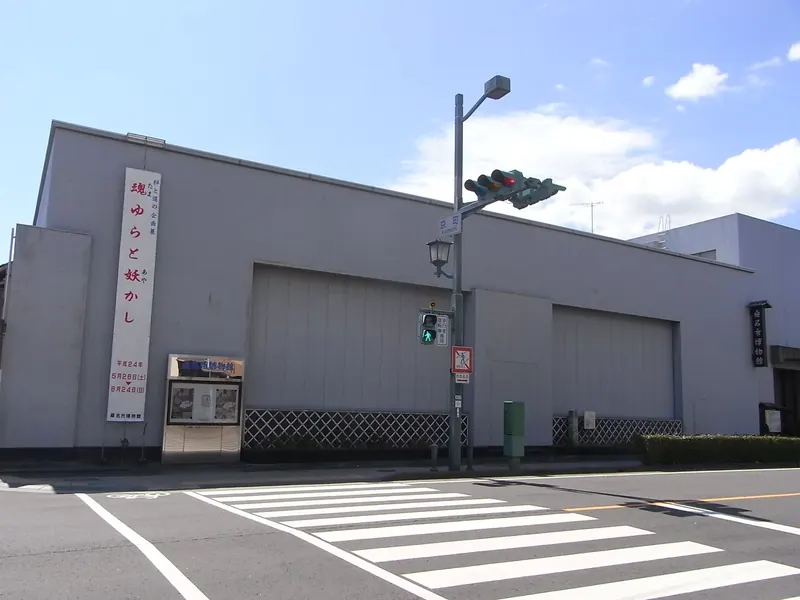
The Kuwana City Museum opened on 1 October 1985 as the first city museum in Mie Prefecture. Alongside its collections of local history, pottery and prints, it displays finished Kuwana cranes, and visitors can try folding them for a fee. The museum's page does not give the price of the folding session, so this guide does not quote one.
Kuwana City Museum
- Hours: 9:30 to 17:00, last entry 16:30.
- Closed: Mondays (open on public holidays), the day after a public holiday (open if that day is a Sunday), the New Year period and exhibition changes.
- Admission: 150 yen for high school students and older; special exhibitions are priced separately.
- Train: JR Kansai Line or Kintetsu Nagoya Line from Nagoya to Kuwana, about 20 to 30 minutes.
- On foot: 15 to 20 minutes from the east exit of Kuwana Station.
- Bus: Kuwana community bus, Southern A route from stand 4, about 5 minutes to Hakubutsukan-mae, 100 yen for adults.
Choen-ji itself stands at Tenmacho 98, about 2 minutes on foot from the Tenmabashi bus stop. Kuwana City lists the temple's copies of Gido's works among its cultural properties, but the sources used here say nothing about viewing them, so treat the temple as a place of worship rather than a museum.
Paper cranes for peace in Hiroshima
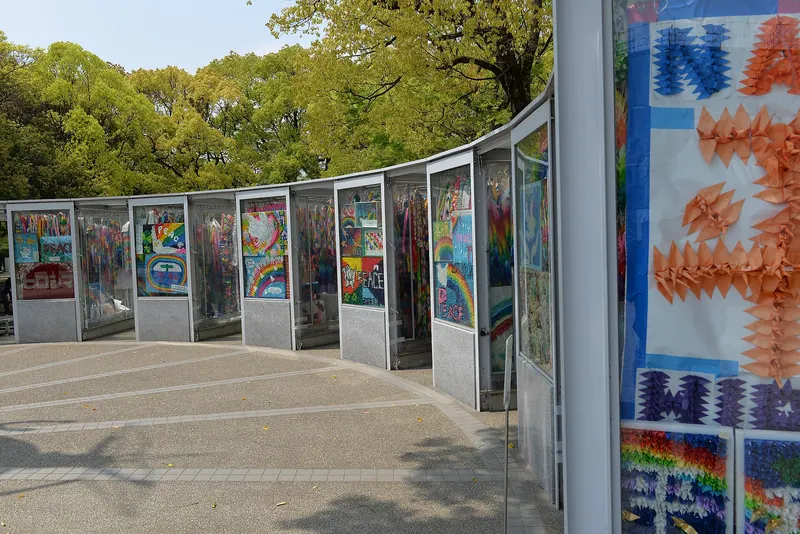
Anyone who walks through Peace Memorial Park in Hiroshima sees strings of bright paper cranes. The City of Hiroshima explains that the cranes come from the old Japanese tradition of origami, but that the birds now stand for peace, and people in many parts of the world fold them for that reason.
The link goes back to one girl. Sasaki Sadako was two when the atomic bomb hit Hiroshima in 1945. She had no visible injuries and grew up strong and healthy, but in the autumn of 1954, in her sixth year of elementary school, she fell ill. In February 1955 she was diagnosed with leukaemia and taken into Hiroshima's Red Cross Hospital. She kept folding cranes in the belief that they would help her recover, and died on 25 October 1955 after eight months of illness. She was 12.
Her death started a campaign for a monument to all the children the bomb had killed. Money for the Children's Peace Monument came from all over Japan, and her story later spread around the world. The city says "approximately 10 million cranes are offered each year" in front of it, and the Hiroshima Peace Memorial Museum notes that letters and cranes still arrive from many countries.
Inside the tower, a gold crane made as a wind chime once hung beneath a bell. It was a gift from the Nobel physicist Yukawa Hideki, and today both the bell and the crane are on display in the ground-floor lobby of the museum's East Building.
A thousand cranes, or more?
Many retellings say Sadako set out to fold a thousand cranes and did not reach the number. The Hiroshima Peace Memorial Museum explains where that came from. In 1956 the Austrian writer Robert Jungk heard her story in Hiroshima and retold it in Light in the Ruins, changing some details, including the number of cranes. In the museum's words: "Although Sadako actually folded over 1300 cranes, many versions have her folding less than 1000."
Folding and sending cranes yourself
The city welcomes cranes from anyone. You can lay them at the monument yourself, or post them to the city, which will place them there on your behalf. You cannot choose the day they are placed, and you pay all postage. The postal address is on the City of Hiroshima's page on paper cranes.
The city's notes for sending cranes
- Tie strings of cranes into bundles.
- Keep each bundle within 150 cm long and 25 cm wide.
- Use strong string and tie it tightly, so no crane falls off the end.
- Any paper will do, including printed adverts and wrapping paper, in any colour.
- Keep large cranes and framed pieces to a sensible size.
- Contact the city first if you plan to send more than 10,000 cranes.
The city also asks people who fold cranes to learn about the atomic bombing, the story behind the monument and the state of nuclear weapons today, and to talk about them with the people around them.
Folding a crane at Hiroshima Orizuru Tower
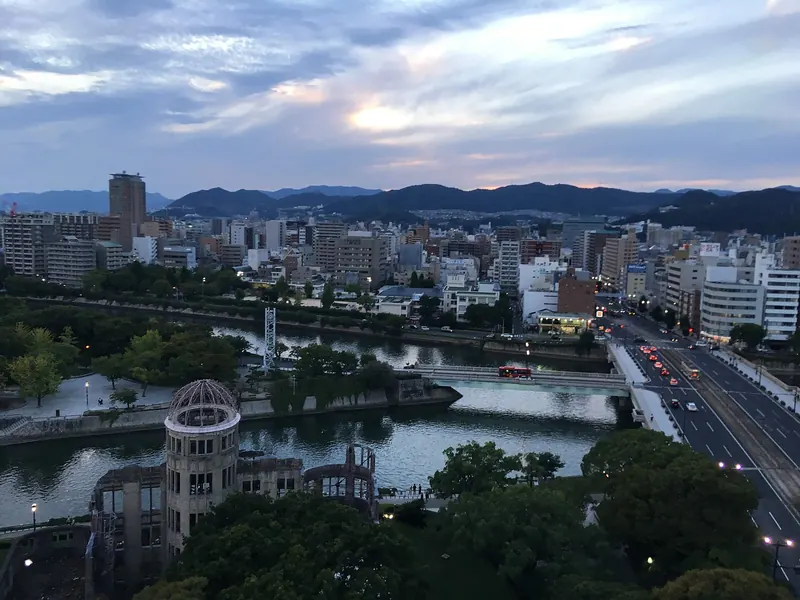
If you want to fold a crane in the city itself, Hiroshima Orizuru Tower stands right beside the Atomic Bomb Dome, on its eastern side, and opened on 23 September 2016. It was designed by Sambuichi Hiroshi, an architect raised in Hiroshima and known for buildings shaped by wind, water and sun. On the 12th floor, Orizuru Square gives visitors eco-friendly paper made from plants such as bamboo. You can watch the folding steps in a web app on an iPad, then drop your finished crane into the Orizuru Wall, which holds cranes folded by visitors from around the world. Because the tower uses its own paper, it does not accept cranes that visitors bring with them or send in, without exception.
Hiroshima Orizuru Tower
- Usual hours: 10:00 to 18:00; tickets and entry stop 30 minutes before closing. Hours change for events, so check the monthly notice.
- Admission: adults 18 and over 2,200 yen; ages 12 to 17 1,400 yen; ages 6 to 11 900 yen; ages 4 and 5 600 yen.
- Orizuru Wall: 100 yen extra to drop in your crane. All prices include tax.
- Children: under-12s must come with someone aged 18 or over.
- Paying: cards are taken at the observation deck ticket counter, but not at the ticket machines; electronic money is not accepted.
- Getting there: tram from Hiroshima Station to Genbaku Dome-mae, about 15 to 20 minutes, then 1 minute on foot.
Re-entry is allowed on the same day only, with a stamp on your hand before you leave. The tower says part of its ticket income helps to preserve the Atomic Bomb Dome and pays for peace projects. From the rooftop deck, on a clear day, you can see both of Hiroshima's World Heritage sites: the Dome below and the island of Miyajima in the distance.
Origami classes and museums in Tokyo
Tokyo has two places run by people who have spent their lives on paper folding, and both are free to enter: the Ochanomizu Origami Kaikan in Bunkyo, a paper dyer's building with a gallery, shop and classrooms, and the Tokyo Origami Museum in Sumida, the home of the Nippon Origami Association. A keen folder can fit both into one day.
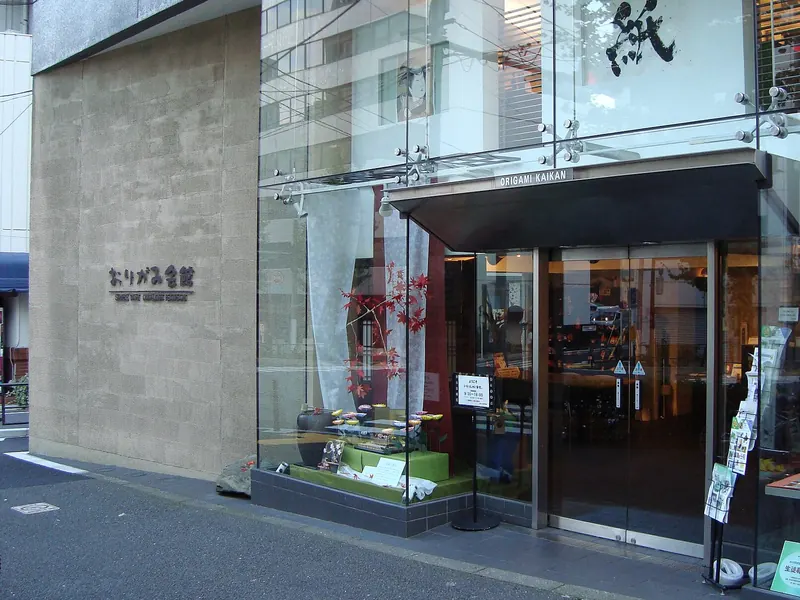
Ochanomizu Origami Kaikan
The Origami Kaikan began as a paper-dyeing workshop. Its founder, Kobayashi Kosuke, learned to handle washi while working as a maker of sliding doors and mounts on jobs such as Kan'ei-ji temple in Ueno, and set up his paper-dyeing business on this spot in Yushima in 1858. As told above, it was this firm that made Japan's first dyed origami paper for schools in the Meiji period. The building is known abroad as the International Origami Center, and the hall says fans of washi, origami and chiyogami come from around the world every day.
Its director, Kobayashi Kazuo, is passionate about the craft. He told Tokyo Updates that Japanese origami paper usually carries its pattern on one side only, with a blank reverse, and that its thinness makes it crease more easily than most paper, yet he insists that "any paper can be used". To prove it, he picked up a plain paper napkin and, with quick folds and twists, turned it into a ballet dancer. Many of the books he has written on origami have been translated into other languages.
What is on each floor
- 1F entrance hall: a large display of sample pieces from the classes, with seasonal origami at the door.
- Mezzanine gallery: free exhibitions of fine work from Japan and abroad, plus 120 panels of traditional folds, or more than 300 counting napkin folds and origata.
- 3F shop: origami paper, chiyogami, washi, kits and books, including paper dyed upstairs; if you are lucky, the director gives a folding demonstration.
- 4F dyeing studio: craftspeople still dye paper by hand, sheet by sheet, so no two are the same; when the door is open, you may watch.
- 5F and 6F: classrooms for beginner to advanced courses, holding up to 45 and 24 people.
The hall says the building is barrier-free, and GO TOKYO lists a wheelchair lift, a lift to the upper floors and a multi-purpose toilet. Viewing the dyeing studio is not always possible, depending on the work being done that day.
Taking an origami class at the Kaikan
Origami lessons at the Kaikan must be booked in advance, and shorter mini lessons are also offered, for individuals and groups. JNTO notes that the classes run on an irregular basis and are open to students of every level, so check the class calendar on the hall's official website before you plan a visit around one. The hall's pages used for this guide do not list a class fee, so this guide does not quote one.
Visiting the Origami Kaikan
- Address: 1-7-14 Yushima, Bunkyo, Tokyo.
- Hours: 9:30 to 16:30, Monday to Saturday; the gallery closes between exhibitions.
- Closed: Sundays, public holidays, a summer break and the New Year period.
- Closed in November 2026: 1, 3, 8, 15, 22, 23 and 29 November.
- Closed in December 2026: 6, 13 and 20 December, then the winter break from 27 December to 3 January 2027.
- Admission: free, including the gallery.
- Exhibition now: the second Takahama Collection show of fine origami from around the world, from 5 November 2026.
Four stations near the Kaikan
- JR Ochanomizu: Chuo and Sobu lines, 7 minutes on foot from either the Ochanomizu-bashi or the Hijiri-bashi exit.
- Tokyo Metro Ochanomizu: Marunouchi Line, 5 minutes from Exit 1.
- Shin-ochanomizu: Chiyoda Line, 10 minutes from Exit B1.
- Suehirocho: Ginza Line, 7 minutes from Exit 3.
Tokyo Origami Museum
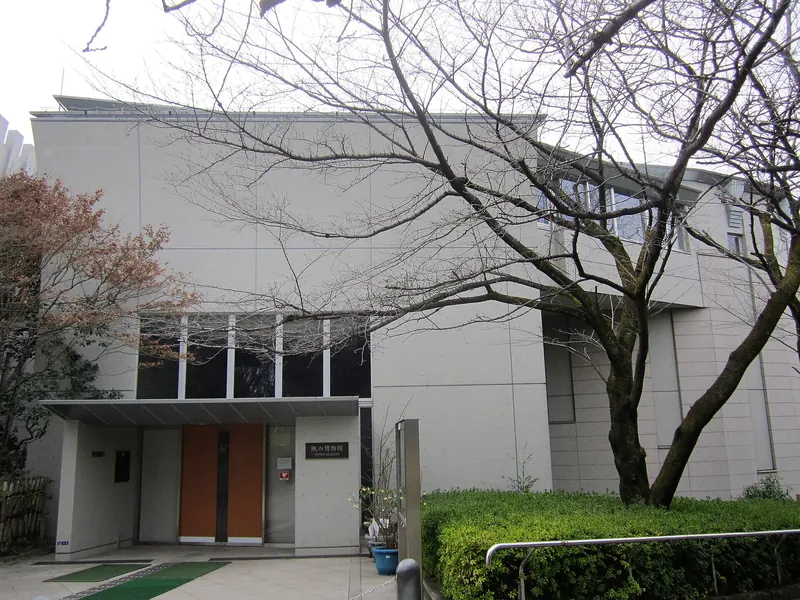
The Nippon Origami Association, set up in October 1973 to spread origami as a traditional art and a teaching tool, moved its office to Honjo in Sumida in December 2010 and opened the Tokyo Origami Museum there. It has a permanent exhibition of folded work, a reference room of origami books and a room for classes, where 19 courses now run, with teachers leading sessions every month.
For a casual visitor, the best times are Saturday and Sunday afternoons, when an origami teacher sometimes shows visitors how to fold simple pieces. The shop sells the association's monthly magazine and its own books, origami books from other publishers, and many kinds of origami paper. The museum and shop stay open through the office's lunch break.
Visiting the Tokyo Origami Museum
- Address: 1-31-5 Honjo, Sumida, Tokyo.
- Hours: 9:30 to 17:30, open on weekends too.
- Admission: free.
- Closed: public holidays that fall on a weekday, the Monday after a holiday that falls on a Sunday, and 30 December to 4 January.
- Closed in November 2026: 3, 23 and 26 November.
- Kuramae: Toei Oedo Line, Exit A7, about 8 minutes on foot.
- Asakusa, Toei Asakusa Line: Exit A2-a, about 9 minutes; Exit A2-b has a lift.
- Asakusa, Ginza Line: Exit 4, about 12 minutes.
Which one should you visit?
| Ochanomizu Origami Kaikan | Tokyo Origami Museum | |
|---|---|---|
| Run by | A paper-dyeing firm founded in 1858 | The Nippon Origami Association, founded in 1973 |
| Entry | Free | Free |
| Open | Monday to Saturday, 9:30 to 16:30 | Weekends included, 9:30 to 17:30 |
| Best for | Paper shopping, a dyeing studio and booked classes | Weekend drop-in folding and books |
| Nearest stations | Ochanomizu, Shin-ochanomizu and Suehirocho | Kuramae and Asakusa |
Origami paper and washi: what to buy and where
There is no single best origami paper; the right sheet depends on what you want to fold. The standard Japanese product is a pack of thin, square sheets with colour or a pattern on one side, which is ideal for a first crane. The sources used here point to a few simple rules for anything more ambitious.
Choosing paper for what you want to fold
- First cranes and simple models: standard origami paper, thin and easy to crease.
- Linked cranes and folds that need force: washi, whose long fibres resist tearing.
- Very complex models: high-quality paper matters, and some artists make their own.
- Gifts to take home: printed kits, where the pattern matches the finished model.
- Decorative pieces: chiyogami and yuzen paper, printed with bright traditional patterns.
- Practice: almost any paper will do, even a paper napkin or wrapping paper.
Where to buy origami paper in Tokyo
The 3rd-floor shop at the Ochanomizu Origami Kaikan is the obvious first stop. It sells the hall's own origami paper, chiyogami and books, from small gifts to serious craft materials, and paper dyed by hand on the floor above. The Tokyo Origami Museum's shop sells books and many kinds of origami paper. For a wider look at paper itself, the Paper Museum in Oji has a shop with samples of washi and origami instruction books. For other paper gifts and where to find them, see our guide to Japanese souvenirs.
The Paper Museum in Oji
Opened in 1950 in Oji, the Paper Museum stood on the site of one of Japan's first makers of Western-style paper, and later moved to Asukayama Park. Its four floors cover the history of paper: a library on the first floor, paper and the paper industry on the second, washi and a video corner on the third, and special exhibitions on the fourth. On set days, a one-hour hand papermaking workshop starts at 13:00; JNTO mentions a workshop that turns used milk cartons into new paper.
Paper Museum
- Hours: 10:00 to 17:00, last entry 16:30.
- Closed: Mondays (open on public holidays), the weekday after a public holiday, the New Year period and occasional temporary closures.
- Special exhibition: 3 October to 29 November 2026.
- Admission: this guide does not quote a price; see the museum's website.
- Getting there: Oji Station, on the JR Keihin-Tohoku Line or the Tokyo Metro Namboku Line, then a 5-minute walk.
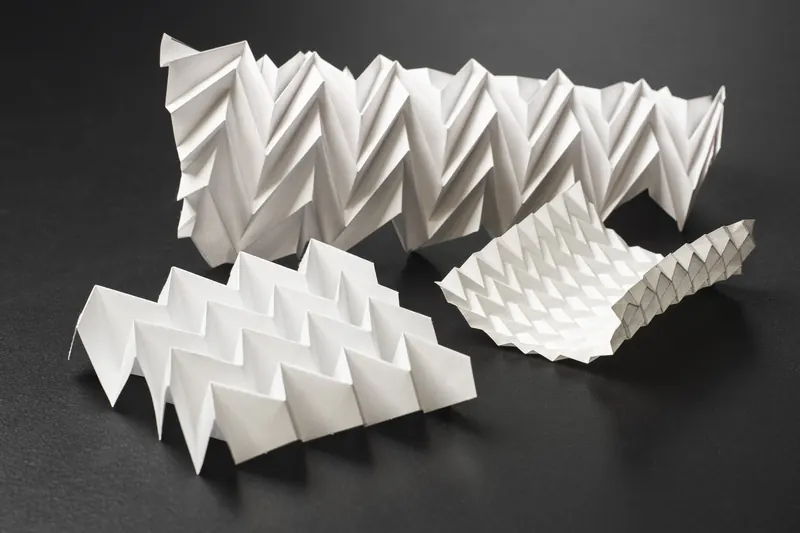
Origami today: super complex models, graphic paper and the Miura fold
Origami in Japan did not stop at the crane. Three very different strands show how far it has travelled: artists who fold extraordinary detail from one sheet, designers who print bold graphics on paper, and engineers who use folding to open structures in space.
Super complex origami
Highlighting Japan describes "super complex" origami as intricate, finely worked pieces folded from one sheet, with so much detail that viewers struggle to believe no second sheet was used. Kamiya Satoshi, born in Nagoya in 1981, began folding at three, and by the age of ten was working from books meant for adult folders. At 17 he won a TV origami championship and kept the title. His Ryu-zin 3.5, made in 2005, took about a month to fold from a sheet two metres square and stands 20 cm tall. When he studied in the United States from 2000, he found good paper hard to come by, and learned again how much paper quality matters from artists who made their own sheets by hand.
Modern origami in three numbers
- 460folds in Miyamoto Chuya's Grim Reaper, from one square
- 2 meach side of the sheet used for Kamiya Satoshi's Ryu-zin 3.5
- 14 meach side of the solar sail of JAXA's IKAROS craft
Graphic origami
The design group COCHAE, formed in 2003, set out to make origami more cool. At that time, origami was usually folded from plain paper, so their sheets printed with bright images and patterns were new. Their Classic Origami kit has six traditional models, including a crane, a turtle and a samurai helmet, each printed with a pattern that fits the finished shape, and Highlighting Japan says it has become a popular gift to take abroad.
The Miura fold and folding in space
In 1970 Miura Koryo, a professor emeritus of the University of Tokyo, devised the Miura fold, which lets a large sheet open out and fold away quickly when you pull or push on its diagonals. In Japan it turns up in handy maps, sightseeing leaflets and railway maps. It was first worked out for structures in space.
Folding in space
- 1995: the Space Flyer Unit satellite used the Miura fold to stow and open its solar panels.
- May 2010: JAXA launched IKAROS, a small craft built to show for the first time anywhere that a solar power sail could work. Its square sail was about 14 metres on each side and only 7.5 microns thick, and its team tested folding methods with paper first.
The Origami Kaikan's director also points to architecture and aviation as fields where origami engineering is now at work.
Three faces of modern origami
- Art: single-sheet figures and insects with hundreds of folds.
- Design: printed kits and packaging that make simple folds look new.
- Engineering: maps, solar panels and sails that open out and fold away quickly.
Frequently asked questions
Is origami Japanese or Chinese?
Both countries play a part. Paper was invented in China and reached Japan from there, and Europe had its own paper folding too. But origami as a named art, with its own folds, books and teachers, was developed in Japan, and the Japanese word is now used around the world.
What does origami mean?
It means folding paper, from the Japanese oru, to fold, and kami, paper. It usually means folding one square sheet into a shape without glue.
Why is the paper crane a symbol of peace?
Because of Sasaki Sadako, a Hiroshima girl who was two when the atomic bomb hit her city and who died of leukaemia in 1955 at 12, folding cranes to the end. Her death inspired the Children's Peace Monument, and millions of cranes are offered there every year.
Where can I learn origami in Tokyo?
The Ochanomizu Origami Kaikan runs booked classes and mini lessons on set dates, so check its calendar first. At the Tokyo Origami Museum in Sumida, a teacher sometimes shows visitors simple pieces on Saturday and Sunday afternoons.
Is the Origami Kaikan free?
Yes. Entry to the building and its gallery is free; hours are 9:30 to 16:30, Monday to Saturday. Classes are booked separately.
What paper is best for origami?
For beginners, standard thin origami paper, coloured on one side. For linked cranes or tough folds, washi made from long plant fibres. For very complex models, artists stress that paper quality matters.
Can I send paper cranes to Hiroshima?
Yes. The City of Hiroshima accepts cranes by post and places them at the Children's Peace Monument for you. You pay the postage and cannot choose the day. Tie the cranes in bundles no more than 150 cm long and 25 cm wide.
Sources
Official and primary sources used for this page. Checked November 10, 2026.
- Government of Japan: Highlighting Japan, The World of Origami — Yamaguchi interview: history, Europe, 1797 book
- Government of Japan: Highlighting Japan, Super Complex Origami — Kamiya Satoshi
- Government of Japan: Highlighting Japan, Origami Techniques Applied to Space Development — Miura fold, IKAROS
- Government of Japan: Highlighting Japan, Renzuru — Kuwana linked cranes
- Government of Japan: Highlighting Japan, Making Origami Cool — COCHAE
Show all 34 sources
- JNTO: One Fold At A Time — meaning of the word
- JNTO: Cultural Experiences in Tokyo — Kaikan classes
- JNTO: Paper Museum — museum history, floors, access
- Paper Museum: Home — exhibition dates, workshop
- Paper Museum: Special Exhibition — hours, closed days
- GO TOKYO: Ochanomizu Origami Kaikan — classes, hours, access
- Tokyo Metropolitan Government: Tokyo Updates, Paper Magic — Kobayashi Kazuo, first origami paper
- Ochanomizu Origami Kaikan: Greeting (in Japanese) — founding, origins
- Ochanomizu Origami Kaikan: Access (in Japanese) — floors, stations
- Ochanomizu Origami Kaikan: Gallery (in Japanese) — gallery, current show
- Ochanomizu Origami Kaikan: Opening days (in Japanese) — closed days
- Nippon Origami Association: Home (in Japanese) — Origami Day, museum hours
- Nippon Origami Association: About (in Japanese) — history, museum, classes
- Nippon Origami Association: Access (in Japanese) — address, stations
- Kuwana City: Kuwana Linked Cranes (in Japanese) — Gido, folding rules
- Kuwana City: Kuwana no Senbazuru, Kids Page (in Japanese) — the 1797 book
- Kuwana City Museum: Guide and Access (in Japanese) — hours, fee, access
- Kuwana City Tourism: Choen-ji (in Japanese) — the temple
- City of Hiroshima: Paper Cranes and Children's Peace Monument — Sadako, sending cranes
- Hiroshima Peace Memorial Museum: Children's Peace Monument — monument facts
- Hiroshima Peace Memorial Museum: Sadako and the Paper Cranes — number of cranes
- Hiroshima Peace Memorial Museum: Sadako's Hope — letters and cranes
- Hiroshima Orizuru Tower: Orizuru Square — folding, wall
- Hiroshima Orizuru Tower: Tickets — prices, re-entry
- Hiroshima Orizuru Tower: Opening Hours — usual hours
- Hiroshima Orizuru Tower: Q&A — cranes, payment
- Hiroshima Orizuru Tower: Access — tram
- Hiroshima Orizuru Tower: Company — opening date
- DIVE! HIROSHIMA: Hiroshima Orizuru Tower — architect, views
Related guides
To cite or link to this page: Origami in Japan: the meaning of the word, Japanese or Chinese roots, its history from samurai gift folds to the 1797 crane book, the linked cranes of Kuwana, Hiroshima's paper cranes, classes and museums in Tokyo, and the paper to buy — Japan Pocket Guide, https://japanpocketguide.com/culture/origami-in-japan/