Culture · Ikebana
Ikebana in Japan: what it means, where it began, the main styles and schools, the basic rules, trial lessons in Kyoto and Tokyo, and exhibitions to see
Ikebana is the Japanese art of arranging plants, and it grew up in Kyoto more than five centuries ago in a six-sided temple that still stands at the heart of the city. This guide explains what ikebana means, how it developed, the styles and schools you will hear about, the basic rules and tools, where a visitor can try it in English in Kyoto and Tokyo, and when the big exhibitions are held.
Last checked · Sources

In short
Ikebana is the Japanese art of arranging branches, leaves and flowers in a container, with few materials, plenty of empty space and plants of the season. It took shape in Kyoto in the 15th century at Rokkakudo temple, home of Ikenobo, the oldest school. The main styles are rikka, shoka and free style, and there are thousands of schools, with Ikenobo, Sogetsu and Ohara among the best known. Visitors can try a lesson in English at Rokkakudo in Kyoto on Thursdays for ¥7,000, or in the Sogetsu International Class in Tokyo on Mondays, ¥6,000 for a first lesson.
What ikebana means
In the simplest terms, ikebana is an art made with plants. That is the Kyoto City Tourism Association's summary, and its guide adds that the art was born in Kyoto in the Muromachi period (1336-1573) and that the city is still the centre of ikebana today. A JNTO story on flower crafts gives the meaning of the word as "living flowers" and describes an art built on minimalism and asymmetry.
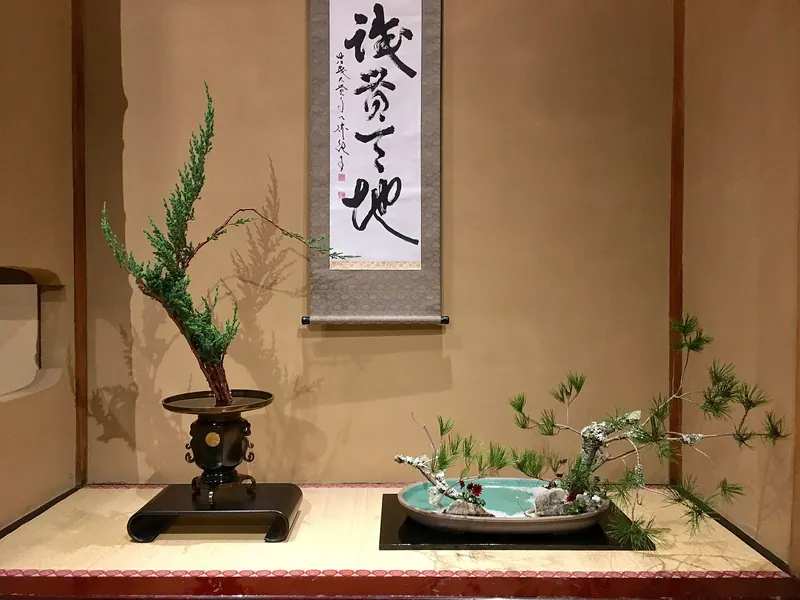
You will often see ikebana translated as Japanese flower arrangement, but the flowers are only part of it. Branches, leaves, grasses and the container all count, and so does the space left empty around them. A licensed ikebana teacher from the Koshu-ryu school, interviewed by JNTO, says the biggest difference from a Western bouquet is how little material is used. Western arrangements tend to be busy and full of blooms; in ikebana the aim is balance and space. "In Japan we value empty space." She links that idea to Zen Buddhism, where leaving room is meant to let the mind rest.
Ikebana words you will meet
- Ikebana: the art of arranging plants in a container, and the name most people know.
- Kado: another name for ikebana, the way of flowers, used for it as a discipline and a tradition.
- Iemoto: the grand master or head of a school; each school is led by one.
- -ryu: the ending on many school names, as in Koshu-ryu, Sogetsu-ryu and Ohara-ryu.
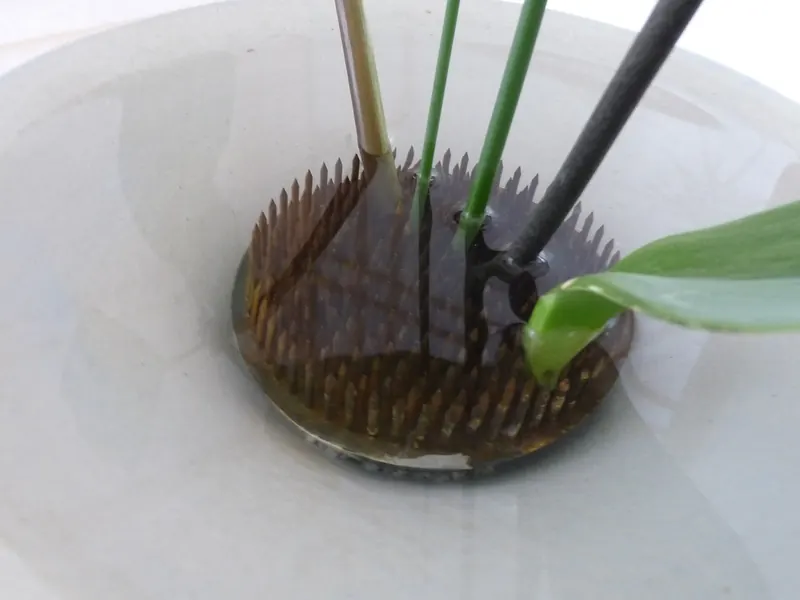
- Kenzan: the holder with needle points that keeps stems in place, often in a shallow dish.
- Tokonoma: the recessed alcove in a tatami room, where an arrangement is traditionally displayed.
Japan's Agency for Cultural Affairs gives a fuller definition. In its words, kado means choosing seasonal plants and flowers and a container to suit a traditional style, then using flower scissors and other tools and long-established techniques to shape the materials and set them in the container, so that the arrangement rebuilds a natural scene and a feeling of the season. Through the beauty and life of the plants, the person arranging them expresses the nature and season they have in mind, and something of their own outlook too.
Where ikebana began: Rokkakudo and six centuries of history
Ikenobo, the oldest school, traces ikebana to three things that came together in Japan. People had long enjoyed flowers for their own sake: with four clear seasons there is something in bloom all year, and early poetry collections like the Manyoshu and the Kokinwakashu are full of flower poems. Evergreen trees were treated as yorishiro, objects that divine spirits are called down to, and the pine kadomatsu set out at New Year is one form of that. And from the 6th century, when Buddhism arrived, flowers were offered on Buddhist altars.
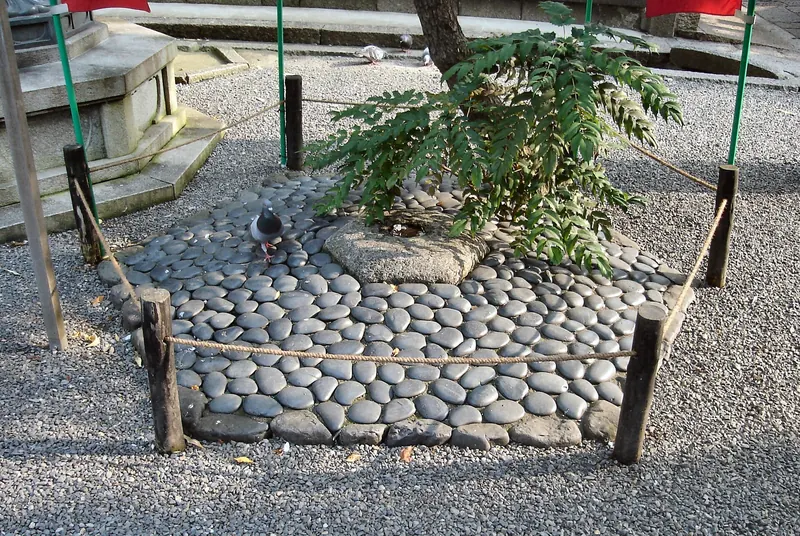
Three roots of ikebana, as Ikenobo tells it
- Looking at flowers: seasonal flowers admired in poetry and in cherry blossom viewing.
- Yorishiro: evergreens believed to receive divine spirits, like the New Year pine.
- Altar offerings: flowers placed before the Buddha after Buddhism reached Japan.
Not every account agrees on how old the art is. A JNTO page on cultural experiences says ikebana "originated thousands of years ago and was initially tied to Shintoism". Ikenobo, Kyoto's tourism association and Japan's Agency for Cultural Affairs all date ikebana as a formal art to the Muromachi period, and see the older customs of flower viewing, yorishiro and altar flowers as the ground it grew from. This guide follows those three.
Rokkakudo, the birthplace
The temple at the centre of the story is Rokkakudo, formally Shiunzan Chohoji, in central Kyoto. According to Kyoto's tourism association, Prince Shotoku built it, and its everyday name comes from the hexagonal main hall, rokkaku being the Japanese for hexagon. According to Ikenobo, the priests who made flower offerings there morning and evening lived in a hut (bo) beside a pond (ike), and that is how they came to be called Ikenobo. Ever since the Muromachi period, the temple's head priest has also been the headmaster of the Ikenobo school.
The first named arranger appears in 1462. A diary kept by a Zen monk at Tofukuji, the Hekizan nichiroku, records that Senkei Ikenobo, a priest at Rokkakudo, was asked to arrange flowers for a warrior, and that the people of Kyoto admired the work. Within the first fifty years of the 16th century, a theory of the art that went beyond technique was set down by Senno Ikenobo. His teaching, known as the Ikenobo Senno Kuden, says that ikebana is more than admiring pretty flowers: "For plants arranged in a vase it is important to observe their inner essence and express their natural form." Even a dry branch could be valued. The novelist Yasunari Kawabata quoted that idea in his Nobel Prize speech, and it became known around the world.
From temple altars to the tea room and the townhouse
Over the next centuries the art grew larger, then simpler, then spread to everyone. In the 16th century, as tea grew into a formal art under Sen no Rikyu, flowers became a fixed part of the tea room, and the JNTO interview adds that warriors studied ikebana alongside the military arts. Large alcoves in castles called for large arrangements, and in 1594 Senko Ikenobo I made a huge sunanomono rikka, set on a bed of white pebbles, for Toyotomi Hideyoshi's visit to the house of Maeda Toshiie.
Under Senko Ikenobo II, Emperor Gomizuno-o held rikka gatherings at court, and a Tanabata rikka gathering at Rokkakudo became a yearly event for Kyoto. That gathering still exists as the November exhibition described further down. As rikka spread among wealthy townspeople, a simpler style was wanted, and in the mid-18th century it was formalised as shoka. In 1879 Sensho Ikenobo began teaching at a women's school in Kyoto, and the share of women in ikebana rose quickly from then on.
Six centuries of ikebana in nine dates
- 1462: Senkei Ikenobo of Rokkakudo is praised in Kyoto for his flowers, the first record of the Ikenobo name.
- 1486-1499: dates noted at the close of the Kao irai no Kadensho, believed to be the oldest surviving ikebana manuscript.
- 1594: Senko Ikenobo I makes a large sunanomono rikka for Toyotomi Hideyoshi.
- 1692: two Ikenobo pupils make rikka 9 metres tall for the restored Great Buddha at Todaiji in Nara.
- 1797: Senjo Ikenobo publishes a book of rikka drawings; in his time branches start to be cut and joined, and rikka goes from seven main branches to nine.
- 1879: Sensho Ikenobo starts teaching at a women's school in Kyoto.
- 1895: Unshin Ohara founds the Ohara school with moribana, flowers in a shallow dish.
- 1927: Sofu Teshigahara founds Sogetsu, treating ikebana as a creative art.
- 1977: the Ikenobo Headquarters building is completed in Kyoto, and its Ikebana History Museum is founded.
The Agency for Cultural Affairs tells the same story from the outside. Upright tatebana arrangements were made for events and rooms from the Muromachi period; the rikka style was settled in the early Edo period, and a book of rikka drawings came out in 1698. A freer way of arranging, nageire, was popular with merchants, with a guide printed in 1684; the shoka or seika style developed in the late Edo period; and moribana came in the Meiji period, when Western ways changed how people lived.
Ikebana styles: rikka, shoka, free style and moribana
Every school has its own forms, but the same few names keep appearing. The Koshu-ryu teacher in the JNTO interview sorts them broadly into three: a formal style, a free style and a standing style, each with many forms and rules inside it. Some forms use branches from a single tree with no flowers at all; others are abstract and contemporary.
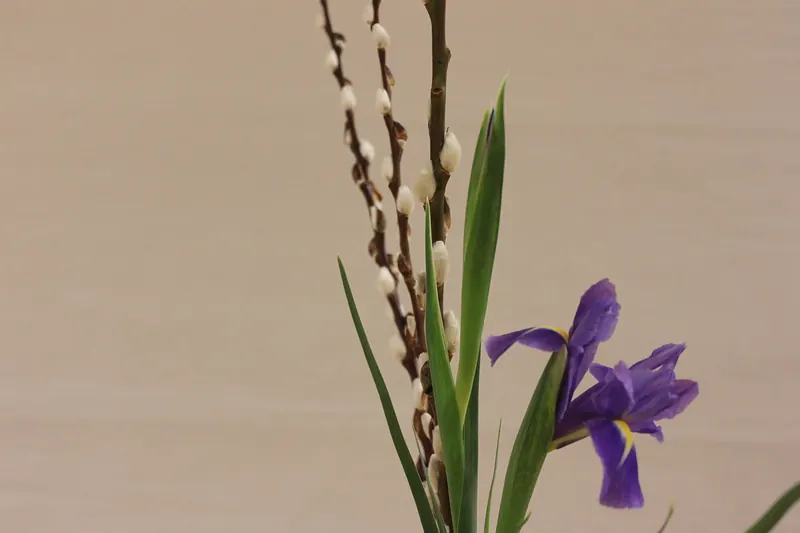
The three styles taught at Ikenobo are a good map of the whole field, and Kyoto's tourism association uses them to explain ikebana to visitors.
The three styles taught at Ikenobo
- Rikka: the oldest style, from the Muromachi period; a whole landscape in a vase, with trees standing for mountains and grasses for water.
- Shoka: from the mid-Edo period; one to three kinds of flower, showing the moment a flower comes to life. Less demanding than rikka, it was taken up widely by ordinary people and by women.
- Jiyuka: free style, a recent form that reflects modern ways of living; plants can be seen from many angles and placed as the maker likes.
The Kyoto guide says rikka is based on tatebana, flowers placed in a vase before the Buddha. A 16th-century book of Ikenobo teachings includes a skeleton drawing of a style with seven main parts, the yakueda, and that style later came to be called rikka. For shoka, Sensho Ikenobo set out shofutai, a form that was simple to learn and to pass on, and published a textbook, Hana no Shiori, in 1904. Free style has "no set formula", in the words of the Kyoto guide, and the person arranging decides how the plants are shown.
Nageire and moribana
Two more names cover a great deal of what you will see. Nageire puts materials in a vase so that they keep their natural shape, and dates from the Edo period; moribana arranges them in a shallow dish. Ikenobo's history says both took shape in the Meiji period as ikebana for the more Western way of life of the time. Ikenobo took them into its teaching as oyobana, an application of rikka and shoka, and set guidelines for them in 1934. After the Second World War, the styles that came from them began to be called free style.
The Ohara school claims moribana as its own invention. Its founder, Unshin Ohara, drew on his years as a sculptor to design shallow dishes and bowls for the Western flowers then arriving in Japan, and the school dates its founding to 1895. Ohara says the picture most people have of ikebana, a flat dish with a needle holder, began with it, and that moribana is now used across many schools.
Three styles from the Ohara school
- Moribana: a flat dish (suiban), with the materials heaped up to spread across the surface.
- Heika: a vase arrangement in the line of Edo-period nageire, adjusted to suit modern taste.
- Hana-isho: made for today's rooms and the wider range of flowers now sold; some types can be seen from several directions. Easy to arrange and remember, it is the first style Ohara students learn.
At the free end of the scale is Sogetsu, which the JNTO interview singles out for using man-made materials such as wire and metal. In 1927, when most people thought ikebana meant following set forms, its founder treated it as a creative art, and the school's own summary is short: "Anyone can enjoy Sogetsu Ikebana anytime, anywhere, using any material." Its third headmaster, Hiroshi Teshigahara, opened a new era with works in bamboo, and the school says its work suits lobbies and banquet rooms in hotels, shop windows and big public spaces as well as homes.
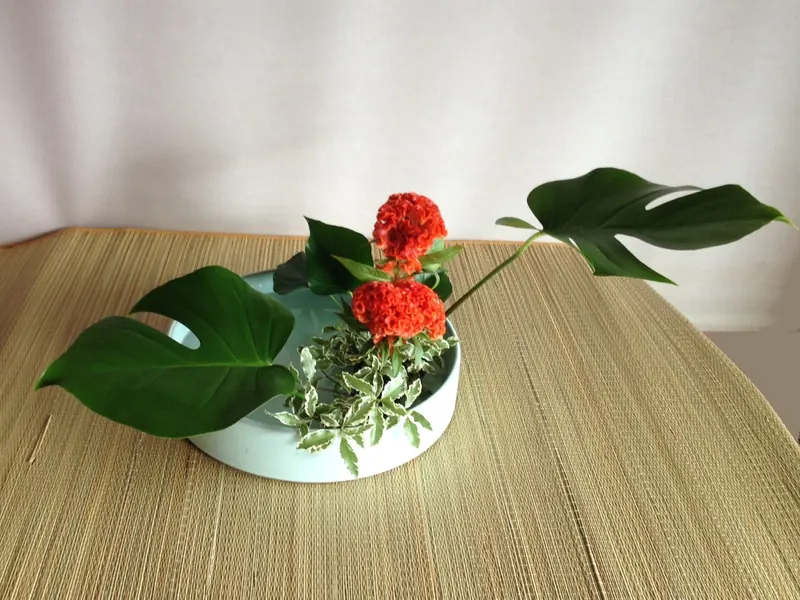
Ikebana schools: Ikenobo, Sogetsu, Ohara and more
How many schools are there? The JNTO interview puts the number at around 3,000 to 4,000, each with its own style and its own iemoto. Most visitors will only meet a handful, and the table below sets out the ones in this guide. A practitioner usually belongs to one school and keeps studying there for years, even after becoming a teacher.
Ikebana by the numbers
- 3,000+schools in Japan, by one teacher's count
- 120Sogetsu branches and study groups in 38 countries and regions
- 7,000members of Ikebana International, in nearly 140 chapters
| School | Began | Base | Known for |
|---|---|---|---|
| Ikenobo | Late 15th century | Rokkakudo, Kyoto | The oldest and largest school; rikka, shoka and free style |
| Saga Goryu | Passed down at Daikakuji | Daikakuji, Kyoto | Arrangements shown at the temple's spring festival |
| Koshu-ryu | About 120 years ago | Nara | A family-run school |
| Ohara | 1895 | Minami-Aoyama, Tokyo | Moribana in shallow dishes |
| Sogetsu | 1927 | Sogetsu Kaikan, Akasaka, Tokyo | Free, creative work in any material |
| Ichiyo | No date in the sources used | Nakano, Tokyo | Free-flowing work with an emphasis on self-expression |
Ikenobo
The JNTO interview calls Ikenobo the oldest school and the largest today, with branches abroad. Its headquarters stand next to Rokkakudo in Kyoto, with offices in Tokyo since 1889 and in San Francisco since 1968, and it set up a junior college in 1952. Ikenobo is clear that learning never stops: "the study of ikebana is never finished", and only your own teacher can give permission to start teaching students of your own.
Sogetsu
Sofu Teshigahara, born in 1900, learned ikebana as a child. He grew uneasy with a tradition that left no room for personal expression, and in 1927 he left his father's teaching and set up a school of his own. The first Sogetsu exhibition came in 1928, at the Senbikiya fruit parlour in Ginza; his light, modern work was a hit, and NHK radio took him on to teach its ikebana lessons. Between 1950 and 1970 he gave exhibitions and demonstrations across Europe and the United States. Sogetsu turns 100 in 2027.
Sogetsu's four headmasters
- Sofu Teshigahara: the founder and first iemoto, from 1927.
- Kasumi: his eldest daughter, the second iemoto.
- Hiroshi: the third, from 1980, when illness stopped Kasumi.
- Akane: Hiroshi's second daughter, the fourth, leading the school since 2001.
Ohara
Unshin Ohara (1861-1916) was born into a potter's family in Matsue, in Shimane, and worked as a sculptor in Osaka before poor health turned him to ikebana. His son Koun built the first branch network in the ikebana world and spread the school nationwide; the third headmaster, Houn, took part with Sofu Teshigahara in the avant-garde ikebana movement, and the two held a joint exhibition in 1945. The present headmaster, Hiroki Ohara, took over in 1995 at the age of six. The school says its courses are set out in stages, so that the content is the same in every classroom.
Saga Goryu, Koshu-ryu and Ichiyo
Saga Goryu has been handed down for generations at Daikakuji Temple in Kyoto, a temple once linked to the Saga Imperial Palace. Koshu-ryu, the school of the teacher in the JNTO interview, began in Nara about 120 years ago and is still run by the founding family. The Ichiyo School, based in Nakano in Tokyo, runs beginners' workshops that GO TOKYO, the city's tourism site, describes below in the classes section.
The group's motto is "Friendship through Flowers", and it now reaches over 44 countries and areas.
The basic rules, tools and vases
Each school has its own rules, but a few ideas run through nearly all of them. The first is restraint: a handful of branches and flowers, not a full bunch, with the space around them treated as part of the work. The second is structure. The Koshu-ryu teacher explains that an arrangement is built on three lines of different height, made by the longest, middle and shortest branches. "These represent earth, heaven and humankind." Arranged well, she says, the three lines show everything in balance.
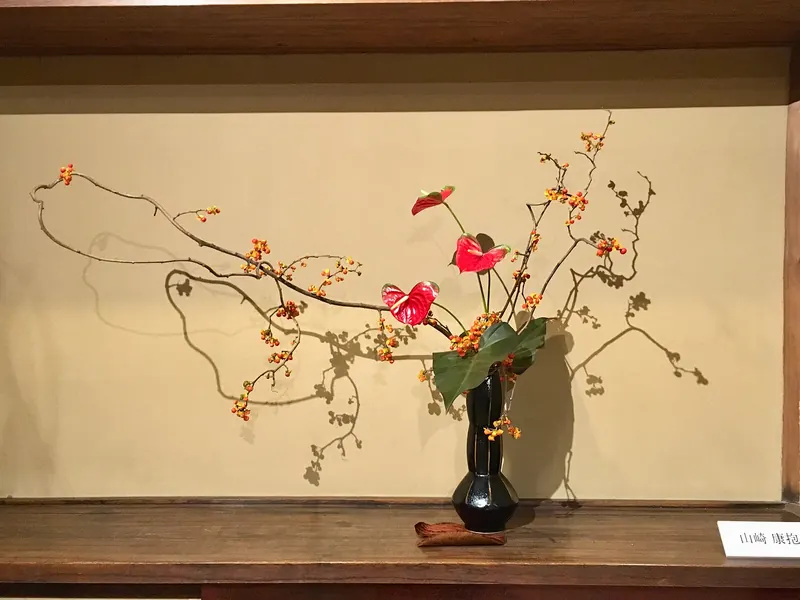
The third idea is the season. Plants are chosen for what is growing now, and an ikebana teacher in Kyoto reads the year through them: plum and cherry in spring, wintersweet (robai) with its soft yellow flowers in late February, daffodils in early spring, Japanese irises as the cherry season ends, then wisteria and azaleas, hydrangeas and lotuses over summer, chrysanthemums as autumn ends and camellias through the winter.
Ideas that run through most schools
- Few materials: a small number of stems rather than a crowded vase.
- Empty space: the gaps between stems matter as much as the stems.
- Three main lines: long, middle and short branches at different heights.
- The season: plants of the moment, often picked rather than bought.
- Natural form: each plant shown as it grows, buds and bare branches included.
That last point goes back to the Senno teaching quoted earlier, and it is why a bare branch, a bud or a fading flower can earn a place. The teacher in the JNTO interview learned it from her mother, who told her "there’s no need to buy special flowers for ikebana": grasses and branches from the fields nearby will do.
Tools and containers
The kit is small. At an Ikenobo trial lesson the vases, the needle holder and the scissors are all lent for the session, and Sogetsu says every item needed for lessons can be borrowed, so there is nothing to buy before you start.
The basic ikebana kit
- Ikebana scissors: the most basic tool, in the words of the Kyoto guide.
- Kenzan: the needle holder that grips the stems in a shallow dish.
- Suiban: the flat dish used for moribana.
- Vase: a tall container for vase styles such as nageire and heika.
- Hand towel and flower bag: on Sogetsu's list of what a student needs, with the textbooks and something to write with.
Sogetsu suggests buying your own tools a little at a time, once you know which ones you find easy to use. The shop on the 4th floor of Sogetsu Kaikan in Tokyo sells textbooks, vases and scissors, and Ikenobo says its supplies and books can be bought by anyone, not only members, including from abroad.
Ikebana classes and workshops in Kyoto and Tokyo
No experience is needed to try ikebana. JNTO notes that beginner's classes can be found in most major cities, and the two big schools both run lessons that welcome visitors in English. There are two ways in: a one-off trial lesson, where you make a single arrangement and take the plants home, or a regular class, which is how Japanese students learn. The table sets out the options in this guide; prices are the ones the organisers publish, and where they publish none, this site does not quote one.
| Lesson | City | When | Language | Price |
|---|---|---|---|---|
| Ikenobo trial lesson | Kyoto, Rokkakudo | Thursdays, 13:30-15:30, on listed dates | English or Chinese guide | ¥7,000 |
| Sogetsu WEST class | Kyoto, one stop from Kyoto Station | 3 times a month, Fridays and Saturdays | Not stated | This site does not quote one |
| Sakura Japanese Culture Experience | Kyoto, near Nijo Castle | Not stated | English-speaking staff | This site does not quote one |
| Sogetsu International Class | Tokyo, Sogetsu Kaikan in Akasaka | Mondays, 10:30-12:30 | English | ¥6,000 first lesson, ¥7,000 after |
| Sogetsu Iemoto Class | Tokyo, Sogetsu Kaikan | Tuesdays and Thursdays, weeks 1-3 | Japanese, with some English help | This site does not quote one |
| Ichiyo School workshop | Tokyo, Nakano | Not stated | Japanese and English | This site does not quote one |
| Mika Otani private lesson | Tokyo, Minami-Aoyama | Not stated | English | This site does not quote one |
Kyoto: a trial lesson at Rokkakudo
The most direct way to try ikebana where it began is the Ikenobo trial lesson for visitors, held in the Ikenobo Headquarters building beside Rokkakudo. Bookings are made by email to the Ikenobo office, using the address on its trial lesson page; give your name, the date you want, a way to contact you and how you will pay.
Sogetsu also teaches in Kyoto. Sogetsu WEST opened on 1 August 2020 at street level in Hotel Emion Kyoto, one station from Kyoto Station, and holds its class three times a month on Fridays and Saturdays. Kyoto's tourism association also points visitors to Sakura Japanese Culture Experience near Nijo Castle, where an Ikenobo instructor teaches and English-speaking staff are on hand; tea ceremony and sushi rolls can be tried there too.
Tokyo: the Sogetsu International Class
In Tokyo, the Sogetsu Headquarters at Sogetsu Kaikan in Akasaka runs a weekly class in English, mainly for non-Japanese speakers. It is open to all levels, and first-timers can join a one-off introductory lesson.
A trial lesson at Sogetsu takes 90 to 120 minutes, and there is nothing to bring.
How a Sogetsu trial lesson runs
- Check in: go to the reception desk by your booking time; staff take you to the classroom, where regular students are arriving too.
- Learn the basics: technical instructors show how to handle plants, ikebana scissors and the kenzan.
- Choose and arrange: you pick your own plants and container freely, then make your arrangement with help on hand.
- Watch a demonstration: the instructor makes an arrangement, then comments on each student's work in turn.
- Take it home: the plants you used are yours to take away and arrange again.
The International Class is not the only choice. The Iemoto Class runs on Tuesdays and Thursdays in the first three weeks of each month, at 10:30, 14:00 and 18:00; it is taught in Japanese, with an English-speaking technical instructor to help visitors. There is also a men-only class on Friday evenings, in Japanese.
Sogetsu Kaikan
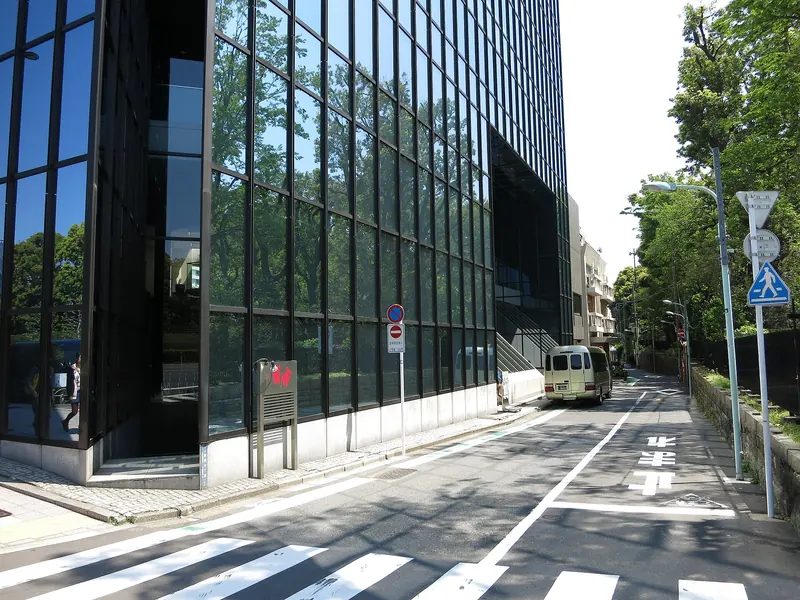
The building itself is worth a look. Kenzo Tange designed it, and building work finished in 1977. The walk takes 5 minutes from exit 4 of Aoyama-itchome station, or 10 from exit 3 of Akasaka-mitsuke station. It is open on weekdays, 9:30-17:30.
Inside Sogetsu Kaikan
- Sogetsu Plaza: an indoor stone garden called Heaven, designed by Isamu Noguchi at Sofu Teshigahara's request and finished in 1978; the Plaza is not taking reservations now, but you can see it from the coffee shop or the 2nd-floor lounge on weekdays, 10:00-18:00.
- 3rd floor: a library of art magazines and exhibition catalogues, open to the public by reservation.
- 4th floor: a shop selling textbooks, vases, scissors and other basic items.
- 5th floor: a Japanese room with seasonal ikebana, one large work and one small, alongside objects by past headmasters and hanging scrolls.
Tokyo: Ichiyo and private lessons
Beyond Sogetsu, two smaller options in Tokyo teach in English.
Two more ways to learn in Tokyo
- Ichiyo School workshop: for beginners, in Nakano. As GO TOKYO describes it, the session starts with an explanation of the basics and the thinking behind ikebana, all materials are provided, and then you make your own free-flowing arrangement; it runs in both Japanese and English, and you need to book.
- Private lesson with Mika Otani: one-to-one, in English, at Atelier Soka, the studio of this Sogetsu artist in Minami-Aoyama. JNTO says the lessons suit any level, include vases, scissors and flowers, and run as a demonstration followed by your own arrangement with individual advice; you take the flowers home. Bookings go through the studio.
Taking regular classes
If one lesson leads to more, regular study is open to anyone. Sogetsu teachers everywhere use the same textbooks; students usually pay for three lessons a month, and there are 12 levels of certificate and diploma. Sogetsu's answer to when to start is simple: "Any time is the right time to start taking lessons." Its students range from 3 years old to people in their 90s, and some beginners reach a teacher's diploma in about three years. Ikenobo's own Headquarters classes are only for students who have already begun with an Ikenobo teacher at home and hold at least four Ikenobo diplomas, and it offers no courses by correspondence or video.
Ikebana exhibitions: when and where to see it
Seeing good ikebana is easier than making it. Kyoto holds large exhibitions every year, and a single visit can show you hundreds of works by teachers and senior students side by side, in every style from towering rikka to free style.
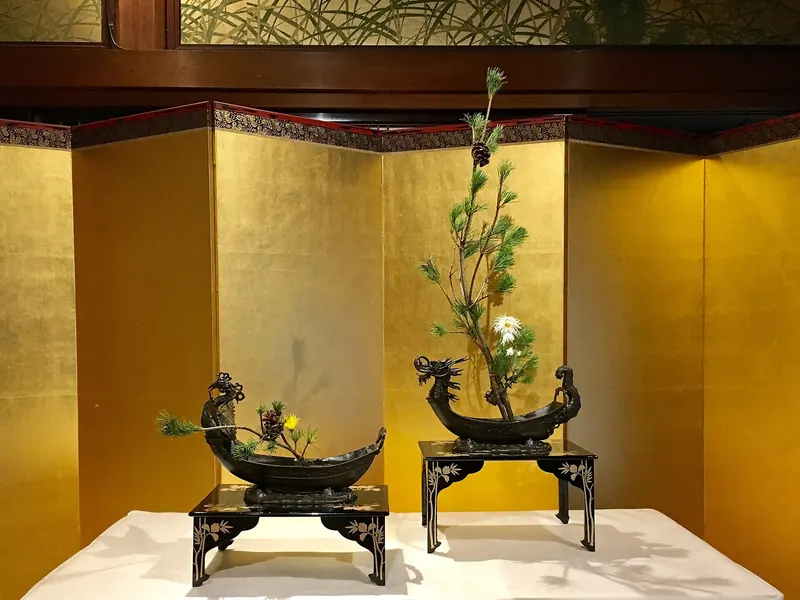
The ikebana year in Kyoto
- 5 January: Hatsuike, the first arranging of the year, a ceremony and exhibition at Ikenobo Headquarters; free, but Ikenobo asks visitors to tell it by the third week of December.
- April: the Ikenobo Spring Exhibition beside Rokkakudo, about 700 works, mostly by students of the Ikenobo Central Training Institute; tickets at the entrance.
- Spring: the Emperor Saga Dedication Flower Arrangement Festival at Daikakuji, with many Saga Goryu works.
- Spring: Kado Kyoten, the city's largest ikebana festival, held since 1950, with works from 29 schools of the Kyoto Ikebana Association in the Daimaru Museum, inside the Daimaru Kyoto store.
- November: Kyu-Tanabatakai, about 900 works by Ikenobo masters and arrangers from all over Japan.
The November show has the longest history. Kyoto's tourism association calls it Japan's oldest ikebana exhibition, and Ikenobo traces it to the Tanabata rikka gatherings Emperor Gomizuno-o held at court. Early in the Edo period the gathering moved to Rokkakudo, and when the seasonal festivals were abolished in the Meiji era, Sensho Ikenobo kept it going under a new name, Kyu-Tanabatakai, the old Tanabata gathering. In 2026, linked to the 400th anniversary of the emperor's 1626 procession to Nijo Castle, one corner recreates rikka by Senko Ikenobo II.
Frequently asked questions
What is ikebana?
Ikebana is the Japanese art of arranging branches, leaves, grasses and flowers in a container. It uses few materials, leaves room for empty space and follows the season. It took shape in Kyoto in the Muromachi period, and it is also called kado, the way of flowers.
What does the word ikebana mean?
JNTO explains the word as meaning living flowers. In English it is often called Japanese flower arrangement, though branches, leaves and the container matter as much as the flowers.
What are the main styles of ikebana?
The best-known are rikka, the oldest and grandest; shoka, a simpler style with one to three kinds of plant; and jiyuka, free style. Moribana, arranged in a flat dish, and nageire, arranged in a tall vase, are also widely taught.
What is the oldest school of ikebana?
Ikenobo, which began at Rokkakudo temple in Kyoto late in the 15th century. The temple's head priest also serves as the school's headmaster, and Ikenobo is the largest school today.
Where can I take an ikebana class in English?
In Kyoto, Ikenobo runs a trial lesson at Rokkakudo on Thursday afternoons with an English or Chinese guide. In Tokyo, Sogetsu holds its International Class in English on Monday mornings at Sogetsu Kaikan in Akasaka, and the Ichiyo School and some private teachers also teach in English.
How much does an ikebana lesson cost?
The Ikenobo trial lesson in Kyoto is ¥7,000 per person. The Sogetsu International Class in Tokyo is ¥6,000 for a first lesson and ¥7,000 after that, including plants and tax. Other teachers set their own fees.
What tools do I need to start?
For a trial lesson, nothing: the school lends the scissors, needle holder and container. At home, flower scissors are the basic tool, and a glass, plate or empty can will do as a vase for free style.
Can children learn ikebana?
Yes. Sogetsu holds regular children's classes at its Tokyo headquarters, open from age 3, and its students range from small children to people in their 90s. High school students and anyone younger can see the November Kyu-Tanabatakai exhibition free.
Sources
Official and primary sources used for this page. Checked November 8, 2026.
- JNTO (Australia): The Art of Ikebana — Koshu-ryu teacher's interview: roots, empty space, three lines, schools, seasons, styles
- JNTO Luxury: Private ikebana experiences — Mika Otani's private lessons
- JNTO: Cultural experiences — the older origin claim, beginner's classes
- JNTO (Singapore): Get hands-on with unique flower crafts in Japan — meaning of the word
- Kyoto City Tourism Association: Ikebana, Japanese art of flower arrangement originating from Kyoto — origins, three styles, Kyoto exhibitions, Rokkakudo, Sakura, trying it at home
Show all 22 sources
- Ikenobo: History of Ikebana — roots, dates, styles, shimputai
- Ikenobo: Rokkakudo Temple — name, headmaster, navel stone, access, spring show
- Ikenobo: Trial lesson for visitors — times, fee, dates, rules, tools
- Ikenobo: FAQ — exhibitions, Headquarters classes, supplies, becoming a teacher
- Ikenobo: Kyu-Tanabatakai national exhibition 2026 (in Japanese) — dates, venues, hours, tickets, history
- Sogetsu: Ikebana trial lesson — venues, classes, lesson flow, length, Sogetsu WEST
- Sogetsu: International Class — day, time, fees, booking, dates
- Sogetsu: Lesson FAQ — textbooks, fees, ages, tools, certificates
- Sogetsu: Sogetsu Plaza — Noguchi's Heaven, viewing
- Sogetsu: Sogetsu Kaikan — architect, access, floors, Sogetsu WEST
- Sogetsu: What is Sogetsu? — founding idea, branches abroad
- Sogetsu: Sofu Teshigahara — the founder's life
- Sogetsu: 100 years of history — headmasters, centenary
- Ohara School: About the Ohara School (in Japanese) — moribana, styles, headmasters
- Ikebana International: About us — founding, members, motto
- Agency for Cultural Affairs: Registering kado as an intangible cultural property (in Japanese) — definition, history, 2024 registration
- GO TOKYO: Embrace mindfulness with traditional Japanese practices in Tokyo — Ichiyo School workshop
Related guides
To cite or link to this page: Ikebana in Japan: what it means, where it began, the main styles and schools, the basic rules, trial lessons in Kyoto and Tokyo, and exhibitions to see — Japan Pocket Guide, https://japanpocketguide.com/culture/ikebana-in-japan/