Things to do · Flower fields
Furano lavender fields: the best time to visit, which field to choose, and how to get there
Furano is the valley in central Hokkaido where lavender was once grown for perfume and is now grown to be looked at. This guide covers when the fields flower, by variety and by field; what Farm Tomita, Lavender East, Hinode Park and Hokuseiyama each offer and cost; the 2026 festival dates; lavender soft serve; and the trains, buses and car parks that get you there. Opening periods, fares and timetables are those published for 2026 by the farms, the area's tourism associations, JR Hokkaido and Furano Bus, checked on 12 October 2026; the 2027 dates had not been announced when this page was written.
Last checked · Sources

In short
July. The Furano Tourism Association gives mid to late July as the best season, Farm Tomita lists early to mid-July as the best viewing for its main lavender fields and for Lavender East, and Kamifurano's tourism association says Hinode Park is usually at its best from early to late July. Early varieties open from late June, late ones last into early August, and most lavender is cut in August. Farm Tomita and Hinode Park are free to enter; in 2026 Lavender East opened from 20 June to 20 July.
When is the best time to see the lavender in Furano?
July. Asked for the best season, the Furano Tourism Association answers in one sentence: "Mid July to late July is the best season for lavender." The Japan National Tourism Organization (JNTO) puts it more loosely on its Furano page, "Blooms are at their peak in July", and gives mid-June to early August as the wider window for the valley's flowers of every kind.
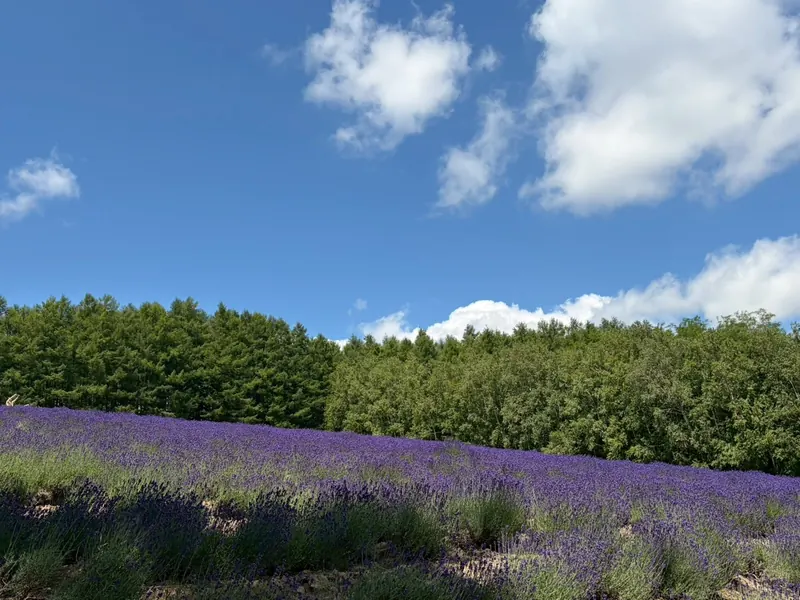
The answer is a range and not a date because the fields are planted with several varieties that open one after another. In practice the season falls into three parts:
- Late June to early July: the early varieties. The association's bloom page says that "early varieties begin blooming from late June". At Hinode Park in 2026 the early variety was first rated as worth seeing on 30 June.
- Early to late July: the peak. Farm Tomita lists early to mid-July as the best viewing season for its Traditional Lavender Field, Sakiwai Field, Lavender Forest Field and Lavender East, and mid- to late July for its Irodori Field, Forest Field and Hilltop Field. In Kamifurano, the town's tourism association says Hinode Park is normally at its best from the start of July to the last part of the month.
- Late July to mid-August: the late varieties. The association again: "Later varieties can be enjoyed through early August, however, some farms begin cutting back the flowers in August to preserve the roots." Farm Tomita's Lavandin Field, planted with a late kind of lavender, is listed as flowering from late July to mid-August.
If your dates are fixed and fall in August, read the association's warning before you book anything: "Most lavender is cut down in August to prepare for the following year, so you may not be able to see it in August."
Every date on this page is one published for the 2026 season, and that season is over. Farm Tomita's Japanese page for Lavender East says its 2026 opening has ended, Hinode Park's lavender was being cut by 3 August, and the summer-only tourist train made its last run on 23 September. None of the farms, towns or transport companies had announced 2027 dates when this page was written on 12 October 2026. Treat the 2026 dates as a guide to the pattern, and check the official pages listed under Sources before you fix a day.
Furano lavender season month by month
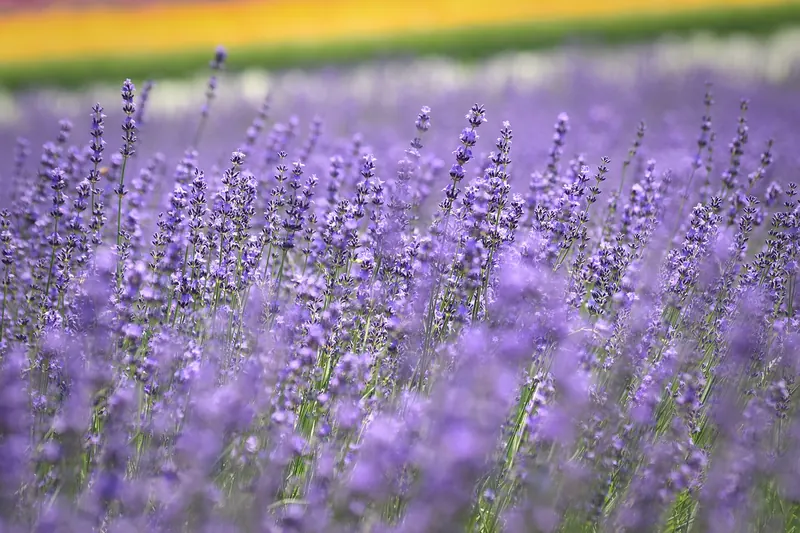
| Month | Lavender outdoors | Other flowers and events |
|---|---|---|
| May | None | Cherry blossom in the first ten days of the month; Farm Tomita's Spring Field from the middle of the month |
| June | Early varieties from late June | Lupins and Japanese roses; Spring Field at its best in early to mid-June; Lavender East opened on 20 June in 2026 |
| July | Peak | Poppies and garden catchfly; Irodori Field at its best in mid- to late July; Lavender Festa Kamifurano |
| August | Late varieties to early August, Lavandin to mid-August; most of the rest is cut | Ageratum and dahlias; Nakafurano's fireworks festival on 1 August in 2026 |
| September | None | Salvia, marigolds and cockscomb; Hanabito Field and Autumn Field at their best until late September |
| October | None | Farm Tomita's flower fields until early in the month; first snow from late October |
| November to April | None | Lavender indoors in Farm Tomita's Greenhouse; snow on the fields |
The flowers named for June to September are the ones Hokkaido's official tourism site lists in its calendar for Farm Tomita; the field names and periods are from the farm's own field guide.
May. There is no lavender in flower outdoors. What Furano has in May is cherry blossom, which the tourism association puts in the first ten days of the month, and at Farm Tomita the Spring Field, listed as flowering from mid-May. The farm's Greenhouse is the one place to see lavender: "Lavenders bloom all year round, except in summer, in this indoor field, bringing visitors the charm of lavenders any time of year."
June. The first three weeks belong to other flowers. Farm Tomita describes its Spring Field as planted with Iceland poppies, oriental poppies and chives, at their best in early to mid-June. Lavender starts at the very end of the month, and only the early varieties. If you can only come in June, come in the last few days of it.
July. The month to come. Every lavender field at Farm Tomita is listed as in flower for at least part of July, Lavender East is open, the Hokuseiyama lift is running and Kamifurano holds its festa. It is also the month when the roads and car parks are at their fullest; Nakafurano town charges for its car park near Farm Tomita in summer for that reason.
August. In the first week there is still lavender in most fields. After that, look for the late kinds: Farm Tomita's Lavandin Field is listed to mid-August, and the association says the lavender at the Rokugo Viewing Platform in Furano City "can be viewed well into early August". The valley's other flowers carry on, and the association adds one more: "Sunflowers are in bloom between July and October."
September. No lavender. Farm Tomita gives its Hanabito Field and Autumn Field a best viewing season that runs from early July to late September, and its field guide describes the Autumn Field as planted with spider flowers and other flowers that last until the first frost.
October. No lavender outdoors. Farm Tomita's long-season fields are listed as flowering until early October, and the association says Furano normally sees its first snow in late October or early November. The farm's home page carries live camera views of the Hanabito Field and the Autumn Field, which is the quickest way to see what is left before you travel.
November to April. The fields are under snow. Farm Tomita stays open, and its Greenhouse and winter programme are covered in the last section of this page.
How the 2026 season went at Hinode Park
Kamifurano's tourism association is the one body in the valley that publishes a dated bloom record. From about June until the lavender is cut, it rates the lavender at Hinode Park on a scale from 0 to 100 for two varieties: an early one it calls No. 3, and Okamurasaki, No. 4. This is the whole of the 2026 record.
| Date in 2026 | Early variety (No. 3) | Okamurasaki (No. 4) |
|---|---|---|
| 11 June | 20 | 20 |
| 16 June | 40 | 20 |
| 24 June | 40 | 40 |
| 30 June | 60 | 40 |
| 7 July | 80 | 60 |
| 14 July | 100 | 100 |
| 21 July | 100 | 100 |
| 28 July | 100 | 100 |
| 3 August | 0 | 0 |
The association explains the numbers like this:
- 20: the stems and spikes are still wrapped in down
- 40: the whole spike is starting to turn purple, and flowering is close
- 60: a few flowers have opened at the tips of the buds; this is where the association says the viewing season begins
- 80: the purple is deeper and about half of each spike is in flower
- 100: most of the flowers are fully open and the field is one colour
- 0: either the season has not started or, at the end, viewing is over
The notes written beside the numbers say more than the numbers do. On 7 July the association judged that between about a third and a half of the early variety's buds had opened. On 14 July both varieties were in full bloom, though several days of rain had knocked some petals off. On 21 July, after about a week of rain and heat in turn, it wrote that the colour was patchier than usual and that the best of the year would last until about 25 July. On 28 July the fields were still rated 100, but the note said they looked darker from a distance and that viewing would end within the week. On 3 August the flowers were over, cutting had begun and the updates stopped.
Read as a calendar, the 2026 record gives roughly two weeks at the top of the scale, from 14 July to the days after 28 July, with the early variety worth seeing from 30 June. It is one park in one year, and the association itself notes that the timing shifts a little with the weather.
Which lavender varieties bloom when
The Furano Tourism Association lists four varieties as the main ones in the area. The table puts its descriptions into plain words.
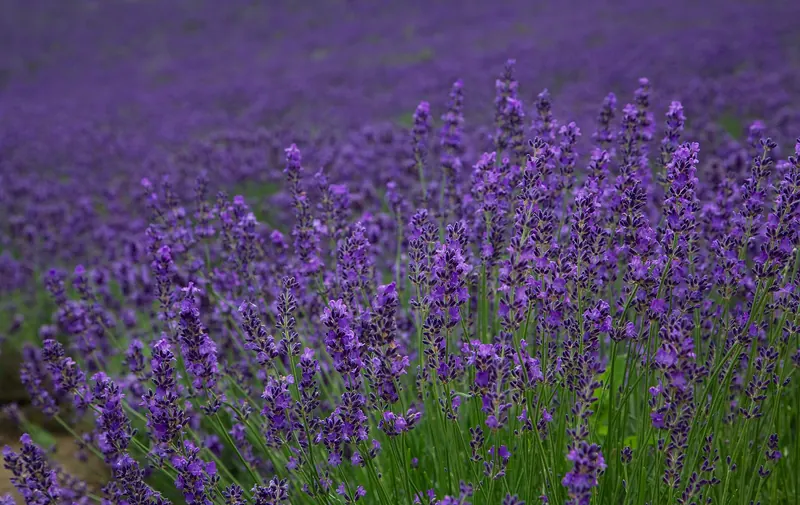
| Variety | When it flowers | How the association describes it |
|---|---|---|
| Yotei | Early | Redder than Okamurasaki and Hanamoiwa, most of all in bud; a fresh, deep scent that suits cosmetics |
| Dark Purple Early Blooming No. 3 | Early | Dark purple from the bud stage; liked for ornamental planting; raised from an off-type Yotei plant |
| Okamurasaki | Middle of the season | The standard light purple; the scent most people think of as lavender; also suits drying and pot-pourri |
| Hanamoiwa | Not stated | Buds from white to pale purple; a lighter scent; its oil is easier to extract, so it goes into shampoo and soap |
Okamurasaki is the one that sets the peak. The association says it has the largest planted area in Furano and reaches its best in mid-July. Farm Tomita grows all of these side by side in one field and says so on its Sakiwai Field page: "They are the Okamurasaki, Yotei, Hanamoiwa and the Noshi Hayazaki."
A fifth name matters at the end of the season. Farm Tomita grows Lavandin, which it describes as its late-blooming variety, in a field of its own that is listed as flowering from late July to mid-August.
One caution about names. The early dark-purple lavender is called Noshi Hayazaki on Farm Tomita's English pages, Dark Purple Early Blooming No. 3 by the Furano Tourism Association and No. 3, read Koimurasaki, by Kamifurano's association, and Hokkaido's tourism site lists a lavender for June under characters that mean dark purple, early blooming. The descriptions match, but none of the pages read for this guide says in so many words that these are one and the same plant, so this page keeps each source's own name.
The two associations also place Okamurasaki differently. Furano's calls it a mid-season variety. Kamifurano's bloom page also calls it mid-season, while its page for Hinode Park calls it late-blooming and says that is why the park still has a view for visitors who arrive a little after the usual peak.
Farm Tomita: fields, hours and rules
Farm Tomita, in the town of Nakafurano, is the farm the valley's reputation started from. Its own description of its oldest field begins: "One of the oldest lavender fields in Japan, this is where Farm Tomita made its first steps in lavender farming." A railway calendar photographed there in the 1970s did the rest, and the farm says of that calendar: "That was the springboard for the lavender fields in Furano to become known nationwide."
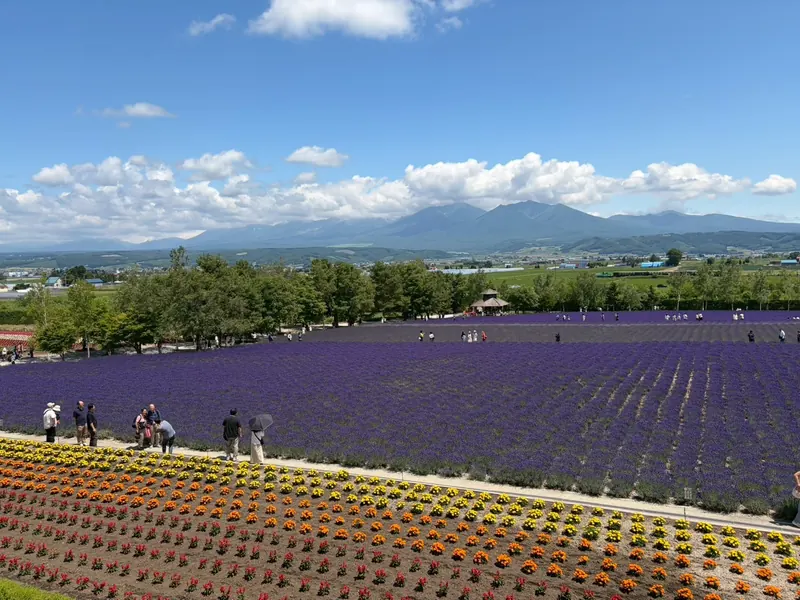
Beside the hours, the farm's home page carries a single line of warning: "Admission is not allowed outside of opening hours." The car park follows the same clock, as the rules further down explain.
The 14 flower fields
The farm's English field guide lists 14 fields and gives a flowering period and a best viewing season for each. Seven are lavender fields or have lavender in them; the rest are what keep the farm in colour from spring to autumn.
| Field | What grows there | Flowering | Best viewing |
|---|---|---|---|
| Traditional Lavender Field | Lavender, on the farm's first slope | Late June to late July | Early to mid-July |
| Sakiwai Field | Four lavender varieties in rows | Late June to early August | Early to mid-July |
| Lavender Forest Field | Okamurasaki and Noshi Hayazaki, ringed by trees | Late June to early August | Early to mid-July |
| Irodori Field | Lavender with bands of other flowers | Early to late July | Mid- to late July |
| Forest Field | Lavender and poppies among conifers | Early to late July | Mid- to late July |
| Hilltop Field | Red, white and pink poppies | Early to late July | Mid- to late July |
| Lavandin Field | The farm's late lavender | Late July to mid-August | Late July to early August |
| Spring Field | Iceland and oriental poppies, chives | Mid-May to late June | Early to mid-June |
| Hanabito Field | Bulbs and violas in spring, marigolds in autumn | Mid-April to early October | Early July to late September |
| Autumn Field | Spider flowers and long-lasting annuals | Early June to early October | Early July to late September |
| Hanabito Garden | More than 120 kinds of plants, herbs among them | Mid-May to early October | Early June to late August |
| Mother's Garden | 50 kinds of bulbs, perennials, shrubs and climbers | Mid-April to early October | Mid-June |
| White Birch Forest | 200 white birches behind the flower fields | Not given | Late May to late September |
| Greenhouse | Lavender under glass | All year except summer | Not given |
Three of these deserve a closer look.
Irodori Field. The farm calls it its best-known field and lists what is planted in the stripes: "Flowers of seven colors adorn the rolling hill, including purple lavender, white baby's breath, red poppies, pink garden catchflies and orange California poppies." Its best viewing season, mid- to late July, starts as that of the pure lavender fields ends, so a visit in the middle of July falls inside both.
Traditional Lavender Field. This is the slope from the calendar. The farm's page promises a climb and a view: "Beyond the lavender flowers swaying in wind are the rural landscapes of the Furano valley and the Tokachi Mountains." It is listed as flowering only until late July, while the Sakiwai Field and the Lavender Forest Field are listed into early August.
Sakiwai Field. In the middle of the farm, with four varieties planted in rows; the farm says that "The different colors of the four types of lavenders create gradations of purple." If you want to see what the difference between an early and a mid-season variety looks like, this is the field to stand in front of.
Two of the quieter fields have a line worth knowing. Of the Forest Field, on a hill among conifers, the farm says: "The dried lavender flowers from Farm Tomita are exclusively from this field." And of the newest: "It is a new field created in 2017." That is the Hilltop Field, which has poppies and no lavender.
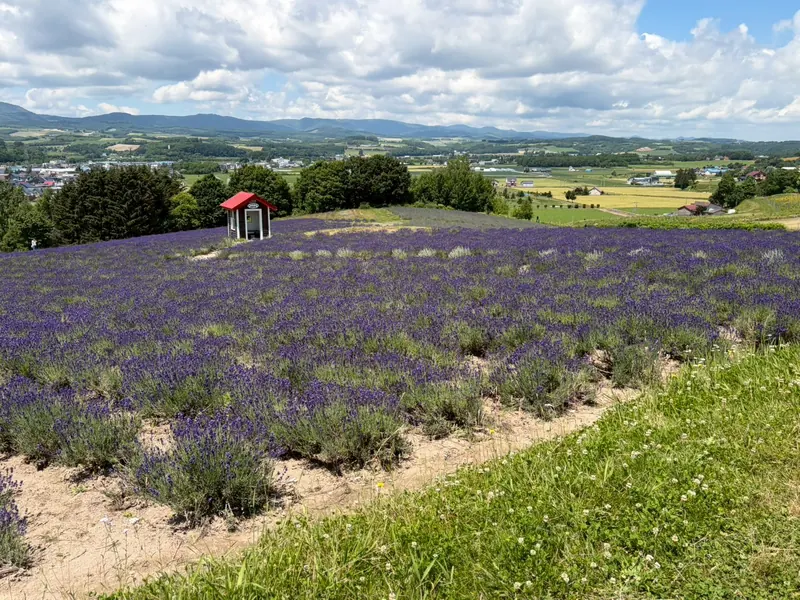
The two wide photographs of Farm Tomita on this page were taken by this site in July 2026.
Buildings on the farm
The same guide lists 14 buildings, which it calls houses: Hanabito House, Dried Flower House, Gallery Fleur, Perfume Workshop, Proche House, Potpourri House, Sakiwai Trail, Flower House, Poppy House, Forest House, Distillery Workshop, Rapport House, Sakiwai House and Arbre House.
Hanabito House is the main one. According to the farm it holds a gift shop, a café, an exhibition on the history of lavender growing in Japan and at the farm, and a room for testing scents; Nakafurano's tourism association adds that the scent room, on the upper floor, lets you compare five lavender oils. The Dried Flower House is the other building the farm singles out: "The house features Japan's largest exhibition room of dried flowers." Hokkaido's tourism site notes that the distillery, where oil is taken from the cut lavender, can be viewed.
Rules the farm asks visitors to follow
On 1 June 2026 the farm published a list of requests for the season. The ones that affect an ordinary visit are these.
- Stay out of the fields. "Please do not enter the fields. Doing so may damage plants or transfer pathogens to the soil."
- Do not pick anything. The farm asks visitors to "please refrain from picking flowers and fruit trees in the garden and taking them home".
- No outside food or drink. "Please refrain from bringing food and beverages into the park." The farm adds that rubbish from outside has to go home with you, and that soft serve bought on the farm should not be carried into its shops and galleries.
- No pets. "Pets are not allowed in the park."
- No tripods. "The use of tripods, etc. is prohibited."
- No drones. The farm prohibits flying them.
- No commercial shoots. "Photography for commercial purposes is prohibited in Farm Tomita Park." Photography in wedding dress is listed separately as not allowed.
- Car park only during opening hours. "Use of the parking lot is limited to business hours. Overnight stay in a car is prohibited."
The same notice points out that the melon shop next door is a separate business and is not part of Farm Tomita, and asks that food bought there is not brought across.
How a perfume crop became a view
The farm's own timeline explains why there is lavender here at all. The first of the Tomita family came from Fukui Prefecture in 1903 and broke the ground. The farm began growing lavender for its essence in 1958, as a raw material for fragrance, and the total area planted with lavender reached its largest, 230 hectares, in 1970 and kept shrinking after that. The timeline gives the reason: "The production of lavender for fragrances has declined from its peak, due to the growing importation of cheaper fragrances."
What kept the fields was the calendar. The farm records that in 1976 its lavender appeared on a railway calendar distributed throughout Japan, and visitors started to come. It began distilling its own essential oil in 1980, made its first perfume in 1984 and soap in 1987, opened Hanabito House in 1993, built the greenhouse in 2000 and opened Lavender East in 2008.
Lavender East and the Lavender Bus
Lavender East is Farm Tomita's second site, and it is a different kind of place: a working field grown for oil, open to visitors only while it is in flower. The farm describes where it is in two sentences: "One of the largest lavender fields in Japan is in the Higashinaka District of Kamifurano Town. It's 4 km east of Farm Tomita, in the direction of the Tokachi Mountains." It also explains what the land was before: "Rice paddies have been converted into the lavender field, to produce perfume ingredients."
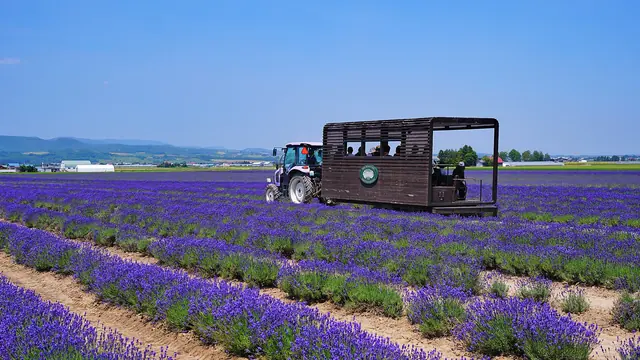
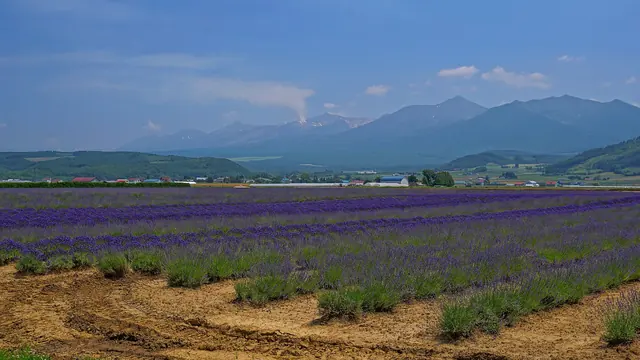
The farm's notice for the season, dated 1 June 2026, put it plainly: "Lavender East will be open from June 20th until July 20th. Business hours are 9:30 - 16:30." The page for the field adds that the schedule and hours can change with the weather and other circumstances. The same page gives no admission price, and this site does not quote one; the only prices the farm publishes for Lavender East are the fares for the Lavender Bus.
Because the field is planted with lavender alone, its season is short. A visit in late July, when Farm Tomita's Irodori Field is at its best, will find Lavender East already closed; in 2026 the last day was 20 July. If Lavender East is the reason for your trip, the farm's own best-viewing window of early to mid-July is the one to aim for.
The Lavender Bus
The Lavender Bus is a trailer of seats pulled round the field. In the farm's words: "The carriage is drawn by a lavender-colored tractor. It takes 15 to 20 minutes to tour the lavender field." The commentary on board is in Japanese, English, Chinese and Korean. The front row has seven separate seats and the rear row is a bench for ten that sits higher, and the carriage is open, with no windows or posts between you and the field.
| Passenger | Fare, tax included |
|---|---|
| Adult, 13 and over | 500 yen |
| Child, 4 to 12 | 250 yen |
| Infant, 3 or younger | Free |
The farm warns that the bus may not run in bad weather.
Getting to Lavender East
The farm's access page says only that Lavender East is 4 km, or 7 minutes by car, from Farm Tomita. None of the pages read for this guide lists a public bus that stops there, so treat it as a place to reach by road. The driving routes in the section on getting to the fields apply here too.
Hinode Park in Kamifurano
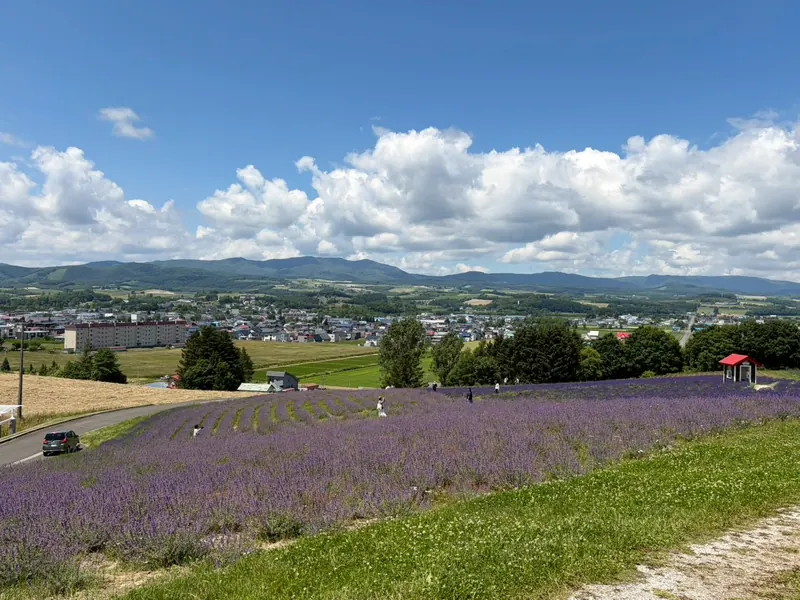
Hinode Park is the town of Kamifurano's lavender garden: one low hill, a short walk from Kamifurano Station, with nothing to pay at the gate. Kamifurano's tourism association lists it as Hinode Lavender Garden and describes a hill that fills with purple and scent from late June to early August, topped by an observation deck that has the lavender on its west side and the Tokachi mountain range on its east.
Three things set it apart from Farm Tomita.
- It has a published bloom record. The dated ratings in the section above are for this park and no other. If you want to know how far along the lavender is before you travel, this is the one field in the valley where the stage of the flowers is written down, in 2026 about once a week.
- It is planted mainly with Okamurasaki. The association's page for the park says so, and adds that this is why there is still a view for people who arrive slightly late. In 2026 the park was still rated at the top of the scale on 28 July, and cutting had started by 3 August.
- It is lit at night during the town's festa. The Lavender Festa is held here each July; in 2026 the lavender was lit from 19:30 to 21:30 between 4 and 12 July. The details are in the festival section below.
The contact the association gives for the park is the town office. Neither the association's page nor the town's festa notice lists opening hours for the park, and this page does not give any.
The two photographs of Hinode Park on this page were taken by this site in July 2026.
Hokuseiyama Lavender Garden and its lift
Hokuseiyama is a hill in Nakafurano that is a ski slope in winter and a lavender garden in summer, and the way up is the lift. The town office calls the hill the symbol of the town and puts the garden 0.7 km, or 10 minutes on foot, from Nakafurano Station, on the way to Farm Tomita. That makes it an easy first stop for anyone walking from the station to the farm.
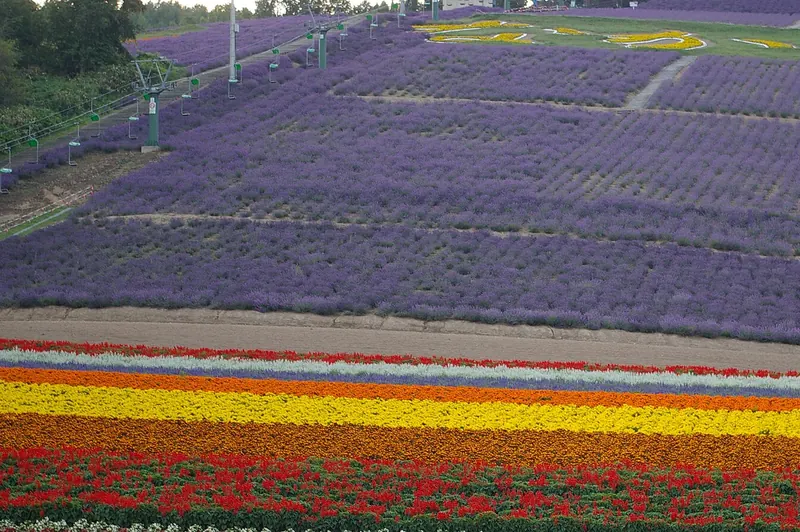
The lift is the point of the visit. Nakafurano's tourism association describes a ride of about five and a half minutes to the top, over lavender and beds of bright annuals. The town lists what you see from the viewing space at the summit as a set of three: the panorama of the Tokachi range, the farmland of the Furano basin and the lavender spread out below. On the way up, the town says, there are sunflowers, marigolds and salvia as well as lavender.
A few practical points from the two pages:
- The chairs are single. The association describes a one-person lift and says nobody may ride while carrying luggage, a child or a pet; the town's page words it as no doubling up and no pets. Children of five or six have ridden it, the association adds, but only on the understanding that they can ride alone, and it asks parents to make sure of that before buying a ticket.
- It can stop. There is no closing day in the season, but the lift may be halted in bad weather.
- Tickets are sold at the purple booth beside Hokusei House and at the shop. The house and the shop close when the last ride up leaves.
- The shop sells light meals, soft serve and cut melon, according to the town.
- Toilets include an accessible one.
- Parking is given as 83 cars and 5 buses in summer by the association, and as a town car park for 100 by the town office.
The two pages do not agree on everything. The town counts four kinds of lavender on the slope and the association three, and this page cannot say which is current.
Hokuseiyama is also where Nakafurano holds its Lavender Festival and Fireworks, on 1 August in 2026, when the garden becomes one of the paid viewing areas. In winter the same hill is the Hokusei ski area, which comes up again at the end of this page.
Other lavender spots in Furano City
Farm Tomita and Hokuseiyama are in Nakafurano and Hinode Park is in Kamifurano. Furano City itself, the next stop down the line, has lavender too. The Furano Tourism Association's bloom page picks out a handful of viewing spots in the city, and two of them matter for timing.
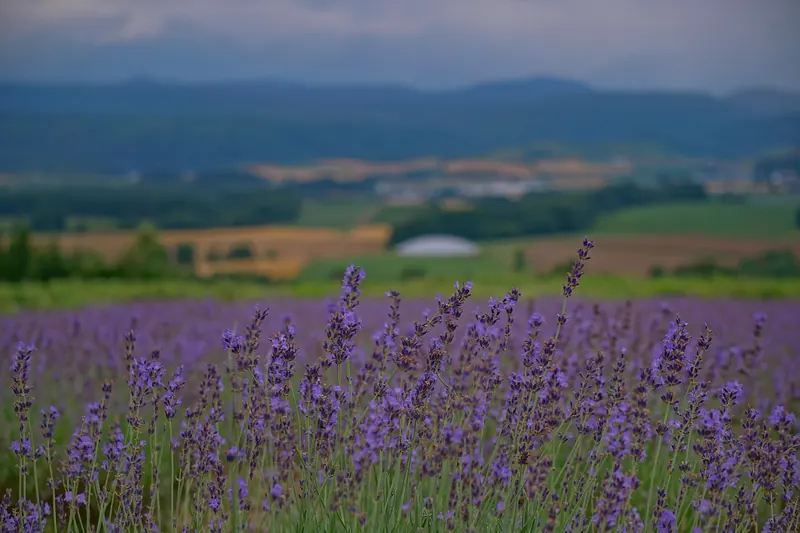
Highland Furano. A hot-spring facility that takes overnight guests and day-trip bathers. The association describes its field in one line: "The largest Lavender field in the city which is spread right in front of the natural hot springs spa." It adds that the flowers can be seen from the outdoor bath.
Rokugo Viewing Platform. An observation deck that looks over the whole Rokugo district. This is the late one. "The Lavender here is a little later than the Lavender in the city", the association says, and it lasts into early August, as the month-by-month section noted.
The same page is where the association posts its bloom status in season, on a scale of its own that runs from 0 to 10: 5 means about half the buds are open, 7 that most of the field is in flower and 10 that every bud has opened. It gives no hours, prices or directions for either place, so look each one up on the association's site before setting out.
Furano lavender festivals in 2026
The valley has two lavender festivals, one in each of the towns north of Furano City, and they are different kinds of evening: nine nights of lit fields in Kamifurano in early July, and one night of fireworks in Nakafurano at the very end of the season.
| Detail | Lavender Festa Kamifurano | Nakafurano Lavender Festival and Fireworks |
|---|---|---|
| Dates in 2026 | 4 to 12 July | 1 August |
| Place | Hinode Park | Hokuseiyama Lavender Garden and Nakafurano Flower Park |
| Evening programme | Lavender lit from 19:30 to 21:30 | Stage from 17:00, fireworks from 19:45 |
| What costs money | The park's car park, 500 yen from 17:00 to 22:00 | Viewing-area tickets from 3,000 yen a person; car park tickets |
| Nearest station | Kamifurano | Nakafurano |
Lavender Festa Kamifurano
The town of Kamifurano ran its 2026 festa at Hinode Park from Saturday 4 July to Sunday 12 July, with the lavender lit from 19:30 to 21:30. For a lavender light-up in Furano, this is the one with published dates and times. The town's notice for the event is mostly about how to get in and out, and it is worth reading closely.
- Parking at the park costs money only in the evening. During the festa the Hinode Park car park charged a flat 500 yen between 17:00 and 22:00 and was free at other times.
- The payment machine does not take cash. The town suggested paying by phone; anyone who wanted to pay in cash had to go to the organisers' tent.
- There were three free car parks: a temporary one behind the station, one at the Shakyo Centre and one at the town hall.
- Free shuttle buses ran a loop to the venue from the Shakyo Centre and town hall car parks from 19:00, but only on the two weekends, 4 and 5 July and 11 and 12 July.
- The road was closed on those same four evenings: the road called Kita 27-go was shut from 18:30 to 22:00.
- Tour buses could not park at the venue during the event.
- Visitors with disabilities could drive up to the car park at the observation deck, provided they contacted the town office beforehand.
Rain does not stop it. The town's rule for 2026 was that the lighting goes ahead in ordinary rain. It is called off in advance when a storm, heavy-rain or special warning is in force or very likely, or when a typhoon is certain to pass, and it is stopped on the night for a severe thunderstorm or a sustained wind of 10 metres a second or more. For the wet final Sunday the notice told visitors to bring rain gear, and recommended a raincoat.
The Furano Tourism Association's bloom page mentions one more light-up, at the lavender field beside the city's winery during July, without giving hours.
Nakafurano Lavender Festival and Fireworks
Nakafurano's festival is a single evening. The 43rd was held on Saturday 1 August 2026 at Hokuseiyama Lavender Garden and the Nakafurano Flower Park, and the town's notice said that in bad weather the fireworks alone would move to the next day, Sunday 2 August.
- 17:00: opening, followed by music and dance on the stage.
- 19:45: fireworks.
- 20:30: the band of the Ground Self-Defense Force's Kamifurano garrison plays the crowd out.
The town sold places in two paid viewing areas, and tickets for temporary car parks:
| Ticket | Price in 2026 |
|---|---|
| Summit area, with parking, per vehicle | 25,000 yen |
| Hokuseiyama Lavender Garden area, per person | 3,000 yen |
| Temporary car park, ordinary car | 2,000 yen |
| Temporary car park, mid-sized vehicle | 2,500 yen |
| Temporary car park, motorcycle | 1,500 yen |
Tickets were sold online through Ticket Pia from 29 May to 29 July 2026, and at Seven-Eleven stores. The food and drink stalls were at the Flower Park.
The train is the sensible way in. The town imposed traffic restrictions on the day, said there was no parking around the venue and recommended coming by some means other than a car. JR Hokkaido put on an extra train after the fireworks, leaving Nakafurano at 21:24 and reaching Kamifurano at 21:36, Biei at 21:55 and Asahikawa at 22:30; the scheduled train before it left at 20:54. JR's notice put the end of the fireworks at about 20:30 and the walk from the venue to the station at about 15 minutes.
The date sits at the very end of the lavender season: in 2026 Hinode Park's lavender was being cut two days later. Neither town had announced its 2027 festival dates when this page was written.
Lavender ice cream in Furano
The lavender ice cream people come looking for is soft serve, and the one place that publishes a menu for it is Farm Tomita. Of its lavender flavour the farm says: "Its original flavor owes to the rich lavender essence. The refreshing taste is particularly welcome on hot days."

| Flavour | Cone | Cup | On sale |
|---|---|---|---|
| Lavender | 450 yen | 400 yen | All year |
| Lavender and vanilla | 450 yen | 400 yen | Late April to late October |
| Lavender and cantaloupe | 450 yen | 400 yen | Late April to late October |
| Cantaloupe | 450 yen | 400 yen | Late April to late October |
| Vanilla | 450 yen | 400 yen | Late April to late October |
Plain lavender is sold at the most counters. The menu lists nine for it: Potpourri House, Sakiwai Trail, Poppy House, Forest House, Rapport House, René in Hanabito House, Petit René, Lavare House and Arbre House. The other four flavours are all sold at Poppy House, Forest House and Rapport House, and Petit René also has vanilla and the lavender and vanilla mix.
The cantaloupe flavour is the orange half of the lavender and cantaloupe twist. The farm describes it this way: "It's flavored with Hokkaido cantaloupe juice. The orange-colored cantaloupe ice cream has a moderate sweetness."
For allergies, the menu lists milk and soybean for every flavour and wheat for the cones only, and adds orange for the two flavours with cantaloupe in them.
Two of the farm's requests apply to ice cream in particular: soft serve should not be carried into the shops and galleries, and food bought elsewhere should not be brought in.
The soft serve photographed for this page, in July 2026, is a lavender and melon twist. This site did not record which shop sold it, so it is shown as an example of the flavour and not as a Farm Tomita product.
Farm Tomita is not the only counter. The shop at Hokuseiyama Lavender Garden sells soft serve, though the town's page does not name the flavours. No other shop's price for lavender ice cream was found on an official page, and this site does not quote one.
How to get to the Furano lavender fields
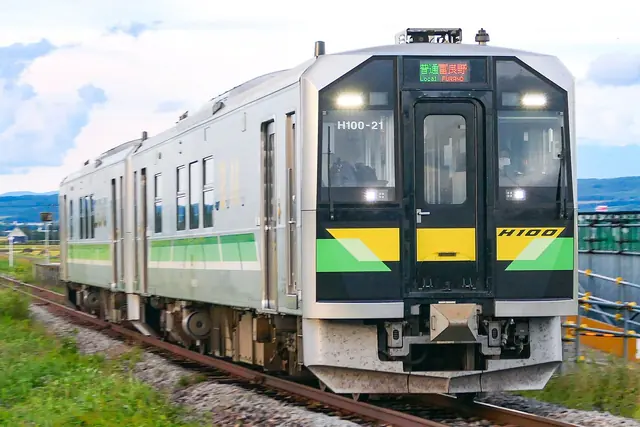
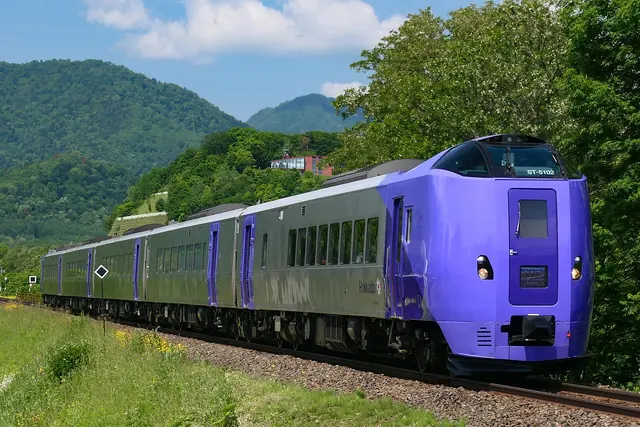
The fields lie along one railway and one road. The railway is the JR Furano Line between Asahikawa and Furano; the road is Route 237, which the Furano Tourism Association says is nicknamed Hanabito Road and which passes Asahikawa Airport, Biei, Kamifurano, Nakafurano and Furano City on its way south. JNTO sums up the choice between them: "You can reach the flower fields by train and then bus. A rental car is recommended if you want to visit every flower field, but public buses are available to many of the main areas."
| Field | Nearest station | From the station |
|---|---|---|
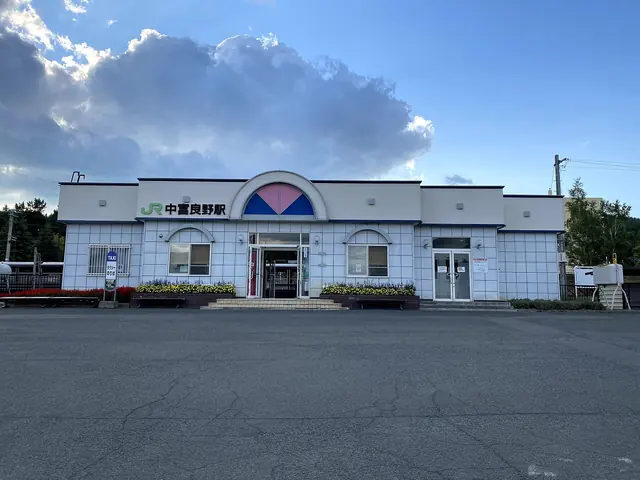
| Farm Tomita | Nakafurano all year; Lavender-Batake in summer 2026 | About 25 minutes on foot; 7 to 8 minutes on foot |
| Hokuseiyama Lavender Garden | Nakafurano | 10 minutes on foot |
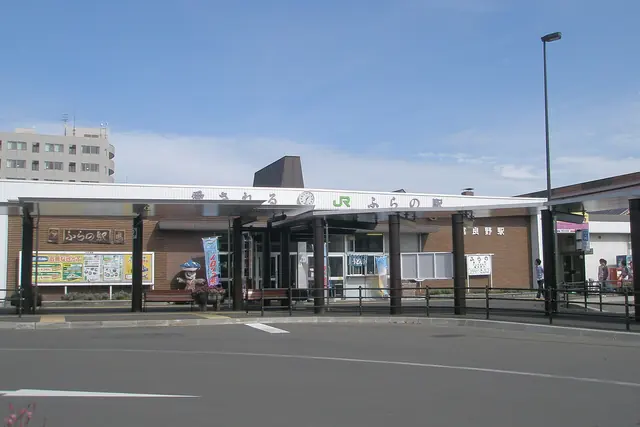
| Hinode Park | Kamifurano | About 15 minutes on foot |
| Lavender East | None | 4 km by road from Farm Tomita |
By train on the Furano Line
Three stations on the line matter for lavender: Kamifurano, Nakafurano and, in summer, the temporary Lavender-Batake station between them. These are the ordinary adult fares that JR Hokkaido published in 2026; children pay half.
| From | To Kamifurano | To Lavender-Batake | To Nakafurano | To Furano |
|---|---|---|---|---|
| Asahikawa | 1,040 yen | 1,210 yen | 1,380 yen | 1,380 yen |
| Biei | 470 yen | 580 yen | 680 yen | 800 yen |
| Kamifurano | Not applicable | 320 yen | 320 yen | 470 yen |
| Furano | 470 yen | 320 yen | 320 yen | Not applicable |
Farm Tomita's access page puts the ride from Asahikawa to Nakafurano at about 1 hour 5 minutes and the ride from Furano to Nakafurano at about 10 minutes. From Nakafurano Station the farm is about 25 minutes away on foot, and Hokuseiyama is on the way. If you would rather not walk, the same page names a local taxi firm, Nakafurano Hire, on 0167-44-2331.
Whether a rail pass covers these trains depends on the pass. The nationwide one is explained in the Japan Rail Pass guide, and two regional tickets sold in 2026 are described under passes below.
Lavender-Batake station and the Norokko train
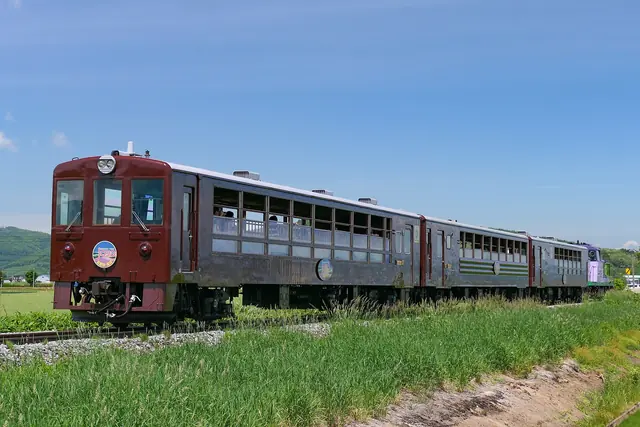
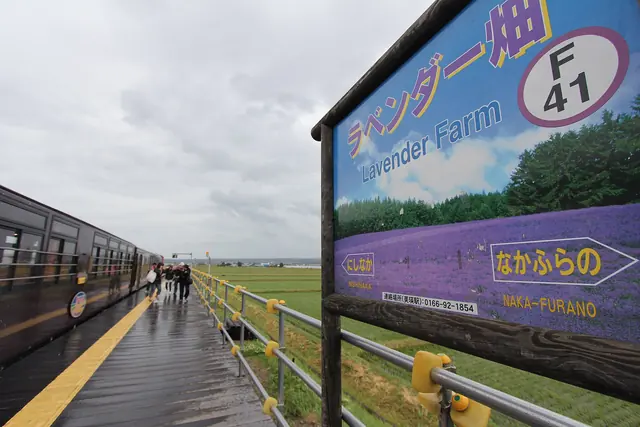
Lavender-Batake means lavender field, and Farm Tomita's English pages call the stop Lavender Farm Station. It is a platform that exists only for the flower season. The farm explains: "The special Furano-Biei Norokko-go train on the JR Furano Line stops at this station only in summer." It is also the approach the farm prefers: "If you plan to come to Farm Tomita by public transport, we recommend that you take a train and get off at the station." The walk from the platform to the farm takes 7 to 8 minutes.
In 2026 JR Hokkaido opened the station from 6 June to 23 September and listed the six Norokko trains and some of the line's local trains as the ones that stopped there. A ticket from Furano cost 320 yen.
The Norokko itself is the part that has changed. It was a slow sightseeing train that had run on the line since 1998, and JR Hokkaido announced that the run on 23 September 2026 would be its last. These are the facts of its final season:
- Running days in 2026: 6 and 7 June, every day from 13 June to 11 August, Saturdays and Sundays from 15 August to 13 September, and 19 to 23 September, according to Farm Tomita's station page.
- Trains: three in each direction on a normal day. The first of the day started from Asahikawa at 10:00 and the last went back there; the others ran between Biei and Furano.
- Seats: three carriages, all reserved in 2026, with a 1,000 yen seat ticket on top of the fare.
The JR notices read for this guide give no reason for ending the train. They do not say what, if anything, will take its place, and they do not say whether Lavender-Batake station will open in 2027. JR did run extra rapid trains on the line on eight days in September 2026 and described them as a trial. Until the summer 2027 timetable is published, plan around Nakafurano Station, which is open all year, and check JR Hokkaido's site for the temporary station nearer the time.
From Sapporo
There are five ways to make the trip, and none of them is short: the times the sources give come to between about two and two and a half hours each way, before any wait for a connection.
- By train, changing at Takikawa. This is the route JNTO gives: "From Sapporo Station, catch the Lilac Limited Express Train or Kamui Limited Express Train going to Takikawa (about 50 minutes), then a local train on the Nemuro Main Line to Furano Station (about 70 minutes)." Farm Tomita's access page adds about 10 minutes more on the Furano Line from Furano to Nakafurano.
- By train, changing at Asahikawa. The limited express from Sapporo to Asahikawa takes about 1 hour 25 minutes, and the Furano Line from there to Nakafurano about 1 hour 5 minutes. This way round passes Biei and Kamifurano, so it suits a day that starts at Hinode Park or takes in Biei.
- By the Furano Lavender Express. JR Hokkaido's summer limited express runs between Sapporo and Furano without a change in about two hours. In 2026 it left Sapporo at 7:41, called at Iwamizawa at 8:18, Takikawa at 8:44 and Ashibetsu at 9:10, and reached Furano at 9:44. The return left Furano at 16:53 and reached Sapporo at 18:52. All seats were reserved in 2026. The train had five carriages, the first of them a lounge car, with Wi-Fi throughout and a power socket at every seat. The ordinary fare with a reserved-seat limited express ticket came to 5,440 yen one way, and JR's online-only advance discount for the same journey ran from 2,720 to 4,890 yen. JR published the running days as a calendar and not as a list, so check them on its site.
- By express bus. Farm Tomita's access page lists the Chuo Bus service called Kosoku Furano-go, from the Sapporo Station Bus Terminal to the Furano Bus Terminal in 2.5 hours. The fare was not on any page read for this guide, and this site does not quote one. How Japan's highway buses are booked is covered in the bus guide.
- By car. The farm's directions from central Sapporo are the Do-o Expressway as far as the Mikasa interchange and ordinary roads from there, 2.5 hours in all. Hokkaido's official tourism site puts the farm about 90 minutes from that interchange.
From New Chitose Airport, the farm gives 2.5 hours by car, leaving the expressway at the Shimukappu interchange. By train the Furano Tourism Association gives about two and a half hours, going through Sapporo and changing at Takikawa.
From Asahikawa and Asahikawa Airport: the Lavender-go bus
Asahikawa Airport is the nearest airport to the fields, and it has no railway station. What it has is the Lavender-go, an ordinary route bus run by Furano Bus between Furano and Asahikawa Station by way of Nakafurano, Kamifurano, Biei and the airport.
- No reservations. Seats cannot be booked.
- Pay when you get off. Take a numbered ticket as you board and pay the fare as you leave.
- No guaranteed connections. Furano Bus says the buses are not timed to meet flights or trains.
- Seven buses each way in the timetable revised on 1 April 2026.
Towards the fields, from Asahikawa:
| Asahikawa Station | Asahikawa Airport | Biei Station | Kamifurano | Nakafurano | Furano Station |
|---|---|---|---|---|---|
| 9:55 | 10:37 | 10:52 | 11:11 | 11:21 | 11:38 |
| 11:25 | 12:07 | 12:22 | 12:41 | 12:51 | 13:08 |
| 12:30 | 13:12 | 13:27 | 13:46 | 13:56 | 14:13 |
| 13:55 | 14:37 | 14:52 | 15:11 | 15:21 | 15:38 |
| 15:45 | 16:27 | 16:42 | 17:01 | 17:11 | 17:28 |
| 16:45 | 17:27 | 17:42 | 18:01 | 18:11 | 18:28 |
| 19:20 | 20:02 | 20:17 | 20:36 | 20:46 | 21:03 |
Back towards Asahikawa:
| Furano Station | Nakafurano | Kamifurano | Biei Station | Asahikawa Airport | Asahikawa Station |
|---|---|---|---|---|---|
| 6:50 | 7:02 | 7:14 | 7:34 | 7:53 | 8:30 |
| 8:20 | 8:32 | 8:44 | 9:04 | 9:23 | 10:00 |
| 9:25 | 9:37 | 9:49 | 10:09 | 10:28 | 11:05 |
| 10:50 | 11:02 | 11:14 | 11:34 | 11:53 | 12:30 |
| 12:40 | 12:52 | 13:04 | 13:24 | 13:43 | 14:20 |
| 13:40 | 13:52 | 14:04 | 14:24 | 14:43 | 15:20 |
| 16:15 | 16:27 | 16:39 | 16:59 | 17:18 | 17:55 |
By this timetable the airport and Nakafurano are about 45 to 50 minutes apart, Asahikawa Station and Nakafurano about 1 hour 25 minutes, and Furano Station and Nakafurano 12 to 17 minutes, depending on the direction. The last bus of the day from Nakafurano towards the airport leaves at 16:27, which is before Farm Tomita closes, so check the return before you settle in. From the Nakafurano stop, Farm Tomita's page gives a 25-minute walk or a 5-minute taxi ride.
Furano Bus publishes its fare table as an image that could not be read for this guide, so this site does not quote a fare.
If you would rather drive from the airport, the Furano Tourism Association's answer is short: "Rental cars are available at Asahikawa Airport, so take Route 237 and in about 1 hour you will arrive in Furano." Farm Tomita, which is north of Furano City, gives 45 minutes from the airport by the same road.
By car, and where to park
A car is the simplest way to see Farm Tomita, Lavender East and Hinode Park in one day, because no public bus to Lavender East appears on the pages read for this guide. In July it is also what fills the roads. Rental satnavs take a map code or a phone number as the destination, as the driving guide explains, and these are the codes published for the three main fields:
- Farm Tomita: 349 276 889
- Hokuseiyama Lavender Garden: 349 276 031, or the phone number 0167-44-3939
- Hinode Park: 349 463 374
Lavender East is 4 km, or 7 minutes, from Farm Tomita. Hiring the car itself, including the Hokkaido Expressway Pass, is covered in the car rental guide.
| Car park | Spaces | Charge in 2026 | Worth knowing |
|---|---|---|---|
| Farm Tomita | 500 | Free | Open only during the farm's opening hours |
| Nakafurano town car park on Kita 15-go | 104 cars and 18 buses | 500 yen per use for cars and 2,000 yen for buses, from 13 June to 23 August | Open 24 hours; no cash |
| Hokuseiyama | 83 cars and 5 buses, or 100, depending on the page | Not stated | On the fireworks day the town said there was no parking around the venue |
| Hinode Park | Not stated | Free; 500 yen from 17:00 to 22:00 during the festa | Road closed on the festa's weekend evenings |
Farm Tomita asks one thing of drivers on its access page: "Please do not park on public roads or in the tour bus parking lots."
The town car park needs a word of explanation. Kita 15-go is the road in Farm Tomita's own address, and in 2026 the town of Nakafurano charged for its car park there for a limited period, 13 June to 23 August, giving the easing of congestion in the tourist season as the reason. The machines are cashless: credit cards, electronic money, transport IC cards and QR-code payments are accepted and cash is not. Cameras read the number plate. If you are travelling without a card that works in Japan, use the farm's own free car park.
Passes and sightseeing buses
Three products sold in 2026 could cut the cost of a visit without a car.
- Sapporo-Furano Area Pass. A JR Hokkaido pass for holders of non-Japanese passports, valid for four days. It cost 11,000 yen bought in advance, or 12,000 yen at a station in Japan, with children at half those prices, and JR describes it as giving unlimited rides within its area on limited express, rapid and local trains, in reserved or unreserved ordinary-car seats. It is sold all year. Check the area on JR Hokkaido's English rail-pass page before relying on it for the Furano Line.
- Hokkaido Mannaka Nonbiri Ressha Pass. A new ticket in 2026 for local trains only, in unreserved seats: 3,300 yen for one day, 5,600 yen for two and 6,900 yen for three. It was an electronic ticket bought on JR Hokkaido's e-Pass site and shown on a phone, and it was on sale from 18 April to 8 November 2026. JR published the area it covers as a map and not as a list of stations.
- Furano Bus sightseeing loop buses. The short one, the Furano-go Enjoy Course, left Furano Station at 12:00 and came back at about 15:50, every day from 1 July to 11 August 2026, for 5,000 yen (3,000 yen for children aged 3 to 11). A longer Biei-go Panorama Course left Furano Station at 10:15, and an Asahikawa-go Patchwork Course left Asahikawa Station at 9:50; each cost 9,000 yen, or 3,000 yen for a child. The stops listed across the three include Farm Tomita and the Shirogane Blue Pond, but the pages read for this guide do not make clear which course calls where, so check before booking. Seats were booked online and paid for by credit card, bookings were not taken by phone, lunch was not included and the buses had no toilet.
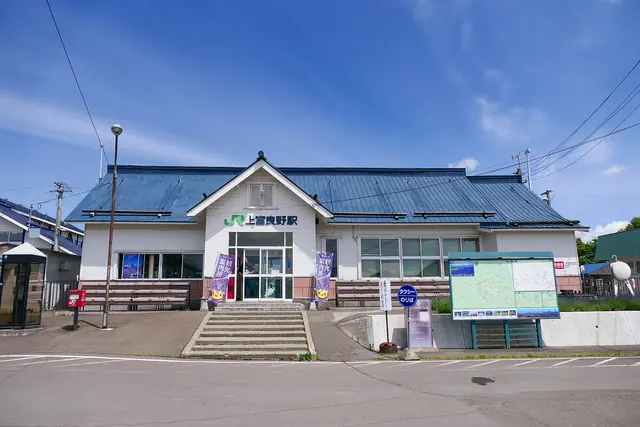
Furano outside lavender season
Lavender fills only a few weeks of the year. These are the things the sources read for this guide say about the rest of it.
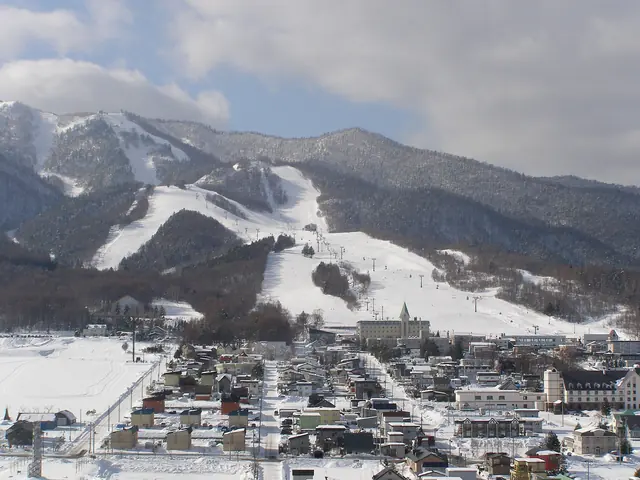
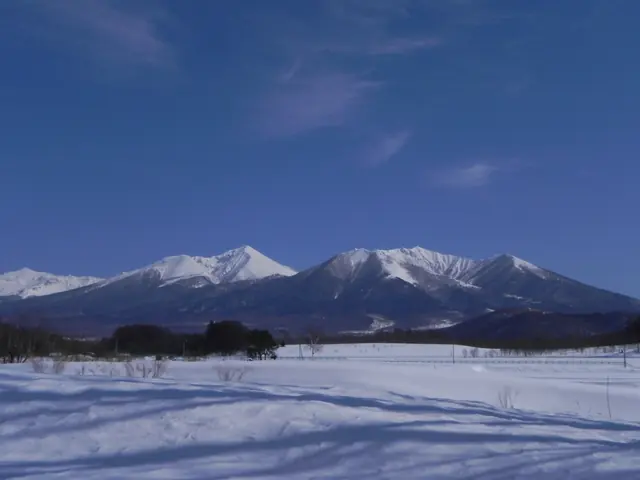
Winter at Farm Tomita. The farm is open all year, and its winter page is built around the one place where lavender is still in flower: "In the Greenhouse, you can enjoy the beauty of lavender even if it is not summer." Outside, the farm builds snowmen, one of them of its mascot, and snow domes that visitors can step inside for a photograph; the best viewing season it gives for most of its winter features is early January to late March. Indoors, the page lists Hanabito House, Gallery Fleur and the Dried Flower House, and says of the café: "Café René offers soft-serve lavender ice cream, croquettes, hot drinks and other items." It closes with a warning that applies to any winter plan in the valley: "The operating hours and other details are subject to change depending on the weather conditions, snowfall and other circumstances."
Spring. There is no lavender, but early May has cherry blossom, and the Furano Tourism Association names where to look: "The most popular spots for cherry blossom viewing in Furano are the University of Tokyo Forests (Yamabe), Rokugo Road (Nunobe), and Asahigaoka Park (Kitanomine)."
Autumn. The association gives two rounds of colour. Leaves turn from the middle to the end of September in the Tokachi range, about an hour from Furano by car, and at the start of October in Furano City and in the Rokugo district; in November it is the turn of the larches, which go yellow. Its summary: "You can enjoy fall foliage twice in Furano."
First snow. Late October to early November, in an ordinary year. After that the association says: "By the end of November the snow is continuous, and the ski areas in Furano are scheduled to open around this time." It also notes that rental cars in the area are switched to winter tyres as soon as the first flurries arrive in November.
Hokuseiyama in winter. The hill with the lavender lift is the Hokusei ski area in the cold months. Nakafurano's tourism association says the ski lift normally opens around the second week of January and runs until early March, depending on the snow. It records that the 2025 to 2026 season was cancelled for lack of snow, although an area was set aside where children could practise skiing and go sledging, and it lists the 2026 to 2027 season as planned for mid-January to early March 2027, with details still in preparation.
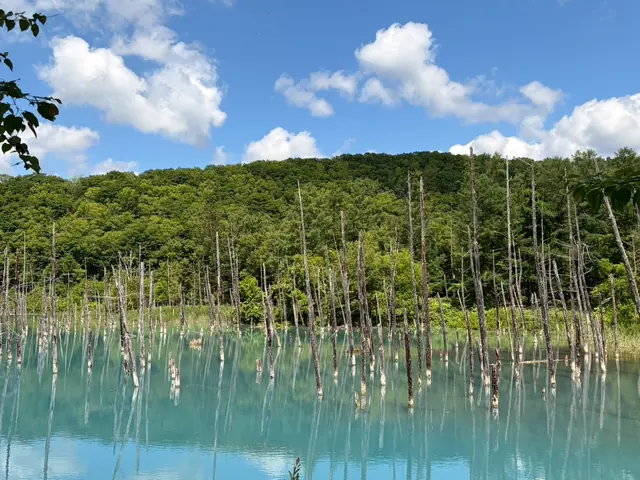
The Blue Pond. The other stop in this part of Hokkaido that does not depend on flowers is in Biei, two towns north of Nakafurano on the same railway line and the same bus route. It is open all year and is lit after dark from 22 October 2026 to 21 April 2027. The bus from Biei Station, the parking charge and the lighting hours are in the Blue Pond guide.
One dated note for anyone heading towards the mountains. Mount Tokachi, the volcano in the range that the lavender fields look out on, has been at volcanic alert Level 3 since 12 September 2026, and the Japan Meteorological Agency's commentary of 9 October said that level was continuing. The agency's warning tells people to watch for large volcanic rocks within roughly 3 km of the crater, and it names Furano City and Kamifurano among the municipalities where entry to the mountain around the crater is restricted. Check the agency's current information if your plans include the mountain itself.
Frequently asked questions
When is the best time to visit the Furano lavender fields?
July. The Furano Tourism Association gives mid to late July, Farm Tomita lists early to mid-July as the best viewing season for its main lavender fields and for Lavender East, and in 2026 Hinode Park was rated at the top of its bloom scale from 14 to 28 July. Early varieties open from late June and most fields are cut in early August.
When is the Furano lavender season in 2027?
Nobody had announced 2027 dates when this page was written on 12 October 2026. The pattern in 2026 was early varieties from late June, the peak in July and cutting from the first days of August, with Lavender East open from 20 June to 20 July. Use that as a guide to the pattern, which Kamifurano's tourism association says shifts a little with the weather, and check the farms' own pages in spring.
Is there lavender in Furano in May?
Not outdoors. May in Furano is cherry blossom in the first ten days and, at Farm Tomita, the Spring Field from the middle of the month. The only lavender in flower is in Farm Tomita's Greenhouse, which the farm says blooms all year except in summer.
Can you see lavender in Furano in June?
Only at the very end of the month, and only the early varieties. At Hinode Park in 2026 the early variety was first rated as worth seeing on 30 June. Lavender East opened on 20 June in 2026, and Farm Tomita lists its first lavender fields as flowering from late June.
Is there still lavender in Furano in August?
In the first days, yes. After that most of it has been cut: at Hinode Park cutting had begun by 3 August 2026. The late exceptions are Farm Tomita's Lavandin Field, listed as flowering until mid-August, and the Rokugo Viewing Platform in Furano City, where the lavender lasts into early August.
What is there to see in Furano in September and October?
No lavender outdoors. Farm Tomita's Hanabito Field and Autumn Field are at their best until late September and are listed as flowering until early October. Autumn leaves turn in the Tokachi range in mid- to late September and in Furano City in early October, and the first snow normally comes in late October or early November.
How long does the lavender stay in bloom?
For a single field, not long. Hinode Park's 2026 record shows roughly two weeks at the top of the scale, from 14 July to the days after 28 July. The valley as a whole has lavender in flower from late June to mid-August only because different varieties open one after another.
Is Farm Tomita free?
Yes. Admission is free and so is the farm's 500-space car park. What costs money is what you buy: soft serve at 450 yen in a cone, things from the shops, and the Lavender Bus at Lavender East, 500 yen for adults.
What are Farm Tomita's opening hours?
The farm's own site showed 9:30 to 17:00 when it was checked in October 2026. Hokkaido's official tourism site says the hours vary by season and by building and gives 8:30 to 18:00 for July. The farm does not allow entry outside opening hours, so check its site for your date.
Is Farm Tomita open all year?
Yes. It has no regular closing day and the farm describes itself as open year-round. In winter the lavender is in the Greenhouse and the fields are under snow. Lavender East is the exception: it opens only while it is in flower.
When is Lavender East open?
In 2026 it was open from 20 June to 20 July, from 9:30 to 16:30. The farm's page for it gives no admission price, and this site does not quote one. The 2027 dates had not been announced when this page was written.
How much is the Lavender Bus at Lavender East?
500 yen for adults aged 13 and over and 250 yen for children aged 4 to 12, with children of 3 or younger free. The tractor-drawn ride round the field takes 15 to 20 minutes and may not run in bad weather.
When is the Furano lavender festival?
There are two. In 2026 the Lavender Festa Kamifurano ran from 4 to 12 July at Hinode Park, and the Nakafurano Lavender Festival and Fireworks was held on Saturday 1 August, with the fireworks from 19:45. Neither town had announced its 2027 dates when this page was written.
Are the lavender fields lit up at night?
Hinode Park is, during the Kamifurano festa: in 2026 from 19:30 to 21:30 between 4 and 12 July. The Furano Tourism Association also mentions a light-up at the lavender field beside the city's winery in July, without giving hours. Farm Tomita does not allow entry outside its opening hours.
How much is lavender ice cream at Farm Tomita?
450 yen in a cone and 400 yen in a cup, for every flavour on the soft-serve menu. Plain lavender is sold all year; the lavender and vanilla mix, the lavender and cantaloupe mix, cantaloupe and vanilla are sold from late April to late October.
How do I get to Farm Tomita by train?
Take the JR Furano Line to Nakafurano Station and walk for about 25 minutes. The ride is about 1 hour 5 minutes and 1,380 yen from Asahikawa, or about 10 minutes and 320 yen from Furano. In summer 2026 the temporary Lavender-Batake station, 7 to 8 minutes from the farm on foot, was open from 6 June to 23 September.
Is the Furano-Biei Norokko train still running?
No. JR Hokkaido announced that the run on 23 September 2026 would be its last; the train had been on the Furano Line since 1998. The notices read for this guide do not say what will replace it or whether Lavender-Batake station will open in 2027.
How do I get to Furano from Sapporo?
There are five ways, each taking between about two and two and a half hours before any wait for a connection: a train with a change at Takikawa, a train with a change at Asahikawa, the summer Furano Lavender Express, the Chuo Bus express bus and a car. In 2026 the Lavender Express left Sapporo at 7:41 and reached Furano at 9:44, and the fare with a reserved seat was 5,440 yen one way.
How do I get to the lavender fields from Asahikawa Airport?
By the Lavender-go, the Furano Bus route bus that runs from Asahikawa Station through the airport, Biei and Kamifurano to Nakafurano and Furano. There were seven buses each way in the timetable revised on 1 April 2026, seats cannot be reserved and you pay as you get off. The airport to Nakafurano takes about 45 to 50 minutes, and the last bus back from Nakafurano towards the airport leaves at 16:27. By car, Farm Tomita gives 45 minutes from the airport.
Where can I park at Farm Tomita?
In the farm's own car park, which has 500 spaces, is free and can be used only during opening hours; staying overnight in a car is not allowed. The town of Nakafurano also has a car park on the road called Kita 15-go, which in 2026 cost 500 yen per use for a car from 13 June to 23 August and took cashless payment only.
Can I bring a dog, a tripod or a drone to Farm Tomita?
No to all three. The farm's list of requests for 2026 says pets are not allowed, tripods may not be used and drones may not be flown. The lift at Hokuseiyama Lavender Garden does not take pets either.
Farm Tomita or Hinode Park: which should I choose?
They are different kinds of place. Farm Tomita has 14 flower fields, 14 buildings that include shops and cafés, and flowers from spring to autumn. Hinode Park is a single hill with an observation deck, planted mainly with the Okamurasaki variety, with a published bloom record and night lighting during the town's festa. Both are free, and the train between their stations cost 320 yen in 2026.
Can I see the lavender fields and the Blue Pond in one day?
The two are on the same railway line and the same bus route, so the pieces fit together, though this site has not timed the day. Biei Station is 680 yen from Nakafurano by train, and the Dohoku Bus from Biei Station to the Blue Pond takes 22 minutes and costs 800 yen. By car, Biei's tourism association puts Furano and Biei about 34 km, or roughly 40 minutes, apart. In 2026 the Furano Bus sightseeing loop buses listed both Farm Tomita and the Blue Pond among their stops.
Which lavender varieties grow in Furano?
The Furano Tourism Association lists four main ones: Yotei and Dark Purple Early Blooming No. 3, which flower early, Okamurasaki, the mid-season variety with the largest planted area, and Hanamoiwa. Farm Tomita also grows Lavandin, a late kind that is listed as flowering from late July to mid-August.
Is there a Furano lavender forecast?
No forecast was found on any official page read for this guide. What exists in season is bloom status: Kamifurano's tourism association publishes dated ratings for Hinode Park, and the Furano Tourism Association posts a status on a scale from 0 to 10 for spots in Furano City. Farm Tomita's home page carries live camera views of the farm; in October 2026 they showed the Hanabito Field and the Autumn Field.
Sources
Official and primary sources used for this page. Checked October 12, 2026.
- Farm Tomita: Official website — the opening hours shown in October 2026, the line on no entry outside opening hours and the live camera views of two fields
- Farm Tomita: Farm Guide — the lists of 14 flower fields and 14 buildings, and what Hanabito House holds
- Farm Tomita: Traditional Lavender Field — the flowering period, the best viewing season and the description of the farm's first lavender slope
- Farm Tomita: Sakiwai Field — the flowering period, the best viewing season and the four varieties planted in rows
- Farm Tomita: Lavender Forest Field — the flowering period, the best viewing season and the two varieties grown there
- Farm Tomita: Irodori Field — the flowering period, the best viewing season and the flowers planted in the stripes
- Farm Tomita: Forest Field — the flowering period, the best viewing season and the line on dried lavender
- Farm Tomita: Hilltop Field — the flowering period, the best viewing season, the poppies and the year the field was made
- Farm Tomita: Lavandin Field — the late-blooming variety and its flowering period
- Farm Tomita: Spring Field — the flowering period, the best viewing season and what is planted there
- Farm Tomita: Hanabito Field — the flowering period, the best viewing season and what is planted there
- Farm Tomita: Autumn Field — the flowering period, the best viewing season and what is planted there
- Farm Tomita: Hanabito Garden — the flowering period, the best viewing season and the number of kinds of plants
- Farm Tomita: Mother's Garden — the flowering period, the best viewing season and the number of kinds of plants
- Farm Tomita: White Birch Forest — the number of trees and the best viewing season
- Farm Tomita: Greenhouse — lavender in flower indoors all year except in summer
- Farm Tomita: History — the timeline from 1903 to 2008, the largest planted area and the railway calendar
- Farm Tomita: Request from Farm Tomita — the rules on fields, picking, food and drink, pets, tripods, drones, commercial photography and the car park, and the note on the melon shop next door
- Farm Tomita: Lavender East — where the field is, what the land was before, the flowering period, the best viewing season and the note that the schedule can change
- Farm Tomita: About Lavender East in 2026 — the 2026 opening dates and hours
- Farm Tomita: Lavender Bus — the fares, the length of the ride, the seats, the languages of the commentary and the bad-weather note
- Farm Tomita: Lavender East has closed for the season (Farm Tomita is open for business.) — the farm's statement that it is open year-round
- Farm Tomita: ラベンダーイースト (in Japanese) — the notice that the 2026 opening has ended
- Farm Tomita: Accesses to Farm Tomita and Lavender East — driving times from Sapporo and the two airports, bus and rail times, the walk and the taxi from Nakafurano, the distance to Lavender East and the request not to park on public roads
- Farm Tomita: Lavender Farm Sta. (Norokko-go) — the summer-only station, the walk from it and the Norokko train's running days
- Farm Tomita: Soft-serve ice cream — the flavours, prices, sale periods, counters and allergens
- Farm Tomita: WINTER GARDEN — the Greenhouse and the café in winter, the note that winter hours can change and the Dried Flower House
- Furano Tourism Association: Lavender Information — the four main varieties and how each is described
- Furano Tourism Association: Lavender Efflorescence Status Information — when early and late varieties flower, Okamurasaki's planted area and peak, Highland Furano, the Rokugo Viewing Platform, the winery light-up and the 0 to 10 scale
- Furano Tourism Association: FAQ — the best season, the cutting in August, sunflowers, cherry blossom, autumn leaves, the first snow, the nickname of Route 237 and the routes from Sapporo, Asahikawa Airport and New Chitose Airport
- Japan National Tourism Organization: Furano Flower Fields — the peak month, the wider flower season and the advice on trains, buses and rental cars
- Kamifurano Tokachidake Tourism Association: 日の出ラベンダー園 (in Japanese) — the season at Hinode Park, its main variety, the observation deck, the address, the map code and the walk from the station
- Kamifurano Tokachidake Tourism Association: ラベンダー見頃情報 (in Japanese) — the dated 2026 bloom record for Hinode Park and the meaning of each step on its scale
- Town of Kamifurano: 「ラベンダーフェスタかみふらの」駐車場情報等について (in Japanese) — the 2026 festa dates, the lighting hours, the parking charge, the free car parks, the shuttle buses, the road closure and the bad-weather rules
- Nakafurano Tourism Association: ファーム富田 (in Japanese) — the farm's address, map code and parking spaces, and the five lavender oils in the scent room
- Nakafurano Tourism Association: 北星山ラベンダー園/北星スキー場 (in Japanese) — the lift ride, the single chairs, the map code, the satnav phone number, the summer parking and the ski area in winter
- Town of Nakafurano: 北星山ラベンダー園 (in Japanese) — the 2026 lift season, hours and fares, the distance from the station, the view from the top and the shop
- Town of Nakafurano: 2026年「第43回なかふらのラベンダーまつり&花火大会」について (in Japanese) — the date, the programme, the ticket prices and sale period, and the traffic restrictions
- Town of Nakafurano: 町営北15号駐車場有料化について (in Japanese) — the charge, the period, the spaces and the cashless payment at the town's Kita 15-go car park
- Hokkaido Tourism Organization, HOKKAIDO LOVE!: ファーム富田 (in Japanese) — the July hours, the flower calendar by month, the distillery, the parking spaces and the drive from the Mikasa interchange
- JR Hokkaido: 「JRで行く 富良野・美瑛 2026」キャンペーン, 25 March 2026 (PDF, in Japanese) — the Furano Lavender Express times and fare, the temporary station's dates, the two rail passes and the sightseeing loop buses
- JR Hokkaido: 観光列車のご紹介, JRで行く富良野・美瑛 (in Japanese) — the Norokko train's timetable and seats, the Lavender Express and the fares on the Furano Line
- JR Hokkaido: 富良野・美瑛ノロッコ号ラストイヤー開幕, 29 May 2026 (PDF, in Japanese) — the start of the 2026 run and the announcement that 23 September 2026 would be the last day
- JR Hokkaido: ありがとう!「富良野・美瑛ノロッコ号」ラストランの運転概要・おもてなしについて, 20 August 2026 (PDF, in Japanese) — the last run of the Norokko train
- JR Hokkaido: 富良野線「臨時快速列車」を運転します, 24 August 2026 (PDF, in Japanese) — the trial rapid trains on the Furano Line in September 2026
- JR Hokkaido: JRで行こう!なかふらのラベンダーまつり&花火大会, 15 July 2026 (PDF, in Japanese) — the extra train after the fireworks on 1 August 2026
- Furano Bus: 路線バス (in Japanese) — the Lavender-go timetable revised on 1 April 2026, the stops and the rules on seats and payment
- Furano Bus: 富良野・美瑛・旭川 観光周遊バス2026 (in Japanese) — the 2026 sightseeing loop buses, their running days and fares
- Dohoku Bus: Biei–Shirogane Line timetable and fares (PDF, in Japanese) — the ride and the fare from Biei Station to the Blue Pond
- Biei Tourism Association: Access — the distance and driving time between Furano and Biei
- Town of Biei: 青い池・白ひげの滝ライトアップ (in Japanese) — the dates of the Blue Pond's 2026 to 2027 lighting
- Japan Meteorological Agency: 火山活動の状況(十勝岳) (in Japanese) — the volcanic alert level for Mount Tokachi
Related guides
To cite or link to this page: Furano lavender fields: the best time to visit, which field to choose, and how to get there — Japan Pocket Guide, https://japanpocketguide.com/things-to-do/furano-lavender-fields/