Culture · Performing arts
Bunraku, Japan's puppet theatre: what it is, how three puppeteers work one puppet, bunraku vs kabuki and noh, tickets in Osaka and Tokyo, and the puppet theatre on Awaji Island
Bunraku is Japan's classical puppet theatre, in which three puppeteers in plain view move a single large puppet while one narrator speaks every part to the sound of a shamisen. Read on for what the word means, how the art grew up in Osaka, who does what on stage, how it compares with kabuki and noh, and where it plays in Osaka, Tokyo, Kanagawa and on Awaji Island, with the dates, prices and English help listed by the theatres for December 2026 to March 2027.
Last checked · Sources

In short
Bunraku, in full Ningyo Johruri Bunraku, is a puppet theatre from Osaka in which a narrator called the tayu voices every character, a shamisen player sets the mood, and three puppeteers work each main puppet together. Its home is the National Bunraku Theatre in Nippombashi, Osaka, where the New Year run lasts from 3 to 24 January 2027 at 5,500 to 6,700 yen a part, with a free English synopsis. In Tokyo, bunraku plays at borrowed halls while the National Theatre is rebuilt: 6 to 19 December 2026 at the Tokyo Metropolitan Theatre, then February and March 2027 in Shinagawa and at KAAT in Kanagawa.
What bunraku is, and how it began
In bunraku the actors are puppets, the lines are chanted by a single storyteller, and a shamisen carries the music. UNESCO calls it a blend of sung narration, instrumental playing and puppet drama, and puts it alongside noh and kabuki among the leading stage arts of Japan. The national theatres are run by the Japan Arts Council, and it presents bunraku as theatre for adults, and the plays bear that out: they deal with war, loyalty, love and social duty, and many of them end in tragedy.
The name needs a word of explanation. The full title on the UNESCO list is Ningyo Johruri Bunraku. Joruri is a style of sung storytelling that was already popular in the 15th century, and around 1600, early in the Edo period, performers began to set puppets to it. The art was known as ningyo joruri for a long time; the shorter name bunraku came only in the late 19th century, borrowed from the Bunrakuza, a theatre that led the field in those years.
Bunraku vs joruri
So when people ask about bunraku vs joruri, the two words do not name rival arts. Joruri is the narrated story and its music, which existed before any puppet joined it. Bunraku is the whole theatre: the narration, the shamisen and the puppets on stage together. On Awaji Island, where a related tradition lives on, the local form is still called Awaji Ningyo Joruri.
Bunraku in four words
- Tayu: the narrator, who tells the story and speaks for every character, male or female.
- Shamisen: the three-stringed lute whose player sits beside the narrator.
- Yuka: the raised platform, jutting out into the hall, where the narrator and shamisen player sit.
- Joruri: the chanted storytelling that the puppets act out.
When did bunraku begin?
There is no single birthday. UNESCO places the meeting of puppets and joruri at about 1600. Japan's national tourism organisation, JNTO, gives 1684 as the year of the first bunraku performance in Osaka. The Osaka Convention and Tourism Bureau explains why the city kept the art when puppet joruri was played all over Japan: the narrator Takemoto Gidayu and the playwright Chikamatsu Monzaemon worked together there, and their partnership rooted it in Osaka.
By the middle of the 18th century the staging had settled into the shape audiences see today. Performances once filled an entire day and ran to six acts; a modern programme presents two or three.
Bunraku through the centuries
- 15th century: joruri, a sung narrative form, becomes popular.
- Around 1600: early in the Edo period, puppets are paired with joruri narration.
- 1684: the year JNTO gives for the first bunraku performance in Osaka.
- Mid-18th century: the staging with three visible puppeteers is in place.
- Late 19th century: the name bunraku is taken from the Bunrakuza theatre.
- 1955: Japan names bunraku an Important Intangible Cultural Property.
- March 1984: the National Bunraku Theatre opens in Osaka.
- 2003 and 2008: UNESCO proclaims bunraku in 2003 and inscribes it on its Representative List in 2008.
Of the roughly 700 plays written for puppet theatre in the Edo period, about 160 are still performed. UNESCO also notes that the art draws many young performers today, which matters for a tradition where training takes decades.
Bunraku in three numbers
- 700plays written for the puppet stage in the Edo period
- 160of those plays still in the repertory today
- 3puppeteers working each main puppet
Three puppeteers, one narrator and a shamisen
A bunraku stage has two halves. The puppets play in the main space, and to one side the music comes from a raised platform that juts out into the hall, called the yuka. There the tayu chants the text while the shamisen player sits beside him. Everything the audience hears comes from that platform.
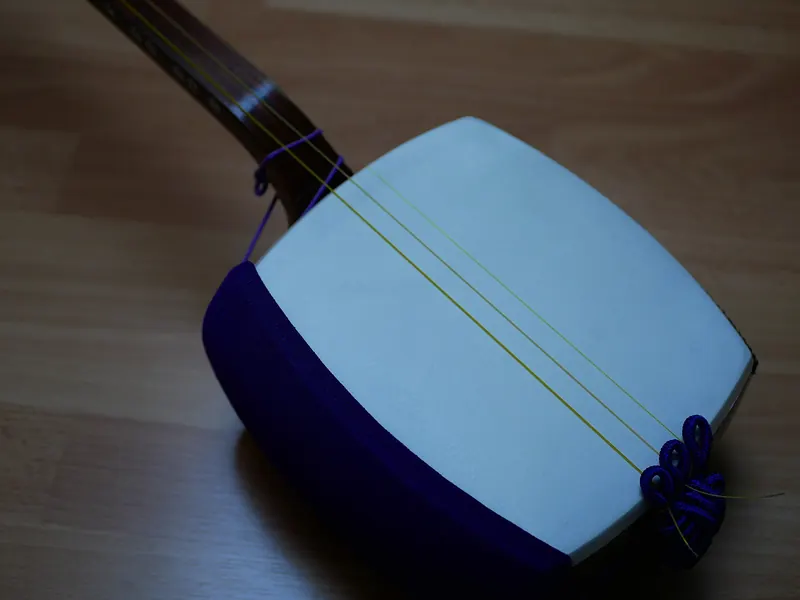
The tayu has the hardest single job in the theatre. He narrates the action and voices every role, from old samurai to young women, shifting his pitch and tone for each one. He works from a written text, yet UNESCO notes there is plenty of room for him to improvise. The Japan Arts Council puts the effect simply: the narrator pours out his voice with all his strength, and the shamisen answers with sounds that are by turns forceful and delicate.
Who does what
- The tayu: sits on the yuka, tells the story and gives a voice to each character.
- The shamisen player: sits beside the narrator and sets the pace and mood of each scene.
- The puppeteers: three to each main puppet, working in full view of the audience.
How three puppeteers move one puppet
The puppets are large and jointed, and they play behind a screen about waist height, with the puppeteers in full view. UNESCO stresses that the three must time every move together if a gesture is to look natural. JNTO splits the work like this: the lead puppeteer holds the head and works the face and the right hand, a second puppeteer moves the left hand, and a third moves the legs.
Three hands on one puppet
- Lead puppeteer: the head, the face and the right hand.
- Left-hand puppeteer: the left hand.
- Leg puppeteer: the legs and feet, which give the puppet its walk.
Learning the roles takes a long time. JNTO says a puppeteer spends about fifteen years on the legs, until the steps look truly human, and another fifteen on the left hand before taking charge of the head. The Osaka Convention and Tourism Bureau points out that a puppet worked by three people is said to be a rarity anywhere in the world.
A puppeteer's training
- 15years on the legs, according to JNTO
- 15more years on the left hand
- 30years before a puppeteer moves on to the head
Faces, costumes and black clothing
Each puppet is made by hand by specialist puppet makers, with rich costumes and a face carved for its character. The Osaka bureau adds that mechanisms inside let a puppet show joy, anger and sorrow. The puppeteers themselves usually appear in black, often with their faces covered, and the Awaji troupe explains the idea behind it: on stage the black clothing stands for nothing at all, so the eye goes to the puppet instead.
Bunraku vs kabuki and noh, and what the plays are about
Japan has three classical theatres that visitors tend to compare, and in 2008 they became, all three at once, Japan's first performing arts on the UNESCO list: kabuki, nohgaku (noh with its comic partner, kyogen) and bunraku. They grew up in different centuries, and a night at each feels very different.
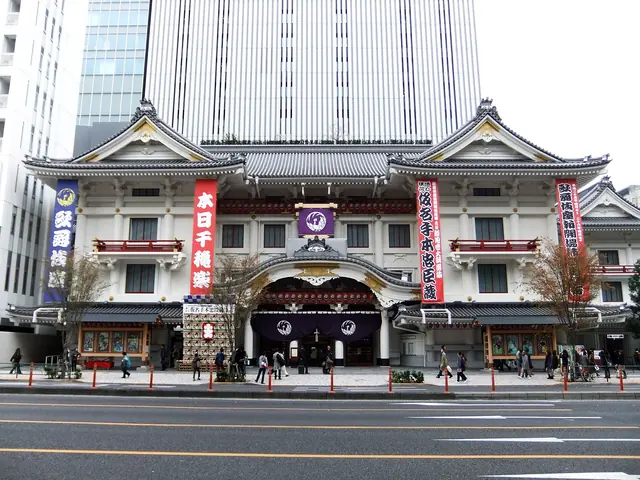
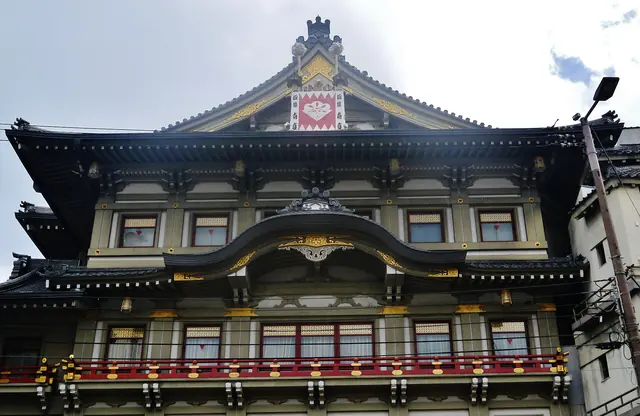
Noh is the oldest: it reached the shape it keeps today in the 14th century, and its lead actor often performs masked; the noh theatre guide covers it in detail. Kabuki began in Kyoto early in the 17th century, and before that century ended its roles were all taken by men. Bunraku grew up at much the same time as kabuki, but it swaps actors for puppets and gives every spoken line to one narrator. If you want star actors, some with followings like pop idols, look at kabuki tickets first. If you want to watch storytelling, music and craft work as one, try bunraku.
| Bunraku | Kabuki | Noh | |
|---|---|---|---|
| Who plays the roles | Puppets, three puppeteers to each main figure | Actors, all men since the late 17th century | Actors, the lead often masked |
| Who speaks the lines | One narrator for every character | The actors, in a measured tone over live music | The actors, with music doing more of the work |
| Took shape | Around 1600, staging settled by the mid-18th century | Early 17th century, in Kyoto | 14th century |
| Main home | National Bunraku Theatre, Osaka | Kabukiza in Tokyo and Minamiza in Kyoto, among others | See the noh guide |
Bunraku, kabuki or noh?
- Bunraku, if you want to watch puppets worked in full view while one narrator gives every voice
- Kabuki, if you would rather see famous actors in person, men playing every role
- Noh, if you like masked drama and an art that leans heavily on music
- All three, if time allows: they entered the UNESCO list together in 2008
Two kinds of story
UNESCO sorts the repertory into two groups. Jidaimono are history plays set in feudal times. Sewamono were the dramas of their own day, about people torn between love and what society demanded of them. One playwright's name turns up again and again: Chikamatsu Monzaemon, whom the National Theatre's notes for its 2027 run say is often compared to Shakespeare.
The two kinds of bunraku play
- Jidaimono: history plays set in the feudal past.
- Sewamono: dramas of their own time, where love runs up against social obligation.
Plays on the bills for winter 2026 and 2027
The programmes for the coming months give a fair picture of what bunraku is about. Fox spirits, a warrior on the run, a loyal maid and a struggling painter all appear on stage between December 2026 and March 2027.
Four plays you can see this winter
- Yoshitsune Senbon Zakura: a classic built around Minamoto no Yoshitsune, a warrior of the 12th century, and those swept up in his fate, ending on a stage set of Mount Yoshino in full blossom. Tokyo, December 2026.
- Kagamiyama Kokyo no Nishiki-e: a maid takes revenge for the humiliation of her mistress in a feud inside a samurai household. Tokyo, December 2026.
- Yuki wa Konkon Sugata no Mizuumi: a white fox in human form marries a hunter, written some seventy years ago and staged by the National Theatre for the first time. Shinagawa and Kanagawa, February and March 2027.
- Keisei Hangonko: Chikamatsu's play about a painter who cannot win recognition until his wife urges him to paint himself. Shinagawa and Kanagawa, February and March 2027.
The New Year run in Osaka opens with Manzai and Sagimusume (The Heron Maiden), followed by the story of the fox Kuzunoha parting from her son, a vendetta from Igagoe Dochu Sugoroku, and Kuruwa Bunsho, a short play set in a teahouse in the pleasure quarter. The Tokyo bills also include a dance piece, Ryuko, in which a heavenly dragon and an earthly tiger fight to a draw, with choreography created for this production.
The National Bunraku Theatre in Osaka
Osaka is where bunraku was born, and the National Bunraku Theatre, which first opened its doors in March 1984, is its home stage. It sits in Nippombashi in Chuo Ward, and the theatre itself lists Kuromon Market and Dotonbori among the sights close by. If you are also heading for the electronics and hobby shops of Den Den Town, the theatre belongs to the same Nipponbashi area, in its Chuo Ward part.
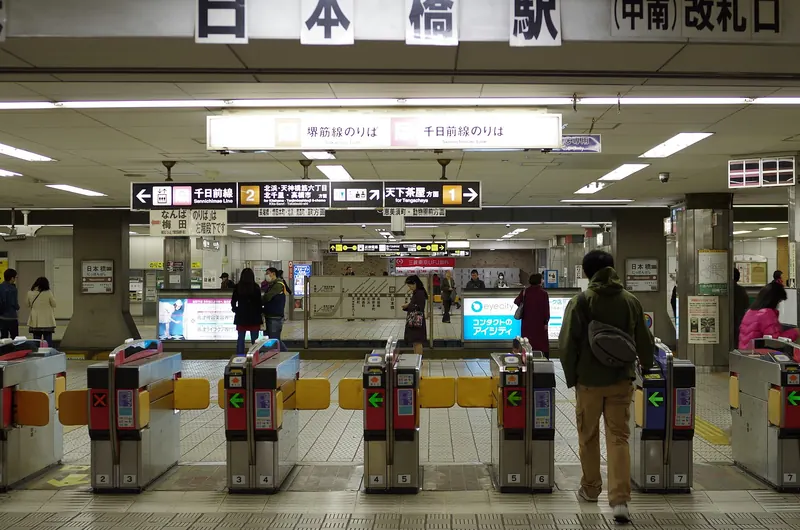
The building holds two halls. The Bunraku Theatre, with 753 seats and stage machinery made for puppet plays, is on the second floor; the Small Hall, with 159 seats, is on the third and is used mostly for popular entertainment, known as engei, and for screenings of recorded performances. A lift serves all three floors, the aisles in the main hall slope gently, and you can get from the entrance to the front row without a single step.
When bunraku plays in Osaka
Bunraku does not run all year. The theatre stages its main productions in January, April, July to August and November, and each June it holds performances for beginners with spoken explanations. The main hall also hosts kabuki, traditional dance and music, folk performance and engei. The 2026 autumn run closes on 23 November, so the next chance in Osaka is the New Year run.
New Year Bunraku 2027 in Osaka
- Dates: 3 to 24 January 2027, with no performance on 14 January
- Part 1, 11:00–13:45: Manzai, Sagimusume and the Kuzunoha scenes of Ashiya Doman Ouchi Kagami; 6,700 yen, students 4,700 yen
- Part 2, 14:30–18:00: Igagoe Dochu Sugoroku, four scenes ending in the vendetta at Iga Ueno; 6,700 yen, students 4,700 yen
- Part 3, 18:45–20:05: Kuruwa Bunsho, the Yoshidaya teahouse scene; 5,500 yen, students 3,900 yen
- Booking opens: 10:00 on 8 December 2026 online and by phone, and 10:00 on 9 December at the box office
- In English: a free handout with the synopsis
The three parts are sold separately, and each is a full show in its own right, so you need not stay all day. Part 3 is the shortest, at about 80 minutes, and the cheapest, which makes it a sensible first taste after a day of sightseeing. Ending times on the schedule are estimates and can shift a little.
English help, food and lockers
Both the autumn 2026 and New Year 2027 runs offer a free English synopsis handout, and the theatre's own bunraku shows come with an English audio guide that you rent for a fee. In autumn 2026 the guide covered Part 3 only, so look at the page for your run before you count on it. The programme booklet sold at each monthly run also carries an English commentary and synopsis.
There is no restaurant in the building, but the shop sells boxed lunches and drinks as well as souvenirs. There is no cloakroom, so large bags need a coin locker.
Bunraku in Tokyo and Kanagawa, December 2026 to March 2027
Tokyo's bunraku seasons used to play at the National Theatre, which opened in 1966. That building closed at the end of October 2023 to be rebuilt, and since then the Japan Arts Council has taken its bunraku seasons to other halls in and around the capital. In 2026 that meant Theatre 1010 in May, a beginners' programme called Discover Bunraku at the Koto Cultural Centre Hall in September, and the Tokyo Metropolitan Theatre in December. Early in 2027 the troupe moves on to Shinagawa and then to Kanagawa.
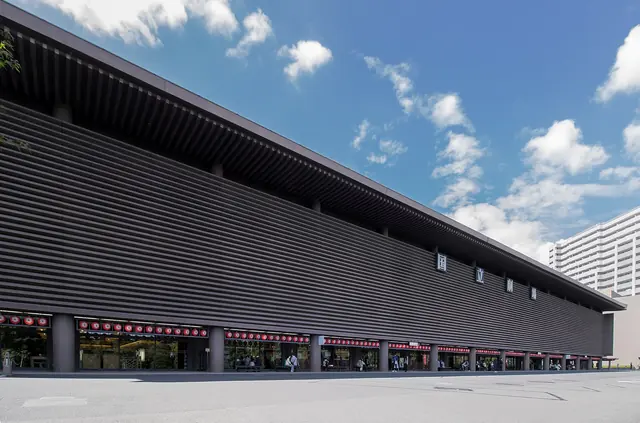
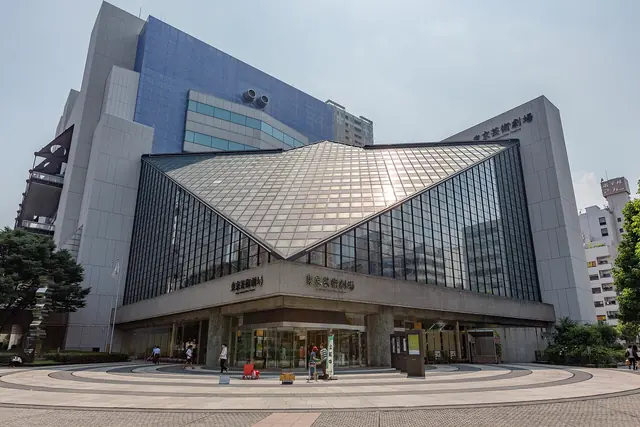
Because the halls change, the way you buy and collect tickets changes too: see the next section before you book.
Bunraku near Tokyo this winter
- 6 to 19 December 2026: Tokyo Metropolitan Theatre, Playhouse; no performance on 10 December
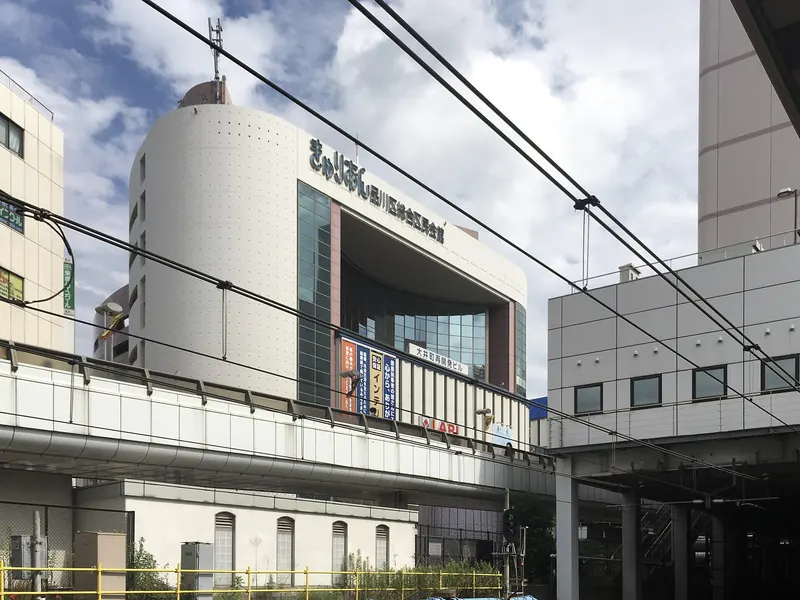
- 5 to 14 February 2027: Shinagawa Curian Hall, Large Hall; no performance on 10 February
- 20 February to 6 March 2027: KAAT Kanagawa Arts Theatre, Hall; no performance on 25 February
December 2026 at the Tokyo Metropolitan Theatre
The December run is a memorial. It marks two years since the death of Yoshida Minosuke III (1933–2024), a puppeteer whose career lasted almost eighty years and who was celebrated above all for his women's roles. All three programmes are plays tied to his best-known parts, and only seats on the first floor are on sale.
December 2026 programmes
- Programme I, 11:00–13:45: Kagamiyama Kokyo no Nishiki-e (The Maid's Revenge)
- Programme II, 14:30–18:15: Yoshitsune Senbon Zakura (Yoshitsune and the Thousand Cherry Trees)
- Programme III, 19:00–20:50: Sonezaki Shinju, the tragic love story of a young clerk and a courtesan
- Price: 9,000 yen for adults and 6,300 yen for students, for each programme
- Disability discount: 20% off for disabled visitors and one companion each
Tickets went on sale on 14 November 2026. Seats still unsold on the day go on sale at the box office in the theatre, which opens at 10:00 and stays open until each programme begins. Finishing times are estimates.
For help in English you have three options, and you can combine them. An English audio guide, rented for an extra fee, explains the story and the key moments as they happen; the Japan Arts Council recommends it to overseas visitors seeing bunraku for the first time. Subtitles in English and Japanese come through an app called EG-G on your own phone or tablet, so install it before you arrive. An English synopsis is printed inside the Japanese programme, which you pay for.
English help in Tokyo
- Audio guide: rented for a fee, with live commentary on the story in English or Japanese.
- EG-G subtitles: English and Japanese text on your own smartphone or tablet through the app.
- Synopsis: in English, inside the paid Japanese programme booklet.
Part tickets: one act at a time
If three or four hours feels like too much for a first visit, December has a cheaper way in. Part tickets let you see a single act from Programme I or II, from a 24-seat block at the back of the first floor. The Japan Arts Council pitches them at first-timers and at anyone who wants just one scene. They cannot be bought for Programme III, and no student or other discount applies.
December 2026 part tickets
- A, from 11:00: Kagamiyama, the Zoriuchi scene; 2,000 yen
- B, from about 11:55: Kagamiyama, the Roka, Nagatsubone and Okuniwa scenes; 7,000 yen
- C, from 14:30: Yoshitsune Senbon Zakura, the Shiinoki and Kokingo Uchijini scenes; 3,000 yen
- D, from about 15:45: Yoshitsune Senbon Zakura, the Sushiya scene; 6,000 yen
- E, from about 17:40: Yoshitsune Senbon Zakura, the journey to Mount Yoshino; 2,000 yen
The rules are strict, because part-ticket holders slip in and out between acts. You need to be at the Playhouse 20 minutes or more before your act begins and wait in a set area until staff lead you in, wearing the lanyard you are given. Acts B, D and E can start a little early or late, depending on how the show runs, and late arrivals may have to wait. When the act ends, everyone in the block leaves: "All Part Ticket holders must leave the auditorium at the end of each act, including those with tickets for subsequent acts."
February and March 2027 in Shinagawa and Kanagawa
The late-winter run plays first at Shinagawa Curian Hall and then at KAAT Kanagawa Arts Theatre, with the same three programmes in both halls. Programme I pairs two tragic love stories, each with a heroine at its centre: the fox play Yuki wa Konkon Sugata no Mizuumi and the classic Shinpan Utazaimon. Programme II sets the wartime drama Kamakura Sandaiki beside Ryuko, a dance of the dragon and the tiger. Programme III is Chikamatsu's Keisei Hangonko.
February and March 2027 programmes
- Programme I, 11:30–14:35: Yuki wa Konkon Sugata no Mizuumi and Shinpan Utazaimon; 9,000 yen, students 6,300 yen
- Programme II, 15:15–18:05: Kamakura Sandaiki and Ryuko; 9,000 yen, students 6,300 yen
- Programme III, 18:45–19:55: Keisei Hangonko; 6,000 yen, students 4,200 yen
- Booking opens: 10:00 on 14 January 2027
- Box office at the hall: 10:30 to 18:45, for any seats left on the day
The same English help as in December is on offer: a rented audio guide, the EG-G subtitle app and the synopsis inside the paid programme. At KAAT, as in December, only first-floor seats are sold. People with disabilities and one companion get 20% off, though it cannot be used together with another discount. At 70 minutes and 6,000 yen, Programme III is the easiest of the three to fit around a day out.
Bunraku tickets in English, and manners at the theatre
All the bunraku seasons above are sold by the Japan Arts Council, so one booking system covers Osaka, Tokyo and Kanagawa. There are three ways in: the English pages of its Online Booking Service, the phone line, and the box office inside the National Bunraku Theatre. For the runs in Tokyo and Kanagawa there is no advance counter at all, so it is online or phone only, with any leftover seats sold at the hall on the day.
Booking online in English needs no account. You book as a guest and pay by credit card, the only form of payment accepted online. The Council has also posted a step-by-step video on how to do it.
Booking bunraku tickets online
- Open the booking site: go to the Online Booking Service from the Japan Arts Council's English pages and choose to reserve and buy.
- Pick the show: select the performance, and for December part tickets, the act.
- Pick your seats: choose from the seating plan.
- Enter your details: who you are, plus an email address and a phone number.
- Pay: by credit card.
- Get your ticket: as a QR ticket or for collection at a box office, which decides how you enter.
Where to collect your tickets
This is the step that catches people out, because the rules differ by theatre and by which version of the site you used. For Osaka, tickets bought online are collected at the National Bunraku Theatre's own ticket office; phone bookings can instead be paid and collected at a 7-Eleven in Japan.
For the Tokyo and Kanagawa runs, a booking made in English is collected on show day, from the box office of the hall where you are seeing it. A booking made on the Japanese site works the other way round: those tickets come only from a 7-Eleven, and the hall cannot hand them over. Phone bookings for these runs are also paid for and collected at a 7-Eleven.
Discounts depend on the show, and prices vary by performance, so the page for each run is the one to go by: the New Year run in Osaka, for example, prints a student price for every part, while the December part tickets allow no discounts at all.
Manners at a bunraku performance
The house rules are short and similar to those at any Japanese theatre, and one of them is absolute: "Taking photos and recording audio or video during the performance is strictly prohibited." That covers the auditorium as well as the stage, so keep the phone in your pocket until you are back in the lobby.
The doors are opened half an hour to an hour ahead of curtain-up. Try to be in your seat early, as entry may be restricted once the play has begun. Children can come along, but if one disturbs others, staff may ask the family to keep the child quiet or to leave, or may guide them to watch on a monitor in the lobby.
Before the curtain and during the play
- Read the English synopsis before the curtain rises, to follow the plot more easily
- Switch the phone off, and do not talk, eat or drink while the play is on
- Save food for the intervals, when many people eat a bento
- Dress neatly, with sensible shoes; there is no dress code
- Leave large bags in a coin locker in Osaka, as the theatre has no cloakroom
JNTO notes that there is no dress code at traditional theatres, though tidy clothes and footwear are recommended, and it even suggests a kimono as a way to make more of the evening; the kimono rental guide explains how that works.
Awaji Puppet Theatre: puppet joruri on Awaji Island
You can also see puppets set to joruri outside Osaka. On Awaji Island, between Kobe and Shikoku, a related tradition called Awaji Ningyo Joruri has its own theatre, the Awaji Ningyoza, which plays most days of the week. The art is a nationally designated Important Intangible Folk Cultural Property, and it has been handed down on the island since the Edo period.
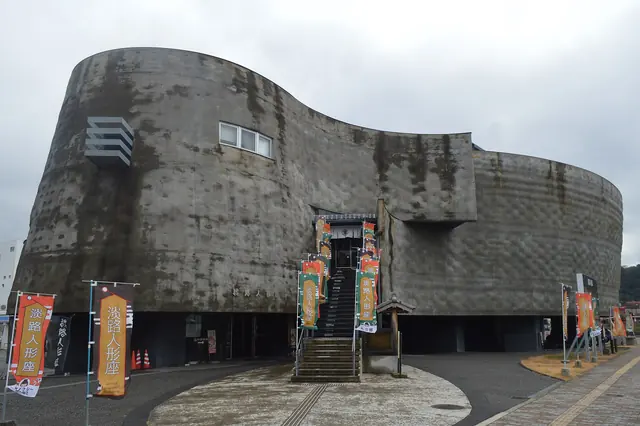
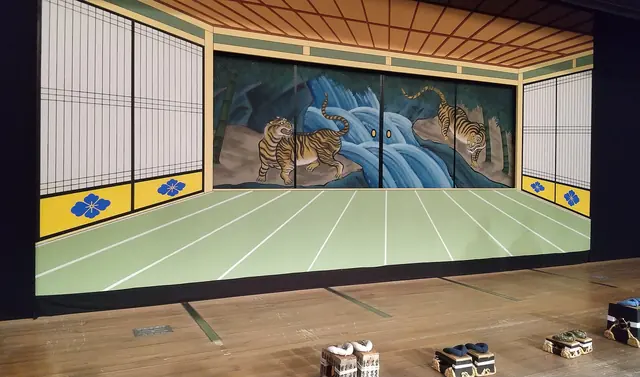
The island once had more than forty puppet troupes, large and small, active from the Edo period until early in the Showa era. The Awaji Ningyoza carries on the props and crest of one of them, the Yoshida Denjiro troupe. The art began in the Sanjo area of what is now Minami-Awaji City, and the troupe still performs in that city.
Awaji vs Osaka bunraku
- Bigger puppets: Awaji's puppets are built one size up from Osaka's, made so that people far back in open-air crowds could see them before there was electric light.
- Quick changes: costume changes in an instant on stage, called ningyo no hayagawari, and complete changes of scenery, called odogu-gaeshi.
- Women on stage: Hyogo's tourism bureau notes that women hold important roles in the Awaji troupe.
- A purpose-built hall: opened on 8 August 2012 and designed by the architect Shuhei Endo to look, from above, like a puppet's head.
A visit fits easily into a day on the island. Before each play, a member of the troupe introduces the story and shows how the puppets are worked. The staff lend out free audio guides, available in Korean, Chinese and English, with an explanation of puppet joruri and the plot of each piece. The hall has 179 seats, some of them suitable for wheelchairs, as well as a lift and accessible toilets.
Frequently asked questions
What is bunraku in simple terms?
Bunraku is Japan's classical puppet theatre. A narrator called the tayu voices every character, a shamisen player provides the music, and three puppeteers work each main puppet in full view of the audience.
What is the difference between bunraku and kabuki?
Both date from the early years of the Edo period, and both share a place on the UNESCO list with noh. Kabuki is played by actors, all of them men, who speak their own lines. In bunraku the roles are taken by puppets, and one narrator gives a voice to every character.
Is bunraku the same as joruri?
Not quite. Joruri is the chanted storytelling with shamisen music, which was popular before puppets joined it. Bunraku is the full puppet theatre performed to that narration, and its name comes from the Bunrakuza, a theatre of the late 19th century.
Where can I watch bunraku in Japan?
Bunraku's home stage is Osaka's National Bunraku Theatre, in Nippombashi, with main runs in January, April, July to August and November. Around Tokyo, the Japan Arts Council stages its seasons at borrowed halls while the National Theatre is rebuilt. A related form, Awaji Ningyo Joruri, plays at the Awaji Ningyoza on Awaji Island.
How much do bunraku tickets cost?
For the New Year 2027 run in Osaka, a part costs 5,500 or 6,700 yen, with lower prices for students. In Tokyo in December 2026, each programme costs 9,000 yen, and part tickets for a single act start at 2,000 yen. At the Awaji Ningyoza, adults pay 1,800 yen.
How long is a bunraku performance?
It depends on the programme. The shortest on this winter's bills is about 70 minutes, Programme III in Shinagawa and Kanagawa, while Programme II in Tokyo in December runs from 14:30 to 18:15. In Osaka, Part 3 of the New Year run lasts about 80 minutes.
Can I understand bunraku without speaking Japanese?
Yes, with some help. The Osaka runs hand out a free English synopsis, and the theatre rents an English audio guide for some shows. Around Tokyo there is a paid English audio guide, English subtitles through the EG-G app, and a synopsis inside the paid programme.
Can I take photos during a bunraku show?
No. Photos and audio or video recording are not allowed during the performance, so keep your phone switched off until you are back in the lobby.
Sources
Official and primary sources used for this page. Checked November 23, 2026.
- UNESCO: Ningyo Johruri Bunraku puppet theatre — origins around 1600, the narrator, shamisen and three puppeteers, the two kinds of play, about 700 and 160 plays, 2003 and 2008
- JNTO: Theater — 1684 in Osaka, roles of the three puppeteers, years of training, dress code, eating in the intervals
- JNTO: A guide to Japanese performing arts — kabuki, noh and bunraku compared
- Japan Arts Council: Bunraku at the National Bunraku Theatre — theatre for adults, the narrator and shamisen, the exhibition room
- Japan Arts Council: Autumn Bunraku 2026 — closing date and English help for the autumn run
Show all 24 sources
- Japan Arts Council: New Year Bunraku 2027 — dates, plays, times, prices and booking dates in Osaka
- Japan Arts Council: National Bunraku Theatre — opening in 1984, halls, seats, access, lift, shop and lockers
- Japan Arts Council: Exhibition on Yoshida Minosuke III — the tribute in the exhibition room
- Japan Cultural Expo: National Bunraku Theatre — English-speaking staff, Wi-Fi and the main runs each year
- OSAKA-INFO: National Bunraku Theatre — why bunraku took root in Osaka, puppet mechanisms, exhibition room
- Japan Arts Council: Performances schedule 2026–2027 — halls used near Tokyo in 2026 and 2027
- Japan Arts Council: National Theatre — opening in 1966 and closure for rebuilding
- Japan Arts Council: Bunraku in December 2026 — dates, programmes, prices and English help in Tokyo
- Japan Arts Council: Part tickets for December 2026 — acts, prices and rules for part tickets
- Japan Arts Council: English audio guide for December 2026 — the audio guide in Tokyo
- Japan Arts Council: Bunraku at Shinagawa Curian Hall, February 2027 — dates, programmes and prices in Shinagawa
- Japan Arts Council: Bunraku at KAAT, February and March 2027 — dates, seats and discounts in Kanagawa
- Japan Arts Council: Ticket information — booking routes, ticket collection, office hours and discounts
- Japan Arts Council: Ticket purchase guide — booking steps in English
- Japan Arts Council: FAQs — photography, doors, late entry and children
- Awaji Ningyoza: Home — the troupe's history, the hall and its puppets
- Awaji Ningyoza: Usage information — hours, show times, closing days, prices and access
- Awaji Ningyoza: How to enjoy (in Japanese) — the meaning of the black clothing
- Visit HYOGO: Awaji Puppet Theater — the Edo-period tradition and women in the troupe
Related guides
To cite or link to this page: Bunraku, Japan's puppet theatre: what it is, how three puppeteers work one puppet, bunraku vs kabuki and noh, tickets in Osaka and Tokyo, and the puppet theatre on Awaji Island — Japan Pocket Guide, https://japanpocketguide.com/culture/bunraku-puppet-theatre/