Culture · Crafts
Where to buy Japanese knives in Japan: Kappabashi in Tokyo, Doguyasuji in Osaka, Aritsugu in Kyoto, the knife towns of Sakai, Seki, Echizen, Tsubame-Sanjo and Tosa, which knife to choose, what knives cost, free engraving, knife-making workshops, tax-free shopping, and how to carry, pack and look after a Japanese knife
Japan's kitchen knives come from a handful of old craft towns, and the government's English magazine says that "almost all the knives used by professional chefs in Japan are believed to have been made in Sakai". You can buy one without going to a knife town, though. Tokyo and Osaka each have a whole street of kitchenware shops, and Kyoto has a knife shop on Nishiki Market that was founded in 1560. This guide starts with which knife to choose and what knives cost, then goes through the places to buy them: Kappabashi in Tokyo, Doguyasuji in Osaka, Nishiki Market in Kyoto, and the knife towns of Sakai, Seki, Echizen, Tsubame-Sanjo and Tosa, with hours, closing days and the workshops where you can make or sharpen your own. The last sections cover engraving, tax-free shopping, the law on carrying a knife in Japan, packing it for the flight home, and how to wash, sharpen and store it. We read every fact on 18 October 2026 in the pages of the Japan National Tourism Organization (JNTO), GO TOKYO, Sakai City, the tourism bodies of Osaka, Gifu, Fukui, Niigata and Shikoku, the knife shops themselves, the Ministry of Land, Infrastructure, Transport and Tourism (MLIT) and the Japan Tourism Agency, all listed in the Sources section at the end.
Last checked · Sources

In short
For most visitors the easiest places to buy a Japanese kitchen knife are two kitchenware streets: Kappabashi Dougu Street in Tokyo, with over 170 shops between Asakusa and Ueno, and Doguyasuji in Osaka's Namba, where Sakai Ichimonji Mitsuhide sells over 2,000 types of knives. In Kyoto, Aritsugu on Nishiki Market has been in business since 1560. To see knives being made, go to a knife town: Sakai near Osaka, Seki in Gifu, Echizen in Fukui, Tsubame-Sanjo in Niigata or Tosa in Kochi. For a first knife, the shops suggest a Santoku or a Gyuto, in stainless steel if you want easy care or carbon steel for the best edge. At the shop in Sakai's traditional crafts museum, bargains start at around 10,000 yen and the most expensive knives cost over 100,000 yen. Some shops, including Kama-asa Shoten in Kappabashi, engrave your name for free. Japanese law forbids carrying a blade over 6 cm unless you have a proper reason. Keep a new knife wrapped and boxed until it goes into your suitcase, and put it in checked baggage for the flight home, never in your cabin bag.
Where to buy Japanese knives: the short list
There are two kinds of place to buy a Japanese knife. The first is a kitchenware street in a big city, where shops sell knives from many makers side by side and some have staff who speak English. The second is a knife town, where the blades are forged, sharpened and fitted with handles, and where you can often watch the work or try it yourself. If you are in Japan for a week or two, a city street is the practical choice. If knives are part of the reason for your trip, a day in a knife town is worth it.
Where to buy Japanese knives, place by place
- Tokyo, Kappabashi: a street of over 170 kitchenware shops between Asakusa and Ueno
- Osaka, Doguyasuji: a covered street of kitchen tools in Namba, with one of the biggest knife shops
- Sakai (Osaka): the knife town of professional chefs, with a crafts museum and shop
- Kyoto, Nishiki Market: Aritsugu, a knife shop founded in 1560
- Seki (Gifu): a cutlery hall with about 2,000 items from over 70 makers
- Echizen (Fukui): Takefu Knife Village, a workshop shared by 14 knife companies
- Tsubame-Sanjo (Niigata): a metalworking area with a shop of about 10,000 items
- Tosa (Kochi): hand-forged blades from Kami City
The city streets and the knife towns are linked. Many of the knives in Tokyo and Osaka shops are made in Sakai, Seki or Echizen, and a shop will usually tell you where each one comes from. What a knife town adds is the workshop: the forge, the sharpening wheel and the craftsmen. The sections below cover each place in turn, with the knife towns after the cities.
Japanese knives in three numbers
- 170+shops on Kappabashi Dougu Street in Tokyo
- 2,000types of knife at Sakai Ichimonji Mitsuhide in Osaka
- 1560the year Aritsugu was founded in Kyoto
Which Japanese knife should I buy?
Start with the knife you will use most. Sakai Ichimonji Mitsuhide, a knife shop in Osaka that publishes buying guides in English, puts it simply: "The most common knives are the Gyuto and Santoku. They are great for nearly every task in the kitchen." If you buy only one knife, make it one of these two. The fish and sashimi knives are beautiful to own, but each is made for one job, and most are sharpened on one side only, which the section on bevels below explains.
Japanese knife types
The Santoku is the knife of the Japanese home. Ichimonji's glossary calls it "a blend of a Chef's Knife, Deba Knife and Nakiri Knife" and adds: "They are the most popular kitchen knife in Japanese households." Osaka Metro's guide to Doguyasuji says that "Japanese Santoku Knives are versatile—they can be used for meats, fish, and vegetables—and popular among international visitors." Its blade is usually 160 to 180 mm long. The Gyuto is "the Japanese version of the classic chef knife": longer, with a pointed tip, and it "can be used on nearly any meat or vegetable".
Six Japanese kitchen knives
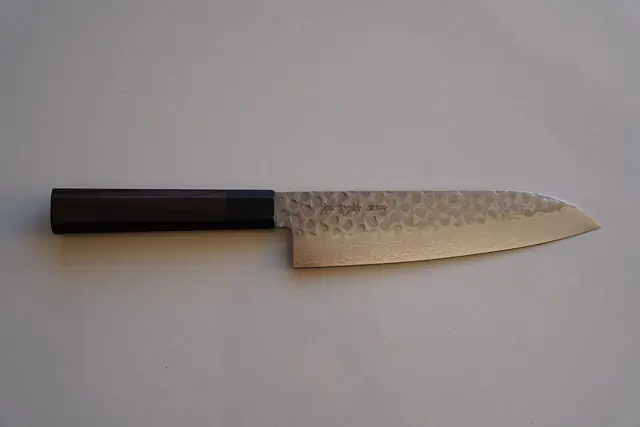 Santoku: the all-round knife of Japanese homes, for meat, fish and vegetables; usually 160 to 180 mm.
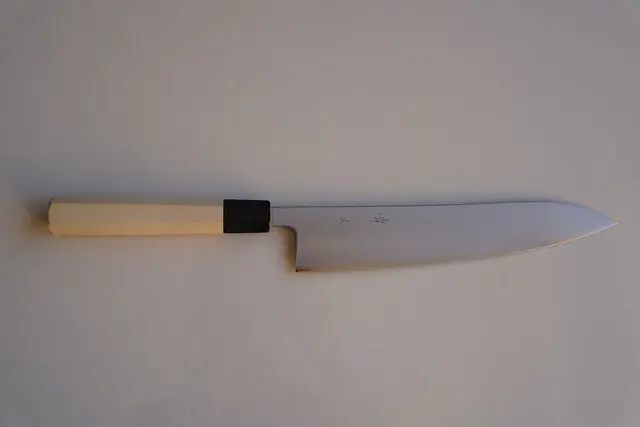 Gyuto: the Japanese chef's knife, longer and pointed, for almost any meat or vegetable.
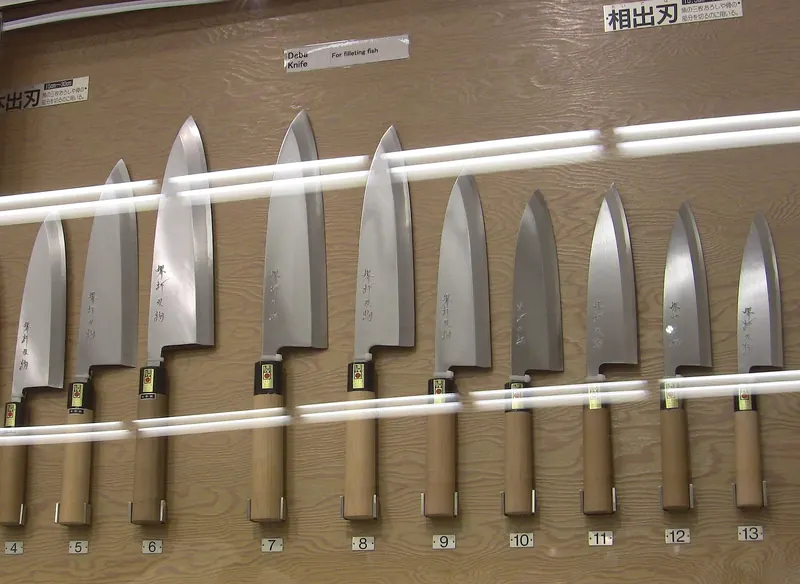
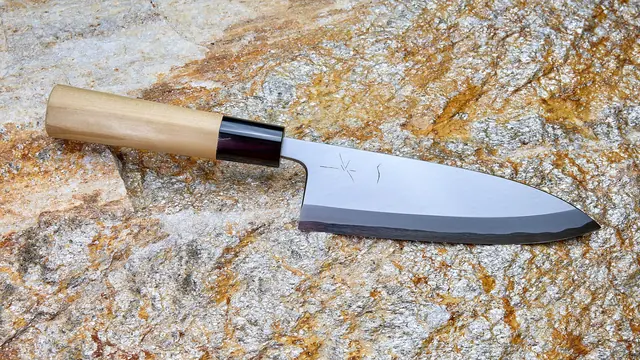 Deba: thick and heavy, for filleting fish; most are sharpened on one side.
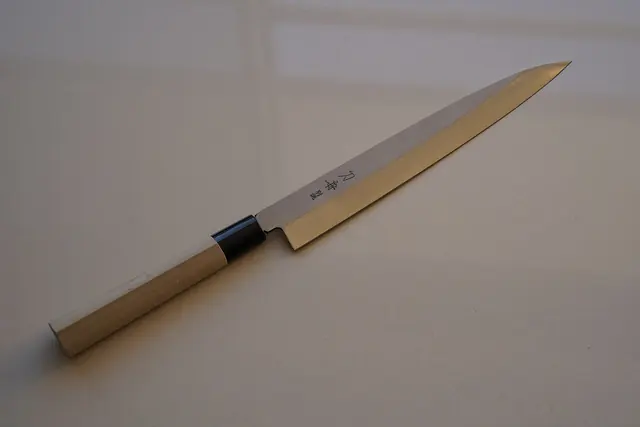 Yanagiba: the long, thin sashimi knife, 180 to 360 mm, sharpened on one side.
- Petty: a small knife of 120 to 150 mm for fruit, peeling and fine work.
- Specialist knives: Sakai makers also make knives just for tuna and for pufferfish sashimi.
Two of the six are for fish. The Deba is "a traditional Japanese knife used for filleting fish". It is "thick and heavy", and "Most often, Deba are single-edged blades." The Yanagiba is the knife "called sashimi knives or sushi knives": "long, thin and sharpened on only one side, usually the right-hand side". The Petty is the small one, "ideal for slicing small fruits and vegetables, as well as peeling and decorative food work". In Sakai, the Osaka Convention & Tourism Bureau found makers who even make knives just for tuna and for pufferfish sashimi.
Single or double bevel
How the edge is sharpened matters more than how a knife looks. Ichimonji's glossary says that "Western knives will always have a double bevel, essentially the edge is on both sides of the blade", and that "Traditional Japanese knives only have 1 single edge on the blade while the opposing side is usually flat or slightly concave." A Santoku or Gyuto from a Japanese shop is usually sharpened on both sides, like the knives you know. A Deba or Yanagiba usually is not. Visiting a Sakai maker, the Osaka Convention & Tourism Bureau noted that "single-edged knives have the advantage of cutting at a sharper angle".
Carbon or stainless steel
The steel comes next, and Ichimonji calls it the biggest decision: "The most important choice when buying your first Japanese Knife is between carbon and stainless steel. Carbon steel knives offer the best cutting performance and ease of re-sharpening. However, they require more maintenance." Its advice for the other side is just as plain: "A stainless steel knife is recommended if convenience and time-saving are your priorities." Carbon steel rusts if you leave it wet. Stainless steel is easier, but it is not rust-proof either, and the care section at the end of this guide covers both.
Japanese knives are also harder than most European ones. On the Rockwell scale, Ichimonji puts most Japanese knives at 56 to 62 and German chef knives at 53 to 58, though it adds that harder does not always mean better: it depends on what the knife is for. Many blades are made in layers. Sakai City explains that "Sakai cutlery consists of a two-layer structure of soft ferrite and hard steel", and labels in shops use a few more words for how the steel is put together.
Steel words you will see on labels
- Carbon steel: the best edge and the easiest to re-sharpen, but it rusts if left wet
- Stainless steel: easier care; still dry it after washing
- Two layers: soft iron backed by hard steel, the traditional Sakai way
- San-mai: three layers of steel forged together
- Damascus: a blade whose outer layers show a rippled pattern
- Rockwell hardness: Japanese knives 56 to 62, German chef knives 53 to 58
Blade length
Longer is not better in a home kitchen. Ichimonji gives a size for home cooks and a larger one for chefs. Before you go, measure your chopping board and the drawer or block where the knife will live: a 240 mm Gyuto needs room.
Blade lengths the shops suggest
- Santoku: 165 to 180 mm, for home cooks
- Gyuto: 210 mm for home cooks, 240 mm for chefs
- Deba: 165 mm for home cooks, 210 mm for chefs
- Yanagiba: 210 to 240 mm for home cooks, 270 to 330 mm for chefs
- Petty: 120 mm for peeling small fruit and vegetables, 150 mm for larger cuts
Japanese or Western handle
Many knives come with a choice of handle. Ichimonji notes that "Santoku are available with western-style handles or with Japanese-style handles (Wa-Santoku)", and of the Japanese style it says: "Japanese-style handles allow for different grip styles and sometimes more agile handling. This will require a little practice to get used to for most." In Sakai, handles are traditionally "made of rot-resistant magnolia wood", Sakai City says. A worn handle is not the end of a knife, either: "Handles used on Japanese knives can usually be replaced."
Two kinds of handle
- Western-style: the shape of a European chef's knife, the one most visitors know from home
- Japanese-style (wa): a plain wooden handle; Wa-Santoku and Wa-Gyuto on a label mean this kind
- Wood: magnolia in Sakai, chosen because it resists rot
- Repairs: a damaged Japanese handle can usually be replaced
How much is a good Japanese knife?
The clearest figures we found come from Sakai. Describing the shop in the city's traditional crafts museum, the Osaka Convention & Tourism Bureau says: "The most expensive ones cost over 100,000 yen, but there are also some bargains available for around 10,000 yen." Take those figures as a guide to one shop's prices, not to every shop. A blade cover, a whetstone and a made-to-order knife all add to the cost or the wait.
Knife prices in Japan (October 2026)
- Sakai museum shop: bargains from around 10,000 yen; the most expensive over 100,000 yen
- Make your own at Wada, Sakai: 12,000 yen, with the knife included
- Engraving: free at some shops, including Kama-asa Shoten in Tokyo
- Blade cover (saya): best ordered with the knife, so that it fits
- Made-to-order: expect a wait; Sakai makers say ordered knives cannot be had straight away
Are Japanese knives cheaper in Japan?
We could not find any official comparison of knife prices in Japan and abroad, so we will not promise that a knife costs less here. What Japan gives you is choice and a chance to hold the knife first. Ichimonji's Osaka shop has over 2,000 types of knife, Kama-asa Shoten in Tokyo lets you handle a knife before you buy it, and some shops engrave your name at no charge. Visitors can also shop tax-free, and for anything you buy from 1 November 2026 the refund comes after Customs has seen the goods on your way out of Japan.
Where to buy Japanese knives in Tokyo: Kappabashi
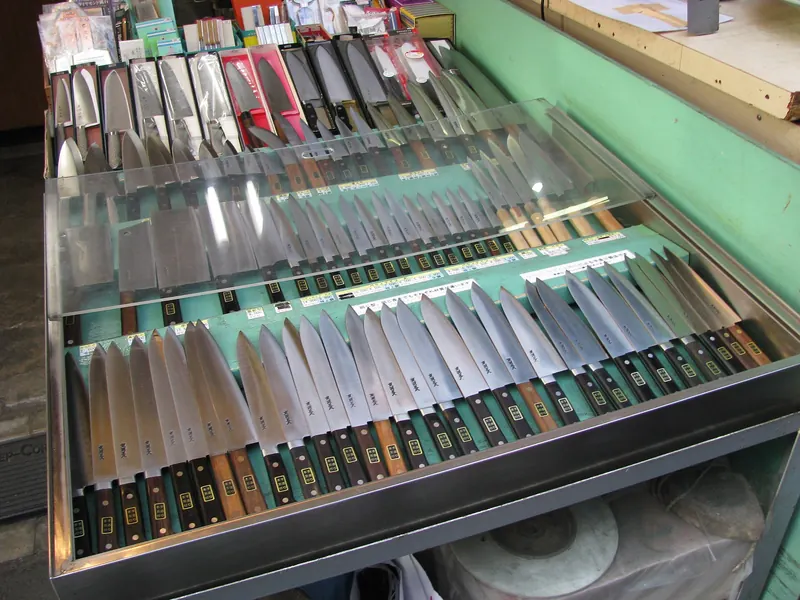
Tokyo's kitchenware street is Kappabashi Dougu Street, in Taito City between Asakusa and Ueno. Its shopping street association describes it like this: "At 800 meters (nearly a half-mile) in length, and with over 170 shops, this is Japan’s largest shopping street devoted to kitchen implements." Merchants "first began gathering in the Kappabashi area around 1912", and it is still a wholesale district used by restaurant cooks, but GO TOKYO notes that "Most stores are open to the public". The closest station, Tawaramachi on Tokyo Metro's Ginza Line, is about five minutes away on foot.
One of the best-known knife shops on the street is Kama-asa Shoten. In a 2020 feature, JNTO's Japan Magazine wrote that "Kama-asa Shoten is a longstanding shop that has been around since 1908", and that "On the first floor are about a thousand knives in 80 different varieties, for preparing both Western and Japanese cuisine, and come in all sizes and materials." It caters well for visitors from abroad: "Kama-asa Shoten always has English- and French-speaking staff on site, so you can talk to them about which knives are best for what you want to do with them." The magazine adds: "They’ll also engrave any knife you purchase there for free." You can choose a short message, or a name written in kanji, katakana or the Latin alphabet.
A newer arrival is a knife maker from Sakai. GO TOKYO writes: "Be sure to visit the Kappabashi branch of the venerable Sakai, Osaka, knife maker Jikko, which opened in 2021." It continues: "The gallery-cum-shop displays approximately 150 knives, including knives with Damascus steel blades and knives with blades featuring Mt. Fuji, with more in the back." For visitors, the useful line is this one: "Custom orders are accepted, and English-language support is available. International shipping can be arranged."
Two Kappabashi knife shops
- Kama-asa Shoten: since 1908; about a thousand knives; English and French; free engraving; 2-24-1 Matsugaya
- Jikko Cutlery Tokyo Kappabashi: a Sakai maker's branch, opened in 2021; about 150 knives on show; custom orders; English; international shipping; 1F and 2F Matex Building, 1-9-10 Matsugaya
Where to buy Japanese knives in Osaka: Doguyasuji
Osaka's kitchen street is Doguyasuji, in Namba. Osaka Metro's guide, as of 2021, says: "Today, Doguyasuji is a 150 m long covered street packed with tableware, kitchen knives, pots, pans, Takoyaki grills, plastic food samples…you name it." Namba Station is about five minutes away on foot. The north entrance is next to the Namba Grand Kagetsu theatre, under a large sign with the character 道 (do).
The big knife shop here is Sakai Ichimonji Mitsuhide. Its store guide begins: "From 1953 to today, Sakai Ichimonji Mitsuhide has been connecting home cooks and professional chefs to sharpness through Japanese knives from the heart of Osaka." It adds: "We carry over 2,000 types of Japan, especially Sakai, made knives." Staff can help in English, Korean, Chinese, Thai and Spanish, though that depends on who is on shift. Osaka Metro found that "you can even get your name on your new knife, free of charge!", and that "They can even choose kanji characters to match the sound of your name".
Sakai: the knife town of professional chefs
Sakai is a city just south of central Osaka, about 20 minutes south of Tennoji Station on the Hankai tram, which runs along the street. The Tokyo Metropolitan Government's guide to traditional crafts traces the fish knife to Sakai: "in the middle of the Edo period (1600-1868), the deba-bocho or pointed knife appeared". It ends: "The special feature of these knives is the finely ground edge and point and their reputation is as good as ever." Sakai City says: "Crafted with great care one blade at a time, Sakai cutlery is popular and widely respected among professional chefs".
The work is shared out between workshops. Sakai City lists forging (hizukuri), sharpening and honing (hazuke or togi) and hafting (ezuke), when the handle goes on. Wada, a Sakai knife shop visited by the Osaka Convention & Tourism Bureau, put it like this: "In Sakai, there has been a detailed division of labor between craftsmen who forge the blades, craftsmen who make the handles, craftsmen who engrave the names, craftsmen who sharpen the knives, and craftsmen who sell the knives." Wada also warned that "even though demand is increasing, the number of craftsmen is decreasing, and the reality is that ordered knives cannot be obtained immediately".
How a Sakai knife is made
- Forging: soft iron and hard steel are heated and hammered together into a blade (hizukuri)
- Sharpening: the blade is ground and honed to an edge (hazuke or togi)
- Hafting: a handle of magnolia wood is fitted (ezuke)
- Engraving and selling: in Sakai, these are separate crafts too
Sakai Traditional Crafts Museum (Sakai Denshokan)
The easiest place to see and buy Sakai knives is the city's crafts museum, the Sakai Traditional Crafts Museum, called Sakai Denshokan in Japanese. Sakai City's page lists a shop on the ground floor, TAKUMI SHOP, with knives and whetstones. Upstairs is the knife museum CUT, which shows how Sakai knives are made, and its centrepiece is a chandelier called HIBANA, built from the materials of each stage of making a knife. Craft demonstrations are free to watch.
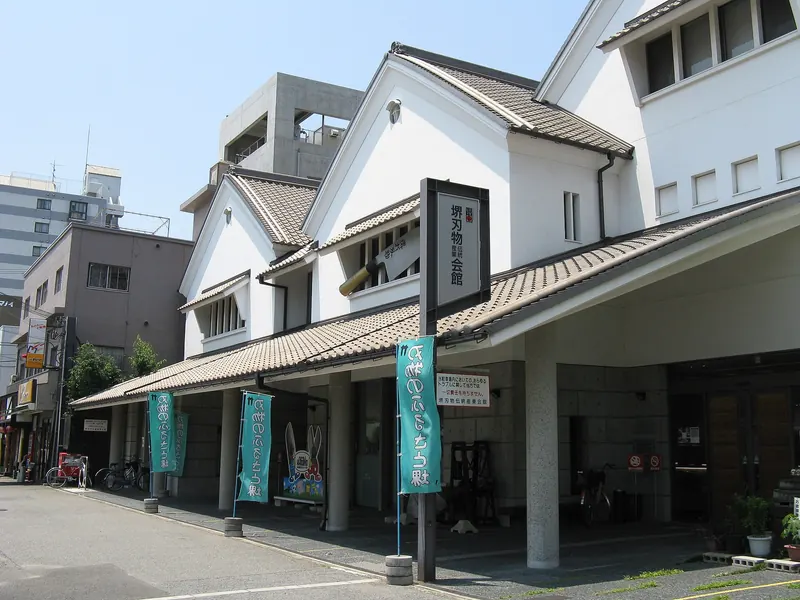
The museum also has a guide from France. Eric Chevallier, a French-born bladesmith, has worked there since 2018, and the government's English magazine reported in 2022 that knife sales at the museum had doubled in that time. He told the magazine that a Sakai knife's "sharpness will not diminish for more than fifty years with maintenance".
Wada is a long-established knife shop in Sakai. Founded over 150 years ago, it "originally started out as a specialist in handle attachment", and today it sells knives and sharpens and looks after them. The shop is at 1-1-1 Shinmeicho Higashi and opens from 9:00 to 18:00, closed on Saturdays and Sundays. Its knife-making experience is in the workshops section below.
Kyoto: Aritsugu on Nishiki Market
Kyoto's best-known knife shop is Aritsugu, in Nishiki Market, the covered food street in the city centre. The market's guide says it was founded in 1560 as a swordsmith, Fujiwara Aritsugu, and today sells knives, pots and other cooking tools to customers "from top chefs of Kyoto cuisine to ordinary households". The shop's own words explain why people come back: "We believe that a knife has a lifelong relationship with its owner from the time it is bought." And: "We strive to provide our customers with long-lasting use of our knives through repairs such as sharpening."
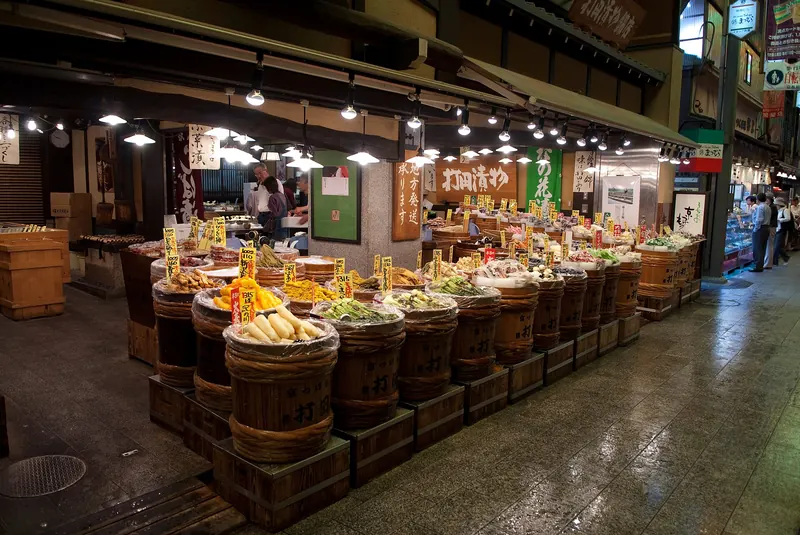
Nishiki Market is narrow and busy, and the market asks visitors not to walk while eating. Shop for your knife first, before the food stalls, so you are not juggling a snack and a parcel.
The knife towns: Seki, Echizen, Tsubame-Sanjo and Tosa
Sakai is not the only knife town. Four more are worth a day trip if you want to buy where the knives are made, watch the work, or make one yourself. Each has somewhere to watch the work or try it, and the boxes below give the trains.
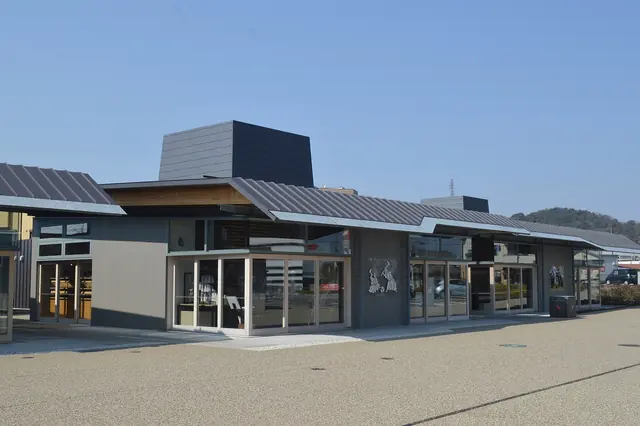 Seki (Gifu): a knife hall with about 2,000 items from over 70 makers, and a sharpening workshop.
- Echizen (Fukui): a shared workshop where you can watch knives being forged, and a knife class.
- Tsubame-Sanjo (Niigata): metal towns with a shop of about 10,000 items and an autumn factory festival.
- Tosa (Kochi): hand-forged blades from a forestry region, and a six-hour forging workshop.
Seki, Gifu: Japan's cutlery town
Seki, in Gifu Prefecture, is "one of Japan’s foremost centers of cutlery making", according to Central Japan's crafts guide. It was a sword town first. When samurai lost the right to wear swords in the early Meiji era, JNTO explains, "Artisans diversified into knives, scissors, cutlery, and other tools, for which Seki is still renowned." The same crafts guide adds: "In 1888, the first Japan made pocket knife was forged in Seki."
For shopping, start at Sekiterasu, the town's tourist centre, with a tourist information desk, a café and a souvenir shop. Knives are sold next door, on the same grounds, at the Gifu Seki Cutlery Hall. Gifu Prefecture's tourism site says it sells about 2,000 items from over 70 knife makers. It also has a sharpening workshop, where you can try sharpening a kitchen knife yourself and where craftsmen re-sharpen knives.
Echizen, Fukui: Takefu Knife Village
The Tokyo Metropolitan Government's crafts guide says forging in Echizen began at the start of the Muromachi period, when a Kyoto swordsmith looking for raw materials came to the area and made sickles for local farmers. Today, "Knives, scissors, hatchets and sickles are the main products being fashioned using time honored Japanese forging skills before being finished by hand."
The place to visit is Takefu Knife Village, a workshop that 14 knife-making companies run together. Fukui's tourism site says it has a viewing ramp over the workshop floor, so you can watch the forging, and it adds that "Since fewer artisans are working in the workshop on weekends, we recommend visiting on weekdays." In the same city, the Echizen Knife Center has a display of Echizen knives and a shop that sells knives for home and professional use.
JNTO also lists a private tour of two Echizen workshops, one that makes lacquered handles and one that makes blades, lasting about two and a half hours. At the blade workshop, it says, "You’ll hear of the history and the traditional methods that have made Japanese knives the choice of fine chefs all over the world."
Tsubame-Sanjo, Niigata: the metal towns
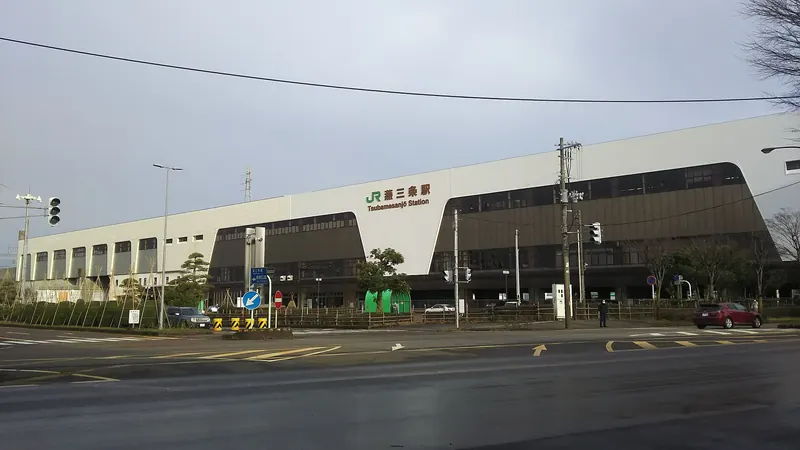
Tsubame-Sanjo is two cities, Tsubame and Sanjo, in Niigata Prefecture. JNTO says the two cities "were both famous for metal products since the Edo period" and are home to factories known for Japanese-style nails, knives and tableware. It adds: "In fact, the cutlery used at the Nobel Banquet is produced in Tsubame Sanjo." The area is about two hours from Tokyo on the Joetsu Shinkansen.
For shopping, the Tsubame-Sanjo Regional Industries Promotion Center has a shop that displays and sells about 10,000 items: Western-style metal tableware, knives, kitchen goods and pots. For making something yourself, there is the Sanjo Blacksmith Dojo, where local blacksmiths run workshops. JNTO is clear about the limits: "The workshops are provided only in Japanese for a fee, and only when there are enough instructors available."
Tosa, Kochi: free-forged blades
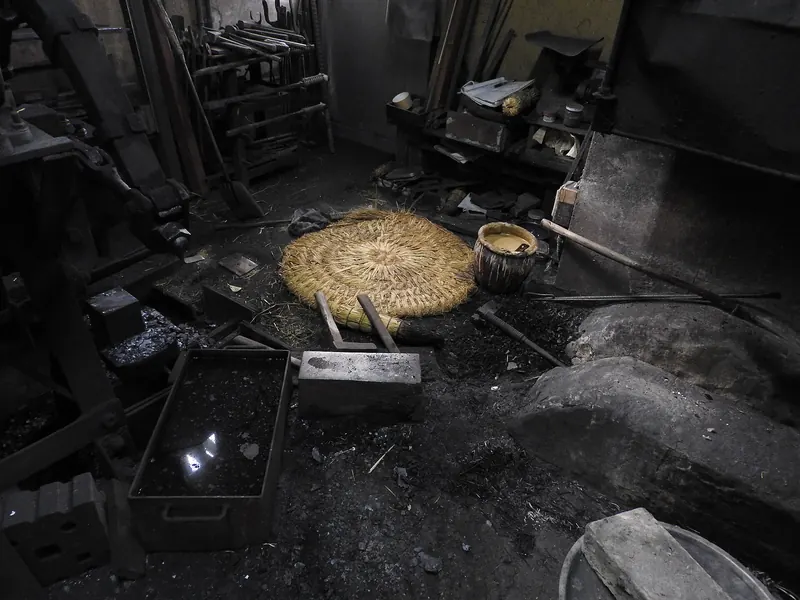
Tosa knives (Tosa uchi-hamono) come from Kochi Prefecture on the island of Shikoku, especially Tosayamada-cho in Kami City. Shikoku's tourism site says they have "over 400 years of history" and grew out of forestry: people in Kochi made blades for felling trees in the mountains, with influences from sword-making. It goes on: "The greatest characteristic of Tosa Uchi-hamono knives is their “free forging”—each product is forged and shaped by the hands of skilled craftspeople in accordance with its purpose, enabling knives to be made according to the user’s request, whatever form that may take." The range runs from kitchen knives to sickles, hatchets and axes, and the site ends with an invitation: "Why not visit Kochi to find a blade just for you?"
Knife-making workshops in Japan
If you would rather make a knife than buy one, several knife towns run classes. Most need booking days or weeks ahead, many run only on weekdays, and the instructors may not speak English, so read the details before you set aside a day for one. At Sakoda Hamono in Kochi, JNTO says, "At the end of the session, you’ll take home the knife you personally crafted." Takefu Knife Village says the same of its class: "You can take your handmade knife home the same day, making it a special, one-of-a-kind keepsake from your trip."
Knife workshops and their prices (as listed in October 2026)
- Takefu Knife Village (Echizen): forge a double-edged knife, about 6 hours, 20,000 yen with a 5,000 yen deposit; 18 and over; book at least a week ahead
- Takefu Knife Village (Echizen): sharpen a small deba or a double-edged knife on a whetstone and fit the handle, 1 to 2 hours, 12,000 yen; 18 and over; book at least a week ahead
- Wada (Sakai): sharpening and fitting the handle, with a visit to the crafts museum, 90 to 120 minutes, 12,000 yen including the knife
- Sakai Toji (Sakai): fit a handle to a Santoku and have your name engraved, about 90 minutes, weekdays at 10:00 or 14:00, 18,150 yen, at least two people
- Sakoda Hamono (Tosa): hand-grinding and forging your own blade, about 6 hours plus an hour for lunch
- Sanjo Blacksmith Dojo (Tsubame-Sanjo): workshops making letter openers, traditional Japanese nails and more; in Japanese only; book ahead
- Gifu Seki Cutlery Hall (Seki): try sharpening a kitchen knife in its sharpening workshop
Getting a name engraved on your knife
Two of the shops in this guide, Kama-asa in Tokyo and Sakai Ichimonji Mitsuhide in Osaka, engrave names for free. Ichimonji's FAQ explains how it works. "The engraving position and font style are selected by our staff based on what they feel will look best (also known as omakase style)." For a visitor's name, "By default we engrave foreign names in katakana, but we can engrave in phonetic-based kanji upon request." And: "We do not engrave on the knife's handle and only engrave on the blade. This way, you can replace the handle later and keep your engraved name on the knife for its lifespan."
Before you ask for an engraving
- Choose the script: katakana spells a foreign name by sound; kanji can be picked to match its sound.
- What to write: a name, a date or a short phrase; Ichimonji will not translate a phrase for you.
- Single-bevel knives: the name goes on the front only, because engraving the back would hurt the cut.
- Returns: Ichimonji says engraved knives cannot be refunded, so check the spelling first.
A Japanese knife as a gift
If the knife is for someone else, you may wonder whether a blade sends the wrong message. In Japan it does not. Asked whether a kitchen knife makes a good wedding present, Ichimonji's FAQ answers yes, and says that in Japan such a gift is seen in a good light. It explains the thinking behind it: "In Japan, giving a kitchen knife as a gift is seen as giving someone a lifelong tool that they can use to cut away the bad luck around them, paving for a bright future ahead." Its answer to the question of bad luck is short: "So no, it is seen as a lovely present and you can give one comfortably!"
The wrapping is part of the gift, and at Ichimonji it costs nothing: "We wrap all of our knives free of charge in wrapping paper." The shop adds a ribbon when a knife is a present, and at some times of the year it offers mizuhiki, the decorative cord used on Japanese gifts.
Tax-free shopping for knives
The tax-free system for visitors is changing this autumn. Until 31 October 2026, a tax-free shop simply charges you the price without the consumption tax. The Japan Tourism Agency explains the new system, which takes over on 1 November 2026. Under it, tax is charged as normal when you pay, and you get it back once a customs check, at the airport or port you leave from, confirms that the goods are going abroad with you. The basic rules stay the same. The minimum is unchanged at 5,000 yen, excluding tax, in a single shop on a single day, and the goods must be ones you carry out of the country yourself.
A single knife often clears that line. A knife of around 10,000 yen, the price of the cheaper knives at Sakai's museum shop, qualifies on its own at a shop that offers tax-free sales. Our tax-free calculator shows how much tax a given price includes.
Getting the tax back at the airport (from 1 November 2026)
- Arrive early: the check comes before the airline counter, so give it time
- Find a terminal: customs kiosks stand in the international departure lobby, on the way to bag drop
- Scan your passport: do it within 90 days of buying; the answer appears in a few seconds
- Read the screen: green means you have finished; red means Customs looks at the goods in its inspection area
- Check in: only now hand over the suitcase with the knife packed inside
Seven airports also let you do the check on your phone through Visit Japan Web: Haneda, Narita, Kansai, Chubu, Fukuoka, Naha and New Chitose. It works only where the airport's dedicated Wi-Fi for the check reaches, before you go through security. Customs looks at each receipt as a whole, so if one thing bought on a receipt is not with you, every item on that receipt loses its refund. A knife bought with other shopping on one receipt has to travel with all of it to the check.
Carrying a knife in Japan and flying home
The law on blades in Japan is short and strict. Article 22 of Japan's law on firearms and swords forbids anyone to carry a blade more than 6 cm long, except for work or for some other proper reason. Most kitchen knives are longer than that, and the article does not list what counts as a proper reason, so keep it simple: the knife stays in the shop's packing, and it stays in your room on the days you go out.
Shipping is the other way to get a knife home, but not every shop offers it for knives bought over the counter. GO TOKYO says Jikko's Kappabashi branch can arrange international shipping. Ichimonji's FAQ, asked about posting a knife bought in its Osaka shop, replies: "We currently do not offer this service, and advise instead to purchase through our web store as you may qualify for free international shipping."
On the train
Trains have their own rule. After an attack on a Tokaido Shinkansen train in June 2018, the national railway rules were changed so that a blade may come on board only if it is packed in a way that cannot hurt other passengers. The transport ministry's guideline on packing says kitchen knives are covered, ceramic ones included, and that any blade over 6 cm must be packed so it cannot be pulled out and used straight away. JR Kyushu's rules on hand luggage say the same.
How to pack a knife for the train
- Cover the tip: a sheath of plastic or leather, or a piece of cardboard over the point
- Wrap it: newspaper around the whole knife
- Bag it: a strong bag, box or case that the knife cannot slip out of
- Or keep the shop's packing: the packaging the shop gave you is one of the guideline's examples
Railway staff may check how a knife is packed, so keep it packed the whole way.
On the plane home
A kitchen knife flies in the hold. JNTO's guide to Japanese knives, in its French edition, says that knives are not allowed in hand luggage but are allowed in checked baggage, and it advises packing the knife carefully in your suitcase in a protective sheath. It also suggests keeping the receipt, in case you need to show where the knife came from and that you bought it legally.
The ministry's list of items restricted on aircraft has one narrow exception for the cabin: "Round-bladed and non-dangerous knives like butter knives are permitted as carry-on baggage." An oyster knife is not one of them, and a Swiss Army knife is refused in the cabin because of what it looks like. On flights inside Japan the rule is the same, and our domestic flights guide covers the rest of the bag rules.
Knives on the flight home
- Kitchen knives: in checked baggage only, in a sheath or the shop's box
- Butter knives: round-bladed ones may go in the cabin
- Oyster knives: not in the cabin
- Swiss Army knives: not in the cabin, because of how they look
- Receipt: keep it, to show where and when the knife was bought
Japan's rules only get the knife out of the country. Your own country decides whether it can come in, and Ichimonji's FAQ reminds buyers: "Please be mindful that laws, customs duties, and import charges differ based on country". It adds: "We always advise checking the rules of the destination country to ensure safe passage of your order."
Looking after a Japanese knife
A Japanese knife needs a little more care than most, and it rewards it. Ichimonji's care guide opens with the promise: "Correctly caring for your knives ensures they perform at their best and last for years to come." Its FAQ makes clear that the advice is not only about its own blades: "These rules generally apply to all Japanese kitchen knives, not just ones from us." The habits below cover carbon steel and stainless steel alike.
A new knife
A new blade is at its most fragile. Ichimonji explains that the surface of its knives is made harder than it needs to be, so that the steel inside is well quenched, and warns that "new blades can chip relatively easily if you're not careful". Its advice: "To avoid chipping, be sure to handle new knives gently. After they go through two or three cycles of use and sharpening, their condition will adjust, and they will be less prone to chipping."
Even the all-round knives have limits. Of the Santoku, Gyuto and Petty, the FAQ says: "While they will cut most things, they won't cut everything." It names bones and frozen food as the things most likely to damage them.
Washing and drying
Never put a Japanese knife in the dishwasher. Ichimonji's answer to the question is "No. Our knives must never be washed in a dishwasher. This is the case with most professional-grade knives made in Japan. Doing so even once can destroy the knife, so please be very careful." It gives three reasons: the jets of water can push other things against the edge, a wooden handle can swell or crack, and dishwasher detergent makes a blade rust badly and fast.
Wash by hand instead: "Wash all Japanese kitchen knives with warm soapy water using the soft side of a kitchen sponge, and thoroughly dry them with a dry hand towel before storage." The rough side of the sponge is for removing rust only. Two more warnings: "Do not wash knives with boiling water, as this will cause the blade to warp", and "Do not wash your knives with bleach, chlorine, or any detergents with an acidic or fruit base." Warm water helps the drying too: "If you rinse blades with lukewarm water, they will accumulate heat, which helps them dry faster." Water that gets into the handle can rust the steel inside it and crack the wood, so, Ichimonji says, "it is crucial to always dry your entire knife, including the handle."
Daily care for a Japanese knife
- Hand wash only: never the dishwasher, not even once.
- Warm, not boiling: boiling water can warp the blade.
- No bleach: and no acidic or fruit-based detergents either.
- Dry it at once: blade and handle, with a dry towel.
Rust on carbon and stainless steel
On carbon steel, rust starts as a light brown tint, which Ichimonji says is red rust beginning; left alone, it works its way into the steel and leaves holes. Stainless steel is not immune either: "Stainless steel knives do not usually rust red. Instead, they get black rust spots which penetrate into the steel, resulting in tiny holes forming." The cure is the same for both: "To avoid rust, it is essential to clean knives thoroughly and dry them well." A new carbon knife needs the most attention: "New carbon steel knives tend to rust more easily, so be particularly careful to dry them thoroughly."
If you do find a spot, deal with it the same day: "If rust does appear, it is crucial to get rid of it as soon as possible. You can scrub the rust off with a non-woven scrub pad."
Rust on a Japanese knife
- Carbon steel: a light brown tint is red rust starting; left alone, it pits the blade
- Stainless steel: black spots instead of red, which also bore into the steel
- New carbon blades: rust most easily, so dry them with extra care
- Removing it: a non-woven scrub pad, as soon as you see it
- Handles: rust inside a handle can make the wood swell
Sharpening
A Japanese knife is sharpened on a whetstone, and sooner than you might think: "Don't wait until your knife starts to feel blunt, as it will likely be already damaged by then." Ichimonji's test uses a tomato: "A good way to test this is by slicing a tomato, and seeing if the knife catches or has any resistance." For a schedule, "If you are still unsure, we recommend sharpening your knife at least once every three months, but more frequently than that if you are using it in a professional setting." For the angle, "We recommend sticking between 10 to 15 degrees per cutting edge side." A keen edge is also the safer one: "In the kitchen, a sharp knife (if used properly) is a safe knife."
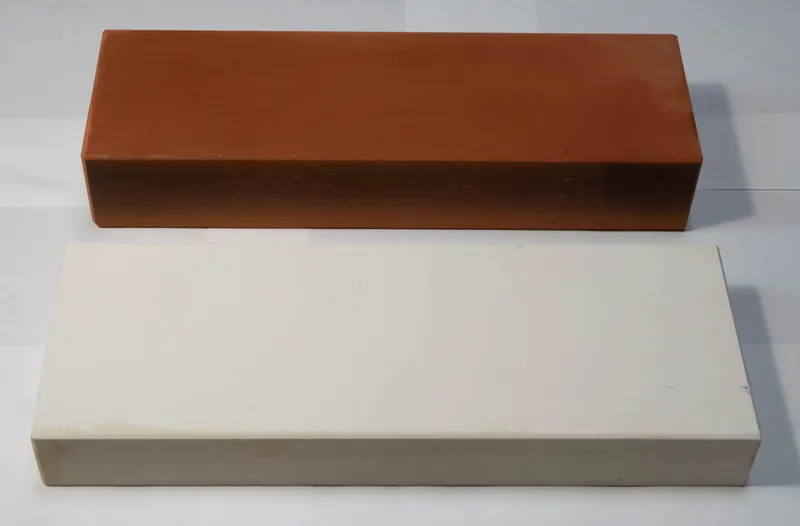
Whetstones are sold by grit number, and Ichimonji's guide says the best results come from three: coarse, medium and fine. For home use it mentions a two-sided stone with No. 1000 on one face and No. 220 on the other. Soak the stone well before you start, add water as you work, and put a cloth under it so it does not move. On a double-bevel knife, the guide sharpens the front of the blade about 70% of the time and the back about 30%, and the polishing marks should show about 5 to 10 mm from the edge. A single-bevel knife is sharpened mostly on the front.
Whetstone grits
- Coarse: around No. 200
- Medium: around No. 1000
- Fine: around No. 3000 to 6000
- Before you start: soak the stone, keep it wet, and put a cloth under it
- For home use: a two-sided stone with No. 1000 and No. 220
Storing a knife
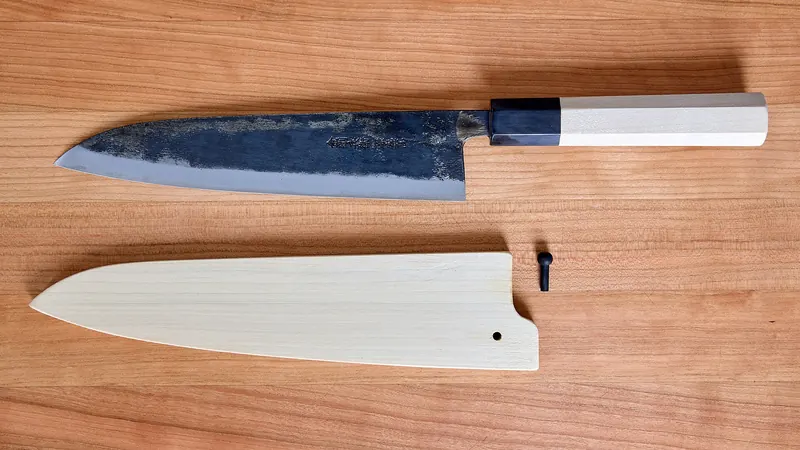
A saya, the protective sheath made for a knife, guards the edge in a drawer or a bag, but it is not a place to leave a knife for months. Ichimonji explains: "A saya's interior can get humid in certain conditions, which will cause rust. We advise to instead oil your knife, and wrap it in dry newspaper." For a long break, clean the knife, dry it completely, and put a few drops of knife oil on the blade, edge included, since the edge rusts first. Then: "If you still have the original box your knife came in, it is best to store your covered knife in that."
Use knife oil rather than whatever is in the cupboard: "Knife oil is tailored specifically to protect knife blades while being easy to clean off before the next use." The FAQ says most cooking and salad oils should not be used. The care guide sums up the last step: "Once the blade is thinly and consistently coated in knife oil, wrap it in dry newspaper and store it in a place with low humidity."
Which knife town for your trip
You do not have to plan a trip around a knife. Each of Japan's three big tourist cities has a good place to buy one, and four of the knife towns can be added from a city you will already be in. Pick the card that matches your route.
Where to buy a knife on your route
- Tokyo: Kappabashi, a 5-minute walk from Tawaramachi Station; Tsubame-Sanjo is about 2 hours away on the Joetsu Shinkansen.
- Osaka: Doguyasuji in Namba; Sakai is about 20 minutes south of Tennoji on the Hankai tram.
- Kyoto: Aritsugu on Nishiki Market, open 10:00 to 16:00 and closed on Wednesdays.
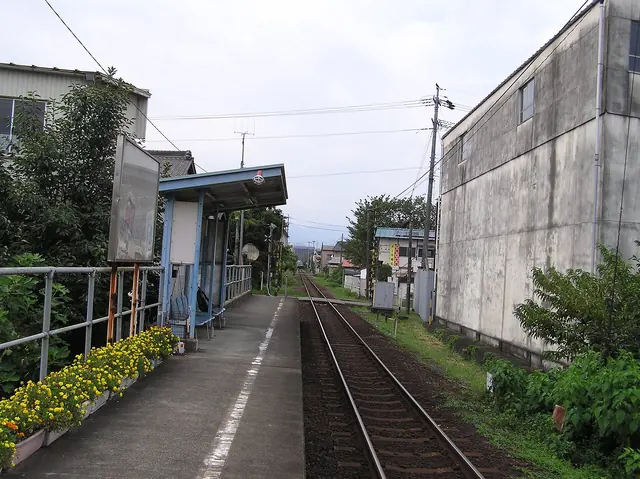 Seki (Gifu): the JR Takayama Line from Gifu to Mino-Ota, and the Nagaragawa Railway on to Sekiterasu-mae.
- Echizen (Fukui): from Tokyo, about 3 hours on the Hokuriku Shinkansen to Fukui and 20 minutes on to Takefu; from Kyoto, the Thunderbird to Tsuruga and the Hapi Line Fukui.
- Tosa (Kochi): about 1 hour 30 minutes by air from Haneda to Kochi Ryoma Airport, then a drive to the workshops.
Hours and festival dates change from year to year, and several of the facts in this guide come from older pages: the Kama-asa details from 2020 and the Doguyasuji guide from 2021. Check with the shop a few days ahead, especially for a workshop you have booked.
Frequently asked questions
Where should I buy a Japanese knife in Japan?
For most visitors, a kitchenware street in a big city: Kappabashi Dougu Street in Tokyo, with over 170 shops, or Doguyasuji in Osaka's Namba, home to Sakai Ichimonji Mitsuhide. In Kyoto, Aritsugu on Nishiki Market was founded in 1560. If you want to see knives being made, go to a knife town such as Sakai, Seki or Echizen.
What is the best Japanese knife for a first-time buyer?
A Santoku or a Gyuto. Both are sharpened on both sides and handle most kitchen jobs. Shops suggest 165 to 180 mm for a home Santoku and 210 mm for a home Gyuto. Choose stainless steel for easy care, or carbon steel for the keenest edge and the easiest re-sharpening, if you will dry and oil it every time.
Are Japanese knives cheaper in Japan?
We found no official price comparison, so we cannot promise that. What Japan offers is choice, the chance to hold a knife before you buy it, free engraving at some shops and tax-free shopping for visitors. At the shop in Sakai's crafts museum, bargains start at around 10,000 yen and the dearest knives cost over 100,000 yen.
Is a Japanese knife allowed on the plane?
Only in your checked baggage. Kitchen knives are not allowed in the cabin, whether the flight is within Japan or international. Put the knife in a sheath or its box, pack it in your suitcase, and keep the receipt. Round-bladed butter knives are the exception that may go in the cabin.
Can I take a kitchen knife on the Shinkansen?
Yes, if it is packed. The transport ministry's guideline asks for the tip to be covered by a sheath or cardboard, the whole knife wrapped in newspaper, and the knife kept in a strong bag, box or case. Keeping it in the packaging from the shop is also accepted, and railway staff may check.
Can I buy a Japanese knife tax-free?
Yes, at shops that offer tax-free sales, if what you buy in one shop in a single day adds up to at least 5,000 yen, not counting tax. Under the new system, which takes over on 1 November 2026, you are charged the tax at the till and it is refunded once Customs has checked the knife as you leave Japan, no later than 90 days after you bought it. The check comes before you hand over the suitcase.
Do Japanese knife shops engrave names for free?
Some do, including Kama-asa Shoten in Kappabashi and Sakai Ichimonji Mitsuhide in Osaka. A foreign name is usually written in katakana, or in kanji chosen for its sound. The name goes on the blade, not the handle, and an engraved knife cannot be returned, so check the spelling.
Are there Japanese knives for left-handed people?
Yes, but fewer of them. Most single-bevel knives are made for the right hand. Ichimonji sells single-bevel knives for left-handed use and double-bevel knives angled for the left hand, and says they are made in small batches. Ask the staff before you choose.
Can Japanese knives go in the dishwasher?
No. Ichimonji says one wash can ruin a Japanese knife: the water can knock other things against the edge, a wooden handle can swell or crack, and the detergent causes heavy rust. Wash it by hand in warm soapy water and dry it straight away.
How often should I sharpen a Japanese knife?
Before it feels blunt. If a tomato catches or resists as you slice it, the knife needs a stone. If you are unsure, Ichimonji suggests sharpening every three months or sooner at home, and more often in a professional kitchen, at an angle of 10 to 15 degrees on each side.
Do I need a saya for my knife?
It is a good idea if the knife will live in a drawer or travel in a bag, because it protects the edge. Do not use it for long-term storage, though: a saya can get humid inside. For a long break, oil the blade and keep it in its box, wrapped in dry newspaper.
Can a Japanese knife shop ship my knife home?
Some can. GO TOKYO says Jikko's branch in Kappabashi can arrange international shipping. Ichimonji does not post knives bought in its Osaka shop and suggests buying from its web store instead. Either way, duty and import rules depend on your country.
Can I make my own knife in Japan?
Yes. Takefu Knife Village in Echizen runs a six-hour forging class for 20,000 yen, Wada in Sakai a sharpening and handle-fitting experience for 12,000 yen including the knife, and Sakoda Hamono in Kochi a six-hour forging workshop. Most need booking ahead, and some are taught only in Japanese.
Can I give a Japanese knife as a present?
Yes. In Japan a kitchen knife is a welcome present, seen as a tool for life that cuts away bad luck, and Ichimonji says it makes a good wedding present. Ichimonji gift-wraps knives at no charge and can add a ribbon.
Sources
Official and primary sources used for this page. Checked October 18, 2026.
- Kappabashi Dougu Street (official): Overview — 800 m, over 170 shops, the largest kitchenware street, merchants from around 1912
- GO TOKYO: Kappabashi Dougu Street — about 160 shops, most open to the public, hours vary by shop
- JNTO: Kappabashi Dougu Street — the street between Asakusa and Ueno
- JNTO: Kappabashi (Japan Magazine, 2020) — Kama-asa Shoten since 1908, about a thousand knives, English and French, free engraving
- GO TOKYO: Kappabashi (New and trending) — Jikko's Kappabashi branch since 2021, about 150 knives, English, international shipping
Show all 44 sources
- Kyoto Nishiki Market (official): Aritsugu — founded 1560, sharpening and repairs, hours, closed Wednesdays
- Government of Japan: Highlighting Japan (September 2022) — Sakai knives used by professional chefs, the museum guide Eric Chevallier
- METI Kansai: Sakai City Traditional Crafts Museum — floors, shop, address, stations, hours, free entry, audio guide
- Sakai Ichimonji Mitsuhide: Store Guide — since 1953, over 2,000 knife types, languages, hours, the walk from Namba
- Osaka Metro: Osaka is Kitchen Street (as of October 8, 2021) — Doguyasuji 150 m, free name engraving, Santoku for visitors
- Tokyo Metropolitan Government: Echizen Uchihamono — a Kyoto swordsmith in the early Muromachi period, knives, scissors, sickles
- Tokyo Metropolitan Government: Sakai Uchihamono — the deba knife in the middle of the Edo period, the finely ground edge
- JNTO: Seki — swords to knives and scissors in the Meiji era, the station name change in 2022
- Central Japan: Seki Cutlery — one of the main cutlery centres, the first Japan-made pocket knife in 1888
- 岐阜県観光連盟: 関鍛冶伝承館 — closed 7 September 2026 to 31 March 2027, the forge still in use, 700 years, prices
- 岐阜県観光連盟: せきてらす — tourist information, shop, hours, closing days, the station
- 岐阜県観光連盟: 岐阜関刃物会館 — about 2,000 items from over 70 makers, sharpening workshop, hours
- 岐阜県観光連盟: 関市刃物まつり — 10 and 11 October 2026, the knife sale on Honmachi-dori, free
- Fukui Prefecture Tourism: Takefu Knife Village — 14 companies, the viewing ramp, weekdays, classes and prices
- METI Kansai: Echizen Knife Center — display and shop, address, hours, free entry
- JNTO: Echizen craft tour — handles and blades in Echizen, trains from Tokyo and Kyoto
- JNTO: Tsubame Sanjo — metal products since the Edo period, about two hours from Tokyo
- JNTO: Sanjo Blacksmith Dojo — the address, trains, workshops only in Japanese
- 燕三条地場産業振興センター — the shop with about 10,000 items of tableware, knives and kitchen goods
- にいがた観光ナビ: 燕三条 工場の祭典2026 — 1 to 4 October 2026, 108 factories and companies
- Shikoku Tourism: Tosa Uchihamono — Kami City, over 400 years, free forging, the distribution centre
- JNTO: Forge a Japanese Knife in Kochi — the six-hour workshop, flights and the drive
- Sakai City: Sakai Cutlery — two layers of soft iron and hard steel, magnolia handles, made one blade at a time
- 堺市: 堺伝統産業会館(堺伝匠館) — the shop, the knife museum CUT, hours, closing days
- 堺市: 堺刃物まつり(2026年) — 11 and 12 April 2026, sale, sharpening and engraving demonstrations (PDF)
- Osaka Convention & Tourism Bureau: Sakai knives — the tram from Tennoji, prices at the museum shop, the Wada store and its workshop
- Osaka Convention & Tourism Bureau: Sakai knife workshop — handle fitting and engraving, weekdays, 18,150 yen, two people or more
- Sakai Ichimonji Mitsuhide: How to Choose — knife types, carbon or stainless, lengths, handles
- Sakai Ichimonji Mitsuhide: Knife Terminology — single bevel, Rockwell hardness
- Sakai Ichimonji Mitsuhide: Knife Care — new knives, rust, whetstones, angles, storage
- Sakai Ichimonji Mitsuhide: FAQ — dishwashers, washing, left-handed knives, festivals, saya, shipping
- e-Gov: 銃砲刀剣類所持等取締法 — Article 22, carrying blades over 6 cm
- 国土交通省: 刃物を鉄道車内に持ち込む際の梱包方法についてのガイドライン — how to pack a knife on a train (PDF)
- JR九州: 手回り品 — knives allowed only when packed
- MLIT: Restricted items on aircraft (24 April 2026) — knives in carry-on and checked bags (PDF)
- JNTO: Japan's Tax Exemption — the refund method from 1 November 2026
- 観光庁: 消費税免税制度(旅行者向け) — the refund method, 5,000 yen per shop per day, goods you carry out yourself
- 観光庁: よくある質問 — the customs check before you check in your suitcase, 90 days
- JNTO (French): Couteaux japonais — knives in the hold, keep the receipt
Related guides
To cite or link to this page: Where to buy Japanese knives in Japan: Kappabashi in Tokyo, Doguyasuji in Osaka, Aritsugu in Kyoto, the knife towns of Sakai, Seki, Echizen, Tsubame-Sanjo and Tosa, which knife to choose, what knives cost, free engraving, knife-making workshops, tax-free shopping, and how to carry, pack and look after a Japanese knife — Japan Pocket Guide, https://japanpocketguide.com/culture/japanese-knives/