Culture · Samurai
Samurai experience in Japan: where to try sword fighting, iai and armour photos in Tokyo, Kyoto and Osaka, what each costs, which is worth it, what suits children, and the samurai districts, castle towns and battlefield to see as well
A samurai experience is one of the things visitors most often book in Japan, and the name covers a lot: an hour of sword drills in a hakama, a photo in armour made for period films, a lesson in stage sword fighting, a quiet class in drawing a real blade, or half a day making a small knife at a forge. This guide explains each kind, where to take one in Tokyo, Kyoto and Osaka and what it costs, how the cities compare, whether it is worth the money, which ones suit children, and how to book and what to expect on the day. It ends with the places where samurai history is still real, from the samurai district of Kanazawa and the battlefield of Sekigahara to the castle towns of Kyushu and Tohoku. Everything here was checked on 17 October 2026 against the official tourism websites of Tokyo, Kyoto, Osaka, Kanazawa, Kumamoto and Kagoshima, the Japan National Tourism Organization (JNTO), the Japanese Sword Museum and the Gifu Sekigahara Battlefield Memorial Museum; you will find them all under Sources at the end.
Last checked · Sources

In short
A samurai experience in Japan is a short class, usually between 40 minutes and two hours, in which staff dress you in a hakama or in armour, teach you how to hold, draw and swing a practice sword, and take your photo. In Tokyo, Yumenoya in Asakusa charges 8,000 yen for a 60-minute samurai experience with a course certificate, HiSUi TOKYO in Ginza charges 18,700 yen for sword drawing in a hakama, and Musashi Ninja Clan near Asakusa runs ninja and samurai courses of 60, 90 or 120 minutes. In Kyoto, Kouzu Shokai, which has made props for period films since 1918, dresses visitors in armour used in real filming, and a professional actor teaches sword fighting at Myokakuji Temple. In Osaka, the Japan Tatedo Association teaches stage sword fighting for one hour from 8,000 yen, Yuushinkan teaches iaido and test cutting from 15,000 yen, and SAMURAI HONOR near Osaka Castle Park runs courses from 40 minutes for 16,500 yen up to 150 minutes with armour and a tea ceremony for 33,000 yen. Booking pages often show a lower starting price than the plan itself, so check what your plan includes before you pay. For history rather than a class, walk the Nagamachi samurai district in Kanazawa, where the Nomura family house costs 550 yen, see the battle of 1600 recreated on a 360-degree screen at the Sekigahara museum in Gifu for 500 yen, or dress as a samurai for a photo in the Sengan-en garden in Kagoshima for 9,000 yen.
What a samurai experience is
The samurai were Japan's warrior class, and a samurai experience is a short class that lets you step into their world for an hour or two. There is no single standard. Some studios teach the movie style of sword fighting with sound effects and lines to shout, some teach the quiet, exact movements of a martial art, some are mainly about putting on armour for photos, and a few let you make or care for a blade yourself. What almost all of them share is that staff dress you, an instructor shows you how to handle a sword safely, and you leave with photos.
Most classes start with clothing. The usual outfit is the hakama, the wide pleated trousers worn over a kimono, which GO TOKYO, Tokyo's official travel site, treats as traditional formal wear. The more expensive plans add armour: a helmet, called a kabuto, and a full suit of plates and lacing. Armour is heavy and complicated, so studios put it on for you. One Osaka studio says plainly: "Assistant staff will do things like wearing hakama and armor. You can't wear it alone."
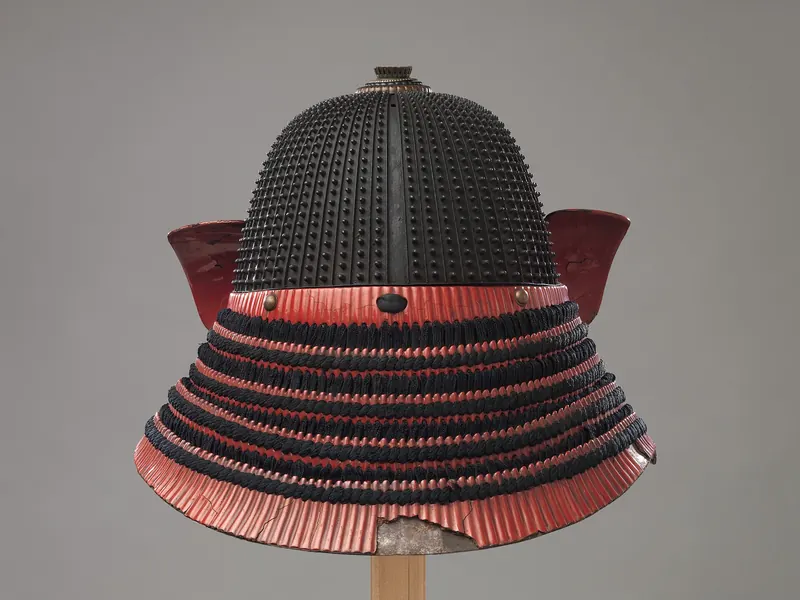
The sword work comes in two broad styles. Tate is the choreographed sword fighting of the stage and screen; the Japan Tatedo Association in Osaka explains that tate "is an action used on stage and in movies". Iai is the martial art of drawing the sword and cutting in one movement, and GO TOKYO describes an Asakusa class that teaches iai sword drawing. Some studios call the same thing batto, the drawing of the sword. In both styles you practise kata, set sequences of moves, and a few dojos also teach tameshigiri, test cutting with a real blade.
Words you will meet on booking pages
- Hakama: wide pleated trousers worn over a kimono. The basic samurai outfit in almost every class.
- Kabuto: the samurai helmet. Armour plans add it to a full suit put on by staff.
- Tate: stage and film sword fighting, with set moves, sound effects and lines.
- Iai and batto: drawing the sword and cutting in one movement, taught as a martial art.
- Kata: a fixed sequence of stances and cuts that you repeat until it is smooth.
- Tameshigiri: test cutting with a real sword, taught at a few dojos.
- Jidaigeki: period dramas set in the samurai age, the films many studios borrow from.
The difference between the two styles matters more than the name of the studio. SAMURAI HONOR, an Osaka dojo, sets out the martial view: samurai were efficient and graceful in their movements, and "As a result, traditional Japanese swordsmanship has few flashy moves and minimal movement." It goes further: "Spinning swords, jumping kicks, and exaggerated movements have no place in true Japanese swordsmanship." A tate class is the opposite by design. It is built for drama, and the Osaka association promises: "There are sound effects during the fights, making you feel like you're the main character in a movie."
Four kinds of samurai experience
- Stage sword fighting (tate): set fights with an instructor or friends, sound effects and lines, the style of period films. Lively and good for groups.
- Sword drawing (iai and batto): greeting, posture, drawing, cutting and sheathing, done slowly and correctly. Calm, closer to a real martial art.
- Armour and costume photos: staff dress you as a warlord or a samurai and a photographer takes the pictures. Little sword work.
- Sword craft: making a small knife at a forge, or fitting a new blade to a replica sword to take home. Half a day or more.
Samurai history in a few dates
A class is fun even if you know little history, but a few dates come up again and again. The Gifu Sekigahara Battlefield Memorial Museum begins: "The renowned and decisive Battle of Sekigahara took place on this very site in the year 1600." The last great fight was the Battle of Osaka, fought in two campaigns, one in the winter of 1614 and one in the summer of 1615, when the Tokugawa family destroyed the Toyotomi family at Osaka Castle. SAMURAI HONOR explains that the Tokugawa shoguns then "ushered in a period of peace and stability that lasted for about 260 years".
That long peace shaped what you will learn. Visit Kanazawa, the city's official tourism site, describes kendo as a martial art that "dates to the Edo period when samurai took up bamboo swords, or shinai, to preserve their skills during centuries of peace". The same samurai studied manners and the tea ceremony. The Edo period, from 1603 to 1868 in JNTO's dates, takes its name from Edo, the old name of Tokyo, where the shoguns ruled. It is also when most of the samurai houses and castle towns you can visit today were laid out. The samurai film came much later: Kyoto's official guide says the first period drama on film is thought to date from 1908.
Samurai history in five steps
- 1600, Sekigahara: the battle in Gifu that decided who would rule Japan.
- 1603 to 1868, the Edo period: the Tokugawa shoguns rule from Edo, today's Tokyo.
- 1614 and 1615, Osaka: the winter and summer battles end the Toyotomi family.
- About 260 years of peace: samurai keep their skills with bamboo swords and study manners and tea.
- From 1908, period films: jidaigeki bring the samurai to the cinema screen.
Samurai experiences in Tokyo
Tokyo's samurai classes sit in a few neighbourhoods. Asakusa, the old temple district, has Yumenoya and, a short walk away, Musashi Ninja Clan. Ginza has HiSUi TOKYO, which combines sword drawing with tea and calligraphy. Nihonbashi has a dojo of the Mugairyu school of iai, and across the Sumida River in Ryogoku the Japanese Sword Museum shows real blades. All of the classes need booking, and the details below come from GO TOKYO's listings and the museum's own pages.
Five samurai stops in Tokyo
- Yumenoya, Asakusa: a 60-minute samurai class with sword drawing, a sword battle and a certificate, 8,000 yen.
- Musashi Ninja Clan, near Asakusa: ninja and samurai courses of 60, 90 or 120 minutes, run by a ninja clan.
- HiSUi TOKYO, Ginza: sword drawing in a hakama, 18,700 yen, with tea, calligraphy or kimono as add-ons.
- Suimokai, Nihonbashi: iai of the Mugairyu school, taught in a working dojo in Japanese and English.
- Japanese Sword Museum, Ryogoku: real blades on display, 1,000 yen for adults on most days.
Yumenoya, Asakusa
Yumenoya takes three minutes to reach on foot from Asakusa Station, in the streets around the temple of Senso-ji. GO TOKYO's headline for it is "Be certified as a samurai", and its description sums the class up: "If you love your period dramas, you will surely relish the chance to don a traditional yukata or hakama outfit and learn how to perform the iai art of sword drawing and engage in a sword battle." At the end you get a certificate: "Be rewarded with bragging rights–and a course certificate at the end of the workshop."
The samurai experience costs 8,000 yen for 60 minutes. Yumenoya also offers a photo shoot for 3,500 yen, which lasts 20 minutes for one or two people and 30 minutes for three, and a kimono rental plan for 4,000 yen. GO TOKYO lists Japanese as the language of the studio, so if you do not speak it, ask when you book whether someone can explain the moves in English.
Musashi Ninja Clan, near Asakusa
Musashi Ninja Clan is best known for ninja training, but it runs a samurai course too, which makes it the obvious choice if one of you wants to be a ninja and the other a samurai. GO TOKYO explains: "Find out if you have what it takes to be a ninja at Musashi Ichizoku, which is run by a clan with a history in ninja arts, or ninjutsu." In the ninja course you "Put on a ninja outfit and try activities such as tossing shuriken ninja stars and blowing darts." On the samurai side: "There is also a samurai experience course, in which you can wear the hakama traditional formal wear and wield a katana sword."
Every course comes in three lengths: "(All experiences are available in 60-, 90-, and 120-minute versions.)" GO TOKYO does not print the prices and points to the clan's own website for them. You will find the dojo at 3-1-13 Matsugaya in Taito City, up on the third storey of the METS Hachibankan building. Tawaramachi, a Ginza Line station, is about 10 minutes away on foot, and the Tsukuba Express station at Asakusa about 6 minutes. Opening hours, 9:45 to 21:00, vary by season, and the dojo shuts for the New Year holidays.
HiSUi TOKYO, Ginza: a samurai experience with tea ceremony
HiSUi TOKYO is a culture studio at 4-3-13 Ginza, in the Koizumi Building (fifth floor), one minute from Exit B4 of Ginza Station. It teaches several traditional arts, and its sword class is called batto. GO TOKYO describes it: "And in the Batto experience, you can wear a hakama as you learn how to behave like a samurai and handle a sword. You can even get a photo of yourself holding the sword for a thrilling memory that you’re sure to never forget."
HiSUi is the place in Tokyo to put a samurai experience and a tea ceremony into one booking. Its other activities are sado, the tea ceremony, shodo, calligraphy, waso, in which women wear a kimono with a hair set and men try a hakama, kado, flower arrangement, and nihon buyo, Japanese dance. Each activity takes 30 to 45 minutes. For tea on its own, our tea ceremony article covers tea rooms in Tokyo and Kyoto.
HiSUi TOKYO prices
- Samurai experience, batto in a hakama: 18,700 yen.
- Batto with one more activity: 30,800 yen. With two: 42,900 yen. With three: 55,000 yen.
- Tea, calligraphy, kimono, flowers or dance without batto: 13,200 yen for one, 25,300 yen for two, 37,400 yen for three.
- Flower arrangement: 2,200 yen extra for the flowers.
- Length: 30 to 45 minutes for each activity.
The studio opens from 11:00 to 16:00 on weekdays only, Monday to Friday, and closes on irregular days. It takes cash and the main cards, Visa, JCB, MasterCard, AMEX and UnionPay, and works in Japanese and English.
Iai at Suimokai, Nihonbashi: Mugairyu in Tokyo
For a class that is a real martial art rather than a show, the Suimokai Headquarters Dojo in Nihonbashi teaches iai of the Mugairyu school. GO TOKYO explains: "Mugairyu is known for its powerful yet seemingly effortless swordsmanship and defined by its creed". That creed, it says, is that "sword and Zen are one truth." The class teaches the correct form for drawing the sword and for a fight, and the right posture and frame of mind to go with them.
GO TOKYO gives no single price, only a note that it varies with the class you choose, so ask for the fee when you book. The long opening hours, into the evening, make it one of the few samurai classes in Tokyo you can fit in after a day of sightseeing.
Japanese Sword Museum, Ryogoku
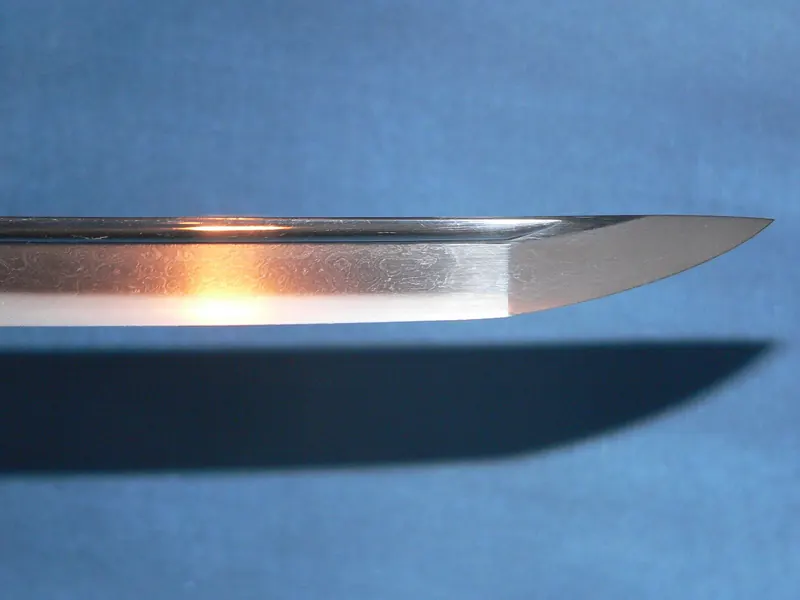
After a class with a practice sword, the Japanese Sword Museum is the place to see the real thing. It is in Ryogoku, the sumo district, five to seven minutes from the station by foot, and its blades are shown in the exhibition hall on the third floor. The first floor has a cafe and a museum shop, and the third floor also has a roof garden.
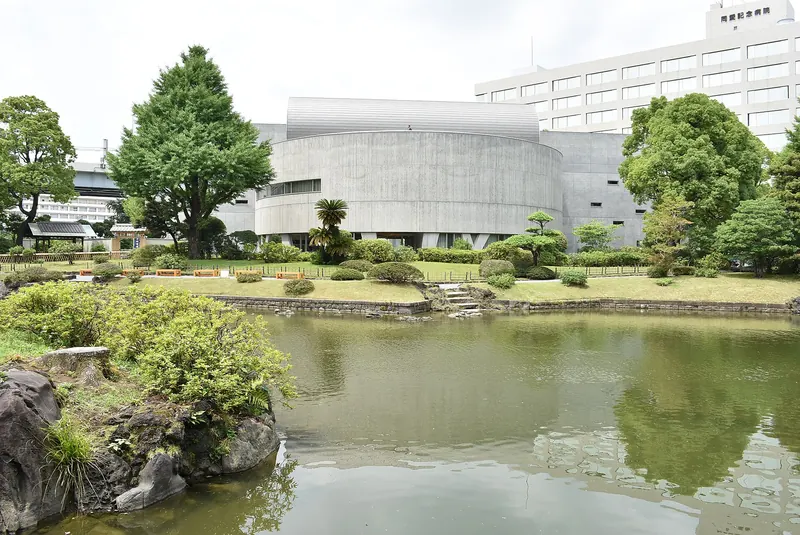
Hours are 9:30 to 17:00, and the last visitors go in at 16:30. It shuts on Mondays (or the Tuesday, when a public holiday lands on the Monday), between exhibitions and over the New Year. On most days admission is 1,000 yen for adults, 700 yen for members and 500 yen for high school, university and vocational school students. The English page says that "persons under 15" go free, and the Japanese page sets the free age at junior high school and below, so a 15-year-old in junior high also goes in free. The English page warns: "*The admission fee varies by exhibition." The Japanese page shows that during the special exhibition from 24 October to 20 December 2026 adults pay 1,500 yen.
If you are in Ryogoku for the sumo, the museum makes an easy pair with a day at the tournament; see our guide to sumo tickets.
Samurai experiences in Kyoto
Kyoto has a special claim on the samurai, because it is where the samurai film grew up. The city's official travel guide says the first period drama is thought to have been made in 1908 by Shozo Makino, the "father of Japanese film", and that the studios at Uzumasa in the west of the city once produced films day after day. Its activities page sums up what the city offers today: "Tea ceremony, traditional crafts, samurai martial arts and more - Kyoto has plenty to offer anyone looking for an unforgettable experience." For samurai, that means armour from real film sets, a sword class taught by an actor in a temple, a long list of smaller studios and, outside the city, a forge where you make your own blade.
Four samurai stops in and around Kyoto
- Kouzu Shokai, Uzumasa: a film prop maker since 1918 that dresses you in armour used in real filming. Children's sizes too.
- Myokakuji Temple, Kamigyo: sword fighting taught by a professional actor, in the grounds of a temple.
- Kyoto's official list: samurai and ninja studios near Arashiyama, Gion, Nishiki Market and Shijo.
- Masahiro Tantoujou forge, Kameoka: half a day making a 15 cm knife with a swordsmith, in Japanese.
Kouzu Shokai, Uzumasa: armour from the films
Kouzu Shokai was founded in 1918 in Kyoto and, in the words of the city's guide, has been making props, armour, swords, carts and rickshaws for films and TV period dramas "for over 100 years". In 2003 it won a Japan Academy Award for its work as a prop maker. Its armour experience goes by the name "Let's Become Military Commanders." The guide explains: "Participants can dress and have their photo taken in military commander armor used in actual filming."
You choose the armour of a famous warlord. The guide names Oda Nobunaga, Tokugawa Ieyasu, Toyotomi Hideyoshi, Takeda Shingen and Taira no Kiyomori, and a later style called gusoku from the end of the age of civil war. Families are welcome: "Children’s sizes are available, so the whole family can take part."
Two extras make it more than a photo. In armour you can play a virtual reality game of a battle and "experience for yourself just how difficult it is to move in!" In the sword maintenance workshop you replace the foil on a takemitsu, the bamboo or wooden fake sword used in period dramas, and the guide adds: "Your sword is yours to take home, so it makes the perfect souvenir of Kyoto." The company also holds a yearly exhibition of its props at Jingoji Temple and can arrange walking tours of Uzumasa, the old film town. The guide gives no prices, so check them on the company's booking page.
Myokakuji Temple: a samurai experience taught by an actor
Kyoto's official activities page lists one class by name: "Samurai experience at Myokakuji Temple: A sword fighting experience taught by a professional actor". The city's tourist information centre gives the organiser as GOAT trip, and the place as Myokaku-ji temple in Kamigyo-ku, the ward of the old Imperial Palace. The temple is 2 minutes on foot from the Tenjin Koen-mae bus stop, and the phone number is 050-5536-1842.
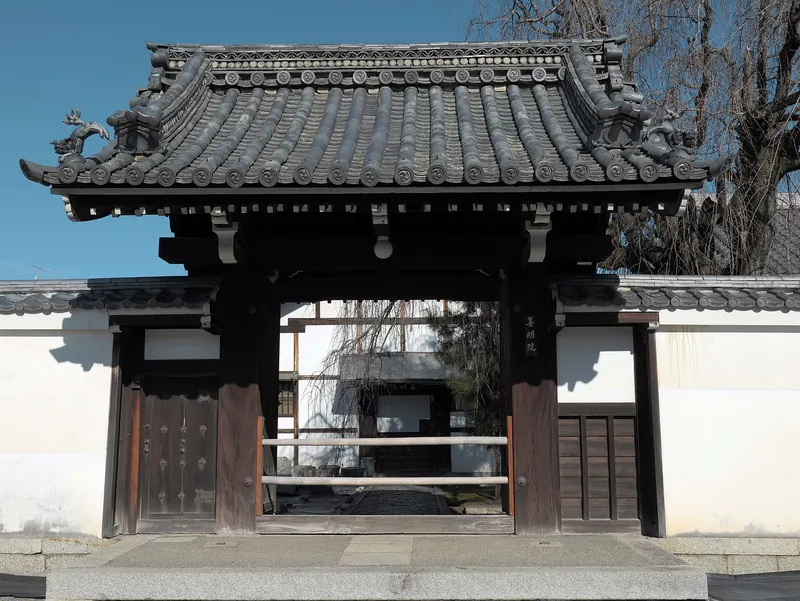
The appeal is the teacher: a professional actor shows you how a screen sword fight is put together. Neither city page gives the price or the length, so read both on the booking page before you pay, and check that the class is explained in a language you understand.
More samurai studios on Kyoto's official list
The Kyoto Tourist Information Center, Kyo Navi, publishes a one-page list of samurai and ninja experiences. The version of September 2025 says that all of them need a reservation, puts a star next to the studios on the Kyoto City Tourist Association's register, and adds: "Information is subject to change without notice." Besides GOAT trip and Kouzu Shokai, it lists these.
Samurai and ninja studios on Kyoto's official list
- Shogun Studio Japan, near Arashiyama: armour, and a samurai film made of you. JR Saga-Arashiyama, about 2 minutes. 075-366-6665. Registered.
- Samurai Kenbu Theater, near Gion: sword and sword dance classes, and a fan and dance class. Basement of the GOZAN building, Sanjo Hanamikoji. 075-751-2033. Registered.
- Kyoto Samurai, central Kyoto: samurai and ninja courses, booked by e-mail if possible. Bentendo Building, 3rd floor. 090-7897-5238. Registered.
- Samurai and Ninja Museum with Experience: ninja and samurai classes about 4 minutes from Nishiki Market. 075-366-5250. Registered.
- Yushinkan Kyoto Branch Dojo: iaido and other martial arts in a basement near Teramachi Rokkaku. 075-748-1825, in Japanese.
- Ninja Dojo and Store Kyoto: ninja lessons, shuriken, stage sword fighting and blowpipes, about 3 minutes from Shijo subway station. 075-778-1990.
In short: Shogun Studio Japan, 2 minutes from Saga-Arashiyama Station (JR), describes its class as "Samurai Experience wearing real armour Filming movies". Samurai Kenbu Theater, below ground in the GOZAN building on Sanjo Hanamikoji, teaches the sword and kenbu, a sword dance, along with a fan and dance class. Kyoto Samurai, in the Bentendo Building (third floor), runs samurai and ninja courses and prefers bookings by e-mail. The Samurai and Ninja Museum with Experience lies 4 minutes on foot from Nishiki Market. All four carry the star.
Two dojos on the list without the star teach martial arts rather than shows. Yushinkan Kyoto Branch Dojo, in a basement near Teramachi Rokkaku, teaches iaido and kenjutsu, sword technique, and its phone line is in Japanese. Ninja Dojo and Store Kyoto, 3 minutes from Shijo subway station, offers ninja lessons, shuriken, tate and blowpipes. The list gives phone numbers but no prices for any of them.
Making a blade at a forge in Kameoka
For something you can keep, JNTO, the national tourism organisation, describes a workshop at the Masahiro Tantoujou Sword Forge in Kameoka, a castle town "just 25 minutes from central Kyoto". With a veteran swordsmith you make "a 15-cm miniature version of a katana known as a kogatana", hammering it out by the forge while he explains the history of the Japanese sword. You take the finished blade home.
JNTO is clear about the language: "The workshop will be conducted in Japanese. The swordsmith speaks limited English", and it suggests hiring an interpreter "(currently ¥19,500 for a half-day, in English or French)". The length is given both as "the four-hour workshop" and as about three and a half hours or more, so plan for half a day. From Shin-Osaka the express to Kyoto takes about 23 minutes, before the train to Chiyokawa and the bus. JNTO gives no price for the workshop itself.
Samurai experiences in Osaka
Osaka was the scene of the last great samurai battles, and its samurai classes lean on that story. OSAKA-INFO, the city's official tourism site, lists three dojos that differ a lot: the Japan Tatedo Association teaches stage sword fighting in Kitahorie, near Shinsaibashi, Yuushinkan teaches iaido and test cutting near Kyobashi, and SAMURAI HONOR, next to Osaka Castle Park, builds a whole course around bushido, the samurai code, with a tea ceremony and armour.
Three samurai dojos in Osaka
- Japan Tatedo Association, Kitahorie: one hour of stage sword fighting with lights and sound, from 8,000 yen.
- Yuushinkan, near Kyobashi: iaido and sword technique with a master's straw cutting, from 15,000 yen.
- SAMURAI HONOR, near Osaka Castle Park: bushido courses lasting 40 to 150 minutes, from 16,500 yen.
One thing to know before you book: each OSAKA-INFO page shows two starting prices. The plan list gives one, and the booking box lower on the same page gives a smaller one, 6,400 yen against 8,000 yen at the Tatedo Association, 12,000 yen against 15,000 yen at Yuushinkan and 4,400 yen against 16,500 yen at SAMURAI HONOR. The smaller number may be for a different plan, a child or a discount, so the prices below are the plan prices, and the final price is the one you see when you choose a date and a plan.
Two starting prices on each OSAKA-INFO page
- Japan Tatedo Association: 8,000 yen in the plan list, 6,400 yen in the booking box.
- Yuushinkan: 15,000 yen in the plan list, 12,000 yen in the booking box.
- SAMURAI HONOR: 16,500 yen in the plan list, 4,400 yen in the booking box.
Japan Tatedo Association, Kitahorie: stage sword fighting
The Japan Tatedo Association teaches tate, the sword fighting of the stage and screen, and its OSAKA-INFO page opens: "You too can become a samurai or ninja!" It goes on: "Based on Japanese samurai culture, the instructor will teach you how to use a sword and how to handle it in a fun and easy-to-understand way." The dojo is easy to miss: "The dojo is like a secret hideout, hidden on the third floor of an office building in the middle of the city."
You start by changing into a samurai or ninja outfit, chosen from over 800 combinations of kimono, hakama and haori jacket, and "The staff will help you put them on." Then you learn kata, the set moves that samurai and ninja use to handle a sword in a fight. The page lists them with a joke or two: the fundamental seigan, then hassou, kesagiri, the cut that slices like the line of a monk's robe, wakigamae, the one for a hidden weapon, nukidou, the hardest of the set, makkougiri, which asks whether you could split an apple, and the basic forms battou and noutou, drawing the sword and putting it back.
An hour at the Tatedo Association
- Change: into a samurai or ninja outfit, with staff to help.
- Kata: the guards and cuts, from seigan to drawing and sheathing the sword.
- Practice: two groups fight each other with the moves.
- Performance: a fight scene with lights and sound.
- Option: throwing plastic shuriken.
After the kata you split into two groups and fight each other, then put on a performance with lights and sound. The spot page explains the fun of it: "You can cut off the teacher or decide on roles with your friends." Even the dialogue is up to you: "Lines range from standard to ad-libbed." As an option you can throw plastic shuriken.
The private course suits a family or a group of friends who want the dojo to themselves. The two OSAKA-INFO pages give different walks from Shinsaibashi Station, 5 minutes from Exit 2 on one and 7 minutes from Exit 7 or 8 on the other, so the simplest way is Yotsubashi Station on the Yotsubashi Line: leave by Exit 3 and the dojo is a minute away.
Yuushinkan, near Kyobashi: iaido and test cutting
Yuushinkan is a working iaido dojo in Miyakojima, a 10-minute walk from either JR Kyobashi Station or Noe-Uchindai Station (Tanimachi subway line). Its OSAKA-INFO page says: "This dojo aims to offer its visitors a very authentic lesson in iaido, kenjutsu and tameshigiri test cutting." The dojo was founded by Tenyu Hirotoshi Seto, who created the Yuushin-ryu style, and it is full of swords and armour. "The mirror walls are an excellent tool that will help you check and correct your proper form during the training."
The lesson follows the order of a real martial art. You change into training clothes, and "First timers will be assisted by the instructor and shown the proper way to wear the clothes, so there is no need to worry." Next comes etiquette, because Japanese martial arts "start with a greeting and end with a greeting". Then: "First you will use a safe practice sword and learn basic techniques like how to correctly wield, draw and swing the sword." The page stresses that, practice sword or not, "every technique trained during this phase is an authentic one". For English: "If English interpretation is necessary, you will be instructed by the assistant instructor."
The order of a lesson at Yuushinkan
- Change: into martial arts training clothes, with help from the instructor.
- Etiquette: the greeting and manners that open and close every practice.
- Basics: holding, drawing and swinging a safe practice sword in front of mirrors.
- Demonstration: the master performs iai kata and cuts a straw target with a real sword.
- Match: a bout with a mock sword using the moves you have just learned.
The high point is watching Seto perform kata with real swords and cut a straw target in one stroke. Then you test what you have learned in a bout with a mock sword. "A professional photographer will take photos throughout your whole experience and you will receive the digital photos on the same day." Next door, the dojo's own shop sells swords, and if you buy one "the store can assist you with preparations and transportation to your home country." Before you buy, check what your own country allows you to bring in.
Yuushinkan courses
- Samurai course: sword fighting and a sparring session, from 15,000 yen, for 1 to 40 people.
- Shogun course: the same in armour, from 25,000 yen, for 1 or 2 people.
- Shogun photo course: a time-limited version of the armour course, from 50,000 yen.
- Length and hours: 60 minutes; classes run 10:00 to 17:00. Closed from 1 to 3 January and on irregular days.
SAMURAI HONOR, near Osaka Castle Park: bushido, tea ceremony and armour
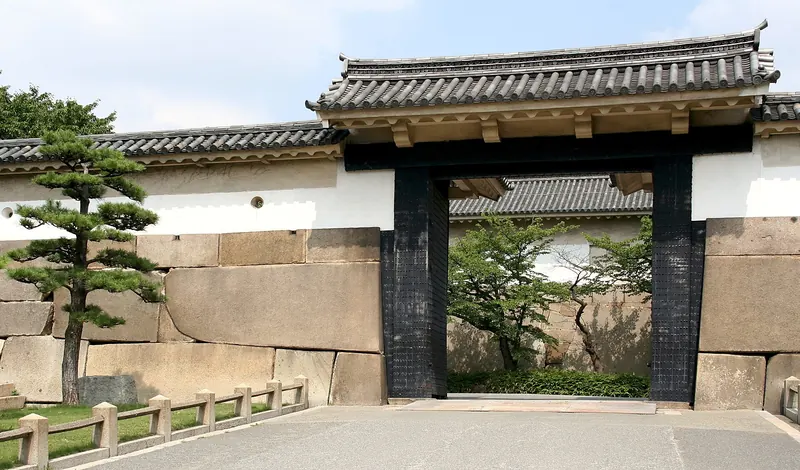
SAMURAI HONOR is a dojo in Joto Ward, 1 minute from Exit 1 of Osaka Business Park Station on the Nagahori Tsurumi-ryokuchi subway line and 2 minutes from the JR Loop Line's Osaka-jo Koen Station, right by the park around Osaka Castle. It teaches the ideas of bushido as much as the sword. The first part of every course is described as "Wearing hakama, sandals, and a sword to learn courtesy, manners, and kata." The dojo's view is that "martial arts begin with manners and end with manners".
SAMURAI HONOR's three courses
- SAMURAI RISE: 40 minutes at 10:00, from 16,500 yen. Manners, kata and a real sword, with a professional photo shoot.
- HONOR: 120 minutes at 11:00, 14:00 or 17:00, from 27,500 yen. Adds the warrior tea ceremony, a parting poem in calligraphy and armour.
- BUSHIDO: 150 minutes at the same times, from 33,000 yen. Adds a final part on how a samurai faced death.
In the shortest course you go on to "Experience the weight and sharpness of an authentic Japanese sword and learn the basic techniques of swordsmanship (drawing and sheathing the sword)." The two longer courses add three parts. The first is a tea ceremony: "The Warrior tea ceremony is a tea ceremony that spread among the samurai during the Edo period as a part of their training and character development." The dojo reminds you why it matters: "In the past, a samurai was a proud title denoting a highly respected person." The second is a parting poem, the last words a samurai wrote before battle, which you write with a large brush. The third is the armour: you put on a helmet and a suit of armour for a part themed on the Battle of Osaka. The BUSHIDO course adds a scene about seppuku, the ritual death of a samurai.
What the two longer courses add
- Warrior tea ceremony: the tea that spread among samurai in the Edo period.
- Parting poem: the last words before battle, written with a large brush.
- Armour: a helmet and a full suit, for a part themed on the Battle of Osaka.
- BUSHIDO only: a scene about seppuku.
SAMURAI HONOR also runs a 90-minute calligraphy class in a kimono at 10:00, from 5,500 yen, in which a calligraphy master turns your name into kanji and you write on a fan or a scroll to take home. Courses take 1 to 20 people, and the dojo works in English and Chinese. You may share the session with other guests, but a booking for one person is accepted. Book on its website at least a day before; on the day, ask by phone. The bushido rules ask you to arrive 10 minutes early, while the general notes ask for about 30 minutes to change into a kimono, so allow half an hour. Cancel 14 or more days before and the booking page refunds you in full.
Booking SAMURAI HONOR
- Group size: 1 to 20 people, and one person can book alone.
- Languages: English and Chinese.
- How to book: online until the day before, by phone on the day itself.
- Arrival: half an hour early, to change into a kimono.
- Calligraphy class: 90 minutes at 10:00, from 5,500 yen.
The rules are strict and worth reading. Photos are allowed with care: "It is possible to take personal photos with your smartphone, etc., as long as you do not take selfies or take pictures of other customers", and no video. On armour: "The size of armor should be within 185 cm of your height and 100 kg of your weight." Staff dress you, and armour stays indoors: "It can only be worn inside the dojo." On the sword: "The act of drawing the sword is dangerous, so do not do it without permission." And on drinking: "For the safety of our customers, we do not allow those who have drunk alcohol in advance." In the tea room, "Do not lift tea utensils high", but "If you find it difficult to sit upright, you can relax your legs."
Samurai districts: Kanazawa's Nagamachi
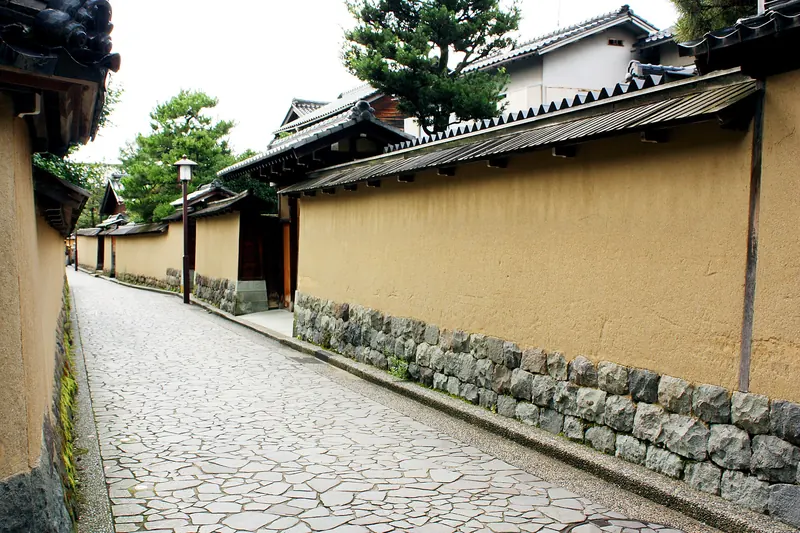
A class shows you how a samurai moved; a samurai district shows you how one lived. The best known is Nagamachi in Kanazawa, the capital of Ishikawa. Visit Kanazawa, the city's official tourism site, explains why the city has so much of this history: "Kanazawa was a castle town during Edo times and the capital of the richest domain under the Tokugawa shogunate." It adds: "It was famed for its wealth of over 1 million koku, a unit of rice that was enough to feed one person for a year." Nagamachi is the old quarter of samurai houses, which the same site sums up as "old earthen walls, mini-canals, cobblestone streets and traditional samurai homes".
The district is small and close to the centre. JNTO says: "From the Ishikawa gate of Kanazawa Castle, the Nagamachi Samurai District is a 10-minute walk." Buses from Kanazawa Station to Korinbo include the city's loop bus and JR buses, and from that stop Nagamachi is five minutes on foot. It is also "a roughly 12-minute walk from Kanazawa’s 21st Century Museum of Contemporary Art". Remember that the lanes are home to real families. The city's guide notes that some people mistake the district for a theme park, "but it is a residential area with people living in most of the houses".
Nomura-ke, the samurai house to go inside
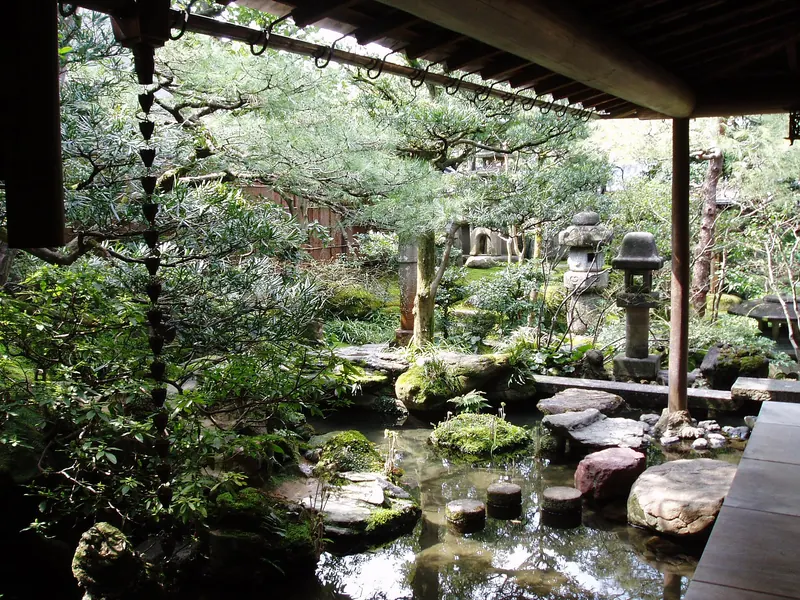
The one house most visitors enter is Nomura-ke, "a restored Edo period house that belonged to high-ranking retainers of the Kaga daimyo warlords". Its finest room is the Jodan-no-ma, "a tatami mat room used for receiving the daimyo himself". Its ceiling is coffered cypress, the woodwork uses ebony, rosewood and persimmon, and the sliding doors were painted by Senkei Sasaki, a master of the Kano school. JNTO explains how houses like this changed hands: when samurai fortunes fell and merchants prospered, many samurai had to give up or sell their homes. The Nomura house has since been carefully restored.
For most people the garden is the reason to come. JNTO says "the garden is a work of art and the highlight of a visit", and you can look at it from many of the rooms. Visit Kanazawa notes that it holds a two-star rating from Michelin, and describes ponds full of carp under beech and wax myrtle, plus stone lanterns, a waterfall and a cherry granite bridge. Entry costs 550 yen for adults. In autumn and winter the house closes an hour earlier, so a morning visit leaves time for the other sights nearby.
A one-hour walk and the smaller museums
Visit Kanazawa suggests a loop that starts and ends at the Korinbo bus stop and zigzags through the lanes and crosses the Onosho canal, which it calls the oldest canal in Kanazawa, by four of its bridges, numbers one, two, three and five. "It is a leisurely one-hour walk." Allow longer if you want a meal or tea. Instead of returning to Korinbo, the city suggests carrying on past Oyama Shrine and into Kanazawa Castle Park, then on to Kenrokuen and the 21st Century Museum. The lanes change with the seasons: fresh green and autumn leaves show over the walls, and in winter you will see komogake, a protective covering of straw mats, and yukitsuri, ropes that keep heavy snow from breaking trees. "The town layout remains as it was on maps from the Edo period."
Two small museums fill in the story. The Maeda Tosanokami-ke Shiryokan, at 2-10-17 Katamachi, keeps about 9,000 items from the Maeda clan, which the warlord Maeda Toshiie (1538 to 1599) established, including letters from the Warring States period. Look for the silver-plated black lacquer armour and helmet worn by his son Toshimasa, with projections inspired by rabbit ears. It opens from 9:30 to 17:00, closes on Mondays and costs 310 yen. The Kanazawa Shinise Memorial Hall, five minutes south of Nomura-ke at 2-2-45 Nagamachi, is the restored pharmacy of Nakaya Yakuho, a merchant who served the samurai of the area. Its hours are the same, and entry is 100 yen.
More stops in Nagamachi
- Maeda Tosanokami-ke Shiryokan: about 9,000 items of the Maeda clan, including Toshimasa's helmet. 310 yen, closed Mondays.
- Kanazawa Shinise Memorial Hall: the pharmacy of the merchant Nakaya Yakuho. 100 yen, closed Mondays.
- Senda-ke Garden: open to the public since April 2025, directly across from Nomura-ke.
- Ashigaru Museum: the houses of low-ranking samurai, for the other end of samurai life.
- Takada Family Samurai House Remains: another stop on the city's list for the district.
Swords at Shijimaya-Honpo and kendo at Saishikan
For a closer look at real blades, cross the Saigawa river to Shijimaya-Honpo, near the Nishi-chaya district, a bus ride of about 20 minutes from Kanazawa Station plus a five-minute walk. It is a maker of fermented foods founded in 1875, and its wooden building is 140 years old and surrounds a garden planted with moss and plum trees. The head of the house, Masahisa Shijimaya, holds second dan in iaido. He shows visitors his katana and wakizashi from the Muromachi and Edo periods, points out the hamon patterns on the blades and reads the inscriptions on the tang, "the end of the sword below the hilt". One reads "Soushuu Masamune XIII", which points to a school of swordsmiths near Kamakura, still at work today.
Shijimaya sees the visitors as good for Japan too: "All the foreign interest in samurai culture has created a great opportunity for Japanese people to look at it again with fresh eyes and rediscover its good qualities," he says in the city's article. A tour costs 7,000 yen. You can add a lunch of the house's fermented foods for 2,200 yen per person, and for 3,000 yen more you can put on a samurai kimono and have photos taken holding replica swords, which the page promises are "not sharp enough to cut". "Be sure to reserve in advance."
Kanazawa is also a good place to try kendo, the modern martial art of the bamboo sword. Saishikan, a kendo school with a shop, is off the Hokuriku Expressway at 1-14-102 Sakuradamachi. The wooden dojo was built in 2021 and still smells of fresh cedar. Its head instructor, Toshihiro Enoki, has practised kendo for nearly 50 years and once taught art at a middle school, one reason the dojo is decorated with carvings and calligraphy. "Art and kendo have points in common," he says, and he links them through heijoushin, presence of mind, and fudoushin, the immovable mind.
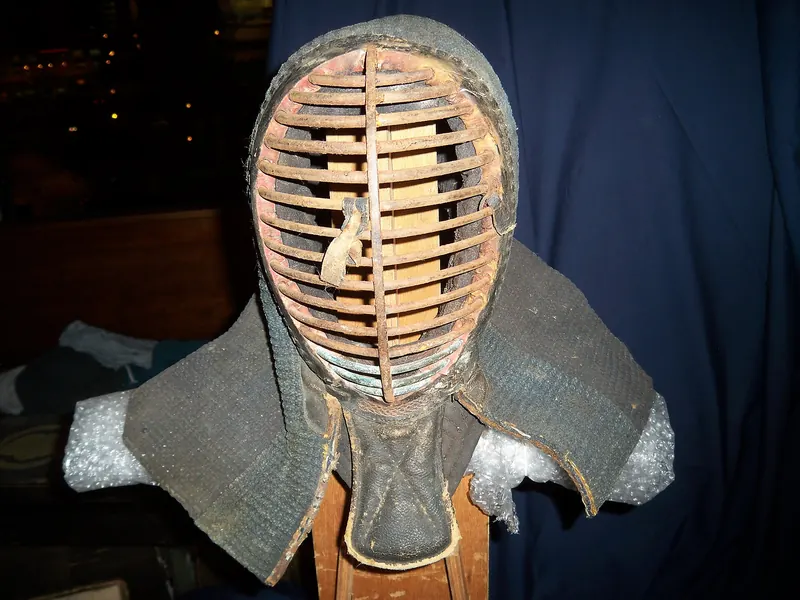
A visit teaches the basics of kendo etiquette: bowing, the main stances, and how to grip and swing the shinai, the bamboo sword. For a souvenir photo you can put on the training clothes, called kendogi, and the bougu, kendo armour, including the face mask with its men grille. The article promises a deeper appreciation of the martial arts and, possibly, a good workout.
Sekigahara: the battlefield museum
The battle that started the long Edo peace was fought in 1600 at Sekigahara, in Gifu. The Gifu Sekigahara Battlefield Memorial Museum stands on the battlefield itself, and its films are the main reason to come. Ground Vision, a screen set into the floor, shows the East and West camps from above for about 8 minutes. The theater then takes about 9 minutes, and the museum's floor guide says: "The oval-shaped, 360-degree screen, 4.5 m in length and 13 m wide, is a sight to behold." It continues: "With its wind, vibrations, and light and sound, it recreates the Battle of Sekigahara with a visceral sense of presence."
The museum's own top page goes further: "Such is its overwhelming power, you may wonder if you have accidentally wandered into the battle itself." Its visitor guide adds: "Please allow about 30 minutes for the films." Both need a numbered ticket, and you might not get back in once the tickets stop being handed out, so watch the films before anything else. The second and fifth floors can be visited again as often as you like.
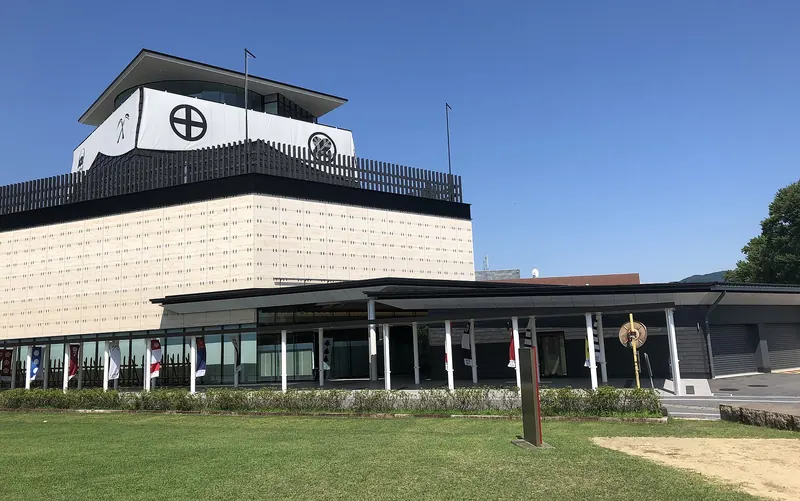
Four floors of the Sekigahara museum
- 1st floor: Ground Vision on the floor, the 360-degree theater, and an information corner for bicycle hire and booking a guide to the historic sites.
- 2nd floor: the Exhibition Room on the battle, and the Sengoku Experience Corner with armour to wear, copies of weapons to hold and VR.
- 3rd floor: a seminar room for lectures and workshops.
- 5th floor: a glass-sided observation room with a panoramic view of Sekigahara today.
Upstairs is the part for samurai fans. In the Sengoku Experience Corner on the second floor, "Visitors can touch weapons just like the originals, and enjoy photo opportunities while wearing armor and getting completely into the role of a warrior. The VR attraction is also recommended." The VR drops you into hand-to-hand fighting from the Sengoku period. On the fifth floor, the "360-degree, glass sided Observation Room" lets you compare the land today with the scene in 1600, and the museum then invites you to step out and tour the battlefield. The information corner on the first floor can arrange a bicycle or a guide to the historic sites.
Opening hours are 9:30 to 17:00, and you must enter by 16:30. It is closed on Mondays, but if a holiday lands on a Monday it closes the next day instead, and for the New Year break, 29 December to 3 January. Adults pay 500 yen, high school and university students 300 yen, and children of junior high school age or younger get in free. Photos are allowed only in the first-floor entrance hall, the Sengoku Experience Corner and the observation room; you may not film the first-floor videos or take photos in the Exhibition Room. Most exhibits are explained in English as well, both the Theater and Ground Vision show English subtitles, a few films can be heard with commentary in Chinese, English or French, and there are leaflets in five languages: English, French, Spanish, Chinese and Korean.
Getting to Sekigahara
Walking to the museum from Sekigahara Station, on the JR Tokaido Main Line, takes 10 minutes. Trains from Nagoya take about 45 minutes on that line. From Tokyo, ride the Shinkansen to Nagoya, about 2 hours, and change there. From Osaka, ride the Shinkansen to Maibara, and then the Tokaido Main Line takes about 20 minutes more. The museum's guide gives about 45 minutes for the Osaka to Maibara Shinkansen and its route diagram about 40, so plan on the longer time. Parking is free, and the South Car Park has room for 70 cars.
| From | Route | Time |
|---|---|---|
| Tokyo | Shinkansen to Nagoya, then JR Tokaido Main Line | about 2 hours, then about 45 minutes |
| Osaka | Shinkansen to Maibara, then JR Tokaido Main Line | about 45 minutes (40 on the diagram), then about 20 minutes |
| Nagoya | JR Tokaido Main Line | about 45 minutes |
| Sekigahara Station | on foot to the museum | 10 minutes |
Individual visitors, 19 people or fewer, can reserve on the website between 50 days and one day ahead, by 15:00, and groups book by phone. The museum asks you to book as early as you can because places go in order. The building is barrier free, but wheelchair spaces in the theater are limited, so ask at reception first. Leave large bags in the coin lockers, which return your money. Eating, drinking and smoking are not allowed inside, but the shopping building next door has a café and a restaurant.
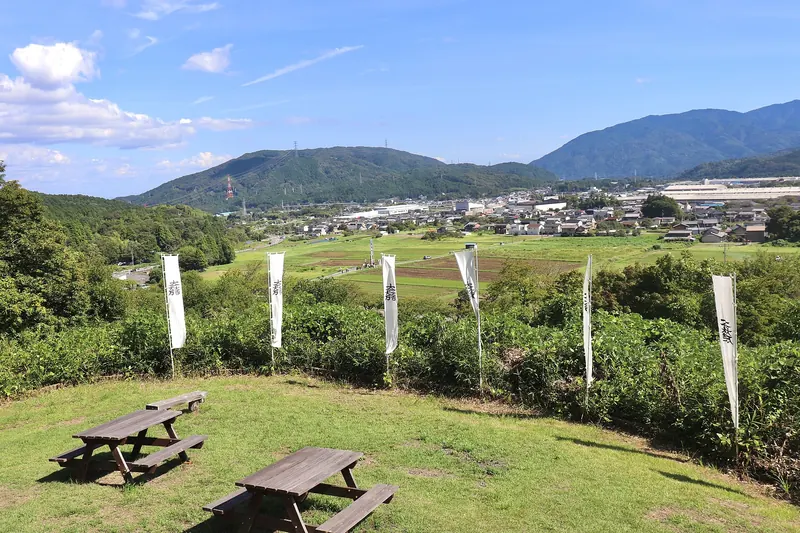
Castle towns in Kyushu and Tohoku
Further from the big cities, four places let you see where samurai lived and dress as one in surroundings that fit. Three are in Kyushu, the large southern island: the re-created castle town below Kumamoto Castle, the Sengan-en garden in Kagoshima and the samurai lanes of Chiran. The fourth is Kakunodate in Akita, in the north of the main island.
Four samurai towns away from the big cities
- Josaien, Kumamoto: a re-created castle town below Kumamoto Castle, with a samurai stage, costume rental and a museum from 300 yen.
- Sengan-en, Kagoshima: a samurai costume photo shoot in a garden facing the Sakurajima volcano, 9,000 yen for adults.
- Chiran, Kagoshima: seven samurai gardens along stone-walled lanes, all on one 530 yen ticket.
- Kakunodate, Akita: six samurai houses open to visitors, and weeping cherry trees planted around 1656.
Kumamoto: Josaien and the castle's samurai troupe
Josaien sits just below Kumamoto Castle in Kumamoto and "re-creates the bustling atmosphere of a seventeenth-century castle town". It has more than 20 restaurants and food shops, where you can try karashi renkon, deep-fried lotus root stuffed with mustard, and ikinari dango, sweet-potato dumplings. The city's guide says: "There is a covered outdoor stage in the middle of Josaien where a troupe of performers dressed as samurai act out an easy-to-follow and entertaining introduction to the castle’s history."
The troupe is the Kumamoto Castle Omotenashi Bushotai, "a troupe of reenactors who welcome visitors to Kumamoto Castle". It portrays 10 historical figures, among them Kato Kiyomasa (1562 to 1611), who built Kumamoto Castle, Konishi Yukinaga, Shimazu Yoshihiro and Kuroda Kanbei. The performers wear armour weighing 15 kilograms, fight with spears and long-handled swords, and speak in old courtly language, mostly Japanese with a little Chinese and English, using archaic words for cameras and cars. "Audience members are encouraged to take photographs of (and with) the reenactors and to post the pictures on social media." The city's page on the troupe dates from 2017 and gives no show times, so ask on arrival.
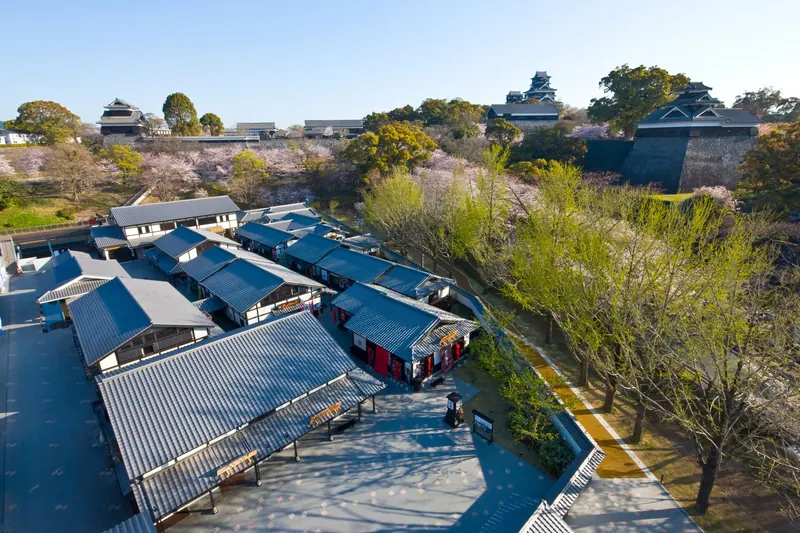
To dress up yourself, go to the Kumamoto Castle Museum Wakuwakuza inside Josaien, which tells the castle's history with VR tours and projection mapping. Costumes can be rented in the museum lobby, so you can walk up to the castle as a ninja, a samurai or a young townswoman, called machi-musume. The page gives no price for the costumes. Entry to Wakuwakuza is 300 yen for adults and high school students and 100 yen for children at elementary or junior high school, and groups of 30 or more get 20% off. Hours are 9:00 to 17:30, and the last entry is at 17:00. From the Hanabata-cho tram stop you walk for about 5 minutes.
Kagoshima: a samurai photo at Sengan-en
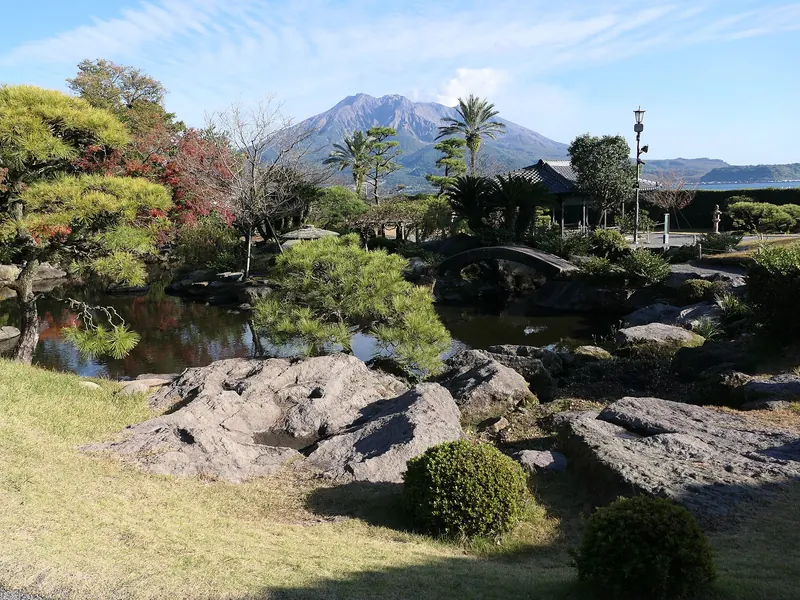
In Kagoshima, Sengan-en is a stately home and garden, once the home of the Shimadzu, a powerful samurai clan, and it belongs to a UNESCO World Heritage site. Across Kinkowan Bay from the garden rises Sakurajima. JNTO's national parks site describes its samurai photo session: "Expert curators will dress you in an accurate replica costume before your photo is taken in a beautiful garden that features the active volcano of Sakurajima in the background." What you take home is explained too: "Selected photos will be developed and posted to you. You will receive the digital data of the remaining images."
The session runs all year and lasts up to 45 minutes. Adults aged 15 and over pay 9,000 yen, and children aged 6 to 14 pay 4,500 yen. "Costumes are available for adults and children." The website linked from the JNTO page is a page from 2018, so confirm the current price with Shimadzu Limited, which runs Sengan-en, on (+81) 099-247-1551 before you go.
Chiran: samurai gardens behind stone walls
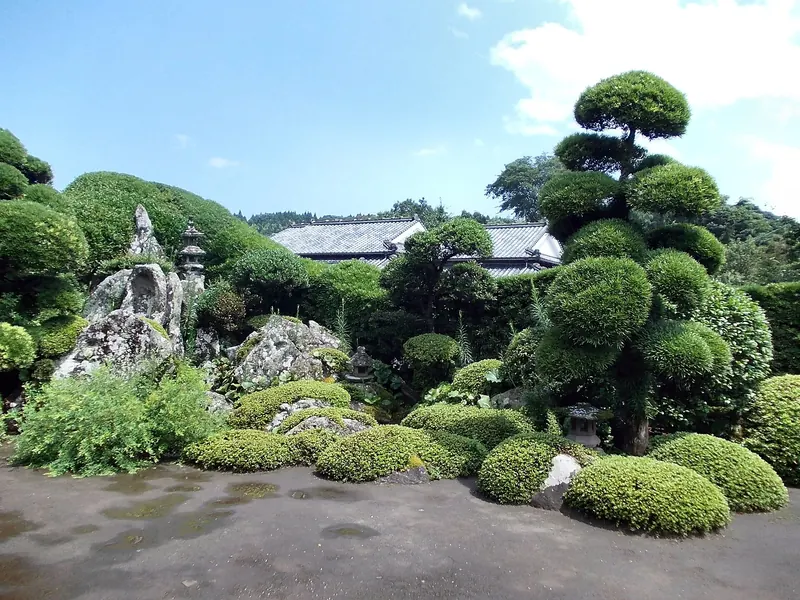
Chiran, also in Kagoshima, is nicknamed the "Little Kyoto of Satsuma", and in the late Edo period, the 19th century, it had more than 500 samurai residences. Its 700 m of lanes lined with stone walls were built for defence with many corners, and the hedges are clipped so that people inside can see out but passers-by cannot see in. The district is an Important Preservation District for Groups of Traditional Buildings, and its seven gardens open to the public are a National Scenic Beauty.
The gardens are the reason to come. Only the Mori family's garden is a tsukiyama sensui garden, using rocks for a mountain and a real pond. The other six are dry karesansui gardens that use shirasu, pumice and volcanic ash from southern Kyushu, to stand for water, a use the prefecture's guide calls unique to Chiran. The gardens are open all year round, from 9:00 until 17:00, and one ticket covers all seven: 530 yen for adults and 320 yen for children. Buses run to the Buke-Yashiki Iriguchi-mae stop from Kinseicho, near Tenmonkan, and from JR Kagoshima Chuo Station.
Chiran in brief
- Seven gardens: one tsukiyama sensui garden with a pond, six dry gardens of shirasu.
- One ticket: 530 yen for adults and 320 yen for children covers all seven.
- Hours: all year round, 9:00 to 17:00.
- Phone: 0993-58-7878 for the garden office.
Kakunodate: samurai houses under weeping cherries
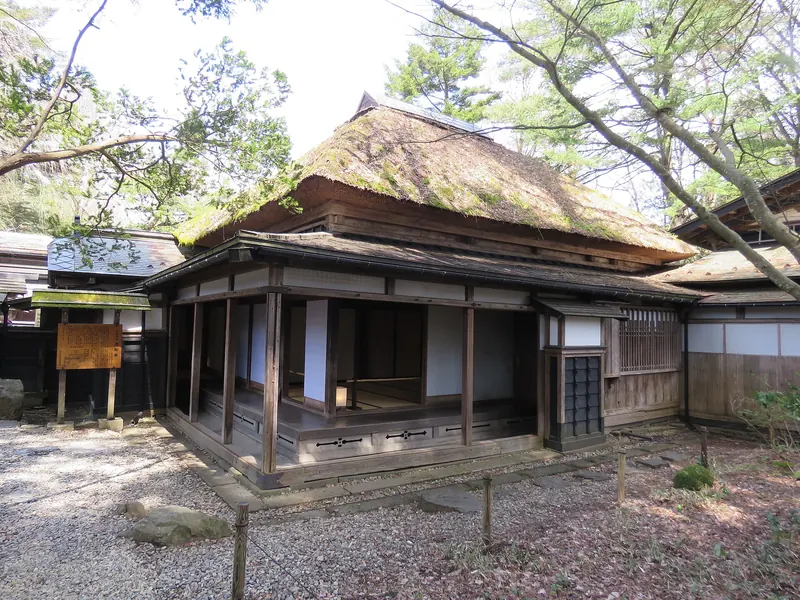
In Akita, Kakunodate is known as the "Little Kyoto of Tohoku". It was founded in 1620 and once housed 80 samurai families. JNTO's UK site says that six of the surviving samurai houses can be visited, and it singles out the Aoyagi and Ishiguro houses as two of the best for size, layout and collections. The houses, now museums, even keep old cameras, clocks and gramophones.
The town is most famous for its shidare-zakura, weeping cherry trees. Many are believed to have been planted by samurai families around 1656, some of them varieties brought all the way from Kyoto. A few minutes from the samurai district, more than 400 cherry trees line the riverbank for 2 km, and around 1.2 million domestic visitors come for the blossom in late April and early May, so book a room early for that season. At other times JNTO suggests a walk with a local guide who speaks two languages and brings her two Akita Inu dogs, or a look at kaba-zaiku, the cherry bark craft that began in Akita in the Edo period.
Samurai experience prices compared
The price of a samurai experience varies a great deal, and the cheapest way into samurai history costs less than a coffee. The table below compares the classes covered here, using the plan prices from each official page. Where a page gives no price or length, the table says so, and you should ask the studio when you book.
| Where | What you do | Length | Price |
|---|---|---|---|
| Yumenoya, Asakusa (Tokyo) | sword drawing, a sword battle and a certificate | 60 minutes | 8,000 yen |
| Musashi Ninja Clan (Tokyo) | ninja and samurai courses | 60, 90 or 120 minutes | on the clan's website |
| HiSUi TOKYO, Ginza (Tokyo) | batto in a hakama | 30 to 45 minutes | 18,700 yen |
| Suimokai, Nihonbashi (Tokyo) | Mugairyu iai | not given | varies by activity |
| Kouzu Shokai, Uzumasa (Kyoto) | film armour, VR and sword maintenance | not given | not given |
| Myokakuji Temple (Kyoto) | sword fighting taught by an actor | not given | not given |
| Japan Tatedo Association (Osaka) | stage sword fighting | 1 hour | from 8,000 yen |
| Yuushinkan (Osaka) | sword fighting and a sparring session | 60 minutes | from 15,000 yen |
| SAMURAI HONOR (Osaka) | a bushido course, from kata to tea and armour | 40 to 150 minutes | 16,500 to 33,000 yen |
| Shijimaya-Honpo (Kanazawa) | a tour of old swords with an iaido master | not given | 7,000 yen |
| Sengan-en (Kagoshima) | samurai costume photos in the garden | up to 45 minutes | 9,000 yen |
Two figures need care. On OSAKA-INFO the booking box shows a lower starting price than the plan, so the price at checkout can differ from the table, and the plan price is the safer one to budget for. The Sengan-en price comes from a 2018 page linked from JNTO, so confirm it before you go.
Samurai history for under 1,000 yen
- 100yen for the Kanazawa Shinise Memorial Hall, a merchant's pharmacy in Nagamachi
- 500yen for adults at the Sekigahara museum, with its 360-degree theater
- 550yen for adults at Nomura-ke, the samurai house and garden in Nagamachi
If you are counting yen, the history sites are the bargain. Besides those three, the Maeda Tosanokami-ke Shiryokan in Kanazawa costs 310 yen, Wakuwakuza in Kumamoto 300 yen, one ticket for all seven Chiran gardens 530 yen, and the Japanese Sword Museum in Ryogoku 1,000 yen on most days, rising to 1,500 yen during its special exhibition from 24 October to 20 December 2026. A morning in Nagamachi with Nomura-ke and both small museums comes to 960 yen per adult.
Samurai experience in Kyoto vs Tokyo vs Osaka
The best city for a samurai experience depends on the rest of your trip, because each has its own strength. Tokyo is the easiest to fit in. Yumenoya and Musashi Ninja Clan are close to Asakusa, HiSUi TOKYO in Ginza lets you add a tea ceremony or calligraphy to the same booking, and Suimokai stays open until 22:00, so you can train after a day of sightseeing. Tokyo is also where you see the real blades, at the Japanese Sword Museum. Asakusa is also where most of Tokyo's kimono rental shops are, as our kimono rental guide explains.
Kyoto has the film history. Kouzu Shokai has made props for period films since 1918 and dresses you in armour from real filming, a professional actor teaches screen sword fighting at Myokakuji Temple, and the city's tourist information centre keeps a list of studios that marks with a star the ones registered with the city's tourist association. The forge in Kameoka, 25 minutes from central Kyoto, is the only place in this guide where you make your own blade.
Osaka has the widest range: stage fighting at the Tatedo Association, a working iaido dojo at Yuushinkan, and SAMURAI HONOR, which works in English and Chinese and puts bushido, a tea ceremony and armour into one course next to Osaka Castle Park. Kanazawa adds what the big cities lack, a samurai district where people still live, a sword tour in a 140-year-old building and a kendo dojo that smells of new cedar.
Which city for a samurai experience
- Tokyo: the easiest to fit in. Studios near Asakusa, batto with tea in Ginza, iai until 22:00 and the Japanese Sword Museum.
- Kyoto: the film city. Armour from real filming, a sword class taught by an actor, a starred list of studios and a forge nearby.
- Osaka: the most choice. Stage fighting, iaido and test cutting, and a bushido course with tea and armour by the castle.
Is a samurai experience worth it?
It is worth it if you know which kind you are buying. A one-hour studio class is a taster rather than martial arts training: you dress up, learn a few moves, fight with a practice sword, and at Yumenoya leave with a certificate. That is good value for friends or a family who want a lively hour and a picture in a hakama. If you want to learn how the sword is really used, choose a dojo that teaches a martial art, such as Mugairyu iai at Suimokai in Tokyo or iaido at Yuushinkan in Osaka, where the lesson runs from etiquette before you touch the sword to an authentic iai kata.
If history is what you are after, a class is poorer value. Most classes teach movement more than history, and one 9,000-yen armour photo session costs as much as eighteen adult tickets to the Sekigahara museum. For the history, the house and garden at Nomura-ke, the battle films at Sekigahara and the stone-walled lanes of Chiran each cost less than 600 yen and show you where samurai lived and fought. A good plan is one of each: a short class in Tokyo, Kyoto or Osaka, and a samurai district or the battlefield on another day.
Which kind suits you
- You want photos: an armour or hakama class, with staff to dress you.
- You travel in a group: stage sword fighting, or a private plan for your party.
- You want a real martial art: an iai or iaido dojo rather than a studio show.
- You care most about history: a samurai district or the Sekigahara museum, for far less.
Samurai experiences for kids and families
Most of the official pages used for this guide give no age limits for the studio classes, so ask when you book. A few places do say what they offer children. At Kouzu Shokai in Kyoto the armour comes in children's sizes. At Sengan-en in Kagoshima there are costumes for children as well as adults, and children aged 6 to 14 pay 4,500 yen, half the adult price. Wakuwakuza in Kumamoto charges 100 yen for children at elementary or junior high school, and its lobby rents costumes for the walk up to the castle.
Museums are kind to a family budget. The Japanese Sword Museum and the Sekigahara museum are both free for children up to junior high school age. The Sekigahara theater, with its loud noise, strobe light and vibration, may not suit small children, so with very young ones you may prefer the Sengoku Experience Corner and the observation room. For a class of your own, the Japan Tatedo Association in Osaka runs a private 60-minute course from 32,000 yen, the same fee for up to four people. At SAMURAI HONOR, armour fits people up to 185 cm tall and 100 kg, and in its calligraphy class a child will find the extra-large brushes too heavy to handle without help. Travelling as a family has its own page: Japan with kids.
Samurai stops that suit children
- Kouzu Shokai, Kyoto: armour in children's sizes.
- Sengan-en, Kagoshima: children's costumes, 4,500 yen for ages 6 to 14.
- Wakuwakuza, Kumamoto: 100 yen for elementary and junior high schoolchildren, with costumes to rent in the lobby.
- Japanese Sword Museum and Sekigahara museum: free up to junior high school age.
- Japan Tatedo Association, Osaka: a private 60-minute course for up to four people, from 32,000 yen.
Booking a samurai experience and what to expect
Book ahead everywhere. Kyoto's official list says that every studio on it needs a reservation, SAMURAI HONOR asks for online bookings at least a day before, Shijimaya-Honpo asks you to reserve, and the Sekigahara museum takes individual reservations on its website from 50 days ahead. When you book, check three things. The first is the plan price, which can be higher than the price shown first. The second is the language: Yumenoya and the Kameoka forge work in Japanese, Suimokai teaches in Japanese and English, and SAMURAI HONOR in English and Chinese. The third is the refund rule: you get all your money back if you cancel at least 7 days ahead at the Tatedo Association, or at least 14 days ahead at SAMURAI HONOR.
Booking a samurai experience in five steps
- Choose the kind: stage sword fighting, iai, armour photos or a forge.
- Check the plan price: it can be higher than the first price on the booking page.
- Check the language: some classes are taught in Japanese only.
- Read the refund rule: 7 days before at the Tatedo Association, 14 days before at SAMURAI HONOR.
- Arrive early: dressing in a hakama or kimono takes time.
There is nothing special to pack, because the studios dress you. At the Tatedo Association you choose from over 800 combinations of kimono, hakama and haori, and staff help you put them on, and at Yuushinkan first-timers are shown how to wear the training clothes. SAMURAI HONOR goes further. Because you sweat in a hakama or armour, it asks you to wear a long-sleeved undershirt under a samue, loose work clothes that are easy to move in, and it has tabi socks and swim caps for you. It also asks you to use the bathroom before you are dressed. Allow about 30 minutes there to change. If you are late, the class may be shortened, and a booking may not be accepted once 30 minutes have passed.
Martial arts classes begin and end with a greeting, and at Yuushinkan the first thing you learn after changing is etiquette. Never draw a sword without permission, even a practice one; SAMURAI HONOR calls drawing dangerous. Do not drink alcohol before a class; SAMURAI HONOR turns away guests who have. Ask before you take photos, because the rules differ: SAMURAI HONOR allows smartphone photos but no selfies, no video and no pictures of other guests, and the Sekigahara museum allows photos only in the entrance hall, the Sengoku Experience Corner and the observation room. In Nagamachi, remember that the lanes are people's homes.
Samurai class etiquette
- Greet: classes start and end with a greeting.
- Wait for permission: never draw a sword on your own.
- Come sober: no alcohol before a class.
- Ask about photos: the rules differ from dojo to dojo and museum to museum.
- Keep your voice down in Nagamachi: it is a residential area.
Putting a samurai day together
A samurai class takes an hour or two, so it is easy to combine with sightseeing. In Tokyo, a class in Asakusa goes well with the temple of Senso-ji, and the Japanese Sword Museum is in Ryogoku, the sumo district. In Osaka, SAMURAI HONOR is next to Osaka Castle Park, so the castle and the class make one outing. In Kanazawa, Nagamachi lies a 10-minute walk from Kanazawa Castle's Ishikawa gate, and the city's walk carries on to Kenrokuen. Sekigahara is about 45 minutes by train from Nagoya and a little over an hour from Osaka, and the films alone take about 30 minutes, so give it at least half a day. Our itinerary guide helps you fit these into a route.
Frequently asked questions
How much does a samurai experience cost in Japan?
A one-hour class costs about 8,000 yen in Tokyo or Osaka, and longer courses with armour and a tea ceremony reach 33,000 yen in Osaka. A samurai costume photo in the Sengan-en garden costs 9,000 yen for adults. Samurai houses and museums cost 100 to 1,500 yen.
What is the best samurai experience in Tokyo?
Each suits a different visitor. Yumenoya in Asakusa gives a 60-minute class with a certificate for 8,000 yen, HiSUi TOKYO in Ginza adds a tea ceremony or calligraphy to sword drawing, and Suimokai in Nihonbashi teaches the Mugairyu school of iai until 22:00.
Is Kyoto or Tokyo better for a samurai experience?
Kyoto is better for film-style armour and screen sword fighting, because of its film studios and prop makers. Tokyo is easier to fit into a trip and has evening classes and the Japanese Sword Museum. Osaka has the widest choice of courses.
Can children do a samurai experience?
Yes, at several places. Kouzu Shokai in Kyoto has armour in children's sizes, and Sengan-en in Kagoshima has children's costumes at 4,500 yen for ages 6 to 14. Most studios do not publish age limits, so ask when you book.
Are samurai classes taught in English?
Not always. Suimokai teaches in Japanese and English, SAMURAI HONOR in English and Chinese, and at Yuushinkan an assistant instructor interprets for you. Yumenoya and the Kameoka forge work in Japanese, and JNTO suggests an interpreter for the forge.
Do you use a real sword?
Most classes use a practice sword. A few let you feel the weight of a real blade, such as the shortest course at SAMURAI HONOR, and at Yuushinkan the master cuts a straw target with a real sword. Never draw one without permission.
What clothes should I bring to a samurai class?
Wear comfortable clothes that are easy to change out of, because staff dress you in a hakama, a kimono or armour. SAMURAI HONOR asks for a long-sleeved undershirt and lends tabi socks and swim caps.
Can I go outside in samurai armour?
At SAMURAI HONOR, no: armour is worn only inside the dojo. At Wakuwakuza in Kumamoto you can rent a samurai, ninja or townswoman costume and visit the castle in it.
How far ahead should I book?
Book as early as you can. SAMURAI HONOR asks for online bookings at least a day before, the Kyoto studios all need a reservation, and the Sekigahara museum opens individual reservations 50 days ahead.
Where can I see real samurai houses in Japan?
Nagamachi in Kanazawa has the Nomura-ke house and garden, Chiran in Kagoshima has seven samurai gardens on one ticket, and Kakunodate in Akita has six samurai houses open to visitors.
Is the Sekigahara museum worth a visit?
Yes, if you like history. For 500 yen you see the battle of 1600 on a 360-degree screen, wear armour in the Sengoku Experience Corner and look over the battlefield from the fifth floor. The theater may not suit small children.
Sources
Official and primary sources used for this page. Checked October 17, 2026.
- GO TOKYO: YUMENOYA — Asakusa, samurai experience 8,000 yen for 60 minutes, photo shoot, kimono plan, certificate, hours, Japanese only
- GO TOKYO: MUSASHI NINJA CLAN — ninja and samurai courses near Asakusa, 60, 90 and 120 minutes, hours
- GO TOKYO: HiSUi TOKYO — Ginza, batto in hakama 18,700 yen, combination prices, hours, payment
- GO TOKYO: Iai Experience, Suimokai Headquarters Dojo — Nihonbashi, Mugairyu iai, hours, languages
- Japanese Sword Museum: English guide — hours, closing days, admission, access from Ryogoku
Show all 25 sources
- 刀剣博物館: 観覧料 — free for junior high school students and younger, the autumn special exhibition price
- Kyoto City Tourist Association: Samurai and ninja experience list (September 2025) — names, addresses, phone numbers, access, the registered mark
- Kyoto City Official Travel Guide: Feel like a Movie Star in Warrior Armor — Kouzu Shokai, film armour, children's sizes, VR, sword maintenance workshop
- Kyoto City Official Travel Guide: Activities — Myokakuji Temple sword fighting taught by a professional actor
- JNTO: Masahiro Tantoujou Sword Forge — Kameoka, making a kogatana, length, language, access
- OSAKA-INFO: Japan Tatedo Association — Kitahorie dojo, what tate is, hours, access
- OSAKA-INFO EXPERIENCE: Tatedo samurai experience — 1 hour, 8,000 yen, private plan, kata, refund rule
- OSAKA-INFO EXPERIENCE: Yuushinkan — iaido, kenjutsu, tameshigiri, courses and prices, photographer, sword shop
- OSAKA-INFO EXPERIENCE: SAMURAI HONOR — three courses, warrior tea ceremony, armour size limit, rules, refund rule
- Visit Kanazawa: samurai trip idea — Nagamachi, Nomura-ke, Shijimaya-Honpo sword tour, Saishikan kendo
- Visit Kanazawa: Nagamachi walk — people still live there, Nomura-ke hours and price, Maeda Tosanokami-ke, Shinise Memorial Hall
- JNTO: Nagamachi Samurai District — walking times from the castle and Korinbo, the Nomura garden
- JNTO National Parks: Step into Samurai Life — Sengan-en costume photos, prices, length, children
- JNTO UK: In the footsteps of the samurai, Kakunodate — founding year, samurai families, six houses, cherry trees
- Gifu Sekigahara Battlefield Memorial Museum: Guide — hours, closing days, admission, access, photo rules, theater warning
- Gifu Sekigahara Battlefield Memorial Museum: Floor guide — theater, armour photos, VR, observation room
- Gifu Sekigahara Battlefield Memorial Museum: Top page — the battle in 1600, Ground Vision and theater lengths
- Kumamoto City: Josaien — castle town, samurai stage, costume rental, Wakuwakuza prices and hours
- Kumamoto City: Kumamoto Castle Omotenashi Bushotai — the reenactors, armour weight, photos
- Kagoshima Prefecture Visitors Bureau: Chiran Samurai Residence Gardens — the stone walls, hedges, seven gardens, hours, price
Related guides
To cite or link to this page: Samurai experience in Japan: where to try sword fighting, iai and armour photos in Tokyo, Kyoto and Osaka, what each costs, which is worth it, what suits children, and the samurai districts, castle towns and battlefield to see as well — Japan Pocket Guide, https://japanpocketguide.com/culture/samurai-experience/