Culture · Crafts
Best pottery towns in Japan: the six ancient kilns, Mashiko and Kasama near Tokyo, Seto, Tokoname and Tajimi near Nagoya, Shigaraki, Kyoto and Tamba in Kansai, Bizen, Arita and the Kyushu porcelain villages, Hagi, Kutani, Tobe and Tsuboya, with the 2026 pottery fairs, classes and where to buy Japanese pottery in Tokyo and Kyoto
Japan has dozens of pottery towns, and each one has its own clay, its own kilns and its own look: unglazed reddish-brown Bizen ware with traces of ash from wood-fired kilns, blue-and-white porcelain from Arita, Hagi pottery that is "typically a translucent beige color", and Kutani ware, "a vividly colored style of porcelain" from Ishikawa. This guide explains what makes a pottery town and the words you will see there, the short history behind the styles, and the Six Ancient Kilns, and then goes town by town: near Tokyo, near Nagoya, in Kansai, in Okayama, across the porcelain villages of Kyushu, and further out in Yamaguchi, Ishikawa, Ehime and Okinawa. It ends with a calendar of pottery fairs for 2026 and 2027, how pottery classes work and how your piece reaches you, and where to buy Japanese pottery in Tokyo and Kyoto if you cannot get to a town at all. Everything here was checked on 17 October 2026 against the Japan National Tourism Organization (JNTO), the Six Ancient Kilns website, the Government of Japan's Highlighting Japan, the official tourism websites of Aichi, Shiga, Kyoto, Hyogo, Okayama, Kyushu, Ishikawa, Ehime and Tokyo, the official sites of the Mashiko and Kasama pottery fairs, Tamba Pottery Village, the Shigaraki Ceramic Culture Park, the Tsuboya Pottery Museum and Traditional Crafts Aoyama Square; you will find them all under Sources at the end.
Last checked · Sources

In short
A Japanese pottery town is a place where potters have worked the local clay for centuries, so the kilns, shops and museums sit close together and you can walk between them. The best known are the Six Ancient Kilns of Echizen, Seto, Tokoname, Shigaraki, Tamba and Bizen, grouped under that name around 1948 by the ceramic historian Koyama Fujio, and Arita in Saga, considered the birthplace of Japanese porcelain. From Tokyo, the easiest trip is Mashiko in Tochigi, where JNTO counted more than 30 pottery shops on Jonaizaka-dori and the 114th autumn pottery fair runs from 31 October to 3 November 2026; Kasama in Ibaraki holds its big fair, the Himatsuri, over Golden Week. From Nagoya you can reach Seto, Tokoname and Tajimi, the home of Mino ware. In Kansai, visit the Shigaraki Ceramic Cultural Park, the Kiyomizu-yaki kilns of Yamashina in Kyoto, and Tachikui in Tamba, where over 50 shops line Kamamoto Yokocho. The Bizen ware festival fills Imbe, right by JR Imbe Station, on the third Sunday of October and the Saturday before, which in 2026 is 17 and 18 October, and the Arita Ceramics Fair puts about 500 stands along four kilometres of street every year from 29 April to 5 May. Many studios run short classes and post the finished piece once it has been fired. If you cannot leave the city, Kappabashi in Tokyo has about 160 shops of tableware and kitchen tools, Traditional Crafts Aoyama Square in Akasaka holds week-long shows from regional kilns, and Kyoto's own Kiyomizu-yaki is sold at shops such as Asahi-do and Gallery Rakuchu Rakugai.
What makes a Japanese pottery town
Japan does not have one national pottery style. It has many local ones, each tied to a town and its clay. JNTO's guide to Japanese ceramics opens in Shiga Prefecture and notes that "Shigaraki is just one of dozens of towns dotted across Japan that have developed their own styles of ceramics". Another JNTO article puts a number on it: "Today, there are more than 50 towns in Japan famed for their pottery." In each of them the kilns, the potters' workshops, the shops and often a museum sit close together, so a visit means walking from one to the next, looking, touching and buying.
The towns grew this way for a reason. The Kyushu Tourism Organization explains that in feudal times potters "served at the pleasure of their feudal lord" and were "essentially tied to their village and their craft, unable to move or change professions without the consent of their lord". It adds that "Nearly everyone in the village was involved in some aspect of pottery production". Skills stayed in one valley for generations, and so did the look of the pots. That is why a Japanese bowl is usually named after its town.
The naming rule is simple. The pottery of each place is known by the place name plus the word yaki, meaning ware, and the Kyushu guide gives the example that "pottery from the town of Arita is known as Arita-yaki". So Bizen-yaki is Bizen ware, Hagi-yaki is Hagi ware, and Mino-yaki is Mino ware. One town has given its name to all Japanese ceramics. The Government of Japan's magazine Highlighting Japan says of Seto in Aichi: "The term setomono, used generally for ceramics in Japanese, originates from this region."
Stoneware and porcelain
Japanese pottery towns split into two broad families. Most of the old towns make stoneware: heavy, earthy pieces from local clay, often with no glaze at all. A smaller group, mostly in Kyushu, Ishikawa and Ehime, makes porcelain: white, thin and hard, made from a white stone rather than ordinary clay, and painted in blue or in bright colours. JNTO describes how, after porcelain arrived in the early 17th century, "ceramics branched in two directions": rough, simple work that valued asymmetry and imperfection, which Japanese call wabi-sabi, and the exact shapes and colours of fine porcelain. You will find both, sometimes in the same shop.
Stoneware or porcelain?
- Stoneware: heavy and earthy, made from local clay, often unglazed.
- Porcelain: white, thin and hard, made from a white stone, painted in blue or bright colours.
- Where to find stoneware: most of the old pottery towns.
- Where to find porcelain: mostly Kyushu, Ishikawa and Ehime.
Many stoneware towns fire their pieces without glaze. This method is called yakishime. Highlighting Japan explains it as a firing in which pottery is "baked at relatively high temperatures for long periods, resulting in dense clay with low water absorption". A glaze, yuyaku in Japanese, is the glass-like coating that makes a surface smooth and shiny. When there is none, the colour comes from the clay itself and from the fire.
Kilns and ash
The fire matters as much as the clay. JNTO writes: "Long ago potters created tunnel kilns, known as anagama kilns, on hillsides and contemporary artisans in some towns still produce stoneware in the same way today." The later, larger kind is the climbing kiln, noborigama, which the Kyushu guide describes as "a multi-chambered kiln constructed on a hillside". The chambers step up the slope, and the fire stoked at the bottom heats them one after another.
In a wood-fired kiln, ash from the burning wood lands on the pots and melts. The Kyushu guide says: "Natural ash glazes were likely the first to come into use, simply a by-product of the firing process." No two pieces come out the same, because each sat in a different spot in the kiln and caught a different amount of flame and ash. In Tamba, JNTO calls this effect hai kaburi, the ash sprinkle that works as a natural glaze. Collectors look for exactly these marks.
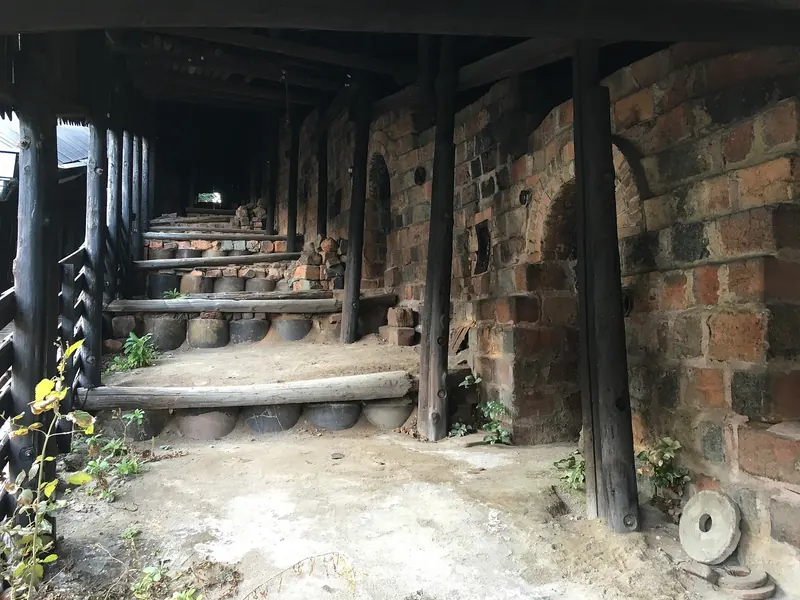
The wheel came later in some towns. The Six Ancient Kilns website says that in Tamba the early Edo period brought the climbing kiln, glazes made of ash and iron, and the rokuro, the potter's wheel. At the Tamba craft park you can still see the foot-powered kick wheel, which is turned by the potter's foot rather than a motor.
The other word you will meet is mingei, the folk craft movement. JNTO explains that the philosopher Yanagi Soetsu founded it and kept the everyday household pottery that people were throwing away as Japan grew more urban. Several towns in this guide owe part of their fame to mingei, which praised plain pots made for daily use.
Words you will see in pottery towns
- Yaki: ware; added to a place name, as in Bizen-yaki or Arita-yaki
- Setomono: a general Japanese word for ceramics, named after Seto in Aichi
- Yakishime: high-fired pottery with no glaze, dense and slow to absorb water
- Yuyaku: glaze, the glass-like coating on a piece
- Natural ash glaze: wood ash that melts onto pots in the kiln; called hai kaburi in Tamba
- Anagama: a single tunnel kiln dug into a hillside
- Noborigama: a climbing kiln of several chambers stepping up a slope
- Rokuro: the potter's wheel; some potters still use a kick wheel
- Mingei: the folk craft movement that valued everyday pottery
- Rokkoyo: the Six Ancient Kilns
A short history of Japanese pottery
You do not need history to enjoy a pottery town, but it explains why the towns look so different from each other. The short version is that Japan learned new methods from China and Korea again and again, and each town kept what suited its own clay.
Pottery in Japan is very old. JNTO's article on Japan's ceramic centres dates the oldest Jomon pottery to as far back as 14,000 BC, and another JNTO article places the Jomon period itself at around 13,000–300 BCE. These were hand-built earthenware pots fired at low heat.
The big change came with better kilns. The Kyushu guide says Kyushu potters began to make stoneware once the climbing kiln reached Japan in the fifth century, coming from China by way of Korea. Natural ash glazes followed, and sancai, a three-colour glaze of green, brown and cream from China, had arrived by the 6th or 7th century. JNTO says that during the Heian period (794-1185) potters began to coat stoneware with plain green lead glazes, a technique borrowed from Tang China, and regional styles such as Kamui ware and Atsumi ware appeared.
The Six Ancient Kilns begin in this era. In Shiga, JNTO says it is believed that Shigaraki pottery began in 742 CE with tiles for a nearby palace. Highlighting Japan says pottery has been made in all six regions continuously from around the 12th century, and that when the kilns were first set up, the methods of Tokoname, then a leading centre, were carried to Shigaraki, Tamba and Echizen. Between the 12th and 16th centuries the six mostly made practical things: storage jars called kame for water or grain, and suribachi, bowls with grooved insides for grinding food. Seto was the exception. Alone among the six, it made glazed ceramics from the late Heian period to the Muromachi period, and the Six Ancient Kilns website credits Kato Shirozaemon Kagemasa, who learned his craft in China in the Kamakura period.
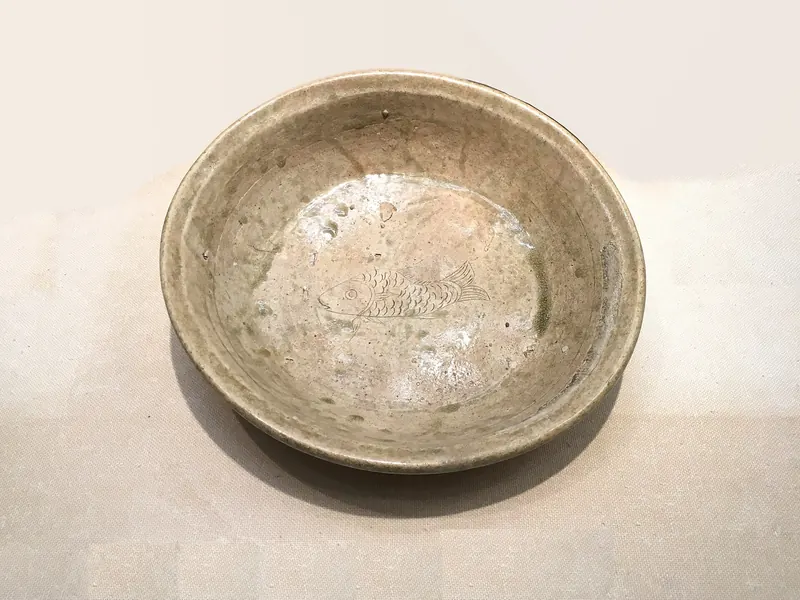
The tea ceremony changed everything in the 16th century. Highlighting Japan links the rise of the tea ceremony in the 16th century to a sharp increase in the making of tea bowls and other tea utensils. JNTO writes that "Tea masters expressed a preference for the craftsmanship that went into rough and unglazed bowls used in their ceremonies, such as Raku ware." Rough, uneven pots from the old kilns suddenly had great value. If you want to see this side of pottery in use, our guide to the Japanese tea ceremony explains how tea bowls are handled.
Korea shaped the next step. JNTO says the potters of Hagi in Yamaguchi turned to their Korean counterparts for inspiration in the late 16th century. The Kyushu guide says Karatsu has made pottery since 1596, and that in Satsuma the Chin family, whose ancestors came over from Korea in the 1500s, still runs a kiln, now in its 15th generation. Then came porcelain. In the guide's words, "Legend has it that kaolin was found in 1616 in the village of Arita by a Korean potter named Kanagae Sambee (also known as Yi Sam-pyeong)." Kaolin is the white stone that porcelain is made from.
Korean roots in four towns
- Hagi (Yamaguchi): potters looked to Korea for ideas in the late 16th century
- Karatsu (Saga): pottery made here since 1596
- Satsuma (Kagoshima): a kiln run by the Chin family, of Korean descent, now in its 15th generation
- Arita (Saga): porcelain begins, by legend, with kaolin found by the Korean potter Kanagae Sambee
Porcelain soon went abroad. JNTO says European buyers valued blue-and-white porcelain highly from the mid-1600s onward, and the Kyushu guide explains that "Imari is the name of the port from which the goods were shipped", which is why old Arita porcelain is known in the West as Imari. Other porcelain towns followed. Kutani kilns in Ishikawa opened in the mid-1650s, closed in 1730 and were revived in the early 1800s, and Tobe in Ehime dates from 1777, when the Ozu Domain's lord hired potters. Even Seto turned to porcelain: "In the late Edo period (late 18th to mid-19th century), Seto also began producing porcelain."
The modern era was hard on potters. The Kyushu guide says the Meiji Restoration (1868) took away the feudal lords who had been their steady employers, and JNTO says the government's push for Westernization cost the craft many of its patrons. The recovery came from collectors. In 1936 Yanagi Soetsu and the mingei movement opened the Japan Folk Crafts Museum. After the war, the Six Ancient Kilns website says, the ceramic historian Fujio Koyama renamed Echizen pottery in 1947, and Highlighting Japan says that "The name Six Ancient Kilns was coined around 1948 by ceramic historian KOYAMA Fujio". In 2017 the Agency for Cultural Affairs recognised the six regions as Japan Heritage. Japanese ceramics also became a modern industry: JNTO mentions Noritake for tableware, and Toto, a name taken from Toyo Toki, or Oriental Ceramics.
Japanese pottery in ten steps
- Jomon: hand-built earthenware, with the oldest pieces dated as far back as 14,000 BC
- 5th century: the climbing kiln reaches Japan from China via Korea
- 6th to 7th century: three-colour sancai glazes arrive from China
- 742 CE: Shigaraki is believed to begin with tiles for a palace
- 12th to 16th century: the old kilns make storage jars and grinding bowls; Seto alone uses glaze
- 16th century: the tea ceremony makes rough, unglazed tea bowls valuable
- 1616: legend says kaolin is found in Arita, and Japanese porcelain begins
- Mid-1600s: blue-and-white porcelain is shipped to Europe from the port of Imari
- 1868: the Meiji Restoration takes away the lords who employed potters
- 1936 to 2017: the Folk Crafts Museum opens, Koyama names the Six Ancient Kilns, and the six become Japan Heritage
The Six Ancient Kilns
The Six Ancient Kilns, Rokkoyo in Japanese, are the six pottery regions that Koyama grouped together: Echizen in Fukui, Seto and Tokoname in Aichi, Shigaraki in Koka City in Shiga, Tamba in Tambasasayama City in Hyogo, and Bizen in Okayama. The Six Ancient Kilns website describes them as towns "whose pottery production has continued from the Middle Ages to the present day". Many other towns are older or more famous for one thing or another, but these six have kept their kilns going without a break ever since.
The Six Ancient Kilns in numbers
- 6pottery regions, from Echizen in Fukui to Bizen in Okayama
- 12thcentury or so: since then all six have made pottery without a break
- 1948or so: the ceramic historian Koyama Fujio gives them their name
What they share is clay and fire rather than decoration. Highlighting Japan says unglazed pottery fired at high temperatures is the norm everywhere but Seto. The Six Ancient Kilns website puts it this way: "The unique texture and variation in color that was created by not using a glaze garnered many enthusiasts, and still continues to inspire fans today." Each one still looks different, because each clay is different. Seto clay contains very little iron and fires white. Echizen and Bizen clays are rich in iron and fire red-brown. Shigaraki clay is coarse and full of sand. Tokoname was the biggest producer of all, and Tamba is known for its ash glazes.
The six towns now promote themselves together. Highlighting Japan says their joint council runs tours of all six areas, organises exhibitions and held clay workshops at Expo 2025 in Osaka. With time for only one, choose by base city: Seto and Tokoname are easy from Nagoya, Shigaraki and Tamba from Kyoto or Osaka, Bizen from Okayama, and Echizen from Fukui or Kanazawa. All six get their own sections below.
The Six Ancient Kilns at a glance
- Echizen (Fukui): iron-rich clay that fires red; the only one facing the Sea of Japan
- Seto (Aichi): white-firing clay; the only glazed kiln of the six for centuries
- Tokoname (Aichi): the largest of the six, now known for teapots and pipes
- Shigaraki (Shiga): coarse, sandy clay south of Lake Biwa
- Tamba (Hyogo): bright natural ash glazes and an old climbing kiln
- Bizen (Okayama): unglazed red-brown ware, fired for days in wood kilns
Pottery towns near Tokyo
Two pottery towns sit north and northeast of Tokyo, and both are possible as a day trip or an easy overnight stay. Mashiko in Tochigi is the better known abroad; Kasama in Ibaraki is close by and holds one of the biggest pottery fairs in eastern Japan. Neither belongs to the Six Ancient Kilns, but both are full of working potters, and both have big fairs where you can buy straight from the people who made the pieces.
Mashiko (Tochigi)
Mashiko is a small town where pottery is the main street. JNTO says visitors "can stroll the length of Jonaizaka-dori and admire the items on display in more than 30 pottery shops". That count comes from a guide JNTO marks "All information is correct as of March 2019", so the exact number may have changed, but the street is still the place to start. JNTO adds the part most visitors come for: "Many offer short courses on how to craft a bowl, mug or platter that can be mailed to you after it has been fired in the kiln." Ask at the shop how long firing and shipping take, and whether they send abroad, before you book.
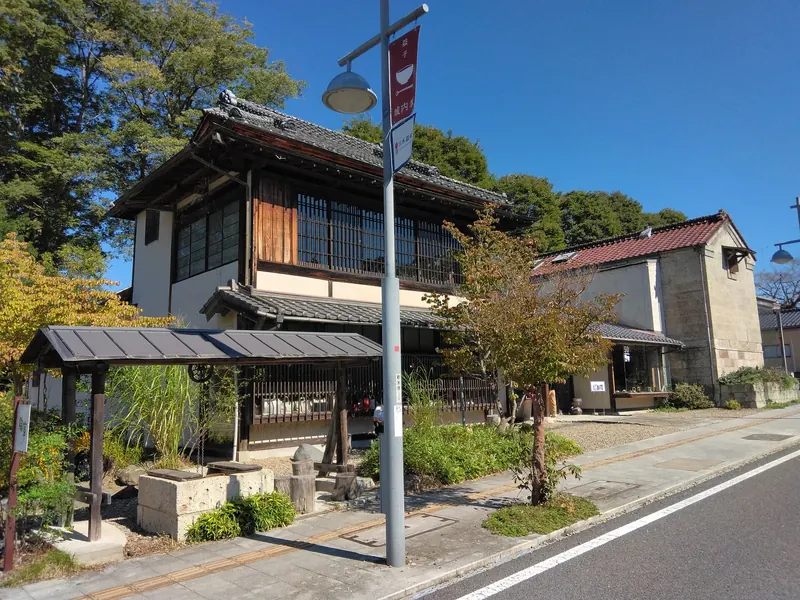
The best time to go is during the Mashiko pottery fair. Its official site lists the 114th autumn fair from Saturday 31 October to Tuesday 3 November 2026, open 9:00 to 17:00 and until 16:00 on the last day. It is run by the fair's own executive committee, and the Mashiko tourism association answers questions on 0285-70-1120, in Japanese. Fair days are busy, so arrive early if you want the best choice.
If you cannot get to Mashiko, it may come to you. Traditional Crafts Aoyama Square in Tokyo lists a Mashiko-yaki traditional craftsmen's exhibition from Friday 22 January to Thursday 4 February 2027. More on Aoyama Square in the shopping section below.
Kasama (Ibaraki)
Kasama is the other pottery town of the Kanto plain, and its big event is the Kasama no Himatsuri. The fair's official site lists the 45th edition from Wednesday 29 April to Tuesday 5 May 2026, from 9:00 to 17:00, at the event square of Kasama Geijutsu no Mori Park, 2345 Kasama, Kasama City. Entry was 500 yen a day, free for anyone 18 or under up to high school age, and free for holders of a disability certificate together with one companion. The ticket could also be paid with PayPay or AEON Pay.
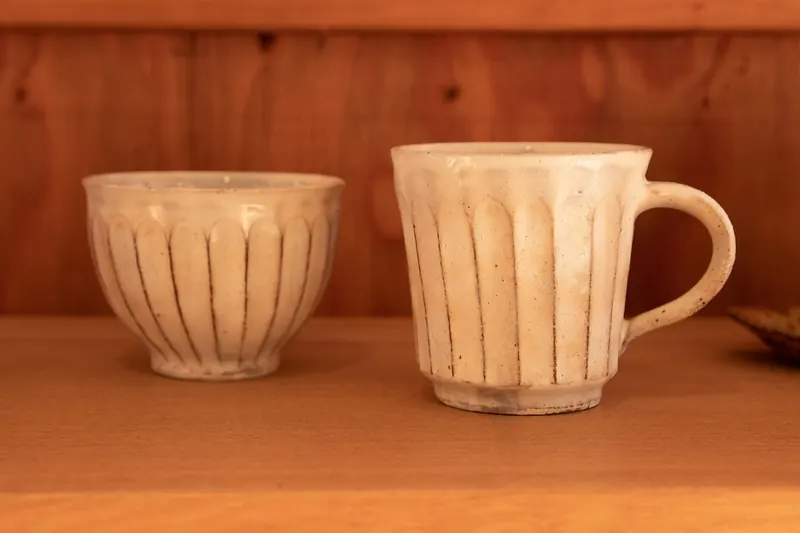
The fair is big. The organisers, the Kasama-yaki cooperative, say more than 200 kilns and shops from Kasama and beyond take part, and that about 80,000 people came in 2026 even though the weather was unusually poor on many days. They also warn that heavy traffic jams are expected during Golden Week and ask visitors to use public transport. The 2026 dates have passed, so check the official site for 2027; the fair is held over Golden Week. For autumn, the same cooperative runs a smaller event, the Kasama-yaki Aki-ichi, from the end of October 2026; 2026 is its third year, and the exact dates were not yet listed when we checked.
In Tokyo, Traditional Crafts Aoyama Square lists a Kasama-yaki show by the Sanno Kiln from Friday 19 February to Thursday 25 February 2027.
Pottery towns near Nagoya
Nagoya is the best base for pottery in central Japan. Two of the Six Ancient Kilns, Seto and Tokoname, are in Aichi, the same prefecture as the city, and Tajimi, the centre of Mino ware, is just over the border in Gifu. All three can be done as day trips by local train, and if you have two or three days you can see all of them. They are also very different from each other. Seto is the town of glazes, Tokoname is the town of bare red clay and teapots, and Tajimi is the town of green glaze and modern design.
Three pottery towns near Nagoya
- Seto (Aichi): the town of glazes; one of the Six Ancient Kilns
- Tokoname (Aichi): bare red clay and teapots; also one of the six
- Tajimi (Gifu): green glaze and modern design; the centre of Mino ware
Seto (Aichi)
Seto's story starts with its clay. Highlighting Japan, the government's English magazine, says Seto clay is "highly refractory and highly plastic", which in plain words means it stands up to great heat and is easy to shape. The article goes on: "Making use of these properties, Seto has produced a wide variety of pottery with many types of glazes." That variety is the reason to come. Where most of the old kilns are about bare clay and the marks of the fire, Seto is about what potters can do with a coat of glaze.
The early glazed ware has its own name, koseto, in the history kept by the Six Ancient Kilns council. JNTO describes the Seto style as known for "beautiful white bisque pieces", and sends visitors to two places: the Setogura Museum, to learn the history, and the Ceramic Craft Studio, to try making a piece yourself. Aichi Now, the prefecture's tourism site, also lists the Setogura Ceramic Plaza next to the museum, the setomono shops along the Seto River, and the Shinseiki Kogeikan craft hall as places to see in town.
Seto in brief
- Clay: stands up to great heat and is easy to shape
- Style: a wide variety of glazes; the early glazed ware is called koseto
- Learn: the Setogura Museum and the Setogura Ceramic Plaza
- Try it: the Ceramic Craft Studio
- Shop: the setomono shops along the Seto River
- Station: Owari-Seto, on the Meitetsu Seto Line
Seto's big fair is the Setomono Matsuri, held over a weekend in September. Aichi Now listed the 95th edition on Saturday 12 and Sunday 13 September 2026, so this year's fair is over. Its heart is a huge sale: about 200 pottery shops set up along the Seto River, which Aichi Now calls one of the largest in the country, selling everything from everyday dishes to art pieces, and the fair usually draws hundreds of thousands of people from all over Japan. JNTO describes the same scene: "For two days, over 200 merchants line the streets along the Setogawa River and offer visitors a wide selection of local pottery to purchase." Setogawa is simply the Japanese name for the Seto River.
Setomono Matsuri in numbers
- 2days over a weekend in September
- 200or so pottery shops along the Seto River
- 1,000or so fireworks on the first night
The 2026 fair also had an Ao no Hiroba, or blue square, where Seto sometsuke, the town's blue-and-white ware and an officially recognised traditional craft, was shown and sold, with demonstrations. About 1,000 fireworks went up on the first night, which Aichi Now notes is unusual for September. The fair takes place around Owari-Seto Station on the Meitetsu Seto Line and across the city. Entry is free, though some events have their own rules. There is little parking, so the organisers ask people to use trains and buses. The contact is the Seto tourism association on 0561-85-2730, in Japanese.
If you missed September, Aichi Now also lists the 26th Yururi Aki no Kamameguri, a name that means a relaxed autumn round of the kilns, on Saturday 7 and Sunday 8 November 2026. The listing gives no further detail, so check with the tourism association before you build a day around it.
Tokoname (Aichi)
Tokoname was the giant of the old kilns, and the Six Ancient Kilns council explains how it got so big: "Products from its kilns were transported across Japan from the Tohoku region in the far north to the Kyushu region in the far south, via its sea routes." The council also traces its roots: "Much like the Seto kilns, Tokoname kilns originated from the Sanage kilns." From that shared start, the two towns went opposite ways. Seto chose glaze. Tokoname kept its pots bare, and Highlighting Japan puts it simply: "Tokoname-yaki is characterized by high-fired unglazed pottery."
The clay explains the shapes. "Its clay, rich in iron, vitrifies even at relatively low temperatures, making it well suited for producing large jars and pots." For big pots the council describes yoriko zukuri: instead of turning the pot on a wheel, the potter shapes it by moving around it. Later the town found new work. When railways and sewers spread in the Meiji era, from 1868 to 1912, clay pipes made in wooden moulds were in great demand. And from the Edo period, Tokoname made an unglazed red teapot, first modelled on Chinese ones, which is still one of the town's best-known products. Highlighting Japan says the region is now "renowned both domestically and internationally for teapots, which have been produced since the 19th century, as well as for bonsai pots and other items".
Tokoname ware in brief
- Roots: like Seto, it grew out of the Sanage kilns
- Reach: shipped by sea as far as Tohoku and Kyushu
- Look: high-fired and unglazed
- Clay: rich in iron and good for large jars and pots
- Method: yoriko zukuri, where the potter moves around the pot instead of using a wheel
- Known for: red teapots, bonsai pots, and clay pipes since the Meiji era
For a visit, JNTO points to the Tokoname Pottery Footpath, which it calls "a popular attraction". Another JNTO article goes further: "Tokoname City in particular has numerous pottery-related locations and experiences, making it a must-go city for ceramics enthusiasts." Along the way, Aichi Now lists the Noborigama Hiroba exhibition workshop, named after the climbing kiln, and the old house of the Takita family, who were shipping merchants.
Tokoname's fair is the Tokoname-yaki Matsuri. Aichi Now listed the 60th edition on Saturday 3 and Sunday 4 October 2026, so it has also just passed. It was spread over three venues: the main one at Boat Race Tokoname, about 8 minutes on foot from Meitetsu Tokoname Station, plus the Pottery Footpath, called Yakimono Sanpomichi in Japanese, and Ceramall. A free shuttle bus linked the three venues and the station. Hours were 9:00 to 20:00 on the Saturday and 9:00 to 16:00 on the Sunday. Kilns, wholesalers and potters held a big sale, there was an outdoor tea gathering using Tokoname kyusu teapots at Ceramall, and fireworks lit up the first evening. The contact number is 0569-34-3200, in Japanese. Check Aichi Now for the 2027 dates.
Tajimi and Mino ware (Gifu)
Tajimi is not one of the Six Ancient Kilns, but JNTO notes that Mino ware "boasts 1,000 years of history producing elegant serving ware". Another JNTO guide puts it this way: "Situated on the southern border of Gifu and Aichi prefectures, the town of Tajimi is best known for being the center of production for Mino-yaki ceramics for the past 10 centuries." It describes a town where "The whole place is devoted to shaping and firing distinctive plates, bowls, containers and serving ware." If you want dishes to use every day, this is the town to visit.
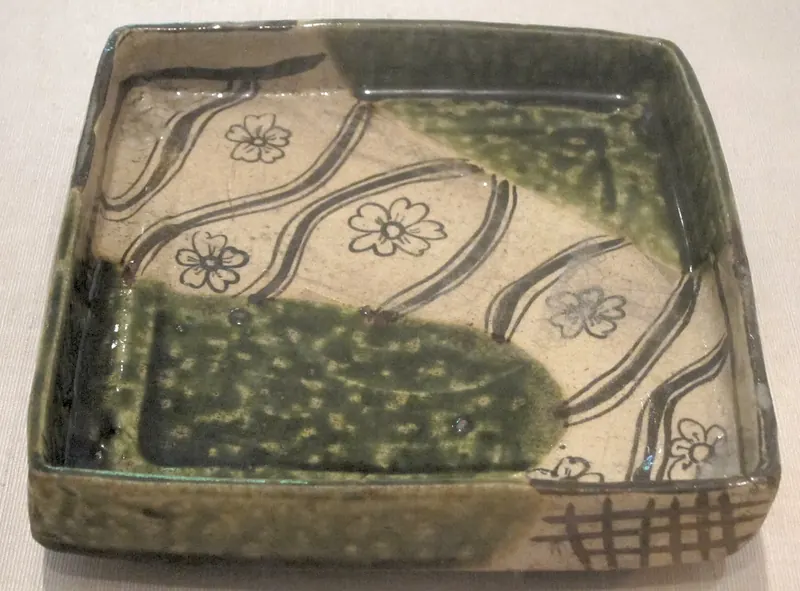
Mino ware is known for one colour above all. JNTO says "Minoyaki is known for its signature deep green copper glaze", and its Tajimi guide agrees: "The popular deep-green copper glaze used is something of a signature design." The place to see it is Honmachi Oribe Street. "A 10-minute walk across the river on the south side of Tajimi Station brings you to Honmachi Oribe Street, a shopping district devoted entirely to ceramics." Prices cover the whole range: "From reasonably priced souvenirs to jaw-droppingly expensive works of art, there is something for every taste and budget here." The street also has a small information centre, antique shops and places for lunch.
To make something yourself, go to Ceramic Park Mino. "Ceramic Park Mino is just a 10-minute bus ride from Tajimi Station." JNTO's guide says "You can shop and try your hand at making your own pottery here, which can be shipped to you after it's fired." If home is abroad, ask before you book whether shipping overseas is possible and what it costs. "The park is home to the Museum of Modern Ceramic Art and the Gifu Prefectural Ceramic Museum."
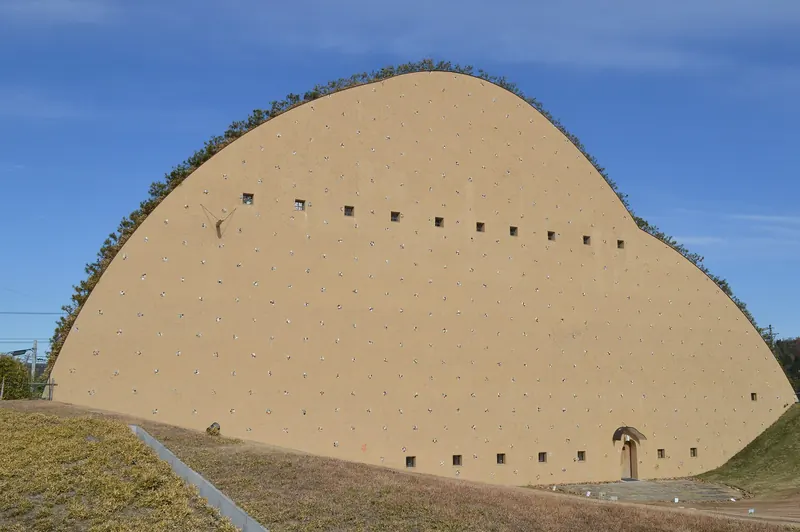
The most striking building in the area is the Tajimi Mosaic Tile Museum. "Tajimi Mosaic Tile Museum takes the visitor on a tour of tile production throughout history over the course of 200-300 exhibits." JNTO is honest about the real draw: "While the museum may be fascinating, the building itself is perhaps an even better reason to visit." "Designed by Fujimori Terunobu, it is a triumph of blending architecture with nature." "The museum is 20 minutes by bus from Tajimi Station."
Tajimi is easy to reach. "Tajimi is on the JR Chuo Main Line and about 30 to 40 minutes from Nagoya." From Gifu City, JNTO gives a second route: the Takayama Line to Mino-Ota, then a change to the Taita Line, about an hour in all. For buying, time your trip for a fair: "The spring and autumn Tajimi Ceramics Festivals draw tens of thousands of visitors." JNTO's other article points to the festival in April. Neither gives dates for 2026 or 2027, so check with Tajimi before you go.
Echizen (Fukui)
Echizen in Fukui is the old kiln on the Sea of Japan side, and for most visitors the hardest of the six to reach. Its pottery once went by other names, Kumaga yaki or Oda yaki, before it became known as Echizen ware. The Six Ancient Kilns council says it "draws influences from Tokoname ware", but the clay sets it apart: it is high in iron and can take high temperatures. "When fired, it appears to be red in color."
Highlighting Japan says Echizen-yaki is "Known for its simple, sturdy construction and the warm textures created by clay and natural ash glazes", and that it "uses clay with a high iron content and strong heat resistance, producing dense, durable vessels". Big pieces are its speciality: "Traditional forming techniques have been preserved, making it well suited for creating large jars and pots." The same clay made roof tiles. JNTO says Echizen's red clay "was highly sought after as roof tiles", and the council names the Echizen red tile, which stands up well to cold weather and was used at the site of Kanazawa Castle and the ruins of Fukui Castle.
Echizen ware in brief
- Old names: Kumaga yaki or Oda yaki
- Roots: influenced by Tokoname ware
- Clay: high in iron, takes high heat, and fires red
- Feel: simple and sturdy, with warm textures from clay and natural ash glaze
- Good for: large jars and pots, and red roof tiles that stand up to cold
- To see: the Echizen Pottery Village and Park, with the Echizen Old Kiln Museum
The place to go is the Echizen Pottery Village and Park. JNTO says it "offers many galleries and studios as well as an Echizen Old Kiln Museum with an Echizen Pottery Festival held each May." That makes late spring the best time for a visit if you want to buy. Fukui or Kanazawa is the natural place to stay, as noted above, but for the last part of the trip, check bus or taxi options with the town before you go. The Six Ancient Kilns site lists Echizen Town's commerce, industry and tourism division as the local contact, on 0778-34-8720.
Pottery towns in Kansai
Three pottery areas are within easy reach of Kyoto and Osaka: Shigaraki in Shiga, the Kiyomizu-yaki workshops in Kyoto itself, and Tachikui, where Tamba ware is made, in Hyogo. Shigaraki and Tamba are two of the Six Ancient Kilns, with rough, bare clay shaped by fire and ash. Kyoto's pottery is younger and far more refined, made for the city's tea masters and fine dining. With a hotel in Kyoto or Osaka, you can do each one as a day trip.
Kansai's three pottery areas
- Shigaraki (Shiga): one of the Six Ancient Kilns, with rough, bare clay shaped by fire and ash
- Kiyomizu-yaki (Kyoto): younger and more refined, made for tea masters and fine dining
- Tachikui (Hyogo): where Tamba ware is made, another of the six
Shigaraki (Shiga)
Shigaraki is a town in the hills of Koka City. The Six Ancient Kilns council says "Shigaraki is located in the southern part of Lake Biwa, surrounded by mountains, rich in raw materials", and that "It has also been historically known as a transportation hub since ancient times." Its history shows how a pottery town keeps changing what it makes. Following Tokoname's lead, Shigaraki began making large pots and jugs in the 13th century. By the 15th century it was making plain mortars, pots and jugs for daily life. Tea bowls came in the late 16th century, the Azuchi-Momoyama period, teapots and hibachi charcoal heaters in the 19th century, and from the mid-1940s, tiles and building materials.
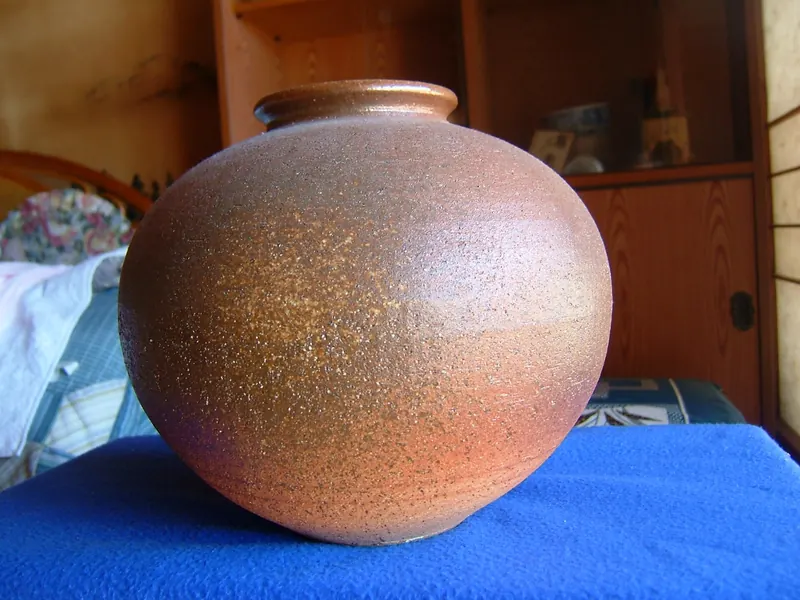
The look is easy to recognise. JNTO describes Shigaraki's "characteristic rough and intricate texture", and Highlighting Japan points to "the striking visual effects that emerge as the clay changes during firing", with no glaze at all. It adds that the clay "allows for a wide range of expressions, from everyday functional vessels to sculptural works". JNTO's guide to the park tells the same story in simple words: "Over time, the color and quality of Shigaraki clay became popular for tea utensils." "Shigaraki continues to produce high-end ceramic art." "The area also makes many humble household implements." You will also see plenty of ceramic tanuki, the raccoon dog figures that JNTO says are often placed outside shops and restaurants.
The main stop is the Shigaraki Ceramic Cultural Park. JNTO's Koka guide says "The Shigaraki area has been recognized for centuries as one of Japan's six great pottery regions, and The Shigaraki Ceramic Cultural Park is its modern epicenter." The park opened in June 1990. Explore Shiga, the Shiga tourism site, lists the Museum of Contemporary Ceramic Art, the Exhibition Hall of Industrial Ceramics with a shop and gallery of Shigaraki ware, and an Artist in Residence programme where artists from Japan and abroad stay and work. JNTO says the park "offers regular pottery classes for the public", and that "Pottery buffs will love its exhibits, hands-on experiences, and annual pottery sales." On the sale, JNTO adds a note of caution: "In addition, there is an annual event where artists sell their works, but the date has changed in recent years, so please check in advance when planning to visit."
Explore Shiga gives opening hours of 9:30 to 17:00 (last admission 16:30). The park closes on Mondays, moving to Tuesday when Monday is a holiday, and over the New Year from 28 December to 4 January. The entrance is wheelchair accessible and there is parking. The address is 2188-7 Chokushi, Shigaraki-cho, Koka City, and the phone number is +81-748-83-0909. Nearby, the Traditional Crafts Center of Shigaraki is worth a look for its building alone: "The exterior and interior walls, and even the floors of the Crafts Center are lined with Shigaraki-yaki ceramic tiles."
Getting there takes three trains from Kyoto. JNTO's route reads: "From Kyoto, take the JR Biwako Line to Kusatsu", change there to the Kusatsu Line as far as Kibukawa, and take the little Shigaraki Kohgen Railway for the last stretch, to Shigaraki Station. JNTO explains that the Biwako Line is the local name for this stretch of the JR Tokaido Main Line, so either name on the board means the right train. The park is about 20 minutes on foot from the station, according to Explore Shiga, or five minutes on the Koka City Community Bus. Explore Shiga also lists the Shigaraki Kogen Railway Rent-a-Cycle and the Shigaraki-cho Tourist Association among the places near the park. JNTO also warns about the name: Gunma Prefecture has a Kusatsu too, so check that your ticket is for the one in Shiga.
Kyoto and Kiyomizu-yaki
Kyoto's own pottery is Kiyomizu-yaki, which grew up on the road to Kiyomizu Temple. The Kyoto City Tourism Association describes its origins: "New methods were imported from neighboring China and Korea, and developed into the sophisticated styles of pottery known as Kiyomizu ware, or Kyoto ware." In the 16th century, kilns stepped up the slope of Gojo-zaka, the steep road to the temple. As the population grew, the potters moved their kilns south over the hill to Yamashina, where the kiyomizu-yaki danchi, or Kiyomizu Pottery Complex, is still at work. The association says "Over the course of 400 years, Kiyomizu pottery has developed countless techniques", and calls the area "a treasure trove you can reach on a short bus ride from central Kyoto".
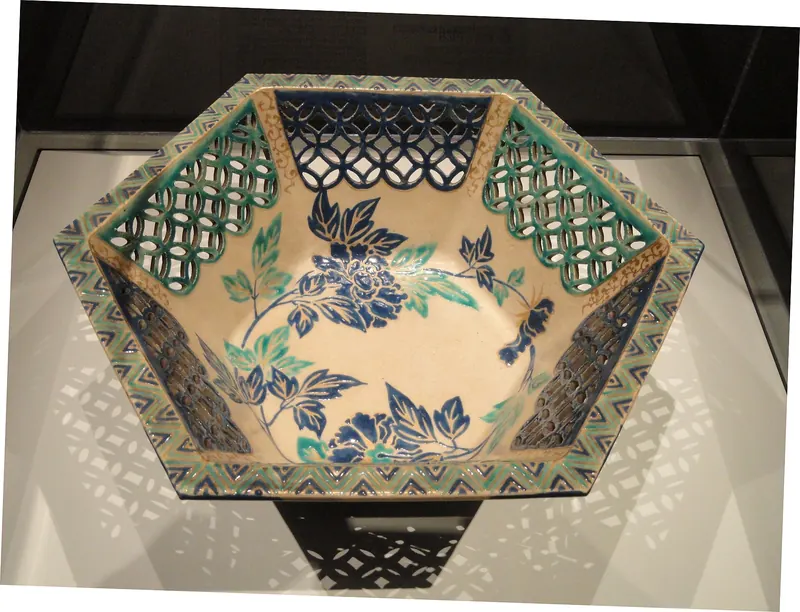
The association's Yamashina page notes: "The town is also known for its Kiyomizu-yaki ceramics, Kyoto folding fans, and other handicrafts." One of the places it names is Gallery Rakuchu-Rakugai, run by Mr. Kumagai, a wholesaler, which shows everything from ceramic art to delicate tableware. On the second floor is a ceramic copy of a rakuchu-rakugai folding screen, which took seven years to make.
Another is Unraku-gama, run by the Saito family. "In 1963, they were pioneers in the introduction of an electric-powered kiln for high-temperature firing." They still use a shiny glaze that is 400 years old, and they have also developed a harder matte glaze called aomatto for stronger pieces. If you plan to buy, you can see the work too: "With a phone or email reservation in advance, however, purchasing customers can view the production process at the kiln." For shopping, the association's souvenir guide says "Kiyomizu-yaki pottery is available in a wide spectrum of designs and colors, many of which are unique to specific kilns", and names Asahi-do, Gallery Rakuchu Rakugai and Kyoto Unraku-gama as places to buy.
Kiyomizu-yaki in brief
- Origins: methods from China and Korea, developed in Kyoto over some 400 years
- First kilns: on Gojo-zaka, the steep road to Kiyomizu Temple
- Today: the Kiyomizu Pottery Complex in Yamashina, reached by bus from central Kyoto
- Gallery: Gallery Rakuchu-Rakugai, with a ceramic copy of a folding screen
- Kiln visit: Unraku-gama, by reservation for buyers
- Shops: Asahi-do, Gallery Rakuchu Rakugai and Kyoto Unraku-gama
Autumn is the time to be in Yamashina. The association says "Visitors to Yamashina in late October will also be pleased to discover its annual ceramics festival with food, and over 100 tents with hand-crafted pieces." For 2026, its Yamashina page lists the Kyoto Pottery Expo 2026 from Friday 16 to Sunday 18 October 2026 in the Shimizu-yaki Pottery Industrial Park area, with details in Japanese only. Its market guide also lists the KYOTO KIYOMIZU CERAMIC POTTERY MARKET at Kiyomizu-yaki Danchi in Yamashina, held once a year for three days, with information in Japanese. The association spells the area both ways, and both listings point to the same place and a three-day event, so if your trip falls in mid to late October, check the Japanese pages for this year's dates.
Tamba Tachikui (Hyogo)
Tachikui, in Tambasasayama City, is the home of Tamba ware. The Six Ancient Kilns council says "Surrounded by mountains and within close proximity to Kyoto and Osaka, Tambasasayama is still a thriving pottery-making area." Tamba ware began in the late Heian period. In the second half of the Edo period, potters created a signature ware called Shiro Tamba, made with white soil. The council sums up the town's spirit: "Always aligned with the demands of the times, flexible and innovative Tamba potters created products that were relevant and very much rooted in the lives of the ages." Highlighting Japan says the same tradition has given "simple yet robust vessels for everyday use".
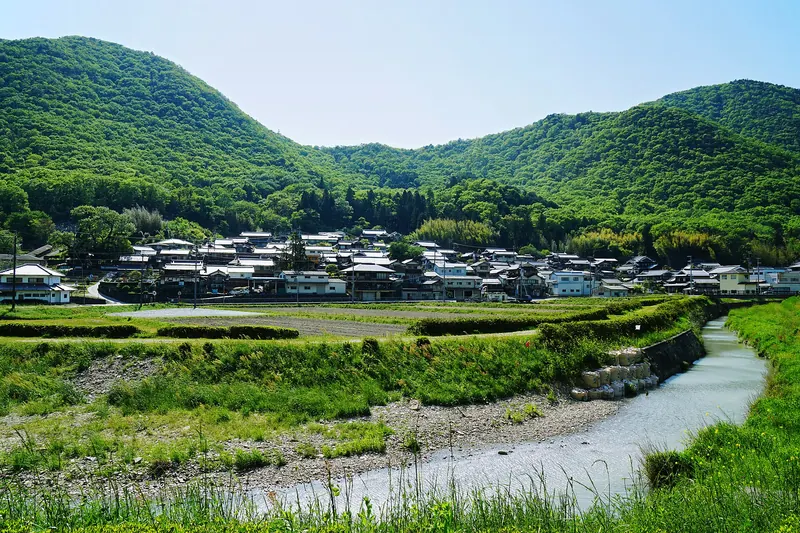
The village's pride is its climbing kiln. JNTO says no older climbing kiln survives in Japan, and that it climbs the hillside for more than 47 metres. It adds: "The recently restored kiln is operational again and back to producing beautiful pottery pieces." That JNTO article dates from 2022, so ask locally whether it is being fired when you visit. For shopping, JNTO says: "A visit to the Tachikui Pottery Village is a must for learning about the history and technique of Tambayaki and professionally produced pieces are available for purchase from over 50 shops along Kamamoto Yokocho."
Tachikui in numbers
- 47metres or more: the climbing kiln, the oldest surviving one in Japan
- 50or more shops along Kamamoto Yokocho
- 4kilometres or so: the village from north to south
Start at Sue no Sato, the Tamba Traditional Craft Park, which the village's own guide presents as the place to begin exploring Tachikui. Its Potters Alley is a good first stop: "Approximately 50 potters exhibit and sell a wide variety of ceramic works." The guide's advice is practical: "You may discover a potter that interests you here, then visit the workshop in person afterward." Visit HYOGO, the prefecture's tourism site, adds: "You can also view the climbing kilns that supported the history of tambayaki pottery from close up."
The TAMBA GATEWAY CENTER has galleries, a special exhibition room, Tamba mosaic tile art at the entrance and a café. Entry to the park is free, but "Admission to exhibitions is charged": ¥500 for adults (¥400 each in groups of 20 or more), ¥120 for elementary and junior high school students, and free for preschool children. Visitors with a disability pay half, ¥250 for adults and ¥60 for students, and so does one caregiver. A combined ticket with The Museum of Ceramic Art, Hyogo is also sold. The Traditional Industry Hall shows old Tamba ware, Ko-Tamba, from the Kamakura period through to the Edo period, new works by about 50 contemporary artists, and an introductory video.
Sue no Sato at a glance
- What it is: the Tamba Traditional Craft Park, the gateway to the Tachikui pottery village
- Potters Alley: about 50 potters show and sell their work
- Exhibitions: ¥500 adults, ¥120 elementary and junior high, preschool free; the park itself is free
- Discounts: half price for visitors with a disability and one caregiver; groups of 20 or more ¥400
- Workshop: hand-building or painting, fired in a Tamba kiln; beginners welcome
- Open: 10:00 to 17:00; closed Tuesdays (open on national holidays) and 29 December to 1 January
- Address: 3 Kamitachikui, Kondacho, Tambasasayama City, Hyogo; 079-597-2034
- Parking: 54 cars
To make your own piece, try the pottery workshop, where you can do hand-building or painting, alone or with family and friends. "Challenge yourself to create an original piece." "Beginners are always welcome." "Your finished piece will be fired at a Tamba Ware kiln, so please look forward to seeing how the colors and textures turn out." Tamba clay (No. 1 clay) and tools are also sold next to the classroom reception, if you want to keep working at home.
The village stretches about 4 kilometres from north to south, so Sue no Sato rents bicycles. A standard bike is ¥500 a day; an electric one is ¥1,200 for riders 140 cm or taller or ¥1,500 for riders 150 cm or taller, plus a ¥1,000 deposit. It is cash only, the office is open from 10:00 to 16:00, helmets are free, bikes must go back to the Sue no Sato office, and there are no advance reservations. Electric bikes can also be rented at Kamanjyo. The park is open from 10:00 to 17:00 and closed every Tuesday (open if it is a national holiday) and from 29 December to 1 January. The address is 3 Kamitachikui, Kondacho, Tambasasayama City, Hyogo, the phone number is 079-597-2034, and there is parking for 54 cars.
By train from Kyoto, take the JR Kyoto Line to Osaka (28 minutes), then the JR Fukuchiyama Line to Aino (52 minutes). From Shin-Osaka, it is 4 minutes on the JR Kobe Line to Osaka, then the same route. At Aino, board a Shinki Bus for Shimizu or for the Hyogo Museum of Ceramic Art. The Sue-no-sato-mae stop is 10 minutes away, or you can get off at Tachikui-kokaido-mae, 5 minutes on foot from the park. By car, the park is 14 minutes from the Sanda-Nishi IC (Maizuru-Wakasa Expressway); the drive to that exit takes about 55 minutes from the Kyoto-Minami IC, or about 32 minutes from the Toyonaka-minami exit of the Hanshin Expressway.
Getting to Tachikui by train
- From Kyoto: JR Kyoto Line to Osaka, 28 minutes
- From Shin-Osaka: JR Kobe Line to Osaka, 4 minutes
- From Osaka: JR Fukuchiyama Line to Aino, 52 minutes
- From Aino: Shinki Bus for Shimizu or for the Hyogo Museum of Ceramic Art, 10 minutes to Sue-no-sato-mae
- Or: get off at Tachikui-kokaido-mae, 5 minutes on foot from the park
Bizen (Okayama)
The last of the Six Ancient Kilns in this guide is Bizen, the furthest west of the six. JNTO's ceramics guide gives the short history: "Bizen ware first appeared in the 14th century and, thanks to its rustic appearance and popularity for the tea ceremony, had its heyday in the 16th century." A JNTO blog on Japan's ceramic centres reaches further back: "Bizenyaki has over 1,000 years of history and is well known for producing statues used in Shinto shrines that can be found all over Japan." The Six Ancient Kilns council explains how both dates can be true. Potters made sueki, an older grey stoneware, around what is now Setouchi City from the 6th century. When that ended in the late Heian period, Bizen ware grew up in the Inbe area. In the late Middle Ages there was strong demand for its mortars, and in the Azuchi-Momoyama period (1573 to 1603) tea lovers came to admire its simple, rustic character.
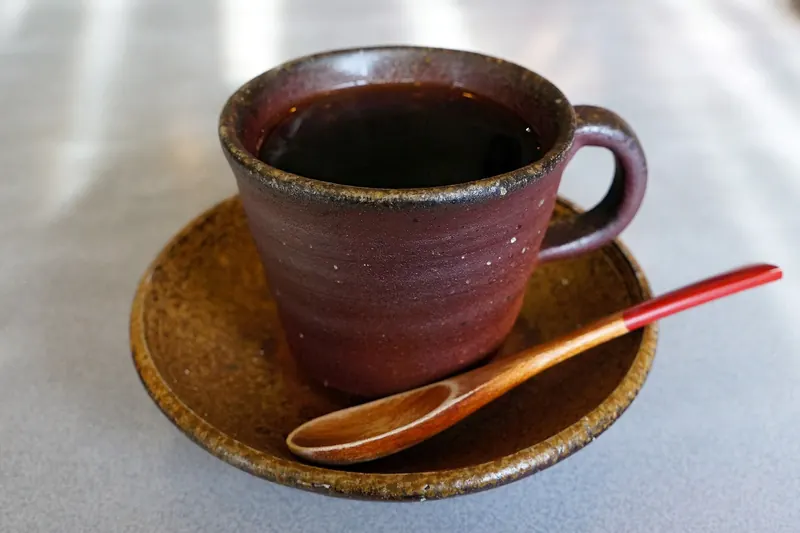
What makes Bizen special is what is missing. Highlighting Japan puts it plainly: "Bizen-yaki is characterized by its robust natural clay flavor and the varied kiln effects that emerge from high-temperature, long-duration firing without the use of painting or glaze." No paint and no glaze means every colour on the piece comes from the clay and the fire. The magazine goes on: "During firing in climbing kilns, each piece is shaped by the action of flames and ash, resulting in vessels with unique appearances, each one distinct." So no two pieces are quite the same. When you shop, pick up several and compare them side by side, then choose the one you like best.
Bizen ware in brief
- Age: from the 14th century, with roots over 1,000 years old
- Roots: grew out of sueki stoneware made around Setouchi from the 6th century
- Look: bare clay with no paint and no glaze; the colour comes from the fire
- Kiln: long firing at high heat in climbing kilns, where flames and ash mark each piece
- Heyday: the 16th century, when tea lovers prized its rustic look
- Known for: statues for Shinto shrines all over Japan
Imbe, the Bizen pottery village
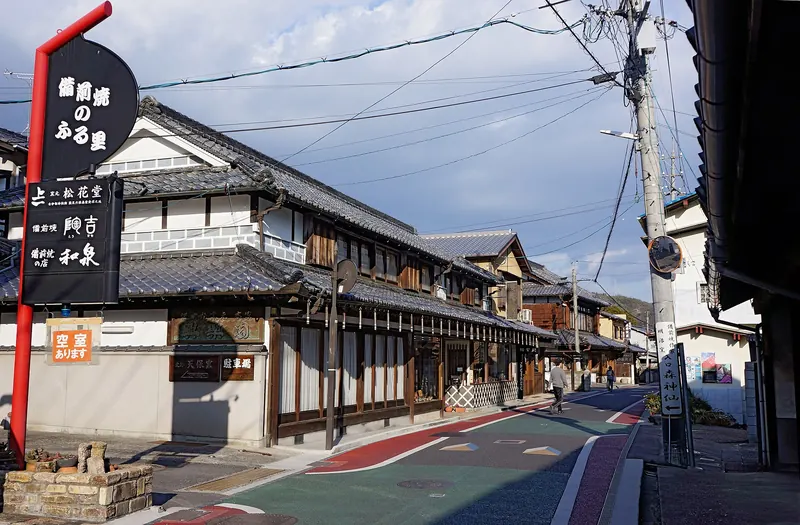
JNTO's ceramics guide says: "Many people with an interest in ceramics have the village of Imbe, in Okayama Prefecture's Bizen district high on the list of places they must visit." You will also see the name written Inbe, and the postal address uses Ibe. They are all the same place, in Bizen City in Okayama. The prefecture's tourism site describes the main street: "There are shops displaying Bizen ware, which has a unique earthy taste and a calm atmosphere, reminiscent of the past, as well as brick chimneys and rows of houses surrounded by mud walls." It adds: "In addition, the town of Inbe is home to many pottery makers and artists."
Both sources point to a museum. JNTO's blog says: "The Bizen Pottery Museum houses not only national treasures but also features an entire floor dedicated to active local artists." The prefecture's site says: "The Bizen Ware Museum in front of the station displays masterpieces of ancient art as well as representative works by modern pottery artists." English names vary between sources. JNTO also mentions classes: "You can also take part in workshops held at the museum as well as the annual Bizen Pottery Festival held in October." The prefecture lists more places close by: the Bizen Ware Traditional Industry Hall, the Inbe Tourist Information Center, Amatsu Shrine and the Bizen City Museum of Art.
The Bizen Pottery Festival
The Bizen-yaki Matsuri is held on the third Sunday of October and the Saturday before it. Okayama's tourism office lists the 42nd festival on Saturday 17 and Sunday 18 October 2026. If you miss it, the same rule points to Saturday 16 and Sunday 17 October 2027, but those dates have not been announced yet, so check before you book. The festival draws about 100,000 people. Shops that belong to the Bizen ware potters' association, and the festival's special sale venues, sell at 20% off the marked price.
Entry is free. The festival is right by JR Imbe Station, and the organisers ask people to arrive by train or bus, as the town gets crowded. By car, Imbe is about 15 minutes from Bizen IC or about 10 minutes from Wake IC on the Sanyo Expressway. Shuttle buses run from the car parks further out, and some parking can be booked for a fee. The festival has an official website and an Instagram account, and the contact is Bizen City's Bizen-yaki promotion section on 0869-64-1887, in Japanese.
The porcelain villages of Kyushu
North-west Kyushu is where Japanese porcelain began, and it is still the best place to see it made. Much of this section comes from a long 2022 guide by Vicki L. Beyer for the Kyushu Tourism Organization, so check opening times and prices before you go. The Kyushu guide says: "Arita is still regarded as one of the leading pottery villages of Kyushu." It counts eight pottery villages in the old Hizen Province, Arita among them: Arita, Imari, Karatsu, Ureshino and Takeo in today's Saga, and Hasami, Sasebo and Hirado in today's Nagasaki.
JNTO has an itinerary that links three of them. From Nagasaki, take the Seaside Liner and switch at Haiki Station to the Sasebo Line, a local train, for Arita, which JNTO times at 1 hour 50 minutes. From Arita, a taxi to Okawachiyama takes about 25 minutes. From there, JNTO allows 1 hour 10 minutes to Karatsu: a taxi to Imari Station, then the JR Chikuhi Line. Check a route planner on the day, as connections are not frequent.
Kyushu's pottery at a glance
- Arita (Saga): where Japanese porcelain began; a white body with blue and coloured painting
- Okawachiyama (Saga): the hidden village of the Nabeshima lords' porcelain
- Karatsu (Saga): earth-toned stoneware, prized for tea
- Hasami (Nagasaki): everyday porcelain at moderate prices
- Onta (Oita): folk stoneware, with clay beaten by river-powered pounders
- Satsuma (Kagoshima): ivory Shiromon and black Kuromon
Arita (Saga)
JNTO's itinerary calls Arita "the origin of Japanese porcelain", and adds: "The locally-made ware has distinct characteristics such as the almost transparent white base and the exquisite, vividly drawn pictures." JNTO's ceramics guide describes a town "famous for its traditional blue-and-white glazed porcelain and newer designs that draw on Chinese styles". The Kyushu guide agrees on the colour: "Even today, the blue on white glaze that gave Arita its start back in the 17th century is regarded as the signature glaze color of Arita."
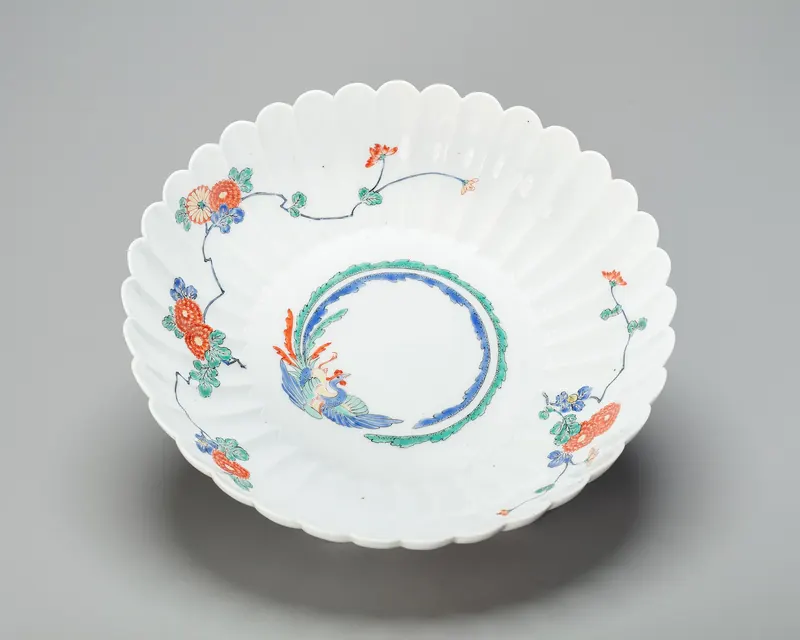
Export made Arita famous. The Kyushu guide explains that the first orders from Dutch traders were for dishes in shapes the Japanese already used, to sell in other parts of Asia, and Arita potters copied the Chinese blue-on-white style. Imari ware, named after the port it was shipped from, came from several Hizen villages, but Arita was "the largest and most prolific". JNTO notes how far it went: "This was highly valued by royals and aristocrats in Europe and in Turkey during the 17th and 18th centuries." Dutch traders then worked with the potters on designs for European buyers. The export pieces of the Edo period, now mostly in museums, are known as Ko-Imari, or old Imari. Pieces for export were usually bigger than the ones made for Japanese homes, and rather than round, they were often oblong, square or octagonal, sometimes with fluted or scalloped rims.
Spotting an old export piece
- Size: usually bigger than pieces made for Japanese homes.
- Shape: often oblong, square or octagonal, not round.
- Rim: sometimes fluted or scalloped.
- Where to see one: mostly in museums today.
European buyers wanted rich decoration in many colours. That meant hand-painted overglazes and more than one firing, and the enamelled pieces that came out of it are called Kakiemon, after "the 17th-century potter who first developed this style of decoration". Another style was kinrande, which means gold brocade: gold painted carefully by hand as the last step of glazing.
Arita porcelain in brief
- Start: the 17th century; called the origin of Japanese porcelain
- Look: an almost transparent white base with vividly drawn pictures
- Signature colour: blue on white
- Export name: Imari ware, after the port; old export pieces are Ko-Imari
- Kakiemon decoration: overglaze enamels in several colours, fired more than once
- Kinrande: gold painted on by hand at the end of glazing
- Sister city: Meissen in Germany, also famous for porcelain
The town itself is easy to enjoy. The Kyushu guide says: "Arita is a relatively compact and inviting town." And: "Visitors can wander its pretty streets, ducking in and out of boutiques, galleries and studios and soaking up the creative atmosphere." In the oldest part of town, potters' studios hide behind tall walls built from broken pottery and old kiln bricks. Kanagae Sambee, the potter linked to the kaolin story told earlier, has a monument at Sueyama Shrine, which the guide calls "Arita's shrine to the god of ceramics". This hilltop shrine, also known as Tozan Shrine, has ceramic lion dogs guarding a ceramic torii gate. "Even its ema votive plaques are ceramic, instead of the usual pine wood." The old Izumiyama Quarry on the edge of town, where the kaolin is said to have been found, is no longer worked but can still be seen.
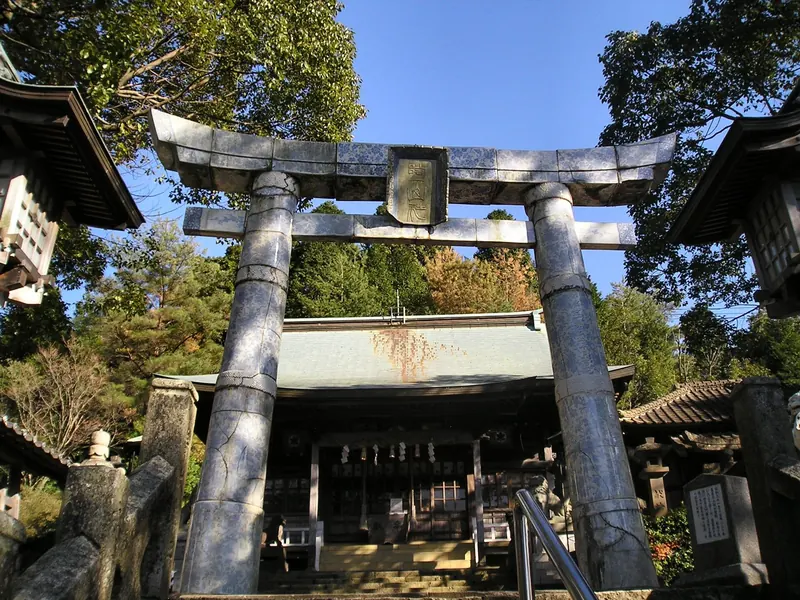
For the history, JNTO's blog says: "The Kyushu Ceramic Museum can shed a light on the history of ceramic production in the region". The Kyushu guide adds that it holds "a vast collection of Imari ware, especially Ko-Imari, as well as more contemporary pieces". JNTO's itinerary also sends visitors to the Arita Ceramic Museum to learn "how it all started in this humble landlocked town", and notes that Arita has a sister city in Meissen, Germany, also famous for porcelain. Then there is Imaemon: "Imaemon has been plying their trade for nearly 400 years and is one of Japan's most famous porcelain manufacturers." Its museum of ceramic antiques covers Iro-Nabeshima, porcelain painted with overglaze enamels in many colours. On the outskirts, the Kyushu guide describes Arita Porcelain Park as "a kind of theme park dedicated to ceramics", with a copy of a famous climbing kiln, pottery lessons, and a museum of Japanese and European porcelain in a copy of the baroque Zwinger palace in Dresden.
Museums in Arita
- Kyushu Ceramic Museum: the region's ceramic history, with a big Imari collection that is strong on Ko-Imari
- Arita Ceramic Museum: how porcelain making started in the town
- Imaemon: a famous maker for nearly 400 years, with a museum of old pieces including Iro-Nabeshima
- Arita Porcelain Park: at the edge of town; a copy of a famous climbing kiln, pottery lessons, and porcelain in a copy of the Zwinger palace
To see a working kiln, the Kyushu guide visits the Kouraku Kiln, one of the largest in Arita, which has four big gas-fired kilns. Its fifth-generation head, Takanobu Tokunaga, names three key elements of Arita ware: "the clay, the kiln, and the glaze". He also says "being innovative doesn't mean we have to get rid of things that are working." The kiln sits "nestled on a wooded hillside" and welcomes visitors. "Visitors can apply a decal or paint glaze onto a dish in their workshop and have it sent to their address after being fired." It also runs a bargain hunt in its warehouse: "Visitors can pay 5,000 or 10,000 yen for a shopping basket and wander through a warehouse stuffed with boxes of odd pieces, picking out the ones they want until the basket is full." Those were the 2022 prices, so ask before you go, and ask whether the kiln can post to an address abroad.
Arita's biggest week is in spring. JNTO says: "Held every year during Golden Week from April 29 to May 5, the Arita Ceramics Fair is now more than 100 years old." It counts about 500 stands along the four-kilometre Sarayama Street, at all kinds of prices. The Kyushu guide gives the scale: "Arita's pottery fair is Kyushu's largest, with more than a million people descending on the village, where nearly 500 stalls line the main street." Many studios open their doors during the fair. Like other fairs in the region, it is a chance to buy cheaply: "Various pottery villages across Kyushu sponsor annual pottery fairs at which they sell their seconds and surplus items at discounts." There is a smaller autumn event too, "usually around November 3", so check the date with the town before you plan around it. The guide's practical advice is to "bring an empty wheelie suitcase to make it easier to move around with your purchases".
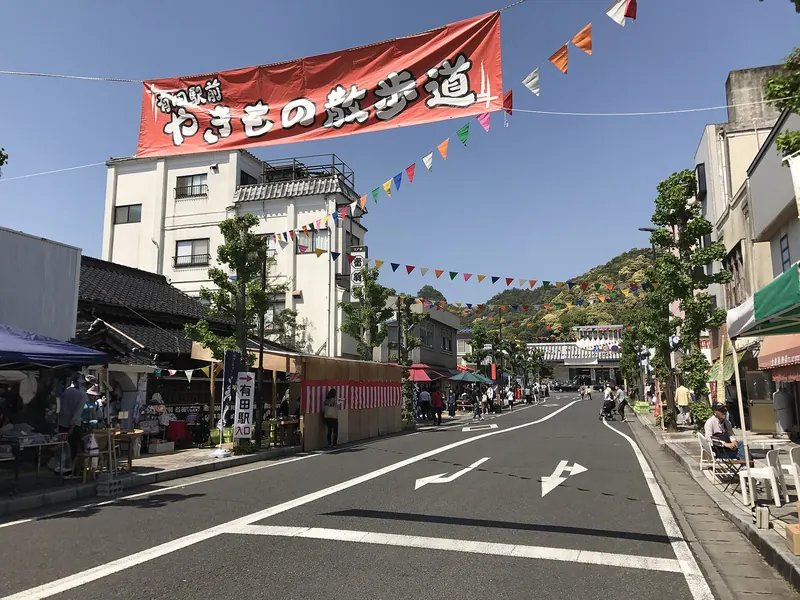
Okawachiyama and Imari
The Kyushu guide calls it "Okawachiyama, a secluded village not far from Imari and Arita", and JNTO paints the same picture: "Okawachiyama is a small, isolated village hemmed in by the mountains." Its story starts in 1607, when Ienobu Goto gave up his position as feudal lord, passing it to the Nabeshima family. Nabeshima-yaki was made from the late 17th century to the late 19th century for the Nabeshima lords, who used it themselves and sent it as tribute gifts to the Tokugawa shoguns. JNTO lists the styles made there under strict control: Nabeshima Celadon, Nabeshima Sometsuke and Iro-Nabeshima, at kilns that worked only for the family.
The Kyushu guide says Chinese-style lion dog figures, often in celadon, were a speciality, but the painted designs were more Japanese than Chinese, with simple, asymmetrical flowers or geometric patterns. Standards were harsh: "Anything imperfect or flawed was destroyed in an effort to maintain the highest quality standards." The lords also kept their methods secret. "The seclusion of Okawachiyama helped preserve their secrets." Today the Nabeshima Domain Kiln Park, which JNTO spells Nabeshimahanyo Park, has a copy of the old checkpoint and guardhouse, old kilns and potters' huts. JNTO says: "At Nabeshimahanyo Park, you can see several stepped kilns along with modern ceramic artwork." The Kyushu guide's advice: "Stroll the narrow streets of this hillside village and drop in to some of the shops selling locally-produced porcelains to absorb more of the atmosphere." The village holds its pottery fair in early April, ahead of the Golden Week fairs.
JNTO's blog pairs Arita with nearby Imari: "These two pottery towns are full of quaint shops, quiet old streets, and kilns producing beautiful porcelain works of art."
Okawachiyama in brief
- Where: a hidden mountain village near Imari and Arita, in Saga
- History: the Nabeshima lords' porcelain, from the late 17th to the late 19th century
- Styles: Nabeshima Celadon, Nabeshima Sometsuke and Iro-Nabeshima
- See: the Nabeshima Domain Kiln Park, with stepped kilns and a copy of the old guardhouse
- Fair: early April
- Getting there: about 25 minutes by taxi from Arita
Karatsu (Saga)
JNTO says: "Karatsu is a coastal city overlooking the Genkai Sea." And it sets the town apart from its neighbours: "In comparison to the colorful Arita ware and regal Imari porcelain, Karatsu's ceramics are generally of a much more earthy hue." This is stoneware, not porcelain. The Kyushu guide explains that the glazes are made from ash and the local clay is high in iron. It also says something you feel as soon as you pick a piece up: "The sizes and shapes of pieces seem to fit naturally into one's hands." Some dishes have a hidden extra: "Patterns on everyday dishes are designed to be revealed as the food served on them is eaten, enhancing the pleasure of the meal in a way rarely conceived of in Western meals." Most of all, "Karatsu-yaki implements for traditional Japanese tea ceremony are especially prized."
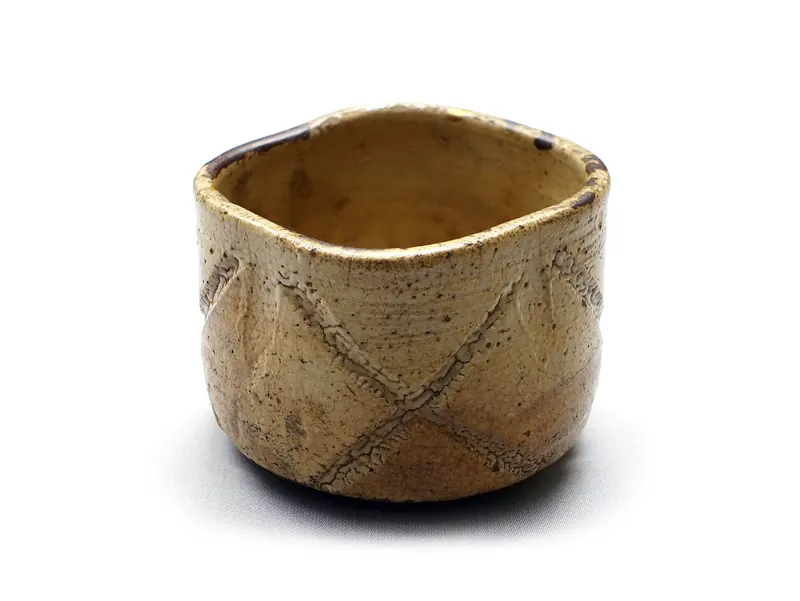
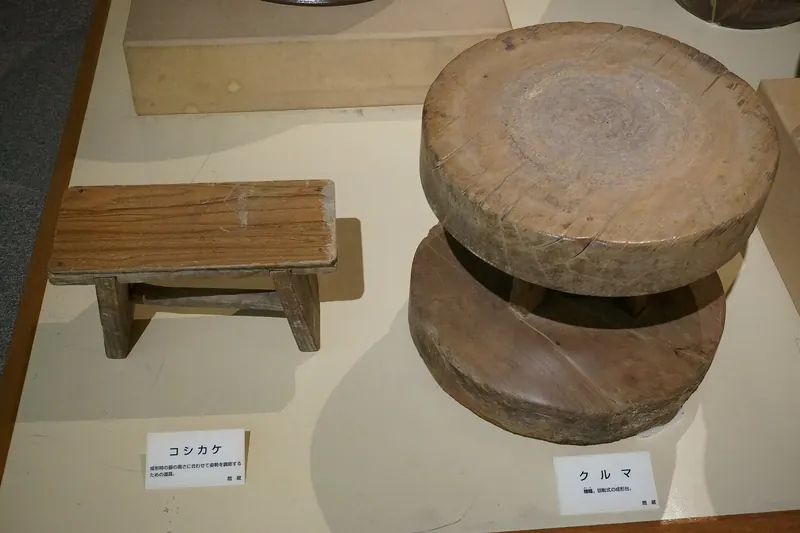
The Kyushu guide stops at the kiln run by Nakazato Taroemon, 14th of his line, from a family long known for tea ware. The kiln is in the Choda district and is also called o-chawan-kama, the honourable tea bowl kiln. The family still uses three wood-fired climbing kilns, and first set up a kiln here in 1734. For tea ware, the guide says, "he prefers to use a 200-year-old foot-operated wheel". "The Nakazato kiln is welcoming to visitors, with a shop and galleries where visitors can see displays of a number of modern and antique works to come out of their kilns." A gallery opened in March 2020 in the restored family home of the 11th Taroemon, with work from at least four generations. In the fireproof storehouse next to it, look closely at the older pieces for kintsugi, the gold repairs on broken pottery.
To see more in one place, the Kyushu guide says: "For a chance to see more Karatsu-yaki, particularly tableware, visit the Furusato Hall Arpino near JR Karatsu Station." It has an exhibition on how Karatsu ware is made and pieces from many local kilns, and it hosts Karatsu's pottery fairs twice a year, in Golden Week and in mid-September. The guide also mentions Takeo, in southern Saga, which claims to come before Karatsu. Its stoneware is often called Takeo Kokaratsu, meaning old Karatsu, and is known for simplicity, warmth and earth tones. It is said to have been the most common everyday ware of ordinary people in Hizen. While you are in Karatsu, JNTO points to Karatsu Castle, built in 1608 and nicknamed the Dancing Crane Castle.
Nagasaki to Karatsu by the pottery villages
- Nagasaki to Arita: about 1 hour 50 minutes; the Seaside Liner, then the Sasebo Line from Haiki
- Arita to Okawachiyama: about 25 minutes by taxi
- Okawachiyama to Karatsu: about 1 hour 10 minutes; a taxi to Imari Station, then the JR Chikuhi Line
Hasami (Nagasaki)
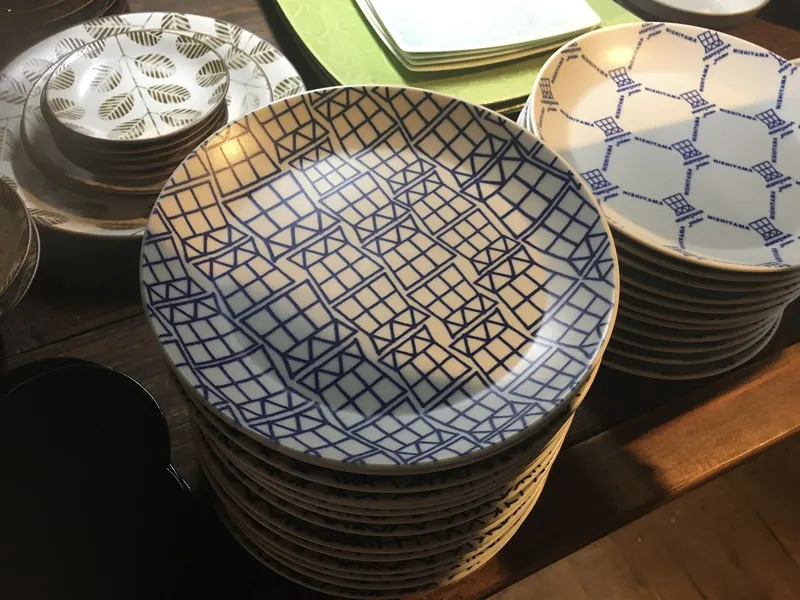
Just south of Arita, over the border in Nagasaki, Hasami has four centuries of pottery behind it, first stoneware and later porcelain. The Kyushu guide describes its look: "One of the signature features of Hasami-yaki is its translucent white glaze and the fine lines of delicate patterns in the overglaze." And: "Icy blue-white celadon glazes are also common on Hasami-yaki." The white comes from fine kaolin mined in the Amakusa Islands, and the town is known for elegant wickerwork pieces said to be unique to Hasami.
Hasami's real strength is the table. "Everyday tableware made in Hasami kilns, with its timeless style and moderate prices, has long been favored as well." Its potters have also made reinforced porcelain tableware built to resist breaking, popular in school cafeterias. Like Arita, Hasami has a ceramics park, Yakimono Park, which "features reproductions of a dozen different kilns from around the world and across time". The park also hosts Hasami's Golden Week fair, with booths from over 100 sellers, most of them selling at a discount.
Onta and Koishiwara
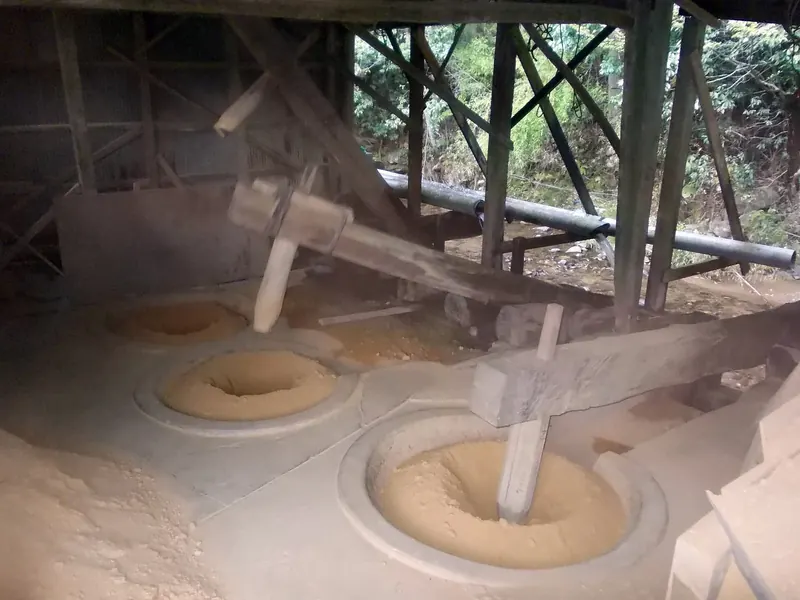
Not all of Kyushu's pottery is porcelain. In the hills of Oita, the tiny village of Onta has made folk stoneware for more than two centuries, glazed in natural earth tones and decorated with small lines cut into the surface. "Most of the villagers of Onta are involved in pottery production, working in family-owned studios passed from father to son and sharing a wood-fired kiln that belongs to the village." The clay has to be just right, so "the villages have devised a river-powered mechanism for beating the clay to the desired consistency". "Visitors report that the thump of the mortars beating the clay is a particular sound to be cherished when visiting Onta." The village became popular in Japan and abroad when the mingei folk craft movement, described earlier, praised it for keeping its old ways of working.
Koishiwara in Fukuoka is another village the mingei movement picked out. "Koishiwara-yaki is characterized by its brown and other earth-tone glazes and simple etched patterns." The pieces are made for everyday use, and the styles have changed with the way Japanese people eat. Koishiwara is known for slipware: before firing, each piece is coated with slip instead of glaze, either by dipping or with a brush. Slip is a runny clay soup that contains minerals. The Kyushu guide lists "a three-day spring pottery fair on May 3-5 and a fall fair on the three day weekend of Sports Day in October". Check the year's dates with the village before you go.
Satsuma and Amakusa
At the southern end of Kyushu, in Kagoshima, Satsuma ware also has Korean roots, as told earlier. It comes in two main types. Shiromon, the white type, is a rich ivory glaze painted with plants or animals in bright colours with gold accents, often called brocade. The Shimazu lords of Satsuma kept the best pieces, and used fine Shiromon as gifts to foreign dignitaries and royalty. Satsuma ware was shown at the 1867 Paris Exposition. "One place to see examples of Shiromon is at Sengan-en, the historical villa of the Shimazu family."
The black type is quite different. "Kuromon, on the other hand, is a luminous black, with little additional decoration." "The color comes from iron-rich volcanic ash used in the glaze." Kuromon pieces were mostly made for everyday use. One of the first Satsuma centres was Miyama, in Hioki city, home of the Chin family kiln mentioned earlier. At Miyama Toyukan, "visitors can have the opportunity to throw a pot on a wheel or dab a bit of glaze on a dish".
Satsuma ware's two styles
- Shiromon (white): a rich ivory glaze painted in bright colours with gold; the lords' gifts to foreign royalty
- Kuromon (black): a luminous black from iron-rich volcanic ash; made for everyday use
- See Shiromon: Sengan-en, the Shimazu family villa
- Visit: Miyama in Hioki, with the Chin family kiln and Miyama Toyukan
Across the water in Kumamoto, the Amakusa Islands supply the white stone for much of Japan's porcelain: "today, 80% of Japan's kaolin comes from Kumamoto's Amakusa Islands". In the mid-18th century a local lord started pottery here, with a system that let farmers make it outside the farming season. The Ueda family of Takahama, a village on the west coast, made porcelain for Dutch traders. After the Meiji Restoration the kiln had to close, but "a small Takahama-yaki kiln re-opened in 1952", and the old Ueda family home and garden, with a small museum, can be visited. Look for Mirumon, a pattern like coral or seaweed in blue, now sometimes made in yellow or red. "The delicate white dishes adorned with just a splash of colorful pattern are translucent and practically glow when held up to the light." The Maruo Kiln on Shimoshima, one of the largest on the islands, started in 1845 and is run today by three brothers of the Kanazawa family, its fifth generation, who make both stoneware and porcelain.
Hagi (Yamaguchi)
In Hagi, in Yamaguchi, pottery and tea go together. As told earlier, its potters looked to Korea in the late 16th century, "with the local feudal lord ordering Hagi ware for his personal tea ceremonies and gifts", in the words of JNTO's ceramics guide. The guide goes on: "The pottery is famous for its subtle and natural forms, as well as subdued and simple colors that are designed to contrast with the bright green of matcha green tea." JNTO's blog adds: "Hagiyaki is an important part of local culture and has been heavily associated with the tea ceremony for more than 400 years."
Hagi ware changes as you use it. The blog explains that its soft, porous clay lets tea seep in and slowly alter the piece, a change known as the Seven Disguises of Hagi ware. If you want to see one in use, our tea ceremony guide covers where to join a tea ceremony. "Hagi also has climbing kilns and workshops for throwing your own pottery."
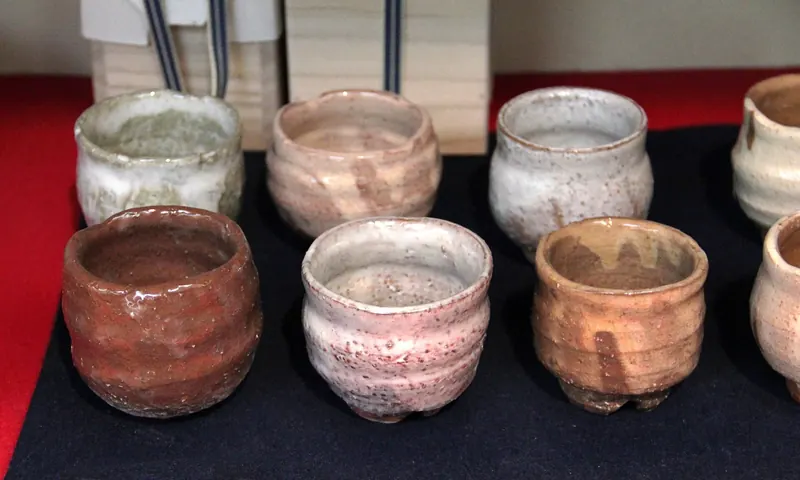
For a longer class, JNTO's Japan's Local Treasures series features Choungama, a kiln set up in the mountains of Hagi in 1979. In 1989 it created its own clear blue glaze, Aohagi, which means blue Hagi. Its classes cover the whole process. You learn "recycling clay with fire, wedging, using the potter's wheel, trimming, and working on a teapot project". "Participants also have the opportunity to enjoy traditional Japanese tea with our handcrafted teaware." The kiln says: "We offer workshops for all skill levels, available in 1-day, 3-day, and 5-day sessions." The listing gives no prices, so ask when you book.
Getting there takes some planning. Ride the Sanyo Shinkansen from Hakata to Shin-Yamaguchi, about 30 minutes. From Shin-Yamaguchi, the Super Hagi Go bus takes about 1 hour 20 minutes, while the Bocho bus reaches Higashi-Hagi Station in about 1 hour 30 minutes. The kiln, at 4431 Yamada, Hagi, is 15 minutes by car from Hagi Station.
Choungama at a glance
- Where: 4431 Yamada, Hagi; 15 minutes by car from Hagi Station
- Since: 1979; its clear blue Aohagi glaze dates from 1989
- Classes: 1, 3 or 5 days, for all skill levels
- You learn: preparing and wedging clay, the wheel, trimming and a teapot
- Also: tea served in the kiln's own teaware
- From Hakata: Shinkansen to Shin-Yamaguchi, then a bus to Hagi
- Price: not listed; ask when you book
Kutani (Ishikawa)
Kutani is the colourful one. JNTO's ceramics guide says: "Kutani ware is a more elaborate and decorative style of porcelain that originated in Ishikawa Prefecture". The guide notes that older Kutani pieces used dark greens, blues and yellows. When production started again in the early 1800s, after the break described earlier, potters used overglaze painting to make detailed, colourful designs. Today Kutani is still made around Ishikawa, and the prefecture's tourism site says visitors can watch the process, from shaping to overglaze painting, at various places.
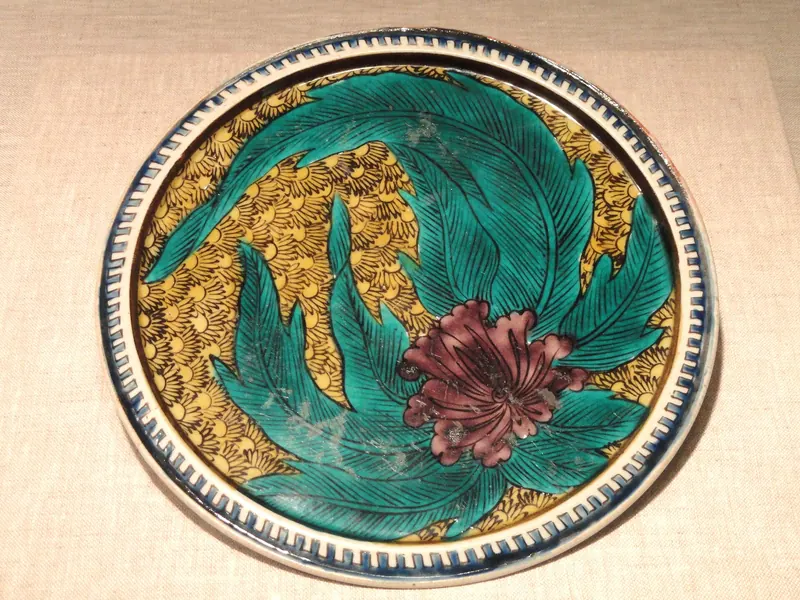
The best place to start is the Kutani Ceramic Art Village in Nomi. Ishikawa's tourism site says: "The village showcases pieces from the seventeenth century to the present, as well as periodic special exhibitions by modern artists." It adds: "The recently renovated museum has informative displays on the history and production process of Kutani ware." And: "Visitors can browse the galleries, purchase souvenirs from the gift shop, or try painting their own Kutani ware in workshops." The Nomi Kutani Ceramics Museum is at 56 Minami, Izumidaimachi, Nomi, open 9:00 to 17:00 (last entry 16:30), closed on Mondays and over New Year. Entry is ¥430, ¥320 for seniors, and free for high school students and younger.
If you are staying in Kanazawa, which is easy to reach from Tokyo, Osaka and Kyoto, you can paint a piece there. The prefecture's page says: "Experience painting a unique Kutani ware piece from a template or freehand." And: "The kiln then fires the piece before sending it to its owner." It lists Kutani Kosen at 5-3-3 Nomachi, Kanazawa, open 9:00 to 17:00 (last entry 16:30) and closed over New Year, and the Kutani-yaki Kiln Exhibition Hall in Kaga, open the same hours, closed on Tuesdays and over New Year, with entry at ¥350, ¥170 for seniors and free for high school students and younger. If you live abroad, ask whether they can post your piece overseas before you start.
Tobe (Ehime)
Tobe ware comes from Ehime on the island of Shikoku. JNTO classes it as blue-and-white pottery, and describes it this way: "Glazed Tobe ware typically has a slightly thicker base, while the designs are characterized by delicate brush strokes to create images in different shades of blue on the white base."
Start at the Tobe-Porcelain Traditional Industry Hall. Ehime's 2023 English guide says the ground floor has "a display of historical artifacts of Tobe-yaki ceramic ware, special examples of porcelain art, and modern pieces by contemporary artisans". Upstairs, work from about 80 potteries is on show and for sale, with changing exhibitions, and a giant porcelain jar and a globe greet you at the door. The hall is busiest during the spring and autumn Tobe-yaki fairs. It is at 335 Ominami, open 9:00 to 17:00, closed on Mondays (open if Monday is a public holiday) and from 29 December to 1 January. Entry is ¥300 for adults, ¥200 for over-65s, ¥200 for high school and college students, and ¥100 for younger school children, with a group discount for 15 or more. It has parking for 50 cars, and the phone number is 089-962-6600, in Japanese.
The 500-metre Tobe Ceramic Promenade runs from the hall to the Tobe Creative Porcelain Making Center, passing Tosogaoka. Its paths and walls are covered in porcelain tiles, some of them the work of local high school students, and there is a wide view over the town from the hillside. Tosogaoka, or Founder's Hill, was built in 1942 and has monuments to people who shaped Tobe ware, including Josuke Sugino, a potter of the 1700s and one of its founders. Several potteries along the way sell direct and let you watch them work; check whether you need to book. Umeno Seiko Toen, founded in 1892, sells Tobe ware made in the traditional way. Upstairs it sells porcelain from Mogura-no-kama, the mole kiln, made by four young local potters who use a climbing kiln.
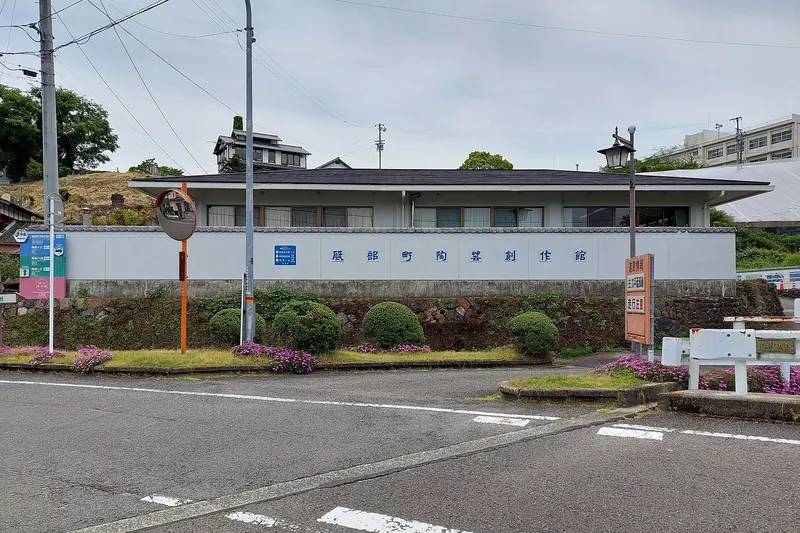
The Creative Porcelain Making Center runs three short classes. In rokuro you use an electric potter's wheel. In tebineri, or hand-forming, you shape clay on a hand-turned wheel or with a wooden spatula. In etsuke, or painting, you choose one of about 100 unglazed pieces and paint it with gosu, a pigment that turns blue in the kiln. Instructors guide you in the first two. Rokuro costs ¥1,500 for one piece and tebineri ¥1,500 for two pieces, both by reservation. Painting costs ¥300 and needs no booking. A thrown or shaped piece takes about a month to reach the first, or biscuit, firing, and two or three weeks more for the final firing; a painted piece takes two or three weeks. Postage is extra. The center is at 82 Gohonmatsu, with parking for about 20 cars, and is open 9:00 to 17:00, closed on Thursdays (open if Thursday is a public holiday) and from 28 December to 4 January. The prefecture's page links to the center's own website for bookings.
Classes at the Tobe Creative Porcelain Making Center
- Rokuro: an electric potter's wheel; ¥1,500 for one piece; book ahead
- Tebineri: hand-forming on a hand wheel or with a wooden spatula; ¥1,500 for two pieces; book ahead
- Etsuke: paint one of about 100 unglazed pieces with gosu blue; ¥300; no booking
- Waiting time: about a month plus two or three weeks for shaped pieces; two or three weeks for painted ones
- Open: 9:00 to 17:00; closed Thursdays (open on public holidays) and 28 December to 4 January
- Postage: extra
The other big stop is En no Sato, the Tobe-yaki Visitors Center, at the foot of the Misaka Pass on National Route 33. It sells porcelain from many potteries, explains how Tobe ware is made, and offers wheel, hand-forming and painting classes. It also has the Senzan-gama, a kiln of three chambers rising in steps, built with Tobe's own bricks. It is at 359 Senzoku, open 8:30 to 18:00 and closed only on 31 December, with parking for about 100 cars; call 089-962-2070, in Japanese, for current class prices. The prefecture's page dates from 2023, so check hours and prices before you go.
Tsuboya (Okinawa)
Tsuboya is a district of Naha in Okinawa. The Naha Municipal Tsuboya Pottery Museum says Tsuboya has played a big part in the growth of Okinawan pottery and still leads its production. The museum explains the roots of that pottery: "We Okinawans have also cultivated a unique culture of pottery through our interaction with nature and cultural exchange with neighboring countries." It adds: "The history of Okinawan pottery shows that its role and forms have changed to meet the demands of the times." The museum hopes visitors will also explore "Yachimun Alley, which is alongside of the museum".
The museum's local guide says Tsuboya suffered little damage in the war, so cultural sites linked to pottery and to local faith survive all over the district. It sits next to the public market that the museum calls Okinawa's kitchen, and the Arakaki family house nearby is a national Important Cultural Property.
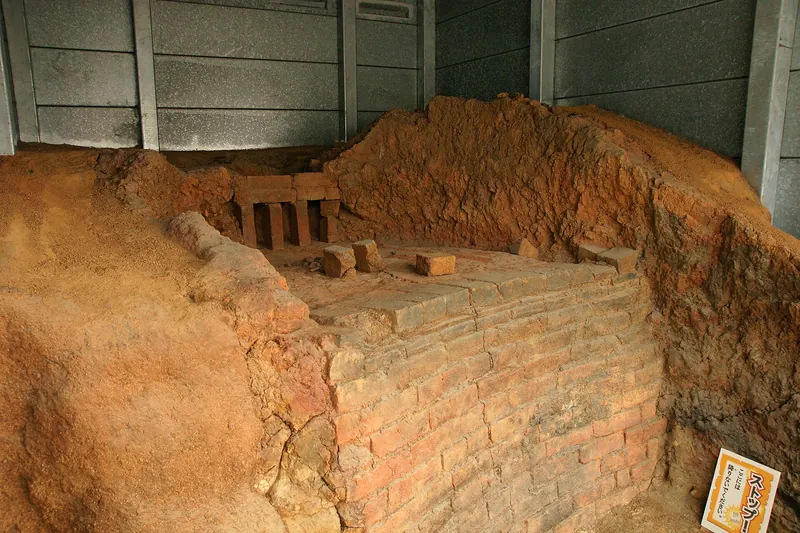
The museum is at 1-9-32 Tsuboya, Naha, a 10-minute walk from Makishi Station, 5 minutes from the Tsuboya or Kainan bus stops, and 5 minutes from Makishi Public Market. It is open from Tuesday to Sunday, 10:00 to 18:00 (last entry 17:30). It closes on Mondays, with changes around national holidays, from 28 December to 4 January, and on other days as needed. Entry is free for a visitor with a disability and one companion; the English page gives no general fee, so check on arrival. The ground-floor hall has free Wi-Fi, and an audio guide is free to borrow. The phone number is 098-862-3761, in Japanese.
Pottery fairs in 2026 and 2027
A fair is the best time to buy. On fair days a quiet pottery town turns into one long market, many studios open their doors, and prices drop: shops in the Bizen potters' association take 20% off the marked price during the festival, and the Kyushu villages clear their seconds and surplus pieces at a discount. Fair days are crowded, so go early for the best choice. Organisers also ask you to leave the car behind. Kasama warns of heavy traffic over Golden Week, and Seto has little parking. If you mean to buy a lot, the Kyushu guide's tip works anywhere: bring an empty suitcase on wheels.
The two tables below collect every fair date in this guide. The first lists what is still ahead in autumn 2026, counted from 17 October 2026, when we checked. The second is for 2027. Few 2027 dates have been announced, so where a fair follows a fixed rule we give the date the rule points to, and where it does not we give the season. Always confirm the dates on the official site before booking a train.
| Dates | Event | Where | Good to know |
|---|---|---|---|
| 16 to 18 October 2026 | Kyoto Pottery Expo 2026 | Yamashina, Kyoto | in the Shimizu-yaki Pottery Industrial Park area |
| 17 and 18 October 2026 | 42nd Bizen Pottery Festival | Imbe, Okayama | 20% off at member shops; by JR Imbe Station |
| From the end of October 2026 | Kasama-yaki Aki-ichi | Kasama, Ibaraki | exact dates not yet listed |
| 31 October to 3 November 2026 | 114th Mashiko autumn pottery fair | Mashiko, Tochigi | 9:00 to 17:00, until 16:00 on the last day |
| Usually around 3 November | Arita autumn event | Arita, Saga | smaller than the spring fair; check the date |
| 7 and 8 November 2026 | 26th Yururi Aki no Kamameguri | Seto, Aichi | a relaxed autumn round of the kilns |
Mashiko is the big one for a trip from Tokyo this autumn: four days from Saturday 31 October to Tuesday 3 November 2026, open from 9:00 to 17:00 and until 16:00 on the final day. Kasama's smaller autumn market starts at the end of October, its third year, but the dates were not yet on the official site when we looked. In Kyushu, Arita's autumn event is usually held around 3 November, so confirm the 2026 date with the town. Seto's relaxed round of the kilns on Saturday 7 and Sunday 8 November 2026 is the last fair date we found for the year.
| When | Event | Where | Good to know |
|---|---|---|---|
| Early April | Okawachiyama pottery fair | Okawachiyama, Saga | before the Golden Week fairs |
| Spring, in April | Tajimi Ceramics Festival | Tajimi, Gifu | there is an autumn one too; no dates yet |
| 29 April to 5 May 2027 | Arita Ceramics Fair | Arita, Saga | about 500 stands on Sarayama Street |
| Golden Week | Kasama Himatsuri | Kasama, Ibaraki | check the official site for 2027 |
| Golden Week | Karatsu pottery fair | Arpino, Karatsu, Saga | held again in mid-September |
| Golden Week | Hasami pottery fair | Yakimono Park, Hasami, Nagasaki | over 100 sellers |
| 3 to 5 May 2027 | Koishiwara spring fair | Koishiwara, Fukuoka | three days |
| May | Echizen Pottery Festival | Echizen Pottery Village, Fukui | held each May |
| Spring and autumn | Tobe-yaki fairs | Tobe, Ehime | no dates published |
| A weekend in September | Setomono Matsuri | Seto, Aichi | about 200 shops by the Seto River |
| October | Tokoname-yaki Matsuri | Tokoname, Aichi | 3 and 4 October in 2026 |
| 9 to 11 October 2027 | Koishiwara autumn fair | Koishiwara, Fukuoka | the Sports Day weekend |
| 16 and 17 October 2027 | Bizen Pottery Festival | Imbe, Okayama | by its usual rule; not yet announced |
| Late October | Yamashina ceramics festival | Yamashina, Kyoto | over 100 tents of hand-crafted pieces |
Spring 2027 starts in the hills of Saga, with the Okawachiyama fair in early April, and Tajimi's spring festival also falls in April. Then comes Golden Week, the busiest week of the pottery year. The Arita Ceramics Fair always runs from 29 April to 5 May, which in 2027 is Thursday 29 April to Wednesday 5 May. Kasama, Karatsu and Hasami hold their big fairs over the same holiday, and Koishiwara follows on 3 to 5 May, a Monday to a Wednesday in 2027. Echizen's festival is in May.
Autumn 2027 is the season for the old kilns. Seto's fair is on a weekend in September, Karatsu's second fair of the year in mid-September, and Tokoname's in October; in 2026 it was held on 3 and 4 October. Koishiwara's autumn fair falls on the three-day Sports Day weekend, Saturday 9 to Monday 11 October in 2027. Bizen's rule of the third Sunday of October and the Saturday before gives Saturday 16 and Sunday 17 October 2027. Shigaraki also has a yearly sale of artists' work, but JNTO notes that its date has moved in recent years, so check with the park.
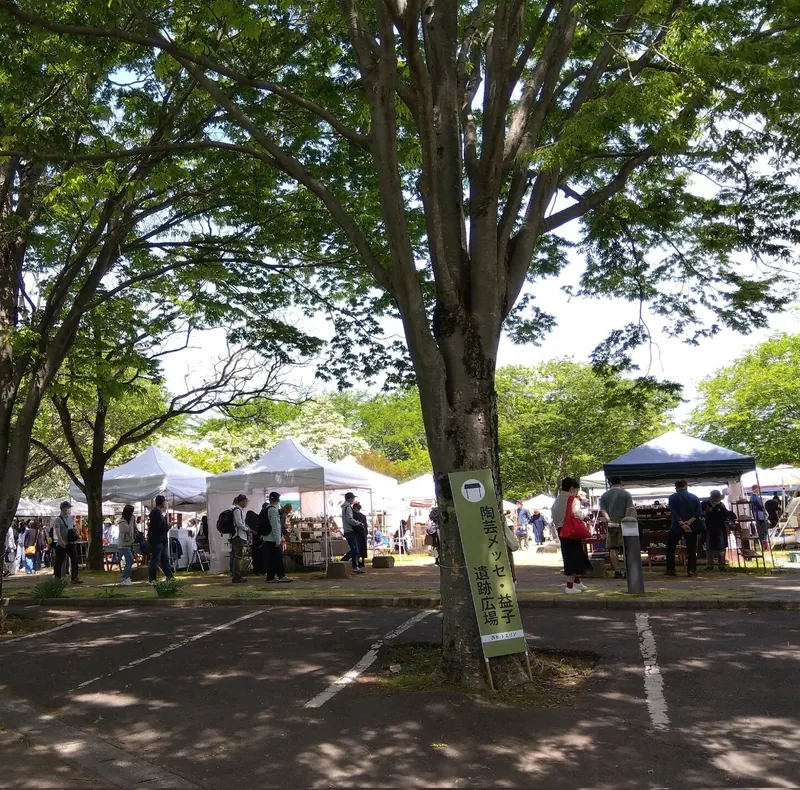
Before you go to a pottery fair
- Check the year's dates: many 2027 fairs are not announced yet.
- Go early: the best pieces go first on busy fair days.
- Take the train or bus: Kasama expects traffic jams over Golden Week and Seto has little parking.
- Bring an empty suitcase: a wheelie case makes a day of buying easier to carry.
- Look for the discount: 20% off at Bizen member shops, seconds at the Kyushu fairs.
Pottery classes and getting your piece home
Making something yourself is the other reason to visit a pottery town, and you do not need any experience. Most classes are one of three kinds, and the Tobe centre uses the Japanese names you will see on many menus: rokuro, throwing on a potter's wheel; tebineri, shaping by hand; and etsuke, painting a piece that has already been made. Painting is the quickest and the easiest to fit into a day. The wheel is the one most people picture, and at Tobe it needs a booking.
The catch is time. Clay has to dry and go through the kiln, often twice, so you rarely leave with your piece. Tobe is the one place in this guide that gives waiting times: about a month to the first, or biscuit, firing and two or three weeks more for the final firing for a shaped piece, and two or three weeks for a painted one. The studio then posts it to you. The table shows what each place in this guide offers and how the piece reaches you, as far as its own page says.
| Where | What you can do | How you get your piece |
|---|---|---|
| Mashiko shops (Tochigi) | short courses: a bowl, mug or platter | mailed to you after firing |
| Ceramic Park Mino (Gifu) | make your own pottery | shipped to you after firing |
| Shigaraki Ceramic Cultural Park (Shiga) | regular classes for the public | not stated; ask when you book |
| Sue no Sato, Tachikui (Hyogo) | hand-building or painting | fired in a Tamba kiln; ask about delivery |
| Bizen Pottery Museum, Imbe (Okayama) | workshops held at the museum | not stated; ask when you book |
| Arita Porcelain Park (Saga) | the wheel, hand-building or painting porcelain | not stated; ask when you book |
| Kouraku Kiln, Arita (Saga) | a decal or glaze painted onto a dish | sent to your address after firing |
| Choungama, Hagi (Yamaguchi) | 1-, 3- or 5-day courses, with a teapot project | not stated; ask when you book |
| Kutani Ceramic Art Village, Nomi (Ishikawa) | painting your own Kutani ware | not stated; ask when you book |
| Kutani Kosen, Kanazawa (Ishikawa) | painting from a template or freehand | the kiln fires it and sends it to you |
| Creative Porcelain Making Center, Tobe (Ehime) | wheel ¥1,500, hand-forming ¥1,500, painting ¥300 | posted to you; postage is extra |
| En no Sato, Tobe (Ehime) | wheel, hand-forming and painting | call 089-962-2070, in Japanese |
For a first try in Kyushu, JNTO's blog recommends Arita Porcelain Park, "a small, pottery theme park". There you can shape clay on a wheel or by hand. "You can even design and paint your own porcelain creations." For a cheap try with almost no planning, Tobe's painting class costs ¥300 and needs no booking. For a serious course, Choungama in Hagi runs classes over one, three or five days. If you only have half a day in Kanazawa, Kutani Kosen lets you paint a piece freehand or follow a template.
Several places promise to send the finished piece. The Mashiko shops mail it, Ceramic Park Mino ships it, Kouraku Kiln sends it to your address and Kutani Kosen fires it and sends it to its owner. What none of the sources we used tells you is whether they post abroad or what that costs. If home is outside Japan, ask both questions before you pay, and allow for the postage in your budget.
Booking a pottery class in five steps
- Choose the kind: the potter's wheel, shaping by hand or painting.
- Book ahead: wheel and hand-forming need a reservation at Tobe; painting does not.
- Ask about posting abroad: whether the studio can do it, and what it costs.
- Allow time: about a month plus two or three weeks for a shaped piece at Tobe.
- Check the prices: some pages, such as Tobe's from 2023, may be out of date.
Prices are listed for only a few places. At Tobe's Creative Porcelain Making Center, the wheel costs ¥1,500 for one piece and hand-forming ¥1,500 for two pieces, both by reservation, and the 2023 page they come from may be out of date. Sue no Sato, Choungama and En no Sato give no prices on the pages we used, so ask when you book.
Where to buy Japanese pottery in Tokyo and Kyoto
You do not have to travel to a pottery town to come home with Japanese ceramics. JNTO's blog points out that buying pottery is easy all over Japan. "Pottery or porcelain for everyday use can be purchased at almost any department store or large supermarket at an affordable price." It adds: "You can find displays of rice bowls and other dishes at local department stores or other home goods stores around town." For something better than everyday ware, Tokyo and Kyoto each have a few places worth a special trip. Our souvenir guide covers other things to take home.
Kappabashi Kitchenware Town
Kappabashi, in Tokyo, is the city's kitchen street. GO TOKYO calls it a "Treasure trove of kitchenware, plastic food samples and crockery", and gives the numbers: "The main road and side streets of the kitchenware district boast approximately 160 shops, offering everything from high-quality Japanese knives and lacquerware to professional-grade stoves." You can shop there too: "Most stores are open to the public, so you can get great deals on tableware, kitchen tools, and plenty of other useful little gadgets you never knew you needed."
For pottery, GO TOKYO's things-to-do list has "Browsing the endless racks of colorful and well-priced Japanese ceramics". It also suggests looking for "noren curtains, ceramic cups, and fanciful chopstick rests" as souvenirs. Kappabashi is an easy add-on to a day in the old east of the city: "Kappabashi Kitchenware Town is within walking distance of Asakusa's Sensoji Temple and Tokyo Metropolitan Ueno Park."
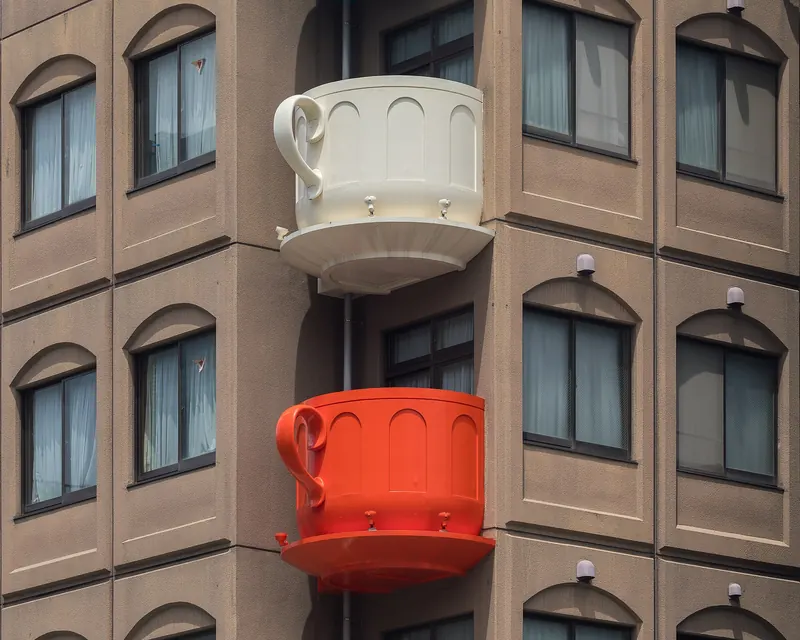
The buildings are part of the fun. GO TOKYO says "Even if you aren't in the mood for shopping, Kappabashi is worth a visit to see the elaborate storefronts and signs." Look up as you walk, and "you will come across huge knives, whisks and teacups adorning the buildings". The nearest station is Tawaramachi on the Tokyo Metro Ginza Line, 5 minutes on foot. GO TOKYO gives the address as 3-18-2 Matsugaya, Taito City, and lists opening hours of 10:00 to 17:00, Monday to Saturday, as a guide, noting that hours vary by floor, store and facility.
Traditional Crafts Aoyama Square
For pottery by named potters and kilns, go to Traditional Crafts Aoyama Square in Akasaka. It is run by the Traditional Crafts Industry Promotion Association, and its events calendar is the part to check. Every week or two a different craft area holds a show in the store, and when we checked, the calendar listed 13 pottery shows from November 2026 to April 2027. That is how a Mashiko or a Bizen potter can come to you in Tokyo.
The store is on the first floor at 8-1-22 Akasaka, Minato-ku. It is open from 11:00 to 19:00 all year except over the New Year holidays, though the calendar marks a few days that close at 18:00, open at 12:00 or close completely. The phone number is 03-5785-1301, in Japanese. Some events on the calendar carry a label for a production demonstration or a production experience, so look for those if you want to watch a craftsman at work or try it yourself. These are the pottery shows listed when we checked; most run for a week or two from a Friday.
| Dates | Pottery show |
|---|---|
| 13 to 19 November 2026 | ink painting with Imari and Arita techniques, Oobayashi Pottery Studio |
| 4 to 10 December 2026 | Arita ware by Ri Sanpei, 14th generation |
| 18 December 2026 to 7 January 2027 | master potters of Kyo-Kiyomizu ware; the store closes over New Year |
| 18 to 27 December 2026 | Akazu ware from the Haido Kiln, Inayama |
| 4 to 14 January 2027 | Mumyoi ware from Sado |
| 15 to 21 January 2027 | Izushi porcelain |
| 22 January to 4 February 2027 | Mashiko ware traditional craftsmen |
| 5 to 11 February 2027 | Akazu ware by Umemura Haruho and Gugetsu, parent and child |
| 19 to 25 February 2027 | Kasama ware, Sanno Kiln |
| 26 February to 4 March 2027 | Mino ware, Kato Oto |
| 5 to 18 March 2027 | Bizen ware traditional craftsmen's association |
| 19 March to 1 April 2027 | Imari and Arita ware traditional craftsmen |
| 26 March to 1 April 2027 | Bizen ware by Shinichi Yokoyama |
Flea markets in Tokyo
For older pieces, JNTO's blog sends you to the flea markets. At Hanazono Shrine in Shinjuku, it says, about 40 vendors sell old coins, hand-carved wooden boxes and antique pots. "Sometimes you can even find pots that have been repaired using kintsugi, making for a unique souvenir to take home." Our kintsugi guide explains the gold repairs, and where to try one. The blog gives the schedule: "The antique flea market is held every Sunday from 6AM, weather permitting." It was written in December 2022, so check the shrine's current schedule before you set an early alarm.
The same blog points to the Tokyo Nomi-no-ichi flea market, an autumn event in Tachikawa, where hand-picked vendors from all over Japan bring antiques and modern ceramics. "In addition to antique pottery, you can find rustic ceramics with antique vibes for a perfect (and affordable!) addition to your kitchen." Markets like these are not only a Tokyo thing, the blog adds: a country flea market may turn up pottery from its own area.
Pottery shopping in Tokyo
- 160shops or so in Kappabashi Kitchenware Town
- 13pottery shows at Aoyama Square from November 2026 to April 2027
- 40or so vendors at the Hanazono Shrine antique market
Kyoto
In Kyoto, start with Kiyomizu-yaki, the city's own ware. The city's souvenir guide names Asahi-do, Gallery Rakuchu Rakugai and Kyoto Unraku-gama as places to buy it, and the Kiyomizu Pottery Complex in Yamashina, covered earlier, is where its kilns moved and still work. Yamashina is also where to be in the middle of October 2026, for the Kyoto Pottery Expo from 16 to 18 October.
Kyoto also has monthly markets at its temples, shrines and parks. The Kyoto City Tourism Association's market guide says "Each market has a different variety of goods on sale, including antiques, secondhand goods and clothing, handmade crafts and foods." It adds: "These may be great places to find special items with local flavor, things that are no longer in stores or are hand made by the seller." The guide does not say which stalls sell pottery, so treat the markets as a hunt rather than a shop. The one with ceramics in its name is the yearly pottery market in Yamashina.
| Market | Place | When |
|---|---|---|
| Kobo-san flea market | Toji Temple | 21st of each month, 8:30 to 17:30 |
| Antique and handicraft market | Toji Temple | first Sunday of each month, 7:00 to 16:30 |
| Tenjin-san flea market | Kitano Tenmangu Shrine | 25th of each month, 7:00 to 16:00 |
| Imamiya-ichi handicraft market | Imamiya Jinja Shrine | 1st of each month except May, 10:00 to 15:00 |
| Inaba Yakushi handicraft market | Byodoji Temple | 8th of each month, 9:00 to 16:00 |
| Hyakumanben handicraft market | Chionji Temple | 15th of each month, 8:00 to 16:00 |
| Kamigamo handicraft market | Kamigamo Jinja Shrine | fourth Sunday of each month, 9:00 to 16:00 |
| Heian Rakuichi and Heian Antique Market | Okazaki Park | once a month, on changing dates |
| Kyoto Antique Fair | Kyoto Pulse Plaza | three times a year, three days each |
| Kyoto Art Craft Market | The Museum of Kyoto Annex | once a year, three days |
| KYOTO KIYOMIZU CERAMIC POTTERY MARKET | Kiyomizu-yaki Danchi, Yamashina | once a year, three days |
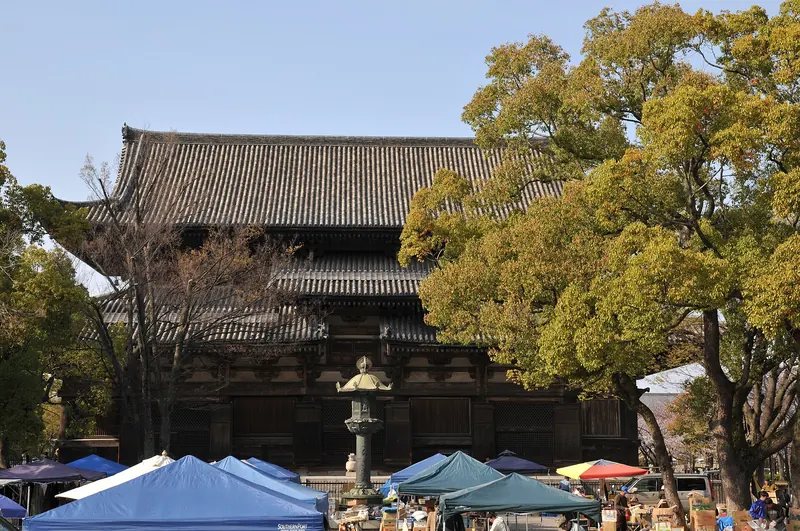
The list dates from September 2023, several of its markets are marked as Japanese only, and the ones without fixed dates send you to their own websites. Check before you go. The two Toji markets are the easiest to plan around: the Kobo-san flea market on the 21st of every month and the antique and handicraft market on the first Sunday.
Planning by base city
Most pottery towns are a day trip from a big city, so the simplest plan is to pick the towns near where you are already staying. The Six Ancient Kilns are spread across central and western Japan, the porcelain villages cluster in Kyushu, and Tokyo has two pottery towns within reach as well as its shops. For fitting a town into a longer route, see our Japan itinerary guide.
From Tokyo, Mashiko in Tochigi and Kasama in Ibaraki are the two pottery towns, and Kappabashi, Aoyama Square and the flea markets are in the city itself. Nagoya covers Seto and Tokoname in Aichi and Tajimi in Gifu, the home of Mino ware, 30 to 40 minutes away on the JR Chuo Main Line. Kyoto or Osaka puts you close to Kiyomizu-yaki and Yamashina, Shigaraki in Shiga and Tachikui, the Tamba ware village in Hyogo. Okayama is the base for Bizen ware in Imbe, right by JR Imbe Station. Kanazawa has Kutani painting in the city and in Nomi, and Fukui or Kanazawa works for Echizen. In Kyushu, Arita, Okawachiyama, Imari, Karatsu and Hasami sit in Saga and Nagasaki, with Onta in Oita and Koishiwara in Fukuoka further east.
Pottery towns by base city
- Tokyo: Mashiko in Tochigi and Kasama in Ibaraki, plus Kappabashi, Aoyama Square and the flea markets in the city.
- Nagoya: Seto and Tokoname in Aichi, and Tajimi for Mino ware, 30 to 40 minutes on the JR Chuo Main Line.
- Kyoto or Osaka: Kiyomizu-yaki in Kyoto and Yamashina, Shigaraki in Shiga and Tachikui for Tamba ware.
- Okayama: Bizen ware in Imbe, right by JR Imbe Station.
- Kanazawa: Kutani painting in the city and in Nomi, and Echizen in Fukui.
- Kyushu: Arita, Okawachiyama, Imari, Karatsu and Hasami in Saga and Nagasaki, then Onta and Koishiwara.
Three places need more time. Hagi is reached from Hakata by the Sanyo Shinkansen to Shin-Yamaguchi and then a bus of well over an hour. Tobe is in Ehime, on Shikoku, and Tsuboya is in Naha, in Okinawa. If you have only one free day in Tokyo, skip the trains and spend it between Kappabashi and Aoyama Square.
Whatever you plan, look at the date on each page you plan from, not only the fair dates. Some of the sources here are a few years old: the JNTO blog on flea markets is from 2022, the Kyoto market list from 2023, the Tobe classes page from 2023, and the Kouraku Kiln basket prices are from 2022.
Frequently asked questions
What is the most famous pottery town in Japan?
There is no single winner. Arita in Saga is considered the birthplace of Japanese porcelain, the Six Ancient Kilns are the oldest stoneware towns still at work, and Seto is so well known that setomono became a general Japanese word for ceramics. Near Tokyo, Mashiko is the better known abroad.
Which pottery town is easiest to visit from Tokyo?
Mashiko in Tochigi is the easiest, and JNTO counted more than 30 pottery shops on its main street. Kasama in Ibaraki is close by. In the city itself, Kappabashi and Traditional Crafts Aoyama Square sell pottery without a train ride.
When is the best time to buy pottery in Japan?
During a pottery fair. Golden Week, from 29 April to 5 May, has the most: Arita, Kasama, Karatsu and Hasami all hold their big fairs then. Autumn brings Seto, Tokoname, Bizen and the Mashiko autumn fair, which in 2026 runs from 31 October to 3 November.
When is the Arita Ceramics Fair in 2027?
It runs every year from 29 April to 5 May, which in 2027 is Thursday to Wednesday. About 500 stands line the four kilometres of Sarayama Street, and more than a million people come.
Are there pottery fairs left in autumn 2026?
Yes. After the Bizen festival on 17 and 18 October, there is the Kasama-yaki Aki-ichi from the end of October, the Mashiko autumn fair from 31 October to 3 November, Arita's autumn event usually around 3 November, and a relaxed round of the Seto kilns on 7 and 8 November.
Where can I buy Japanese pottery in Tokyo?
Kappabashi Kitchenware Town has about 160 shops near Asakusa, and many sell everyday ceramics at good prices. Traditional Crafts Aoyama Square in Akasaka holds week-long shows by kilns from all over Japan. Department stores sell everyday ware, and the Hanazono Shrine flea market has antiques.
Where can I buy Japanese pottery in Kyoto?
Look for Kiyomizu-yaki at Asahi-do, Gallery Rakuchu Rakugai or Kyoto Unraku-gama, or go to Yamashina, where the kilns are. Kyoto's temple and shrine markets, such as the Kobo-san market at Toji on the 21st, are good for a hunt.
Can I make my own pottery in Japan?
Yes. Many pottery towns run classes on the wheel, in hand-forming or in painting, and no experience is needed. Painting is the quickest: at Tobe it costs ¥300 and needs no booking.
Can a pottery studio ship my piece abroad?
Some studios send your piece after firing, including Kouraku Kiln in Arita, Kutani Kosen in Kanazawa and many Mashiko shops. None of the pages we read gives rules or prices for posting abroad, so ask before you book.
How long until I receive a piece I made?
Several weeks. At Tobe, a thrown or shaped piece takes about a month to the biscuit firing and two or three weeks more for the final firing. A painted piece takes two or three weeks. Then add the time in the post.
What is the difference between Japanese pottery and porcelain?
Pottery, or stoneware, is heavy and earthy, made from local clay and often left unglazed. Porcelain is white, thin and hard, made from a white stone, and is often painted in blue or bright colours. Most of the old towns make stoneware; the porcelain towns are mostly in Kyushu, Ishikawa and Ehime.
What are the Six Ancient Kilns of Japan?
Echizen, Seto, Tokoname, Shigaraki, Tamba and Bizen, six pottery regions that have worked without a break since the Middle Ages. The name was coined around 1948 by the ceramic historian Koyama Fujio. Apart from Seto, all of them are known above all for unglazed pottery fired at high heat.
Sources
Official and primary sources used for this page. Checked October 17, 2026.
- JNTO: Japanese Ceramics — history from Jomon to porcelain, the six old kilns, tea masters, Arita, mingei, and notes on Bizen, Hagi, Kutani, Tobe and Mashiko
- JNTO: Japan's Ceramic Centers — Tokoname, Seto, Echizen, Mino, Shigaraki, Tamba Tachikui, Bizen, Hagi and Arita by region
- JNTO: Dip into the History of Japanese Pottery and Experience it Firsthand — the Setomono Festival, everyday ware, Arita Porcelain Park and Tokyo flea markets (December 2022)
- JNTO: Nagasaki's Diversity and Saga's Ceramic Heritage — Arita, the Arita Ceramics Fair, Okawachiyama, Imari and Karatsu, travel times
- JNTO: The Shigaraki Ceramic Cultural Park — address, access by train, pottery classes
Show all 33 sources
- JNTO: Koka and Shigaraki — Shigaraki as one of the six great pottery regions
- JNTO: Tajimi — Mino ware, Honmachi Oribe Street, Ceramic Park Mino, the Mosaic Tile Museum, festivals, time from Nagoya
- JNTO: Single- and Multi-day Ceramic Workshops in Hagi — Choungama, 1-, 3- and 5-day courses, access from Hakata
- The Six Ancient Kilns: About us — the six kilns, how they were named, notes on each kiln
- Government of Japan: Highlighting Japan, March 2026 — the six kiln regions, yakishime, setomono, Tokoname teapots
- Okayama Kanko Web: 第42回 備前焼まつり — dates 17 and 18 October 2026, near JR Imbe Station, free entry, 20% off
- Okayama Prefecture Official Tourism Guide: Imbe (Bizen Pottery Village) — the old street, the Bizen Ware Museum, access
- 益子陶器市: 第114回 益子秋の陶器市 — dates 31 October to 3 November 2026 and hours
- 笠間の陶炎祭 公式サイト — the 45th fair, 29 April to 5 May 2026, hours, fee, stalls, visitors, the autumn market
- Aichi Now: 第95回 せともの祭 — dates, about 200 shops along the Seto River, near Owari-Seto Station
- Aichi Now: 第60回 常滑焼まつり — dates, three venues, free shuttle from Tokoname Station
- The Shigaraki Ceramic Cultural Park — opened 1990, what is inside, hours, phone
- Explore Shiga: Shigaraki Ceramic Cultural Park — last entry, closing days, walk from Shigaraki Station
- Kyoto City Tourism Association: Yamashina — Kiyomizu-yaki, Gallery Rakuchu-Rakugai, Unraku-gama and the Kyoto Pottery Expo 2026
- Kyoto City Tourism Association: Eastern Kyoto's Treasure Trove of Living Traditions — Kiyomizu ware, Gojo-zaka, Yamashina, the late-October festival
- Kyoto City Tourism Association: Kyoto Souvenirs You Can't Leave Without — Kiyomizu-yaki and where to buy it
- Kyoto City Tourism Association: Monthly and seasonal markets in Kyoto — the ceramic market, Toji, Kitano Tenmangu and other markets (September 2023)
- Tamba Pottery Village: Sue no Sato Guide — about 50 potters, fees, hours, closing day, workshop
- Visit HYOGO: Sue no Sato Tamba Traditional Craft Park — the pottery lane, classes, address, hours
- Kyushu Tourism Organization: Kyushu's Pottery and Ceramics — Arita, Kouraku Kiln, Okawachiyama, Karatsu, Hasami, Onta, Koishiwara, the fairs
- Ishikawa Travel: Kutani Porcelain Experience — painting classes in Kanazawa and Kaga, hours, fees
- Ishikawa Travel: Kutani Ceramic Art Village — the Nomi Kutani Ceramics Museum, workshops, fee, closing day
- Ehime Prefecture: Immersing yourself in Tobe porcelain — the Traditional Industry Hall, the promenade, classes and prices (2023)
- Naha City Tsuboya Pottery Museum: Top page — the museum and Yachimun Alley
- Naha City Tsuboya Pottery Museum: Information — hours, closing days, address, access
- 那覇市立壺屋焼物博物館: 壺屋地域の案内 — little war damage, cultural properties around the museum
- GO TOKYO: Kappabashi Kitchenware Town — about 160 shops, what to buy, address, hours, access from Tawaramachi
- Traditional Crafts Aoyama Square — address, hours, phone, the exhibition calendar
Related guides
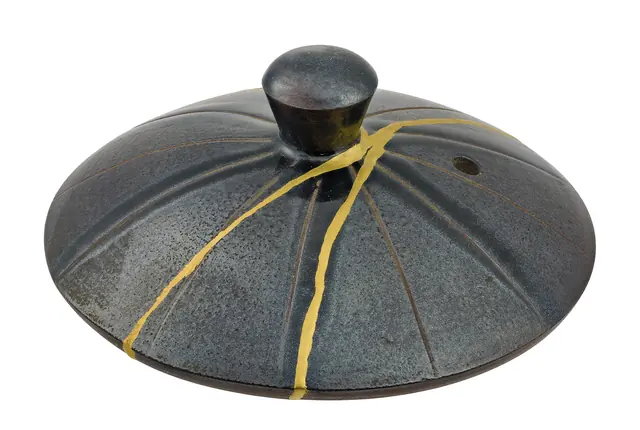
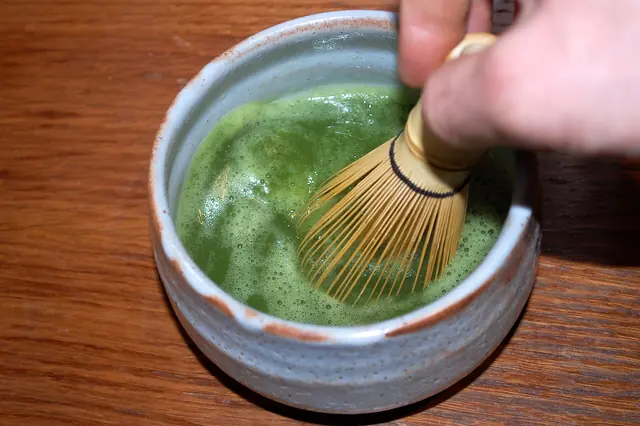
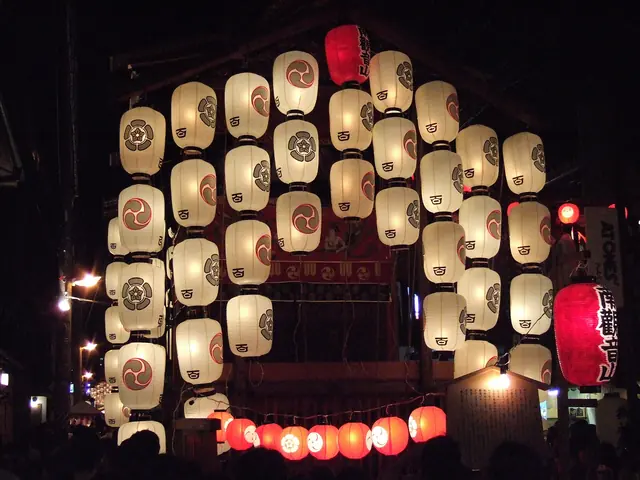
To cite or link to this page: Best pottery towns in Japan: the six ancient kilns, Mashiko and Kasama near Tokyo, Seto, Tokoname and Tajimi near Nagoya, Shigaraki, Kyoto and Tamba in Kansai, Bizen, Arita and the Kyushu porcelain villages, Hagi, Kutani, Tobe and Tsuboya, with the 2026 pottery fairs, classes and where to buy Japanese pottery in Tokyo and Kyoto — Japan Pocket Guide, https://japanpocketguide.com/culture/japanese-pottery-towns/