Culture · History
Ninja museums in Japan: who the ninja really were, the Ninja Museum of Igaryu in Iga, Koka's Ninja House and Ninja Village, Togakushi in Nagano and Odawara near Tokyo
Ninja history in Japan is spread across a handful of places, and the two that matter most are Iga in Mie Prefecture and Koka in Shiga Prefecture, the neighbouring valleys where the real shinobi lived. Below you will find who those people actually were, what each ninja museum shows and costs, how Iga and Koka compare, how to reach them by train from Kyoto and Nagoya, and two more choices for travellers further east: Togakushi in the mountains above Nagano and the NINJA-kan inside the grounds of Odawara Castle.
Last checked · Sources

In short
Japan's ninja museums are spread over several towns. In Iga City, Mie Prefecture, one of the two homes of the real ninja, the Ninja Museum of Igaryu stands in Ueno Park, about 10 minutes' walk from Uenoshi Station on the Iga Railway. Adult admission is 1,000 yen, and a guide shows you the trick doors and hiding places of a relocated ninja house. Across the prefectural border in Koka, Shiga Prefecture, you can see the Koka Ninja House, the original home of a Koka ninja leader, and the Koka Ninja Village. Further east there are the Togakushi Ninja Museum near Nagano, open only between late April and late November, and the Odawara Castle NINJA-kan in Kanagawa.
Who the ninja really were
The word ninja is a modern one. Mie University runs an International Ninja Research Center, and its researchers point out that the people we now call ninja were known in their own time as shinobi. Their job had little to do with the acrobatic assassins of films. The centre puts it in a single sentence: "The main objective of the shinobi was that of gathering intelligence and information for the lords they served." Spying, scouting and carrying news came first; fighting was a means to that end.
Four words to know
- Shinobi: the word used in historical records for the people now called ninja.
- Ninjutsu: the skills of the shinobi, from slipping into a castle to memorising what was seen there.
- Iga-shu and Koka-shu: the local warrior bands of Iga and Koka, the two homes of the real ninja.
- Ninjutsu-sho: the written manuals in which ninja families passed their knowledge down.
Iga and Koka: two valleys that governed themselves
In 2017 Japan's Agency for Cultural Affairs listed Iga City and Koka City together as a Japan Heritage story, Shinobi no Sato Iga-Koka, the home of the shinobi. The story makes a plain point: the real ninja of these valleys were jizamurai, small local warriors who lived on their own land, known as the Iga-shu in Iga and the Koka-shu in Koka.
Neither area had a strong lord. Instead the warriors ran their own affairs through leagues and lived in small fortified compounds, and the ground itself helped them stay out of sight.
How the Iga and Koka warriors lived
- Leagues: the Iga Sokoku Ikki in Iga and the Koka Gunchu-so in Koka settled matters at meetings, sometimes by majority vote.
- Compounds: each roughly 50 metres on a side and ringed by earth walls more than 5 metres high.
- Sites found: around 800 across the two areas, one of the densest groups anywhere in Japan.
- Hills: clay laid down some three million years ago by an ancient lake, the forerunner of Lake Biwa, now weathered into a maze of small valleys.
The Mie University researchers link this self-government directly to ninjutsu. Because the lords of Iga were weak, the local warriors had to defend themselves, and they developed the methods that later became famous. In 1579, in the first of the Tensho Iga Wars, they drove back troops sent by the warlord Oda Nobunaga.
The shinobi in six dates
- 14th century: the first verifiable records of shinobi activity.
- 1579: Iga's local warriors defeat Oda Nobunaga's troops in the first Tensho Iga War.
- 1582: after the Honnoji Incident, men of Iga and Koka escort Tokugawa Ieyasu home through the mountains, the escape remembered as the Shinkun Iga-goe.
- Early 17th century: a Japanese-Portuguese dictionary compiled by the Jesuits lists Xinobi, a spy who climbs into castles at night.
- Edo period, 1603 to 1868: shogunate and domains hire ninja, many as low-ranking samurai who mostly guard castles and castle towns.
- 1850s and 1860s: the last traces of shinobi activity, as the Edo period closes.
Farmers, guards and writers of manuals
Real ninja lived ordinary lives most of the time. The Japan Heritage story quotes a chronicle of the Iga wars, the Iranki by Kikuoka Jogen, which describes men working at the family trade in the morning and gathering at temples in the afternoon to practise warfare. When war came, a bell rang through the village and everyone, from farmers to monks, took up the weapon they handled best.
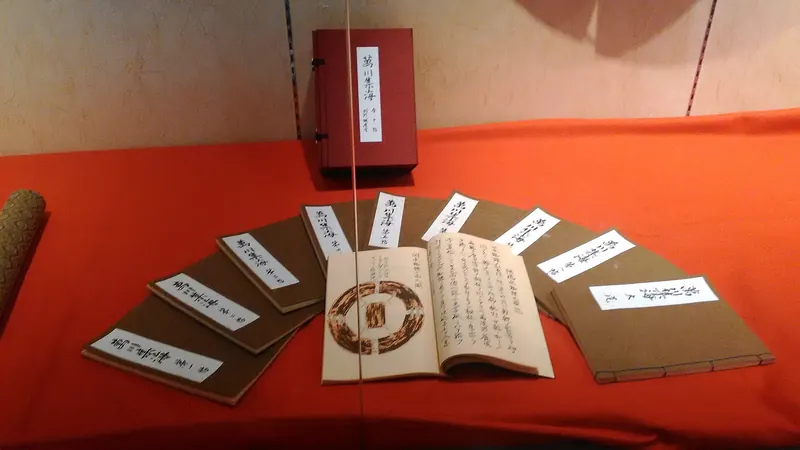
Once the wars ended, the shogunate and domains across Japan took ninja into service. Some ranked as low-grade samurai, some as farmers with a few samurai privileges, and others as plain farmers. They still did some intelligence work, yet for many the daily job was guard duty in a castle or castle town. Families who stayed in the villages wrote their knowledge down, and these ninjutsu-sho cover a surprising range of subjects: entering and leaving places unseen, disguise and memory, but also medicine, food, astronomy, weather and the making of black powder.
Where the black costume came from
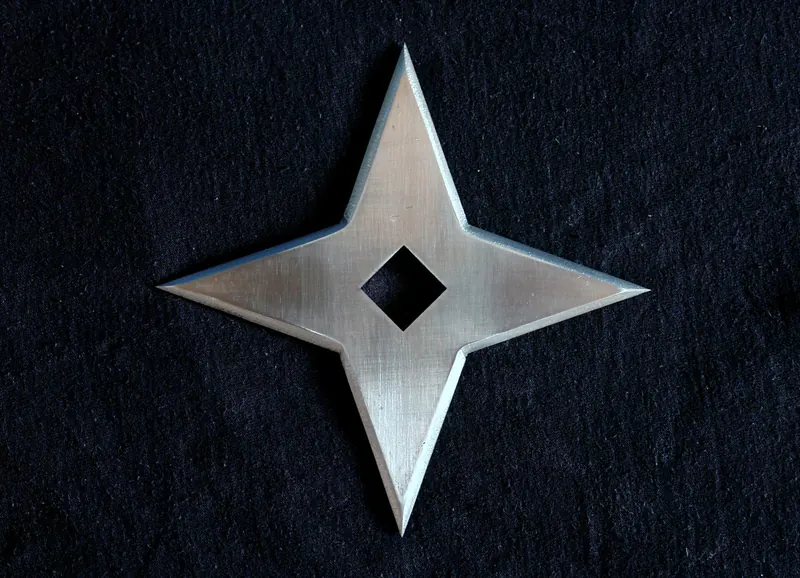
The figure in a black hood throwing a star is younger than the shinobi themselves. According to the Mie University researchers, pictures made between the early Edo period and the mid-1700s show ninja in the ordinary clothes of the day. Around the mid-1700s, stage plays started putting ninja characters in black outfits and masks so that audiences could spot them at once, and early in the 1800s popular novels copied the look. Edo fiction usually cast ninja as villains. Only in the Taisho era, between 1912 and 1926, did a popular book series from the publisher Tatsukawa Bunko give them a heroic image. That is worth remembering in every museum below: the costumes in the shops are stage dress, and the tools and houses are the part rooted in history.
Where to see ninja history in Japan
Five places stand out for a traveller who wants real ninja history rather than a costume photo. Three of them sit close together in the hills between Kyoto, Nara and Nagoya, in Iga and Koka. The other two are further east, in Nagano and Kanagawa. For short ninja and samurai classes in Tokyo and Kyoto, see the guide to samurai experiences in Japan, which covers the city studios.
Japan's ninja museums at a glance
- Ninja Museum of Igaryu, Iga (Mie): ninja house with a live guide, more than 400 tools and a ninja show.
- Koka Ninja House, Koka (Shiga): the original home of a Koka ninja leader, with trapdoors and hidden ladders.
- Koka Ninja Village, Koka (Shiga): a trick house, a ninjutsu museum and outdoor challenges in the forest.
- Togakushi Ninja Museum, Nagano: the Togakure school, a maze-like ninja house and a shuriken range.
- Odawara Castle NINJA-kan, Kanagawa: hands-on displays on the Fuma ninja of the Hojo clan.
| Museum | Prefecture | Adult admission | Season and closing days |
|---|---|---|---|
| Ninja Museum of Igaryu | Mie | 1,000 yen | All year; closed 29 December to 1 January |
| Koka Ninja House | Shiga | 800 yen | Closed Wednesdays, the fourth Thursday, 27 December to 3 January and in winter |
| Koka Ninja Village | Shiga | 2,000 yen | Closed Mondays |
| Togakushi Ninja Museum | Nagano | 700 yen | Late April to late November |
| Odawara Castle NINJA-kan | Kanagawa | 500 yen | Closed 31 December and 1 January |
The Ninja Museum of Igaryu in Iga
The Ninja Museum of Igaryu stands in Ueno Park, in the centre of Iga City in the west of Mie Prefecture, close to Iga Ueno Castle. The Iga-Ueno Tourist Association runs it. Its English pages start from a point that surprises many visitors: "Ninjutsu is not a martial art." They describe it instead as an art of warfare of its own, developed above all in Iga and in Koka over the hills in Shiga Prefecture.
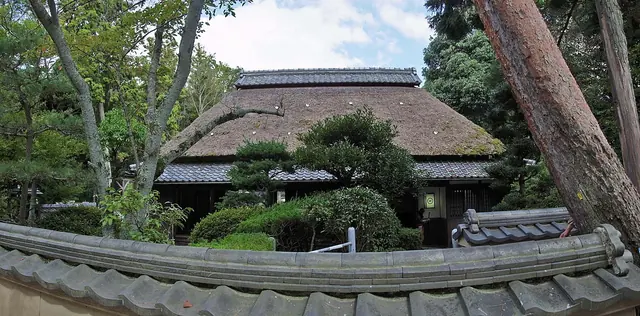
A visit has three parts: a guided tour of a ninja house, two exhibition halls, and, on most days, a stage show for an extra fee.
Inside the ninja house
The house is the highlight. It was a late Edo-period residence of a dogō, a family of local landholding warriors, and it was moved here from the southern part of Iga. From the outside it looks like a plain farmhouse. Inside, a guide dressed as a ninja or a kunoichi, a female ninja, leads each group from room to room and shows the tricks one by one. The English description explains why a quiet farmhouse would need all this: the traps and false passages were there to stop enemies from stealing the know-how for making explosives.
What the ninja house hides
- Hidden doors: openings that look like part of an ordinary wall.
- Fake hallways: passages that lead an intruder the wrong way.
- Sword hiding places: spots where a weapon could be kept close at hand.
- Escape routes: ways out for when the front door was not safe.
Two halls of tools and know-how
Next to the house are two exhibition buildings. In the Ninja Experience Hall, a short film in a small theatre follows Iga ninja as they slip into Ueno Castle and out again without being seen. The same hall displays more than 400 ninja tools, among them shuriken that were really used in the ninja era, and some tools can be handled. The museum's Japanese site warns anyone who has only held a toy: real shuriken are surprisingly heavy.
The Ninja Tradition Hall is about knowledge rather than gear. Its panels cover secret codes, the hand signs called kuji, the reading of faces, and the everyday tricks a ninja used to survive. A small shop, NINJA BO, sells T-shirts, toys, tools and clothing made for the museum.
The ninja show and shuriken throwing
The Ninja Show is performed by a local troupe called Ashura, using the kinds of tools the ninja really used, such as shuriken, swords and the kusarigama, a sickle on a chain. It costs 600 yen per person on top of admission, and there is no group discount. It does not run every day. In November 2026 the calendar shows no shows on the 2nd, 5th, 9th to 12th and 24th, and on other days there are usually two to four performances, often around 11:00 and 13:30, with times changing from day to day. Some slots fill up with group bookings, so check the calendar on the museum's website before you plan your day around it.
Throwing shuriken is the easiest thing to add. Six throws cost 300 yen, and you can do it without buying a museum ticket.
Ninja Museum of Igaryu at a glance
- Address: 117-13-1 Ueno-Marunouchi, Iga, Mie, inside Ueno Park.
- Adults, high school age and over: 1,000 yen; 900 yen each in groups of 20 or more.
- Children, aged 4 to junior high school: 700 yen; 600 yen in groups.
- With a disability certificate: 700 yen for adults and 500 yen for children.
- Ninja Show: 600 yen extra, on days shown in the monthly calendar.
- Shuriken: 300 yen for six throws, no admission ticket needed.
- Weekdays: 10:00 to 16:00, last entry 15:30.
- Saturdays, Sundays and holidays: 10:00 to 16:30, last entry 16:00.
- Closed: 29 December to 1 January, plus a one-off closure on Friday 18 December 2026.
Costume rental is not part of the museum ticket. The museum's English site lists several places around Iga that will dress you as a ninja, from 1,000 yen per person, among them shops and hotels.
Iga Ueno Castle next door
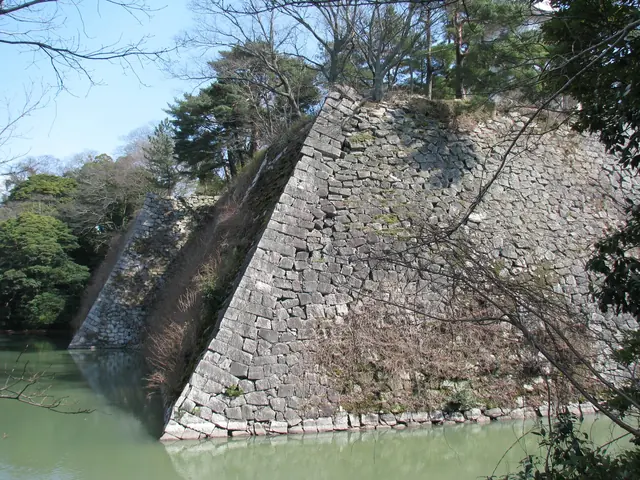
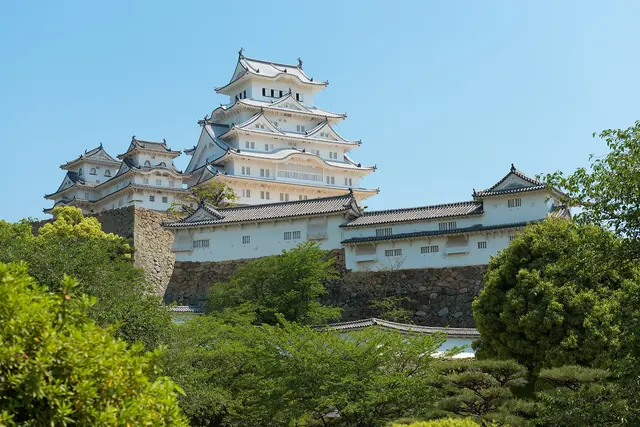
Iga Ueno Castle shares Ueno Park with the museum. It was built by the warlord Todo Takatora. Its inner moat and stone walls survive, and at about 30 metres the walls are among the highest in Japan. The castle ruins were made a National Historic Site on 27 December 1967.
The keep you see today dates from 1935, when Kawasaki Katsu had it built in wood, and its white three-tiered outline earned the castle the nickname Hakuho-jo, the White Phoenix Castle. Inside are armour, items left by the Todo family and a ceiling covered with 46 shikishi boards painted or written by well-known people, among them the painter Yokoyama Taikan. The keep itself became a cultural property of Iga City in March 1985. For more on how to read a castle like this one, see the guide to Japanese castles.
Iga Ueno Castle at a glance
- Adults, high school age and over: 600 yen; 500 yen each in groups of 30 or more.
- Children, elementary and junior high school: 300 yen; 250 yen in groups.
- With a disability certificate: 400 yen and 200 yen.
- Hours: 9:00 to 17:00, last entry 16:45.
- Closed: 29 to 31 December.
- Payment: cash, or the coupons of contracted travel agencies; no paying later.
- From the station: about 10 minutes on foot from Uenoshi Station.
Ninja Day and the NINJA Festa
Iga marks 22 February as Ninja Day. In 2026 it fell on a Sunday, and an event ran from 10:00 to 16:00 across three places near the station: the fourth and fifth floors of the Haitopia Iga building, the square in front of Uenoshi Station and a ninja experience facility named after the Bansenshukai, the famous ninja manual. In spring, the Iga-Ueno NINJA Festa fills the castle town; the 2026 festival ran from 3 to 5 May, and the costume corner and some other events charged a fee.
Getting to Iga
The museum and the castle are both about 10 minutes on foot from Uenoshi Station on the Iga Railway. Drivers leave the Meihan Expressway at Ueno-Higashi IC, about 10 minutes away, and there is paid parking. According to the Iga-Ueno Tourist Association, the drive takes about 90 minutes from either Osaka or Nagoya.
Koka: the Ninja House and the Ninja Village
Koka lies just over the hills from Iga, in the south of Shiga Prefecture, and it tells the other half of the story. Where Iga gives you one well-organised museum in the middle of town, Koka spreads its ninja sites across the countryside. The two to know are the Koka Ninja House, a real ninja leader's home still standing where it was built, and the Koka Ninja Village, a large park in the forest with a trick house, a museum and outdoor challenges.
The Koka Ninja House
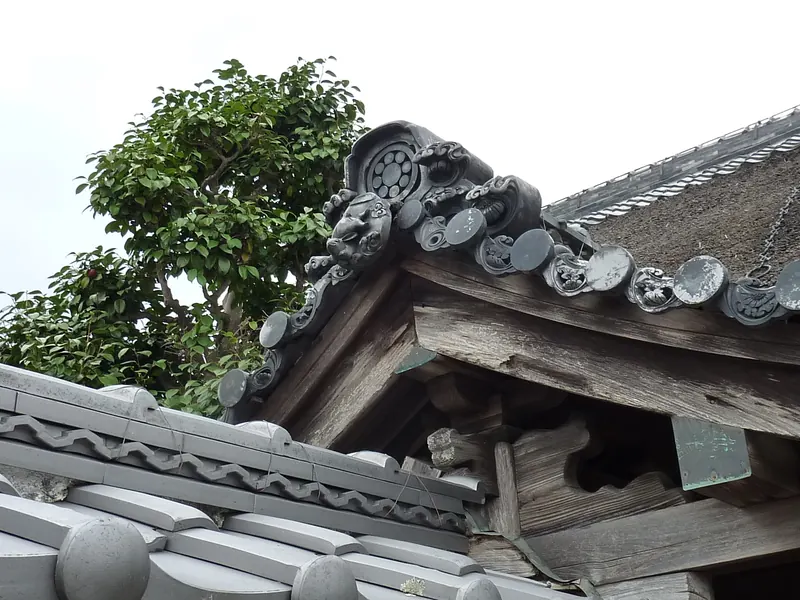
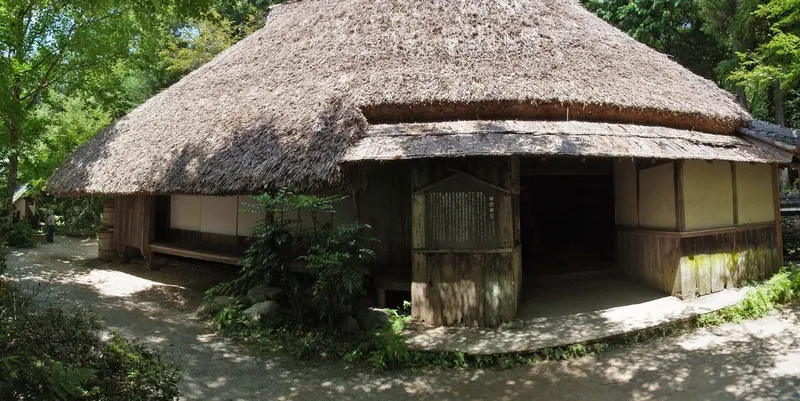
Known in Japanese as Koka-ryu Ninjutsu Yashiki, the house was the main residence of the Mochizuki family. JNTO dates it to the late 1600s and describes it as the home of Mochizuki Izumo-no-kami, head of the Koka ninja. The family, whose crest was a ring of nine stars, had ties to the mountain worship of the Iido hills at the western foot of the Suzuka range and were known for their skill in shugendo mountain practice and in medicines.
What makes the house special is that it has never been moved or rebuilt for tourists. The owners stress that it was not relocated or recreated, but repaired and looked after in its original place and condition. It has been open to the public since around 1955. Inside, the building rises through three levels, and almost every one of them hides something.
Tricks inside the Koka Ninja House
- Low mezzanine: the ceiling is only 1.1 to 1.5 metres high, too low for an enemy to swing a sword, while ninja fought with short-bladed swords.
- Third floor: reached from the mezzanine, with a rope ladder for a quick escape down to the ground floor.
- Lookout window: one bar of the lattice comes out, so a ninja could drop through it to the floor below.
- Revolving doors: called donden-gaeshi, panels that turn when you lean on them and look like ordinary walls when shut.
- Pitfall: a trapdoor about 3 metres deep, linked to tunnels under the house that lead outside.
- Trick window: a mesh door that seems fixed until you slide a single sheet of paper between it and the wall.
- Nine-star crest: the family's emblem on the roof tiles all over the house.
You are encouraged to try the mechanisms yourself, handle ninja tools and take photographs. A video introduction plays before you explore, and a materials room shows shuriken, tools and scrolls. Throwing iron shuriken costs extra.
Koka Ninja House at a glance
- Address: 2331 Ryuboshi, Konan-cho, Koka, Shiga.
- Adults, junior high school age and over: 800 yen; 700 yen in groups of 30 or more.
- Children, aged 3 and over: 600 yen; 500 yen in groups.
- Weekdays: 10:00 to 16:00, last entry 15:30.
- Saturdays, Sundays and holidays: 10:00 to 17:00, last entry 16:30.
- Closed: every Wednesday, the fourth Thursday, 27 December to 3 January, and for a winter break.
- By train: about 2 kilometres, or roughly 20 minutes on foot, from Konan Station on the JR Kusatsu Line; about 5 minutes by taxi.
- By car: about 3 minutes from the Shin-Meishin Expressway's Konan IC.
The Koka Ninja Village
Koka no Sato Ninjutsu Mura, as the village is called in Japanese, takes a whole hillside. Its grounds are spread through old forest at the foot of the Suzuka mountains, with a shrine, a museum, a trick house and a shuriken range dotted among the trees, and the park plays on the feeling of a hidden village.
The trick house was the home of the Fujibayashi family, descendants of real Koka ninja. The village explains why such a house had to look ordinary: being known as a ninja could cost you your life, so ninja families lived as if they were ordinary villagers. Behind that front are weapons hidden in unexpected places, secret passages, a drop-down staircase and hidden doors.
The Koka Ninjutsu Museum opened in 1983 to study the history and work of the Koka ninja. Thatched farmhouses with links to Koka ninja were moved here to serve as its exhibition halls, which also keeps the old buildings standing. The collection begins with the Bansenshukai, one of the three great secret books of ninjutsu, and goes on to shuriken of different schools and the tools ninja used on water and with fire.
Things to try in the village
- Walk on water: try the water-spider technique the ninja used to cross water.
- Climb: scale a rock wall the way a ninja was trained to.
- Throw: aim shuriken at targets in the dojo.
You can also rent a ninja costume for the day: 1,100 yen for adults and 700 yen for children, plus 200 yen for a hood, on a first-come basis with a deposit. A small shrine, the Shinobi Jinja, honours the ninja who died without leaving their names. The village also hosts the All-Japan Ninja Championship; the 43rd was held on 12 October 2026.
Koka Ninja Village at a glance
- Address: 394 Oki, Koka-cho, Koka, Shiga.
- Adults, 18 and over: 2,000 yen; 1,800 yen with an online ticket.
- Children: 1,500 yen; 1,300 yen with an online ticket.
- Aged 2 and under: free.
- Included: the trick house and the Koka Ninjutsu Museum.
- Hours: 10:00 to 17:00, last entry 16:00; the opening calendar varies by day.
- Closed: Mondays.
- Parking: free, in three car parks.
Getting to the Koka Ninja Village
JNTO puts the village at a 30-minute walk from Koka Station, and taxis are another choice. The village itself runs a free car from the bottom of the north exit stairs at Koka Station, a ride of 5 to 10 minutes; ring the village when you arrive and wait at the meeting point. The service runs only while the village is open, and with larger parties the car makes several trips. For the return, be at the village reception 15 minutes before your train.
From Kyoto or Nagoya to Koka Station
- From Kyoto or Osaka: take the JR Tokaido Line, also signed as the Biwako Line, to Kusatsu.
- Change at Kusatsu: board a JR Kusatsu Line train bound for Tsuge and get off at Koka; JNTO puts the trip from Kyoto at about an hour.
- From Nagoya instead: ride the JR Kansai Line to Tsuge, then the Kusatsu Line towards Kusatsu as far as Koka.
- At Koka Station: walk down the north exit stairs and call the village for the free pick-up.
The Koka-ryu Real Ninja-kan
The Real Ninja-kan is Koka City's main tourist information centre, set inside the Shinobi no Sato Plala Konan building in the same Ryuboshi district of Konan-cho as the Ninja House. Entry is free, and it opens from 10:00 to 16:00, closing on Mondays unless they fall on a public holiday, and from 29 December to 3 January. Drop-in activities include making hyorogan, the portable ration balls ninja carried, and grinding coffee in a yagen, the boat-shaped mortar once used to crush medicines. At weekends and on holidays, a hospitality troupe in ninja dress greets visitors.
Iga or Koka: how to choose, or see both
Iga and Koka are neighbours, and their ninja shared the same hills and much of the same history; the Japan Heritage story treats them as one. In practice, though, a visit to each feels quite different, and the closing days matter more than you might expect.
| Iga (Mie) | Koka (Shiga) | |
|---|---|---|
| Main sites | Ninja Museum of Igaryu and Iga Ueno Castle, side by side in Ueno Park | Koka Ninja House near Konan Station, Koka Ninja Village near Koka Station |
| Ninja house | Relocated late Edo-period house, shown by a guide | Original Mochizuki residence in its own place; Fujibayashi house in the village |
| Hands-on | Shuriken, ninja show, costume rental in town | Shuriken, mechanisms to work yourself, walking on water, climbing, costume rental |
| Adult tickets | 1,000 yen museum, 600 yen castle | 800 yen Ninja House, 2,000 yen Ninja Village |
| Weekly closing | None | Ninja House on Wednesdays and the fourth Thursday; village on Mondays |
| Nearest station | Uenoshi, Iga Railway | Konan and Koka, JR Kusatsu Line |
Choose Iga if you want everything in one place, with a castle thrown in, and if you are travelling on a Monday or a Wednesday when one of the Koka sites is shut. Choose Koka if you care most about authenticity: the Ninja House is a ninja leader's home that still stands where it was built. Families with energetic children may prefer the Koka Ninja Village, where most of the fun is outdoors.
Seeing the two Koka sites in one day
The two Koka sites sit on the same railway. JNTO notes that Konan is a seven-minute ride from Koka on the Kusatsu Line, so a single day can cover both: the Ninja House near Konan in the morning, then the train to Koka and the free pick-up to the village.
Before you set off
- Match your day to the closing days: the Koka Ninja House closes on Wednesdays and the fourth Thursday, the Koka Ninja Village on Mondays.
- Look up the Iga ninja show calendar if the show matters to you, as there are days without one.
- Carry cash for Iga Ueno Castle, which lists cash and travel-agency coupons as its ways to pay.
- Remember that the Koka Ninja House also takes a winter break and closes from 27 December to 3 January.
Driving between them
By car the two areas are linked by expressways, and the nearest exits are close to each site.
By car
- Koka Ninja Village: about 10 minutes on local roads from Konan IC, coming from Kyoto or Osaka, or from Koka-Tsuchiyama IC, coming from Mie or Nagoya, both on the Shin-Meishin Expressway; free parking.
- Koka Ninja House: about 3 minutes from Konan IC.
- Ninja Museum of Igaryu: about 10 minutes from the Meihan Expressway's Ueno-Higashi IC; the car parks charge a fee.
The Togakushi Ninja Museum in Nagano
Togakushi, a mountain district in the north of Nagano City, has a ninja tradition of its own. Go! NAGANO, the prefecture's official travel site, tells the legend behind the name, which means hidden door. When the sun goddess Amaterasu hid in a cave and the world went dark, the other gods lured her out, and one of them hurled the cave's door away. It landed in Nagano and became Mount Togakushi. The mountain later became a centre of shugendo, the strict mountain practice that mixes Shinto and Buddhist belief, whose followers sat under freezing waterfalls and fasted in caves.
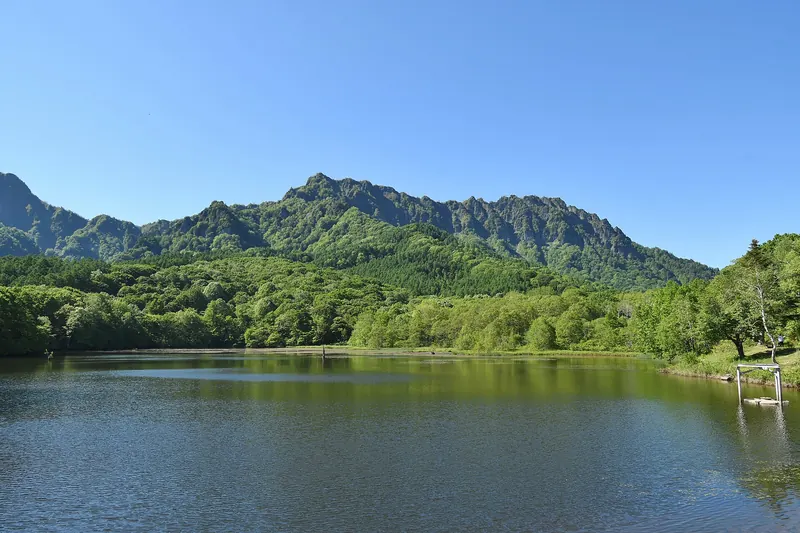
Those mountain ascetics, the yamabushi, are central to the ninja story here. According to legend, a 12th-century warrior, Daisuke Nishina, blended samurai combat with the practices of shugendo and so founded the Togakure school of ninjutsu, which has been passed from one master to the next ever since. Go! NAGANO gives the school a history of more than 800 years.
What the museum shows
The Togakushi Ninja Museum is spread over several buildings that were moved to the site and restored. On show are genuine ninja weapons, shuriken and arrows among them, gear like the spiked rings worn to scale earthen walls, and photographs given by Masaaki Hatsumi, the 34th master of the Togakure school. Three more parts of the site are worth your time.
Three parts of the Togakushi Ninja Museum
- Ninja House: a maze of secret stairs and hidden doors that is famously hard to escape from.
- Shuriken dojo: a range where you throw real metal stars at targets.
- Togakushi Folk Museum: next door, around 2,000 everyday objects from the Edo period.
Go! NAGANO warns that English information is limited inside, so it helps to know the background before you go. Food is part of the story too. Because the steep land was poor for rice, buckwheat became the main food, and soba noodles were an easy food to carry for the ninja and monks who trained in the mountains.
Togakushi Ninja Museum at a glance
- Address: 3688-12 Togakushi, Nagano City.
- Admission: 700 yen for adults, 500 yen for children and 200 yen for those under 4.
- Hours: 9:00 to 17:00, last entry 16:30.
- Season: late April to late November; closed in winter.
- Bus: route 70 or 71 for Togakushi from Nagano Station, about an hour, to the Togakushi Okushairiguchi stop across the road.
Nagano Station is a stop on the Hokuriku Shinkansen, so Togakushi fits into a trip between Tokyo and Kanazawa. For younger children, the Chibikko Ninja Mura, or Kids Ninja Village, lies 3.4 kilometres down the road, and Go! NAGANO lists the same late April to late November season for it. Children dress up as ninja and work their way through forest playgrounds, climbing walls, a blowpipe range and a rope-pulled raft across a pond.
The Odawara Castle NINJA-kan near Tokyo
For travellers based in Tokyo, the closest choice is inside the park of Odawara Castle in Kanagawa Prefecture. The Odawara Castle NINJA-kan, also known by its older name of Historical Museum, is built around the Fuma ninja, a band said to have worked in the shadows for the Hojo, the clan that ruled from Odawara in the age of the warring states.
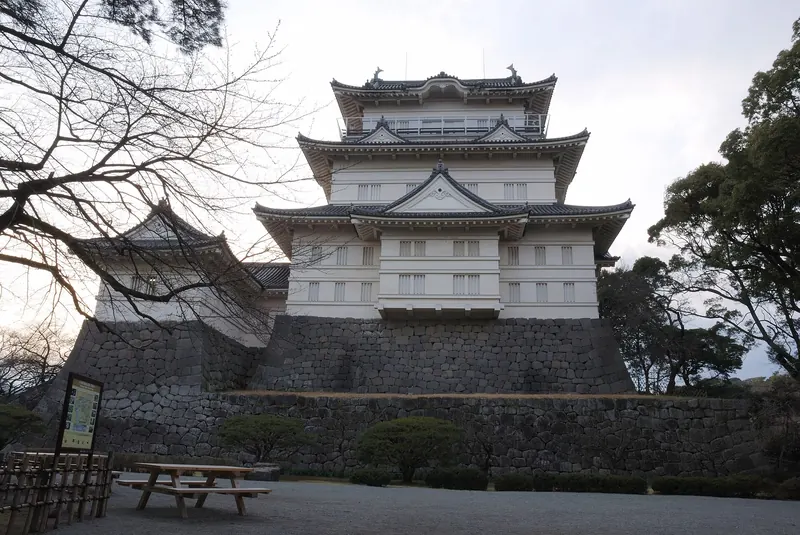
The museum is built around a story. Visitors are given a mission: Toyotomi forces have driven Odawara Castle to the brink, and the Fuma must save it. Along the way, films and displays tell the story of the five generations of Hojo lords and of the Fuma themselves, with objects to touch and move and digital effects, and the museum aims to be easy to follow for both children and visitors from abroad.
The Fuma remain largely a mystery. Their leaders all took the name Kotaro, one generation after another, and legend describes the fifth Kotaro as a giant more than 2 metres tall. Very few documents about the Fuma survive, so most of what is told about them is legend.
Odawara Castle NINJA-kan at a glance
- Adults, high school age and over: 500 yen; 400 yen in groups of 30 or more.
- Elementary and junior high school pupils: 200 yen; 160 yen in groups.
- Preschool children: free.
- With a disability certificate: free, with one carer.
- Hours: 9:00 to 17:00, last entry 16:30, or earlier when busy.
- Closed: 31 December and 1 January.
- From the station: 10 minutes on foot from Odawara Station.
There is no general car park in the castle grounds, and roads around the castle get very busy at weekends and on holidays, so the castle asks you to use public transport instead. For hands-on ninja and samurai classes in Tokyo and Kyoto themselves, the studios are listed in the guide to samurai and ninja classes.
Frequently asked questions
Where is the ninja museum in Japan?
There is more than one. In the old ninja homeland of Iga, the Ninja Museum of Igaryu stands in Ueno Park, Iga City, Mie Prefecture, about 10 minutes on foot from Uenoshi Station on the Iga Railway. In neighbouring Koka, Shiga Prefecture, there are the Koka Ninja House and the Koka Ninja Village. Further east are the Togakushi Ninja Museum in Nagano City and the Odawara Castle NINJA-kan in Kanagawa.
How much does the Ninja Museum of Igaryu cost?
Admission is 1,000 yen for adults of high school age and over and 700 yen for children aged 4 to junior high school. The ninja show costs 600 yen extra and does not run every day. Throwing shuriken costs 300 yen for six throws, and you can do it without a museum ticket.
Were ninja real?
Yes, though they were not the black-clad acrobats of films. Historical records call them shinobi, and their main job was collecting intelligence for their lords. Records of their activity run from the 14th century to the closing years of the Edo period. Two well-known groups were the local warrior bands of Iga and Koka. The black costume first appeared on the stage in the mid-18th century.
Should I visit Iga or Koka?
They suit different trips. Iga keeps its museum and castle together in one park, with a guided ninja house and a show. Koka has the original home of a ninja leader, the Koka Ninja House, and an outdoor park, the Koka Ninja Village. Check closing days first: the Koka Ninja House shuts on Wednesdays and the fourth Thursday, and the village on Mondays.
Is there a ninja museum near Tokyo?
The closest is the Odawara Castle NINJA-kan, inside the castle park in Odawara, Kanagawa, about 10 minutes on foot from Odawara Station. It tells the story of the Fuma ninja of the Hojo clan through hands-on displays, and adult admission is 500 yen.
Is the Togakushi Ninja Museum open in winter?
No. The museum's season runs from late April until late November, from 9:00 to 17:00 with last entry at 16:30. The nearby Kids Ninja Village keeps the same season.
Sources
Official and primary sources used for this page. Checked November 20, 2026.
- Mie University International Ninja Research Center: What is Ninja Study — who the shinobi were, history, costume
- Japan Heritage Portal: Shinobi no Sato Iga-Koka, Story #042 (in Japanese) — Iga-shu and Koka-shu, sites, dates
- Ninja Museum of Igaryu: Ninja Museum of Igaryu — fees, hours, house, halls
- Ninja Museum of Igaryu: What is a Ninja? — ninjutsu as an art of warfare
- Ninja Museum of Igaryu: About the Ninja Experience — costume rental around Iga
Show all 34 sources
- Ninja Museum of Igaryu: Transportation Access — walk from Uenoshi Station
- Ninja Museum of Igaryu: Home (in Japanese) — fees, exhibition, closure
- Ninja Museum of Igaryu: Ninja Show schedule — show days in November 2026
- Kanko Mie: Ninja Museum of Igaryu (in Japanese) — the house, guides, show, access
- Kanko Mie: Iga Ueno Castle (in Japanese) — history of the castle and keep
- Iga Ueno Castle: Visitor information (in Japanese) — fees, hours, payment
- Iga Ueno Castle: Iga Ueno Castle — designation dates
- Kanko Mie: Ninja Day 2026 (in Japanese) — Ninja Day 2026
- Kanko Mie: Iga-Ueno NINJA Festa 2026 (in Japanese) — NINJA Festa 2026
- Iga-Ueno Tourist Association: Iga travel guide — driving times
- Koka-ryu Ninjutsu Yashiki: Home (in Japanese) — the Mochizuki family and house
- Koka-ryu Ninjutsu Yashiki: Highlights (in Japanese) — tricks of the house
- Koka-ryu Ninjutsu Yashiki: Visitor information (in Japanese) — fees, hours, access
- Koka Ninja House: Koka Ninja House — what visitors can try
- JNTO: Koka Ninja House — age of the house
- JNTO: Koka Ninja Village — route and walking time
- JNTO: Shiga's Koka Ninja Village — Konan to Koka by train
- Koka no Sato Ninjutsu Mura: Facilities (in Japanese) — hours, buildings, museum
- Koka no Sato Ninjutsu Mura: Admission (in Japanese) — fees
- Koka no Sato Ninjutsu Mura: Access (in Japanese) — trains, pick-up, parking
- Koka no Sato Ninjutsu Mura: Home (in Japanese) — Ninja Championship
- Koka-ryu Real Ninja-kan: Home (in Japanese) — hours, activities, event
- Go! NAGANO: Togakushi Ninja Museum — fees, season, exhibits
- Go! NAGANO: Five Ways to Get in Touch with Ninja in Togakushi — legends, soba
- Go! NAGANO: Kids Ninja Village (Chibikko Ninja Mura) — season
- JNTO: Togakushi Ninja Museum — buses, buildings
- Odawara Castle: Odawara Castle NINJA-kan (in Japanese) — theme, fees, hours
- Odawara Castle: New admission fees from March 2026 (in Japanese) — 2026 fees
- Odawara Castle: Access (in Japanese) — walk, parking
Related guides
To cite or link to this page: Ninja museums in Japan: who the ninja really were, the Ninja Museum of Igaryu in Iga, Koka's Ninja House and Ninja Village, Togakushi in Nagano and Odawara near Tokyo — Japan Pocket Guide, https://japanpocketguide.com/culture/ninja-museums-japan/