Culture · Art
Ukiyo-e in Japan: what the name says, how the woodblock prints were made, Hokusai and Hiroshige, ukiyo-e vs sumi-e, and where to see prints in Tokyo and beyond
Ukiyo-e are the woodblock prints and paintings of Edo-period Japan: kabuki actors, fashion, travel scenes and views of Mount Fuji, sold to townspeople and later admired by Monet and Van Gogh. Below you will find what the name says and how to say it, how one print passed through four pairs of hands, the artists to know, how ukiyo-e differs from sumi-e ink painting, and where to see the real thing in Tokyo, Matsumoto and Obuse, including the Tokyo National Museum's Hiroshige exhibition, which runs until 20 December 2026.
Last checked · Sources

In short
Ukiyo-e is a genre of Japanese woodblock prints and paintings that flourished from the late 17th century to the 19th century. The name is usually translated as pictures of the floating world, and the subjects were the things townspeople enjoyed: kabuki actors, fashion, festivals, famous places and landscapes. Most works are prints, made by a team of an artist, a carver, a printer and a publisher. In Tokyo you can see ukiyo-e at the Ota Memorial Museum of Art in Harajuku, the Sumida Hokusai Museum in Ryogoku and Room 20 of the Tokyo National Museum in Ueno.
What ukiyo-e means, and how to say it
Ukiyo-e is a genre of Japanese art made up of woodblock prints and paintings from the Edo period, the years between 1603 and 1868 when the shoguns ruled from Edo, today's Tokyo. The Tokyo National Museum, usually shortened to TNM, defines it as paintings of people and daily life in that age, from the 17th to the 19th century. Most of what you will meet in a museum is printed rather than painted, and the subjects are the things that city people of the time cared about: actors, fashion, festivals, travel and famous views.
Ukiyo-e in four words
- Ukiyo: this world, the here and now; in English, usually the floating world.
- E: picture; the same ending appears in nishiki-e and sumi-e.
- Nishiki-e: a full-colour print, with a separate block for each colour.
- Edo period: 1603 to 1868, the age in which ukiyo-e was born and peaked.
The name is translated in two slightly different ways. GO TOKYO, the city's official travel site, renders it as "pictures of the floating world". The Japan National Tourism Organization (JNTO), writing about the Hokusai Museum in Obuse, gives a plainer meaning for the first part: ukiyo stands for "this world" or "the present world". Both point the same way. These were pictures of the here and now, of the fashions and crowds of a busy city, not of gods or ancient legends.
How to pronounce ukiyo-e
Ukiyo-e has four syllables, and every one of them is spoken.
From hand-painted pictures to prints for everyone
TNM describes ukiyo-e as "the first genre of art enjoyed by common people on a large scale". Its account starts with money. In the 17th century the economy grew, living standards rose, and townspeople built an urban culture that was keen on trends, fashion and entertainment. The first ukiyo-e showed the celebrities of the day, above all kabuki actors, and the range later widened to take in festivals of the seasons, places to travel and landscapes.
The way the pictures were made changed just as much. The first ukiyo-e were hand-painted, one at a time. Artisans then started cutting the pictures into woodblocks and printing them in large numbers, and those black-and-white prints were far cheaper than paintings. As carving and printing improved, prints in a brilliant range of colours became possible. JNTO dates the flowering of the genre to the period between the late 1600s and the late 1800s.
How ukiyo-e changed
- Painted by hand: the first ukiyo-e, from the 1600s, are one-off pictures painted by the artist.
- Printed in black: carvers cut the pictures into woodblocks, and prints in black ink sell at a fraction of the price.
- Printed in colour: nishiki-e use one block for each colour, printed in turn, for bright full-colour pictures.
- New subjects: beauties and kabuki actors come first, and stories and landscapes follow.
- 1830 to 1833: Hokusai's Thirty-six Views of Mount Fuji turns landscape into a genre of its own.
- About 1833 to 1857: Hiroshige's road and city series, from the Tokaido to One Hundred Famous Views of Edo.
- After 1868: the prints travel abroad and influence Van Gogh, Monet and other Impressionists.
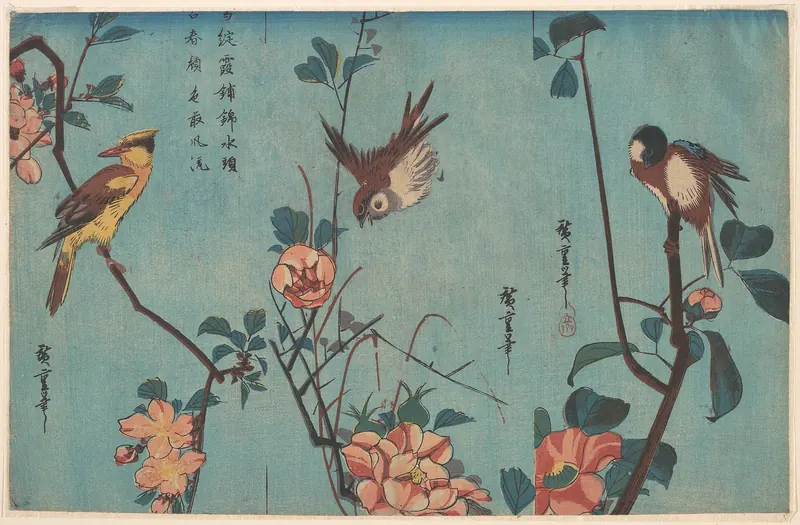
How an ukiyo-e woodblock print was made
A famous print carries one artist's name, but no single person made it. The Adachi Foundation for the Preservation of Woodcut Printing, a Tokyo body that trains printmakers, calls the traditional woodcut print "a comprehensive art that is created by the artist, carver, printer, and the publisher who produces the work". The artist drew the picture, the carver turned it into woodblocks, the printer pressed it onto paper, and the publisher, in the foundation's phrase, produced the work.
The same foundation points out that these techniques were developed so that ukiyo-e could be produced in quantity. A print was a commercial product, so it had to be cheap and quick to make as well as good to look at, and that pressure shaped the clean, pared-back look that people now admire. Hokusai himself knew the trade from the inside: the Sumida Hokusai Museum says he is believed to have worked as a woodblock carver from around the age of 14, before he trained as an artist.
The three materials
- Wild mountain cherry: the wood used for the printing blocks.
- Washi: handmade Japanese paper that takes the colour into its fibres.
- Water-based pigments: rubbed into the paper for soft, warm colour.
From design to finished print
JNTO describes the basic method as carving the wood, inking the resulting keyblock and then pressing paper onto it. For a colour print the process was repeated. TNM explains that nishiki-e used a different block for each colour, printed one after another on the same sheet, which is how the bright colours were built up. The Adachi Institute of Woodcut Prints, the workshop behind the foundation, still makes prints this way, with water-based pigments rubbed into handmade washi, just as printers did in the Edo period.
From design to finished print
- Publisher: produces the work and sets the project in motion.
- Artist: draws the design that the print will follow.
- Carver: cuts the outline into a keyblock, then one more block for each colour.
- Printer: inks the blocks in turn and presses the paper onto each one, layering the colours.
Because the blocks could be inked again and again, one design could become many prints. That is one reason the same famous image can turn up in several museums, and why a single print was cheap enough for ordinary people to buy and take home.
Why the prints on show keep changing
Paper and plant-based colours are delicate. The Sumida Hokusai Museum explains that the originals react badly to heat and light, so each one goes on display for no more than 30 days in a year. Its permanent room therefore uses full-size, high-definition replicas, and its original works come out only in temporary exhibitions. Other museums work in the same way and rotate their prints, so what you see in a given month depends on the current show.
The artists to know: Hokusai, Hiroshige and others
Many artists designed ukiyo-e, but two names dominate what visitors meet in Japan: Katsushika Hokusai and Utagawa Hiroshige. Both turned ukiyo-e towards landscape, and both have museums and exhibitions devoted to them in Tokyo and beyond.
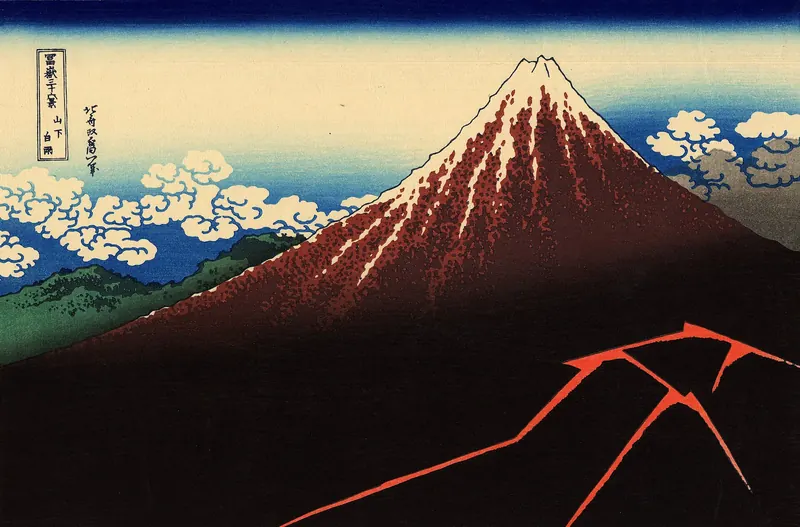
Katsushika Hokusai (1760–1849)
Hokusai was born in 1760 near Honjo Warigesui, in what is now Sumida City in eastern Tokyo, and he lived in the area for most of his life. The Sumida Hokusai Museum, which stands close to his birthplace, tells the story in stages. He is said to have started drawing at six, worked at a book-lending shop at around 12 and then carved woodblocks. In 1778 he became a pupil of Katsukawa Shunsho, a popular painter of actor prints, and worked under the name Katsukawa Shunro.
Hokusai's life in brief
- 1760: born near Honjo Warigesui, in present-day Sumida City.
- About 1773: said to be working as a woodblock carver.
- 1778: becomes a pupil of Katsukawa Shunsho and draws actor prints as Shunro.
- 1794 to 1798: works as Sori, then takes the name Hokusai.
- 1804 to 1811: illustrates popular novels in black ink.
- 1830 to 1833: Thirty-six Views of Mount Fuji, including the Great Wave.
- 1844: visits Obuse in Nagano at the invitation of the merchant Takai Kozan.
- 1849: falls ill in spring and dies.
He changed his art name many times, signing himself Sori and then, from 1798, Hokusai. His most famous prints came late: between 1830 and 1833, in his seventies, he produced Thirty-six Views of Mount Fuji, the series that includes The Great Wave off Kanagawa.
The museum makes a striking claim about that series. Before it, it says, "the genre that we call landscape picture did not exist in the field of ukiyo-e". The success of Thirty-six Views of Mount Fuji created landscape as a new branch of the art, which the museum counts among Hokusai's great achievements. In 1834 he published One Hundred Views of Mount Fuji and wrote that, given a hundred years and more, he might draw pictures that seemed alive.
Utagawa Hiroshige (1797–1858)
Hiroshige was born in 1797, a generation after Hokusai. TNM describes him as primarily a commercial print designer, whose landscapes of the changing seasons and lively pictures of birds and flowers opened a new chapter for ukiyo-e. It credits him with inventive layouts, clever ways of showing the time of day and the weather, and local people placed naturally in the scene, a style that made him hugely popular.
Hiroshige's three great series
- The Fifty-Three Stations of the Tokaido Road: about 1833 to 1835; the road from Edo to Kyoto along the coast.
- The Sixty-Nine Stations of the Kiso Road: about 1836 to 1837; his second great road series.
- One Hundred Famous Views of Edo: his late series on the city, with prints dated as late as 1857.
His best-known work follows Japan's roads. The Tokaido ran from Nihonbashi in Edo to Kyoto, nearly 500 kilometres, with 53 post stations where travellers rested. JNTO says his prints of that journey are "some of the most recognisable prints in the world". He followed them with a series on the inland Kiso Road and, late in life, One Hundred Famous Views of Edo. JNTO adds that he also made ink paintings, such as a view of Mount Kano in present-day Chiba.
Other names on museum labels
Two older artists turn up often. Katsukawa Shunsho, Hokusai's first teacher, was known for his prints of kabuki actors. Torii Kiyonaga (1752–1815) is another; his Cherry-Blossom Viewing at Asuka Hill was a highlight of the ukiyo-e room at TNM in 2022. Labels may also name collectors and publishers, because without them the prints would not have been made or kept.
Four names to recognise
- Katsushika Hokusai, 1760–1849: Mount Fuji, waves and the Sumida River.
- Utagawa Hiroshige, 1797–1858: roads, seasons, birds and flowers.
- Katsukawa Shunsho: actor prints; Hokusai's first teacher.
- Torii Kiyonaga, 1752–1815: Cherry-Blossom Viewing at Asuka Hill, a TNM highlight.
Ukiyo-e vs sumi-e: prints and ink painting
Ukiyo-e and sumi-e are often mixed up, because both are Japanese and both can show landscapes. They come from different worlds. Sumi-e is ink wash painting, done with a brush in black ink diluted with water. JNTO credits Sesshu, a Zen monk and painter of the 15th century, with creating "a distinctly Japanese style of ink wash painting", and six of his works are National Treasures.
Ukiyo-e came later and from the town rather than the temple. It was made for sale to ordinary people, in colour and in many copies, by a team of craftsmen. A sumi-e painting is a single work from a single brush. The table sums up the main differences.
| Ukiyo-e | Sumi-e | |
|---|---|---|
| What it is | Mostly woodblock prints, plus some paintings | Brush painting in ink and water |
| Colour | Full colour in nishiki-e | Shades of black ink |
| Copies | Many prints from one set of blocks | Each work is one of a kind |
| Who made it | Artist, carver, printer and publisher | One painter |
| When | Late 17th to 19th century | Sesshu worked in the 15th century |
| Background | Townspeople's fashions and travel | Zen temples and monk painters |
| Where to see it in Tokyo | TNM Honkan, Room 20 | TNM Honkan, Room 13-3 |
The two do meet. Hokusai's book illustrations from the early 1800s used black ink alone, and the Sumida Hokusai Museum credits him with creating depth through differences in ink density. Hiroshige, best known for colour prints, also painted in ink. If brush and ink interest you, our guide to Japanese calligraphy explains the tools and where to try them.
Outside Tokyo, the Sesshu Memorial Museum stands in Masuda, in Shimane Prefecture, near the place where Sesshu spent his last years. It is just over a kilometre from Masuda Station and shows a few of his paintings at a time, together with gardens made in his style.
Where to see ukiyo-e in Tokyo
Tokyo has three places where ukiyo-e is the main event: a private museum in Harajuku, a museum devoted to Hokusai in Ryogoku, and the national museum in Ueno. They are in different parts of the city, so most visitors pick one or two. All three close on Mondays as a rule, so plan around that.
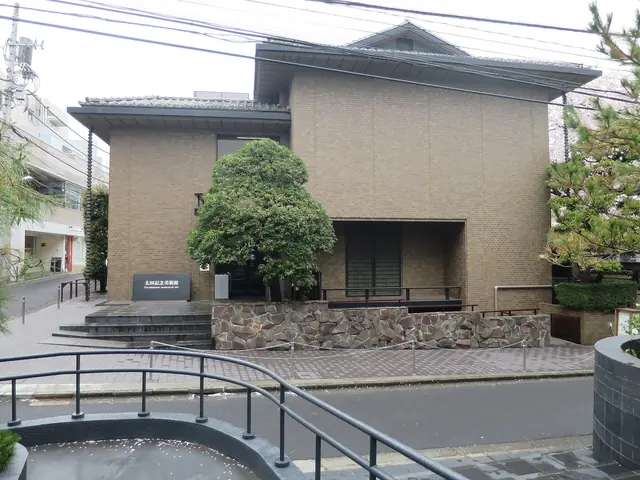
Ota Memorial Museum of Art, Harajuku
GO TOKYO calls this small museum "one of the only museums dedicated to the Japanese art of ukiyo-e". It opened in 1980, following the death of the collector Seizo Ota, who wanted his private collection to be shared with the public. The collection now numbers 15,000 pieces, with Hokusai among the artists.
Only a small part is on view at any one time. Each month the museum shows between 70 and 100 works around a theme, so a return visit a few weeks later brings a different set of prints. It also holds occasional lectures, and inside there is a Japanese-style rock garden where you can sit and rest.
Ota Memorial Museum at a glance
- Address: 1-10-10 Jingumae, Shibuya City.
- Hours: 10:30 to 17:30, with entry until 17:00.
- Closed: Mondays and over the New Year; when a closing day is a public holiday, the museum opens and closes the following day instead.
- Admission: set separately for each exhibition.
- Payment: cash.
- Station: Meiji-jingumae (Chiyoda and Fukutoshin lines), Exit 5, then 3 minutes on foot.
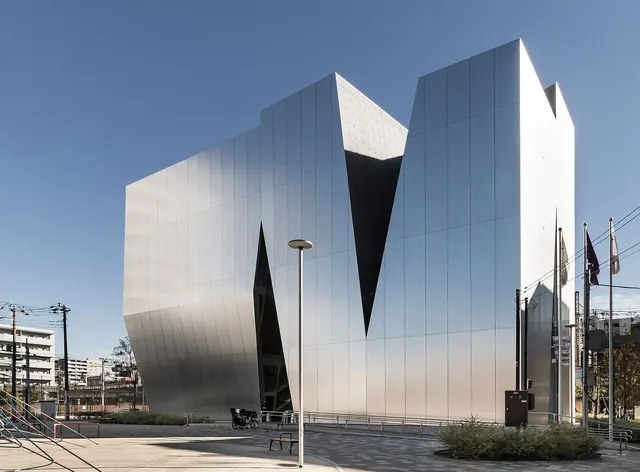
Sumida Hokusai Museum, Ryogoku
This museum opened in Sumida City in 2016, Hokusai's birthplace and his home for most of his life, and it shows the work of Hokusai and his pupils. The building is a sight in itself: a four-storey design by the architect Sejima Kazuyo, with a library of books on Japanese art and a museum shop. In front of it lies Midoricho Park, with a sign marking Hokusai's birthplace.
The permanent Education Room, called Discover Hokusai, is divided into seven areas that follow his life and his changes of name. GO TOKYO notes that it uses full-size, high-resolution replicas with touch panels and information in several languages. It also has a life-size model of the studio where Hokusai, at 84, lived with his daughter Oei, and a video that shows how nishiki-e were made. Photography is allowed in this room, with some exceptions. Original works appear only in the special exhibitions on the upper floors.
Sumida Hokusai Museum at a glance
- Address: 2-7-2 Kamezawa, Sumida City.
- Hours: 9:30 to 17:30, with entry until 17:00.
- Closed: Mondays, moving to the following weekday after a Monday holiday, and from 29 December to 3 January.
- Education Room: adults 400 yen; high school and university students and visitors aged 65 and over 300 yen; middle school students and younger, and disabled visitors, free.
- Special exhibitions: priced separately; no booking needed, and same-day tickets are on sale at the first-floor counter.
- Payment: cash or major cards.
- Stations: Ryogoku on the Toei Oedo Line, 5 minutes on foot; Ryogoku on the JR Sobu Line, 9 minutes.
Tokyo National Museum, Ueno
At TNM in Ueno Park, ukiyo-e has its own room in the Honkan, the main building. Room 20, on the second floor, is given to the art of fashion and the art of ukiyo-e from the 17th to the 19th century, so the prints share the space with the fashions of the same age. The works in the room change from time to time.
Until 20 December 2026 there is a bigger reason to go. The special exhibition Hiroshige: New Perspectives on Edo Japan, in Room A on the first floor of the Honkan, celebrates a donation of 1,025 prints that once belonged to Uchiyama Susumu (1893–1980), a collector who focused on Hiroshige. It is the museum's first exhibition devoted entirely to Hiroshige, and it shows every print of his three great series, one series in each part. TNM calls it "a globally unprecedented opportunity to view all three works in their entirety". A corner with an immersive screen shows the prints in ultra-high-definition video.
The Hiroshige exhibition in three parts
- Part One, 29 September to 25 October: The Fifty-Three Stations of the Tokaido Road; now finished.
- Part Two, 27 October to 23 November: The Sixty-Nine Stations of the Kiso Road.
- Part Three, 25 November to 20 December: One Hundred Famous Views of Edo.
Every work on view changes between parts, so a visit before 23 November and another from 25 November would show you two different series.
Visiting the Hiroshige exhibition
- Hours: 9:30 to 17:00, and until 20:00 on Fridays, Saturdays and 22 November; entry until half an hour before closing.
- Closed: Mondays, except 23 November, and also 24 November and 15 December.
- Tickets: adults 1,500 yen, university students 500 yen; no booking needed, though you may have to wait at the counter on busy days.
- Free entry: high school students and younger, anyone under 18, visitors aged 70 and over, and disabled visitors with one carer; bring ID.
- Also included: the same ticket admits you to the TNM Collection Exhibitions on the same day.
- Getting there: a 10-minute walk from the Park Exit of JR Ueno Station or from JR Uguisudani Station.
Edo-Tokyo Museum, Ryogoku
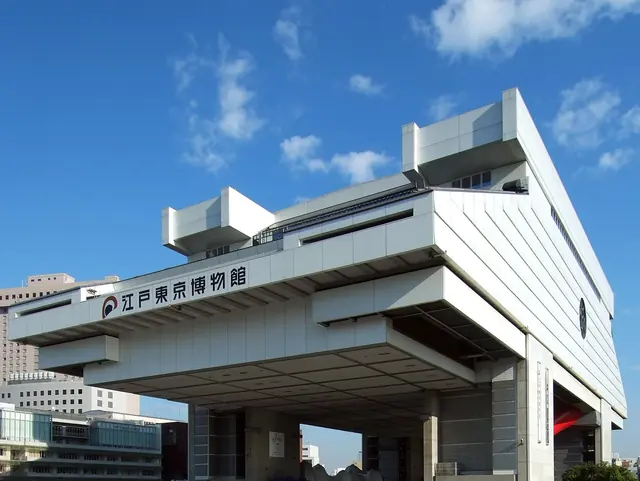
The ukiyo-e museums show the city in pictures; the Edo-Tokyo Museum shows the city itself. Run by the Tokyo Metropolitan Government, it covers about 400 years of Tokyo's history, from the start of the shogunate in Edo to today, and after a renovation that closed it for about four years, it opened again on 31 March 2026. It stands beside the Ryogoku Kokugikan sumo hall.
The highlight is a life-size copy of Nihonbashi Bridge, where Japan's main roads began in the Edo period. That is the same bridge where Hiroshige's Tokaido series begins, so the museum makes a natural pairing with the prints. Audio guides in 13 languages, English included, play on your own smartphone, so there is nothing to borrow.
Edo-Tokyo Museum in three numbers
- 800yen: adult admission to the permanent exhibition
- 13languages offered by the audio guide
- 3minutes' walk from JR Ryogoku Station, West Exit
Over-65s pay 400 yen, university and vocational school students 480 yen and high school students 300 yen, and entry is free up to junior high school. From the Toei Oedo Line, Exits A3 and A4 of Ryogoku Station are a minute away.
A Hokusai walk around Ryogoku
GO TOKYO publishes a walking route through the streets where Hokusai lived and worked, and it fits neatly around a visit to the Sumida Hokusai Museum. Several of the stops are places that he drew in his prints and picture books.
Following Hokusai through Sumida
- Ryogoku Station: the start; the Ryogoku Kokugikan sumo hall is just to the north.
- Hokusai-dori Street: runs east to west behind the sumo hall; look for Hokusai's art on the street lights.
- Sumida Hokusai Museum: the museum, with the sign for his birthplace in Midoricho Park in front.
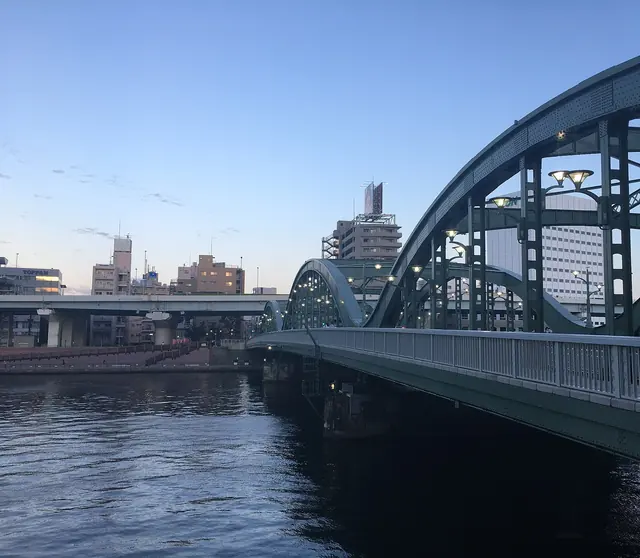
- Umaya Bridge: the area appears in a print from Thirty-six Views of Mount Fuji; today's bridge, from 1929, is the only one on the Sumida with three arches.
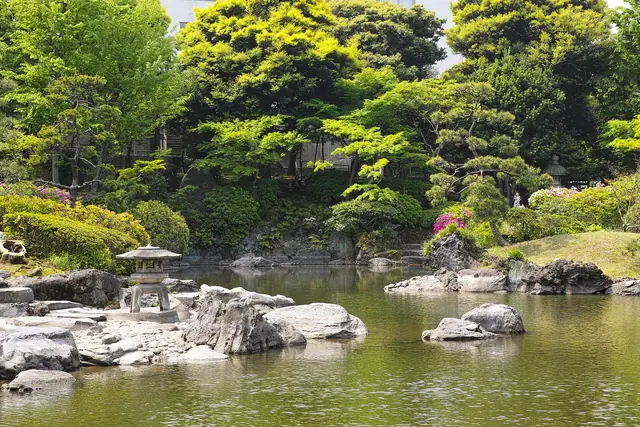
- Kyu-Yasuda Gardens: an Edo-period garden whose Komadome stone appears in an 1822 Hokusai triptych.
- Around the sumo hall: Hokusai drew this stretch of river in a picture book published around 1806.
- Ryogoku Bridge: first built in 1659 and drawn by Hokusai and Hiroshige before it was rebuilt in 1932.
Ukiyo-e beyond Tokyo: Matsumoto, Obuse and Yui
Two important ukiyo-e museums outside the capital are in Nagano Prefecture, one in the castle town of Matsumoto and one in the small town of Obuse. A third, on the old Tokaido road in Shizuoka, is closed until spring 2027.
Japan Ukiyo-e Museum, Matsumoto
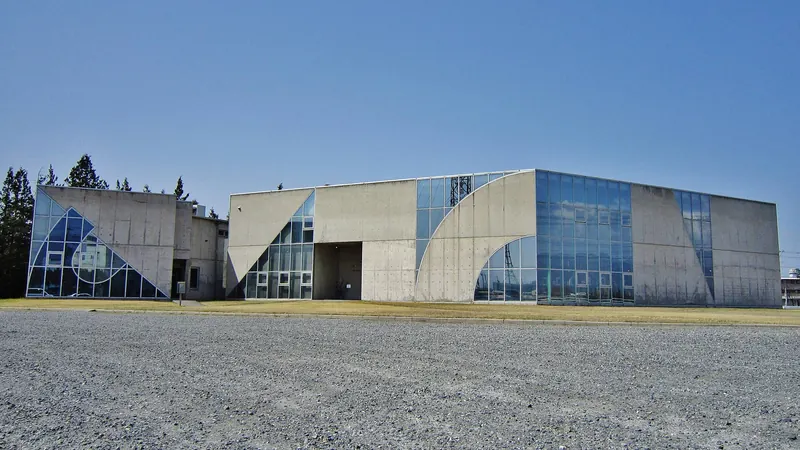
The Japan Ukiyo-e Museum opened in 1982 to share a collection that the Sakai family, merchants of Matsumoto, built up across five generations and some 200 years. The museum puts it at about 100,000 items: woodblock prints, paintings, scrolls and old books as well as modern prints, some of them bought back after they had gone abroad. JNTO calls it "the world's largest private collection". One link with the artists is personal: in 1836 Hiroshige drew a portrait of one of the Sakai family in a book of comic poems.
Exhibitions cover everything from the earliest ukiyo-e to modern art prints, with Hokusai and Hiroshige among the masters on show. The museum stands close to the Matsumoto City Historical Village.
Japan Ukiyo-e Museum at a glance
- Hours: 10:00 to 17:00; last admission 16:30.
- Closed: Mondays; after a Monday holiday, the following day instead.
- Admission: 1,000 yen; middle school, high school and college students 500 yen; elementary school children and younger free.
- Discounts: 100 yen off for a group of at least 20, disabled visitors, visitors aged 60 and over, and anyone with a half-price ticket from the Historical Village.
- By bus: from the Alps Exit of JR Matsumoto Station, the Matsumoto Bus Shimauchi Line to the Ukiyo-e Museum/History Village stop takes about 25 minutes; the bus does not run on Sundays or holidays.
- By train: a 12-minute walk from Oniwa Station (Alpico Kotsu Kamikochi Line).
- By car: about a minute from the Matsumoto interchange, with parking.
Hokusai Museum, Obuse
Obuse is a small town about 20 kilometres north-east of Nagano city, and Hokusai made several visits here in his last years. His first was in 1844, when the merchant Takai Kozan (1806–1883), a local man, invited him, and he worked from a studio annex on new pieces. The Hokusai Museum, founded in 1976, holds his woodblock prints and hanging scrolls and two festival floats; JNTO's must-see is the floats' ceiling panels, painted by Hokusai. A ceiling painting at Ganshoin Temple, about 2 kilometres away, was one of his last large works.
Getting to Obuse from Tokyo
- Ride the Hokuriku Shinkansen to Nagano, about 1 hour 20 minutes.
- Change to the Nagano Electric Railway for Obuse, about half an hour.
- Walk 12 minutes from Obuse Station to the Hokusai Museum.
- For Ganshoin Temple, allow 30 minutes on foot, or 10 minutes by bus, from the centre of town.
Tokaido Hiroshige Museum, Yui
In Yui, on the old Tokaido road in Shizuoka City, the Tokaido Hiroshige Museum was the first ukiyo-e museum in Japan to carry Hiroshige's name. Its collection of about 1,400 works centres on his landscape series, including three different editions of the Tokaido and One Hundred Famous Views of Edo, and the display usually changes every month.
Watching prints being made, and taking one home
Ukiyo-e is not only a museum art. The techniques of the Edo period are still in use in Tokyo, and a few places let you see the tools, the blocks and the work of living printers. The foundation is open about the pressure on the craft: digital printing has cut the demand for woodcut printing, and there are now fewer artisans and successors to carry it on.
The Adachi Foundation showroom, Mejiro
The Adachi Foundation for the Preservation of Woodcut Printing was set up in 1994 to preserve traditional woodcut techniques and to support and train artisans. In 2013 it gained the status of a public interest foundation. Its showroom in Mejiro, beside the office of the Adachi Institute of Woodcut Prints, is described by the foundation as "a comprehensive facility covering various aspects of traditional woodcut printing".
What the showroom offers
- Tools and materials: the craft's materials and tools, with each stage of production explained.
- Prints on show: reproductions of ukiyo-e and contemporary woodcuts made under the foundation's supervision, all year.
- Reading: a collection of reference materials on woodcut printing.
Adachi Foundation showroom at a glance
- Address: 3-13-17 Shimo-Ochiai, Shinjuku-ku.
- Hours: weekdays 10:00 to 18:00, Saturdays 10:00 to 17:00.
- Closed: Sundays, Mondays, national holidays and the year-end holidays.
- By train: a 10-minute walk from JR Mejiro Station, on the Yamanote Line.
- By bus: Toei bus route Shiro 61 to the Shimo-Ochiai 3-chome stop, then 3 minutes on foot.
The foundation also looks to the future of the craft. Each year it chooses one or two trainees for an advanced skills programme meant to produce the skilled artisans of the future, and each summer it runs an internship-style workshop for people who hope to apply.
Taking ukiyo-e home
An original Edo-period print is a collector's piece, but a well-made reproduction is within reach. The Adachi Institute of Woodcut Prints has used techniques passed on since the Edo period to reproduce some 1,200 ukiyo-e so far, carving new blocks and printing them by hand on washi, and it sells them through its own online store. Because they are made in the old way, each one is itself a woodblock print.
Museum shops are the other easy option. The Sumida Hokusai Museum has a shop on site, a good stop after the Education Room. For other ideas on what to bring back from Japan, see our guide to souvenirs.
Before you go
- Check the museum's current exhibition, because originals rotate and the famous prints are not always out.
- Remember that most of these museums close on Mondays.
- Carry some cash for the Ota Memorial Museum of Art.
- Note the end dates of the Sumida anniversary show, 23 November, and the TNM Hiroshige exhibition, 20 December 2026.
- Allow time for a walk in Ryogoku if you visit the Sumida Hokusai Museum.
Frequently asked questions
What does ukiyo-e mean?
The word is usually translated as pictures of the floating world. Ukiyo refers to the present world, the one people live in, and e means picture, so the name points to scenes of everyday city life in the Edo period rather than religious or legendary subjects.
How do you pronounce ukiyo-e?
Say it in four even syllables, oo-kee-yoh-eh. The final e is short, as in bed, and it is always spoken. The plural in English is also ukiyo-e.
What is the difference between ukiyo-e and sumi-e?
Ukiyo-e are mostly colour woodblock prints made in many copies by a team of artist, carver, printer and publisher for ordinary townspeople. Sumi-e is ink wash painting with a brush, usually in shades of black, and each work is one of a kind.
Who are the most famous ukiyo-e artists?
Katsushika Hokusai and Utagawa Hiroshige are the best known. Hokusai made Thirty-six Views of Mount Fuji, the series with the Great Wave, and Hiroshige is known for his series on the Tokaido and Kiso roads and for One Hundred Famous Views of Edo.
Where can I see ukiyo-e in Tokyo?
The three main places are the Ota Memorial Museum of Art in Harajuku, the Sumida Hokusai Museum in Ryogoku and the Tokyo National Museum in Ueno, where Room 20 of the Honkan covers ukiyo-e. All three usually close on Mondays.
Is the Great Wave always on display?
No. Original prints are sensitive to heat and light, so museums show them for short periods and rotate them. The Sumida Hokusai Museum shows replicas in its permanent room and keeps originals for its special exhibitions, so check the current programme first.
Are ukiyo-e still made today?
Yes. In Tokyo the Adachi Institute of Woodcut Prints still makes reproductions of classic prints with Edo-period methods, and a related foundation supervises new contemporary woodcuts and trains one or two new artisans each year.
Sources
Official and primary sources used for this page. Checked November 15, 2026.
- GO TOKYO: Ota Memorial Museum of Art — meaning, collection, hours, access
- GO TOKYO: Sumida Hokusai Museum — building, Education Room, access
- GO TOKYO: Discover Hokusai — Ryogoku walking route
- Sumida Hokusai Museum: Visitor Information — hours, closures, fees
- Sumida Hokusai Museum: Hokusai's Life — life, names, landscape
Show all 25 sources
- Sumida Hokusai Museum: Education Room — replicas, studio model, light
- Sumida Hokusai Museum: 10th Anniversary Exhibition (in Japanese) — dates, scroll
- Tokyo National Museum: Ukiyo-e — definition, nishiki-e
- Tokyo National Museum: The Art of Ukiyo-e — history, Kiyonaga
- Tokyo National Museum: Honkan Floor Map — Rooms 13-3 and 20
- Tokyo National Museum: Hiroshige — exhibition, parts, fees
- JNTO: Hiroshige Utagawa — Tokaido, ink paintings
- JNTO: Japan Ukiyo-e Museum — collection, access
- Visit Matsumoto: Japan Ukiyo-e Museum — hours, fees, bus
- Japan Ukiyo-e Museum: About — Sakai family, 1836 portrait
- JNTO: Hokusai Museum — meaning of ukiyo, Obuse, access
- Visit Shizuoka: Tokaido Hiroshige Museum — collection, closure
- JNTO: Sesshu Memorial Museum — Sesshu, ink painting
- Adachi Foundation: Woodcut Printing — team, materials
- Adachi Foundation: Our Objectives — founding
- Adachi Foundation: Cultivation of Successors — trainees
- Adachi Foundation: Showroom — hours, access
- Adachi Foundation: Printmaking Demonstrations 2026 — dates, places
- Adachi Institute of Woodcut Prints: Home — reproductions
- Tokyo Metropolitan Government: Edo-Tokyo Museum — reopening, fees, access
Related guides
To cite or link to this page: Ukiyo-e in Japan: what the name says, how the woodblock prints were made, Hokusai and Hiroshige, ukiyo-e vs sumi-e, and where to see prints in Tokyo and beyond — Japan Pocket Guide, https://japanpocketguide.com/culture/ukiyo-e/