Things to do · Virtual tour
Virtual tour of Japan: 15 famous places to explore in Google Street View, from Tokyo to Hiroshima
You do not need a plane ticket to stand under the giant red lantern at Senso-ji or walk through the torii gates of Fushimi Inari. Google Street View covers Japan, and this page puts 15 of its best-known places into one virtual tour: five in and around Tokyo, four in Kyoto and Nara, five between Osaka and Hiroshima, and the thatched village of Shirakawa-go in the mountains. Every view is live and free to explore, and under each one are the facts from the official tourism pages and how you would get there for real.
Last checked · Sources
In short
Yes. Google Street View covers Japan, and you can tour its famous places free in a browser or on a phone: drag the view to look around, click the arrows on the ground to move, and use + and - to zoom. The 15 views below follow the shape of a classic first trip — Tokyo, Kamakura, Nikko and Mt Fuji, then Kyoto, Nara, Osaka, Himeji, Hiroshima and Miyajima — with Shirakawa-go as a detour into the mountains. Some views come from Google's own cameras and some are 360-degree photos added by visitors, which carry the photographer's name.
How to use this virtual tour
Google describes Street View as a way to "explore world landmarks and natural wonders", and each view on this page is the real thing, embedded from Google Maps. Nothing needs installing and there is no account to make. The views load as you scroll down to them.
- Look around. Google's instruction is simply to "Drag your mouse around". On a phone or tablet, swipe with one finger.
- Move. Where arrows or a cross appear on the ground, click there; in Google's words, "Click once to travel to the X". Single 360-degree photos added by visitors usually stay in one spot.
- Zoom. Use the + and - buttons at the bottom right, the scroll wheel, or pinch on a touch screen.
- Face north. Click the compass.
- Keep exploring. View on Google Maps, at the top left of each view, opens the same spot in Google Maps, where you can carry on along the streets around it.
The 15 places at a glance
The order follows the usual route of a first trip, from Tokyo west to Hiroshima. The last column is how the official tourism pages say to get there for real.
| # | Place | Where | Getting there |
|---|---|---|---|
| 1 | Kaminarimon Gate, Senso-ji | Asakusa, Tokyo | 5 minutes on foot from Asakusa Station |
| 2 | Shibuya Scramble Crossing | Shibuya, Tokyo | Right outside Shibuya Station |
| 3 | Great Buddha of Kamakura | Kamakura, Kanagawa | 7 minutes on foot from Hase Station (Enoden line) |
| 4 | Nikko Toshogu Shrine | Nikko, Tochigi | About 15 minutes by World Heritage tour bus from Nikko or Tobu Nikko Station |
| 5 | Chureito Pagoda and Mt Fuji | Fujiyoshida, Yamanashi | 10 minutes on foot from Shimoyoshida Station, then a 5-minute climb |
| 6 | Fushimi Inari Taisha | Kyoto | In front of JR Inari Station |
| 7 | Kiyomizu-dera | Kyoto | Bus 100 or 206 from Kyoto Station, then 10 minutes uphill |
| 8 | Arashiyama Bamboo Grove | Kyoto | 10 minutes on foot from Saga-Arashiyama Station |
| 9 | Todai-ji | Nara | 20 minutes on foot from Kintetsu Nara Station |
| 10 | Osaka Castle | Osaka | Morinomiya or Osakajokoen Station on the Osaka Loop Line |
| 11 | Dotonbori | Osaka | Namba Station on the Midosuji subway line |
| 12 | Himeji Castle | Himeji, Hyogo | 15 to 20 minutes on foot from Himeji Station |
| 13 | Atomic Bomb Dome | Hiroshima | 1 minute from the Genbaku Dome-mae tram stop |
| 14 | Itsukushima Shrine | Miyajima, Hiroshima | 10-minute ferry from Miyajimaguchi, then 10 minutes on foot |
| 15 | Shirakawa-go | Gifu | About 50 minutes by bus from Takayama |
Tokyo and around: 5 places
1. Kaminarimon Gate, Senso-ji (Tokyo)
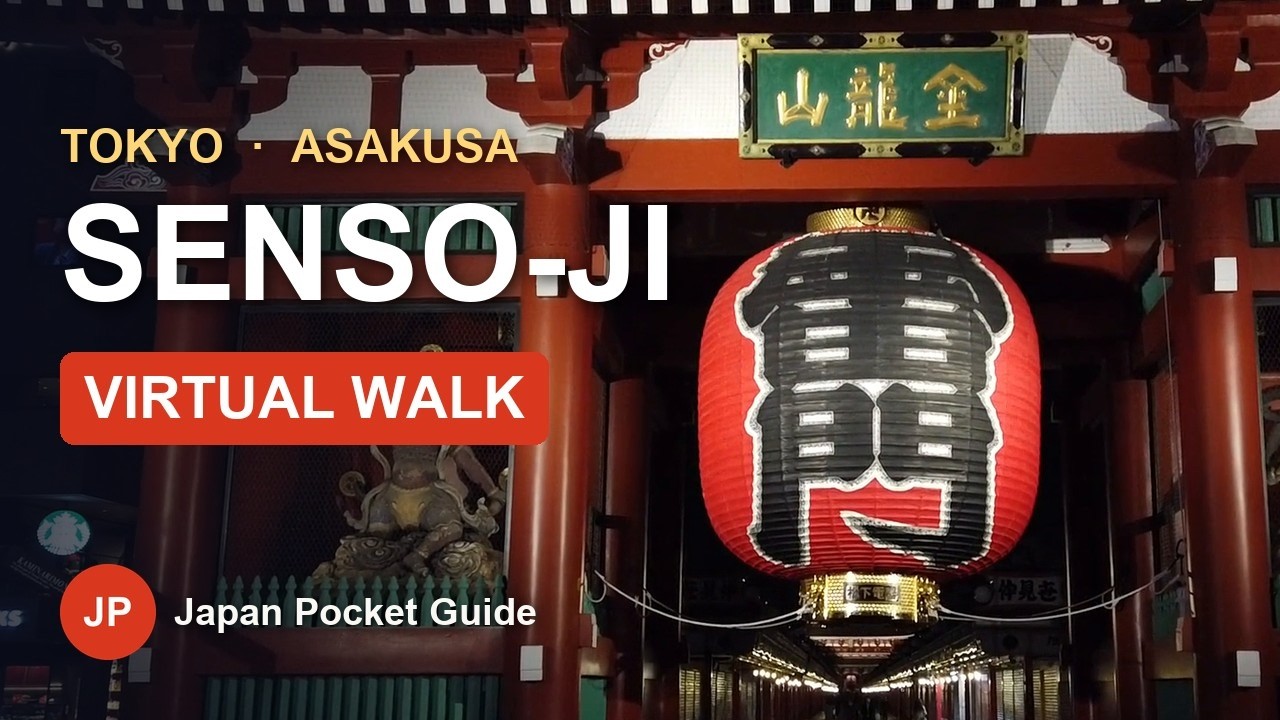
You are standing beneath the main gate of Senso-ji in Asakusa, looking up at the lantern that has become the symbol of the district. GO TOKYO gives its size as 3.9 metres high and 3.3 metres wide, weighing "roughly 700 kilograms", and says the present gate "dates from 1960", rebuilt with a donation from the founder of Panasonic. The temple itself is far older: JNTO's quick facts begin "Built in 628 AD". Statues of the gods of wind and thunder stand on either side of the gate, and beyond it runs Nakamise-dori, the shopping street to the main hall, which JNTO says "is 250 meters long".
Prefer to watch? Our two-minute video walks the whole of Senso-ji with narration and captions: in under the lantern of the Kaminarimon, along the stalls of Nakamise-dori, through Hozomon to the Main Hall and the five-storied pagoda, and back again after dark.
2. Shibuya Scramble Crossing (Tokyo)
GO TOKYO describes Shibuya Scramble Crossing as "the ubiquitous image of Tokyo", the place to see "upwards of 1,000 people crossing the multi-cornered intersection at a time", and notes that although they arrive from every direction, "pedestrians skilfully manage to avoid colliding with one another". Drag the view round to see the station on one side and the giant screens on the buildings opposite. On a real visit, cross from the station side towards Center Gai, then look down on the crowd from the coffee shop above the crossing, as GO TOKYO suggests.
3. Great Buddha of Kamakura (Kanagawa)
The bronze Buddha of Kamakura has sat in the open air for more than 500 years. "The statue is 11.3 meters tall and weighs 121 tons." It was cast in the 13th century and first stood inside a hall, but storms, a tsunami and earthquakes destroyed the building again and again, and in 1498, JNTO says, it was left out under the sky for good. Of Japan's bronze Buddhas, only Todai-ji's in Nara, number 9 on this tour, is taller. On a real visit you can pay a small donation to go inside the statue, and JNTO calls Kamakura "an easy day trip from Tokyo".
4. Nikko Toshogu Shrine (Tochigi)
Nikko Toshogu is the shrine of Tokugawa Ieyasu, the warlord whose rule as shogun began the Edo period, and it is the opposite of the plain wood most people picture when they think of Japanese shrines: colour and carving on every surface. Its Yomeimon Gate is, according to JNTO, "Japan's most lavishly decorated gate", "covered with 508 detailed carvings of children and elders and mythical beasts". Zoom in on the roofs and beams in the view to see the detail. In person, look for the sleeping cat and the Three Wise Monkeys, who see, speak and hear no evil.
5. Chureito Pagoda and Mt Fuji (Yamanashi)
A red pagoda on a wooded hill with Mt Fuji behind it is one of the pictures most people already have of Japan. The pagoda belongs to Arakura Fuji Sengen Shrine in Arakurayama Sengen Park, and JNTO says that in cherry blossom season "you can fit three Japanese icons all into one shot" — pagoda, mountain and blossom. Full bloom is in mid-April, and in November the autumn leaves turn red to match the pagoda.
Kyoto and Nara: 4 places
6. Fushimi Inari Taisha (Kyoto)
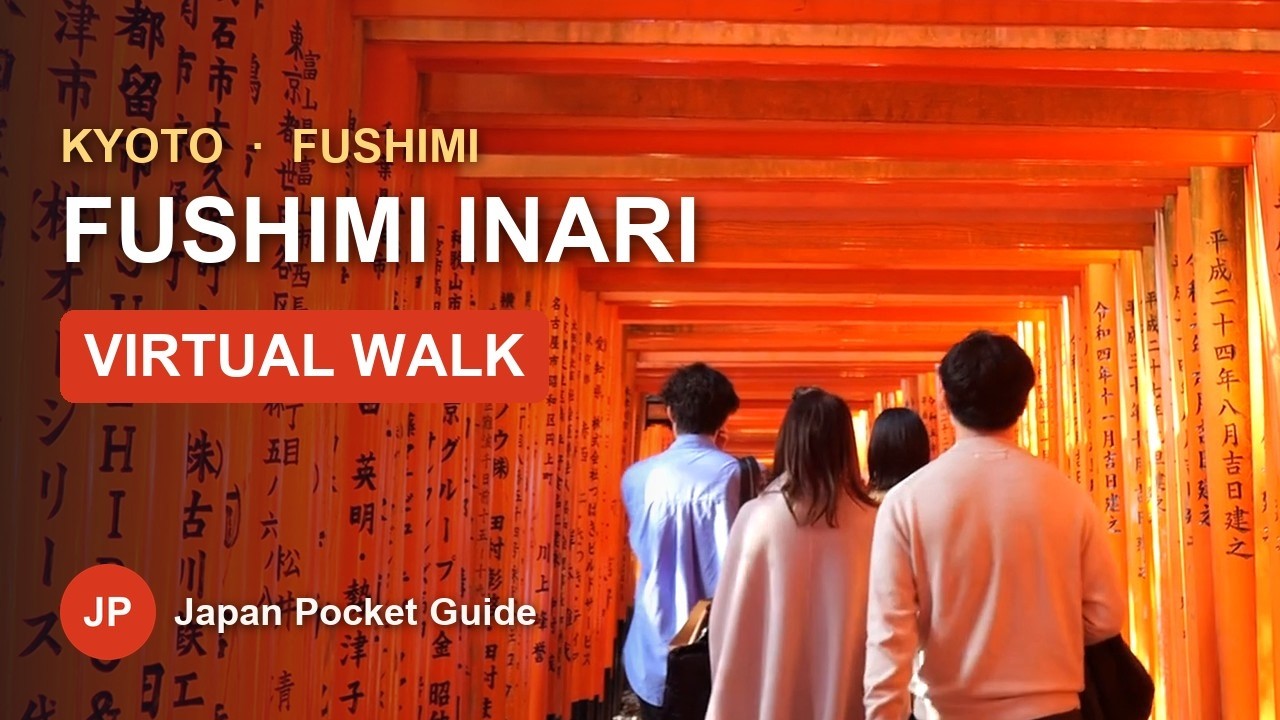
Fushimi Inari is the head shrine of the more than 30,000 Inari shrines across Japan, and its orange gates are, as JNTO puts it, "an iconic sight in Kyoto". The path climbs the "233-meter-tall Mt. Inari" and is marked by "approximately 10,000 torii gates", each one given by a company or a person hoping for success in business. JNTO says the shrine is said to have been founded in 711, before Kyoto was the capital. The gates in this view are close together, which is why it looks like a tunnel. A real walk round the mountain takes "between two to three hours", but the most famous stretch, Senbon Torii on the approach to the Okunoin shrine, comes early in the walk.
Prefer to watch? Our two-and-a-half-minute video starts with a view from the air, then walks the same path with narration and captions: through the Romon gate past the fox messengers, into the tunnels of Senbon Torii, on to Okusha and the Omokaru stones, and a little way up Inariyama.
7. Kiyomizu-dera (Kyoto)
Look up: the wooden platform above you is Kiyomizu-dera's famous stage, held up by a lattice of huge pillars. JNTO says the stage "is one of the most famous images of Japan", and that it "stands 13 meters above the ground and is built without the use of nails". From the stage itself you look out over the whole of Kyoto. On a real visit, the walk up through the old streets of Ninenzaka and Sannenzaka, lined with pottery and snack shops, is part of the experience; the temple is a 10-minute walk uphill from the nearest bus stop.
8. Arashiyama Bamboo Grove (Kyoto)
The bamboo grove in Sagano, on the western edge of Kyoto, is short but feels like another world. "There's something almost magical about the light dappling on the forest floor." Drag the view upwards to see how tall the stems are. JNTO's tip for a real visit is to "approach the grove from the side gate of Tenryu-ji Temple", the temple next door, and to carry on to Okochi-Sanso Villa at the top, which it says is generally free of crowds. The path also leads to Nonomiya Shrine, where people pray for a happy marriage.
9. Todai-ji (Nara)
The building in front of you is the Daibutsu-den, the Great Buddha Hall, one of the largest wooden buildings in the world. It was rebuilt in 1709 after two great fires. Inside sits the Great Buddha, made in 752: "The Great Buddha is 14.98 meters tall." JNTO adds that "Even its ears are 2.54 meters in length", and that it took "roughly 2.6 million people" to make it. Todai-ji is part of the Historic Monuments of Ancient Nara World Heritage Site, and on a real visit you will meet Nara's deer, which JNTO calls "one of the symbols of Nara".
Osaka, Himeji and Hiroshima: 5 places
10. Osaka Castle (Osaka)
Osaka Castle was begun in 1583 by Toyotomi Hideyoshi, the warlord JNTO calls the "Napoleon of Japan", and was burned down and rebuilt several times in the conflicts that followed. The main tower you see is a rebuild: it was "re-constructed in 1931" and now holds a museum, with an observation deck at the top. Around it are "106 hectares of open park", with cherry, plum and apricot trees, a running route round the outer moat and sightseeing boats on the water.
11. Dotonbori (Osaka)
Dotonbori is Osaka's neon canal street, and the view puts you in the middle of the crowd. Its story as an entertainment district goes back to the early 1600s, when a local businessman widened the banks of the river, and within 50 years it had six kabuki and five bunraku puppet theatres. The most famous sign here is the Glico Man, a runner on a blue track above the Dotonbori bridge; "The billboard was first erected in 1935". JNTO's list of what not to miss ends with "Trying local specialties like okonomiyaki and takoyaki", and the street is lined with places to try them. For what to order, see what to eat in Japan.
12. Himeji Castle (Hyogo)
Himeji is the castle to see if you only see one. JNTO calls it "The best-preserved castle in Japan", one of the 12 castles in Japan whose keep is still the original, and its white walls give it its other name: it is "also known as the White Heron Castle". The present castle was "completed in 1609" and is made up of more than 80 buildings joined by labyrinth-like winding paths. The keep rises above the trees at the end of the path in the view. On a real visit, the outer grounds with their lawn and cherry trees are free; you buy a ticket at the Hishi Gate to go through the inner castle and walk up to the six-storey main keep.
13. Atomic Bomb Dome (Hiroshima)
The ruined building across the river was the Hiroshima Prefectural Industrial Promotion Hall, built in 1915 to a design by the Czech architect Jan Letzl. At 8:15 a.m. on 6 August 1945 it was destroyed by the world's first atomic bomb, and everyone inside was killed. Part of the walls survived because the blast came from above, leaving the steel frame of the dome. It was added to UNESCO's World Heritage List in December 1996 "as a symbol of the devastation caused by the first atomic bomb in the history of humankind". On a real visit, the Peace Memorial Park and the Hiroshima Peace Memorial Museum are next to it, and the trip from JR Hiroshima Station by tram takes about 17 minutes.
14. Itsukushima Shrine, Miyajima (Hiroshima)
Follow the shore in this view to the red gate standing in the sea. This is the Otorii of Itsukushima Shrine on the island of Miyajima: "The Otorii gate stands at 16 meters tall", and it was built offshore in 1875 as the entrance to the shrine for worshippers arriving by boat. JNTO explains that at high tide the shrine and the gate "appear to float on the water", while at low tide the mud flats are exposed and you can walk out to the gate. The ferry from Miyajimaguchi takes about 10 minutes, and the shrine is about 10 minutes on foot from the pier.
In the mountains: 1 place
15. Shirakawa-go (Gifu)
Shirakawa-go is a village of steep thatched farmhouses at the foot of the sacred Mt Hakusan, and a UNESCO World Heritage Site. Its main village, Ogimachi, is "the largest hamlet of gassho-zukuri style houses in Japan", and the name gassho-zukuri means "like praying hands", after the shape of the roofs. JNTO says the houses are built without nails, every beam slotting into the next, and have stood since the 1800s. Some of the houses are now museums of local history and silk farming, and several are guesthouses where you can stay the night, which JNTO recommends booking in advance. Getting there takes a little effort: the bus from Takayama takes about 50 minutes.
A Japan virtual tour for kids and classrooms
The views work on a classroom screen or a family laptop with no account and nothing to install, which makes this page an easy lesson on Japan for children. A few ideas that keep younger viewers looking:
- Spot it. Find the giant red lantern at Kaminarimon, Mt Fuji behind the pagoda, the gate standing in the sea at Miyajima and the snow on the roofs at Shirakawa-go.
- Count. How many orange torii can you count at Fushimi Inari before the path turns?
- Compare sizes. The Great Buddha in Nara is 14.98 metres tall and the one in Kamakura 11.3 metres. Measure the classroom and work out how many classrooms high each one would be.
- Follow the route. Mark the 15 places on a map of Japan and trace the trip from Tokyo to Hiroshima, then guess which ones are closest to each other.
- Old and new. Put the places in order of age, from Senso-ji, founded in 628, to the Glico Man sign of 1935.
If you are planning a real family trip, the Japan with kids guide covers what children pay on trains, strollers, car seats and hotels.
From a virtual tour to a real trip
JNTO puts it simply: "One benefit of a virtual tour is the opportunity to become familiar with a place before arriving in person." The 15 places above follow the route most first-time visitors take, so they turn easily into a real plan.
- How long. The 7-day route in the itinerary ideas takes in Senso-ji, Shibuya, Kiyomizu-dera, Fushimi Inari and Arashiyama, with a day trip to Nara or Osaka; the 10-day version adds Hakone or Hiroshima and Miyajima. Both are set out day by day, with Shinkansen times and fares.
- Getting between cities. Compare the Japan Rail Pass with ordinary Shinkansen tickets before you buy; on a Tokyo–Kyoto–Hiroshima trip the ordinary tickets are often cheaper. Shirakawa-go is reached by bus, and the bus guide explains highway bus tickets and passes.
- Where to stay. The where to stay guide covers the best areas for a first trip and what a night costs.
- What it costs. The trip cost guide shows what visitors spent in 2025 and how to budget your own trip.
- First trip? Start with the first-time visitor guide.
Frequently asked questions
Does Japan have Street View?
Yes. Google Street View covers most of Japan's cities and main roads, and many temples, shrines, castles and parks have 360-degree photos as well. You can use it free in a browser or in the Google Maps app.
Is this Japan virtual tour free?
Yes. The views are embedded from Google Maps and there is nothing to pay, no account to make and nothing to install.
Can I take the virtual tour on a phone?
Yes. Swipe with one finger to look around, tap the arrows on the ground to move and pinch to zoom. To open a view in the Google Maps app, tap View on Google Maps at the top left of the view.
Why does a person's name appear on some views?
Those views are 360-degree photos that visitors took and published on Google Maps, and Google shows the photographer's name with them. Views from Google's own cameras show only the Google name.
Are the Street View images up to date?
Not always. Each image was taken on a particular date, so the season, the weather and even the shops can differ from today. Shirakawa-go in this tour is under snow and Shibuya is at night.
How do I find other places in Japan on Street View?
Open Google Maps on a computer, drag the small yellow figure called Pegman from the bottom right onto the map, and drop it on a blue line or dot. Blue lines are streets with Street View, and dots are single 360-degree photos.
Sources
Official and primary sources used for this page. Checked October 9, 2026.
- Google Maps Help: Use Street View in Google Maps — how to look around, move and zoom, Pegman and the blue lines, and older imagery
- JNTO: Sensoji Temple — founded in 628, the length of Nakamise-dori
- GO TOKYO: Kaminarimon Gate — the size and weight of the lantern, the 1960 gate
- GO TOKYO: Shibuya Scramble Crossing — the crowds at the crossing and where to watch them
- JNTO: Kamakura Daibutsu (Great Buddha) — height and weight of the statue, in the open air since 1498
- JNTO: Nikko Toshogu Shrine — the Yomeimon Gate and its carvings
- JNTO: Arakurayama Sengen Park — the Chureito Pagoda and Mt Fuji, cherry blossom and autumn leaves
- JNTO: Fushimi Inari Taisha Shrine — the torii gates, Mt Inari and how long the walk takes
- JNTO: Kiyomizudera Temple — the height of the stage, built without nails
- JNTO: Arashiyama Bamboo Grove — the side gate of Tenryu-ji and Okochi-Sanso Villa
- JNTO: Todaiji Temple — the size of the Great Buddha and the hall
- JNTO: Osaka Castle — the 1583 castle, the 1931 main tower and the park
- JNTO: Dotonbori — the history of the district and the Glico Man sign
- JNTO: Himeji Castle — the 1609 castle, the free outer grounds and the paid main keep
- JNTO: Hiroshima Peace Memorial (Atomic Bomb Dome) — the history of the building and the tram from Hiroshima Station
- JNTO: Itsukushima-jinja Shrine — the Otorii gate, the tides and the ferry
- JNTO: Shirakawa-go — the gassho-zukuri houses, overnight stays and the bus from Takayama
- JNTO: Discover the autumn landscapes of Japan's ancient cities through virtual tours — why a virtual tour helps before a trip, and the deer of Nara
To cite or link to this page: Virtual tour of Japan: 15 famous places to explore in Google Street View, from Tokyo to Hiroshima — Japan Pocket Guide, https://japanpocketguide.com/things-to-do/japan-virtual-tour/